
 by
by Quick answer: Linen sheets are worth it for hot sleepers who value breathability and longevity and don't mind a relaxed, wrinkled look. The trade-offs are a higher upfront price, persistent wrinkling, and a break-in period of several washes before they soften.
By the MattressNut editorial team · Updated June 2026
What Linen Sheets Are Made Of
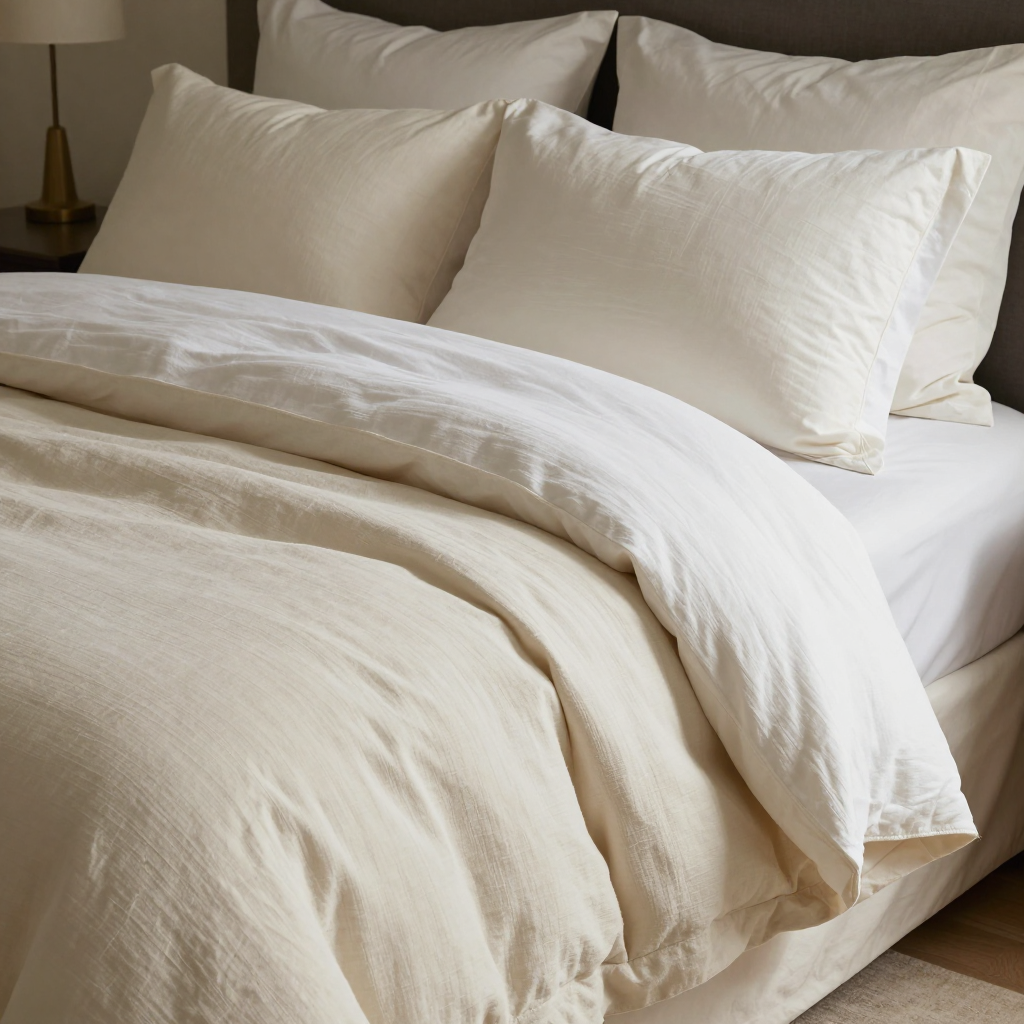
Linen is woven from flax fibers, which are thicker and stronger than cotton. That structure gives linen its signature breathability and durability, plus the textured, slightly crinkled drape it's known for. Weight is measured in grams per square meter (GSM): lighter sets around 170 GSM suit hot sleepers, while heavier ~190 GSM sets feel cozier in cooler climates.
The fiber is hollow, which is why linen regulates temperature so well. Heat moves out; cool air moves in. It also holds a meaningful amount of moisture before it feels damp, which makes a real difference if you sweat at night.
Linen Sheets Pros
Breathability and Temperature Regulation
Linen is one of the most breathable natural bedding materials available. The hollow flax fiber allows air to circulate freely, pulling heat away from your body rather than trapping it. It works in both directions: cool in summer, less chilly in winter than thin cotton percale. For hot sleepers, it's a practical upgrade over standard cotton, not just a preference.
Moisture-wicking is strong too. Linen can absorb a notable portion of its weight in water before it starts feeling wet against your skin. That means it stays drier longer during a warm night.
Durability and Longevity
Linen outlasts most bedding materials by a wide margin. A well-made set can remain in rotation for decades. Flax fibers are inherently strong, and linen actually gets stronger when wet, so repeated washing doesn't degrade the fabric the way it does with lower-thread-count cotton. Over a 10-year horizon, the cost-per-night calculation often favors linen over cheap cotton sets replaced every year or two.
Softens Over Time
Unlike most fabrics that wear out as they soften, linen does both at once: it softens with every wash and holds its structural integrity. Sheets you've had for three years feel noticeably better than the day you bought them. That improvement plateaus eventually, but it's a genuine quality-of-life gain you don't get from polyester blends.
Naturally Hypoallergenic and Low-Lint
Linen is naturally antimicrobial and hypoallergenic, which matters if you're sensitive to dust mites or have skin that reacts to synthetic materials. It also produces very little lint in the dryer, so it won't shed onto darker pajamas or pillowcases over time.
Linen Sheets Cons
Wrinkling
Every linen set wrinkles. Every single one. This is not a quality issue — it's a property of the fiber. If you want a hotel-crisp, flat-looking bed, linen will frustrate you every morning. Most linen owners stop caring within a few weeks and come to see the texture as part of the aesthetic. But it's worth being clear-eyed about this before buying.
Ironing linen is possible but largely pointless: it's wrinkled again by the next morning. "Stonewashed" or "pre-washed" sets tend to wrinkle a bit less severely than raw linen, so those are worth seeking out if you're wrinkle-sensitive.
High Upfront Cost
A quality linen sheet set typically costs significantly more than comparable cotton percale. Entry-level linen starts around $100–$150 for a full set; premium European flax sets run $250–$400+. The price reflects the more labor-intensive harvesting and retting process for flax. If you're looking for budget bedding, linen is not the right category.
Stiff Break-In Period
New linen sheets feel rough and boardy straight out of the package. This surprises people who expect an instant upgrade. The texture improves meaningfully after three to five washes, and continues softening for months. Buying "pre-washed" sets shortens this period considerably. If you wash them and put them right on the bed expecting cotton softness, you'll likely be disappointed.
Limited Color and Pattern Options
Linen is most commonly sold in natural, undyed tones — off-white, sand, oatmeal, slate blue, sage — because the flax fiber doesn't take dye as readily as cotton. Bold patterns and prints are rare. If your bedroom aesthetic depends on a specific color scheme, you may find the selection frustrating.
Can Feel Too Cool for Cold Sleepers
Linen's breathability is a feature for hot sleepers and a drawback for anyone who already sleeps cold. If you pile on blankets in summer, linen sheets are probably not your best option. Flannel or brushed cotton will serve cold sleepers better.
Pros vs. Cons at a Glance
| Pros | Cons |
|---|---|
| Excellent breathability; great for hot sleepers | Wrinkles persistently — not fixable, only tolerated |
| Strong moisture-wicking; stays drier longer | High upfront cost vs. cotton |
| Extremely durable; can last decades | Stiff and rough until broken in (several washes) |
| Softens with every wash over its lifetime | Limited colors and patterns |
| Naturally hypoallergenic and antimicrobial | Too cool for cold sleepers |
| Low-lint; relaxed lived-in aesthetic | Heavier and slower to dry than cotton |
Who Should Buy Linen Sheets
Good fit: Hot sleepers, night sweaters, anyone who wants bedding they can keep for 10+ years, people who like the relaxed "undone" bedroom look, and anyone with skin sensitivities to synthetic materials.
Poor fit: Cold sleepers, anyone who wants a crisp hotel-style bed, people on a tight budget, or anyone who isn't patient with a break-in period.
If you're on the fence about temperature: linen performs best in warm climates or for people who sleep warm. In a genuinely cold room without heavy blankets, thicker cotton flannel usually wins on comfort.
How to Care for Linen Sheets
Linen care is straightforward. Machine wash cold or warm on a gentle cycle. Tumble dry on low heat or line dry — low heat is fine and speeds things up; high heat over time can weaken the fiber. Avoid bleach entirely, which degrades the flax. Skip fabric softener too: it coats the fiber and actually reduces the natural softening process linen undergoes on its own.
The main rule: don't rush it. The more you wash, the better linen gets. There's no trick to shortcutting the break-in — just use them.
Linen vs. Cotton: Quick Comparison
| Linen | Percale Cotton | Sateen Cotton | |
|---|---|---|---|
| Breathability | Excellent | Good | Moderate |
| Durability | Very high (decades) | Moderate (2–5 years) | Moderate (2–4 years) |
| Softness (new) | Rough/stiff | Crisp | Silky |
| Softness (over time) | Very soft | Softens slightly | Softens slightly |
| Wrinkle resistance | Low (wrinkles always) | Moderate | Better |
| Price range | $100–$400+ | $40–$200 | $50–$200 |
| Best for | Hot sleepers, longevity | All sleepers | Cold sleepers, luxury feel |
If you sleep hot and want something that gets better with time, linen wins. If you want softness out of the package and don't run warm, percale cotton is simpler and cheaper. Sateen suits cold sleepers who want a smooth, heavy feel.
Bottom Line
Linen rewards patience: it starts stiff and pricey but becomes a breathable, durable, ever-softening staple that's hard to wear out. The wrinkles are part of the deal, not a defect.
Buy linen if you sleep hot and embrace the relaxed look. Skip it if you want crisp, cheap, or wrinkle-free sheets.
Frequently Asked Questions
Are linen sheets actually cooler than cotton?
For most hot sleepers, yes. Linen's hollow fiber structure moves air more efficiently than standard cotton weaves, and it wicks moisture quickly. That said, the difference is most noticeable compared to cotton sateen or high-thread-count cotton, which can trap heat. Against a quality percale cotton, the difference is real but less dramatic.
How long does it take for linen sheets to soften?
Most people notice a meaningful improvement after three to five washes. The sheets continue softening for months and even years of regular use. If you want to speed up the process, buying pre-washed or stonewashed linen skips the worst of the initial stiffness. Using them consistently — not rotating them in and out rarely — is the fastest path to soft linen.
Do linen sheets shrink in the wash?
Linen can shrink slightly on the first wash, especially in hot water. Washing cold or warm on a gentle cycle and tumble drying on low keeps shrinkage minimal after the first launder. If you're buying a size that already fits snugly, pre-washing before putting them on the bed is worth doing.
Are linen sheets good for people with sensitive skin?
Generally yes. Linen is naturally hypoallergenic and resists dust mites and bacteria without chemical treatments. The rough texture of new linen can irritate very sensitive skin initially, but once broken in, most people with skin sensitivities find linen comfortable. If you're prone to eczema or allergic reactions, linen is usually a better choice than synthetic blends.
Why are linen sheets so expensive?
Flax, the plant linen comes from, requires a labor-intensive harvesting and retting process to separate the fiber from the stalk. Quality linen is also mostly produced in Europe (Belgium, France, Lithuania), where production costs are higher. The price reflects the raw material and manufacturing process — not a markup on a commodity. Over a 10+ year lifespan, the cost-per-use often ends up comparable to or lower than replacing cheap cotton sets every few years.
Can you put linen sheets in the dryer?
Yes. Tumble dry on low heat. High heat over repeated cycles can weaken the flax fiber, so low or medium is the better long-term habit. Line drying is fine too and preserves the fabric longest. Either way, linen dries relatively quickly given how breathable the weave is — though it is heavier than percale cotton, so the drying time is slightly longer than lightweight cotton sets.
Related: our full Saatva mattress review | Explore the Saatva Classic