
 by
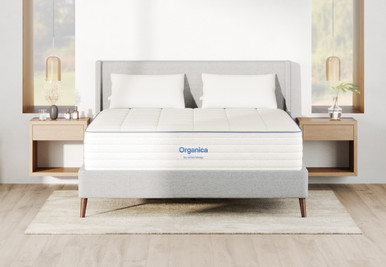
by The best organic mattress in 2026 is the Amerisleep Organica. It pairs natural Talalay latex with organic cotton and GOTS-certified wool, and you get it on a 100-night trial and a 20-year warranty. If you want a fully GOLS-certified latex bed, the PlushBeds Botanical Bliss is the strongest all-organic alternative.
Amerisleep Organica
9.2/10
- Natural Talalay latex certified by OEKO-TEX Standard 100, Rainforest Alliance and eco-INSTITUT
- Organic cotton cover and GOTS-certified organic wool fire barrier, so no chemical flame retardants
- Latex over a pocketed coil core gives latex bounce with proper edge support
- Two firmness builds, Medium for all positions and Plush for side sleepers
- Heavy to move once assembled, like most latex hybrids
- Materials are certified, but the finished mattress does not carry a full GOLS label
The Organica is the cleanest path to a natural latex bed without the off-gassing or the guesswork. Certified materials, a real coil core for support, and a 100-night trial make it the safest organic pick for most sleepers.
What makes a mattress actually organic
Most beds sold as "organic" are not. The word is unregulated for mattresses, so a brand can print it on the tag with very little behind it. What matters is which materials carry independent certification and which body issued it. A genuine organic mattress is built from natural latex, organic cotton and organic wool, and it backs each material with a recognised certificate rather than a marketing slogan.
Three certifications carry real weight. GOLS, the Global Organic Latex Standard, verifies that latex is at least 95% organic. GOTS, the Global Organic Textile Standard, covers organic cotton and wool from farm to finished textile. OEKO-TEX Standard 100 confirms a material has been tested for harmful substances, though it checks chemical safety rather than organic sourcing. A product can be OEKO-TEX certified and still contain no organic content, so read the label for what each certificate actually covers.
Best organic mattresses compared
| Mattress | Type | Latex certification | Cover and wool | Trial | Queen |
|---|---|---|---|---|---|
| Amerisleep Organica | Latex hybrid | Natural Talalay, OEKO-TEX, Rainforest Alliance | Organic cotton, GOTS wool | 100 nights | From $1,199 |
| PlushBeds Botanical Bliss | All-latex | GOLS organic latex | GOTS cotton and wool | 365 nights | ~$2,299 |
| Saatva Zenhaven | All-latex | GOLS Talalay latex | Organic cotton and wool | 365 nights | ~$2,095 |
| Avocado Green | Latex hybrid | GOLS Dunlop latex | GOTS cotton and wool | 365 nights | ~$1,999 |
Organic mattress certifications explained
GOLS, the Global Organic Latex Standard
GOLS is the gold standard for latex. It verifies the latex is at least 95% certified organic and tracks the supply chain from the rubber tree to the finished foam. If a brand claims organic latex without GOLS, treat the claim as marketing. PlushBeds, Saatva Zenhaven and Avocado all use GOLS-certified latex.
GOTS, the Global Organic Textile Standard
GOTS covers the soft components, the cotton cover and the wool fire barrier. Organic wool matters because it lets a mattress pass federal flammability rules without sprayed chemical flame retardants. The Amerisleep Organica uses GOTS-certified wool for exactly this reason.
OEKO-TEX and GREENGUARD Gold
OEKO-TEX Standard 100 tests a material for harmful substances, and GREENGUARD Gold tests the finished mattress for low chemical emissions. Both are about safety rather than organic sourcing, so they pair well with GOLS and GOTS but do not replace them.
Why the Amerisleep Organica tops the list
The Organica wins because it gets the fundamentals right and removes the usual friction. The comfort layers are natural Talalay latex, which breathes better than foam and has almost no break-in smell. The latex is certified by OEKO-TEX, Rainforest Alliance and eco-INSTITUT, the cover is organic cotton, and the fire barrier is GOTS-certified wool instead of chemicals.
Underneath sits a pocketed coil unit with reinforced edges, so you get the responsive feel of latex with the support and edge strength a pure latex slab can lack. The Medium build suits back, stomach and combination sleepers, while the Plush build adds latex for side sleepers who want more give at the shoulder and hip. A 100-night trial and a 20-year warranty cover you if the feel is not right.
For full disclosure, the finished Organica does not carry a GOLS or GOTS label on the mattress itself, only on its materials. Sleepers who require a single GOLS-certified bed should look at the PlushBeds and Saatva options below, which is exactly why we keep them on the shortlist.
PlushBeds Botanical Bliss
8.9/10
- GOLS-certified organic latex with GOTS cotton and wool
- Also carries GREENGUARD Gold and eco-INSTITUT certifications
- Unzip the cover to rearrange layers and change firmness without buying a new bed
- 365-night trial and a lifetime warranty
- Costs more than the Amerisleep Organica at queen
- Setup takes longer because you assemble and tune the layers yourself
If a single GOLS-certified latex bed is non-negotiable, the Botanical Bliss is the most complete option, and the adjustable layers let you fine-tune firmness over years of ownership.
Saatva Zenhaven
8.7/10
- GOLS-certified natural Talalay latex with organic cotton and wool
- Flippable design gives a Luxury Plush side and a Gentle Firm side in one mattress
- Free white-glove delivery, setup and old-mattress removal
- 365-night trial and a lifetime warranty
- Heavy and hard to flip without help
- Premium price, and a return fee applies during the trial
The Zenhaven is the luxury latex pick. Two firmness sides in one all-Talalay build mean you can change the feel by flipping rather than reordering.
Organic latex vs memory foam
Organic latex and memory foam feel very different. Latex pushes back and responds the instant you move, so it sleeps cooler and feels buoyant rather than sinking. Memory foam contours slowly and cradles, which some sleepers love for pressure relief but which traps more heat and is rarely organic. If your goal is a clean, natural bed, latex is the material that actually carries organic certification. Memory foam at best earns CertiPUR-US, which is a chemical-safety standard, not an organic one.
Dunlop vs Talalay latex
Both come from the same rubber tree sap, and both can be GOLS certified. The processing differs. Dunlop is denser and firmer, which makes it well suited to support layers, and Avocado uses it in its core. Talalay is whipped and flash-frozen for a lighter, more consistent and slightly springier feel, which is why Amerisleep and Saatva use it in their comfort layers. Neither is more organic than the other, so choose by feel.
How to shop for an organic mattress
- Demand the certificate, not the word. Look for GOLS on the latex and GOTS on the cotton and wool. If a listing says organic without naming a certifying body, assume it is not.
- Check the fire barrier. Organic wool is the clean way to pass flammability rules. Avoid beds that rely on chemical flame retardants or vague "fire sock" wording.
- Use the trial. Latex feels different from foam, so give a new bed at least three to four weeks before judging it. The longer trials on these picks exist for that reason.
- Match firmness to position. Side sleepers want a softer latex build, back and stomach sleepers want medium to firm.
For a clean, certified, well-supported organic bed, the Amerisleep Organica is our top pick on a 100-night trial. If you need a single GOLS-certified latex mattress, choose the PlushBeds Botanical Bliss or the Saatva Zenhaven.
Frequently asked questions
What is the best organic mattress in 2026?
The Amerisleep Organica is our top pick. It uses natural Talalay latex with certified organic cotton and GOTS wool, and it comes on a 100-night trial with a 20-year warranty. For a fully GOLS-certified latex bed, the PlushBeds Botanical Bliss is the strongest alternative.
What certifications should I look for in an organic mattress?
Look for GOLS on the latex and GOTS on the cotton and wool. OEKO-TEX Standard 100 and GREENGUARD Gold confirm chemical safety and low emissions but do not verify organic sourcing on their own.
Is organic latex better than memory foam?
For a natural bed, yes. Latex carries organic certification, sleeps cooler and responds faster. Memory foam contours more but traps heat and is almost never organic, earning at best a CertiPUR-US chemical-safety label.
What is the difference between Dunlop and Talalay latex?
Dunlop is denser and firmer, which suits support cores. Talalay is lighter, more consistent and a touch springier, which suits comfort layers. Both can be GOLS certified, so pick by feel rather than by which is "more organic."
Does natural mean the same as organic for mattresses?
No. Natural simply means the material came from a plant or animal source. Organic means it was grown and processed to a certified standard such as GOLS or GOTS. Always check for the certificate behind the claim.
What is the best organic mattress for side sleepers?
Choose a softer latex build. The Amerisleep Organica Plush adds latex for shoulder and hip relief, and the PlushBeds Botanical Bliss lets you rearrange layers to a softer setting.
How long does an organic latex mattress last?
Natural latex is one of the most durable mattress materials, and a quality organic latex bed commonly lasts 15 to 20 years or more. The lifetime warranties on the PlushBeds and Saatva picks reflect that longevity.
Related reading on MattressNut: organic and non-toxic mattress guide, Amerisleep vs Avocado, and best cooling mattresses.
Amerisleep Organica
9.2/10
Natural Talalay latex over a supportive coil core, organic cotton and GOTS wool, a 100-night trial and a 20-year warranty. The cleanest, best-supported organic mattress for most sleepers in 2026.
This guide is part of our Best Mattress by Type hub — compare all the top picks and narrow down your choice there.