
 by
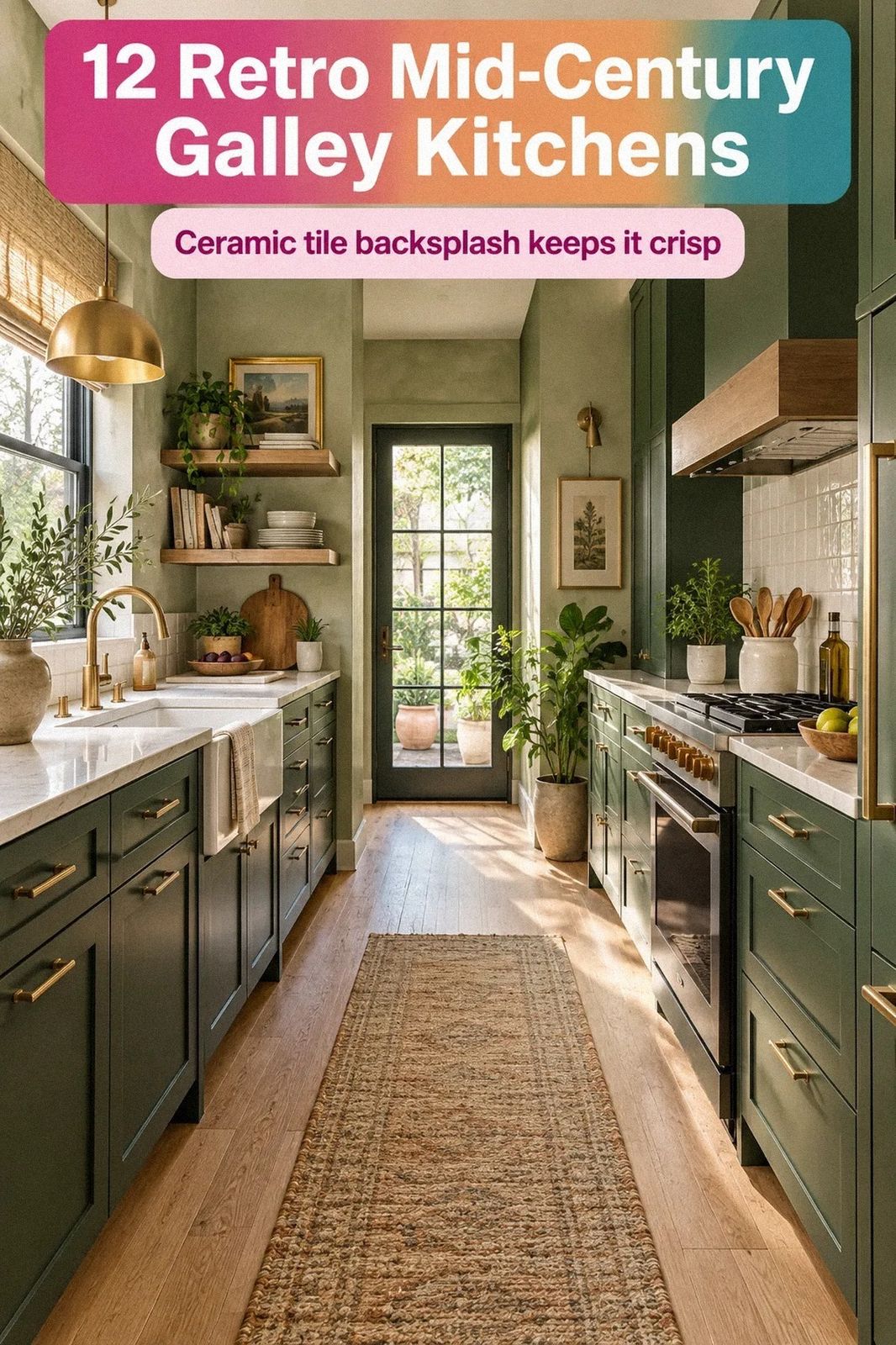
Mid-century modern galley kitchen layouts feel warmest when color, stone, and traffic flow work together. I once blamed a cold kitchen on the white cabinets, then realized the real problem was harsh overhead lighting and nowhere to pause. You don't need a full remodel. You need a few bold decisions that make the narrow room feel intentional.
- Anchor the modern kitchen galley with the Two-Wood Rule
- Paint the uppers in Benjamin Moore White Dove
- Swap bulky hardware for unlacquered brass pulls
- Build the Three-Height Light Stack
- Why does the work triangle matter in a galley kitchen?
- Float a slim walnut shelf instead of adding more cabinets
- Frame the sink with a retro grid backsplash
- Choose open shelving over a full upper run
- Layer a caramel leather stool at the end
- Mix terracotta with Farrow & Ball Studio Green
- Hang one sculptural pendant over the prep zone
- What does a warm galley kitchen makeover cost?
1Anchor the modern kitchen galley with the Two-Wood Rule
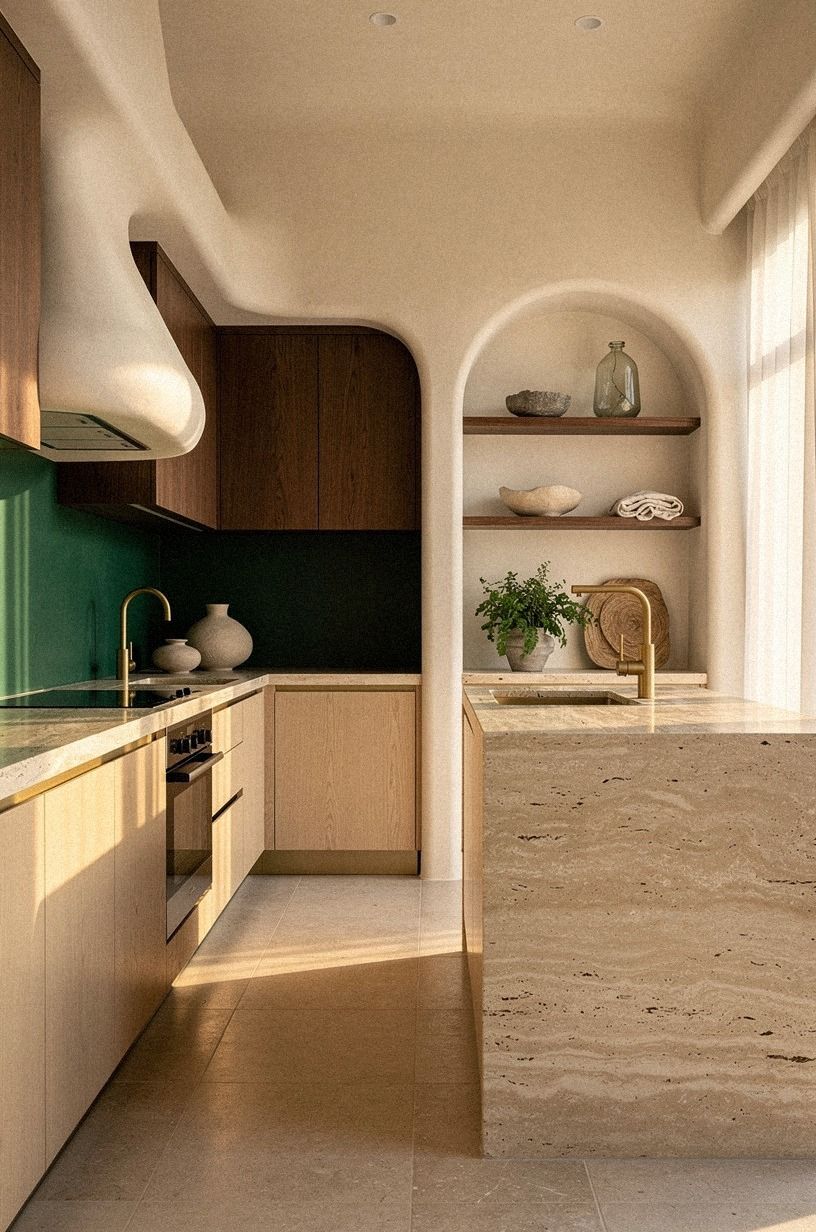
The Two-Wood Rule keeps a narrow kitchen from looking like a showroom. Choose one main wood, such as natural oak, then use warm travertine as the supporting surface.
Add emerald, cream, and aged gold through paint, hardware, or small accessories. If you mix four finishes, your eye won't know where to rest.
I’d use natural oak for cabinet fronts and warm travertine for the counter or backsplash. That contrast feels earthy and refined because the grain and stone catch light differently.
You’ll see the warmth without turning the room rustic. I learned this after pairing too many competing timber tones in one space.
It was too busy!
Keep your counter height around the standard 36 inches, and let the wood carry the visual weight below eye level. If your kitchen connects to a breakfast corner, repeat the cream or emerald there through a stool seat or small tray. These mid-century modern breakfast nook layouts show how a shared color note can make separate zones feel related.
You can also use the Two-Wood Rule to control the ceiling. A pale wood pendant may work with natural oak cabinetry, but a third visible timber tone could make the room feel accidental. I’d rather see one confident contrast than several almost-matching finishes.
Before ordering anything, place wood samples beside your countertop and flooring. You’ll notice undertones immediately. Warm oak can become golden beside cream surfaces, while travertine may look pinker beside emerald paint.
Your narrow kitchen has fewer visual distractions, so small differences become important.
2Paint the uppers in Benjamin Moore White Dove
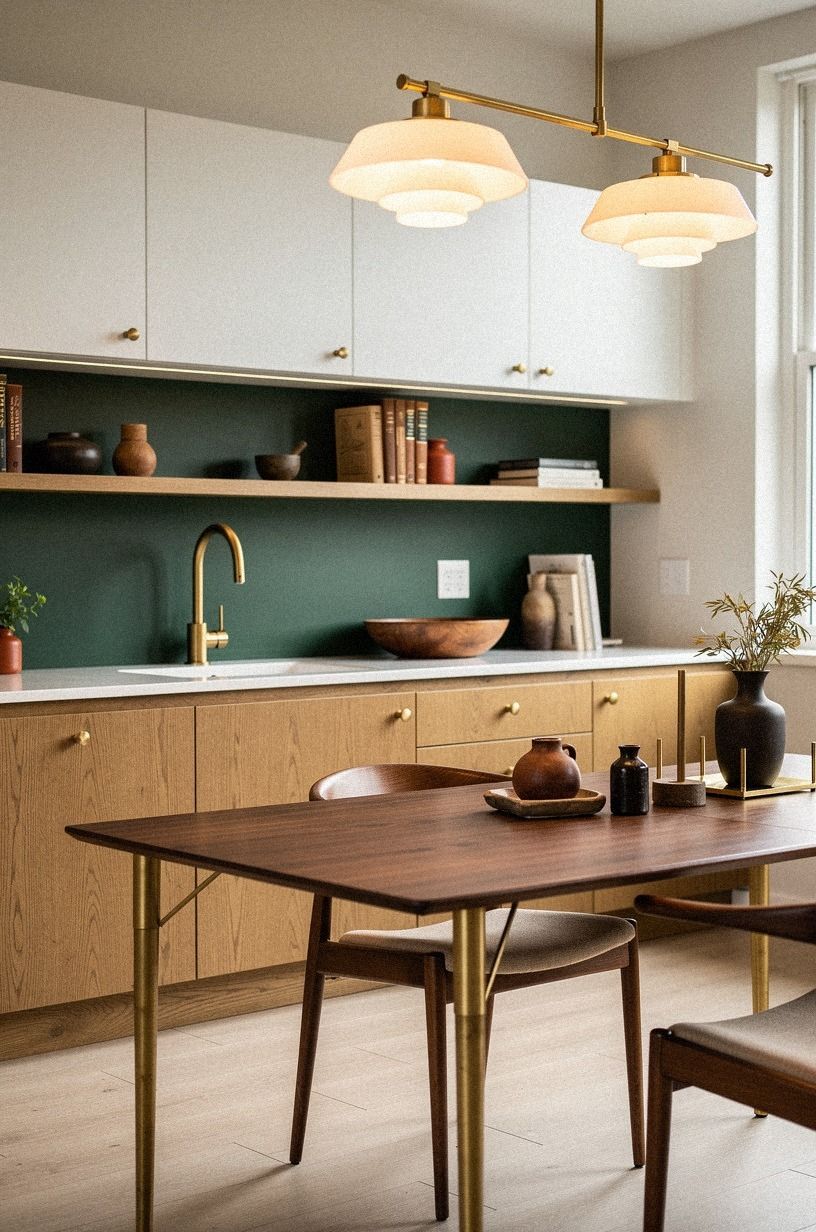
White cabinets can feel warm, but only when the white has a soft undertone. Benjamin Moore White Dove OC-17 is my first choice for upper cabinets because it creates a calm cream field beside natural oak and aged metal. You’ll get a bright backdrop while the lower half keeps the room grounded.
Paint the lower cabinets in a deeper shade if you want more contrast. A rich forest green gives you an organic base beside rust accents and brass.
I’d skip a stark pure white here. It’s bright, sure, but it can make a galley kitchen feel like a medical corridor under cool bulbs.
Your backsplash gap should sit around 18 inches between the counter and upper cabinets. That space gives the color room to breathe and makes the work zone feel less cramped. If you’re unsure how much contrast your room can handle, these sleek modern galley kitchen ideas offer restrained ways to balance light cabinetry with darker details.
I’d test paint on both sides of the room. North-facing light can make White Dove look grayer in the morning, while warm afternoon light may pull out its creaminess. Your cabinets should look comfortable at the hours you actually use the kitchen.
For a softer transition, paint the wall above the uppers in the same family as the cabinets. Then introduce unlacquered brass so it can develop a natural patina over time.
You don’t need a dramatic accent wall. A continuous pale field can make the ceiling feel higher and allow the forest green, rust, and oak details to carry the personality.
3Swap bulky hardware for unlacquered brass pulls
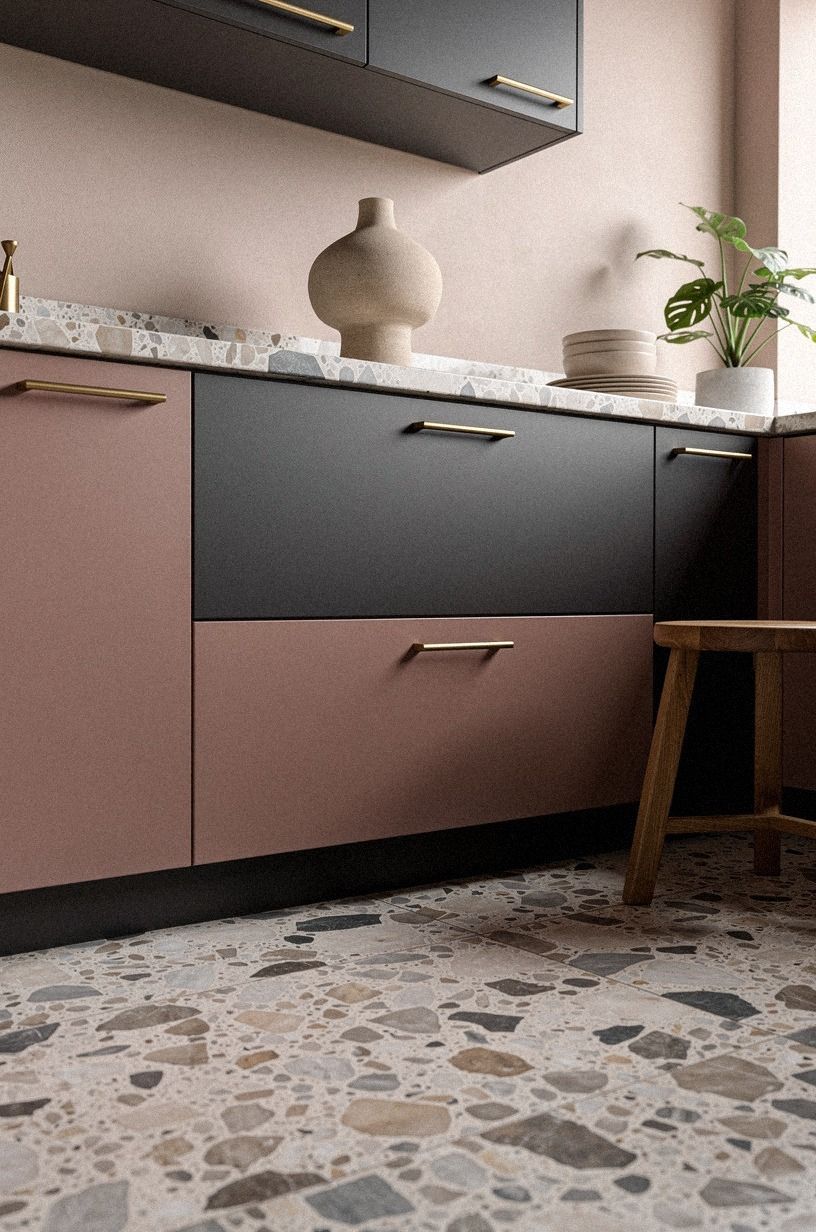
Small hardware changes can shift the entire mood of a galley kitchen. Choose unlacquered brass pulls against dusty rose cabinetry or walls, then balance them with charcoal details and an oversized-chip terrazzo surface. The mix feels graphic without becoming too polished.
4Build the Three-Height Light Stack
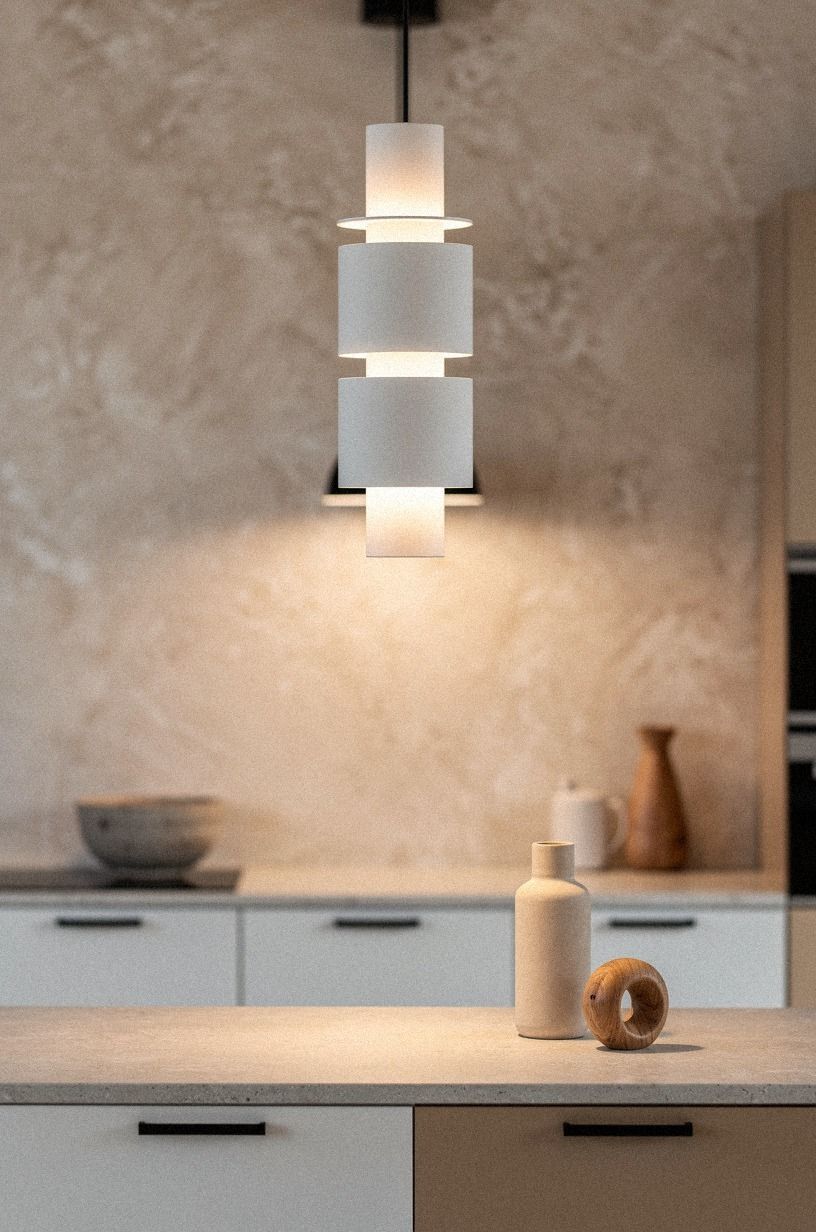
The Three-Height Light Stack gives your mid-century modern kitchen layers instead of one harsh ceiling wash. Start with a ceiling light, add under-cabinet light, then finish with a low glow at counter or table height. Your eye moves through the room, and the galley feels deeper at night.
Use a globe pendant above a small eating ledge, warm under-cabinet strips beneath the uppers, and one ceramic lamp near the end of the counter. I’d choose 2700K bulbs for the evening layer. Cooler bulbs can make warm white paint and camel upholstery look dull.
You don’t need to wire every fixture. A plug-in sconce or rechargeable lamp can give you the same gentle pool of light without opening the wall.
If you’re extending the lighting into an adjacent breakfast area, these retro breakfast nook ideas will help you keep the glow consistent. It’s a small change, but your kitchen will feel more intimate immediately!
Place task lighting where your hands work. A bright strip under the cabinets should illuminate the cutting board without shining into your eyes. I’d put the decorative fixture on its own switch, so you can keep a low evening glow even when the kitchen is clean.
A dimmer matters more than an elaborate fixture. You’ll want clear light for chopping, medium light for breakfast, and a softer setting when friends are standing nearby. That flexibility makes a narrow kitchen feel like part of the living space rather than a passage between rooms.
5Why does the work triangle matter in a galley kitchen?
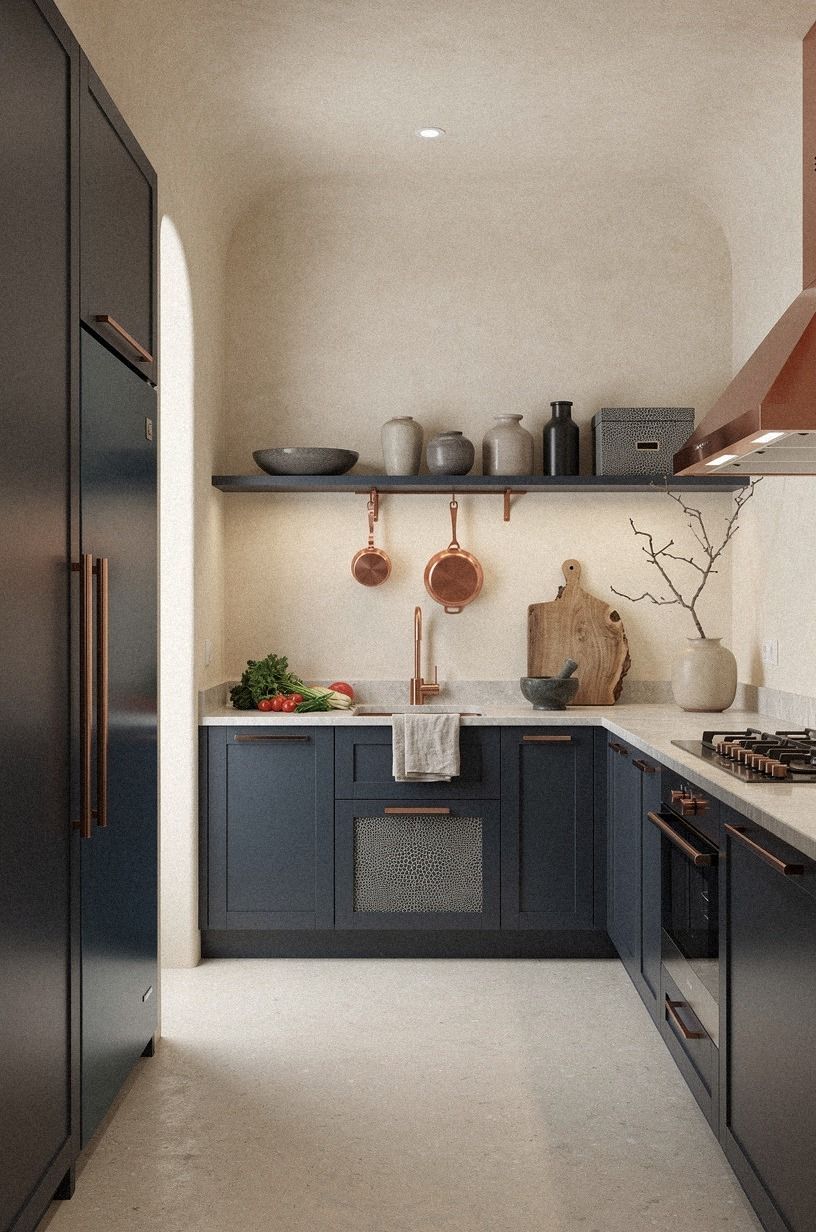
The work triangle matters because a narrow kitchen has very little room for wasted movement. Keep the palette calm with midnight blue, copper, and ivory, then add a small shagreen accent where it won’t interfere with cooking.
6Float a slim walnut shelf instead of adding more cabinets
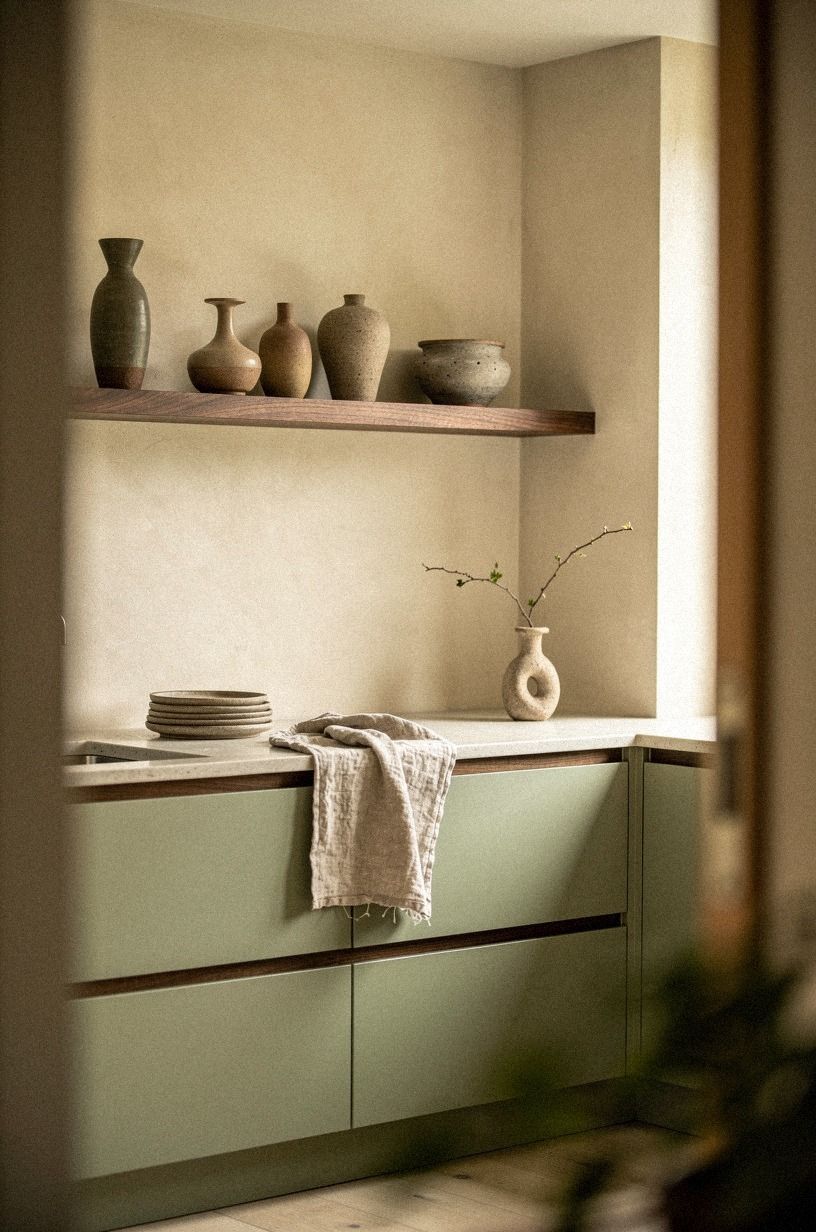
A floating shelf can soften a long run of upper cabinets, especially when your galley already has enough enclosed storage. Use a 3/4-inch natural wood shelf with rounded edges if you want the room to feel more relaxed. A sage green wall, warm cream ceramics, and washed Belgian linen nearby will keep the arrangement soft.
Keep the shelf useful. A stoneware bowl, two framed recipe cards, and a small trailing plant are enough. I’d skip lining it with twelve tiny objects.
That kind of display creates visual noise, and you’ll spend every weekend dusting it.
Install the shelf high enough to protect it from splashes, but low enough that you can reach the everyday pieces without a stool. Your favorite mug, a pepper mill, and one cream linen cloth can make the kitchen feel lived-in. If you’re working with a very narrow footprint, this small galley kitchen layout guide offers practical storage ideas that won’t crowd the walkway.
Check the shelf depth before you buy brackets. Around 8 to 10 inches is usually enough for cups and small bowls without making the passage feel tighter. A deeper shelf may look generous in the store, then become a shoulder-level obstacle at home.
I’d also leave a little breathing room around the objects. A shelf works because your eye can read the wall behind it. If every inch is covered, the display becomes another upper cabinet, only harder to clean.
Use the shelf as a place for things you reach often. Your kitchen will feel more natural when the visible objects have a reason to be there. Decorative pieces can join the arrangement, but they shouldn’t be doing all the work.
7Frame the sink with a retro grid backsplash
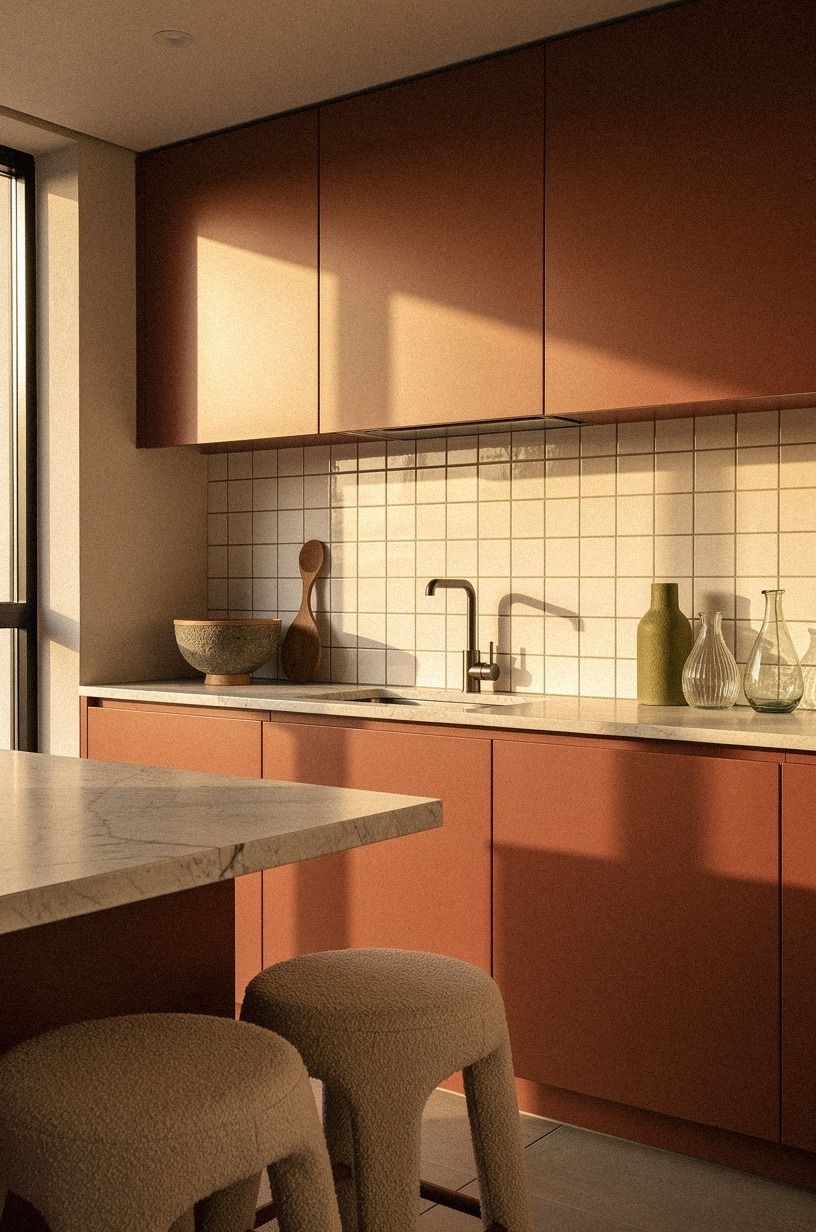
A grid backsplash gives a mid-century style kitchen its strongest graphic moment. Use terracotta tile, pale stone, and olive accents to keep the pattern earthy. An organic bouclé stool or seat nearby can soften the hard surfaces without competing with the grid.
8Choose open shelving over a full upper run
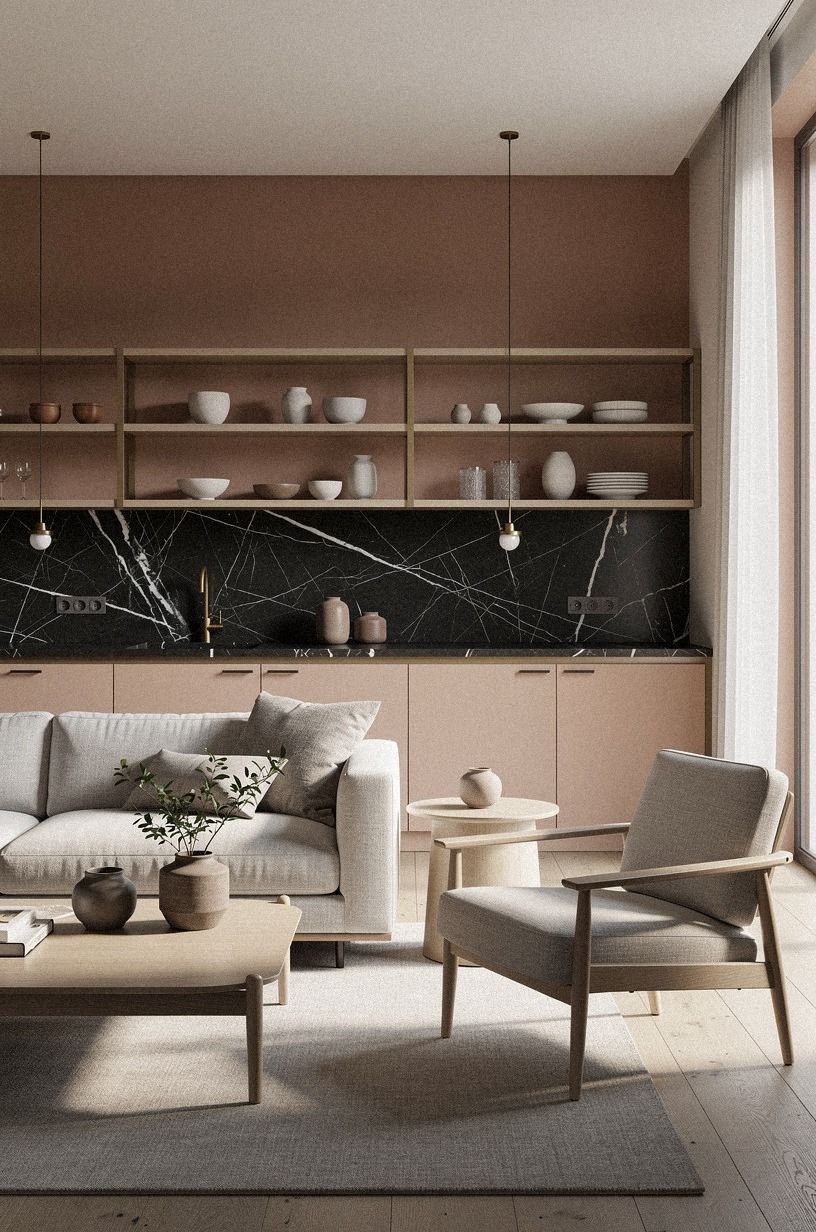
Open shelving over a short cabinet section is one of the easiest ways to keep galley kitchen styles airy. Use one shelf for daily dishes and leave the rest of the wall calm. Clay ceramics and a folded linen runner will bring in a soft, welcoming color story without demanding a full collection.
I’d place the shelf near the dining end, rather than above the busiest cooking zone. Steam, grease, and flying sauce will turn your favorite display into a cleaning chore. If you’re styling above the coffee station, you can keep mugs, tea, and a small sugar bowl within reach.
But don’t remove useful storage just to chase an open look. Your kitchen still needs a home for appliances, pans, and food.
Keep the practical items behind doors, then let one visible shelf carry the character. A narrow room doesn’t need more decoration; it needs a clearer rhythm.
Use shelf brackets as part of the design. Aged brass brackets will echo the hardware, while a slab of Nero Marquina marble can bring in a stronger black-and-white note. I’d choose brackets with enough visual weight to support the wood, but avoid ornate shapes that make the wall feel busy.
You can create a similar openness at the end of the cabinet run by removing one door and painting the interior. That gives you a small display niche without committing to a full row of shelves. Your most useful pieces can stay visible, while less attractive necessities remain concealed.
These retro breakfast nook ideas show how open storage can transition toward a dining area. Repeat one linen or brass detail there, and the two spaces will feel connected.
9Layer a caramel leather stool at the end
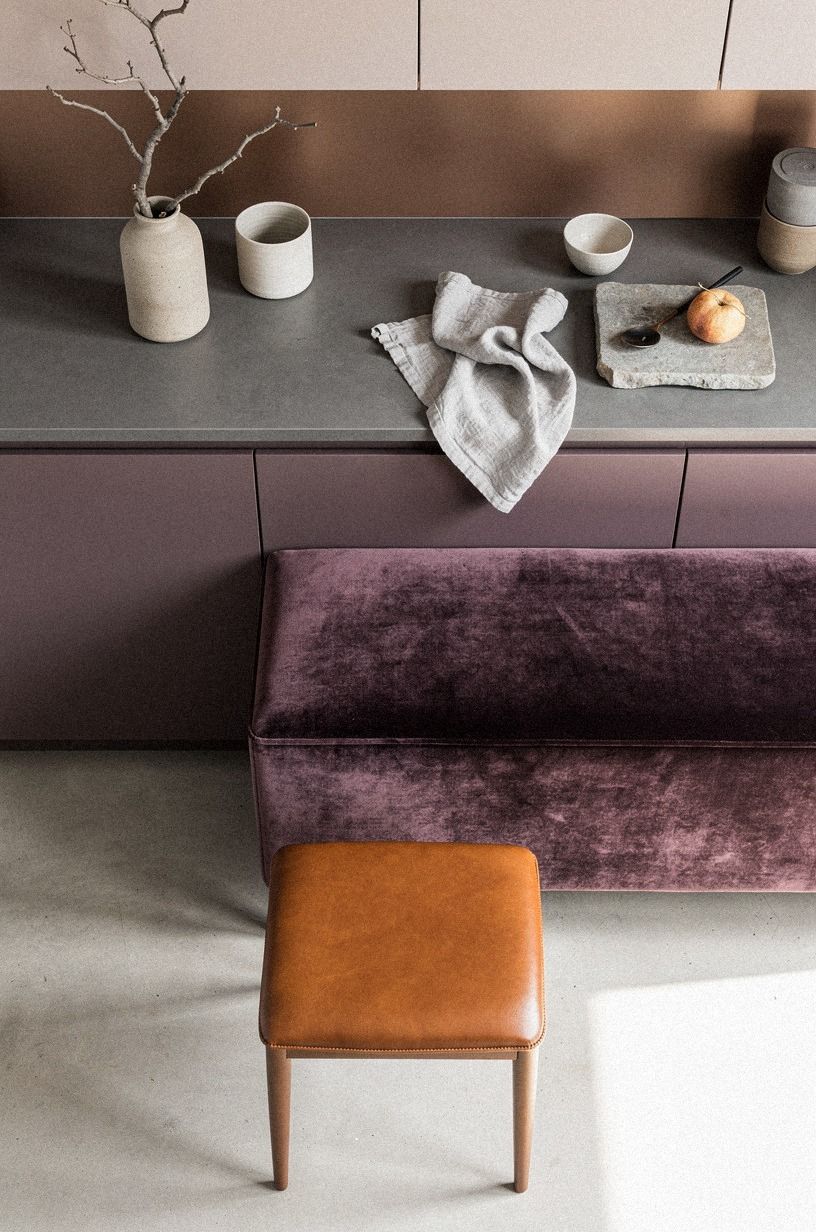
A single stool can make a galley kitchen feel connected to the rest of your home. Choose a deep-pile mohair velvet seat in plum or soft grey, then add a rose-gold detail for warmth. It gives the end of the room a richer finish without adding bulky furniture.
10Mix terracotta with Farrow & Ball Studio Green
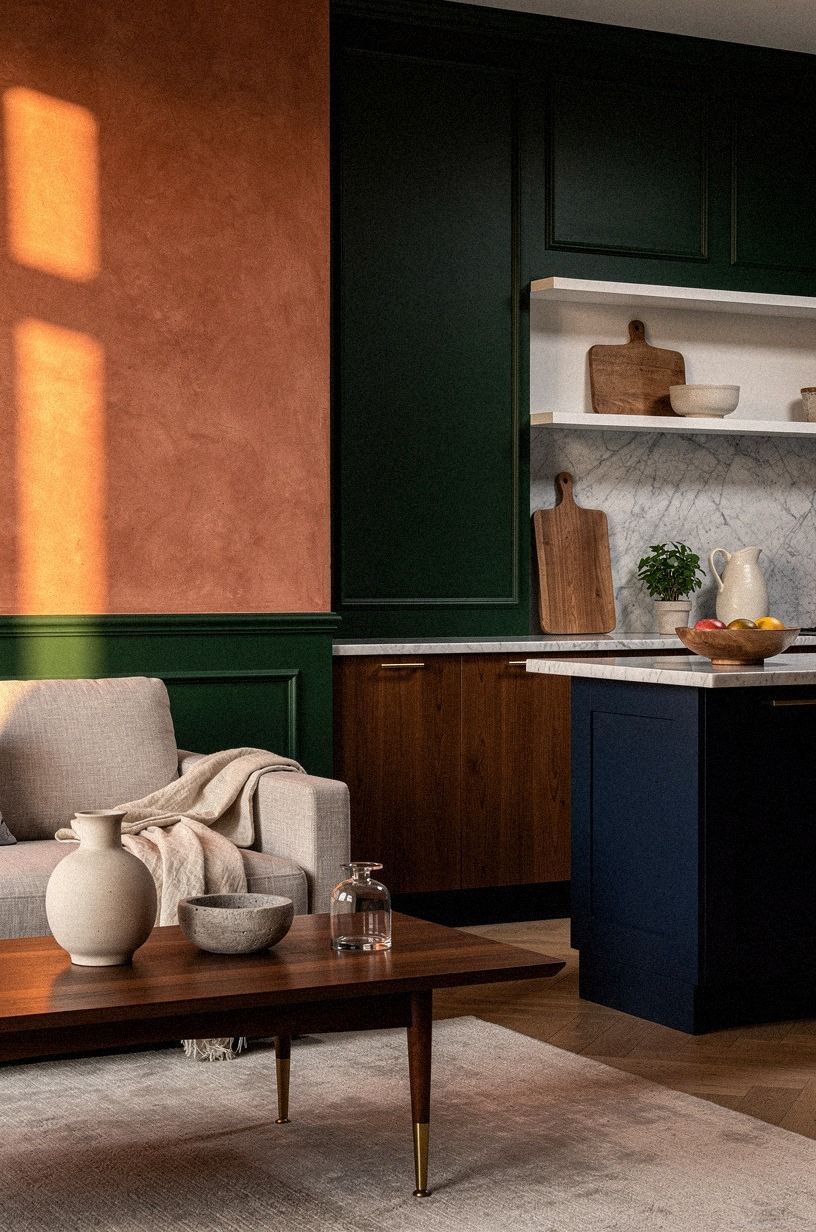
Terracotta brings a gentle, earthy warmth to a narrow kitchen, especially when the room has white walls and dark cabinet details. Use it as a small ceramic accent, while navy, white, and walnut establish the larger palette. Your goal is a few warm notes that keep the room from feeling sterile.
Farrow & Ball Studio Green No.93 can still work on lower cabinets or one short wall. It’s moody and sophisticated, but I’d avoid it on every cabinet if your kitchen gets little daylight. In a north-facing room, the color may become much darker by late afternoon.
Pair the green with white, walnut, and Carrara marble with subtle grey veining. That combination feels serene in the morning and intimate after sunset.
If your kitchen needs a stronger transition to the entry, these mid-century front door ideas offer useful color pairings. You’ll notice that the warmest rooms repeat a shade, rather than repeating an entire furniture set.
Test Studio Green beside your countertop before committing. A green that looks elegant on a small card can appear nearly black across a long cabinet run.
I’d paint a movable board and check it at breakfast, midday, and evening. Your lighting will decide how much color the room can carry.
Terracotta doesn’t have to come from tile. A clay vase, woven runner, or handmade bowl can give you the same warmth with less commitment. If you rent, those portable details may be the smartest way to build the palette.
Keep the green concentrated. One painted plane, a lower cabinet run, or a deep ceramic accent is enough. Your eye will read the color as an anchor, while the white, walnut, and marble keep the room open.
11Hang one sculptural pendant over the prep zone
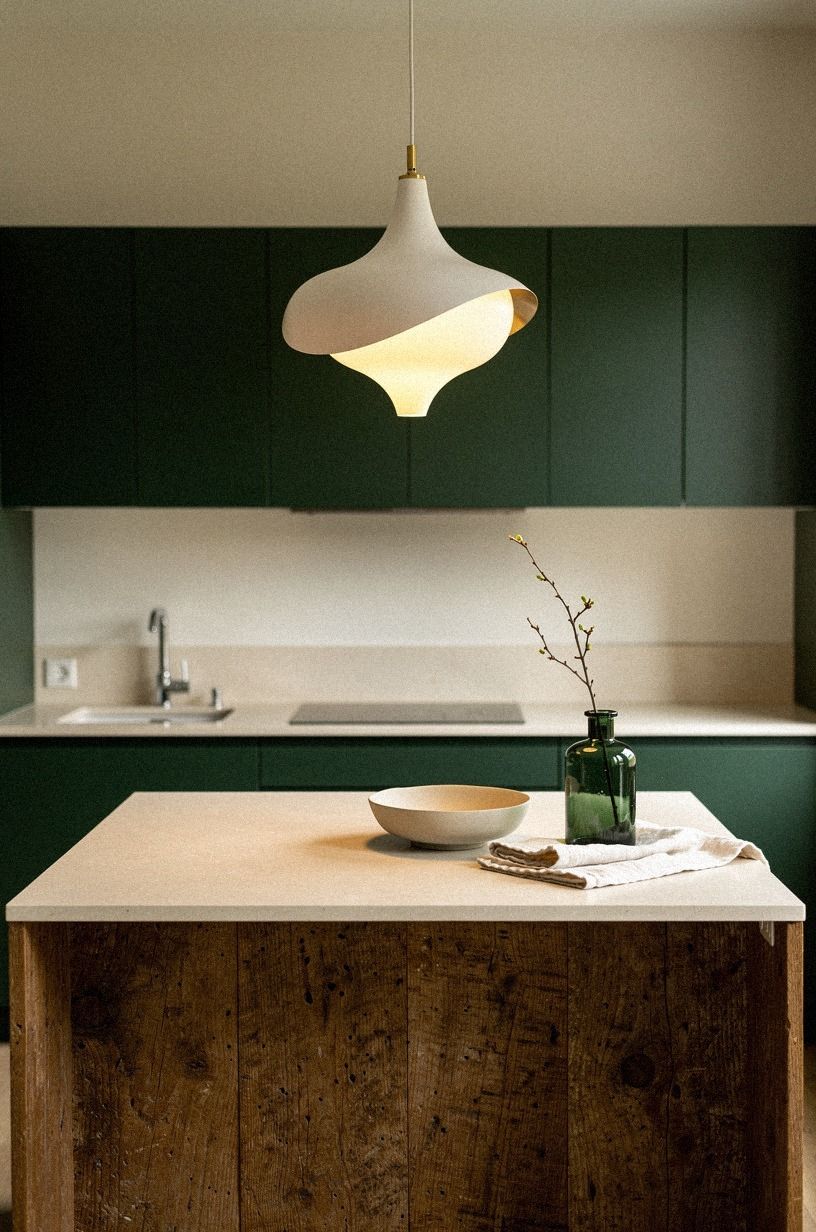
A sculptural pendant gives a modern kitchen galley a focal point without taking up counter space. Choose a fixture with a reclaimed weathered teak detail, then let emerald, gold, and cream carry the surrounding palette. Your fixture should brighten the prep zone while leaving enough ceiling visible to preserve the room’s length.
Hang it where you work, rather than automatically in the center of the room. If the pendant sits too low, you’ll bump it while carrying a pan.
If it’s too high, the light will spread everywhere and lose the intimate effect. A dimmer gives you a soft setting for dinner and a brighter setting for chopping.
I’d skip a row of three pendants in a narrow galley unless the ceiling is unusually high. One confident fixture usually looks more refined than a crowded line. Add a gold canopy or small cream detail if the room needs continuity, then let the bulb glow warm rather than blue.
Check the swing of cabinet doors before finalizing the location. You’ll want the pendant centered over the useful work area, but you also need a clear path for tall doors and open shelves. A few minutes with painter’s tape can prevent an expensive installation mistake.
Scale matters here. A shade around 12 to 16 inches wide can make a statement without swallowing the room. I’d keep the silhouette rounded if the cabinets have strong straight lines, or choose a simple cylinder if the backsplash already has a busy grid.
When the kitchen connects to an island or eating ledge, look at these small kitchen island ideas for proportion cues. Your pendant should relate to the adjacent furniture without copying it exactly.
12What does a warm galley kitchen makeover cost?
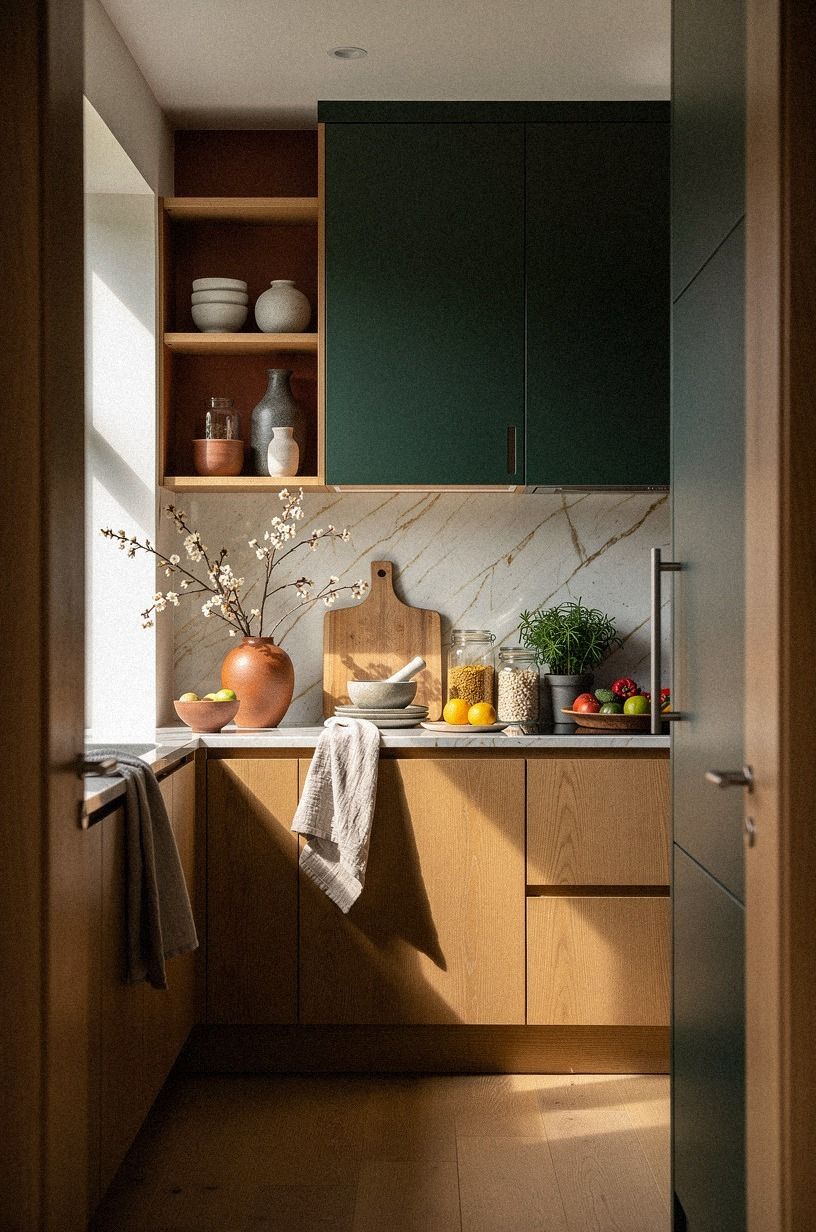
A cosmetic update can give your galley kitchen retro warmth without replacing the entire room. Start with paint, hardware, lighting, and a backsplash, then decide whether the cabinets truly need to go. You’ll save money when you improve the surfaces that affect your daily view first.
These are typical US cost ranges, not a promise for every project. The right number depends on labor, cabinet condition, and your material choices.
For surfaces, Calacatta marble with gold veining can add a dramatic focal point, while natural oak keeps the rest of the room grounded. Forest green cabinetry and rust accents can provide the same richness at a lower commitment. I’d spend first on lighting and cabinet color.
Your eye notices those choices before it notices an expensive faucet.
If you’re working with a small budget, divide the project into visual priorities. Paint the walls and cabinet fronts first, then change the lighting, then replace the most visible hardware. You’ll learn what the room still needs before paying for a larger renovation.
A backsplash can also be staged. Use a removable option while you live with the palette, then install permanent tile once you know the colors work in every season. Your first choice doesn’t have to carry the entire project.
For labor, ask whether the quote includes surface preparation, electrical work, disposal, and repairs behind the old cabinets. Those details can change the final number quickly. I’d keep a small contingency fund for surprises, especially in an older home.
If you’re considering a larger footprint change, these small kitchen island ideas can help you compare storage and circulation before removing a wall. For a connected entry palette, these mid-century front door ideas may help you repeat the cabinet color beyond the kitchen.
Mid-century style works best when you let it live a little. I don’t want a galley kitchen that looks sealed behind glass, with every object chosen to prove a decade. I want the walnut to show a small mark, the brass to lose some shine, and the counter to hold the coffee grinder you use every morning.
That doesn’t mean clutter. It means choosing practical things with enough character to stay visible. A ceramic bowl can hold onions.
A linen runner can protect the counter. A vintage teak tray can gather oils, salt, and the small bottle of hot sauce that never makes it back into the cabinet.
Your room gets warmth from use, rather than from adding more props.
I’ve made the mistake of treating a narrow kitchen like a styling problem when it was really a circulation problem. The room looked charming, but two people couldn’t pass each other near the sink. Once I cleared that pinch point, the kitchen felt calmer.
You’ll want to protect your walking path before you buy another shelf.
The strongest palette usually has one dark anchor, one light field, and one warm accent. That might be forest green, cream, and rust.
Or it might be walnut, ivory, and aged brass. I’d skip matching every finish.
A little tension keeps the room from feeling staged.
The reason this style keeps returning is simple: it respects function while leaving room for personality. Your galley kitchen can be efficient, bright, moody, or playful, but it shouldn’t feel anonymous.
Give yourself one decision with real character, then let the quieter choices support it. That’s where the retro warmth begins.
A Few Things Worth Answering
What is the best Mid-Century Modern Galley Kitchen Ideas With Retro Warmth for a small kitchen?
The best choice is a light upper cabinet, warm wood lower cabinet, and one slim shelf. IKEA KALLAX birch-effect storage can help near the dining end, while an Article Sven counter stool adds leather warmth without a bulky frame. You’ll keep the room bright and still get a strong mid-century signal.
Where can I buy Mid-Century Modern Galley Kitchen Ideas With Retro Warmth pieces on a budget?
Look at IKEA, Wayfair, and Target for budget-friendly hardware and lighting. Facebook Marketplace and local thrift shops are useful for teak trays, stools, and ceramic pieces. You don’t need a complete vintage set.
One authentic wood object can make newer items feel more collected.
How much does a Mid-Century Modern Galley Kitchen Ideas With Retro Warmth makeover cost?
A cosmetic makeover usually runs about $300 to $1,500 for paint, hardware, lighting, and a peel-and-stick backsplash. Free changes include rearranging counter items, removing visual clutter, and using existing wood pieces in a new spot. Your cabinet condition will determine whether you need a larger budget.
Can I create a Mid-Century Modern Galley Kitchen Ideas With Retro Warmth on a budget?
Yes, and you can start with three low-cost changes: paint the walls, replace cabinet pulls, and warm the lighting. Shop your home for trays and ceramics before buying anything. A small terracotta planter, secondhand stool, and warmer bulbs can shift the room for far less than new cabinets.
Is a Mid-Century Modern Galley Kitchen Ideas With Retro Warmth worth it in a small space?
Yes, because a small room makes repetition and proportion easier to control. Use one wood tone, one cabinet color, and a narrow light fixture.
You’ll see every choice clearly, so avoid crowded shelves and oversized furniture. The limited footprint can make the design feel more deliberate.
Is a Mid-Century Modern Galley Kitchen Ideas With Retro Warmth a good idea for a rental?
Yes. Use removable upgrades such as peel-and-stick backsplash, tension-rod café curtains, plug-in sconces, and temporary cabinet pulls.
Keep the original hardware and patch small holes before moving. You can create warmth without painting cabinets or making permanent electrical changes.
Where I’d Start First
If I had to pick one, I’d start with the cabinet color. Farrow & Ball Studio Green gives walnut, cream tile, and brass something to work against, so the room won’t feel flat. Pin this idea for later, then compare it with our small galley kitchen guide before you buy paint.