
 by
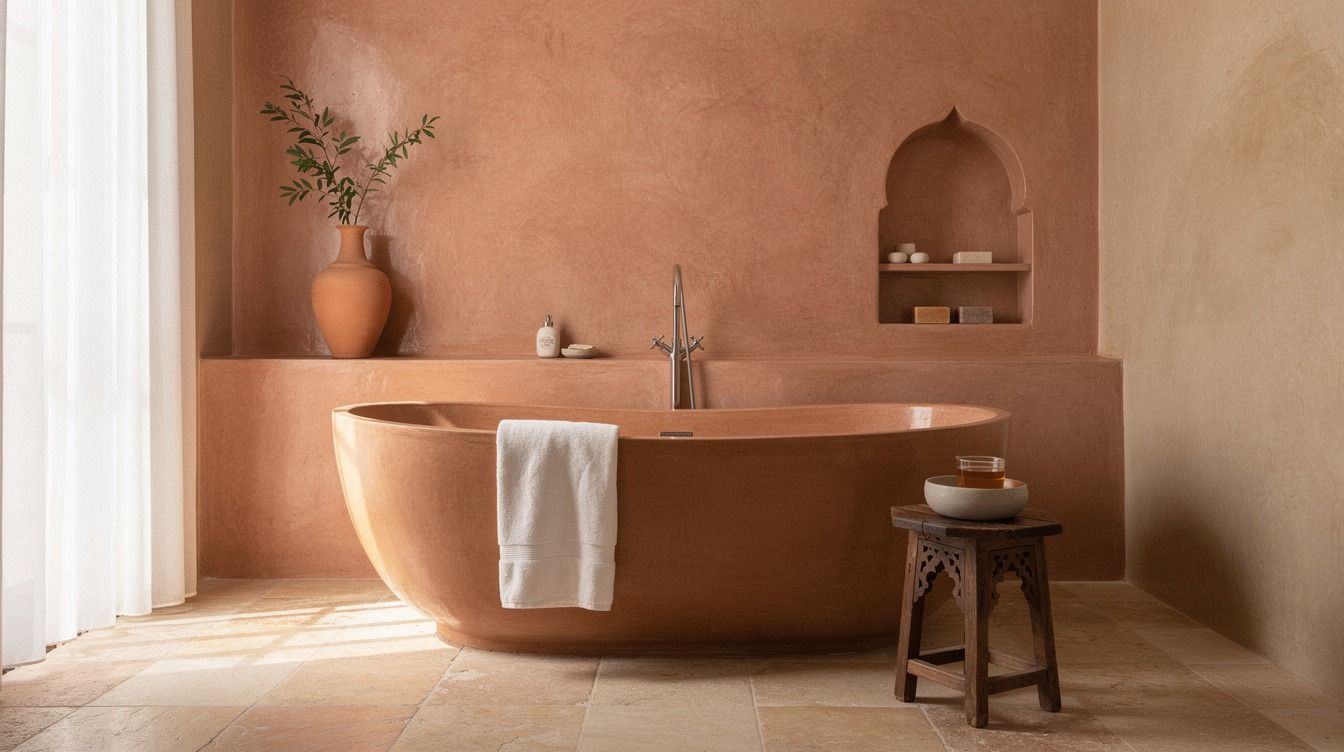
by Moroccan tadelakt bathroom ideas work because they replace cold, hard finishes with soft mineral texture and warm, earthy color. I’ve watched glossy white bathrooms feel oddly clinical even after new towels and a better mirror. Start with the walls. Then let every other choice answer that quiet, hand-finished surface.
- Start with a tadelakt interior wall plan
- Measure the wet zones before choosing clay imports bathroom finishes
- Anchor your palette with the Desert Bowl Rule
- Choose zellige over flat subway tile for the shower
- Build the Two-Wood Rule around your vanity
- Set the vanity at a height your body will like
- Hang a Three-Height Light Stack
- Frame the mirror with metal that can age
- Layer textiles with the Bare-Foot Landing method
- Float storage instead of crowding the floor
- Mix limestone with clay instead of more marble
- Paint the ceiling before adding another wall color
- Finish the room with objects that earn their place
1Start with a tadelakt interior wall plan
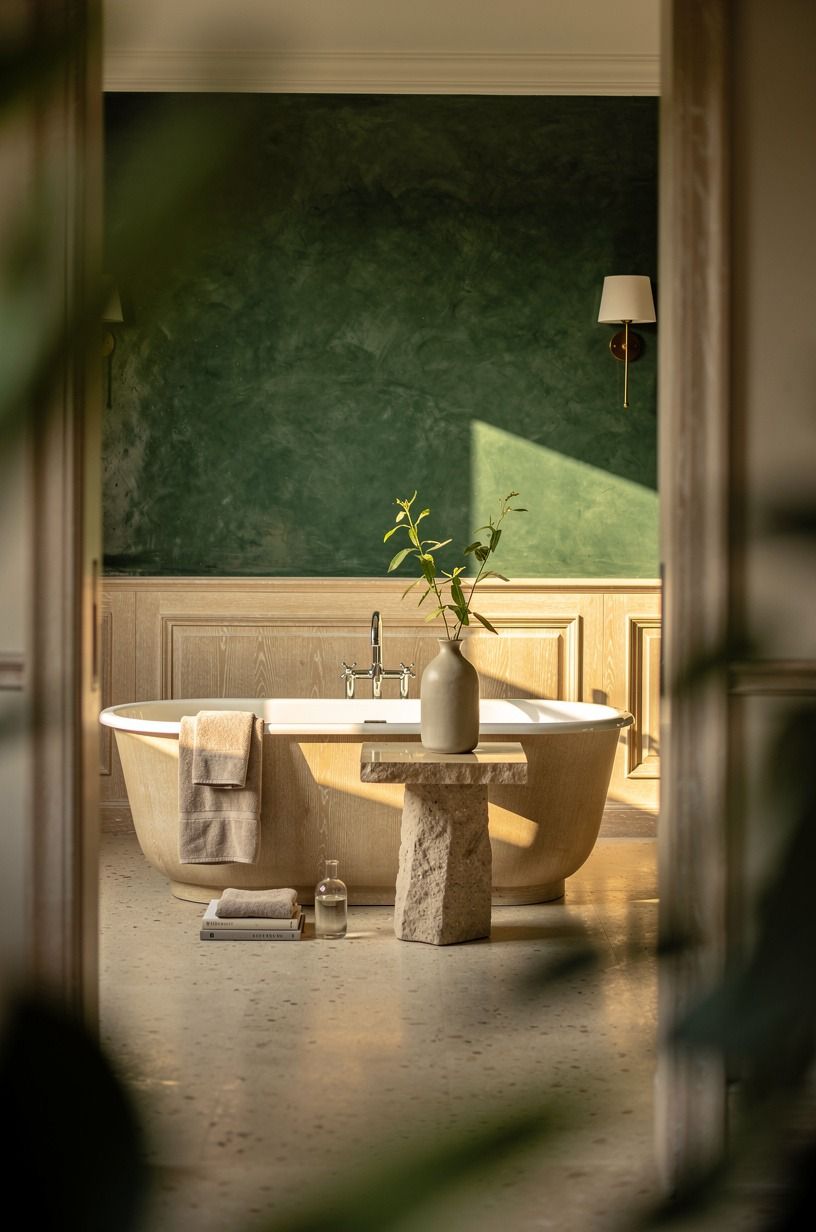
Choose one continuous wall zone before you buy anything: the vanity wall, shower surround, or the wall behind a freestanding tub. You’ll get a more calming result when the plaster wraps a clear visual destination instead of appearing in scattered patches. I’d skip a tiny tadelakt accent niche if your room has plain drywall everywhere else, because it can read like a sample board.
Use an emerald plaster tone with cream textiles, gold hardware, and cerused white oak nearby. Moroccan tadelakt plaster has movement, so your lighting will catch slight changes from morning to night. For more finish direction, see these tadelakt bathroom ideas for seamless hand troweled beauty.
Your room doesn’t need to look busy to feel richly made.
2Measure the wet zones before choosing clay imports bathroom finishes
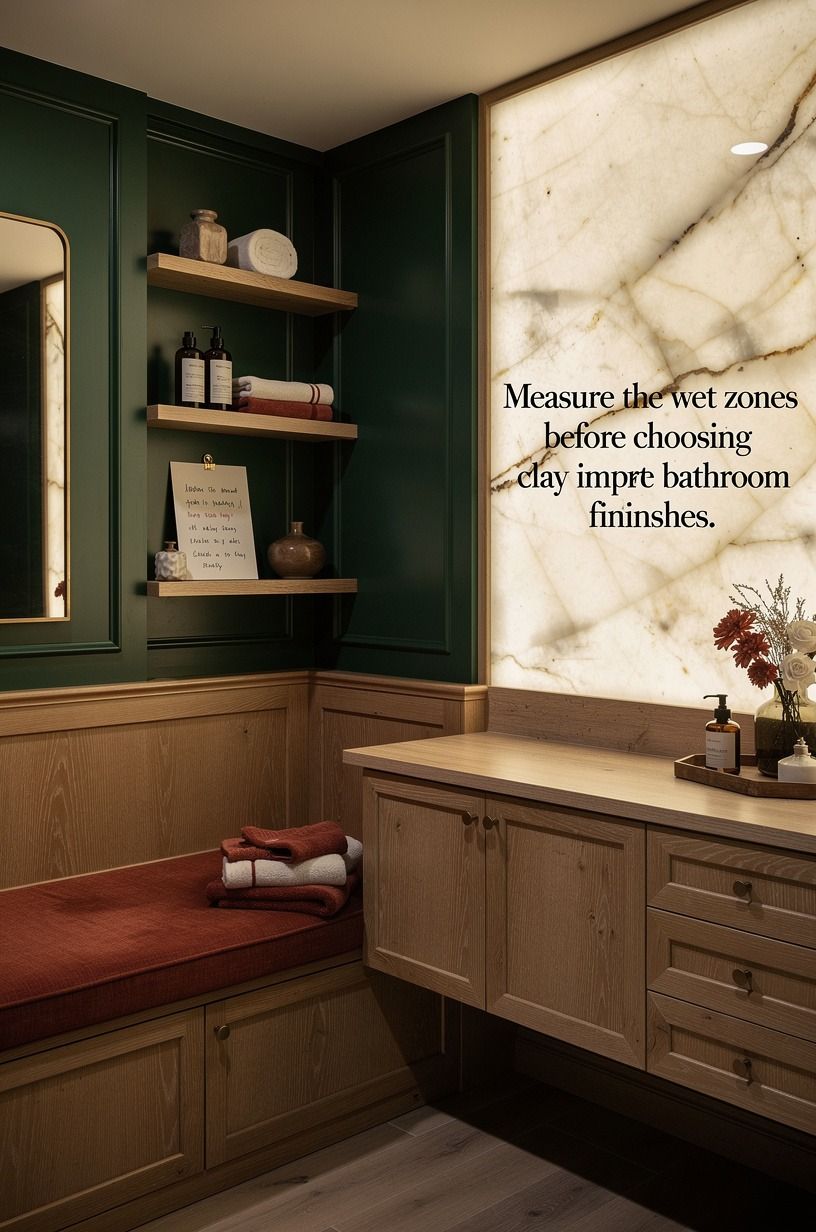
Map the splash areas first. Your vanity needs a wall finish that can handle daily water, while a shower needs a fully waterproof system installed with the right substrate and sealers. A comfortable shower starts at 36x36 in, and you’ll regret squeezing in a dramatic finish if your elbows keep hitting the wall.
Keep your tadelakt-like look outside the direct spray zone if you’re uncertain about maintenance. A backlit translucent onyx detail can bring forest green, rust, and natural oak together outside the hardest-working wet areas.
But don’t let technical caution turn your bathroom into a showroom. The slightly irregular surface is the point.
3Anchor your palette with the Desert Bowl Rule
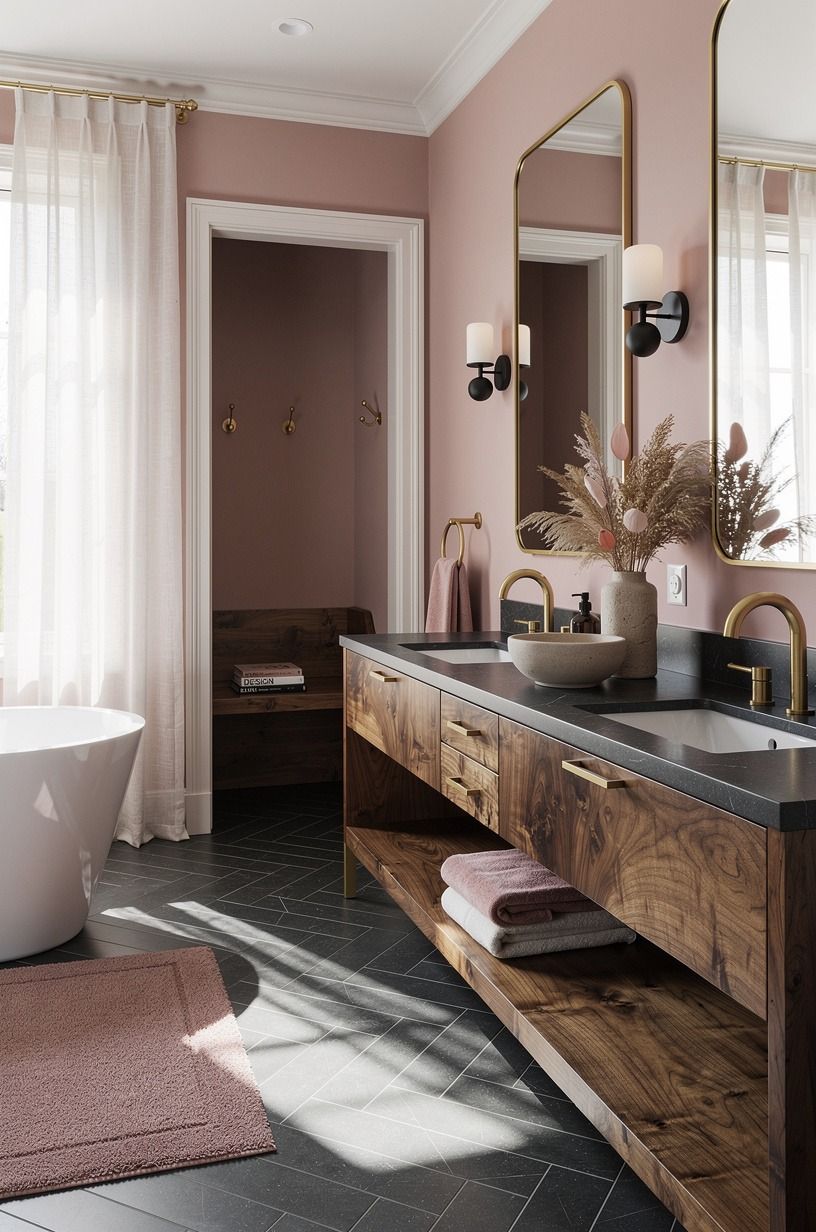
Pick three colors only: dusty rose, charcoal, and brass.
4Choose zellige over flat subway tile for the shower
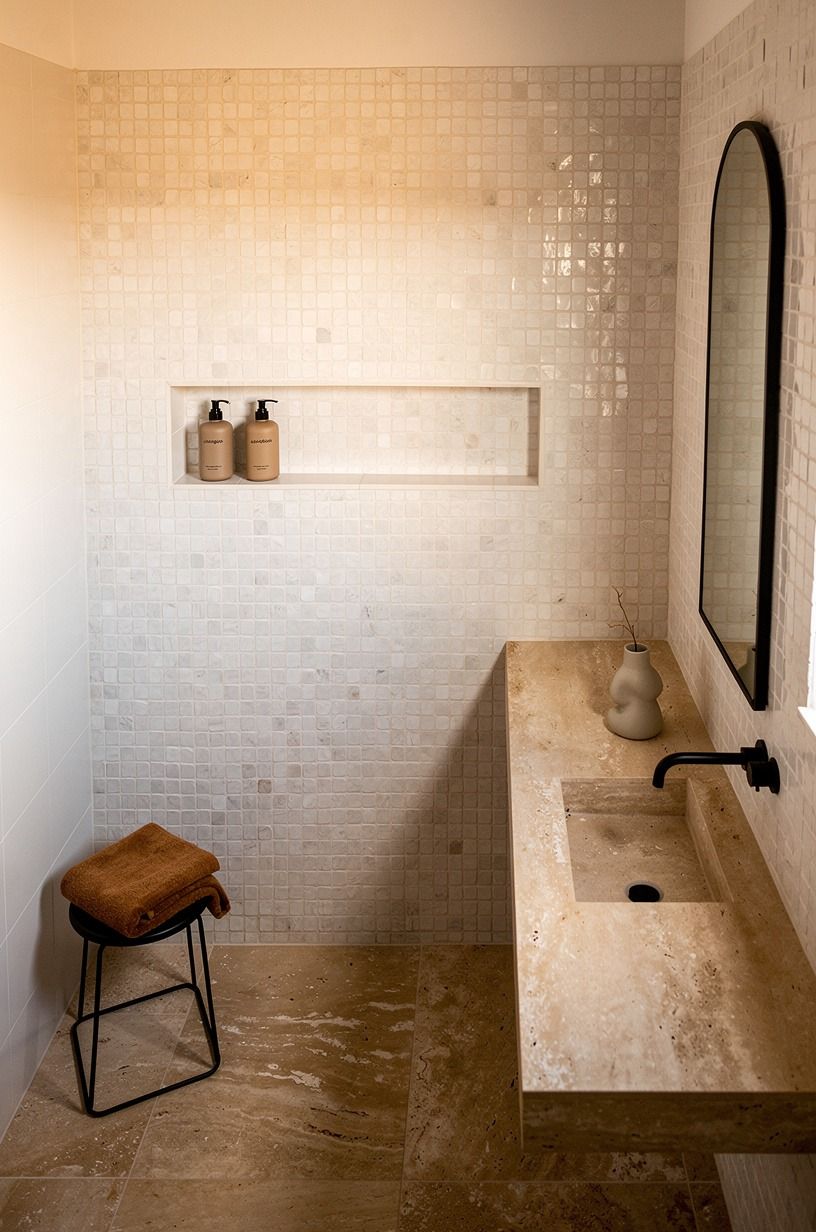
Flat subway tile is cheap and tidy, but it can make a tadelakt bathroom feel like two unrelated projects. Choose zellige where you need a durable wet-wall surface, especially in warm white or camel, then use warm travertine for a quieter adjoining surface. Each tile catches light differently, which gives your shower an organic shimmer without adding another loud color.
Typical zellige tile costs $15-$35 per sq ft, while subway tile generally runs $2-$10 per sq ft. Your budget will notice the difference, so use zellige on one shower wall and a quieter tile elsewhere if needed. These zellige tile bathroom ideas for handmade glossy character show why the imperfect glaze earns its keep.
5Build the Two-Wood Rule around your vanity
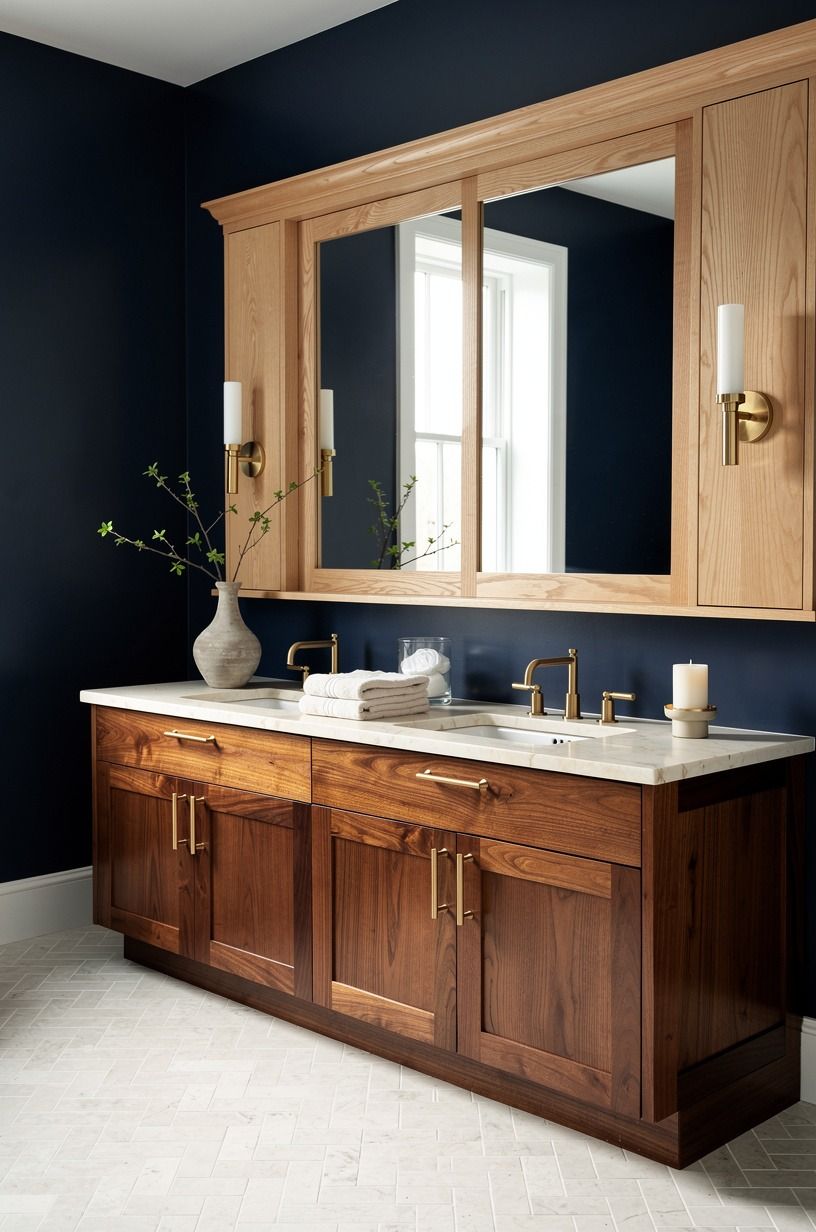
Use only two wood tones: one dominant vanity finish and one smaller accent in a stool, mirror frame, or shelf. More than that, and your artisan bathroom starts to look like a salvage yard.
I made this mistake with walnut, oak, and teak in one tiny room. It wasn’t layered.
It was confused.
A midnight-blue floating vanity feels grounded against clay plaster, especially with a rounded front edge and unlacquered brass that develops a soft patina. Keep the second wood lighter or darker enough to be deliberate.
Choose ivory storage nearby, but don’t pair it with orange-stained pine. Your woods should feel related, not identical.
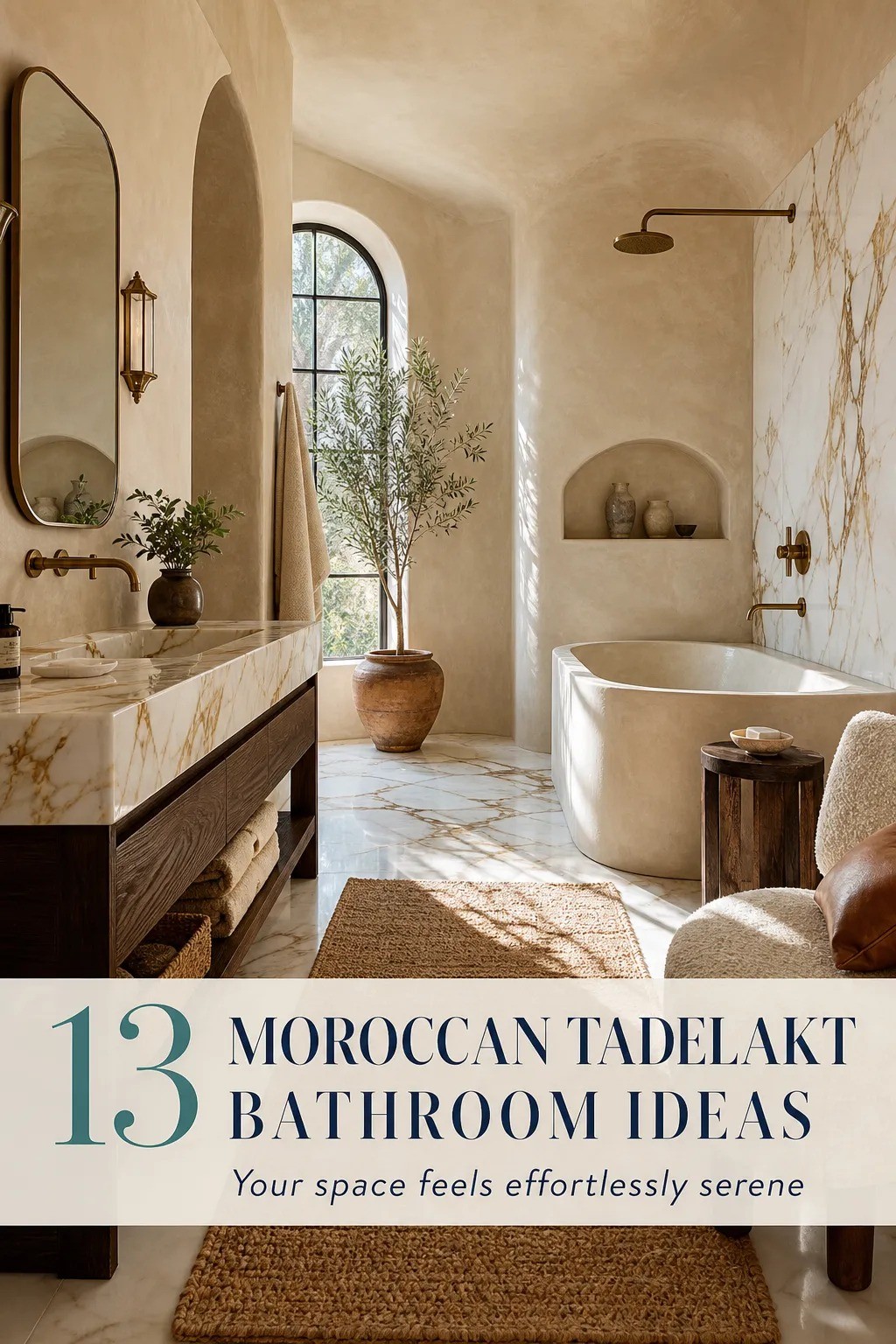
6Set the vanity at a height your body will like
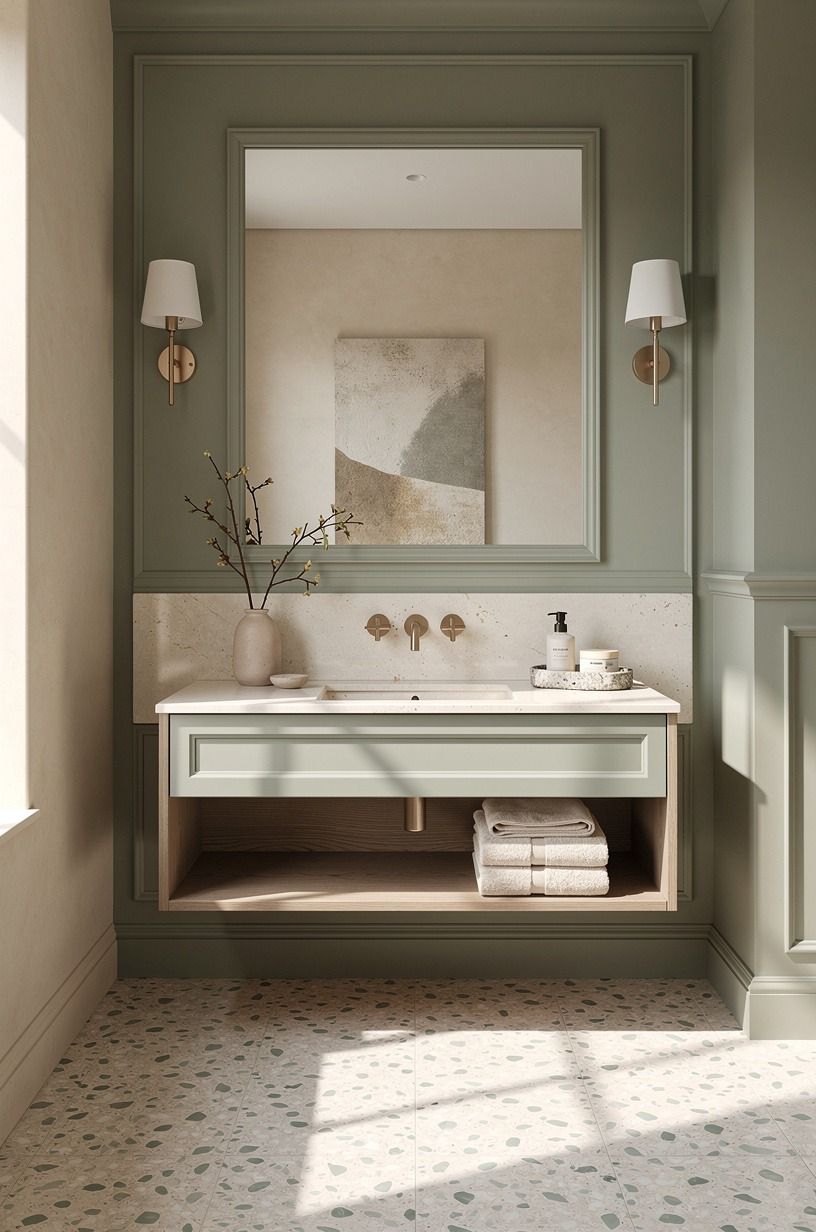
A vanity height of 32-36 in gives most adults a comfortable daily setup, and it matters more than a fashionable basin. You’ll feel the wrong height every morning while brushing your teeth. A low, furniture-like vanity looks graceful, but don’t copy it blindly if your household needs the upper end of that range.
Choose a soft sage cabinet color with warm cream walls and natural wood nearby. An oversized-chip terrazzo counter brings in texture without making the room feel fussy. Typical faucet costs run $120-$450, so your money goes farther than replacing plumbing wholesale.
7Hang a Three-Height Light Stack
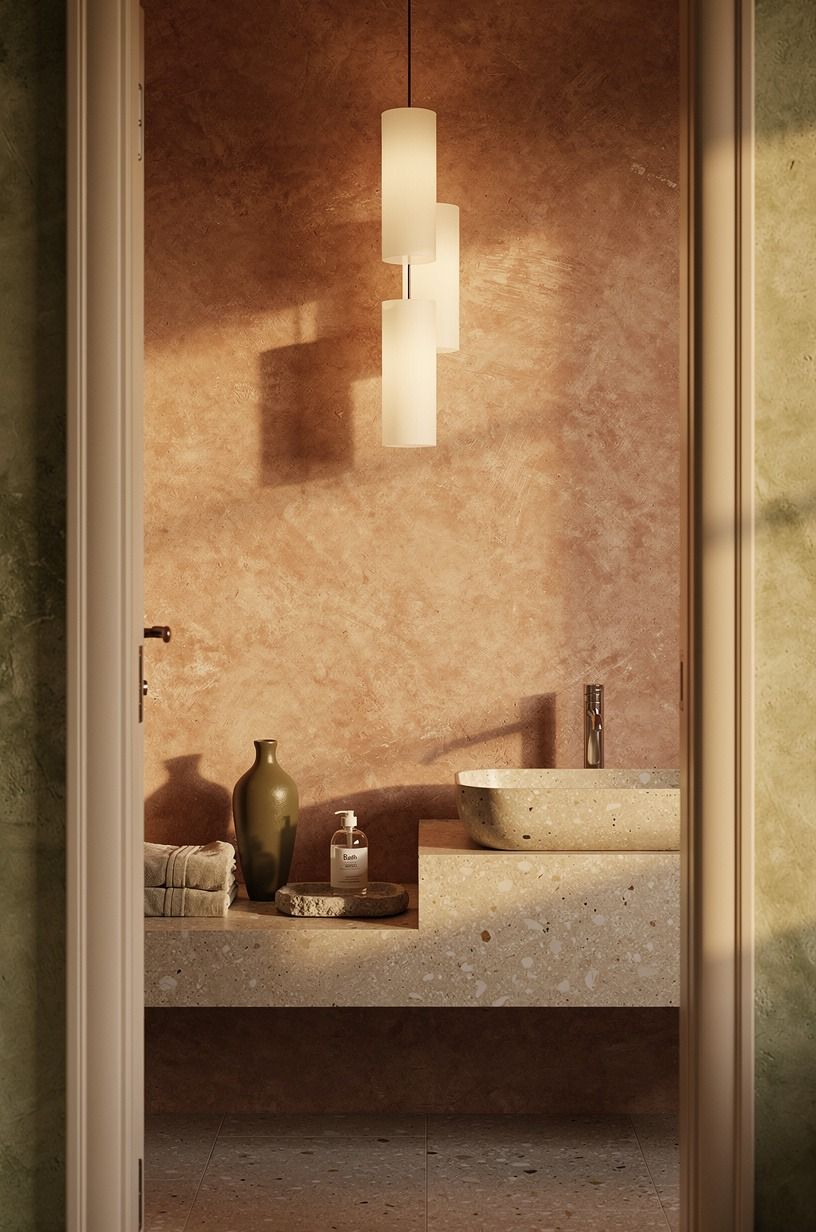
Give your face light at three heights: ceiling, mirror level, and low ambient glow. That’s the Three-Height Light Stack, and it’s what stops a plaster bathroom from becoming a cave after sunset. You don’t need a chandelier.
You need light that lands where you stand.
Put a small ceiling fixture overhead, then flank the mirror with sconces at eye level. Hand-applied Venetian plaster in terracotta, stone, and olive gives that light something warm to move across.
A tiny lamp on a shelf or a dimmable wall light near the tub adds an intimate pool of amber near the floor. And yes, a bathroom lamp sounds slightly absurd until you try it. Your evening bath suddenly feels far more relaxing!
For more warm material pairings, borrow ideas from this organic modern tadelakt bathroom guide. Skip cool-white bulbs. They make every clay finish look gray and tired.
8Frame the mirror with metal that can age
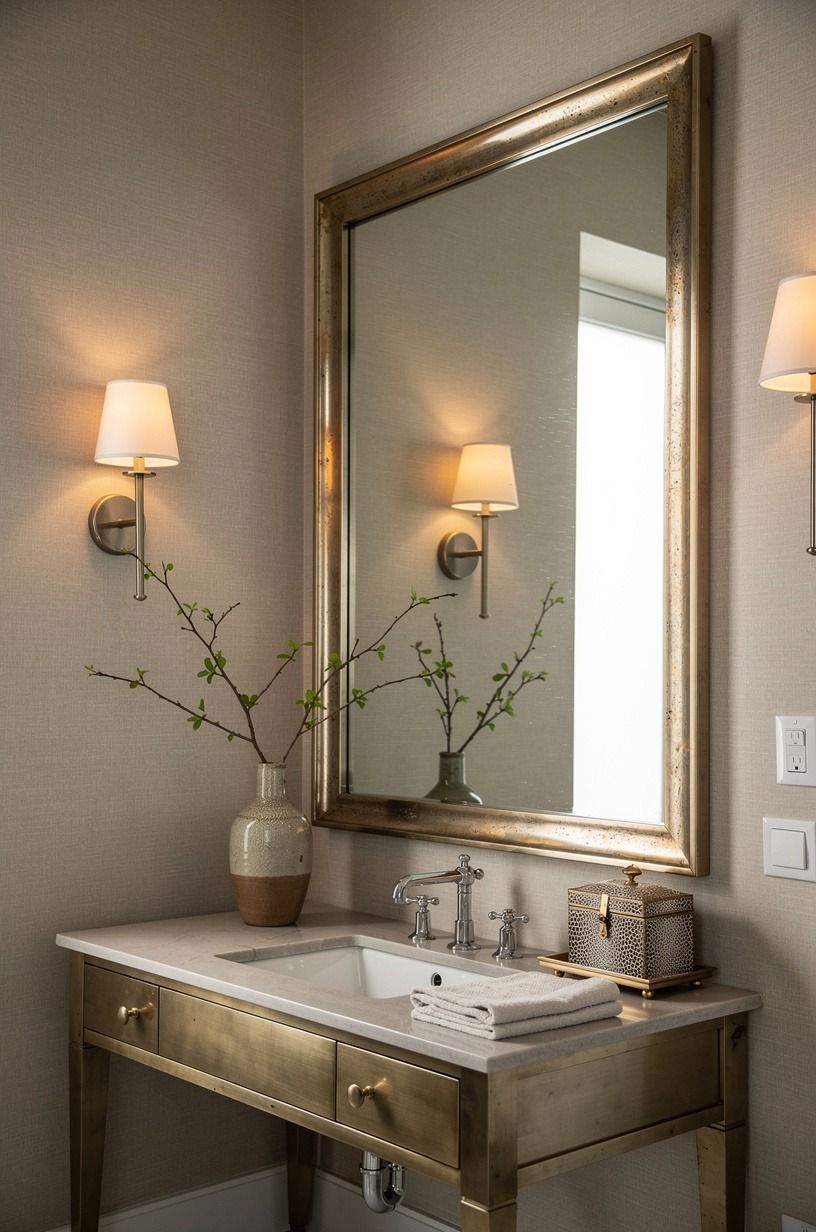
Choose unlacquered brass, aged bronze, or dark iron for your mirror frame, then repeat that finish only once or twice. You’re after a collected feeling, not a matching hardware set from a catalog. Unlacquered brass developing soft patina is my first choice because fingerprints and steam make it better, not worse.
A softly arched mirror with a small shagreen detail gives the wall a Moroccan reference without leaning into costume. But avoid a heavily carved frame if you already have zellige and tadelakt competing nearby.
Your room needs breathing room. The plaster is already doing plenty, and that soft variation is what keeps the space welcoming.
9Layer textiles with the Bare-Foot Landing method
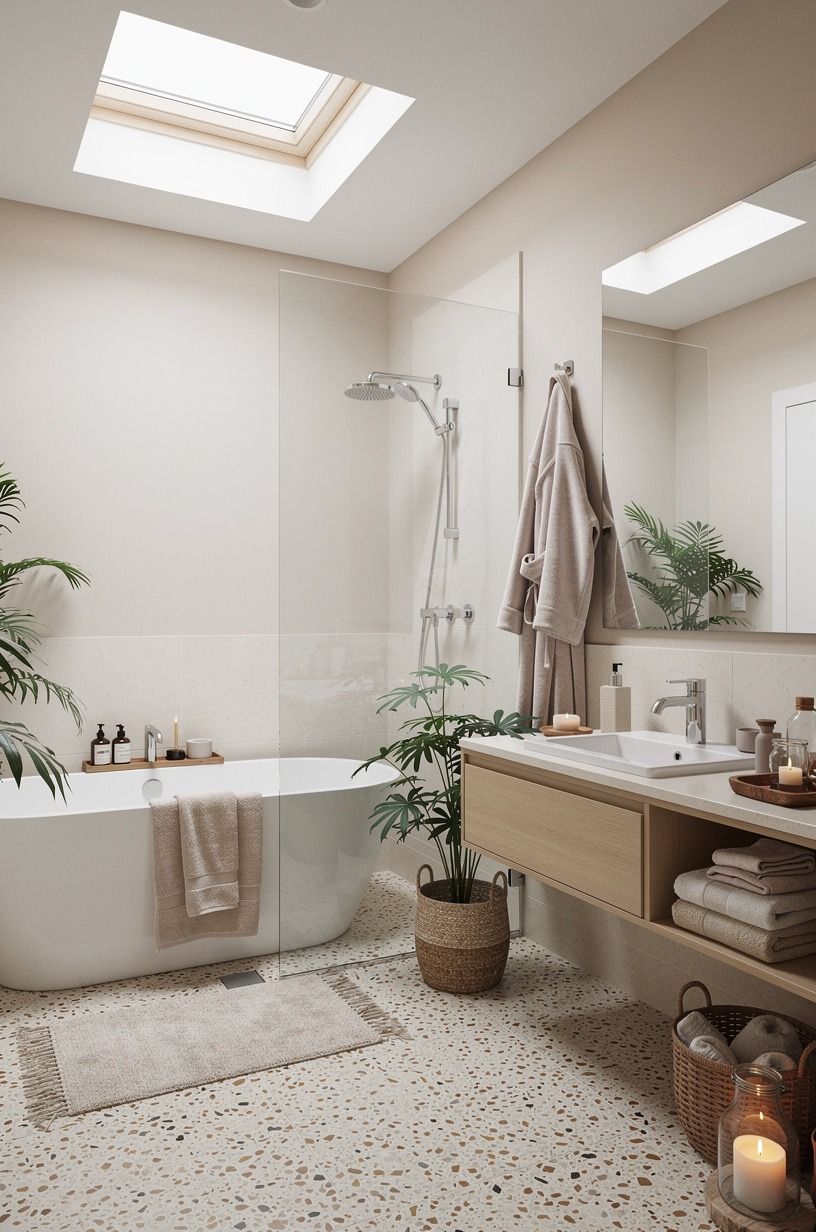
Use textiles where your body meets the room: underfoot, at the sink, and within arm’s reach after the shower. The Bare-Foot Landing method is simple, but it changes the whole experience. A cold floor can undo every warm choice you made above it.
Start with a 600gsm Turkish cotton bath mat in plum or soft grey, then hang two Belgian flax linen towels instead of a crowded tower of mismatched colors. You’ll want your towels to look a little rumpled.
Too crisp and coordinated, and the room loses its gentle, lived-in pull. A woven runner works beside a 60x30 in standard tub if you leave clear walking space.
10Float storage instead of crowding the floor
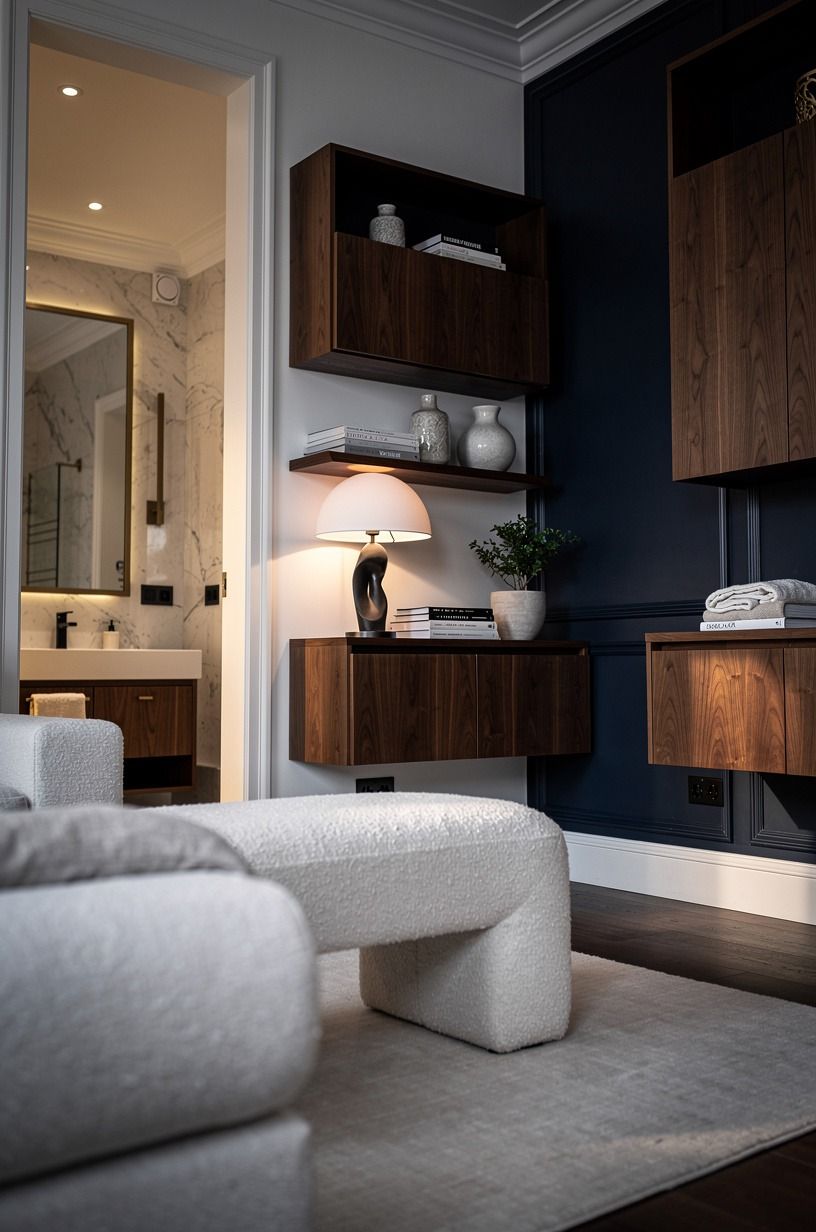
Wall-mounted storage keeps a small bathroom airy, especially when the floor tile has character worth seeing. A small organic bouclé stool can soften the navy, white, and walnut scheme without crowding that clear floor space.
11Mix limestone with clay instead of more marble
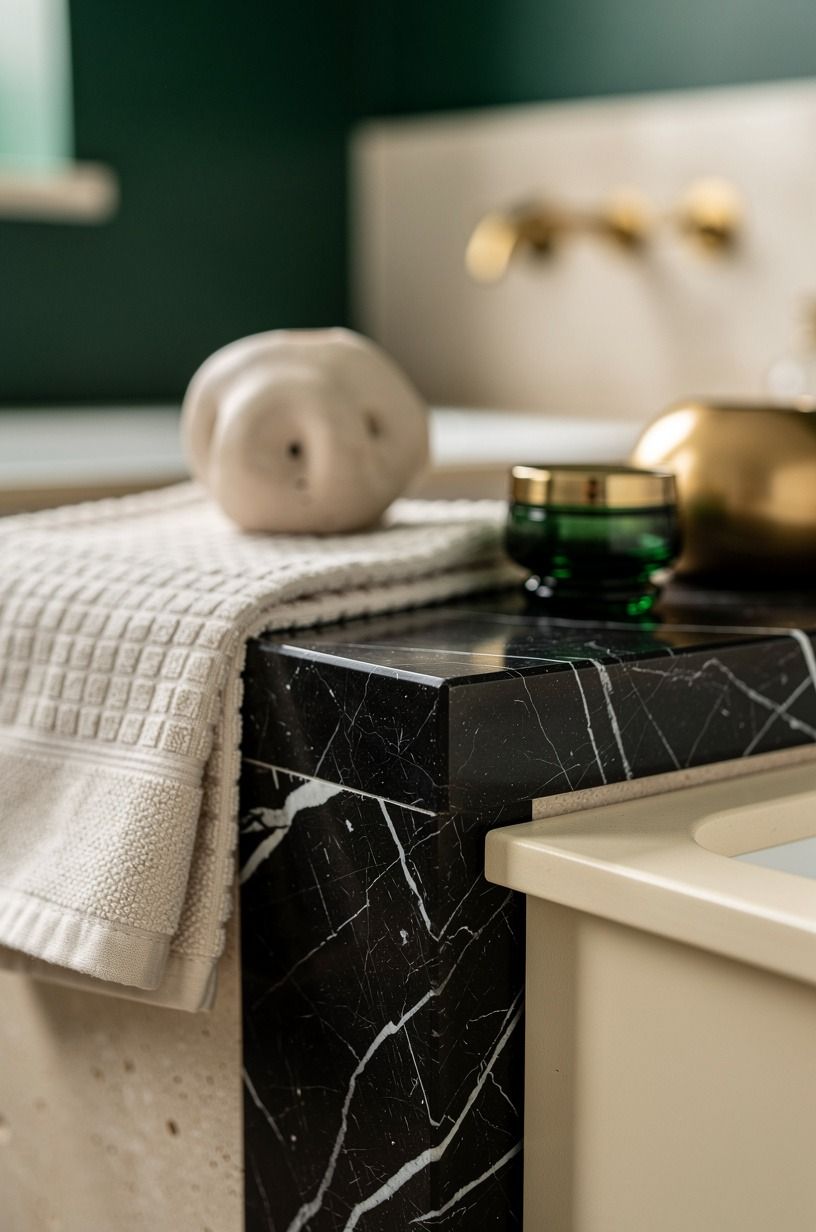
Pair tadelakt with honed limestone, travertine, or a pale stone-look counter rather than glossy marble everywhere. Marble can be lovely, sure, but a polished white slab often feels too formal beside hand-troweled plaster. A small Nero Marquina black marble with white veins detail has a darker, more deliberate presence than a sprawling counter.
A marble top typically costs $50-$100 per sq ft, so it’s worth asking whether the look belongs in your budget. I’d spend on a smaller limestone ledge or soap dish before a huge dramatic counter. Read why limestone is the warmest way to do a neutral bathroom if you’re torn.
Your bathroom should feel peaceful, not precious.
12Paint the ceiling before adding another wall color
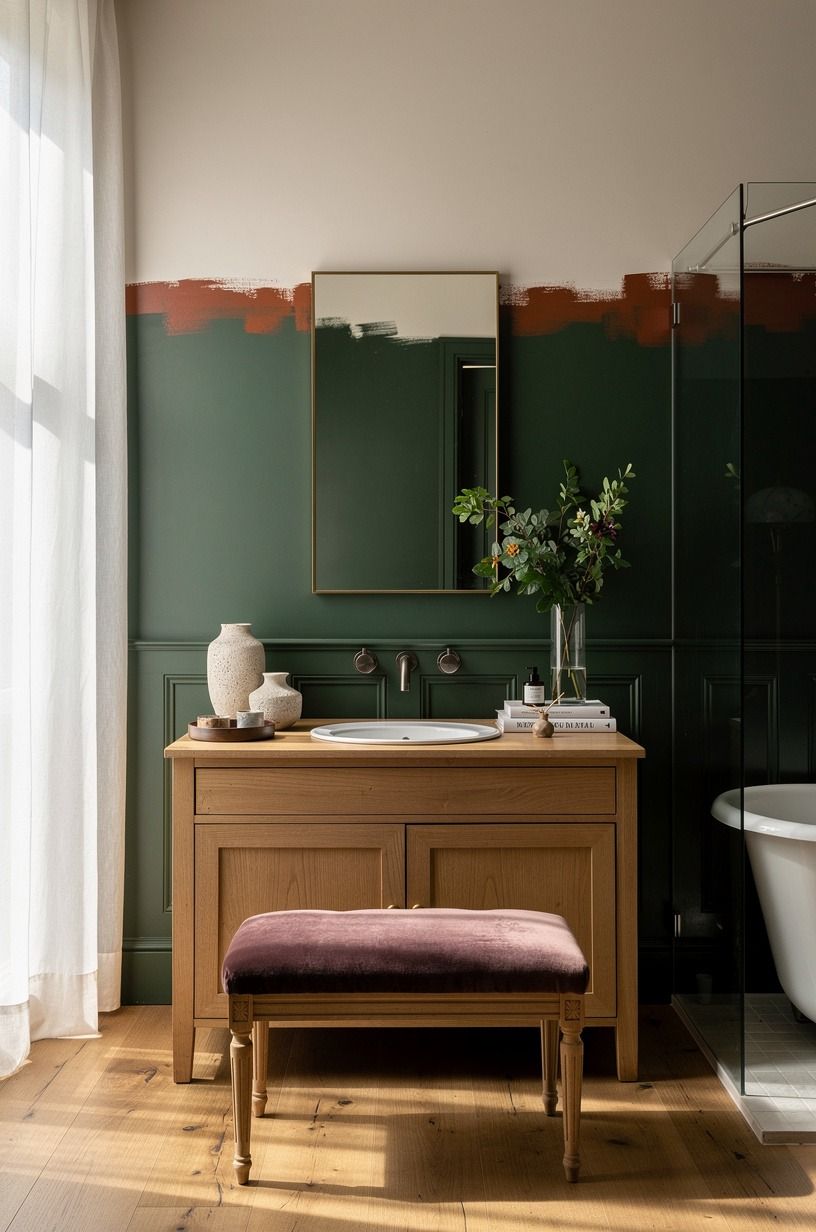
Paint the ceiling in a soft mineral neutral when your walls are light, or use the same tadelakt tone to blur the room’s hard corners. This works especially well in a small bath with a plain white ceiling that’s pulling attention upward. But don’t choose bright white by default.
It can cut right through an earthy scheme.
Farrow & Ball Studio Green gives a forest-green ceiling real depth beside rust accents, natural oak, and deep-pile mohair velvet. Keep your trim in the same family. The ceiling doesn’t have to announce itself, but your eye will notice when it feels disconnected.
13Finish the room with objects that earn their place
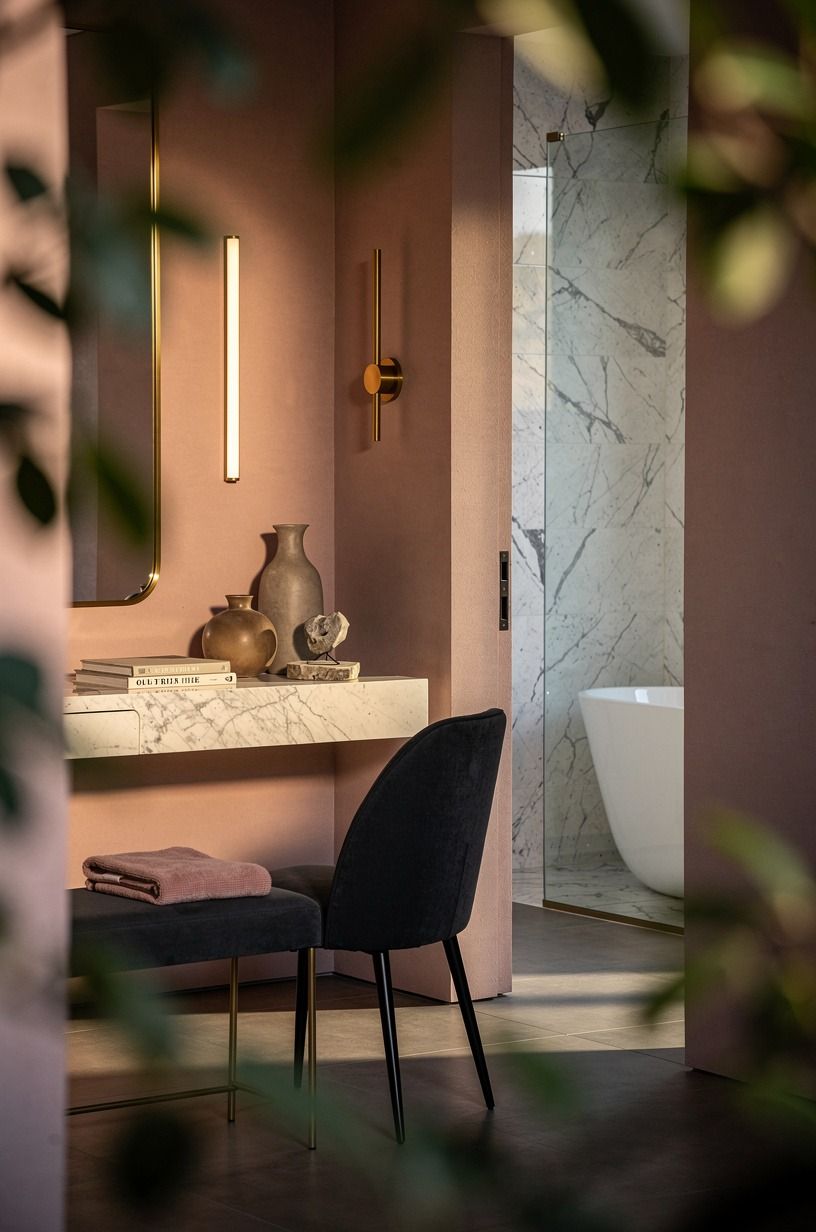
Bring in three useful objects, no more: a hand-thrown soap dish, a small lidded storage jar, and a low wooden stool or bath tray. Your final layer should look charming because it’s useful, not because you bought every object in the photo. A little restraint makes the texture feel luxurious.
A small Carrara marble with subtle grey veining dish beside a brass accessory is enough against dusty rose and charcoal. But skip fake eucalyptus and overly polished trays.
They tend to read staged against real plaster. Want to understand the tile language before selecting a piece? This explainer on what zellige tile is and why handmade variation matters will help your choices feel intentional.
What a Moroccan tadelakt bathroom usually costs
You can create the look at several price levels, but the smart move is deciding where your room needs real performance and where paint, textiles, and lighting can carry the atmosphere. Don’t put every dollar into a wall finish while leaving a bad vanity light above your mirror. Your face will tell you every day.
For a budget route, keep existing plumbing and use paint, an arched mirror, and Target Threshold cotton towels. Mid-range money belongs in a new vanity and better lighting.
High-end work earns its cost only if your shower layout or waterproofing needs help. And if your walls are sound, don’t demolish them just to prove you renovated!
Why this earthy look feels right now
I think tadelakt is back because people are tired of bathrooms that look like short-term rentals. The all-white, sharp-edged formula photographs neatly, but it doesn’t always feel good at 7 a.m. when you’re barefoot, half awake, and looking for a towel.
Clay walls absorb the harshness. They make a practical room feel more human.
There’s a useful lesson in that. You don’t need a literal Moroccan copy to make a room feel authentic.
You need honest materials, a restrained palette, and a few surfaces that change as you use them. That’s why I’d choose plaster, zellige, wood, and brass over a dozen decorative accessories every time.
My rule for getting the look without making it theatrical
I’ve gone back and forth on how much “Moroccan” a bathroom should announce. The answer, for me, is less than Pinterest often suggests.
A room gets awkward fast when every surface asks for attention: patterned floor tile, carved mirror, ornate sconces, a painted cabinet, brass everywhere, tassels on the towels. You don’t walk into it and relax. You walk into a theme.
What I’ve learned is that tadelakt works best as the room’s quiet authority. Your plaster wall has depth already.
It looks different near a window than it does under a sconce, and the fine trowel marks give it a gentle, almost skin-like variation. Let that be the expressive piece.
Then choose one handmade companion, usually zellige, not three.
I’d also put money into touch before display. A good towel, a wood stool with a softened edge, a faucet that feels solid in your hand.
Those choices don’t scream for attention in a photo, but you notice them every single day. The room becomes comforting because it serves you well. That’s the part that lasts.
And don’t chase perfection. Tadelakt has uneven color. Zellige has crooked edges. Brass spots.
A linen towel wrinkles. Good.
Your bathroom should show that people use it, because a room with no evidence of life can feel strangely lonely. The goal isn’t a museum bath.
It’s a serene place where you can close the door and breathe.
A Few Things Worth Answering
What is the best Moroccan tadelakt bathroom idea for a small bathroom?
Start with one tadelakt-style vanity wall and an arched mirror. A single continuous finish makes your small bathroom feel calmer than many tiny accents. Add an IKEA TONSTAD storage piece nearby only if it doesn’t steal your 21 in toilet clearance.
Where can I buy Moroccan tadelakt bathroom pieces on a budget?
Look first at IKEA, Target Threshold, and Wayfair for towels, mirrors, and simple storage. Second-hand wood adds more character than new plastic decor.
Facebook Marketplace. A thrifted stool.
One old brass dish with genuine wear.
How much does a Moroccan tadelakt bathroom makeover cost?
A surface-level makeover can run about $200-$1,200, while a larger renovation often reaches $3,000-$9,000. Paint, better lighting, and textiles deliver the least expensive visible change. Keeping your toilet, tub, and plumbing in place protects your budget.
Can I create a Moroccan tadelakt bathroom on a budget?
Yes, and you don’t need full plaster walls to get the mood. Warm paint and tactile textiles do a lot of the visual work. Existing vanity repainted in Chestertown Buff.
Removable mirror swap. Turkish cotton mat.
One aged-brass accessory.
Is a Moroccan tadelakt bathroom worth it in a small space?
Yes, it’s especially worth it in a small bathroom because you see every finish up close. Texture makes a compact room feel intentional instead of cramped. Keep the floor visible, use a floating vanity, and avoid oversized furniture that interrupts circulation.
Is a Moroccan tadelakt bathroom a good idea for a rental?
Yes, if you make your changes removable and leave waterproof construction alone. You can bring in warmth without risking your deposit. Peel-and-stick mirror frame.
Tension-rod linen curtain. Removable wall color where permitted. Explore microcement’s role in an organic modern bathroom before committing to a permanent finish.
Where I’d Start First
If I had to pick one step, I’d start with the tadelakt-style vanity wall. You can’t fake the soft, shifting surface with more accessories.
It makes brass, oak, and simple towels look chosen. Pin the wall idea for later and let the rest of your bathroom follow it.