
 by
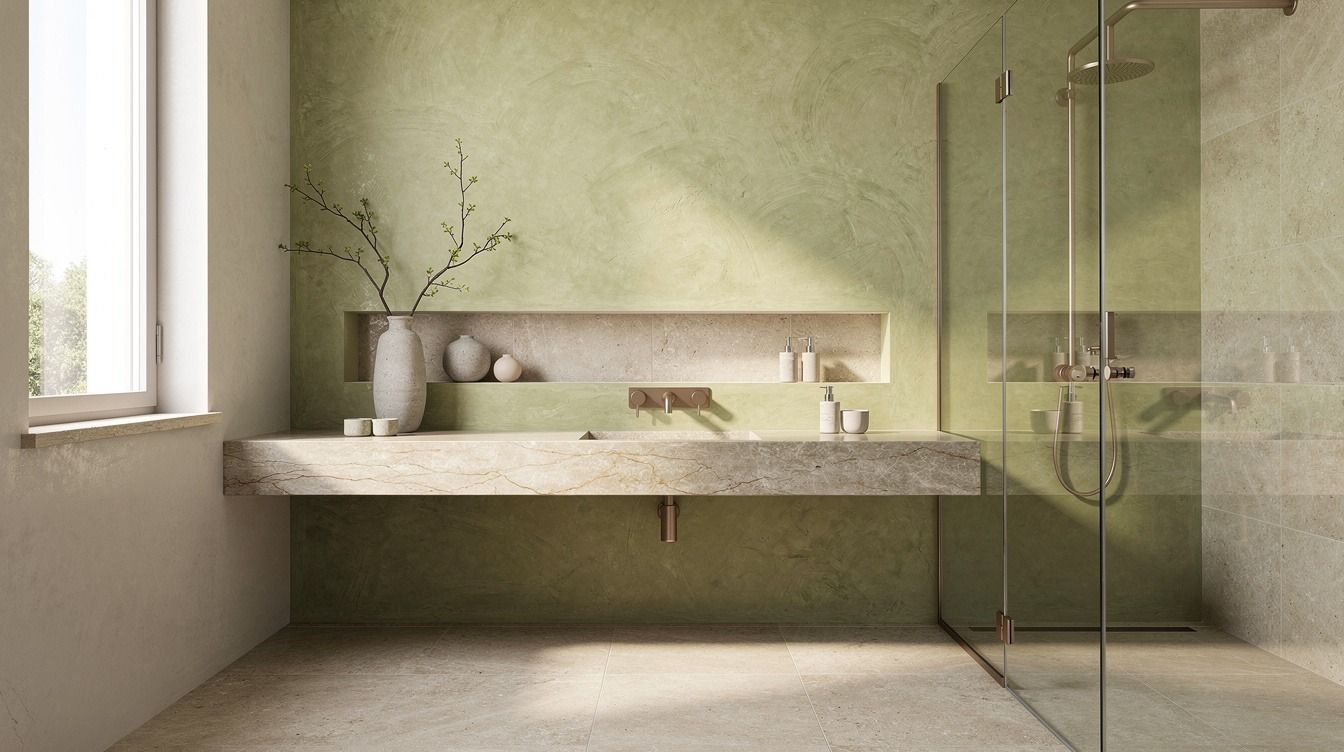
by Venetian plaster makes a bathroom look expensive because it gives flat walls mineral depth without adding visual clutter. I used to think the finish belonged only in grand old houses. It doesn’t. In a small bath, its soft movement can do more than another row of tile ever will.
- Layer Soft Lime Tones for a Luminous Wall
- Skip Cold Gray for a Richer Neutral Bathroom
- Build the Two-Wood Rule Around the Vanity
- Frame a Marble Wall Interior With Quiet Fixtures
- Use the Three-Height Light Stack After Dark
- Paint the Ceiling in a Related Mineral Shade
- Can a Small Bathroom Handle Dark Venetian Plaster?
- Anchor a Luxury Travertine Bathroom With One Honest Surface
- Float the Mirror Instead of Adding a Busy Backsplash
- Choose Zellige Over Subway Tile Only Where Water Demands It
- Make the Hardware Develop Patina, Not Shine
- Borrow the Quiet Hotel Rule for Bathroom Design Inspiration
- Compare the Cost Before You Commit to the Finish
1Layer Soft Lime Tones for a Luminous Wall
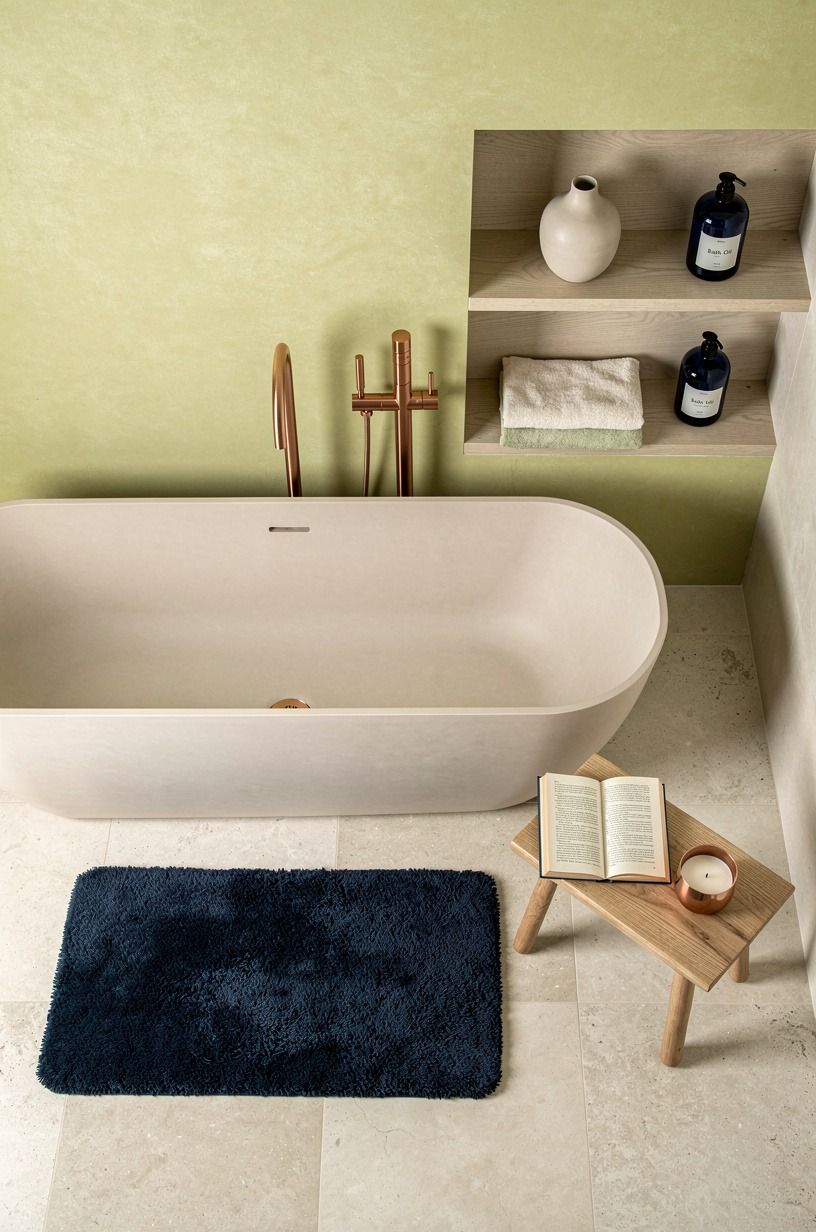
Start with a warm plaster tone, not bright white, if you want your bathroom to feel inviting rather than clinical. Benjamin Moore Chestertown Buff HC-9 has the right honeyed direction for towels, oak, and aged metal, while a deep-pile mohair velvet accent keeps the midnight blue, copper, and ivory palette from reading like ordinary paint.
I’d keep the plaster on the dry walls and let the shower tile handle the splash zone. You’ll get that calm, organic surface without pretending a decorative finish is waterproof where it isn’t.
For more tonal ideas, see these Venetian plaster bathroom ideas for soft luminous walls. Let midnight blue, copper, and ivory bring a little depth to the room.
2Skip Cold Gray for a Richer Neutral Bathroom
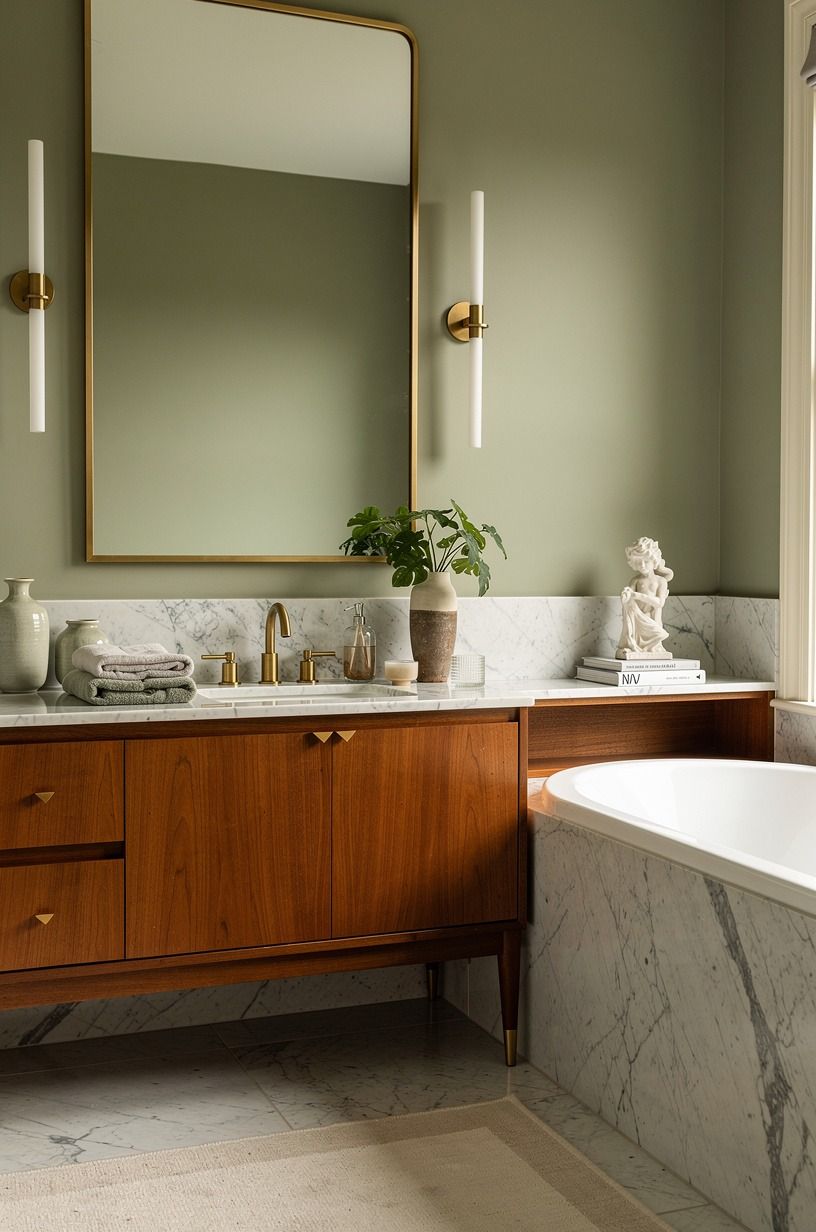
Cool gray plaster had its run. I’d skip it now, especially if your bathroom has chrome, white tile, and little natural light, because it can turn blue by breakfast.
Choose Carrara marble with subtle gray veining as your material reference instead. You’re not trying to copy stone exactly. You’re borrowing its sage-green, warm-cream, and natural-wood balance so your vanity, walls, and towels feel like they arrived in the same room on purpose.
A pale neutral plaster beside Carrara marble is much more relaxing than cold gray beside stone. And yes, your little bathroom can carry it.
3Build the Two-Wood Rule Around the Vanity
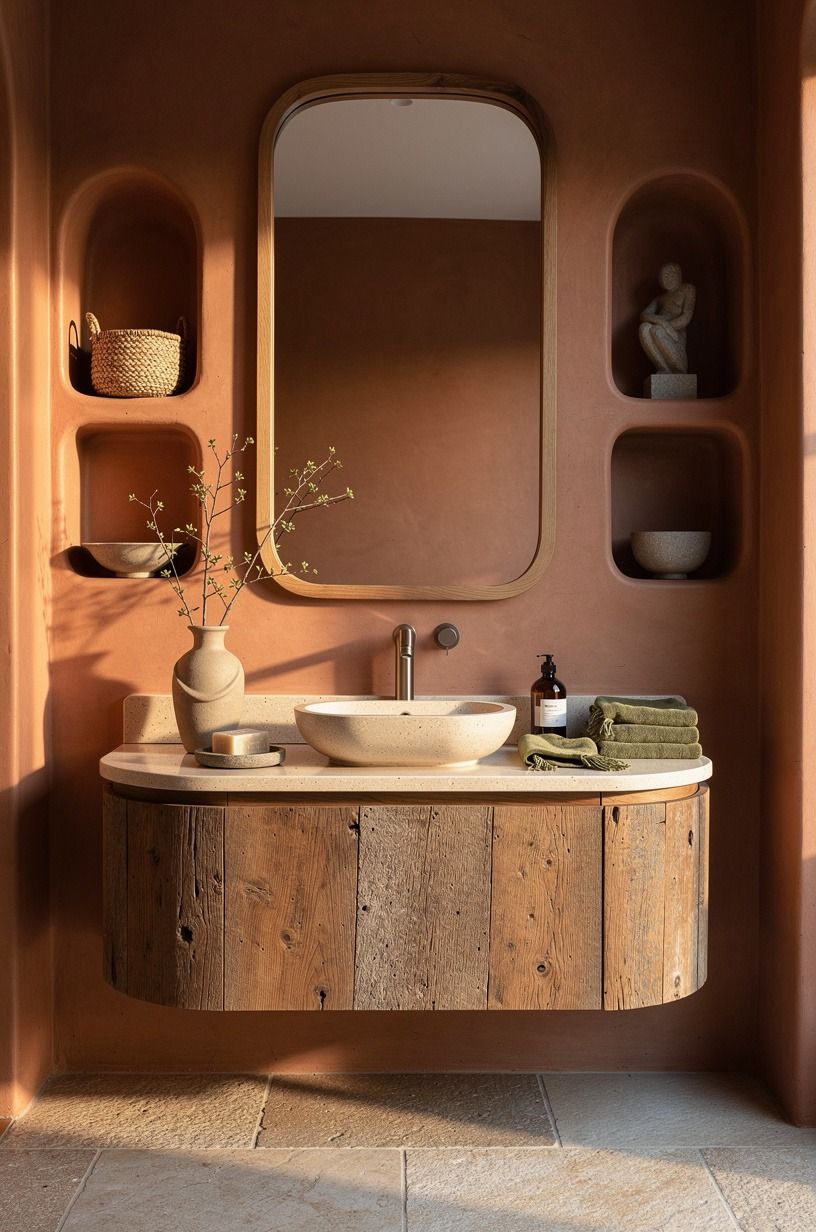
The Two-Wood Rule is simple: use one wood for the vanity and one quieter wood note somewhere else, then stop. A reclaimed weathered teak vanity plus a small olive-toned stool works because the grain changes, but the terracotta and stone warmth stays connected.
Don’t add a third wood through a bamboo blind, teak tray, and oak shelving. That’s where a refined bathroom starts looking like a clearance aisle.
You can keep your vanity at the standard 32 to 36 in height, then let the plaster wall do the expressive work above it. The contrast between weathered teak and imperfect plaster is the whole point.
4Frame a Marble Wall Interior With Quiet Fixtures
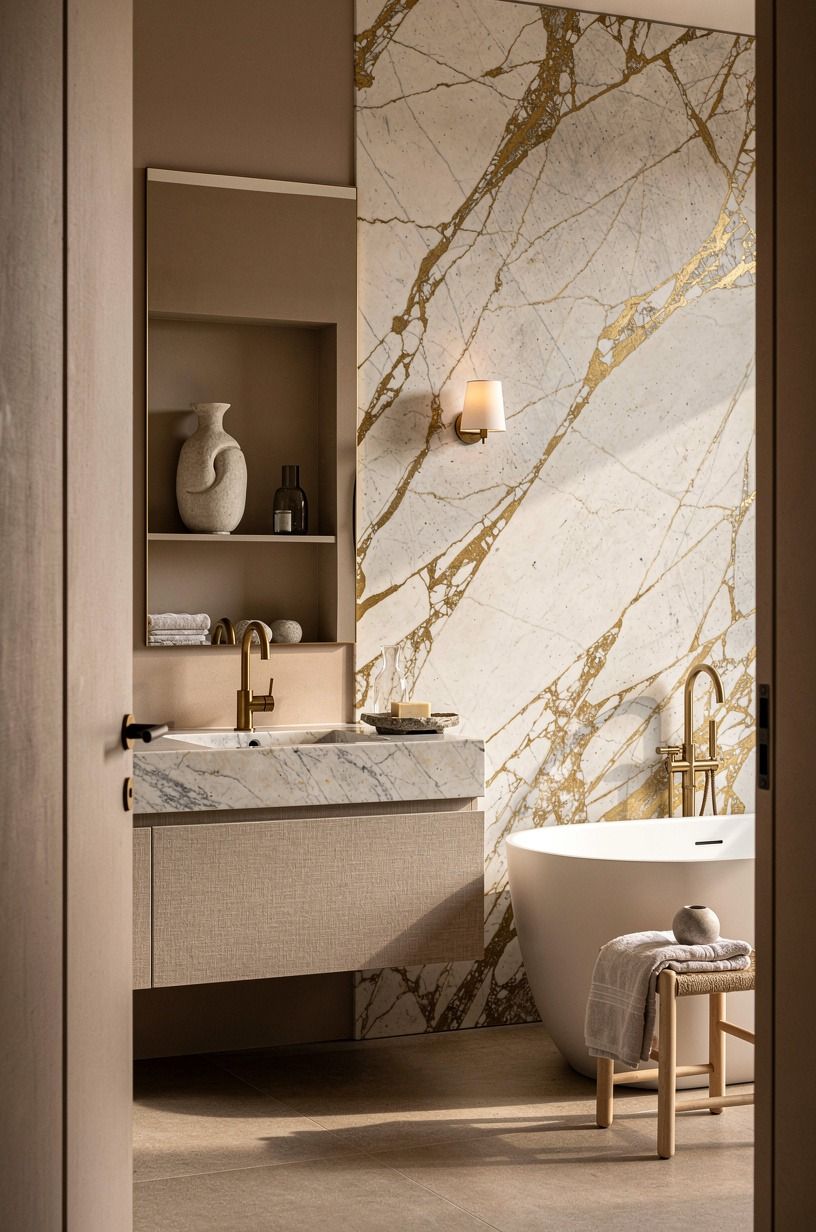
A marble wall interior can feel costly fast, but too much veining fights Venetian plaster. Keep the fixtures quiet against Calacatta marble with gold veining, then repeat clay, linen, and aged brass in the smaller choices so the room feels composed rather than busy.
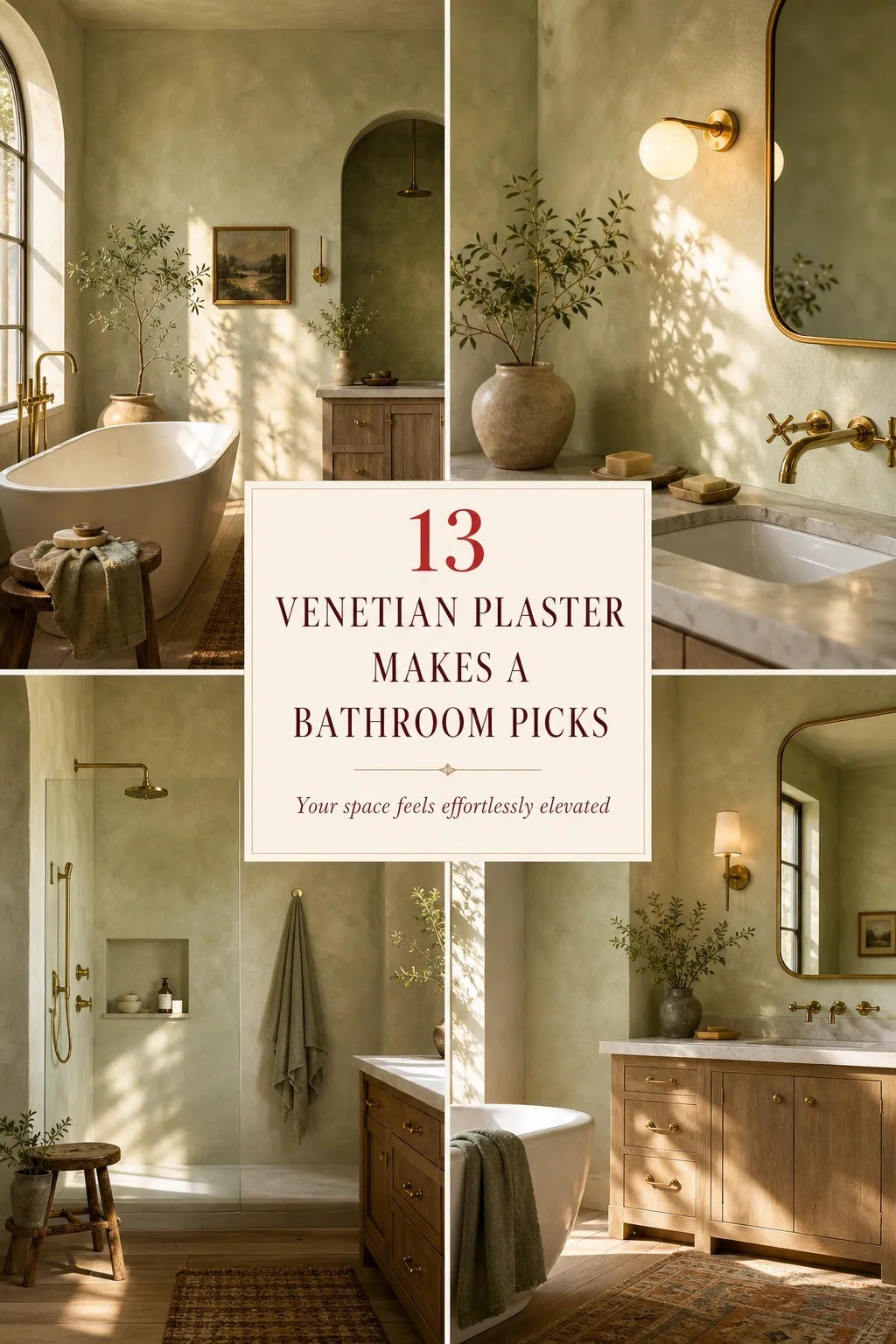
5Use the Three-Height Light Stack After Dark
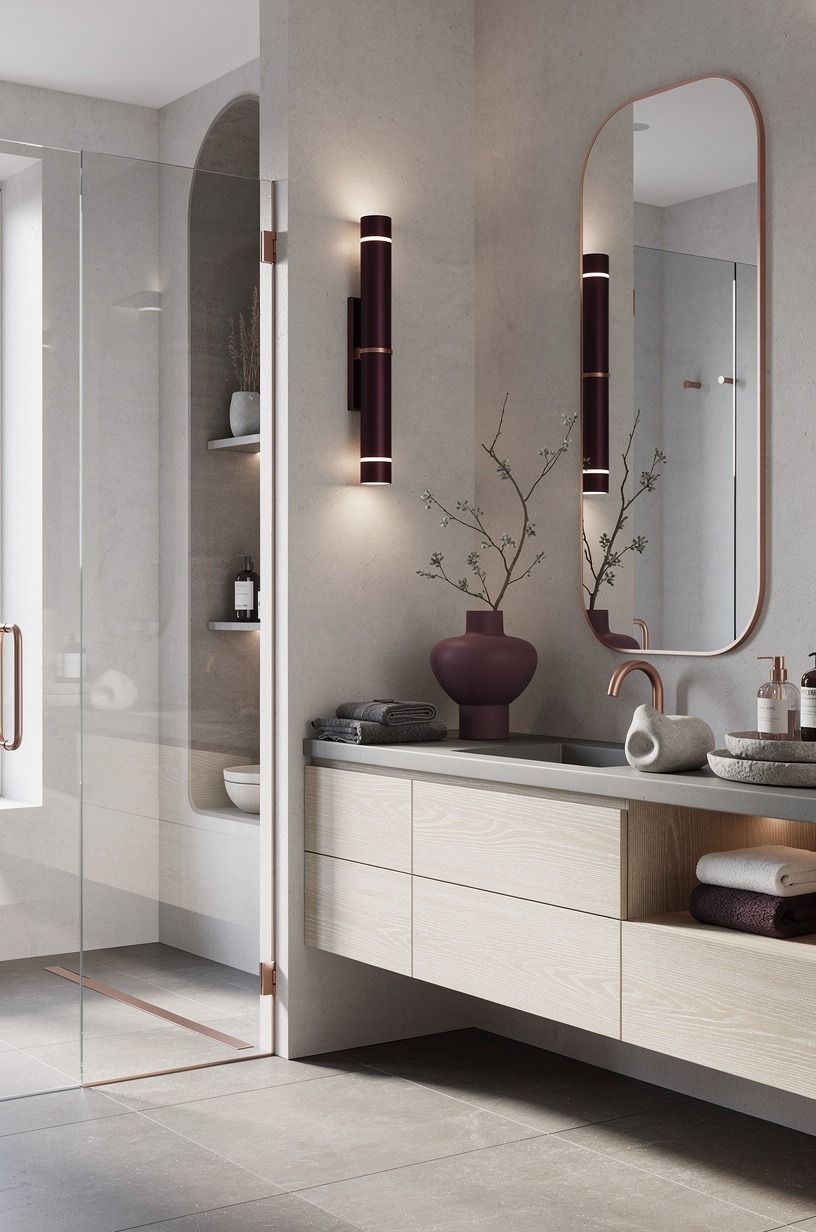
Your overhead light can’t carry the room alone. The Three-Height Light Stack means a ceiling fixture, face-level mirror lighting, and one lower pool of glow from a lamp or sconce.
Try Schoolhouse Ojai globe sconces beside the mirror, a small flush mount overhead, and a low amber lamp on a counter if you’ve got space. Cerused white oak keeps the plum, gray, and rose-gold palette from feeling too precious.
But keep bulbs warm. Blue-white light makes even luxurious finishes look like a dentist’s office. A bathroom should feel gentle at 10 p.m., not alert.
6Paint the Ceiling in a Related Mineral Shade
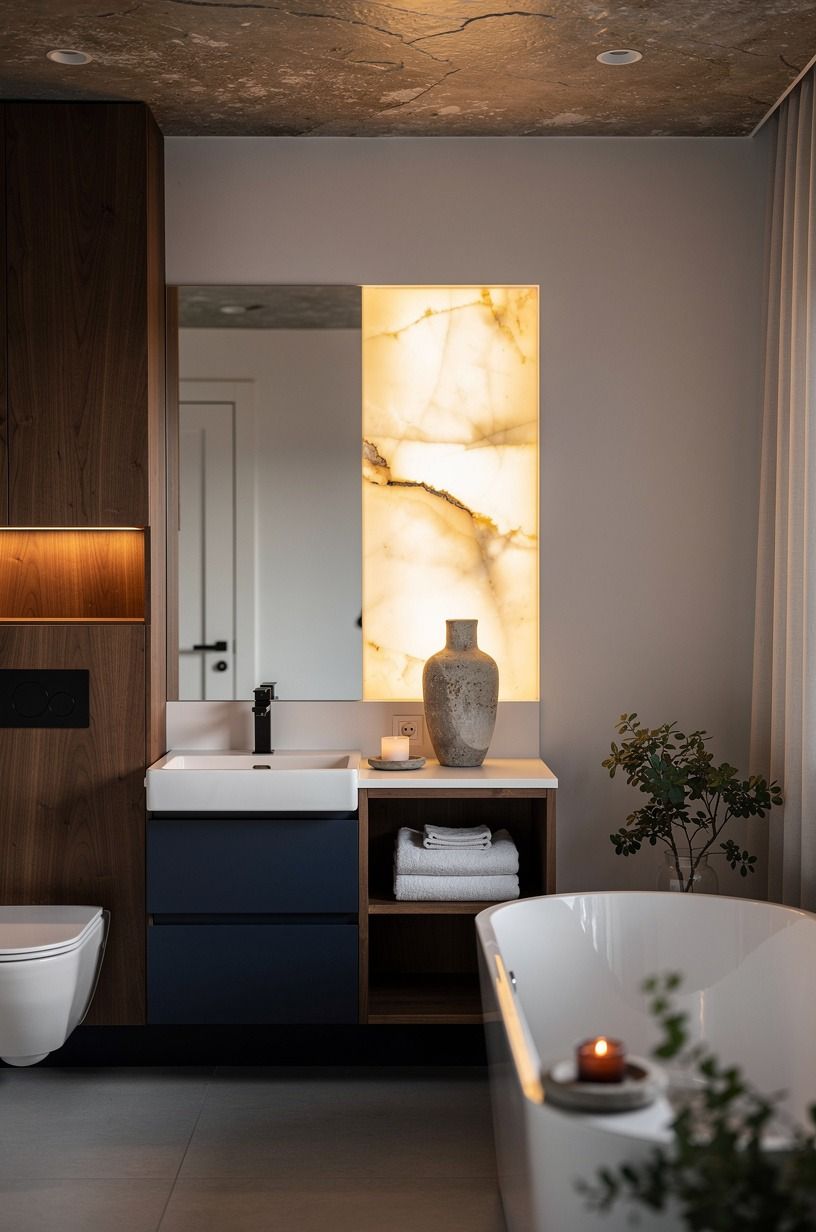
Most people leave the ceiling bright white because they’re nervous. I get it. But a related ceiling shade makes plastered walls feel taller and more intentional, particularly in a narrow bath.
Use Sherwin-Williams Sea Salt SW 6204 overhead with navy, white, and walnut below. It’s subtle enough that you won’t feel boxed in, yet the backlit translucent onyx gives your eye somewhere soft to land.
You don’t need a dramatic ceiling to make a bold choice. A whisper of color works. And if the room is windowless, this is often the better call than another white surface.
7Can a Small Bathroom Handle Dark Venetian Plaster?
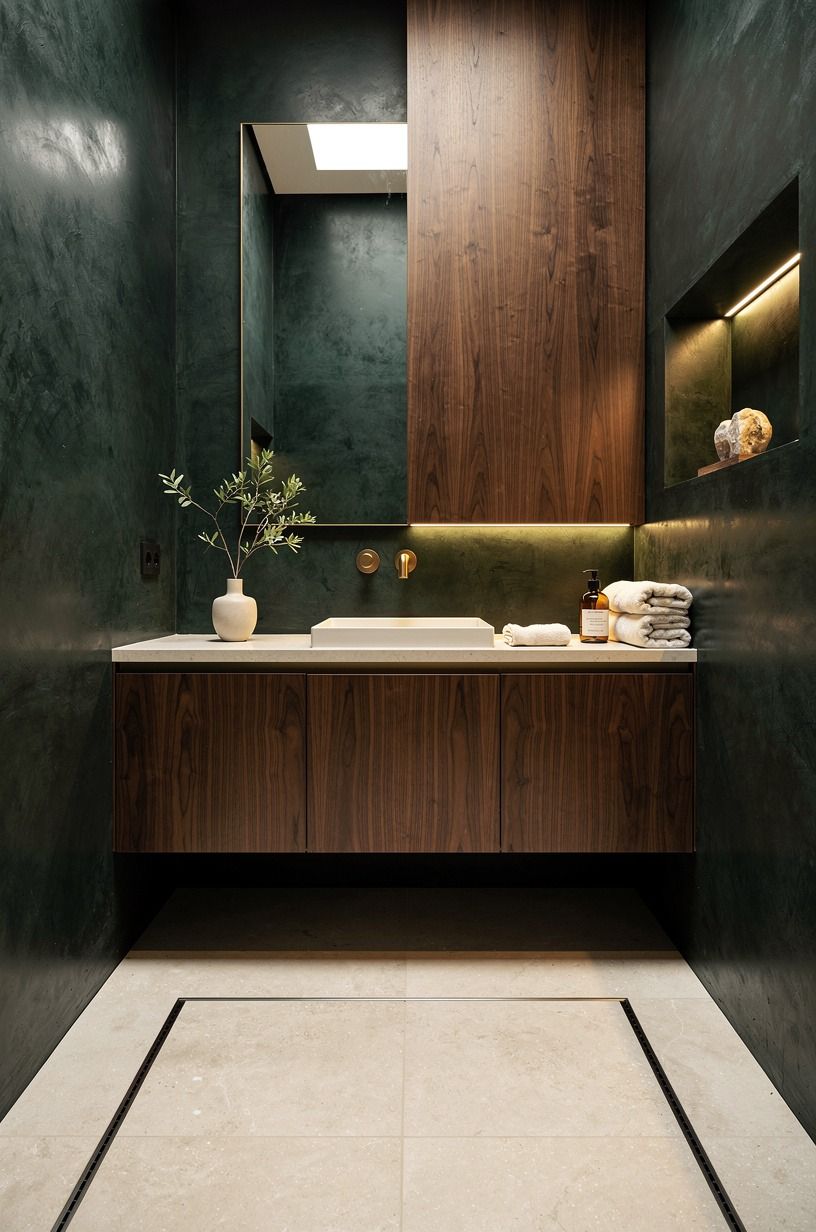
Yes, if you give the dark finish a clear boundary and enough reflective surfaces. Farrow & Ball Hague Blue No. 30 is moody on a plastered accent wall behind a vanity, especially with book-matched walnut, gold accents, and creamy tile.
You’ll want the other walls lighter, though. Four dark plaster walls in a tiny bathroom can feel theatrical in photos and heavy in real life.
A 36 x 36 in shower is already visually compact, so don’t make every plane compete. Let the deep wall sit outside the shower, where its texture can feel dramatic rather than cramped.
8Anchor a Luxury Travertine Bathroom With One Honest Surface
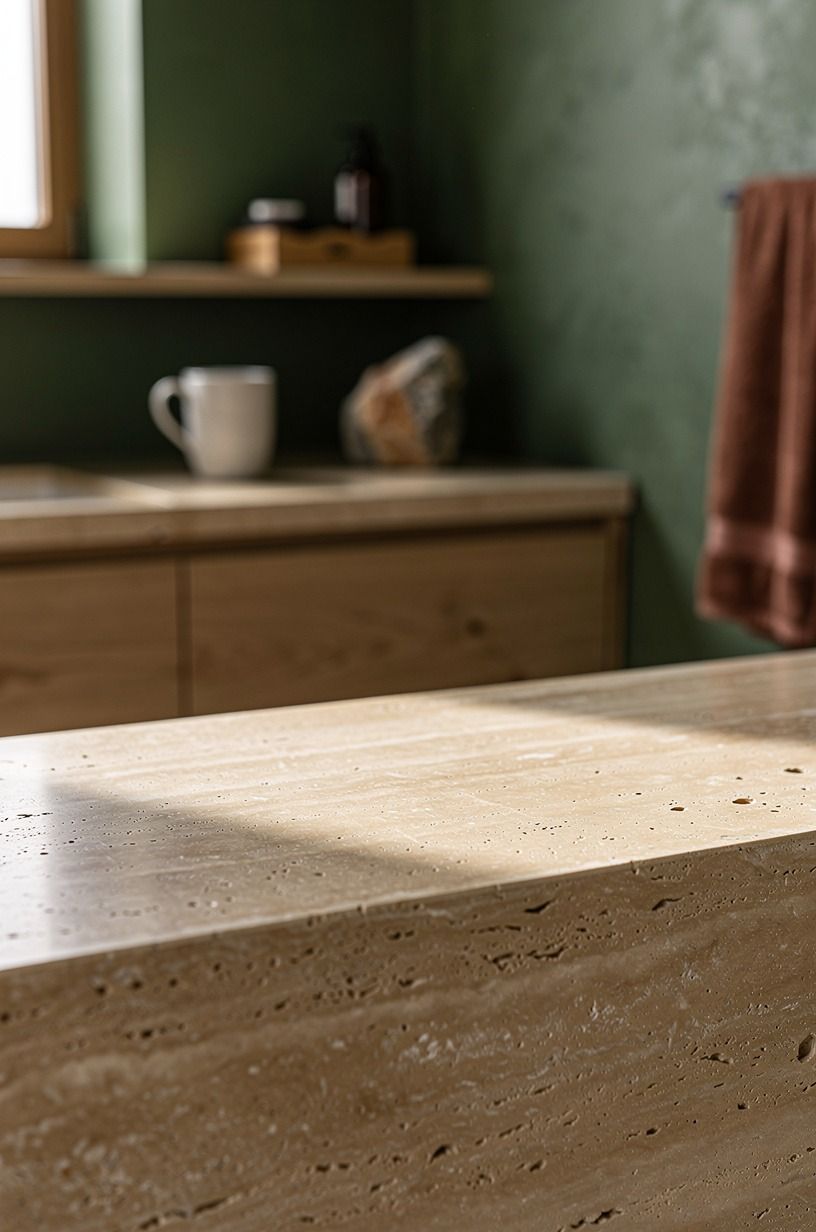
A luxury travertine bathroom doesn’t need matching stone everywhere. Let warm travertine be the honest surface, then keep forest green, rust, and natural oak as the supporting notes.
9Float the Mirror Instead of Adding a Busy Backsplash
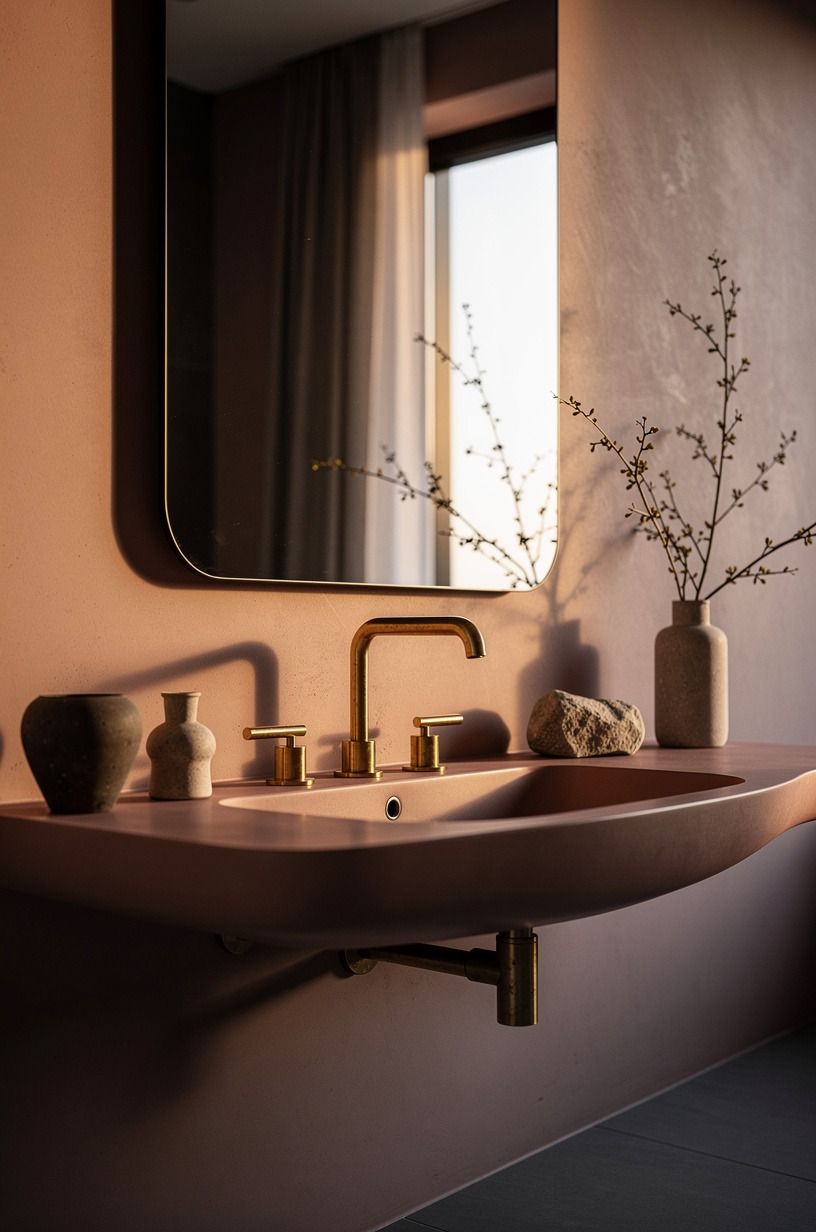
A large mirror floating over plaster gives you more impact than a tiny mosaic backsplash. Leave a clean reveal around an unlacquered brass mirror, then mount sconces so the wall remains visible between them.
Your mirror should feel like furniture, not a bathroom afterthought. A thin black rectangle is the losing option here because it cuts across the dusty rose, charcoal, and brass palette like a hard line.
A 21 in clearance in front of the toilet is the minimum you need, and that visual breathing room matters too. Why spend on a textured wall if you crowd it with five little accessories?
10Choose Zellige Over Subway Tile Only Where Water Demands It
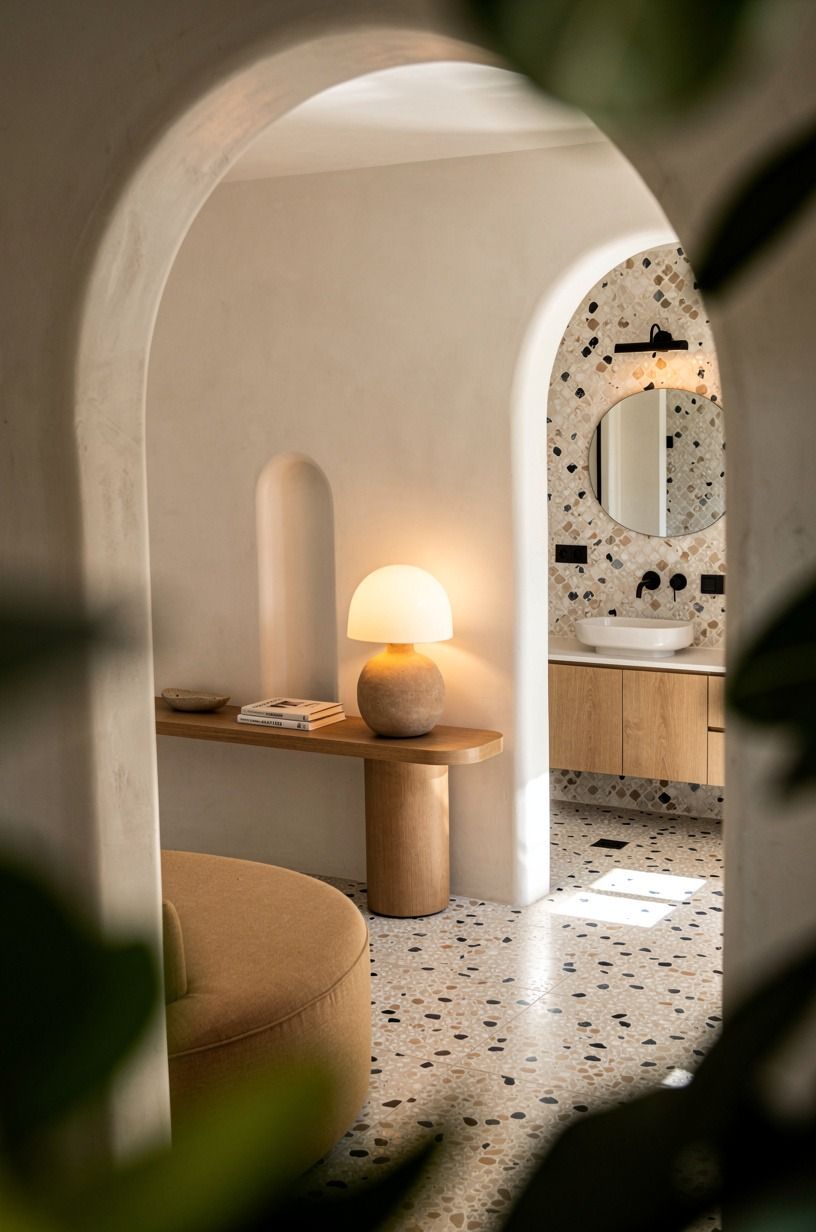
Use oversized-chip terrazzo in the wet zone and Venetian plaster everywhere else. Terrazzo has irregular chips and a warm white, camel, and black-accent mix, so it speaks the same handmade language without asking plaster to survive constant spray.
Subway tile costs about $2 to $10 per sq ft, while zellige typically lands around $15 to $35 per sq ft. You don’t have to tile the entire room to get the effect.
But don’t run terrazzo halfway up every wall. That dated band interrupts the plaster. Keep it contained inside the shower or behind the tub, then let the softer finish take over.
For another grout-light direction, visit microcement bathroom ideas for the seamless no grout look.
11Make the Hardware Develop Patina, Not Shine
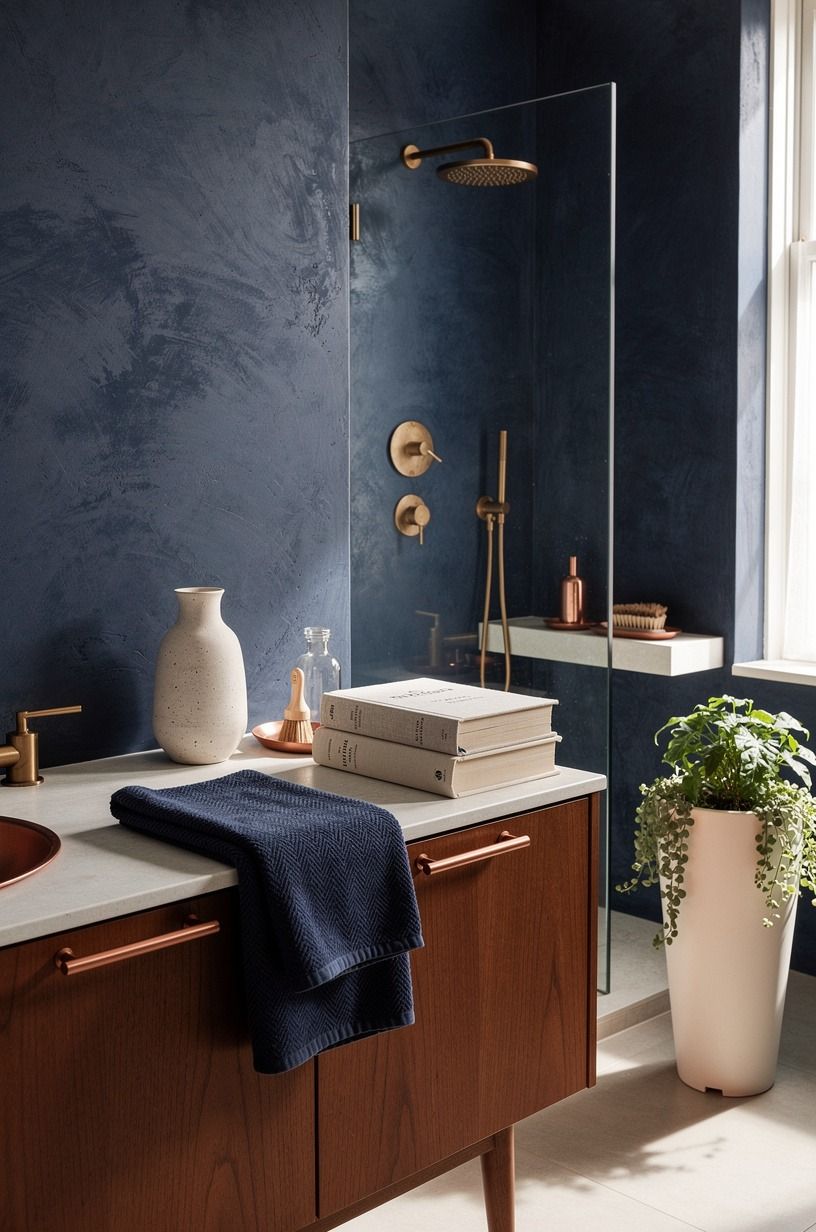
Venetian plaster looks most convincing with hardware that can age a little. Hand-applied Venetian plaster in midnight blue, copper, and ivory gives the room enough depth that the hardware can stay restrained.
A brushed brass faucet usually costs $120 to $450, depending on the configuration. That’s a better place to spend than a novelty soap dispenser, because you touch it every single day.
I wouldn’t mix polished nickel, matte black, and brass in one compact bathroom. Pick one metal family, then let the plaster provide the variation.
12Borrow the Quiet Hotel Rule for Bathroom Design Inspiration
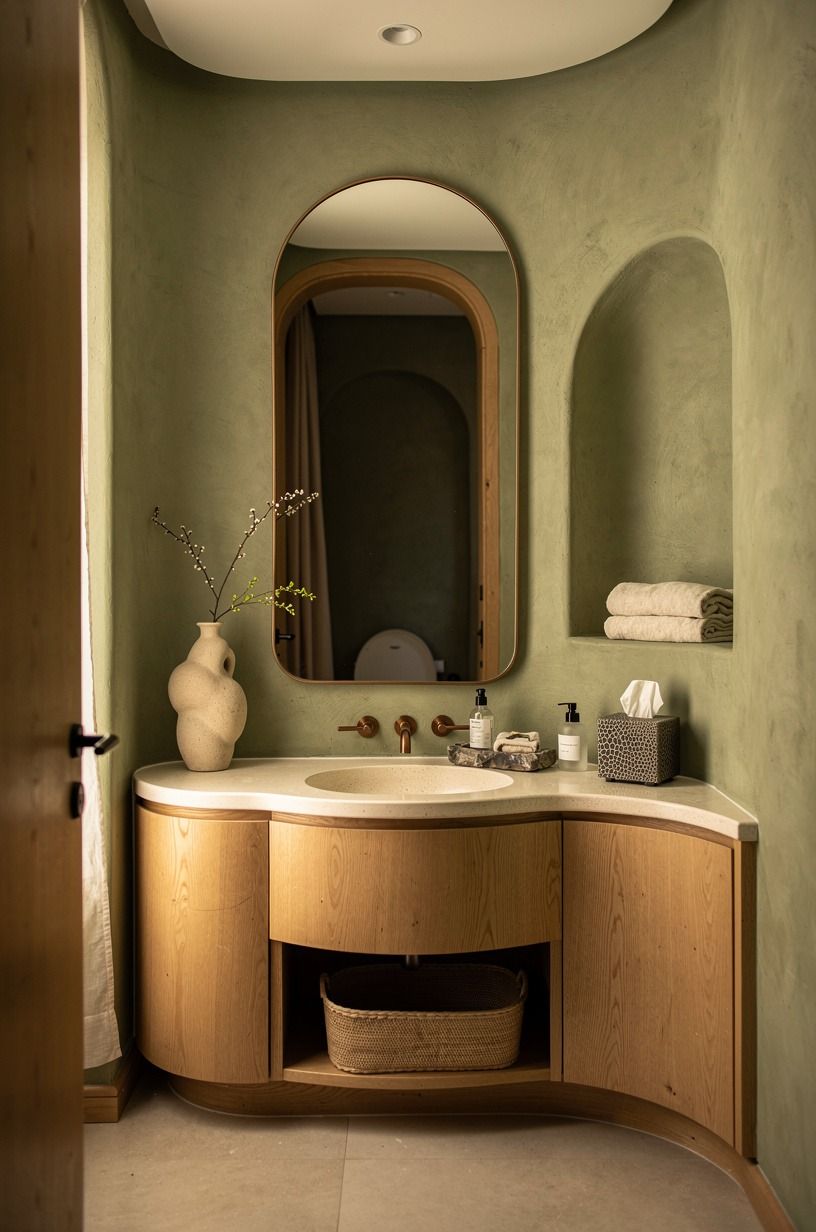
The Quiet Hotel Rule: remove what you don’t use before buying what you think you need. Venetian plaster already carries visual texture, so your counter should hold a folded shagreen tray, a soap dish, and maybe one vessel.
Your bathroom doesn’t need six decorative bottles. It needs a clear edge around the sink and a place for your eye to rest.
And a small detour, because it matters: the same restraint makes a bedroom feel better too. If you’re reworking a whole suite, this guide on why mattresses are so expensive helps you decide where comfort spending belongs.
13Compare the Cost Before You Commit to the Finish
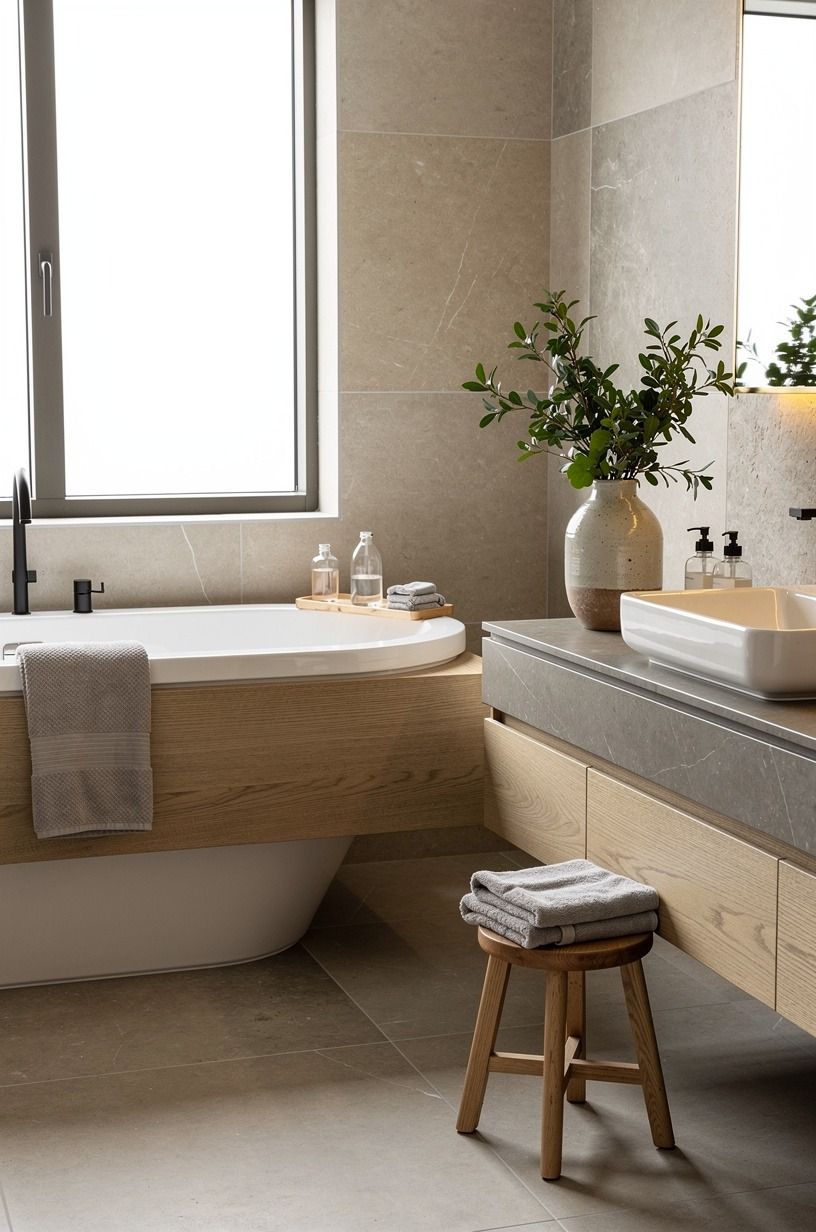
Venetian plaster can be part of a modest refresh or a full renovation. Your budget depends on what you touch around it, not just on the wall finish itself.
I’d put money into wall prep, lighting, and a mirror before replacing a perfectly usable tub. A standard tub is 60 x 30 in, and washed Belgian linen in terracotta, stone, and olive doesn’t require a wild renovation to feel elegant.
If you’re watching every dollar, start with a master bathroom remodel on a budget. You’ll find the inexpensive moves that make plaster look intentional instead of unfinished.
Why Venetian Plaster Feels Different in 2026
I think Venetian plaster is back because people are tired of bathrooms that look like product displays. For years, the formula was obvious: white vanity, white quartz, gray floor, black mirror.
It photographed neatly, but it didn’t give you much to feel. You could swap one bathroom for another and barely notice.
Plaster resists that sameness. It isn’t loud, and it isn’t trying to become a mural.
It changes when you move past it, when daylight shifts, when a sconce throws a pool of amber across the wall. That gentle irregularity makes a room feel personal. You can’t get it from a printed tile or a perfectly flat coat of paint.
I’ve gone back and forth on whether it belongs in a hardworking bathroom, because bathrooms aren’t precious spaces. Kids splash. Guests leave damp towels.
Someone will knock a hair tool into the wall eventually. But that’s why placement matters. Keep Venetian plaster on dry walls, use proper wet-area materials where water hits, and don’t demand that every surface perform the same job.
The most expensive-looking bathrooms are rarely the ones with the most expensive things. They’re the ones where each material has a reason to be there. A warm plaster wall, a real wood vanity, a faucet that will darken rather than peel.
That’s a room with a point of view. And it’s far more welcoming than a showroom-perfect bath.
A Few Things Worth Answering
What Venetian plaster approach works best in a small bathroom?
Use a pale, warm plaster on dry walls with one substantial mirror. Soft visual depth makes a small bathroom feel less boxed in, while a large IKEA HOVET mirror reflects light without adding another competing finish.
Where can I buy bathroom pieces on a budget?
Look at IKEA, Target Threshold, and Wayfair for mirrors, lighting, and simple oak-toned storage. Better proportions for less matter more than logos. Facebook Marketplace can also turn up solid wood stools and vintage frames with far more character.
How much does a Venetian plaster bathroom makeover cost?
A light refresh can run about $200 to $1,200 when you keep plumbing and tile in place. The walls do the heavy lifting if you pair them with a new mirror, faucet, and better textiles rather than a complete rebuild.
Can I create this look on a budget?
Yes, and you should begin with what’s free. Visual calm costs nothing: clear the counter, remove mismatched bottles, repaint a dry wall, and bring in one warm wood piece instead of several little accessories.
Is Venetian plaster worth it in a small space?
Yes, it’s especially worth it in a compact bath because you see every wall up close. Texture replaces clutter when you keep the finish off wet shower walls and give the mirror enough open wall around it.
Is Venetian plaster a good idea for a rental?
Yes, if you use removable alternatives or get written approval for paint. A renter-friendly version includes peel-and-stick tile in the splash zone, a tension rod, removable hooks, and a warm limewash-style paint on an approved wall.
Where I’d Start First
If I had to pick one, I’d start with warm Venetian plaster on the dry vanity wall. You can’t layer warmth over a cold, flat surface, because every brass fixture and oak accessory will fight it. Pin this wall idea for later and browse subtle depth-filled plaster walls.