 by
by Nancy Meyers home office ideas finally made sense when I stopped treating my spare room like a storage closet and gave it one clear job. The desk faced a blank wall, the daybed was covered in laundry, and the old mattress smelled faintly of plastic after warm nights.
I had a small budget and one weekend to make the room feel lived-in, bookish, and calm. I wanted somewhere to write before breakfast, answer emails without hiding from the room, and close the door at night without seeing unfinished work everywhere.
The Room I Kept Avoiding
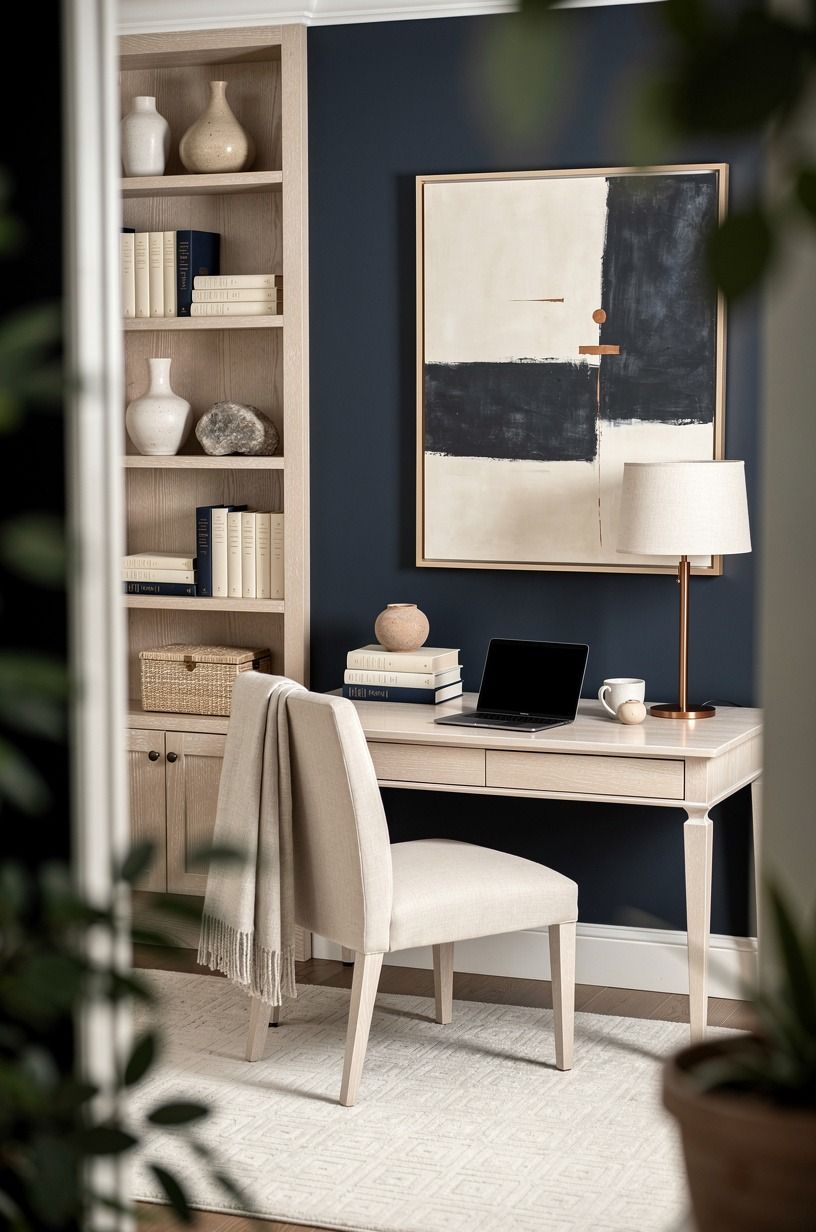
The room had good bones, but I couldn't feel them. A narrow desk blocked the window, mismatched shelves held paperwork, and the overhead light made the walls look gray at 7 p.m. Too much furniture.


And because the room doubled as a guest space, every office purchase had to earn its footprint. I wasn't willing to lose the bed, but I also didn't want a home office that felt like a hotel lobby with a laptop shoved into it.
My first move was removing half of what I owned. I kept the books, the wooden chair, and one small cabinet.
Everything else went elsewhere. If you're working with a small room, this is where I'd start too.
You need to see the floor before you decide what the room needs.
I also used ideas from this Nancy Meyers home interiors guide to define the feeling I wanted: warm materials, practical furniture, and nothing that looked too recently purchased.
I Painted the Walls Before Buying Anything
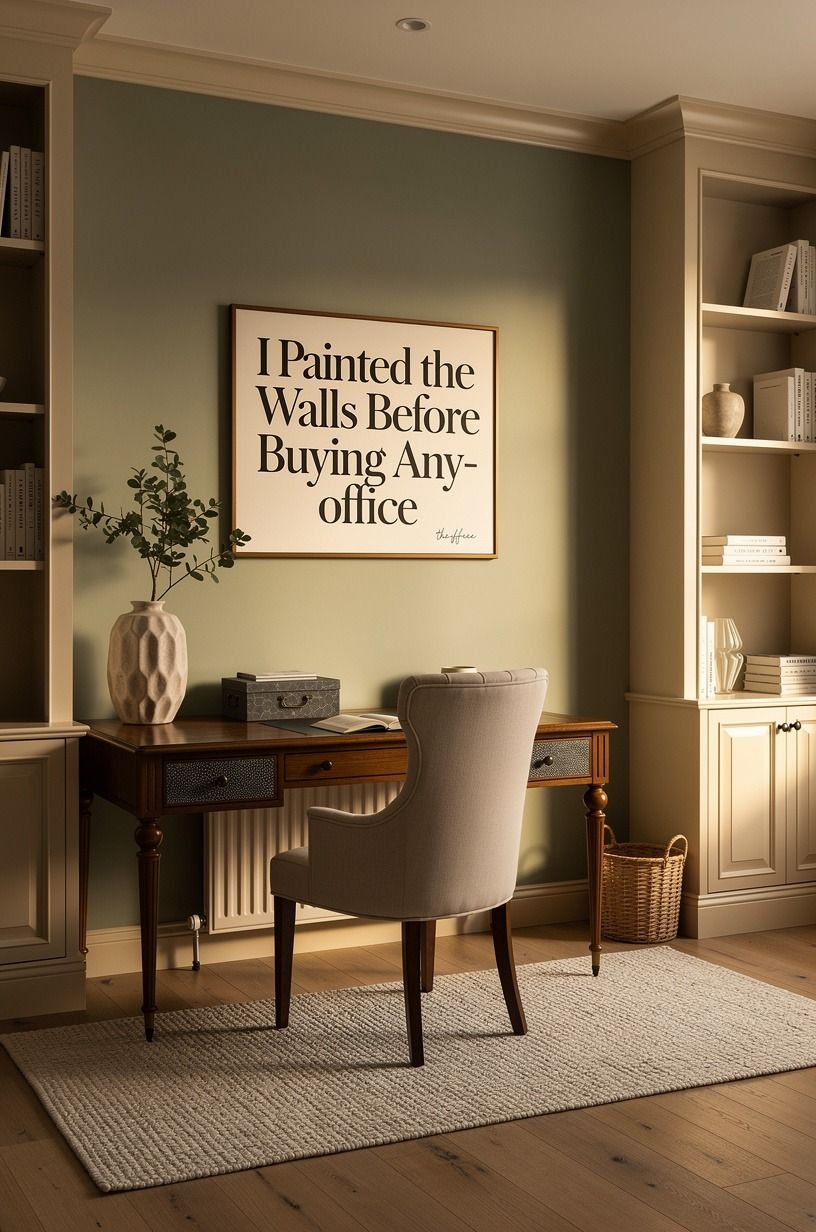
I chose Farrow & Ball Green Smoke No.47 because it looked soft in morning light but still had enough depth at night. Benjamin Moore Cheating Heart 1617 was my first choice, but it made the small room feel heavier than I wanted. Green Smoke won.
The paint changed the room faster than the furniture did. It turned the white trim creamy, made the old oak floor look richer, and gave the books somewhere to belong visually. I used a low-sheen finish because fingerprints and chair marks are part of real life here.
But I didn't paint every surface. The ceiling stayed warm white, and I left the window wall lighter so the room wouldn't feel boxed in.
That balance mattered. A moody office can still feel airy if you give daylight somewhere to land.
I kept the budget in broad buckets: paint first, desk second, lighting third, and small accessories last. That order stopped me from buying pretty objects before solving the room.
I Made the Desk Face the Books
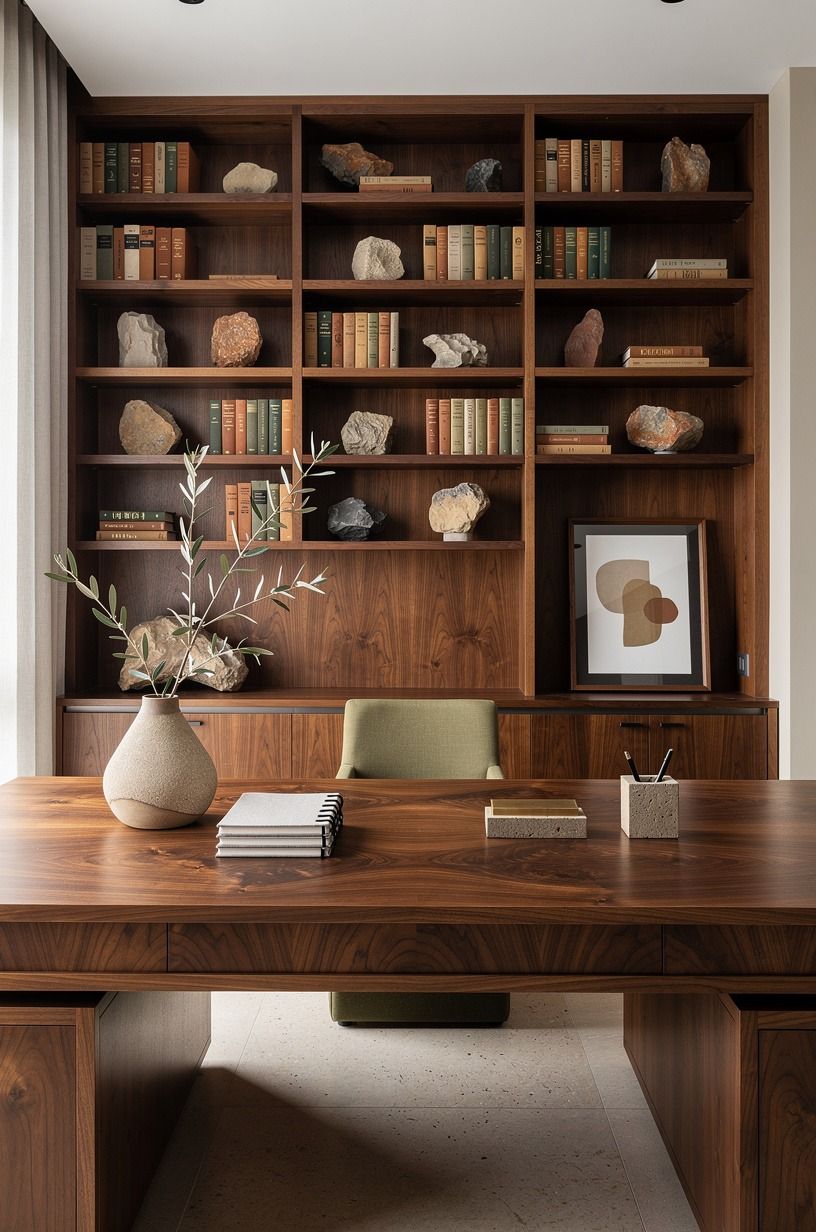
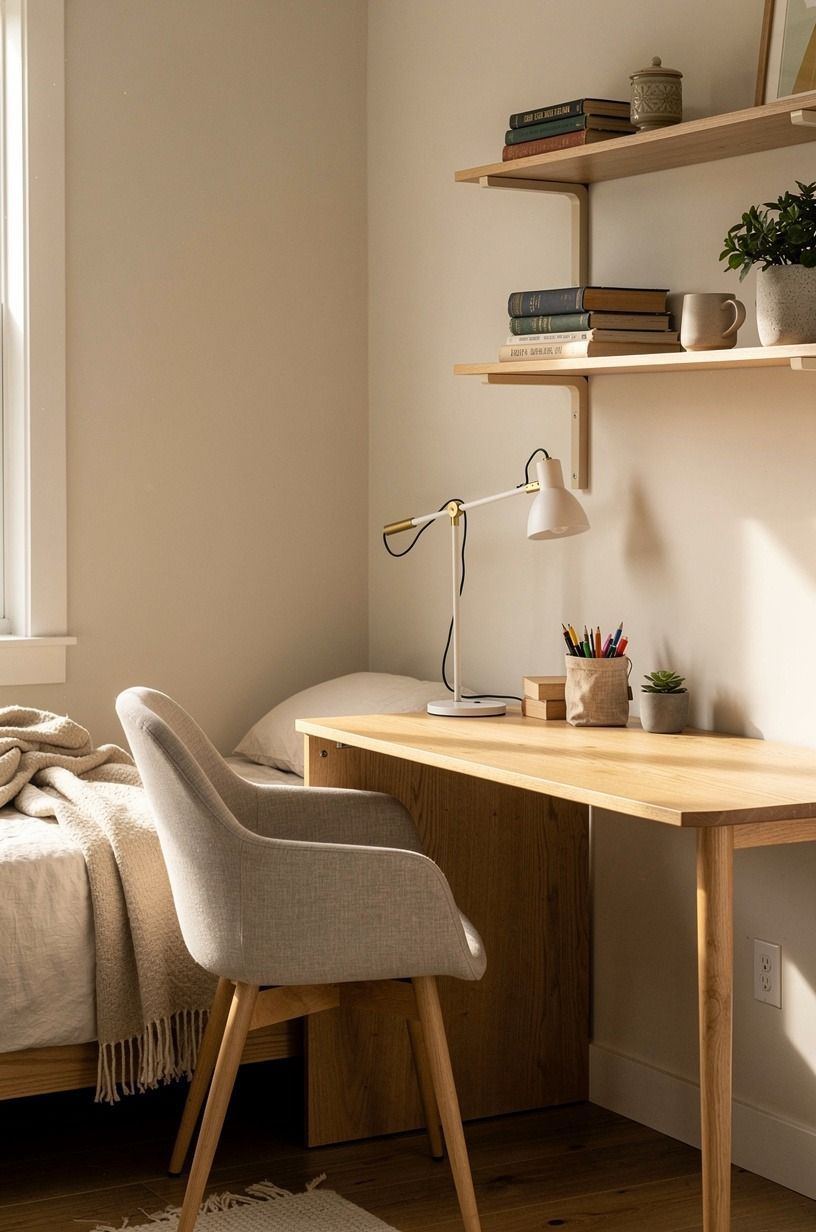
The desk moved in front of the bookcase, not the window. I know that sounds backward, but the window had been distracting me all day. Facing the books gave me a quiet backdrop for video calls and made the office feel like a study instead of a workstation.
I kept the desk height between 29 and 30 inches and left roughly 42 inches behind the chair so I could pull back without bumping the daybed. The depth stayed close to 24 inches, which was enough for my laptop, notebook, and a ceramic mug without swallowing the room.
The desk itself is a simple oak piece with visible grain, not a glossy white workstation. I prefer furniture that gets better when it picks up a few marks. If you're choosing between a sleek desk and a warmer one, I'd take the warmer one every time in this style.
And I put the printer inside the cabinet. That single decision made the room feel calmer.
For the shelves, I kept the books slightly uneven. Tall novels beside thin paperbacks.
A small brass frame leaning instead of hanging. I borrowed the relaxed layering from this Nancy Meyers writer's study look, then made it less polished for my own room.


The Piece My Whole Bedroom Is Built Around
Natural materials, a 365-night home trial, free white glove delivery. Decide in your own room, not a showroom.
I Used the Sleeping Corner as a Design Test
The daybed was the part I nearly ignored. That would've been a mistake. Since the office also needed to welcome overnight guests, I replaced the tired mattress with a Saatva Classic and treated the sleeping corner as part of the design instead of hiding it.
Then I added Organic Cotton Sheets in a warm ivory shade. The fabric softened the dark green walls without making the room look pale, and it gave the bed a useful contrast against the oak desk.
I wasn't sure the bedding belonged in an office story, but it changed how I used the room. When I finish working, I can move to the daybed with a book rather than continuing to stare at the same screen. That small separation helped me stop working late.
The Down Alternative Comforter gave the bed the loose, inviting shape I wanted, while the Organic Quilted Pillow added texture without a pile of decorative cushions. One pillow was enough. More would have made the corner feel staged.
A small relief.
I Replaced the Ceiling Light With Layers
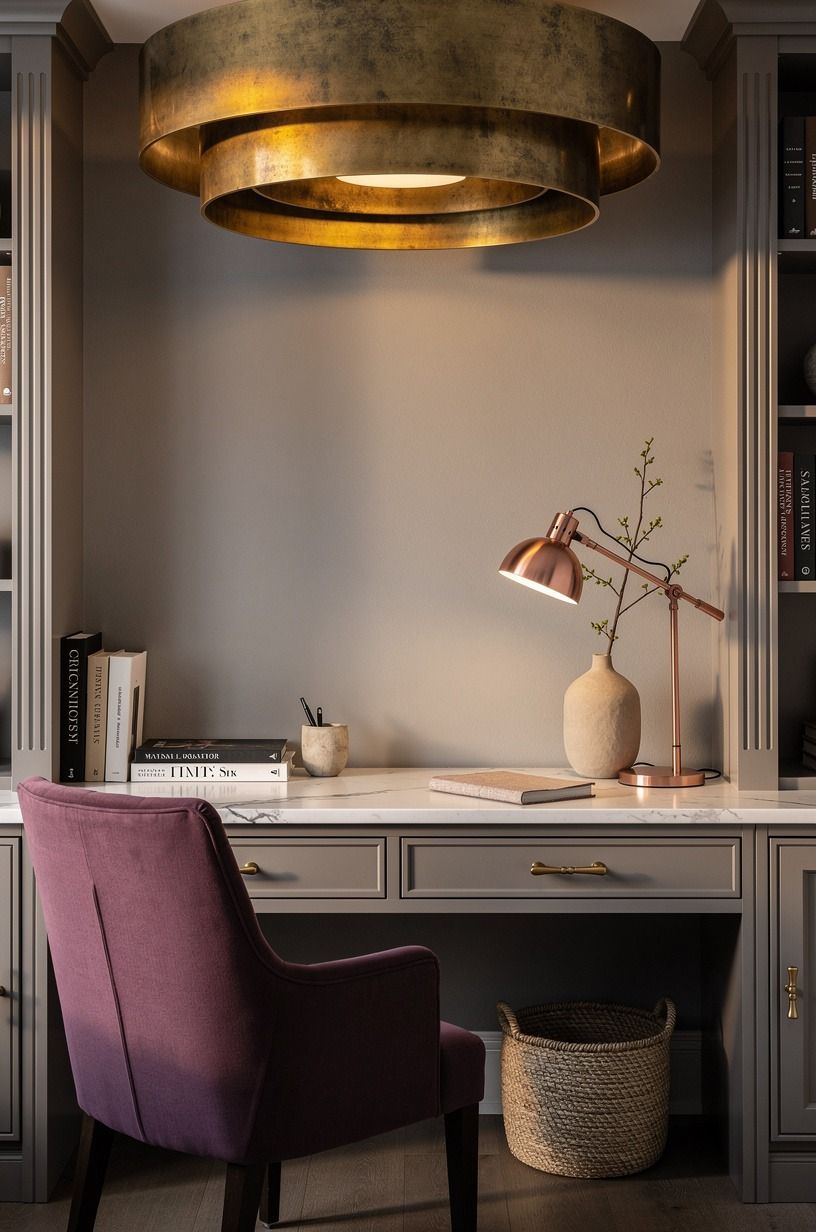
The ceiling fixture stayed for practical reasons, but I stopped relying on it. It was too bright for evening and too flat for the room's warmer materials. I added a shaded table lamp beside the books and a reading light near the daybed.
Sherwin-Williams Iron Ore SW 7069 appeared on the lamp base, which tied the darker details together without adding another color family. I like black accents here, but only when they're softened by wood, cotton, and paper.
And I moved the lamp until the light stopped at the edge of the rug. That sounds fussy, but the room finally felt calm after sunset. The desk had a clear pool of light, the reading corner stayed gentle, and the shelves didn't disappear into shadow.
If you're changing your own office, don't buy every lamp at once. Test the room at 8 p.m. first. You may need one good shade, not three new fixtures.
What I Would Change Next Time
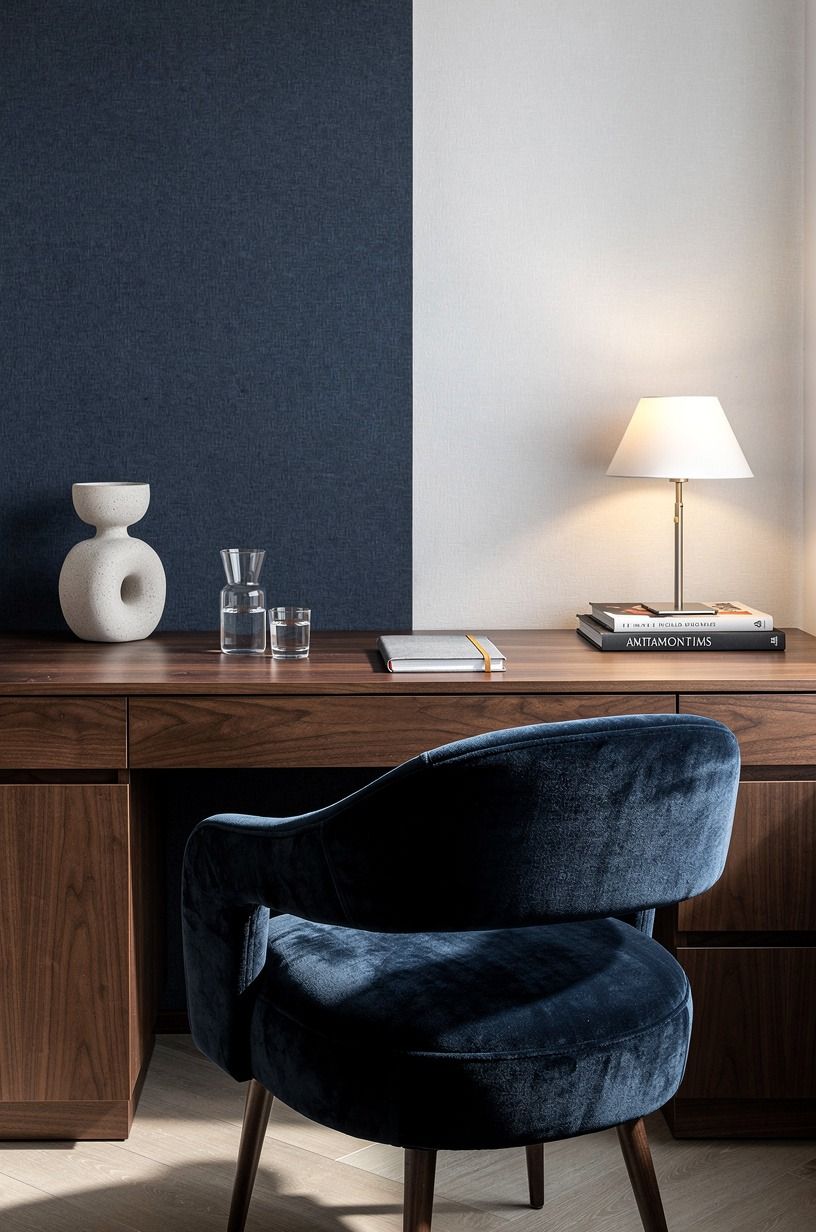
The room feels warm now, but it isn't flawless. I spent too long choosing the wall color and then rushed the chair decision. The chair is comfortable enough, but I should have chosen one with better support and a smaller visual footprint.
For two weeks, I regretted putting the desk in front of the bookcase. I thought the shelves would feel blocked. Instead, the books became a backdrop, and I stopped losing papers against a blank wall.
Still, I would measure the chair clearance before buying anything if I did this again.
But I wouldn't add more decor. My first instinct was to fill the shelves with baskets, framed art, and little collected objects.
The room got better when I removed most of them. I prefer a space where you can see the books, the grain of the desk, and a little empty wall.
The best lesson was simple: don't copy the polished version of this look. Keep the old lamp if you like it.
Let one shelf sag slightly. Use the furniture you already understand.
You can also borrow the softer color balance from these Nancy Meyers aesthetic ideas without turning your office into a set.
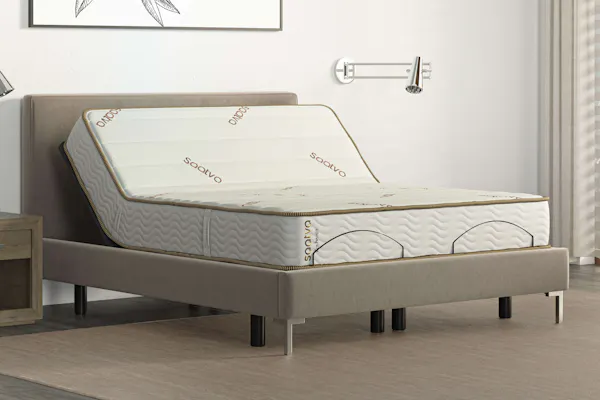 My pick for a healthier bedroomZenhavenTalalay latex, organic cotton, 365-night trial, lifetime warranty, free white glove delivery.See the Zenhaven
Build Your Own Healthier Bedroom
Sale pricing runs on orders over $1,000, and the 365-night trial gives you a full year of nights to be sure.
The Room I Use Now
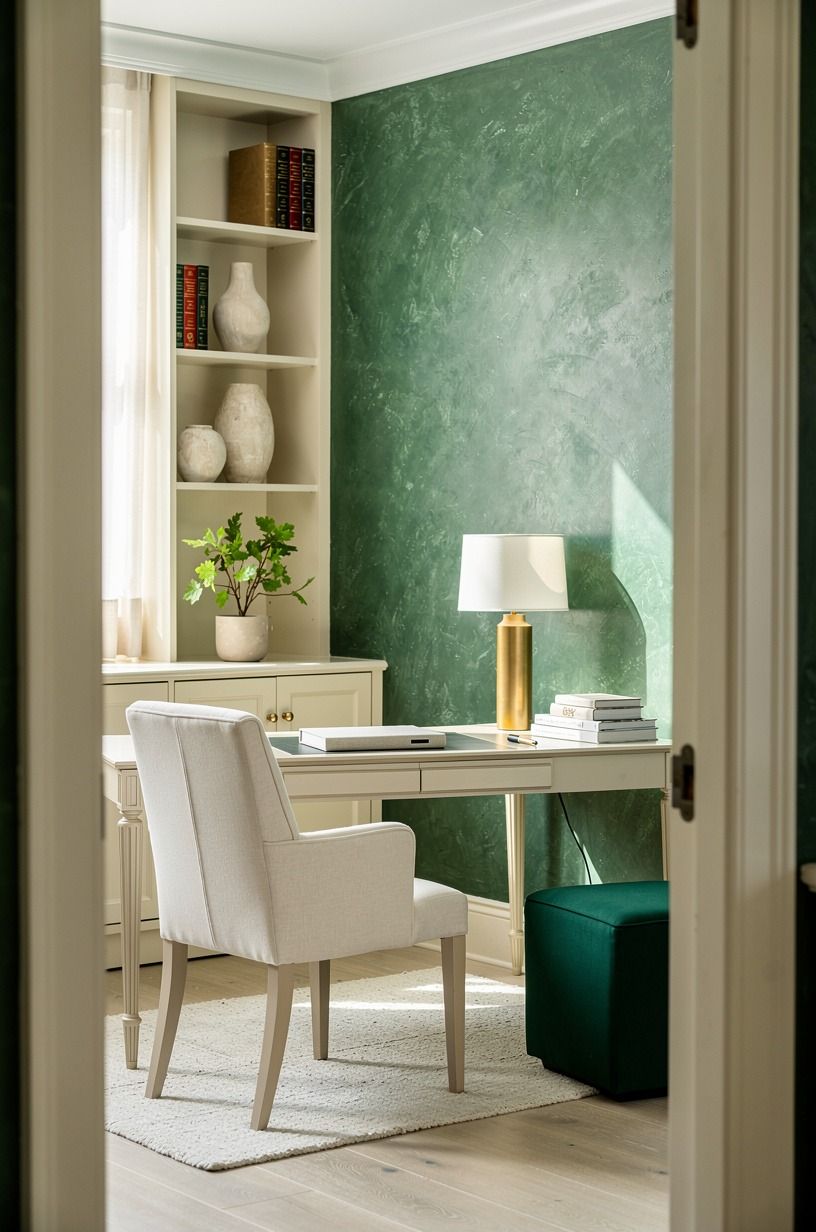
I still leave one notebook open on the desk. The wooden chair faces the shelves, the green walls look warmer after dark, and the daybed is ready when I want to read instead of work.
If I had to pick one change, I'd start with the paint. It gave every old book, oak edge, and shaded lamp a place to settle. Now the last thing I see before closing the door is a small brass reading light glowing beside the pillows.
{ "meta_title": "Nancy Meyers Home Office Ideas for a Cozy 2026",