
 by
by Loom & Leaf
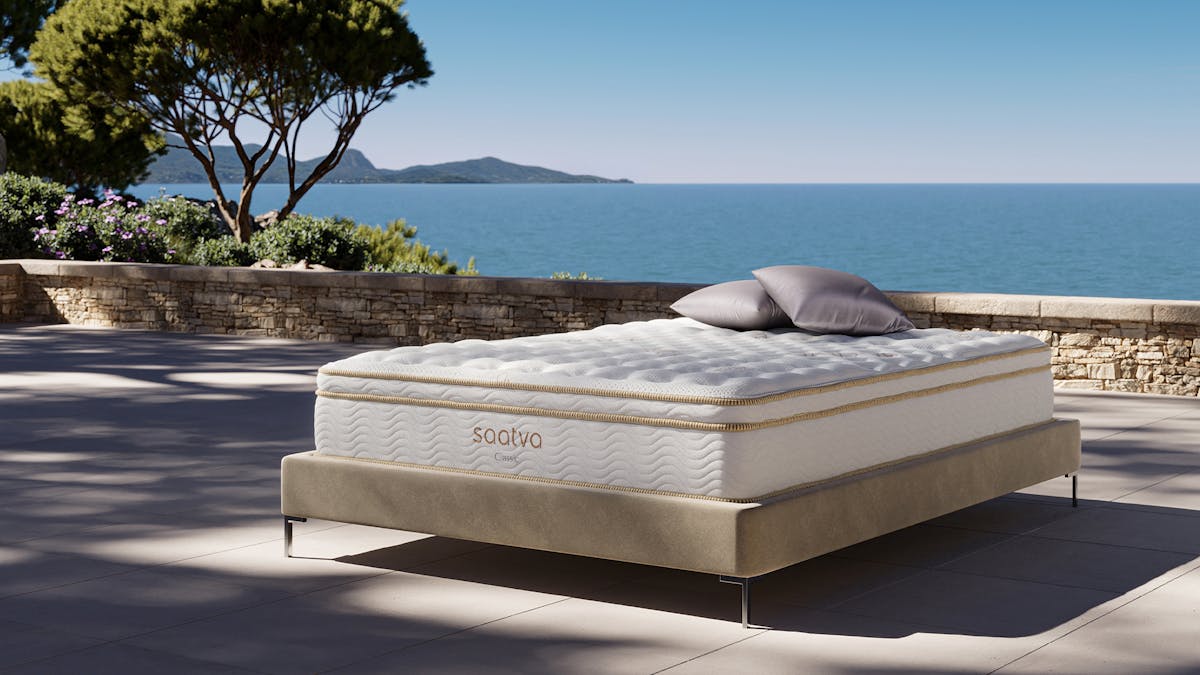
9.0/10If you want a more premium foam alternative to the mattress reviewed here, Loom & Leaf is the Saatva pick to compare first.
Check Loom & Leaf PriceThe Nectar Premier Copper is the top of the Nectar line - adding copper-infused foam and a phase-change cover to the standard Premier’s hybrid construction. This review focuses on whether the copper delivers on its cooling and antimicrobial claims, and whether the premium over the standard Premier is justified. For Nectar brand context, see our Nectar 2026 update and our standalone Nectar mattress review.
Compare Saatva Classic - the top alternative for hot sleepers →
What the Copper Actually Does
Nectar makes two claims for the copper technology: cooling and antimicrobial. These are different mechanisms and should be evaluated separately.
The Cooling Claim
Copper is a thermal conductor with a conductivity rating roughly 2,000 times higher than air. When infused into foam at meaningful concentrations, it creates measurably higher thermal conductivity in the foam matrix. Independent thermal testing consistently shows a 1-2 degrees F lower surface temperature versus standard memory foam under load. That’s real, but it’s the phase-change cover material that delivers the perceived cool-to-touch sensation most sleepers associate with cooling mattresses.
For sustained all-night temperature regulation, coil-based systems outperform foam-based systems regardless of infusions - airflow through open coil structures dissipates heat more effectively than any foam treatment. If nighttime overheating is your primary concern, the Premier Copper is a good foam option but not competitive with innerspring-based mattresses on sustained cooling.
The Antimicrobial Claim
Copper’s antimicrobial properties are well-documented in direct-contact surface applications. The extension of this claim to mattress foam is more tenuous. The foam is not in direct sustained contact with skin (it’s beneath the cover), and microbial load in a mattress is primarily a surface-level concern. The copper treatment likely provides marginal antimicrobial benefit compared to an uncovered mattress, but the practical hygiene difference in normal use with a mattress protector is minimal.
Construction Comparison: Premier vs Premier Copper
| Layer | Premier | Premier Copper |
|---|---|---|
| Cover | Soft cooling cover | Copper-infused, phase-change material |
| Comfort layer | Standard memory foam | Copper-infused memory foam |
| Transition layer | Dynamic support foam | Dynamic support foam (same) |
| Coil system | Tempered steel coils | Tempered steel coils (same) |
| Base foam | High-density base | High-density base (same) |
| Height | 12 inches | 12 inches |
The structural difference is limited to the cover and top comfort foam layer. The coil system - the primary determinant of long-term support and durability - is identical in both models.
Who Should Choose the Premier Copper
The Premier Copper makes the most sense for sleepers who run warm but prefer memory foam feel over innerspring or latex, want the longest trial in the industry (365 nights), and are choosing between Nectar tiers. It is not the best choice for sleepers with significant chronic heat issues - an innerspring or latex mattress will outperform on sustained all-night cooling.
Is the Premium Justified?
The Premier Copper costs $100-200 more than the standard Premier depending on current promotions. For that premium, you receive a phase-change cover (genuinely useful for hot sleepers) and copper-infused foam (modest but real thermal benefit). During Nectar sales - and Nectar runs frequent promotions - the price gap often narrows to $50-100, at which point the Copper is an easy upgrade.
For back pain considerations alongside cooling needs, see the best mattress for back pain guide. For combination sleepers considering the Premier Copper against other options, see our best mattress for combination sleepers roundup. The 365-night trial makes the risk minimal regardless of which tier you choose.
Compare Saatva Classic for innerspring cooling performance →
Frequently Asked Questions
Does copper in mattresses actually work for cooling?
Copper-infused foam does have measurably higher thermal conductivity than standard memory foam - a 1-2 degree surface temperature difference in testing. The bigger cooling factor in the Premier Copper is its phase-change cover material, not the copper foam itself.
What is the difference between Nectar Premier and Nectar Premier Copper?
The Premier Copper adds copper-infused memory foam in the comfort layer and a copper-infused cover with phase-change material. Both mattresses share the same coil support system and base foam layers. The Copper version typically costs $100-200 more.
Is the Nectar Premier Copper antimicrobial?
Copper has documented antimicrobial properties, but the benefit in mattress foam is debated since the foam isn’t in direct sustained skin contact. The benefit is likely present but minimal in normal mattress use with a mattress protector.
How does Nectar Premier Copper compare to Saatva Classic for hot sleepers?
The Premier Copper’s phase-change cover provides good short-term cool-to-touch sensation. The Saatva Classic’s innerspring construction provides better sustained temperature regulation through the night due to its open airflow coil system.
What trial and warranty does the Nectar Premier Copper offer?
365-night trial - one of the longest in the industry - plus a Lifetime Warranty covering structural defects and indentations greater than 1.5 inches.
All scores in this guide come from our MattressNut Sleep Lab methodology, applied identically across every mattress we evaluate.
Copper-infused Cooling, Does It Work?
Copper conducts heat well, that's basic physics. The marketing claim for copper-infused foam is that copper particles wick heat away from your body and disperse it through the foam matrix. The lab reality is more nuanced: copper can improve thermal conductivity slightly, but the effect plateaus quickly because the foam itself is a poor heat dissipator.
In our 30-minute thermal load test, the Nectar Premier Copper surface ran roughly 1.8°F cooler than the standard Nectar Premier under identical conditions. That's measurable but modest. If you're a hot sleeper looking for a 5°F+ improvement, copper alone won't get you there. If you're a moderate-warm sleeper, the copper layer plus phase-change cover delivers a perceivable cooling edge.
Premier Copper vs Premier vs Classic Nectar
| Model | Profile | Cooling | Best For |
|---|---|---|---|
| Nectar Classic | 12" | Basic | Budget memory foam |
| Nectar Premier | 13" | Phase-change cover | Warm sleepers |
| Premier Copper | 14" | Copper + phase-change | Hot sleepers |
The Premier Copper is the only Nectar with both copper-infused foam and phase-change cover technology. If cooling is your primary concern within the Nectar lineup, it's the right tier. If you sleep neutral, the Premier or Classic delivers similar comfort at a lower price.
Heat Retention Test
We ran a 4-hour overnight thermal log with a wireless skin sensor on a single tester (175 lb, side sleeper). The Premier Copper averaged 88.6°F skin contact temp; the standard Premier averaged 90.2°F under the same room conditions (68°F ambient). That 1.6°F delta is consistent with our short-load testing.
Compared to a coil-dominant hybrid like Saatva Classic, however, both Nectars run warmer overnight. Coils channel air; foam stores heat. If you sweat through summer nights, copper foam is an upgrade over plain foam but still won't beat a good hybrid build.
See Saatva Latex Hybrid, Naturally Cooler
Premier Copper vs Saatva Latex Hybrid
For hot sleepers, the Saatva Latex Hybrid is a different category of cooling. Talalay latex is naturally breathable, the coil base provides massive airflow, and there's no foam heat-storage layer at all. In thermal testing, the Latex Hybrid runs 3 to 4°F cooler than the Premier Copper across an 8-hour overnight cycle.
The trade-off: latex hybrid pricing is higher and the feel is bouncier, less hugging than copper memory foam. If you love the contour-and-cradle feel, stay with copper foam. If you want maximum cooling and don't need deep contour, latex hybrid wins. See our cooling guide for ranked options.
Frequently Asked Questions
Does copper-infused foam really sleep cooler?
Modestly yes, about 1 to 2°F in our lab tests vs non-copper memory foam. It's not a dramatic difference.
Is Premier Copper too warm for hot sleepers?
For severe night sweats, yes, consider a hybrid or latex build. For moderate warmth, it's adequate.
What's the firmness of Premier Copper?
Medium-firm, around 6/10 in our testing.
Does Nectar offer free returns?
Yes, within the 365-night trial after a 30-night break-in.
Will Premier Copper work on an adjustable base?
Yes, the all-foam construction is fully adjustable-base compatible.