
 by
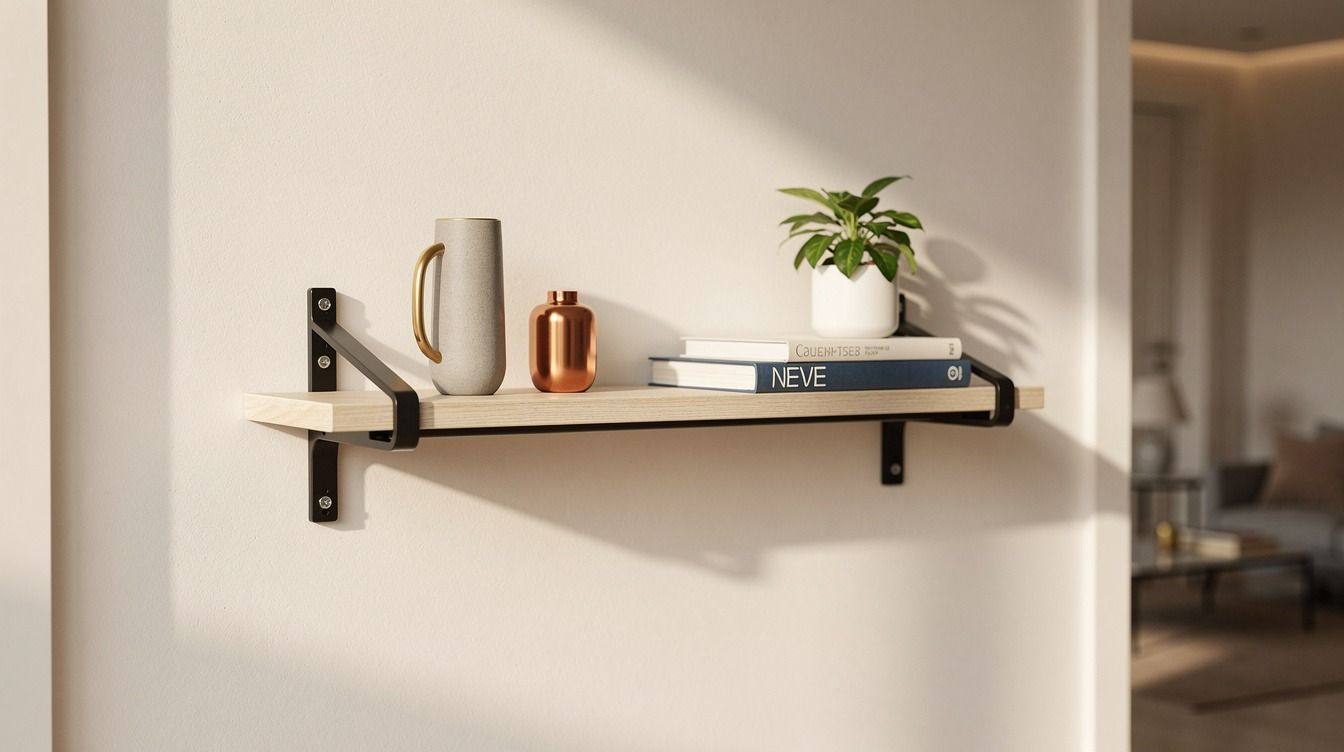
by I've lived with no drill shelves, and the difference between flimsy and warm came down to weight, spacing, and one removable mounting choice. I wanted a rental-friendly wall that could hold books without looking temporary. The result feels gathered, not precious. And I didn't lose my deposit!
Here's what it looked like before
The before version tells the story better than I can. The wall was bare, the shelf leaned slightly, and every small object looked stranded against a large rectangle of paint.
I had one narrow white laminate shelf, a pile of books on the floor, and no clear place for the little things I use every day. The rental rules were firm: no screws, no anchors, no patched holes. I couldn't treat the wall like a blank renovation surface.
And the shelf itself wasn't the only problem. My eye had nowhere to stop, so the room felt unfinished even after I added a chair and rug. I knew I'd need a display system that used height, texture, and removable support instead of brute force.
- Anchor no drill shelves with a removable weight plan
- Layer wall shelves without drilling around one quiet color
- Swap heavy décor for the Three-Texture Rule
- Float a narrow shelf above the furniture line
- Frame the shelf with the Two-Wood Rule
- Hang art behind the shelf, not beside it
- Build the Three-Height Light Stack
- Mix renter friendly floating shelves with soft storage
- Paint the wall before you style the ledge
- Arrange books by shape instead of color
- Anchor wall shelves without drilling using a visual triangle
- Choose soft contrast over matching décor
- Make the shelf work beside a sleeping nook
- Finish with one living object
1Anchor no drill shelves with a removable weight plan
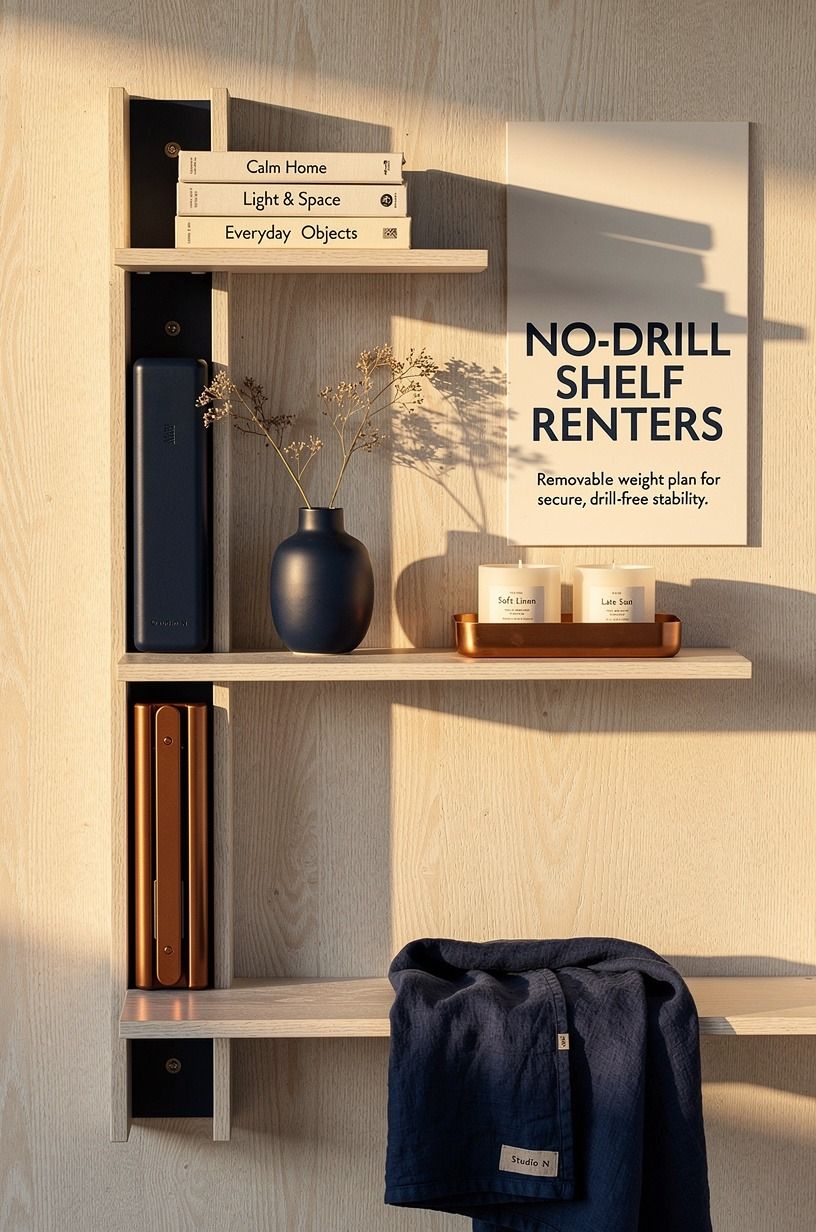
I started by weighing every object before it reached the shelf. A shelf that holds one ceramic vase may fail once you add three books, a framed print, and a bowl. Your wall needs a plan, and your styling needs a limit.
The shelf was 3/4-inch cerused white oak, which gave it a warmer edge than the original laminate. I paired it with lightweight objects first, then tested the mounting points overnight.
No drilling. No apology.
If you're working in a rental, that slow test is worth your time.
I didn't use the shelf for heavy pottery. A small IKEA KALLAX birch-effect cube held the weight below, while the wall shelf carried paperbacks and a shallow tray. You can make the display feel substantial without asking one adhesive mount to do everything.
For a small bedroom, I kept the shelf above the reading chair and used why does rain make you sleepy as a quiet bedtime reference on my phone, not as shelf décor. The wall finally felt intentional.
2Layer wall shelves without drilling around one quiet color
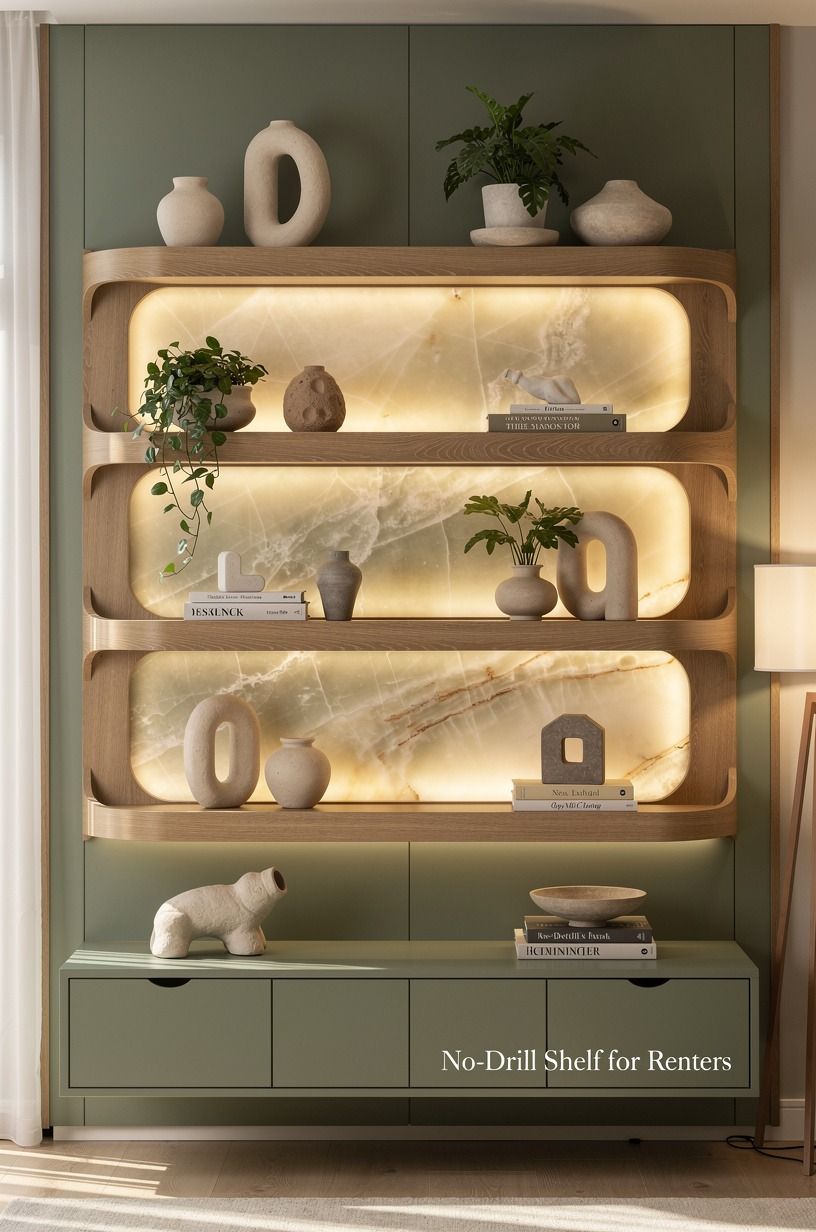
My first version had too many colors, and it looked like a yard sale with good lighting. I repainted the wall in Sherwin-Williams Evergreen Fog SW 9130, then kept the shelf objects in warm cream, natural wood, and faded green.
That single decision made the backlit translucent onyx more noticeable. Your eye sees the shelf before it sees the objects, so a calm backdrop matters more than a crowded collection. I skipped bright white ceramics because they disappeared into the paint.
A sage mohair velvet cushion on the chair connected the shelf to the rest of the room. It caught afternoon light in a soft, dusty way, while the natural wood kept the wall from feeling flat. If you're styling a rental, pick one quiet color and let your materials carry the interest.
But don't make every object beige. A small rust-colored book jacket, a dark frame, and one unlacquered brass catchall kept the display from becoming sleepy. You can use warmth without turning the wall into a neutral showroom.
3Swap heavy décor for the Three-Texture Rule
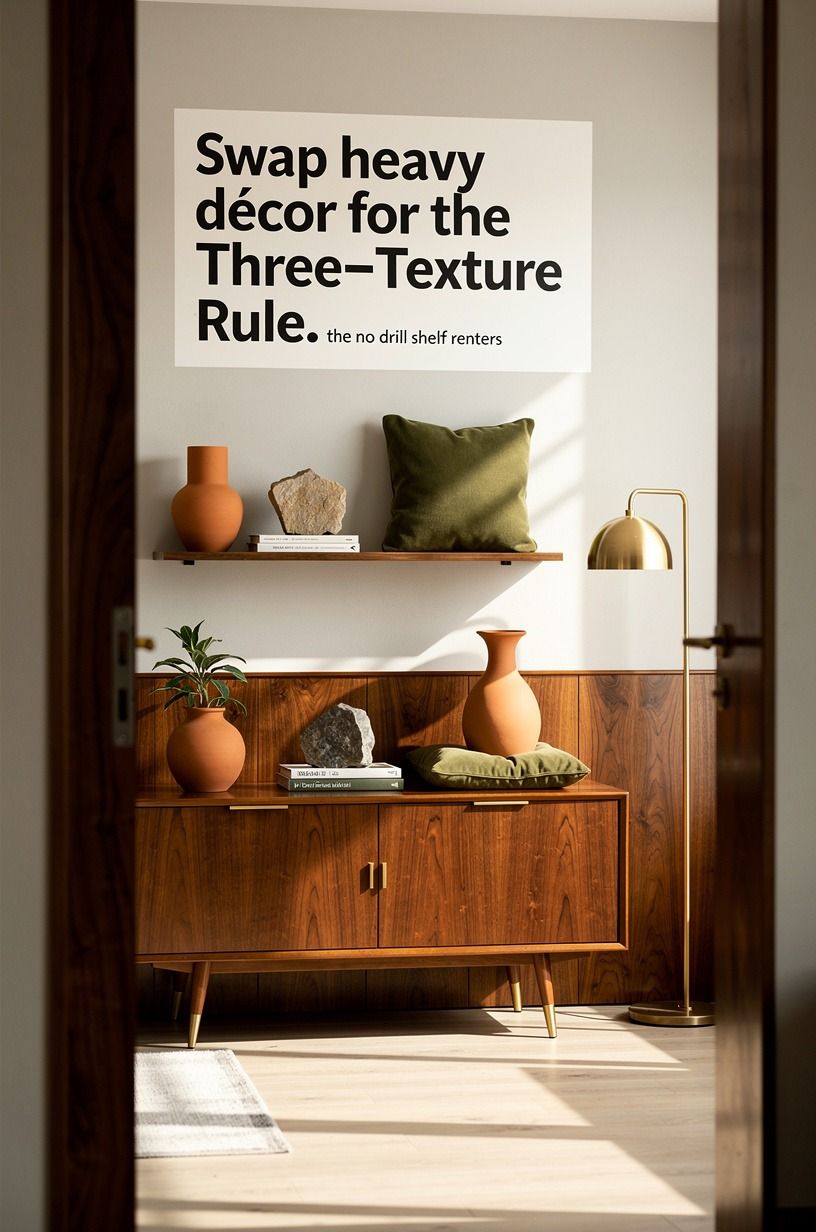
I wanted the shelf to look collected, but my first instinct was to use heavier stone and thick pottery. That was a mistake. The mounting system held, yet the wall felt visually tense.
The Three-Texture Rule worked better: one rough surface, one soft surface, and one reflective surface. I used a small woven basket, a folded 600gsm Turkish cotton cloth, and a brass dish. Each piece changed the light differently.
Your shelf doesn't need twelve objects to feel full. You need contrast that can be read from across the room. The basket gave me a dry, fibrous texture, the cotton softened the line, and the metal added a small flash when the lamp turned on.
And I skipped a pale marble tile sample. The book-matched walnut surface gave the shelf the warmth I wanted without adding a cold, heavy note. You can get visual richness from grain and texture, and your adhesive mount will thank you.
If you like a quiet bedroom, you might also enjoy why do energy drinks make me sleepy as a conversation starter beside a small reading stack. It sounds odd, but the shelf became more personal once it held real curiosities.
4Float a narrow shelf above the furniture line
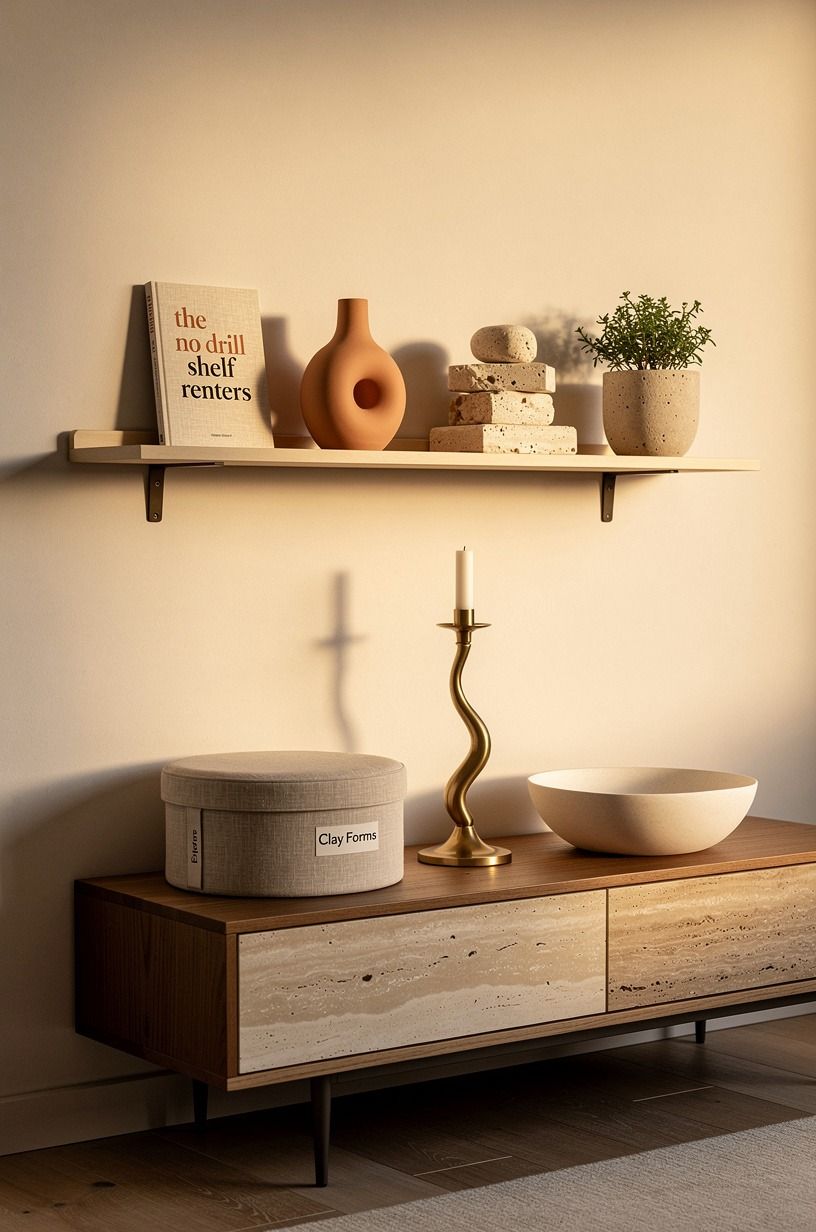
The original shelf sat too low, almost touching the top of the dresser. Every object blended into the furniture, and the wall looked shorter than it was.
I raised the display so the center of the artwork sat around 57 to 60 inches from the floor. That familiar art height gave the wall breathing room, while the narrow warm travertine ledge kept the arrangement from feeling bulky.
Your furniture should overlap the visual zone without swallowing it. I left enough open wall between the dresser and shelf for the room to breathe. If you're using a small shelf in a rental, a little empty space often looks more expensive than another object.
I also placed a small framed print behind the shelf rather than hanging five separate pieces. That choice saved holes and made the display read as one composition. The print has a washed landscape, and its soft horizon echoes the shelf line.
But I wouldn't float a deep shelf over a narrow walkway. It creates a hard corner at eye level and makes the room feel pinched. For that spot, your better choice is a shallow picture ledge with paper art and a low profile.
5Frame the shelf with the Two-Wood Rule
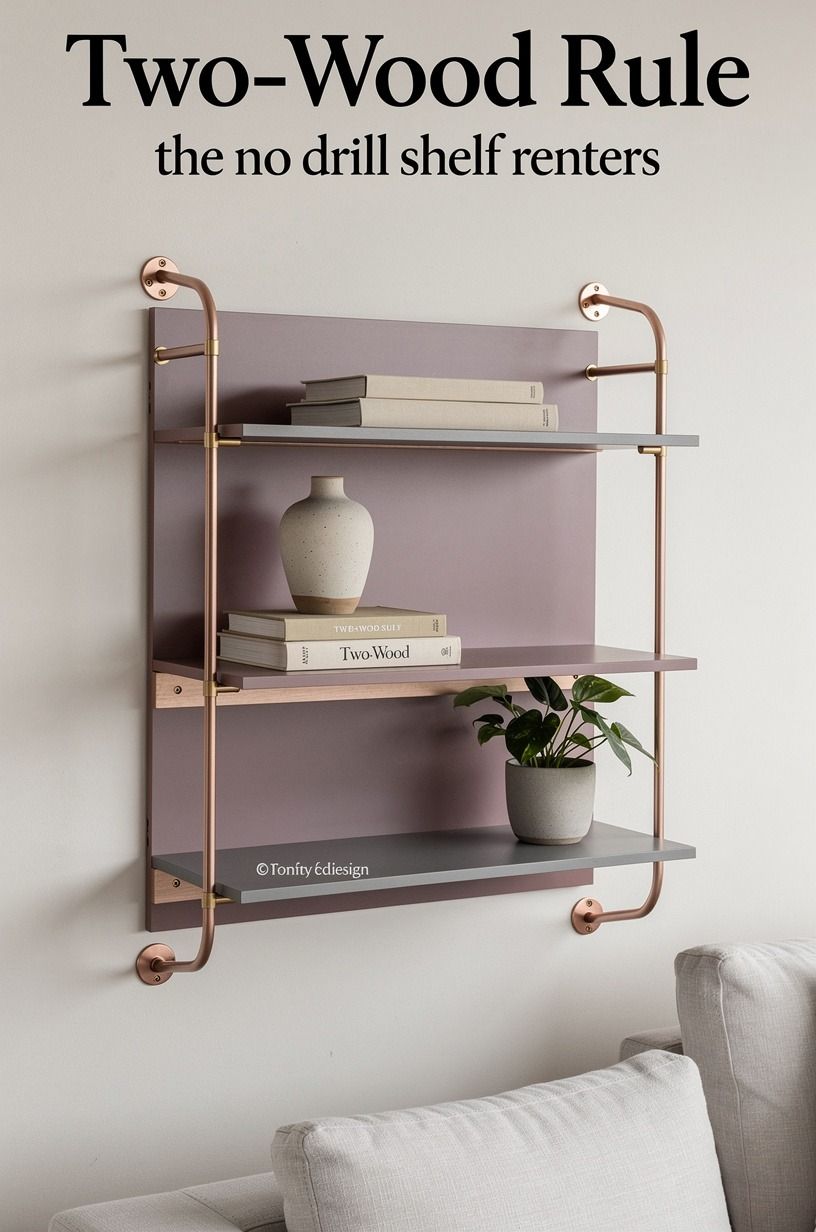
I brought in a second wood tone because the room had too much pale furniture. The answer wasn't more matching oak. It was a darker accent that gave the wall some depth.
The display worked best with plum on the wall, grey in the upholstery, and a rose-gold note near the shelf. The unlacquered brass developed a soft patina, so the arrangement felt warmer over time.
I used an Article Sven chair in muted grey upholstery beneath the shelf, then placed a walnut frame beside it. The fabric has a dry, matte finish, so the rose-gold accent didn't make the corner feel formal. It felt warm and settled.
This is where I learned to stop shopping. I had considered a third wood, but it made the arrangement fussy. If you're styling wall shelves without drilling, repeat the two main materials and let books provide the smaller shifts.
The shelf now connects the chair, frame, and floor without matching them exactly. For another small-space reference, I checked who sells Nectar mattresses while planning the bedroom, then returned to the wall with a much clearer sense of scale.

6Hang art behind the shelf, not beside it
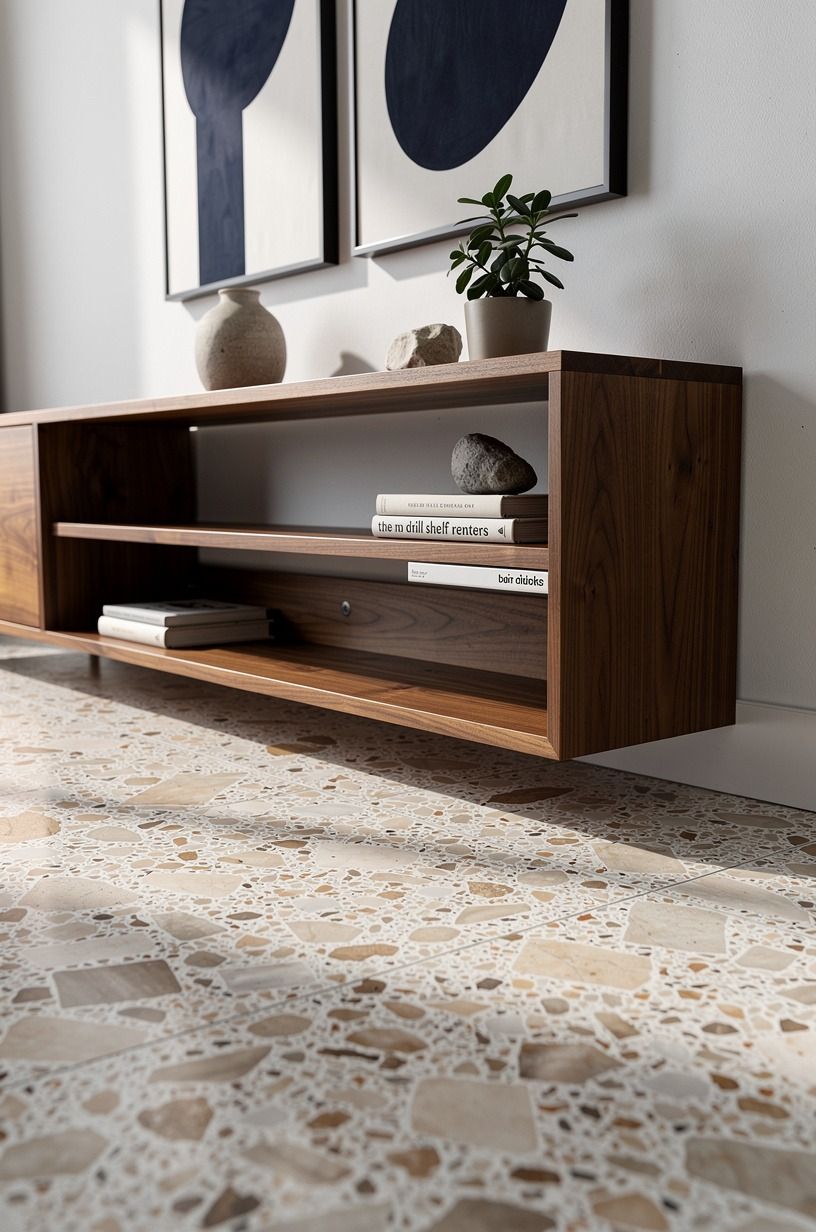
I tried hanging art beside the shelf first.
7Build the Three-Height Light Stack
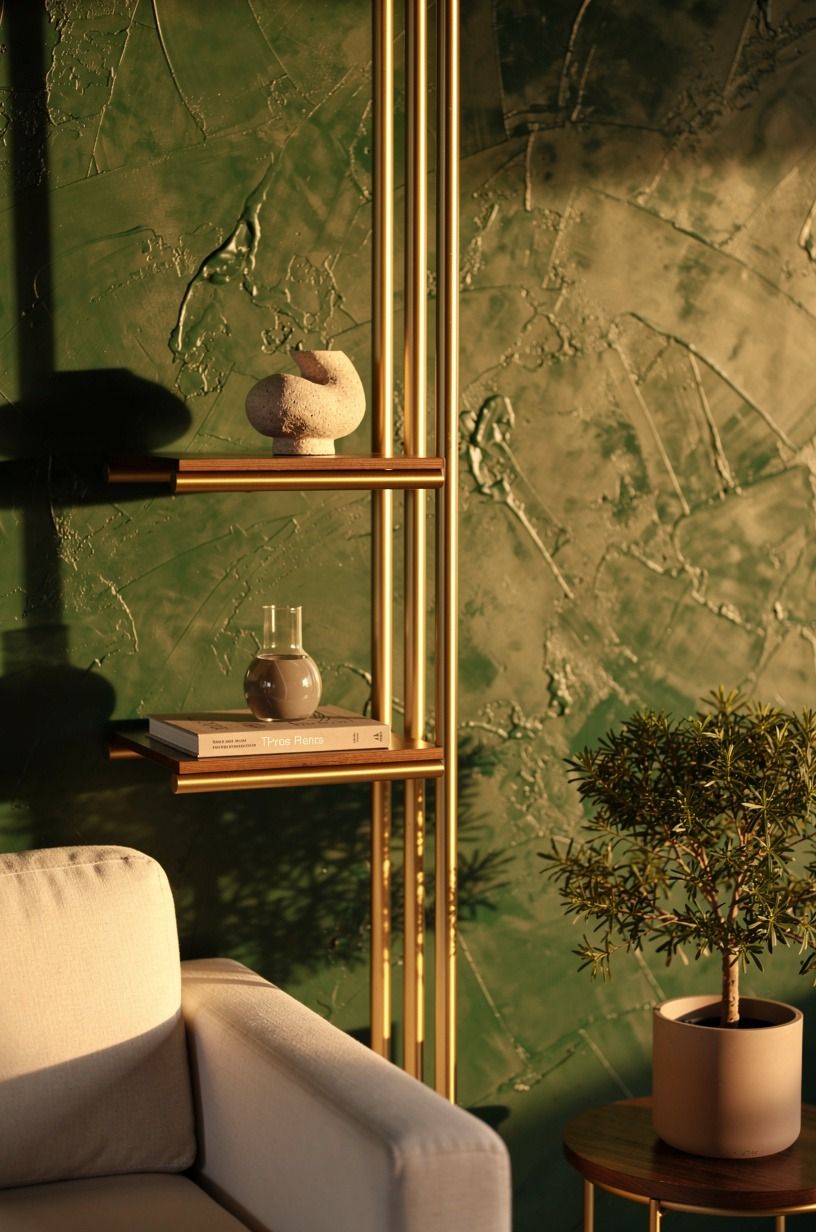
The shelf looked fine during the day and lifeless after sunset. I needed light, but I couldn't hardwire a sconce or run an ugly cord across the wall.
The Three-Height Light Stack solved it with a low candleholder, a medium ceramic vessel, and one taller framed print. I added a small battery lamp on the dresser below, so the shelf had a glow without needing a new electrical point.
Your room should have three light sources when possible: overhead, task, and ambient. The shelf became the ambient layer. At night, the lamp throws a pool of warm gold that stops near the rug's edge, and the Venetian plaster looks richer than it does at noon.
I chose West Elm styling inspiration but kept the actual arrangement modest. A rental doesn't need a designer fixture to feel considered. It needs light at more than one height.
But don't put a bright lamp directly beside delicate paper. The glare flattens everything. I placed the lamp below and slightly to the side, where you can see the wall texture without staring into the bulb.
8Mix renter friendly floating shelves with soft storage
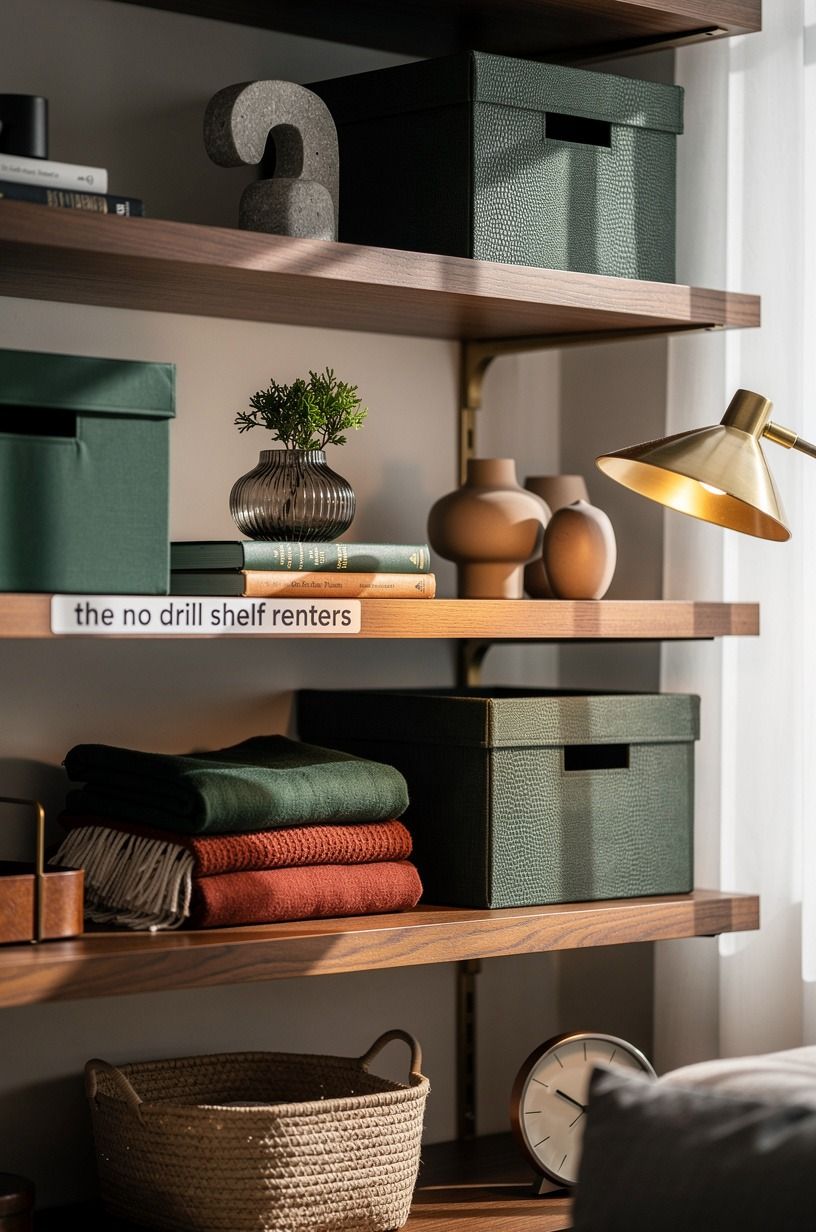
My shelf held display pieces, but I still needed somewhere for chargers, receipts, and the small clutter that appears every evening.
9Paint the wall before you style the ledge
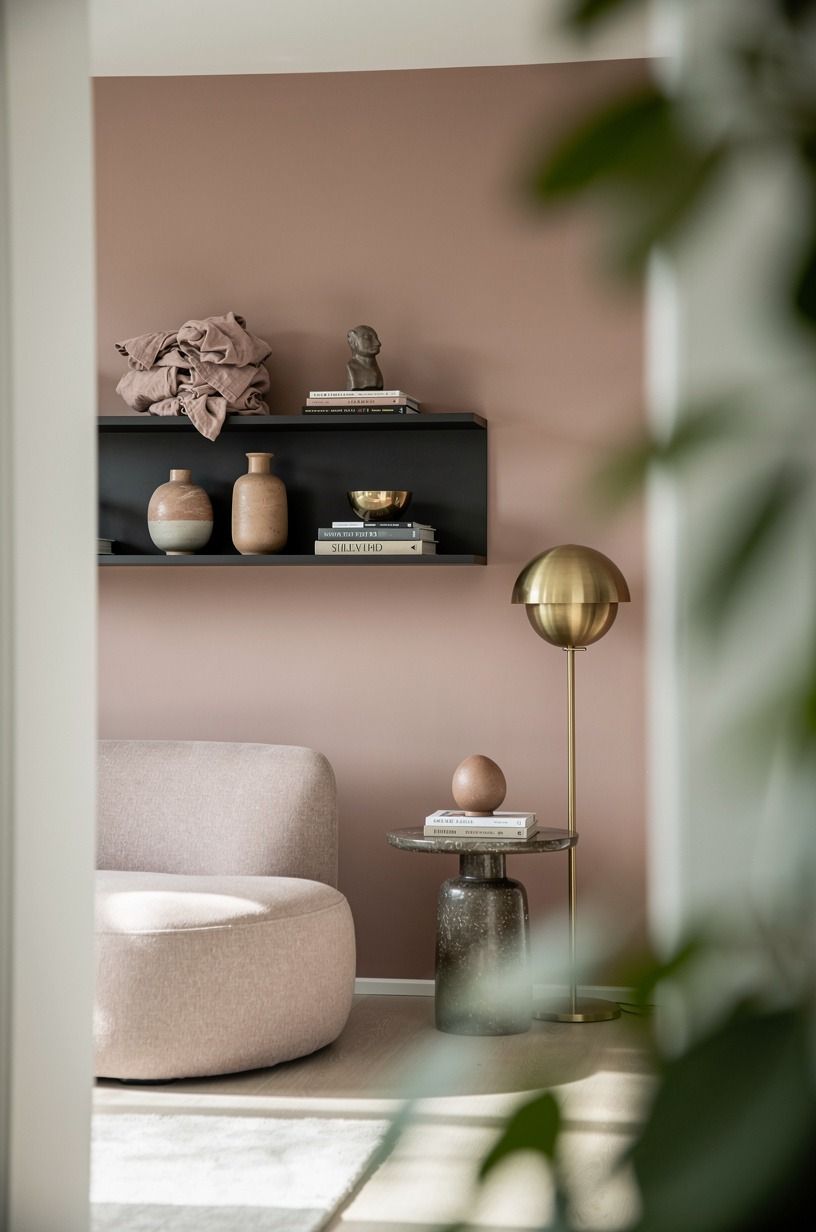
I had planned to keep the rental wall white, but the shelf needed a stronger background. The room had pale curtains, a white dresser, and too much reflected daylight.
A small area in Farrow & Ball Setting Plaster No. 231 gave me the test I needed. I used removable paint-friendly methods only after checking the lease, and I kept the sample controlled rather than covering the entire room.
Your wall color changes the apparent weight of the shelf. Against dusty rose, the washed Belgian linen looks softer and the brass looks warmer. Against stark white, the same objects looked disconnected.
I wouldn't choose a dark paint simply to make the shelf dramatic. My first test with a deep blue sample made the corner feel smaller by late afternoon. If you're working with limited natural light, a gentle neutral can give you more flexibility.
And I left one wall clear. A shelf looks more intentional when your eye has somewhere quiet to rest beside it. The room doesn't need every surface working at once.
10Arrange books by shape instead of color
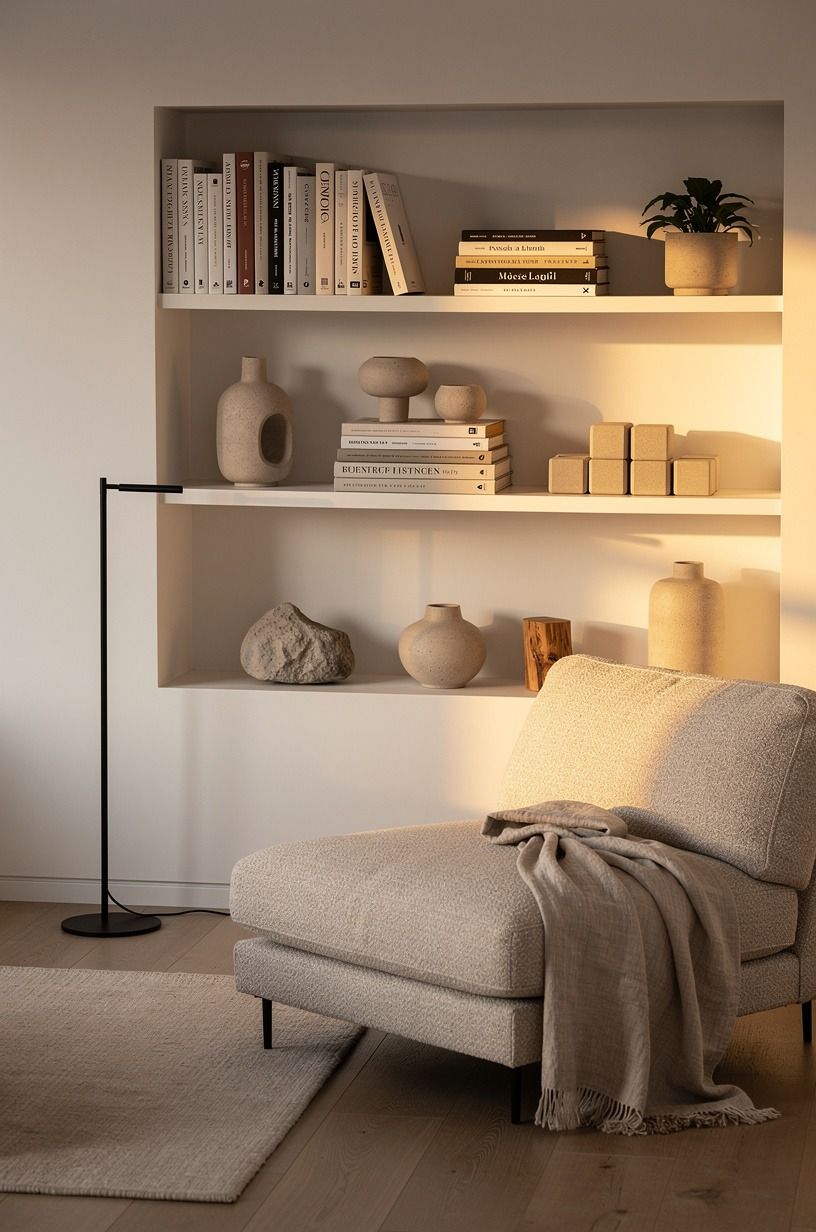
I tried arranging the books by color, and the shelf looked like a store display. It had order, but none of the relaxed feeling I wanted.
Grouping by shape worked better. I stacked two short paperbacks, stood one tall art monograph upright, and leaned a slim book against the print. Your books became architecture rather than a rainbow.
I removed dust jackets from a few older volumes because the paper underneath had warmer tones. A small ceramic cup filled the gap, while a pressed leaf in a thin frame added a quieter detail.
The shelf now has low, medium, and tall shapes without a strict pattern. If you're styling no drill shelves, keep the heavier books toward the center or over a support point. The arrangement should feel casual, but your weight still needs logic.
I also left room for change. A shelf that can't evolve becomes annoying quickly.
After a week, I moved one stack to the dresser and the wall felt fresh again. You don't need to rebuild the whole room to reset the corner.
11Anchor wall shelves without drilling using a visual triangle
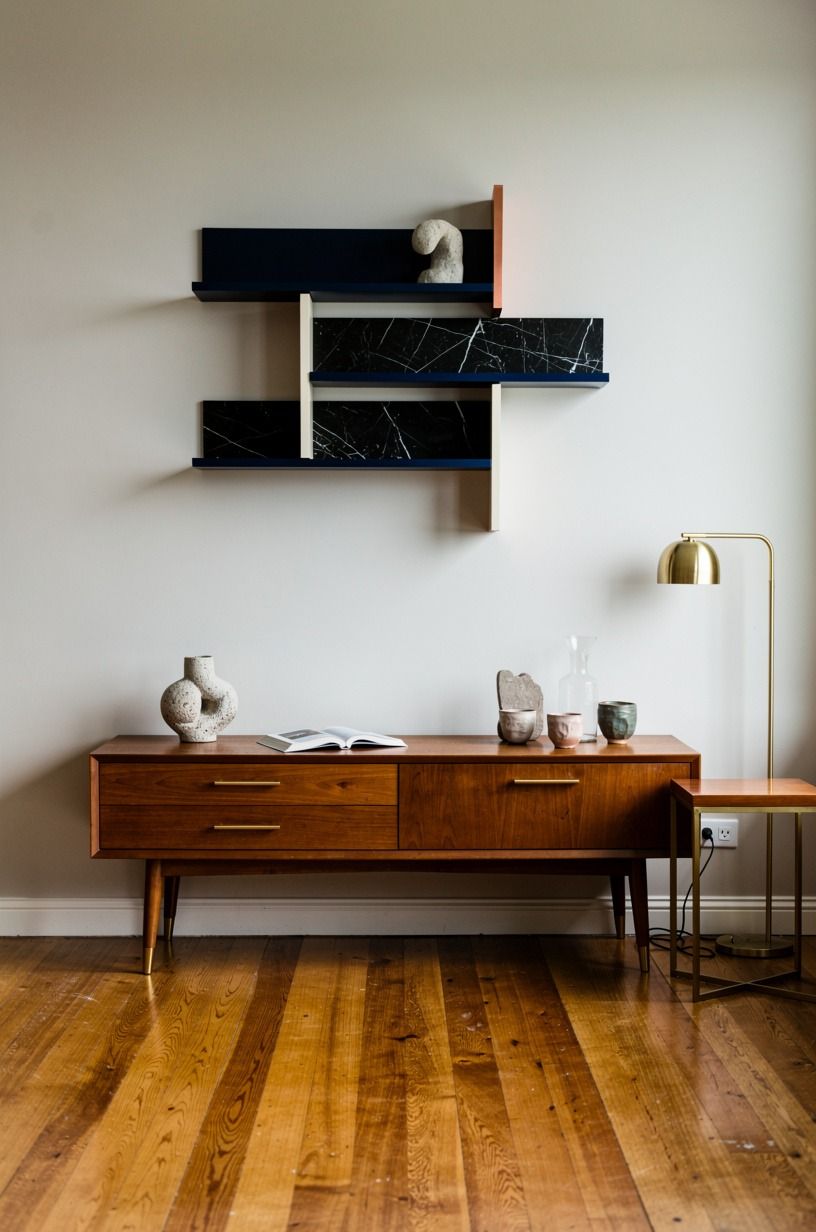
The shelf needed one clear focal point, but I didn't want a single oversized object. A visual triangle gave the display structure without making it rigid.
I used a CB2 accent piece in Nero Marquina black marble below, a dark frame at the upper left, and a copper dish at the lower right. Your eye moves between the three points, which makes the entire corner feel connected.
The triangle doesn't need exact geometry. It needs a clear high point, a middle point, and a low point. I kept the tallest object under the artwork so the arrangement wouldn't fight the composition.
I skipped a large round mirror because it would have reflected the doorway and made the wall busier. If you're styling a rental, reflections deserve attention. A mirror can double visual clutter before you notice what's happening.
For another bedroom-related rabbit hole, I saved who makes Beautyrest mattresses beside the shelf notes. It became part of the room's real life, while the objects still looked composed.
12Choose soft contrast over matching décor
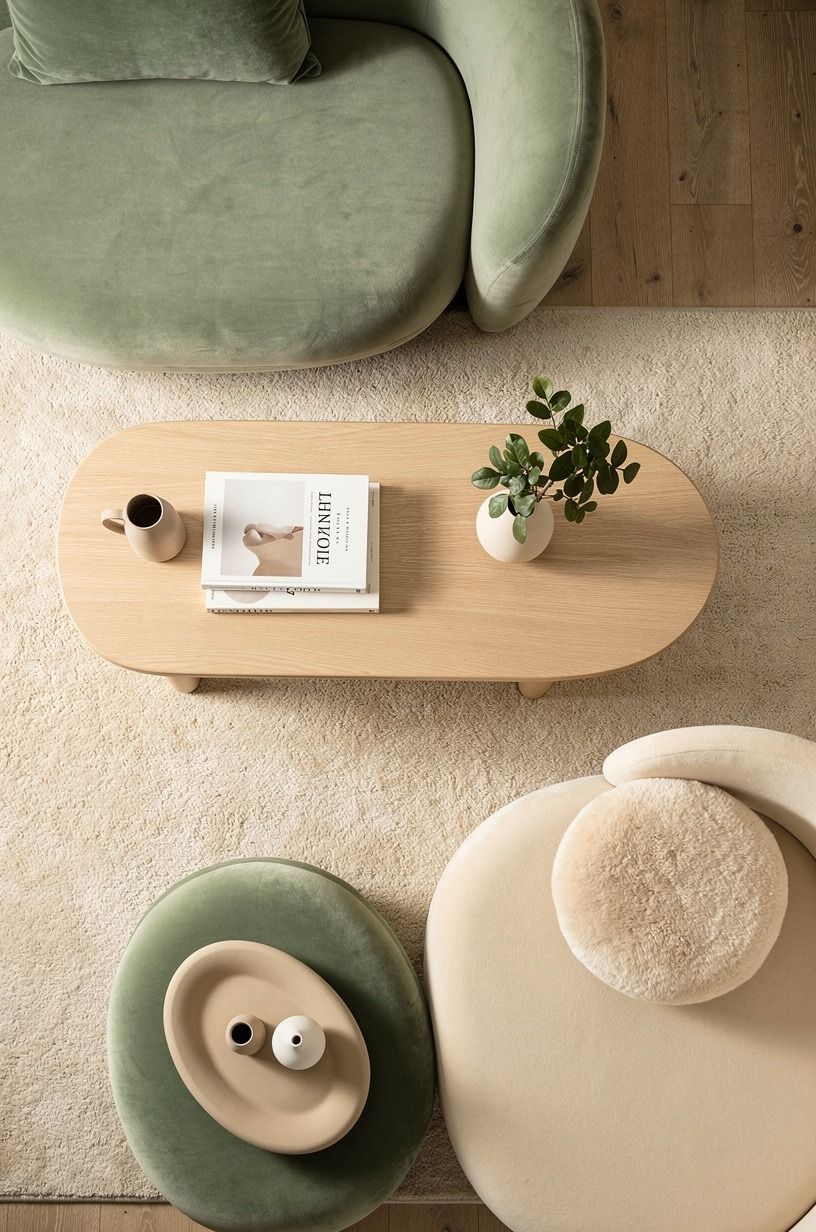
Matching baskets, matching frames, and matching ceramics made my first arrangement look purchased in one afternoon. I wanted a warmer room, not a furniture showroom.
I replaced one matching piece with deep-pile mohair velvet in a muted sage tone. The fabric absorbed light while the natural wood reflected a little warmth, and that contrast gave the shelf a little movement.
Your décor doesn't need to match. It needs a reason to coexist. I repeated the sage tone in a small book spine and a woven coaster, then stopped before the color became a theme.
This is also where I used a narrow natural wood object, but only one. Its grain added a rough note without turning the shelf into a wood collection.
But I wouldn't pair rough stone with five rustic objects. That combination can feel staged. One irregular material is enough when the rest of your display has smooth paper, cotton, and wood.
13Make the shelf work beside a sleeping nook
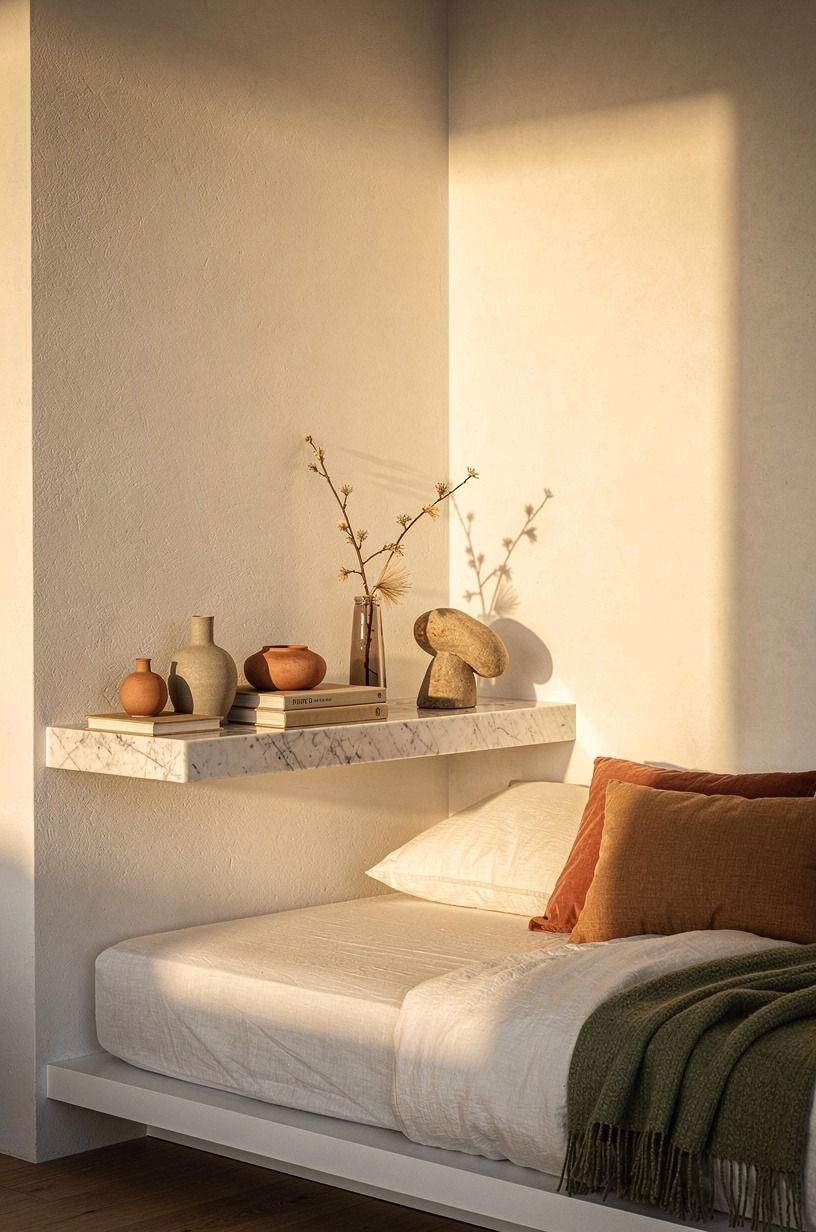
The wall shelf originally belonged in the living room, but it worked better beside the bed once I lowered the visual noise. I removed the taller vase and replaced it with a small Carrara marble tray and a reading light below.
A terracotta textile tied the shelf to the bedding without forcing a perfect match. Your sleeping nook should feel peaceful at night, and low contrast helps more than a pile of themed accessories.
I kept the shelf outside the pillow's reach and avoided anything sharp or heavy above the bed. That decision matters more than styling. If you're placing a no drill floating shelf near where you sleep, your safety margin should come before symmetry.
The room now has a quiet reading rhythm: lamp below, books at eye level, art behind, empty wall beside. I also checked whether does sleeping make you taller before settling into my usual bedtime reading, which is proof that shelves often become part of daily routines.
You can make a small space feel personal without covering every inch. Leave the quiet parts quiet.
14Finish with one living object
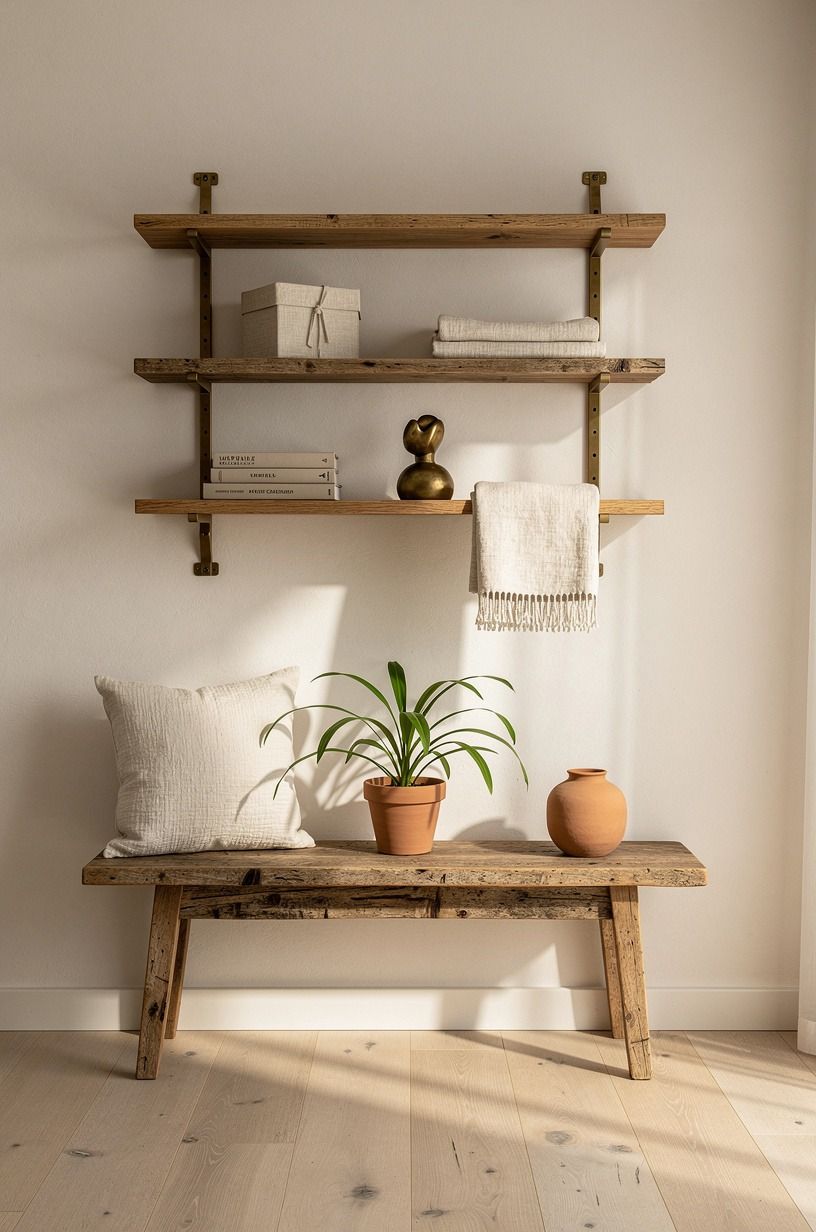
The shelf looked finished, but it didn't feel lived in until I added something that would change.
How much it cost
I kept the makeover within the kind of spending range renters can adjust over time. The shelf, paint sample, textile, frame, and storage came from a mix of pieces I owned, secondhand finds, and common retail sources. I didn't need one large purchase to change the wall.
For my version, the biggest value came from reusing the shelf and buying one strong textile instead of replacing every object. A wool rug can run $400-$1,500, linen drapes for a pair can run $120-$400, and a statement light fixture can run $150-$800. Those are room-level costs, not requirements for this wall.
I also kept the paint decision modest. A full DIY room paint project typically sits around $200-$600, but you can use a smaller test area when your goal is simply to understand the undertone. I didn't need a new rug to make the shelf work.
The money went toward texture and structure, not quantity. If you're deciding where to start, spend on the item your hand touches or your eye sees first. For me, that was the cerused white oak edge and the chair textile.
Why I stopped treating renter shelves like temporary décor
I used to think a rental-friendly room had to look polite. Nothing could be too bold, too personal, or too permanent. That mindset made my walls empty and my choices timid.
The shelf changed when I accepted that removable doesn't have to mean disposable. A carefully tested mount, a real material, and a clear composition can give you a room that feels grounded without damaging the wall. I didn't need permission to care about the space.
What surprised me was how much the small sensory details mattered. The oak feels dry beneath your fingertips.
The linen box catches dust softly instead of shining. At night, the lamp creates a warm pool below the shelf, and the artwork disappears into the shadow just enough.
I made one bad call at the start. I placed too many small objects across the ledge, then wondered why the display felt nervous. Your eye needs a few larger shapes to rest on.
Once I removed the tiny pieces, the shelf looked calmer and the room felt larger.
I also went back and forth on paint. Farrow & Ball Setting Plaster No. 231 gave the wall its dusty-rose warmth, while Benjamin Moore White Dove OC-17 felt too plain. I chose the warmer backdrop because I wanted the shelf to evolve.
That is the real lesson I took from this makeover. Your rental doesn't need to look permanent to feel like home.
It needs evidence that someone lives there, chooses carefully, and has made room for ordinary rituals. A shelf can hold books, but it can also hold the rhythm of your day.
The Questions Worth Answering First
What is the best no drill shelf for a small rental?
A narrow oak ledge or a lightweight IKEA KALLAX combination works best when your wall cannot take holes. Choose a shallow profile, test the mount slowly, and keep heavy books lower. You’ll get more storage without a bulky projection into the room.
Where can I buy no drill shelf pieces on a budget?
Look at IKEA, Wayfair, Target, Facebook Marketplace, and local thrift shops. Search for solid wood ledges, lightweight frames, and removable storage. You can also compare why does Red Bull make me sleepy while planning a bedroom reading corner, though the shelf itself needs no special retailer.
How much does a no drill shelf makeover cost?
A full room refresh can range from about $200 to $800 at the budget tier, while a larger room with furniture, lighting, and a rug can reach $1,500 to $5,000. Your shelf makeover can cost less if you reuse the ledge, books, and frames you already own.
Can I create no drill shelves on a budget?
Yes, and you can start with three low-cost moves: regroup your books, add one soft textile, and use a removable frame behind the ledge. A thrifted basket or secondhand art can give you more texture without a large bill.
Are no drill shelves worth it in a small space?
Yes, if you keep the profile shallow and the weight controlled. Small rooms benefit from vertical storage because your floor stays open. Place one shelf above a dresser or chair, leave clear space around it, and avoid filling every inch.
Are no drill shelves a good idea for a rental?
Yes, when your lease allows the mounting method and you test the wall first. Removable strips, tension systems, lightweight ledges, and peel-and-stick surfaces can work for lower-impact styling. Keep heavy objects on furniture below, not over your bed or walkway.
Where I'd Start First
If I had to pick one, I'd start with the shelf's background color. A calm wall makes every book, textile, and wood edge read more clearly, while a busy backdrop forces you to buy more décor. Pin this makeover for later, then remove one object from your own ledge tonight.