
 by
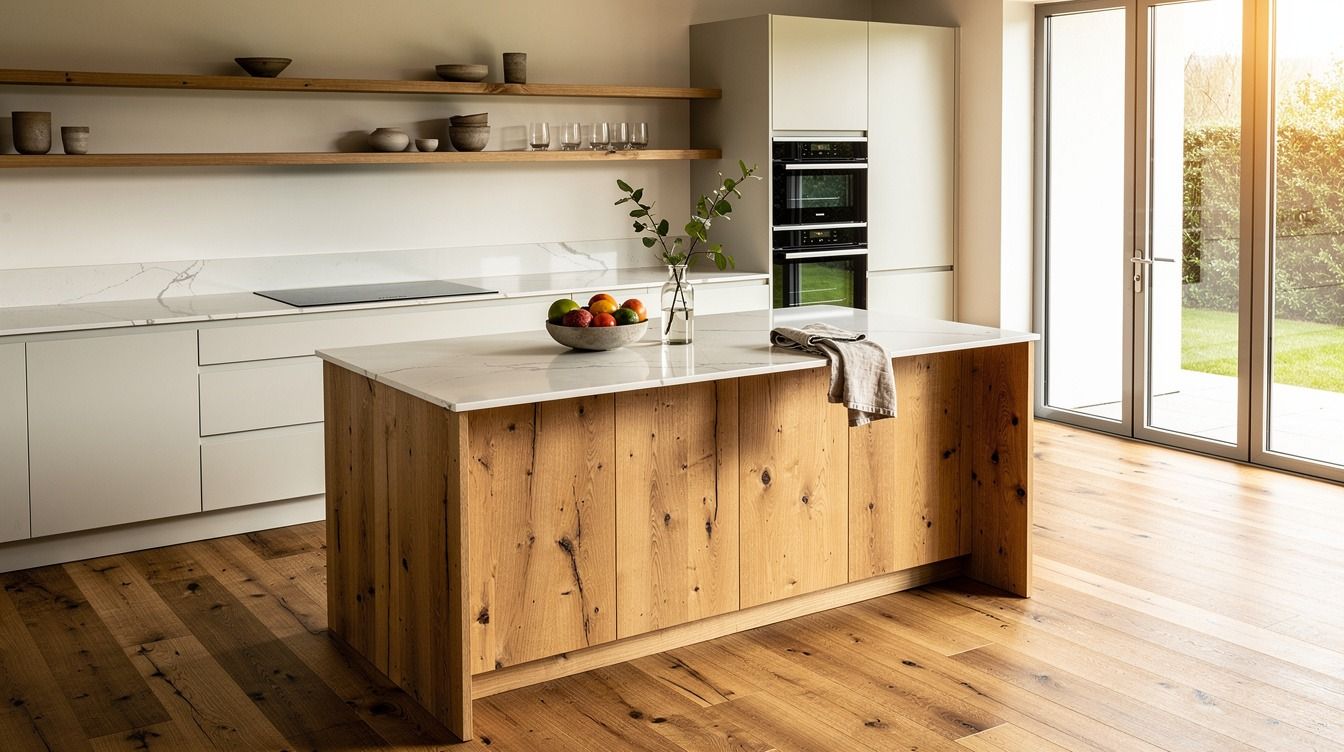
by The short answer: oak floors tie a kitchen together when you stop fighting their warmth and start building on it. I learned that the hard way. I spent two years layering cool grays on top of my honey oak floor, and the room felt like a dentist's office with good bones.
The floor wasn't the problem. My choices were.
Once I stopped apologizing for the oak and started treating it as the anchor, everything else got easier, and cheaper. These 13 ideas are what I'd do again, most of them for under a few hundred dollars.
- Start by reading your floor's undertone
- Paint the walls a warm white, not a stark one
- Follow the Two-Wood Rule
- Choose light cabinets over dark floors, not the reverse
- Should your island match the floor?
- Run a runner down the work aisle
- Swap your hardware for unlacquered brass
- Hang the Three-Height Light Stack
- Float open shelves in matching (or clearly contrasting) oak
- Know what the bigger changes actually cost
- Soften the room with fabric you can actually wash
- Style the counters with wood and stone, not clutter
- Frame the floor with painted lower cabinets
1Start by reading your floor's undertone
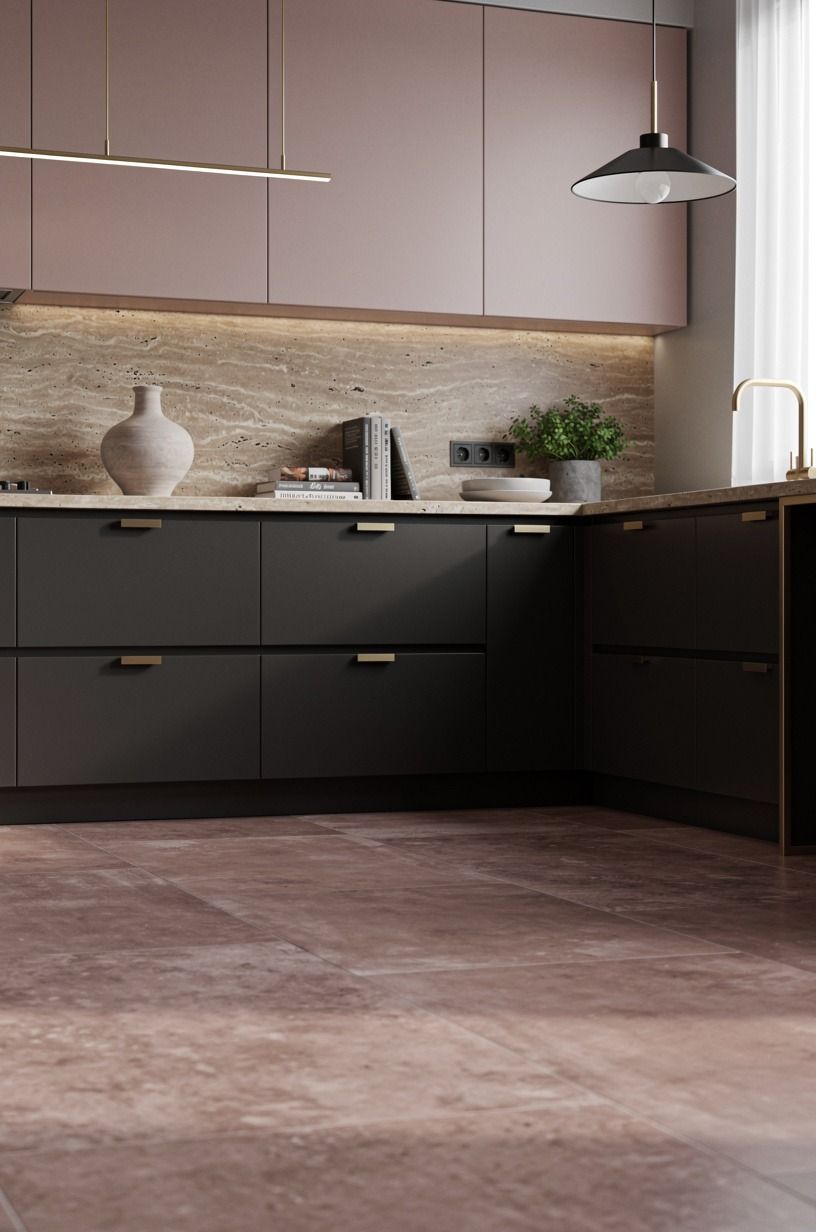
Before you buy a single thing, figure out what your oak is actually saying. Most oak floors lean one of three ways: honey (warm orange), wheat (neutral gold), or weathered (cool gray-brown). I call this the Undertone Read, and skipping it is why so many kitchens feel slightly wrong.
Put a plain white sheet of paper on the floor in daylight. The cast you see next to it is your undertone.
Honey oak wants warm whites and greens. Weathered oak can handle cooler grays. Wheat sits happily in the middle, which is why white oak is everywhere right now.
Two minutes, zero dollars, and every decision after this one gets easier.
A warm travertine piece with dusty rose, charcoal, and brass nearby is a useful reminder: oak does not need everything around it to be beige. It just needs the palette to acknowledge its warmth.
2Paint the walls a warm white, not a stark one
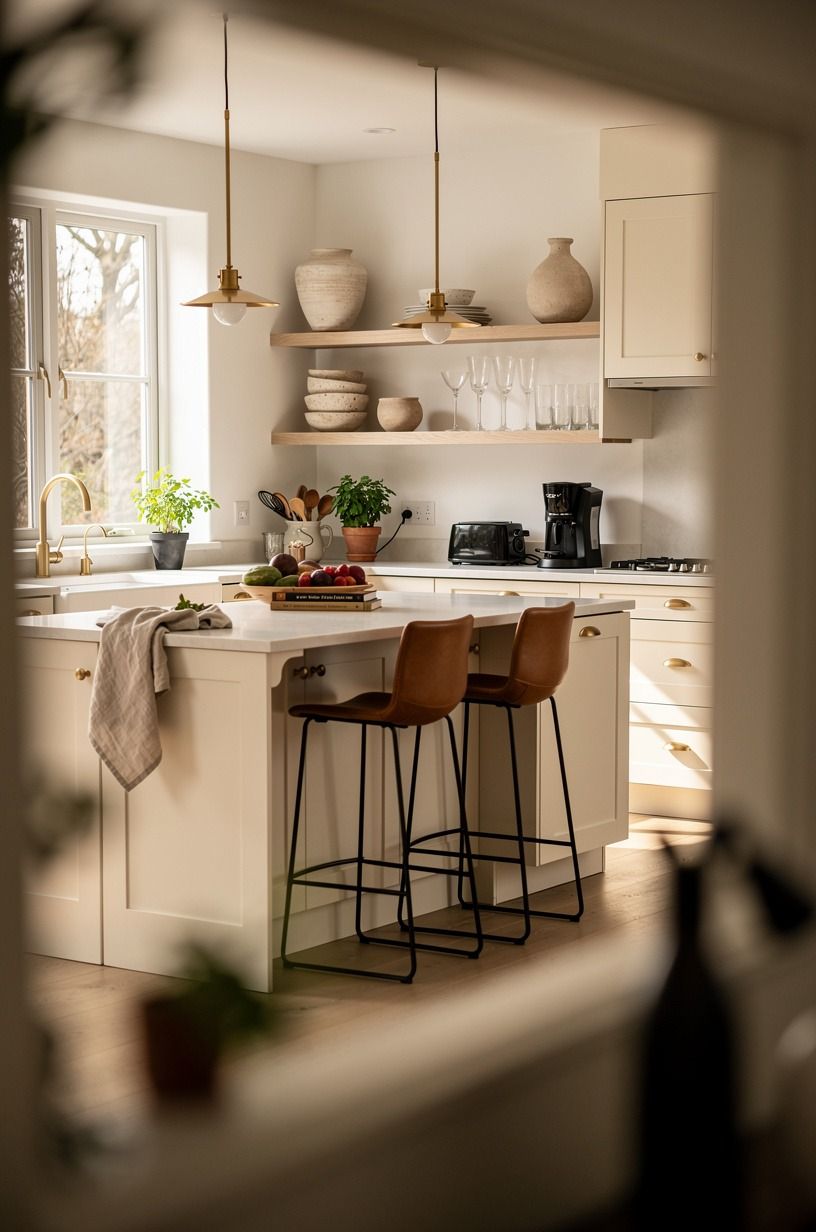
Stark white against oak floors is the mistake I see most.
Choose a warm white instead, especially if you have camel tones, black accents, or unlacquered brass in the room. Brass that develops a little patina makes the whole combination feel lived-in rather than freshly installed.
3Follow the Two-Wood Rule
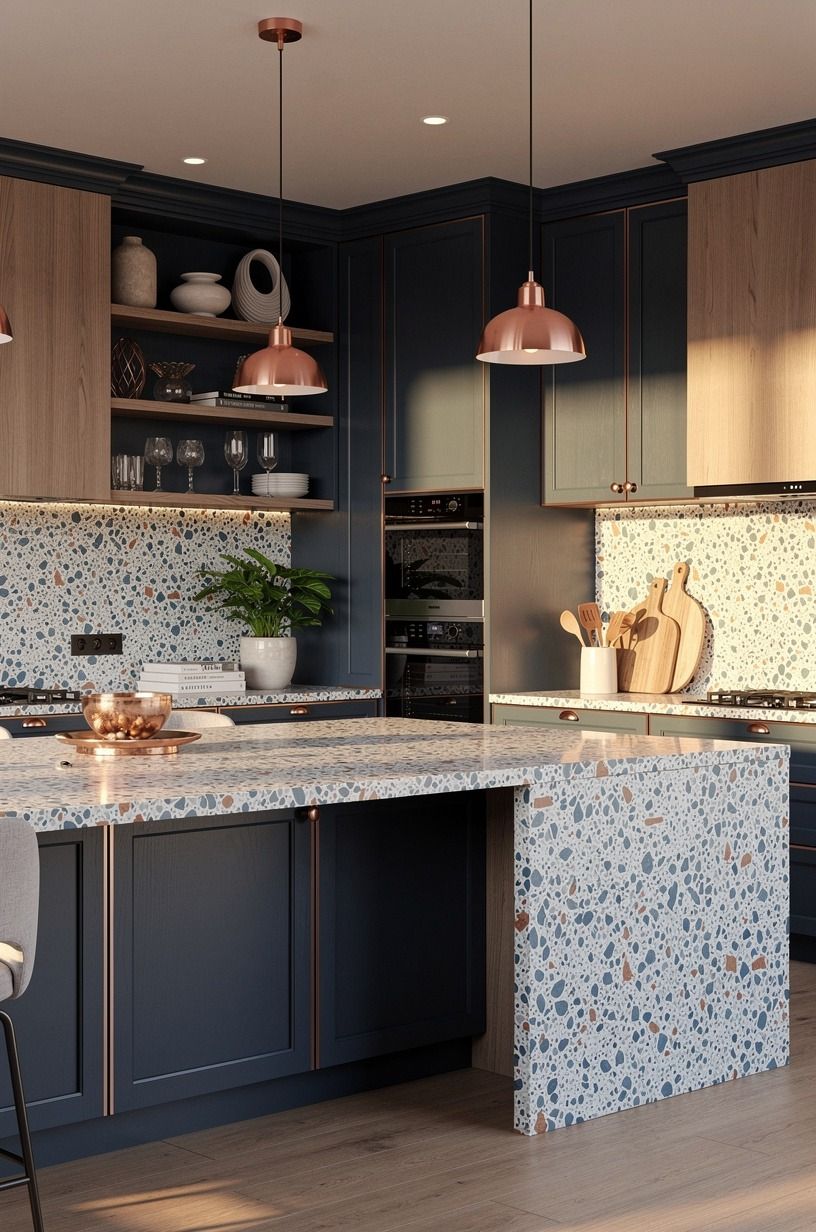
Here's a rule I wish someone had handed me years ago: two wood tones per room, three at most. Your floor is one.
Your cabinets or a shelf can be the second. That's it.
When you add a fourth wood (a walnut stool, a cherry bowl, a bamboo organizer), the room stops feeling collected and starts feeling like a lumberyard. The move is making sure your second wood is either clearly lighter or clearly darker than the floor, never almost-the-same. Almost-matching reads as a failed match.
An oversized-chip terrazzo board against a honey floor works because nobody could confuse them. Deliberate contrast looks intentional.
Accidental sameness never does.
4Choose light cabinets over dark floors, not the reverse
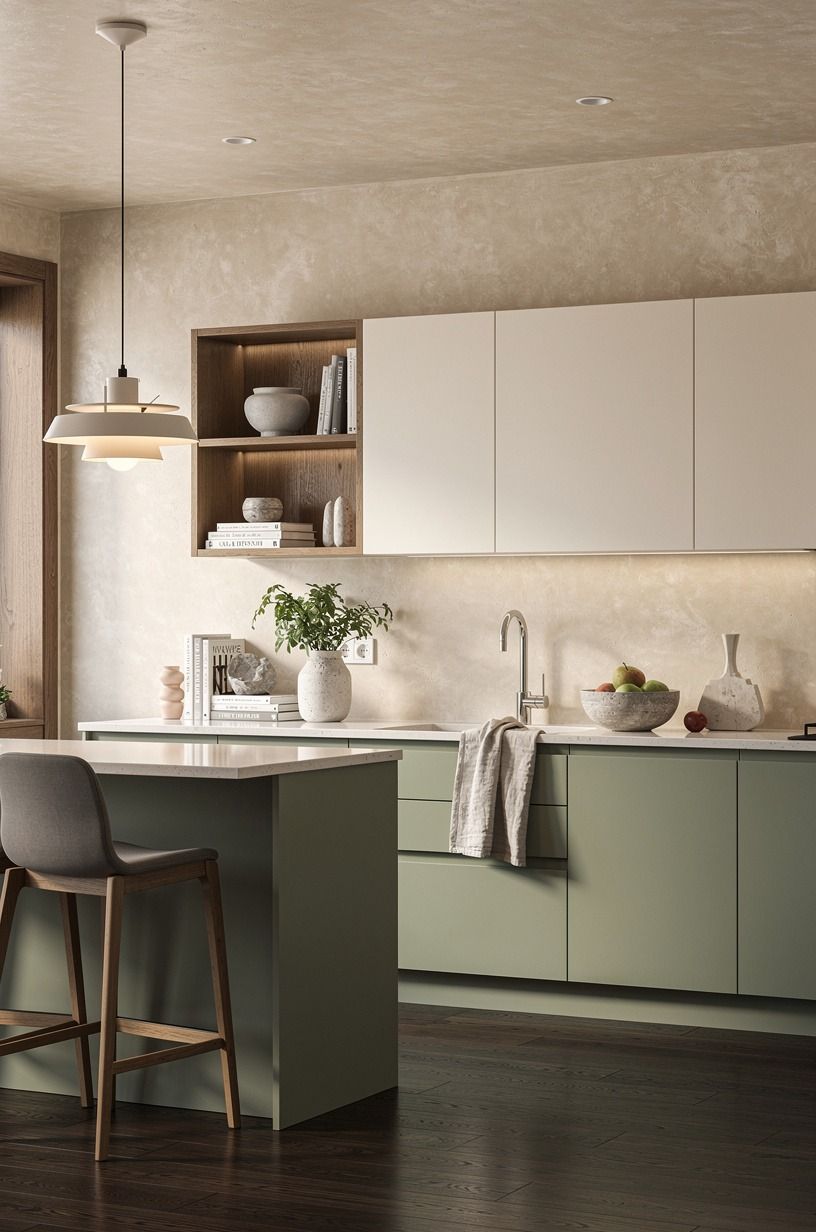
If you're weighing cabinet color against your oak floor, put the lighter tone on top.
A sage green lower cabinet, warm cream upper, and a softly hand-applied Venetian plaster wall keep natural wood from feeling heavy. The floor still grounds the room, but it is no longer carrying every warm note by itself.
5Should your island match the floor?
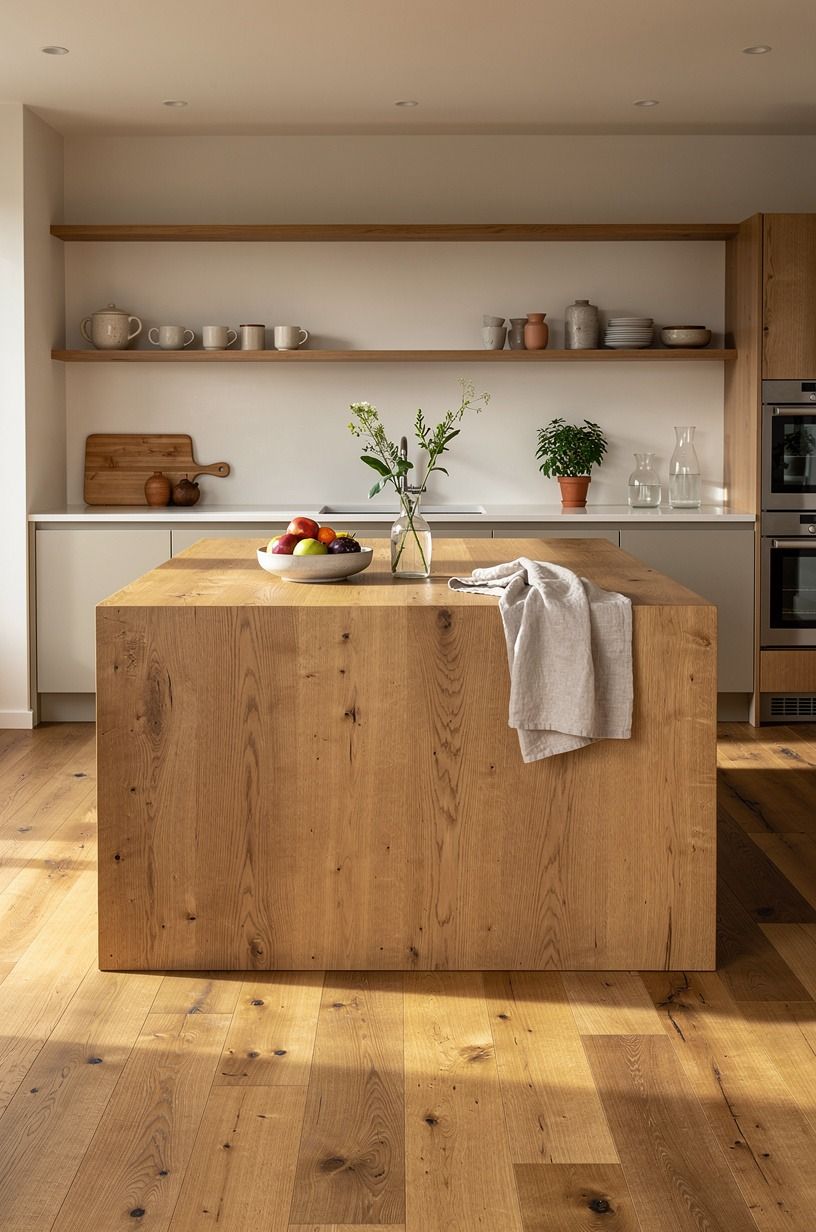
No. And this is the hill I'll die on.
An island in the same tone as the floor looks like it grew out of the boards, and not in a good way. It reads as a blob. You want the island to sit ON the floor, visually distinct, like furniture in a living room.
That means either painted (Farrow & Ball Studio Green, No.93 is my pick for a north-facing kitchen) or a wood that's at least two shades off.
Terracotta, stone, and olive make a particularly good counterpoint to oak; a few shagreen accents can add texture without introducing another competing wood tone. Keep your clearances honest while you're at it.
You want 42 to 48 inches all around an island, or the room feels pinched no matter how pretty the finish is. I've seen gorgeous islands ruined by a 36-inch squeeze. Measure first, paint second.

6Run a runner down the work aisle
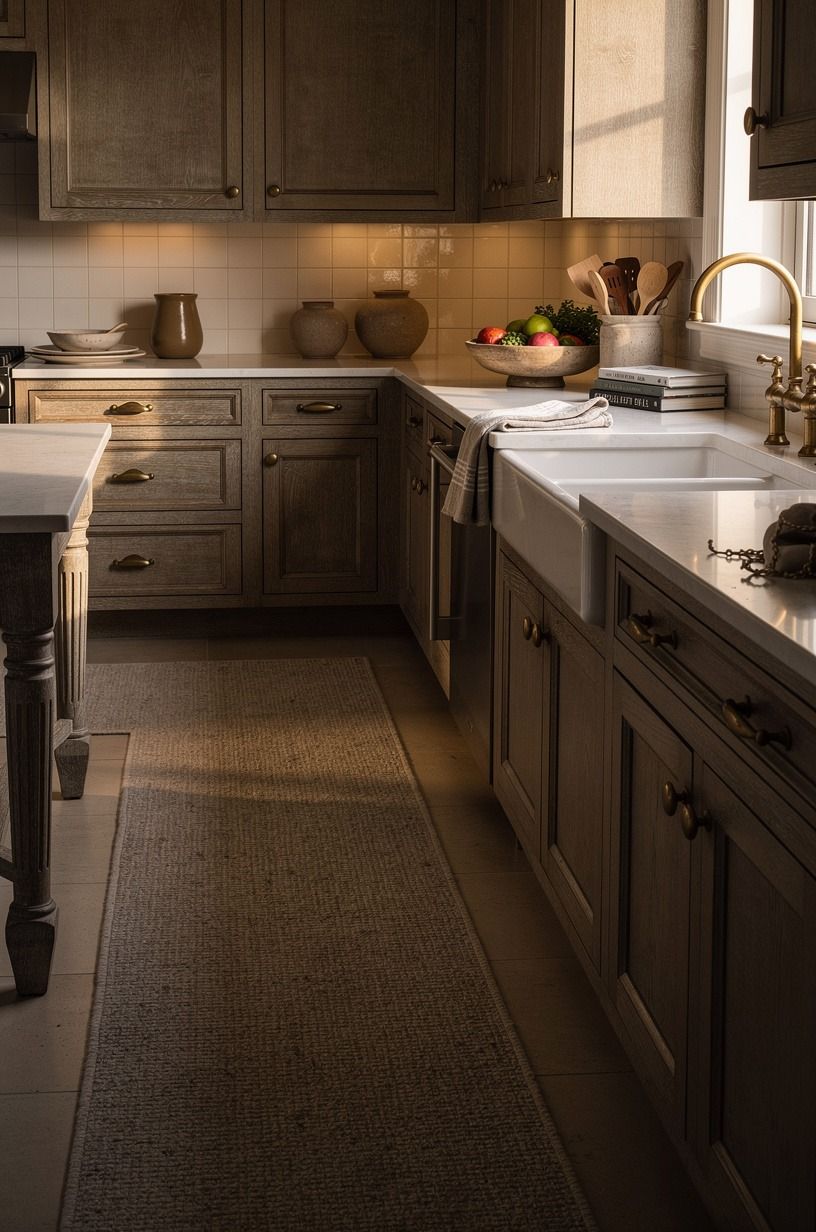
A runner between the sink and the island does three jobs at once: it softens the acoustics, it protects the oak's finish where you stand most, and it adds the one texture a kitchen never has enough of. Fabric.
Go flatweave or low-pile so crumbs don't bury themselves. A washed Belgian linen runner in clay or soft linen tones picks up the oak's undertone and looks better slightly worn.
Size matters here: you want it to stop short of the cabinets on both ends, with 6 to 8 inches of floor showing, so it reads as a layer and not wall-to-wall carpet. Machine-washable only.
Trust me on that one.
7Swap your hardware for unlacquered brass
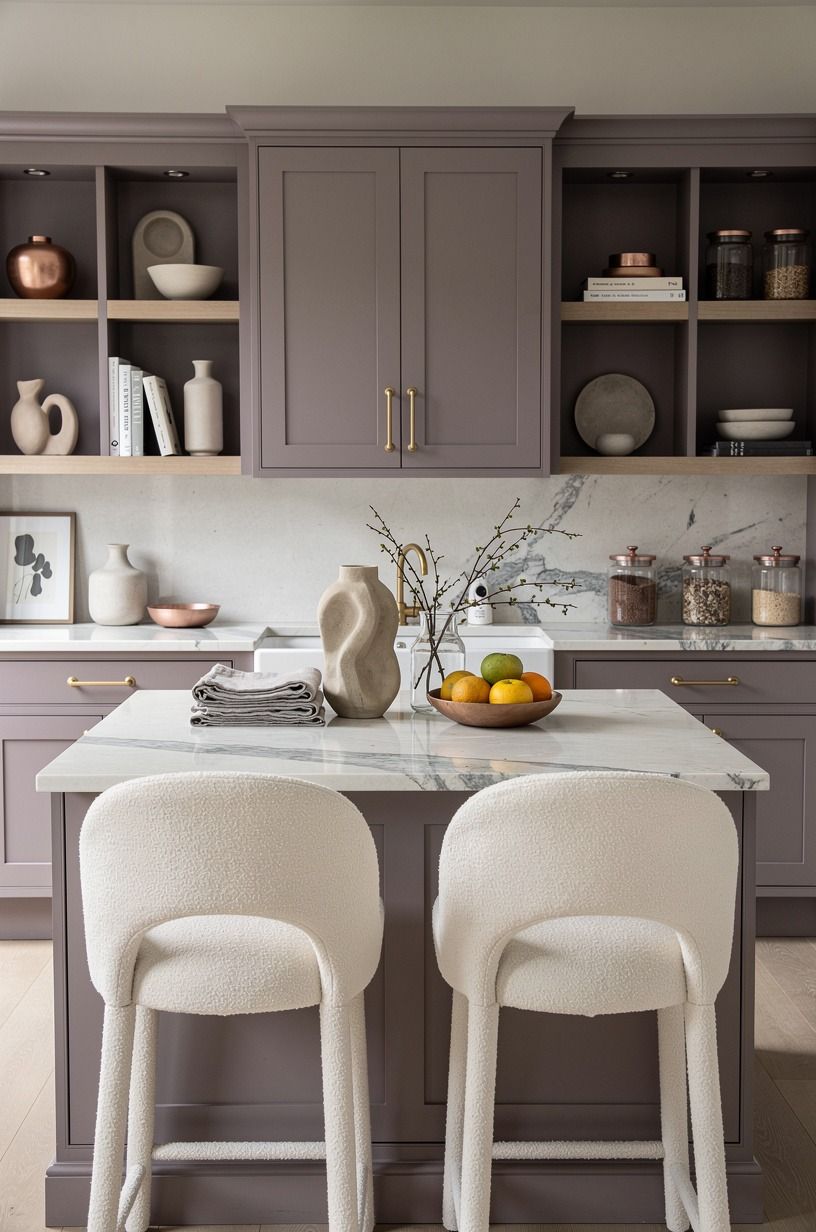
This is the fastest change on the whole list, and maybe the highest impact per dollar. Cabinet pulls and knobs in unlacquered brass echo the warm gold in oak and age into a soft patina that looks better in year three than day one.
Expect to pay about $6 to $15 per pull at the budget end, so a full kitchen of 20 pieces runs $120 to $300. Matte black works too if your floor is weathered and cool-toned, but with honey oak I'd skip chrome entirely. Chrome fights warmth.
Plum, grey, rose gold, and a little organic bouclé can make that brass feel less predictable. One Saturday, one screwdriver, and the cabinets look like you replaced them. That's the whole appeal!
8Hang the Three-Height Light Stack
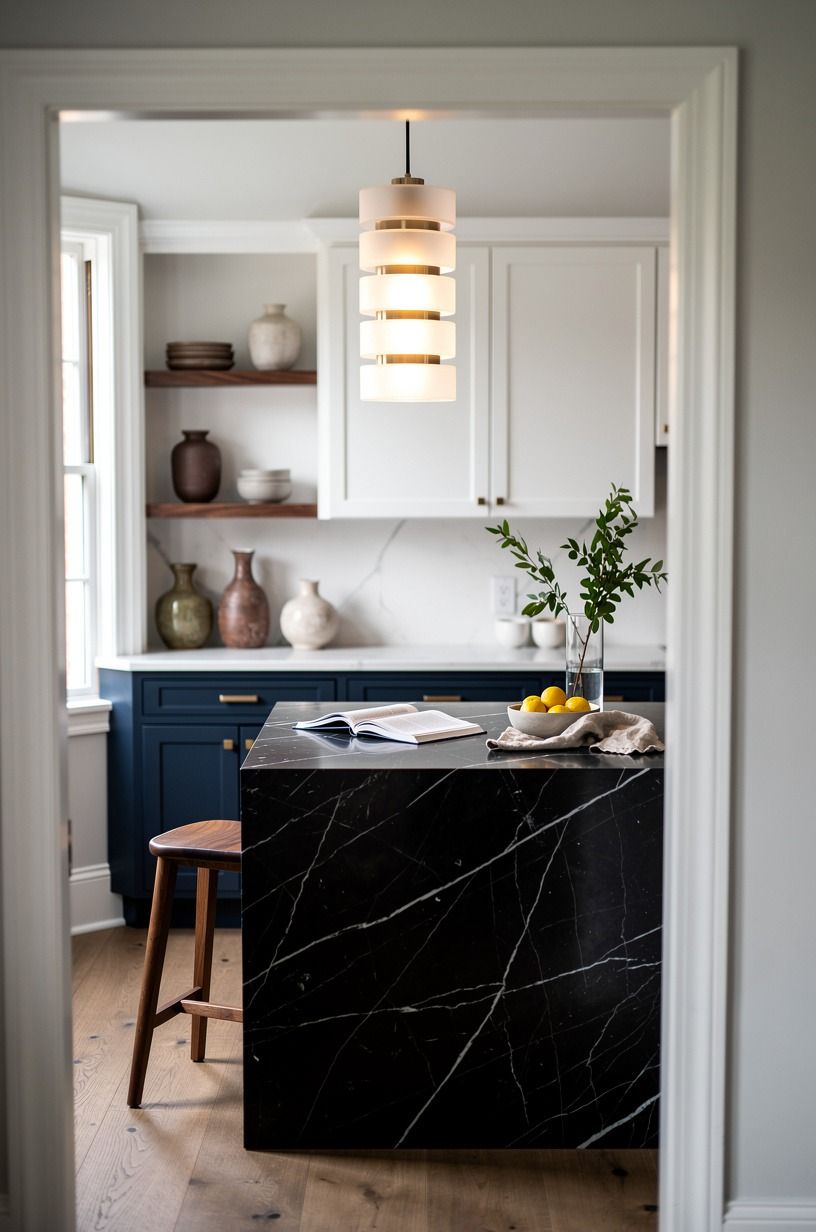
Most kitchens have one light source doing all the work, usually a sad flush mount.
Try three heights instead: ceiling pendants, under-cabinet light, then one lower lamp or sconce near the counter. Navy, white, walnut, and Nero Marquina marble can handle this layered approach beautifully because the lighting keeps the dark materials from swallowing the room.
9Float open shelves in matching (or clearly contrasting) oak
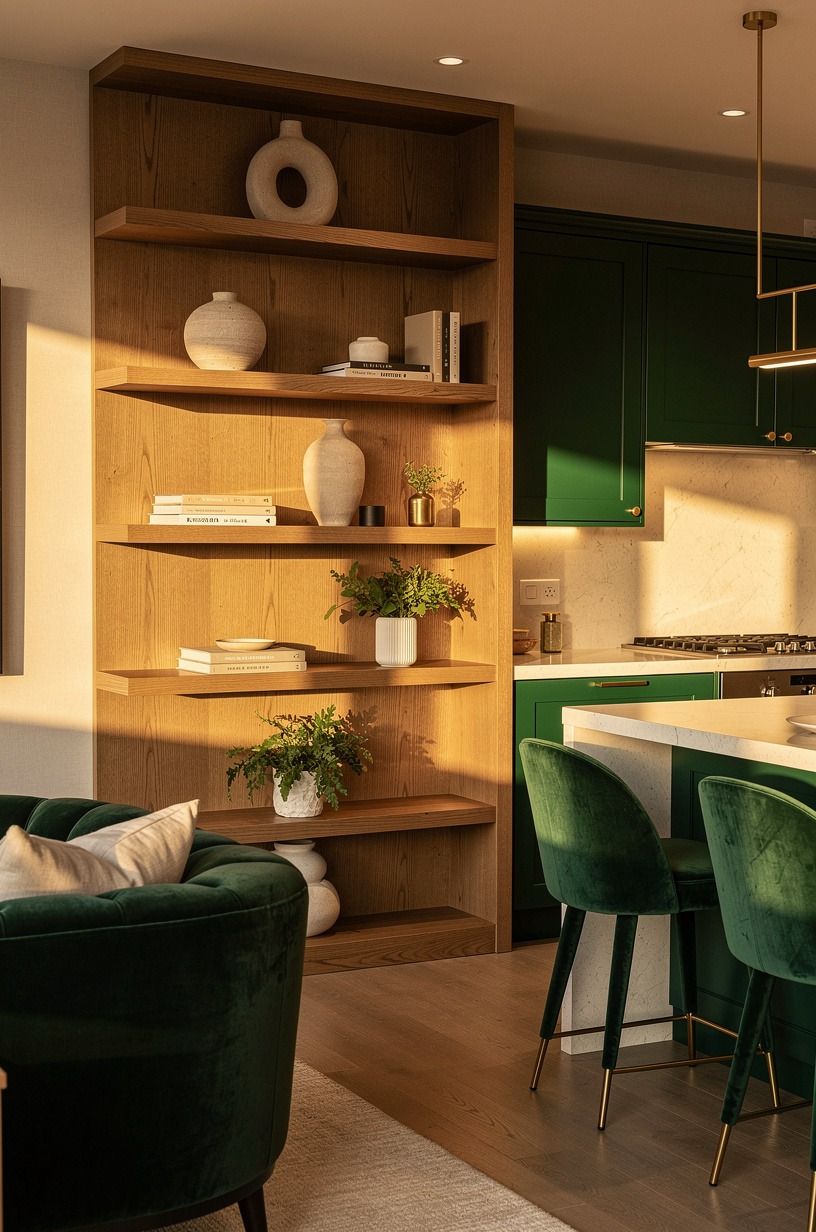
Two or three floating shelves give the floor an echo higher up the wall, which is what "ties the room together" literally looks like. Repeat the wood, repeat the warmth.
The rule from section three applies: match the floor closely, or go clearly darker with walnut. A shelf in a mystery middle tone will bug you forever.
Standard backsplash gap is 18 inches between counter and uppers, and I'd keep the first shelf right at or just above that line so your tallest items still fit. A 3/4-inch solid oak shelf from a local lumberyard, cut to size, costs less than a flimsy big-box version and holds actual weight. Style it with emerald, gold, cream, and one deep-pile mohair velvet detail for softness, using the same restraint I'd use for nightstands that tie a bed together: fewer things, bigger presence.
10Know what the bigger changes actually cost
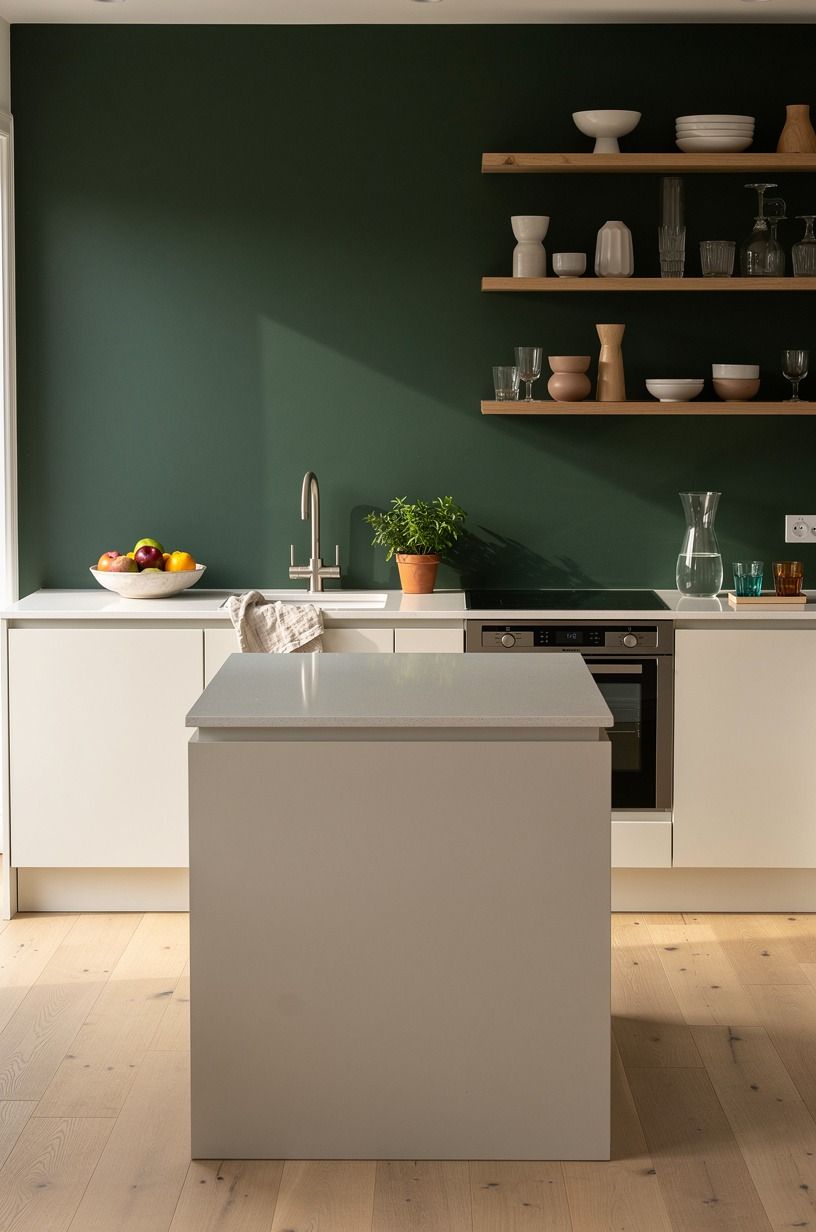
Some ideas on this list are weekend-cheap. Others brush against real renovation money, and you should know which is which before you fall in love with a zellige backsplash. Here's the honest breakdown, based on typical US ranges:
And for the materials themselves:
Everything in sections 1 through 9 sits comfortably in that first tier. That's the point of this list.
If your floor is solid, you don't need tier three. You need paint, brass, light, fabric, and perhaps one small piece of Carrara marble with its subtle grey veining.
11Soften the room with fabric you can actually wash
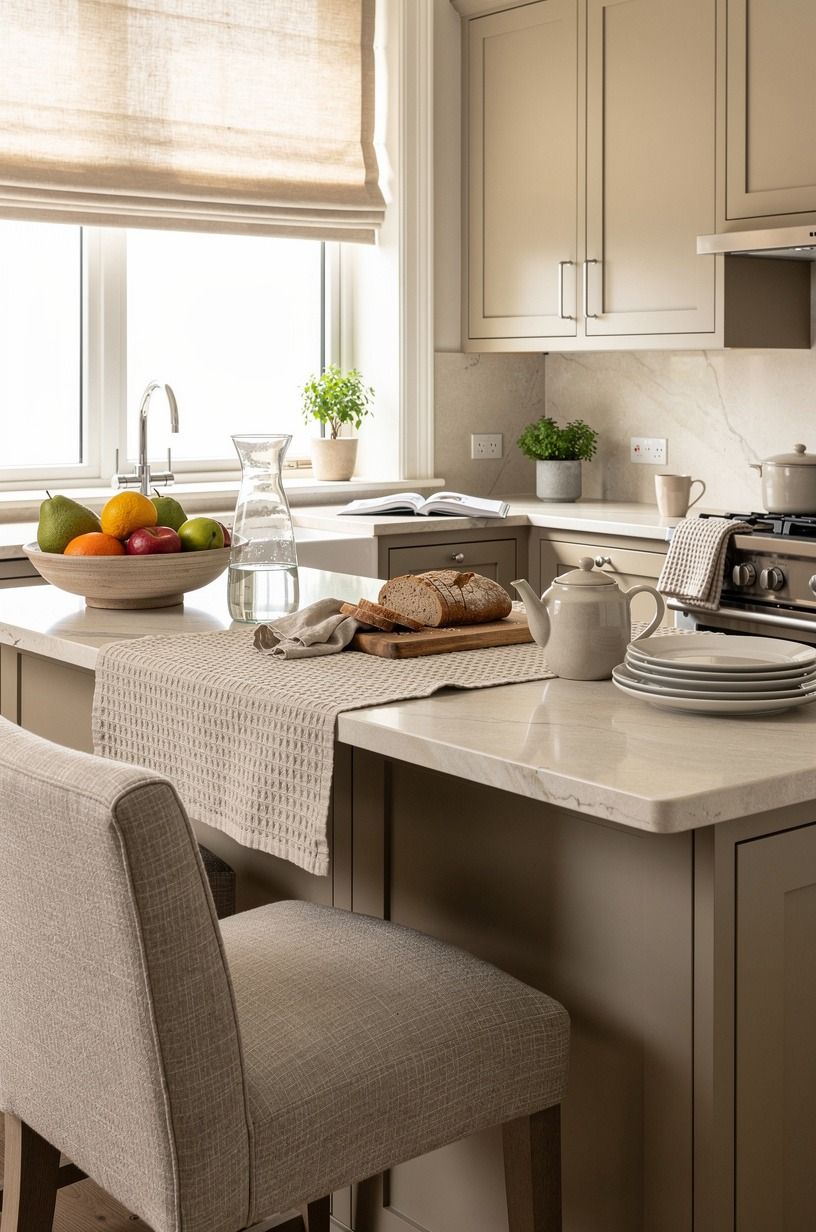
Kitchens are hard surfaces stacked on hard surfaces, and oak floors, lovely as they are, add one more. Fabric is the counterweight. A café curtain on a tension rod.
A linen tea towel that isn't decorative. A seat cushion on the breakfast stool.
Belgian flax linen is worth the small premium here because it wrinkles in a way that looks relaxed instead of messy. Keep the palette in the floor's family: dusty rose, charcoal, and brass also work when the wood is reclaimed, weathered teak.
This is also the cheapest idea on the list, since a tension rod and a yard of fabric runs about $30 total. Renters, this one's entirely yours, since nothing touches a wall.
12Style the counters with wood and stone, not clutter
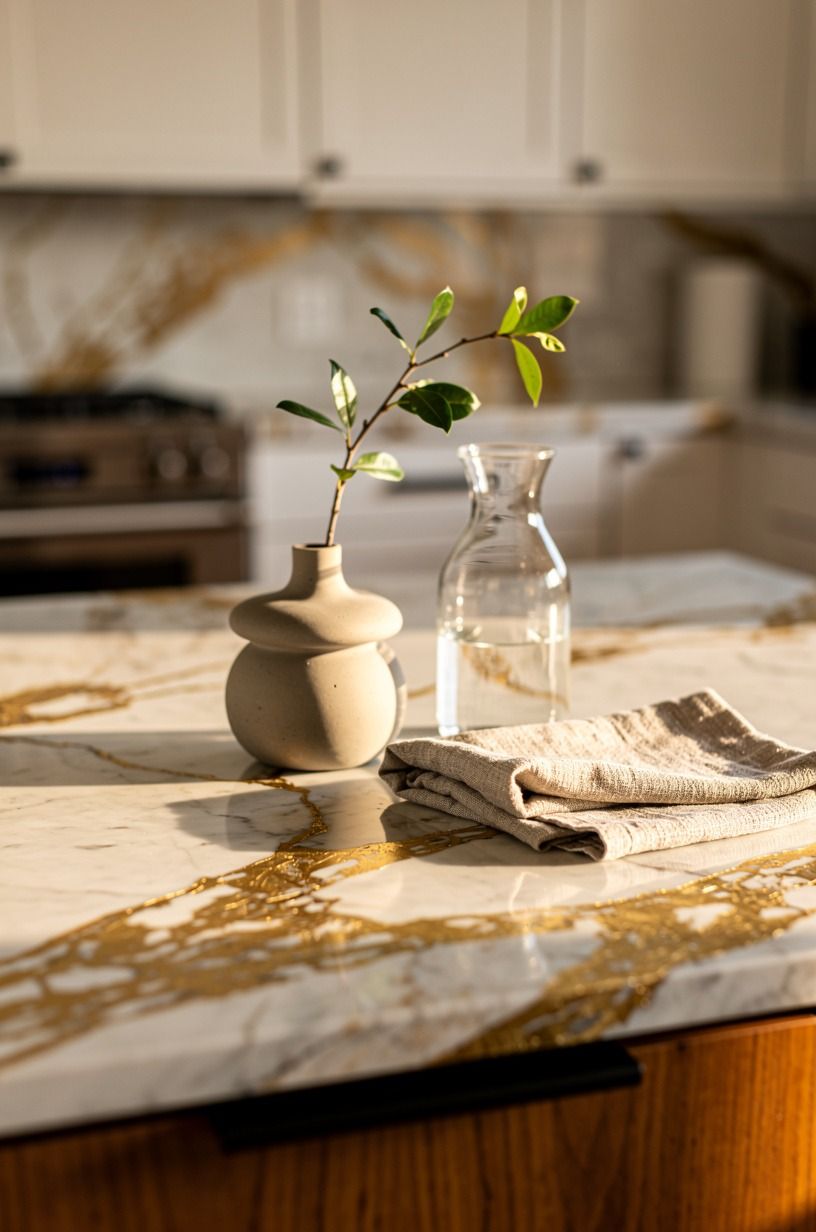
Counter styling is where good kitchens go to die.
Keep it to three useful objects: a wood board, one stone piece, and the thing you reach for daily. Calacatta marble with gold veining brings enough presence on its own, especially with warm white walls, camel tones, and black accents. The rest can stay in the drawer.
13Frame the floor with painted lower cabinets
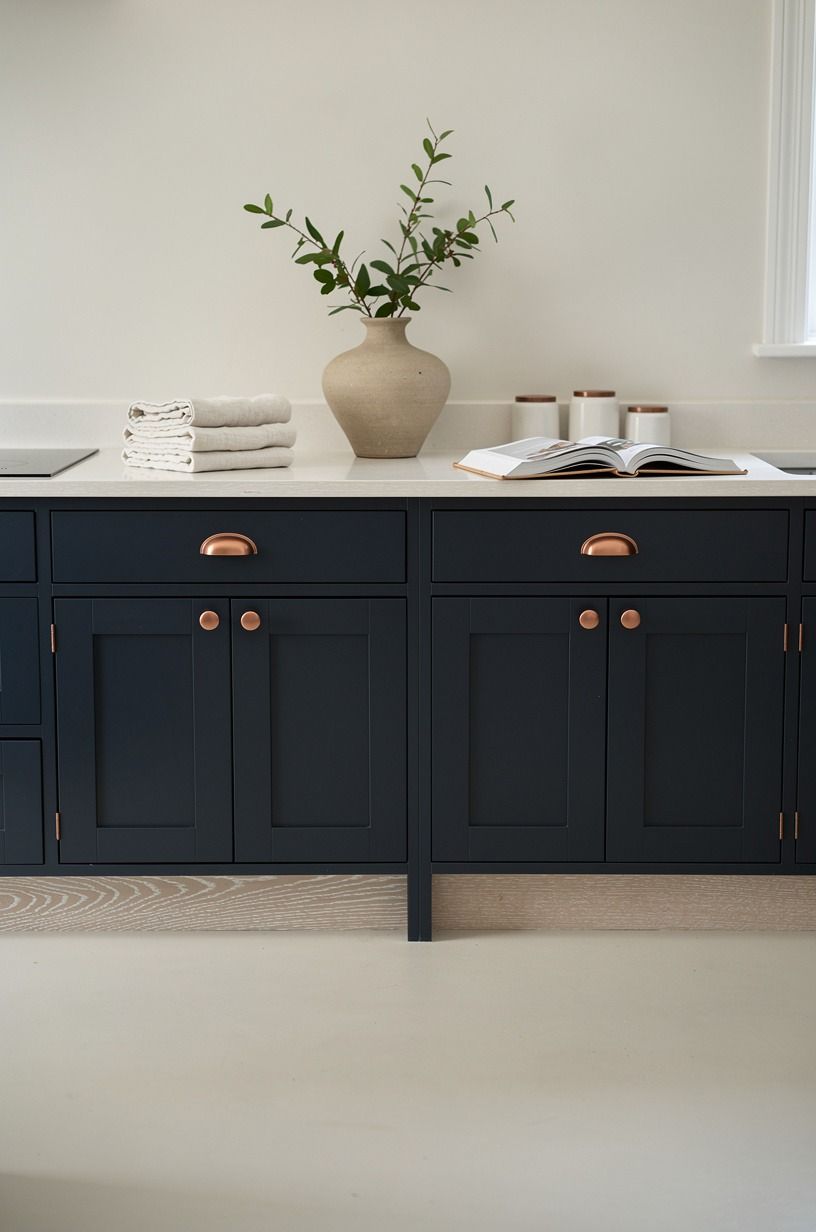
If your cabinets are oak too, and the whole room is one continuous wood tone, painting just the lowers breaks the monotony without touching the floor itself. The floor stays; the room gets a horizon line.
Farrow & Ball Studio Green (No.93) on the lowers with warm white uppers is the combination I'd pick for a honey oak floor. Dark lowers ground the room and make the floor read as the warm middle layer between green and cream.
Midnight blue also works beautifully with copper and ivory, particularly beside cerused white oak. It's a weekend job per section, about $150 to $400 per door if you pay someone, far less if you roll it yourself. And if you love this pulled-together feeling, the same grounding logic shows up in these grey bed frame ideas that make a room feel pulled together.
What I Got Wrong About Oak Floors (So You Don't Have To)
I spent the first two years in this house quietly resenting the floor. I'd pin these cool, pale, Scandinavian kitchens and wonder why mine never looked like them, and the answer was sitting under my feet the whole time. I was designing against the oak instead of from it.
The turning point was embarrassingly small. I painted one wall a warm white instead of the cool gray I'd chosen, and the floor stopped looking orange. Just like that.
It hadn't changed. My framing of it had. That's when I understood that an oak floor isn't a problem to manage; it's a head start most people would kill for.
Warmth is the hardest thing to fake in a kitchen, and the floor was handing it to me for free.
I made other mistakes worth confessing. I bought a walnut island cart that was almost the same tone as the floor, and it looked like a matching-set accident for a year before I admitted it.
I hung 4000K bulbs because the box said "daylight," and the kitchen looked like a break room every evening. And I once tried a gray wash on a test board of oak, thinking I could cool it down.
The grain went muddy, the board went in the trash, and I learned that oak's warmth isn't a flaw to correct. It's the entire asset.
If you take one thing from this list, take this: decide what your floor is, then make every other choice in conversation with it. Paint, metal, light, fabric, each one either flatters the oak or fights it. There's no neutral option.
Once I started asking "does this warm the room or cool it?" before every purchase, I stopped making expensive mistakes. Your floor already did the hard part.
Let it.
A Few Things Worth Answering
What is the best way to tie a kitchen together around oak floors in a small kitchen?
Warm white walls plus one runner. In a small kitchen, Benjamin Moore White Dove (OC-17) bounces light and lets the oak read as warmth, not bulk, and a flatweave runner defines the work aisle.
The IKEA LOHALS flatweave is a solid budget start. Keep upper cabinets light, and check these small oak kitchen ideas for layout moves.
Where can I find pieces for an oak floor kitchen on a budget?
Start with IKEA for runners, shelving, and linen, Target's Threshold line for hardware and lamps, and Wayfair for pendants. Then check Facebook Marketplace and thrift stores for solid oak boards and brass pulls.
Secondhand brass is everywhere, cheap, and better than new budget versions. No affiliate links here, just where I'd actually shop.
How much does an oak floor kitchen refresh cost?
A cosmetic refresh typically runs about $300 to $1,500: paint, hardware, a runner, lighting swaps. The wall color, hardware, and bulbs cover most of the visible change. Reading your undertone, restyling counters, and editing clutter are free.
Can I do this on a tight budget?
Yes, and the free moves come first. Clear the counters down to three useful objects. Swap in 2700K bulbs, about $20 for the room.
Move one lamp onto the counter. Then spend on unlacquered brass hardware next, roughly $120 to $300 for a full kitchen.
Is decorating around oak floors worth it in a small space?
Absolutely worth it, and small kitchens actually have an advantage: every surface is close together, so one right decision (warm white paint, one good runner) changes the whole room at once. Keep the 42-inch aisle clearance if you add any movable island, and let the floor be the pattern. Nothing else needs to compete.
Is this approach a good idea for a rental?
Yes, because the best moves are damage-free. A tension-rod café curtain, a washable runner, 2700K bulbs, plug-in sconces, and a leaning oak board against the backsplash.
Peel-and-stick backsplash if your lease allows it. You keep the deposit and the warmth.
Where I'd Start First
If I had to pick one, I'd start with the wall color. A warm white repaints the floor's reputation in a single weekend, and every later choice builds on it instead of fighting it. Pin this for later, and browse the oak cabinet ideas next.