
 by
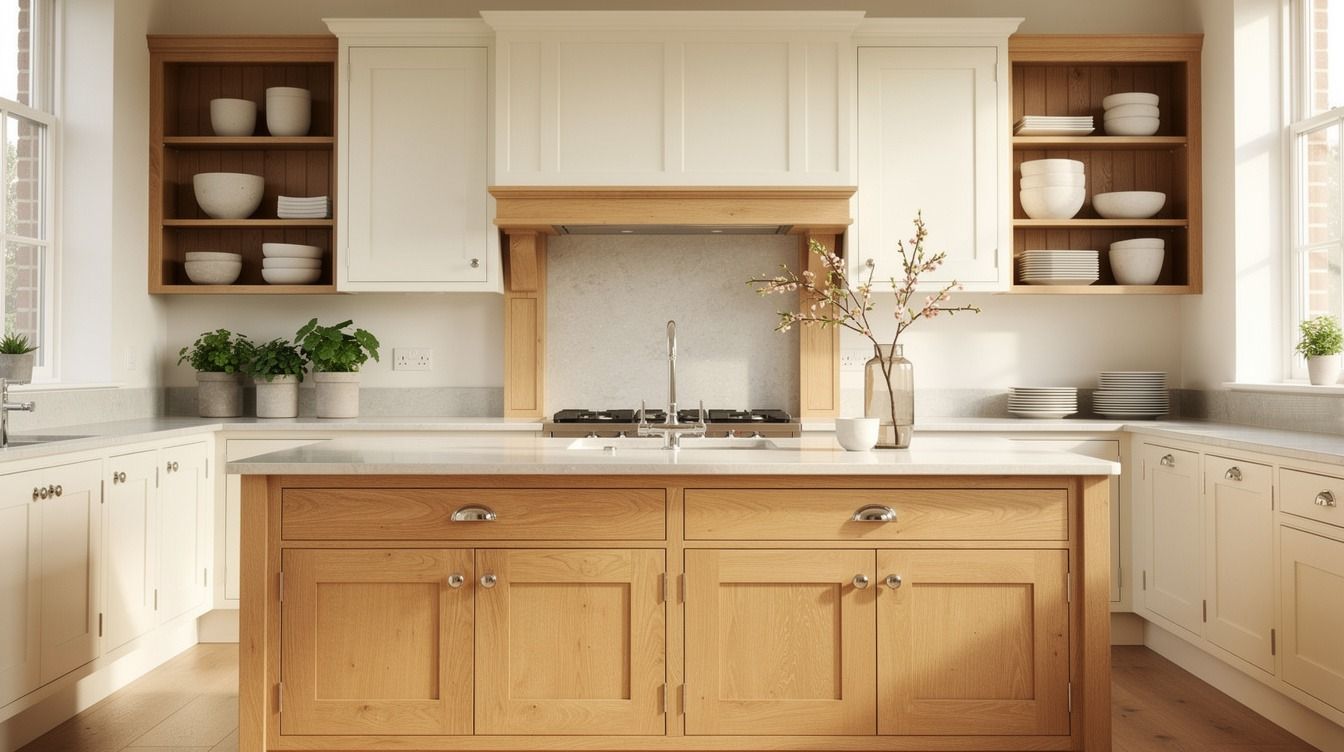
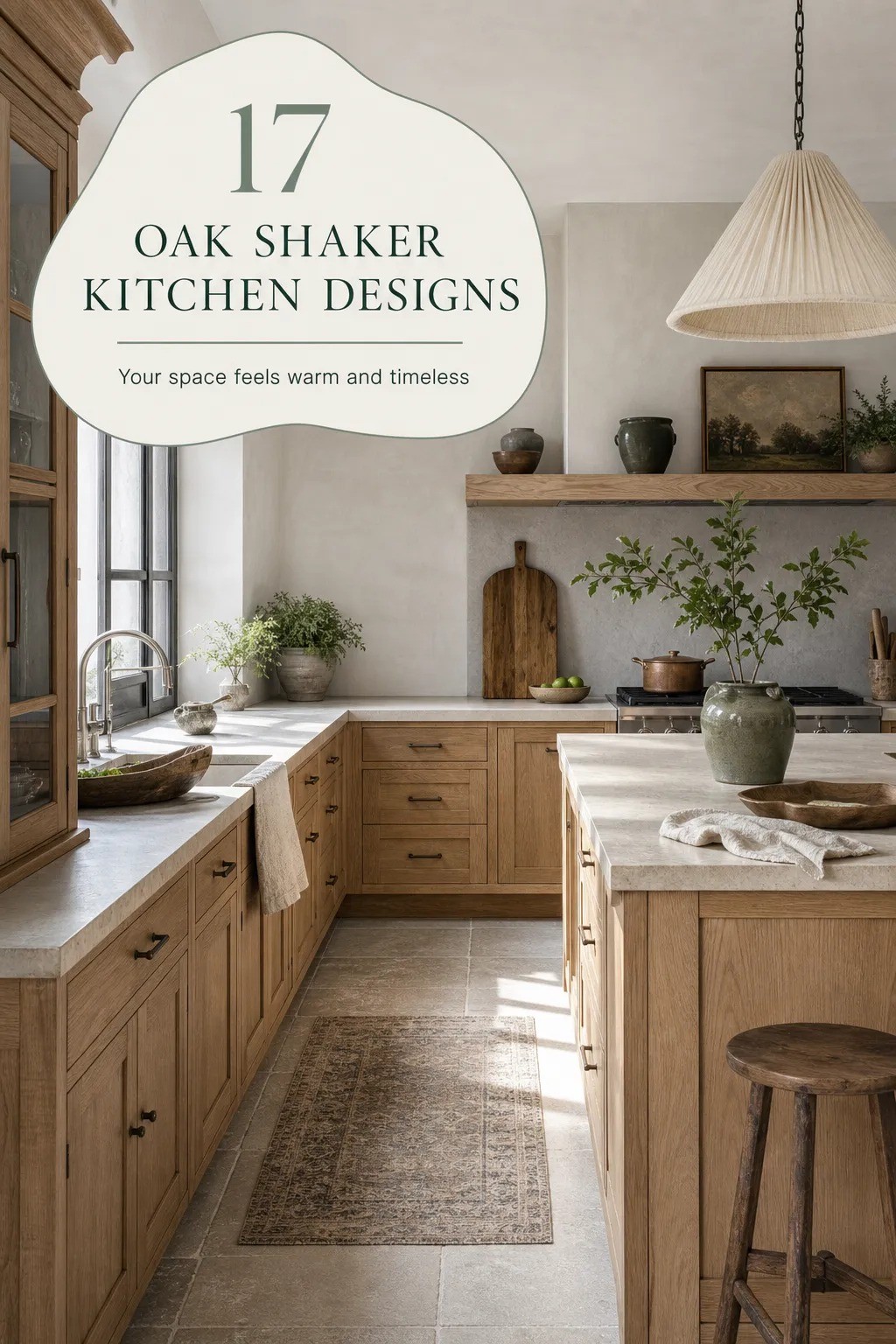
by Oak shaker kitchen ideas work because you don’t need new cabinets to get that classic, clean look. I once tried to “fix” an oak kitchen with cold gray paint and chrome pulls, and it made every cabinet look orange. Keep the oak. Change what fights it.
- Warm Up the Oak With Benjamin Moore White Dove
- Use the Two-Wood Rule for a Classic Wood Kitchen
- Swap Tiny Knobs for Unlacquered Brass Pulls
- Can an Oak Shaker Kitchen Handle a Dark Backsplash?
- Build the Three-Height Light Stack
- Frame the Sink With a Soft Roman Shade
- Let a White Oak Island Break Up the Cabinet Run
- Paint the Island, Not the Oak Shaker Doors
- Choose Quartz Over Busy Granite
- Float Open Shelves Where Uppers Feel Heavy
- The Quiet Counter Strategy Uses Fewer Things
- Mix Black Fixtures With Oak, Not Black Cabinets
- Hang Art Where a Cabinet Would Usually Go
- Try Farrow & Ball Studio Green on One Pantry Wall
- Choose a Small Breakfast Nook With Real Texture
- What Does an Oak Shaker Refresh Really Cost?
- Give the Room One Collected, Useful Finish
1Warm Up the Oak With Benjamin Moore White Dove
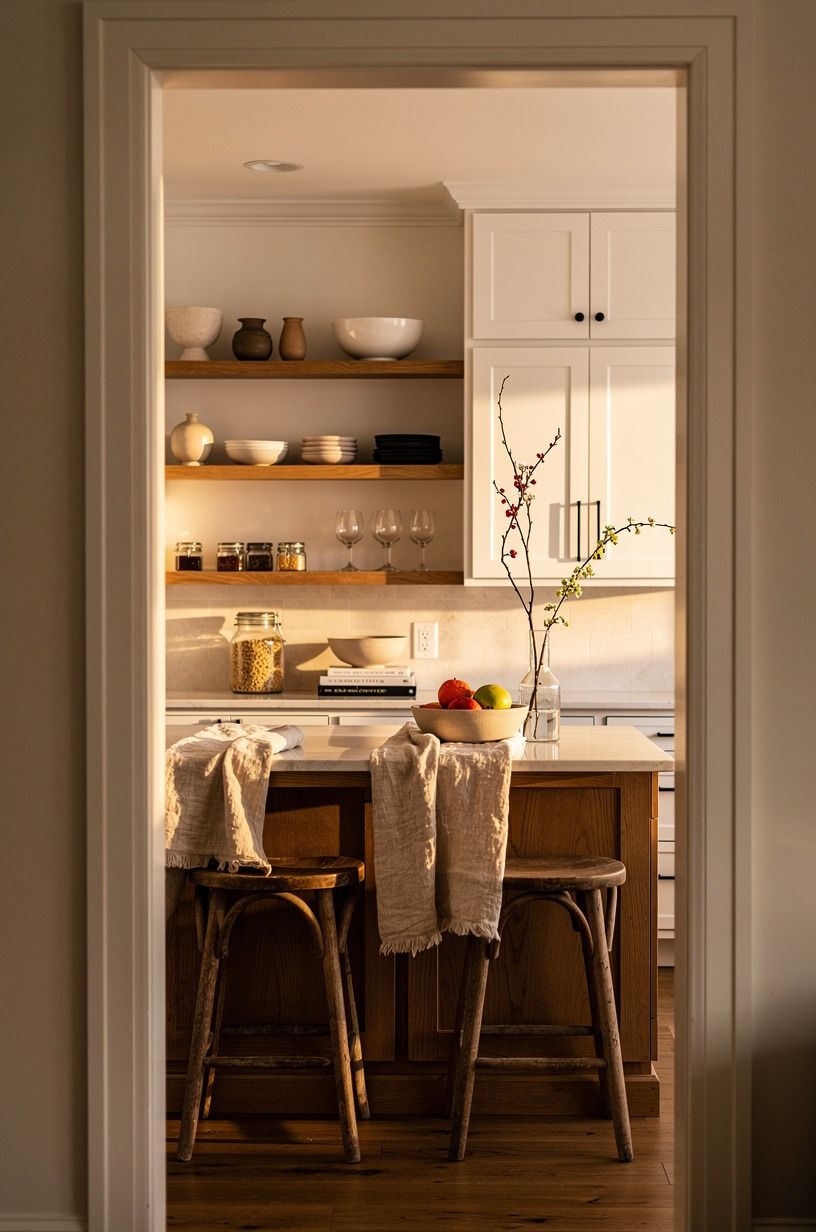
Paint the surrounding walls Benjamin Moore White Dove OC-17 and let your oak shaker doors stay the warm note in the room. You’ll get a bright, inviting kitchen without bleaching out the grain, which is the part worth keeping.
I’d skip stark white here. It can make your wood shaker cabinets kitchen look yellow by comparison, while White Dove carries enough softness to make your counters and cabinets feel intentional. A quiet shift, but you’ll notice it every morning.
2Use the Two-Wood Rule for a Classic Wood Kitchen
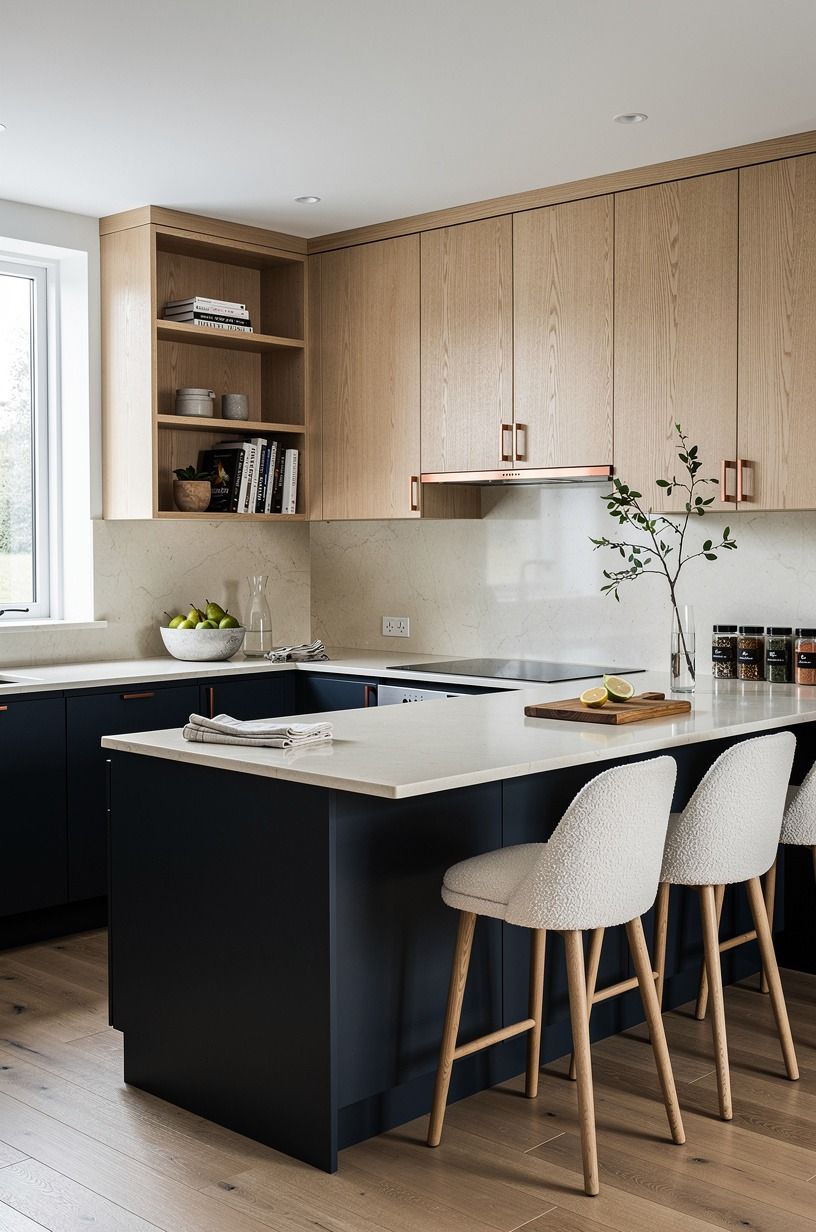
Pair your cabinets with one additional wood tone, then stop.
3Swap Tiny Knobs for Unlacquered Brass Pulls
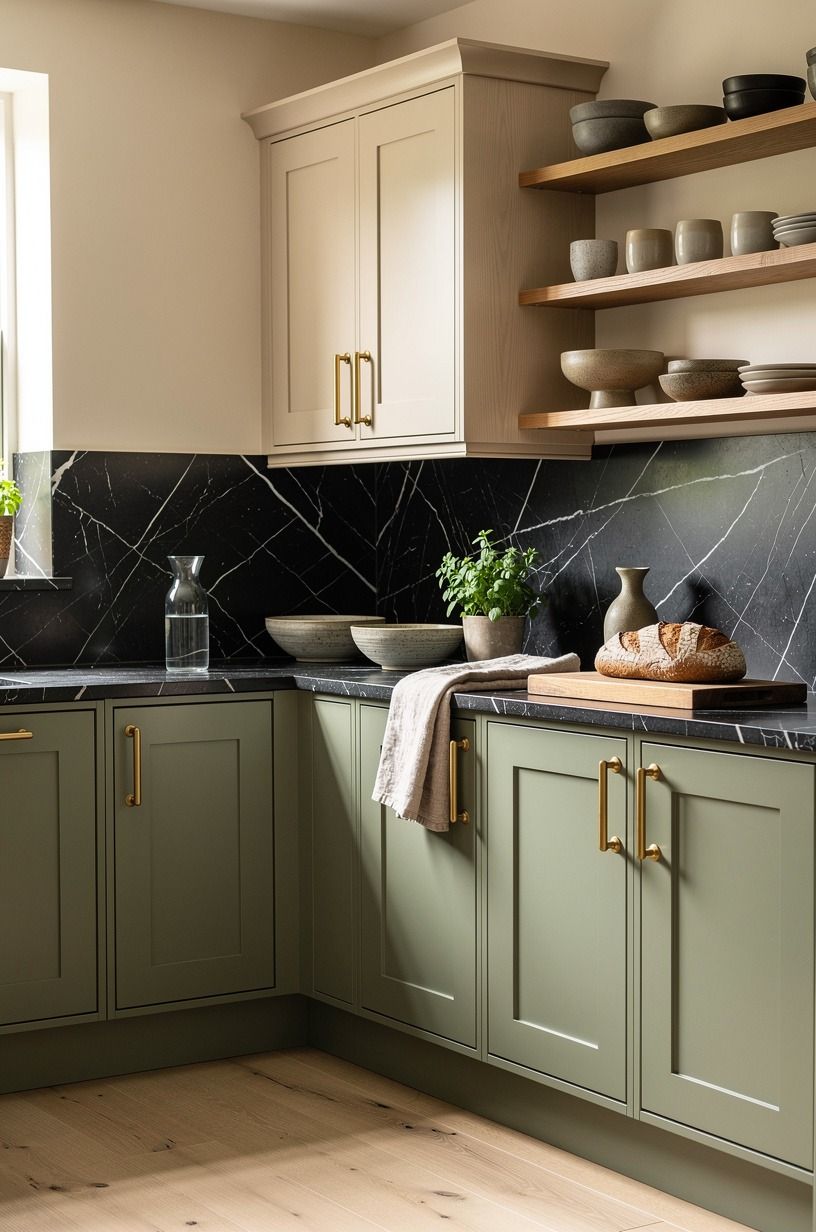
Give each oak shaker cabinet a longer, quieter line with unlacquered brass cabinet pulls that will develop a soft patina. You don’t need matching brass everywhere, and you shouldn’t force it.
Aged brass has a gentle, lived-in look against oak, especially if your kitchen gets afternoon sun. I’d pass on shiny polished chrome because it reads too chilly beside warm grain. Your existing doors will look more refined before you’ve touched a paintbrush.
4Can an Oak Shaker Kitchen Handle a Dark Backsplash?
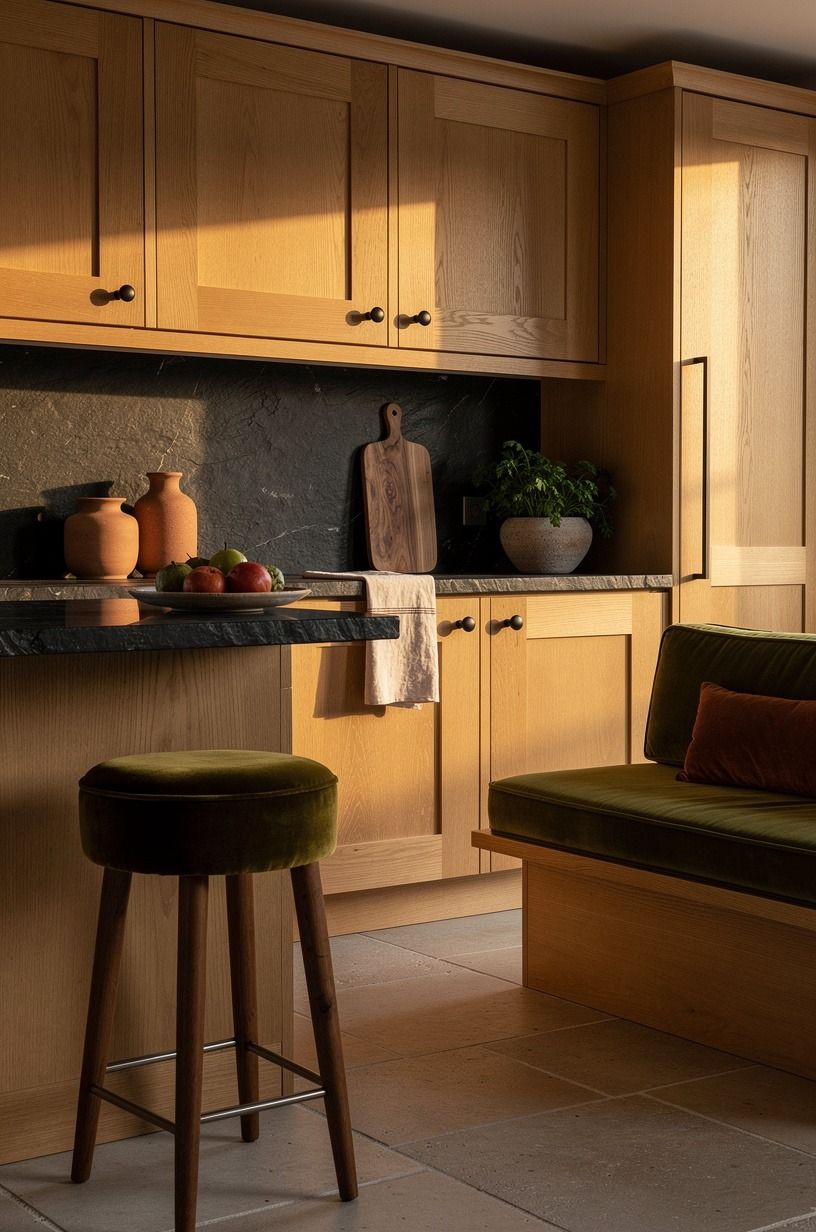
Yes, if you keep the dark color below the upper cabinets and repeat it once.
5Build the Three-Height Light Stack
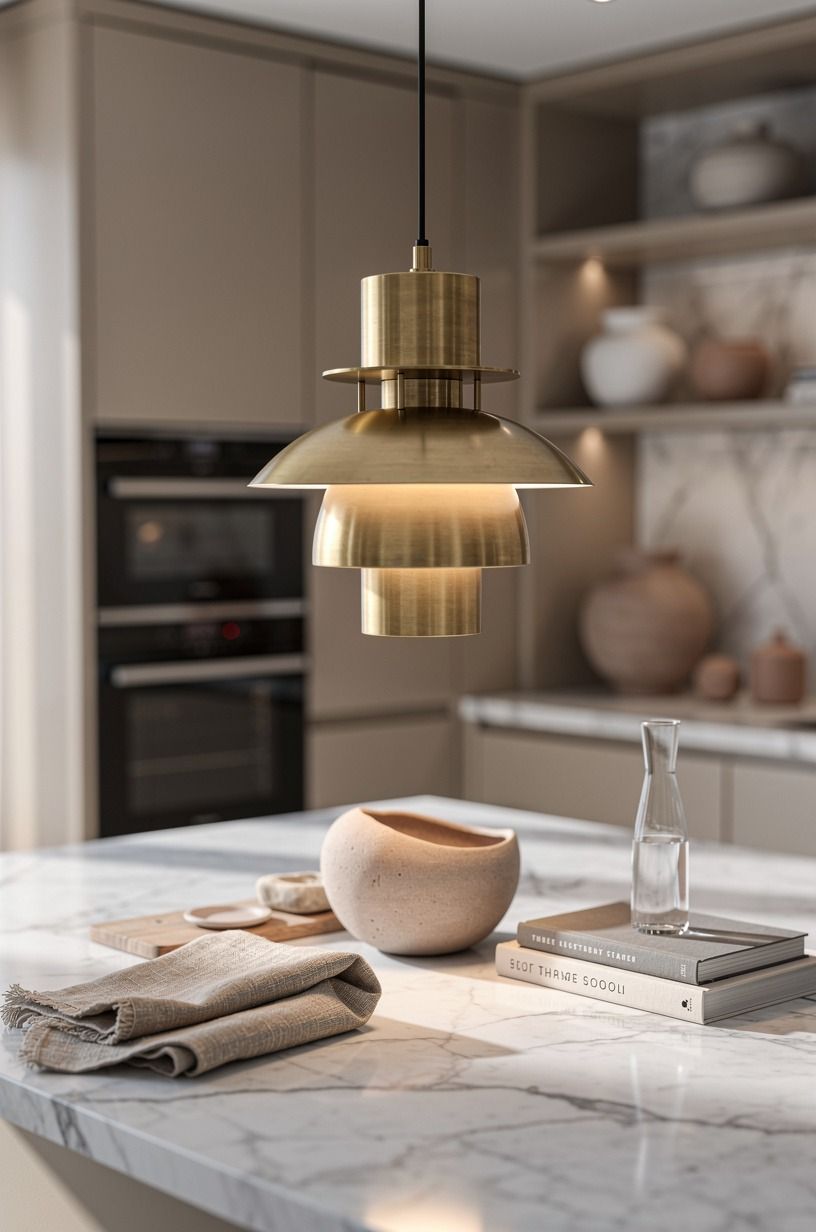
Your oak shaker kitchen needs three heights of light: ceiling, task, and low glow. Start with aged brass pendant lights over the island, then add under-cabinet strips and one small lamp on a counter you don’t use for prep.
You’ll get a warm pool of light instead of one flat blast from above. But don’t buy cool-white bulbs. They make oak look dull and office-like.
A lamp near the coffee setup is the move I resisted longest, and now it’s the first thing I switch on!
6Frame the Sink With a Soft Roman Shade
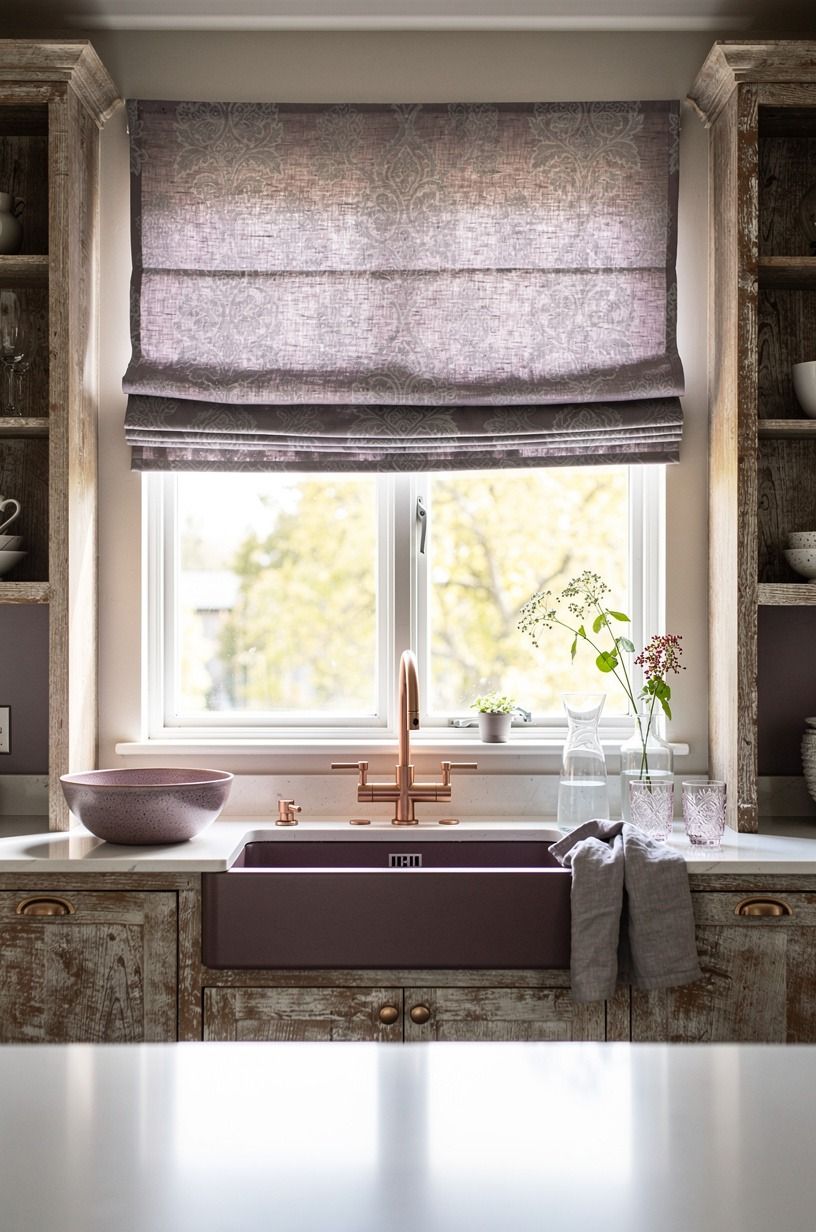
A soft Roman shade above a reclaimed weathered teak sill makes a clean oak kitchen feel less showroom-perfect.
7Let a White Oak Island Break Up the Cabinet Run
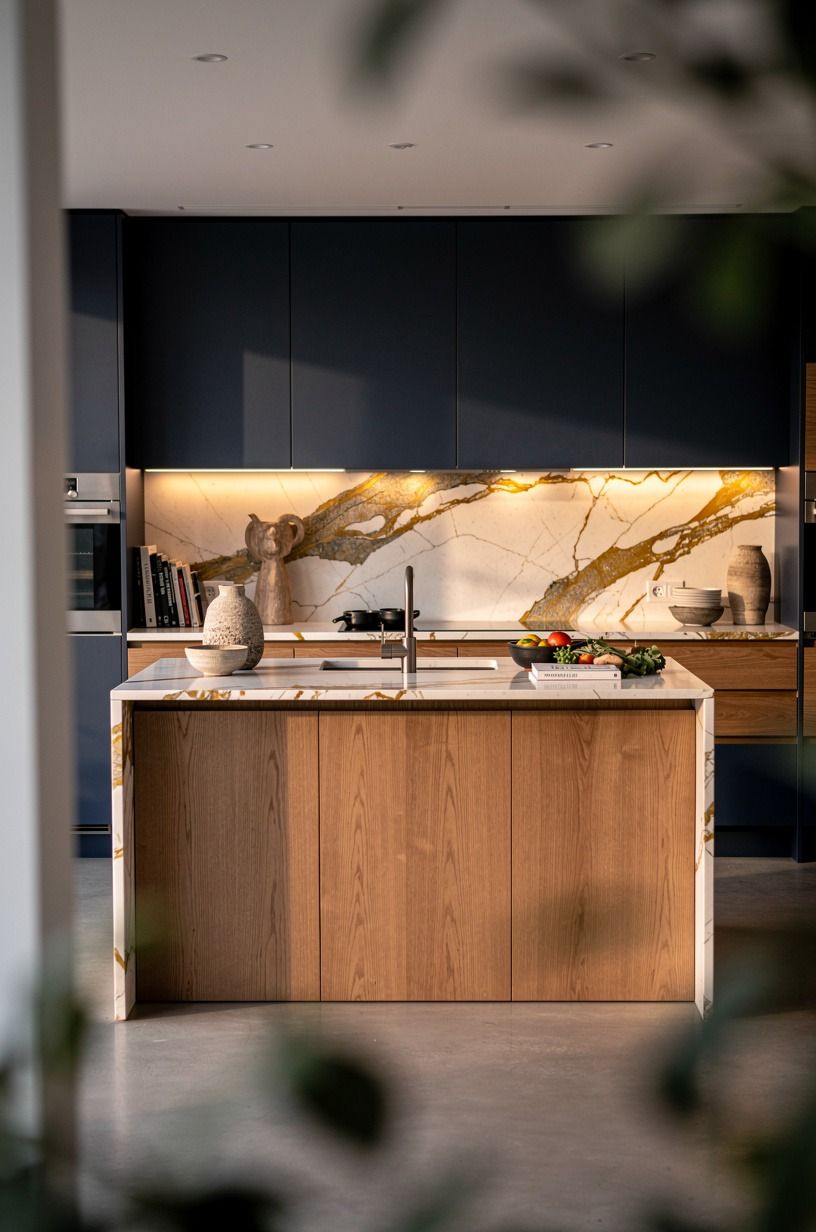
A freestanding IKEA TORNVIKEN kitchen island can interrupt a wall of oak cabinets in a good way. You’ll create a gathering point and a place for bowls, cookbooks, and the everyday mess that makes a kitchen feel human.
Keep 42 to 48 in (107 to 122 cm) clear around the island. That number matters more than the island’s style, because a beautiful island you can’t walk around will drive you nuts. Browse these white oak kitchen island ideas before choosing your footprint.
8Paint the Island, Not the Oak Shaker Doors
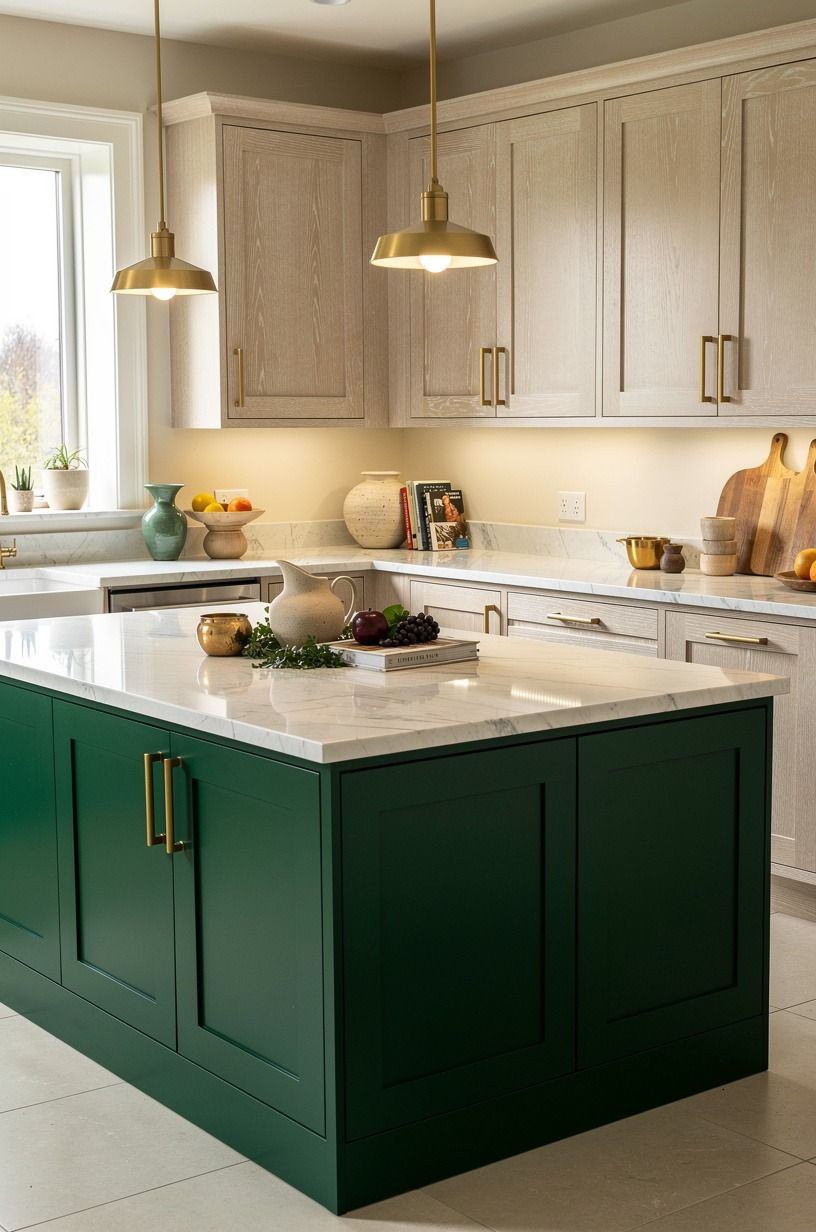
Use Sherwin-Williams Evergreen Fog SW 9130 on an island or base cabinet section while leaving the oak uppers alone. It’s earthy, calming, and far more forgiving than painting every cabinet in sight.
You’ll get contrast without losing the organic warmth that made you choose oak. I made the mistake of painting an entire run once, then spent weeks wishing I’d left one bank of wood visible. A two-tone kitchen has more air in it.
9Choose Quartz Over Busy Granite
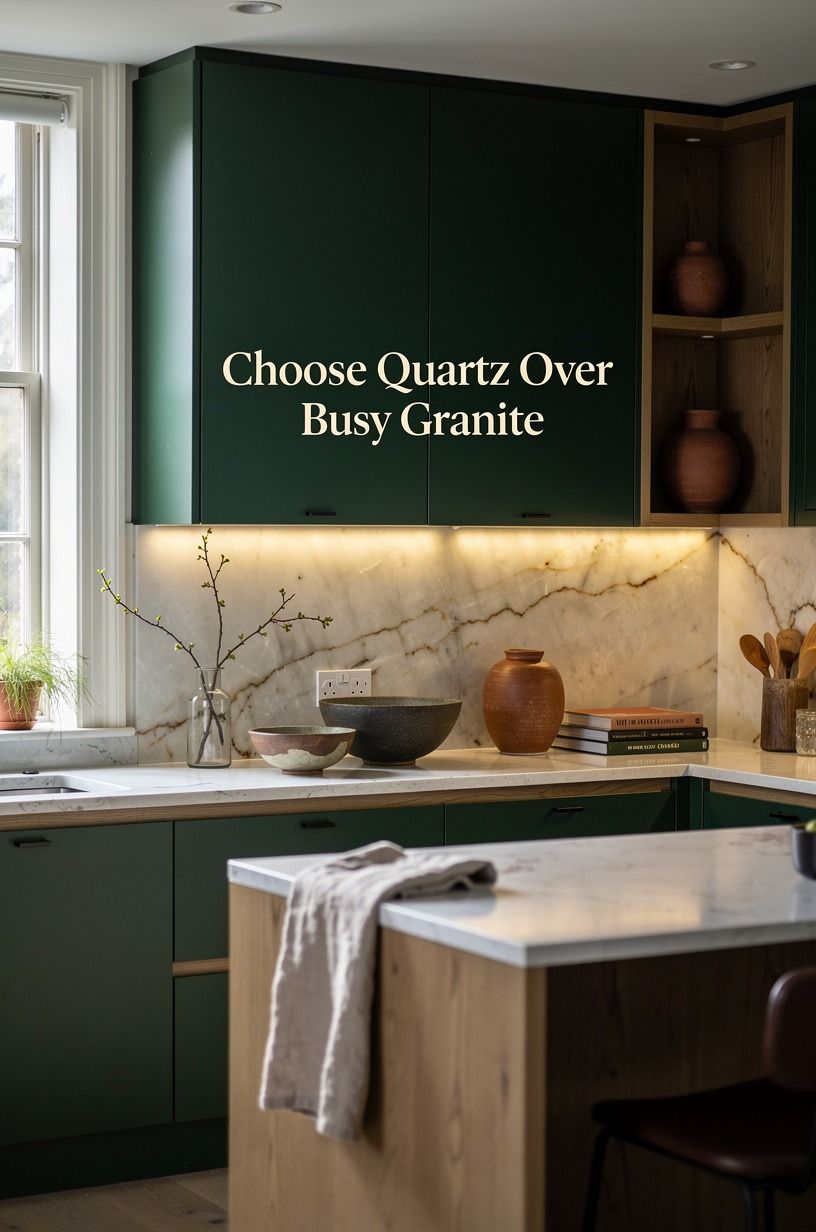
For oak shaker kitchen counters, choose warm white quartz with fine taupe veining over speckled granite. You need a counter that gives your cabinet grain somewhere to rest, not another surface shouting for attention.
Typical quartz runs $60-$120 per sq ft, while laminate usually lands at $10-$40 per sq ft. If your budget is tight, a warm laminate is smarter than a cheap busy stone. You’ll see the counter every day, so don’t choose the loudest sample in the showroom.
10Float Open Shelves Where Uppers Feel Heavy
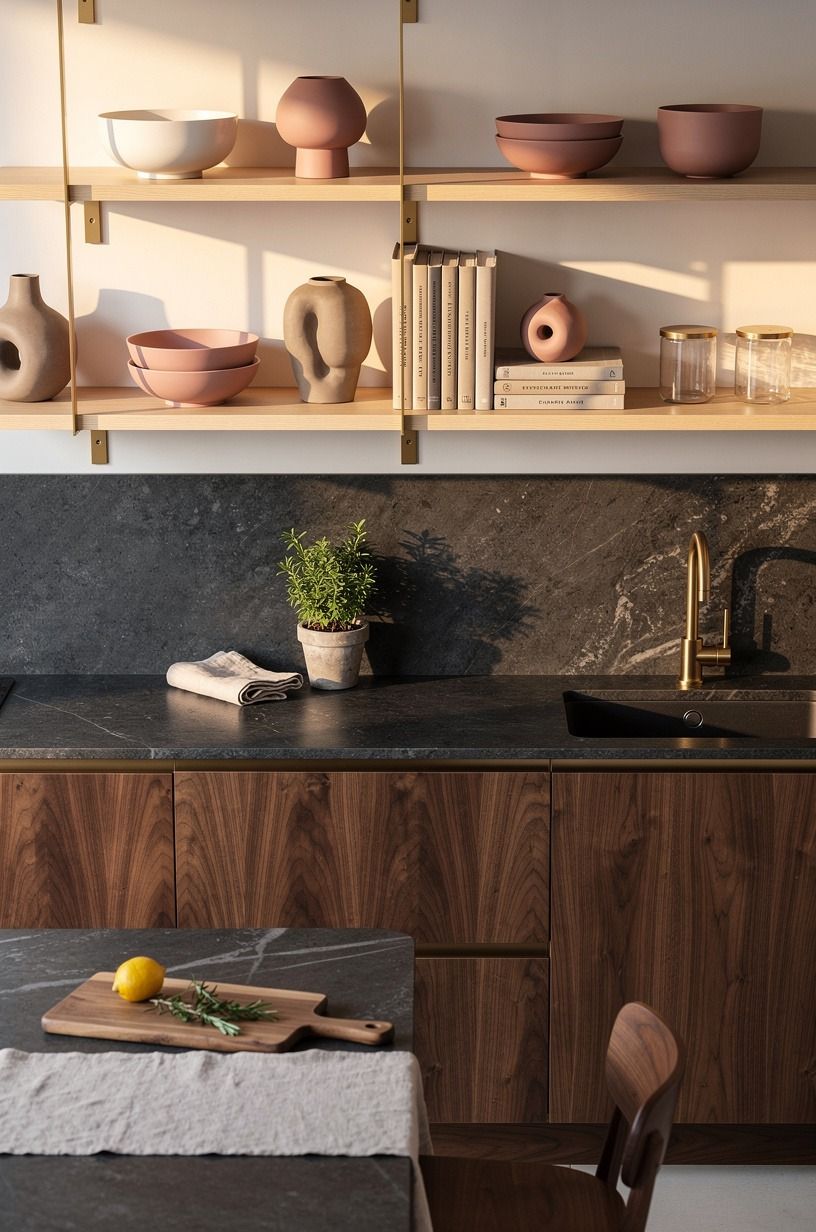
Remove one short upper cabinet run and hang book-matched walnut floating shelves instead. Your dishes become part of the room, and your oak shaker kitchen feels brighter without pretending it’s a restaurant.
Stack white stoneware. A smoked-glass tumbler. One unlacquered brass rail beneath the shelf.
You don’t need fourteen objects up there. But be honest with yourself: if you hate wiping dishes before display, keep the cabinet doors. Open shelves are charming only when you’ll maintain them.
11The Quiet Counter Strategy Uses Fewer Things
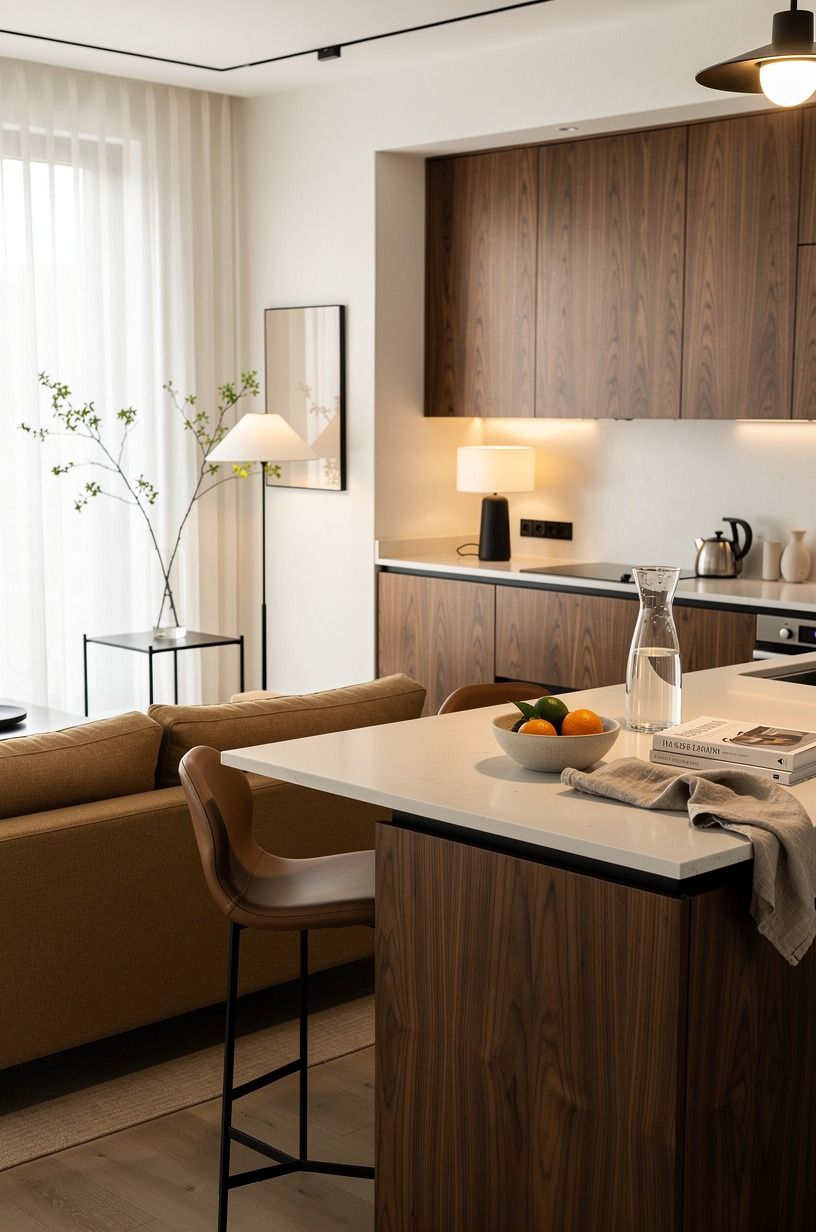
Clear your counters until only the tools you reach for daily remain. A walnut cutting board, a crock for utensils, and a small tray for oil are enough to make warm oak kitchen cabinets look deliberate.
You’ll notice more of the door profile when the counter isn’t buried. I’d skip matching canisters, even though they’re everywhere.
They look staged, and staged kitchens rarely feel comfortable. Leave one useful thing out because you use it, not because a photo told you to.
12Mix Black Fixtures With Oak, Not Black Cabinets
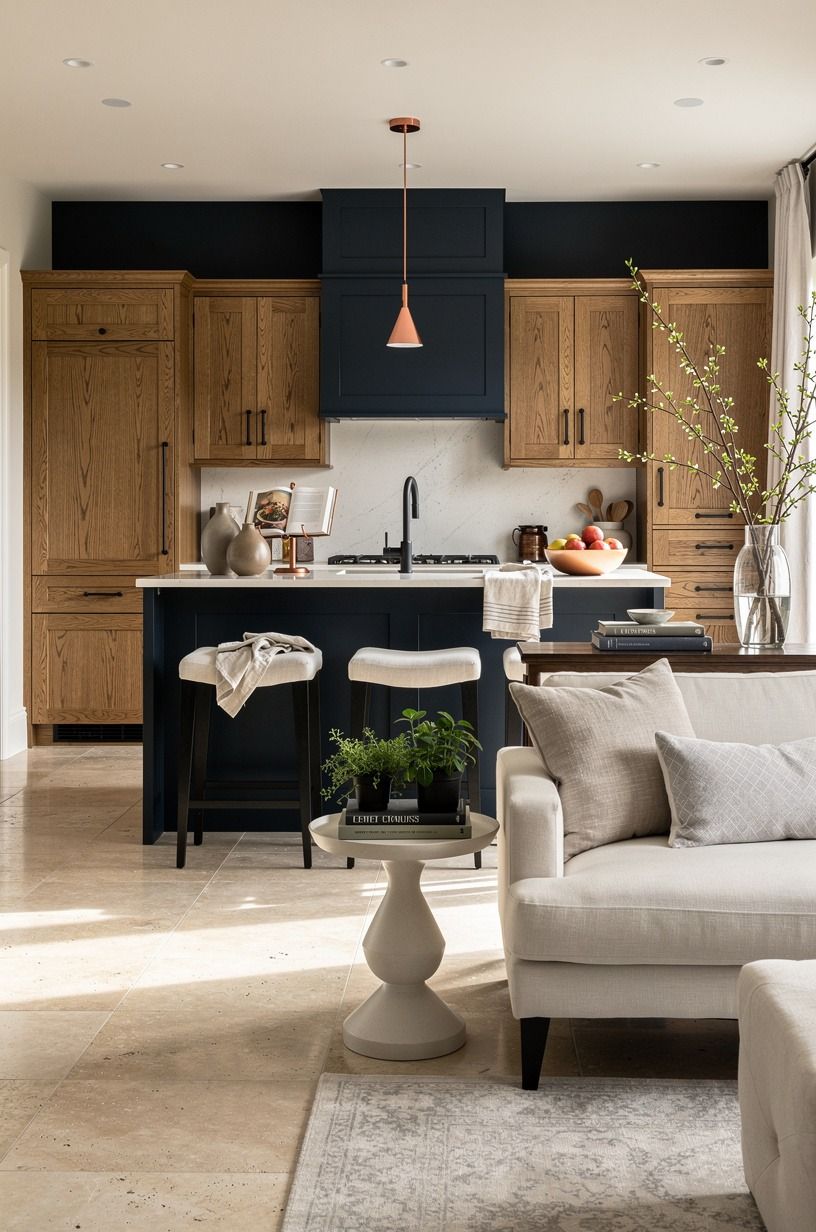
A matte black bridge faucet gives oak shaker doors a crisp outline without making the kitchen feel harsh. Use black in small doses: faucet, cabinet latches, maybe one pendant stem.
Don’t add black cabinet fronts unless your room has a lot of daylight. Dark bases can look dramatic online, but they swallow the wood’s softness in an average kitchen. For a cleaner version of this contrast, explore modern kitchen cabinet ideas.
13Hang Art Where a Cabinet Would Usually Go
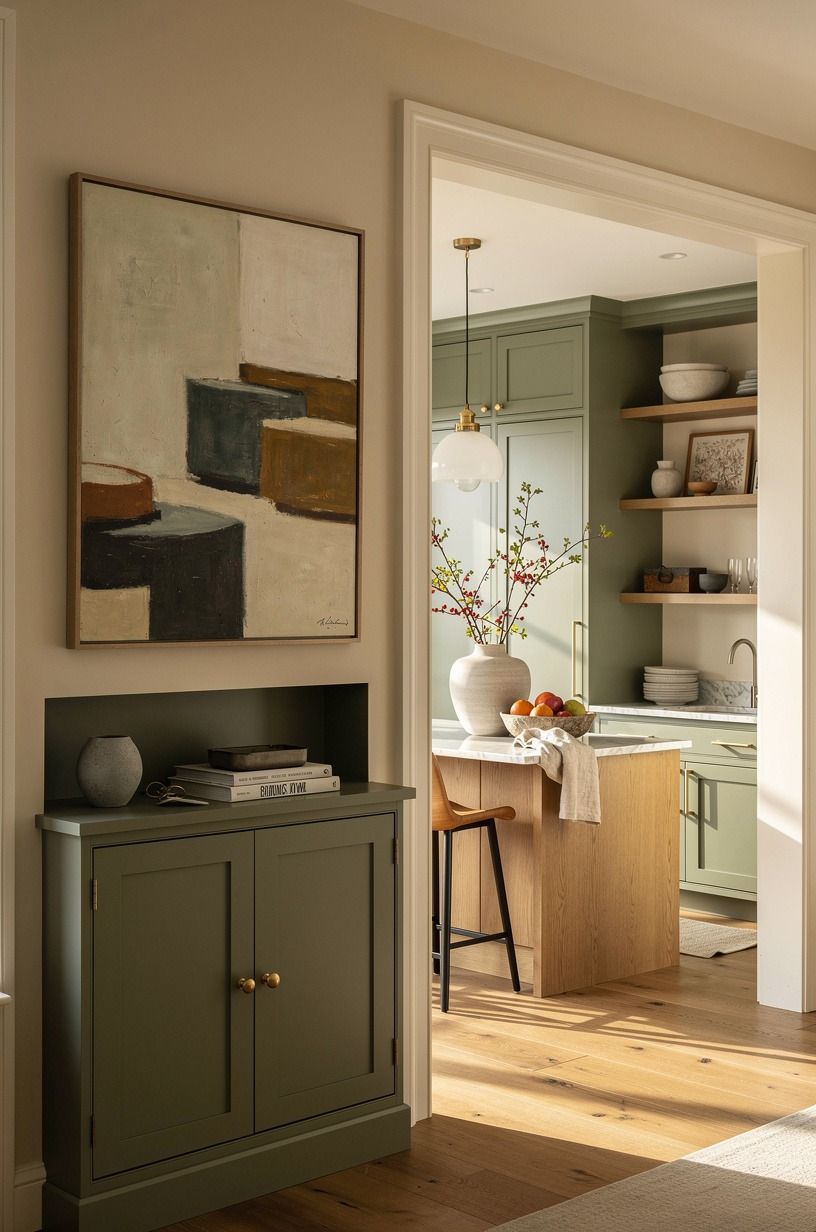
Put a framed print on a small wall between pantry doors or beside a breakfast spot.
14Try Farrow & Ball Studio Green on One Pantry Wall
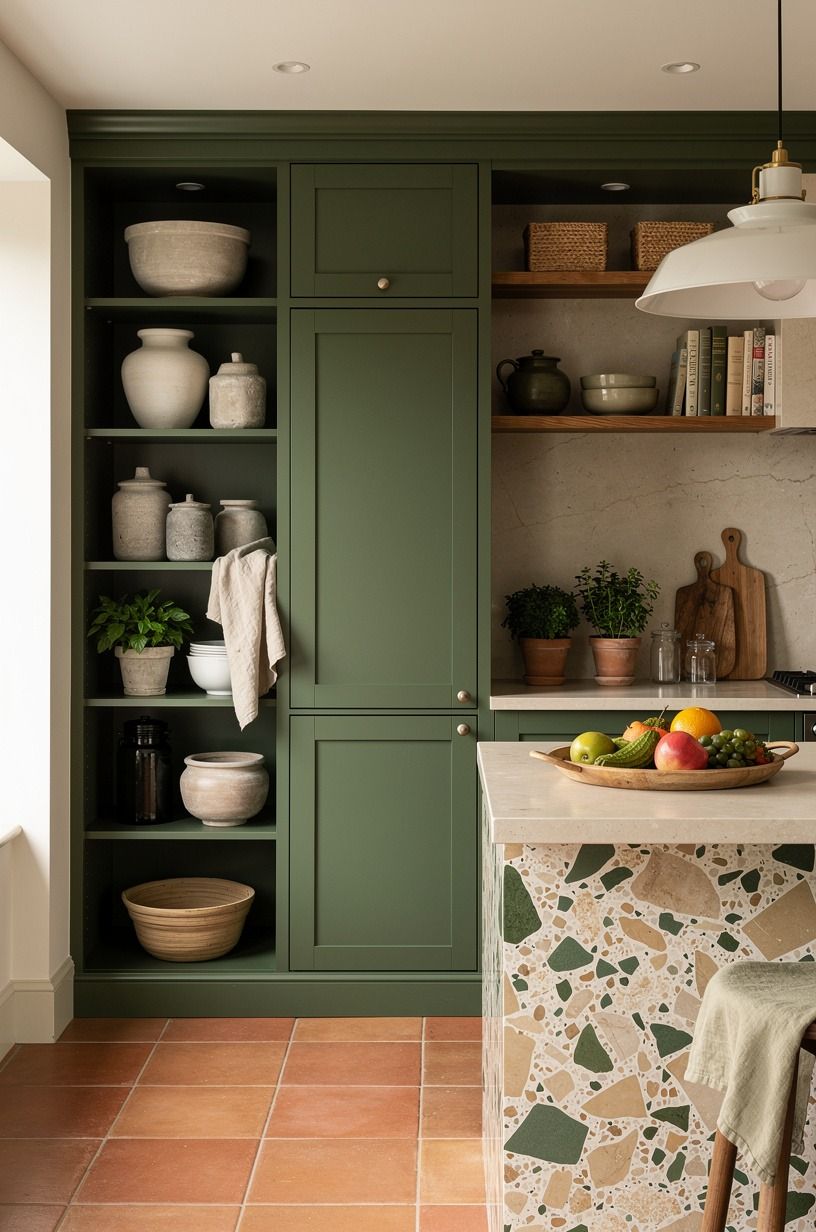
Use Farrow & Ball Studio Green No. 93 on a pantry wall or recessed niche, not across every kitchen wall. It gives the oak a deep, sophisticated companion and makes pale ceramics look sharper.
North-facing kitchens need caution. Studio Green can turn almost black by late afternoon, so you’ll want good task lighting and a pale counter.
I prefer it to trendy sage when you’re after classic wood kitchen character. It has more gravity. Full stop!
15Choose a Small Breakfast Nook With Real Texture
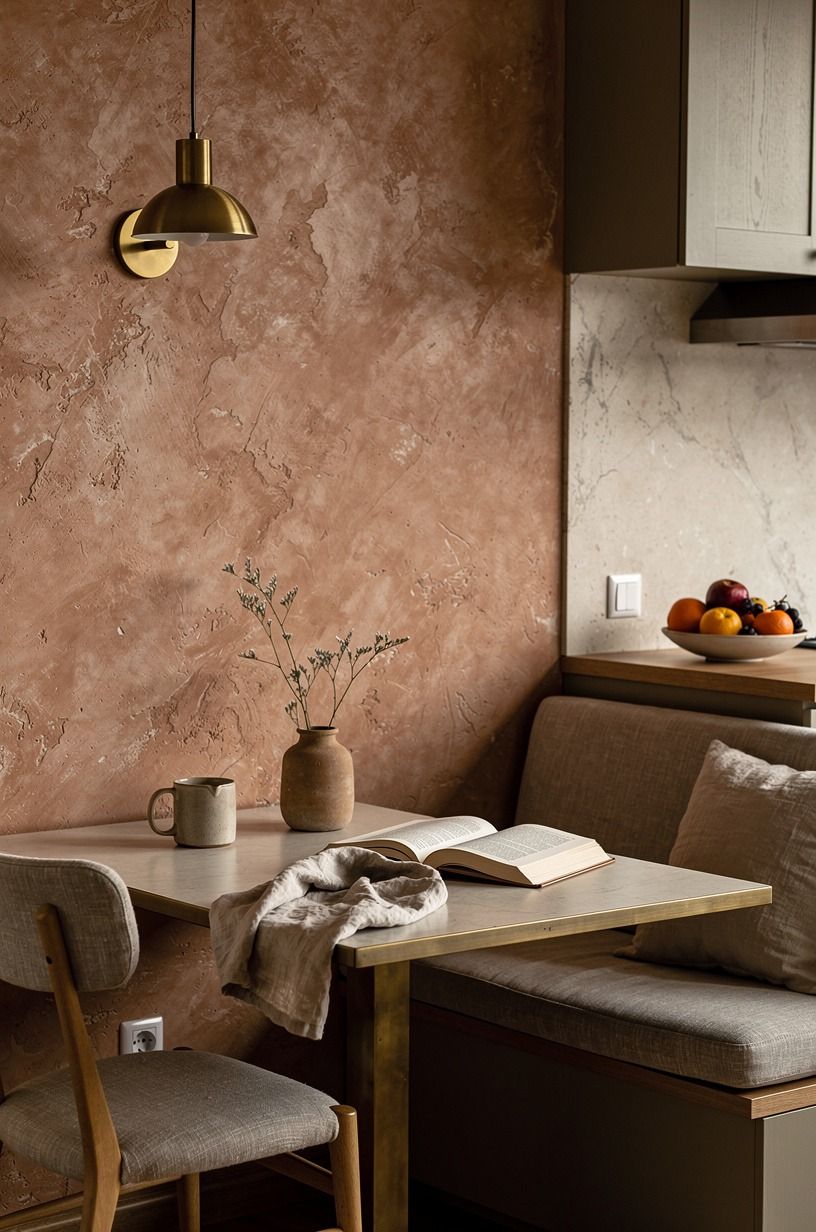
Set a Target Threshold Windsor bench against one wall and add a round pedestal table rather than bulky dining chairs. You’ll save visual space while giving your oak kitchen somewhere to linger over coffee.
Use a washable cushion in 18 oz cotton velvet or striped cotton, then keep the table top bare except for fruit. Hand-applied Venetian plaster on a nearby wall gives the nook the texture it needs without adding clutter. If you want more compact layouts, these modern breakfast nook ideas are a useful starting point.
16What Does an Oak Shaker Refresh Really Cost?
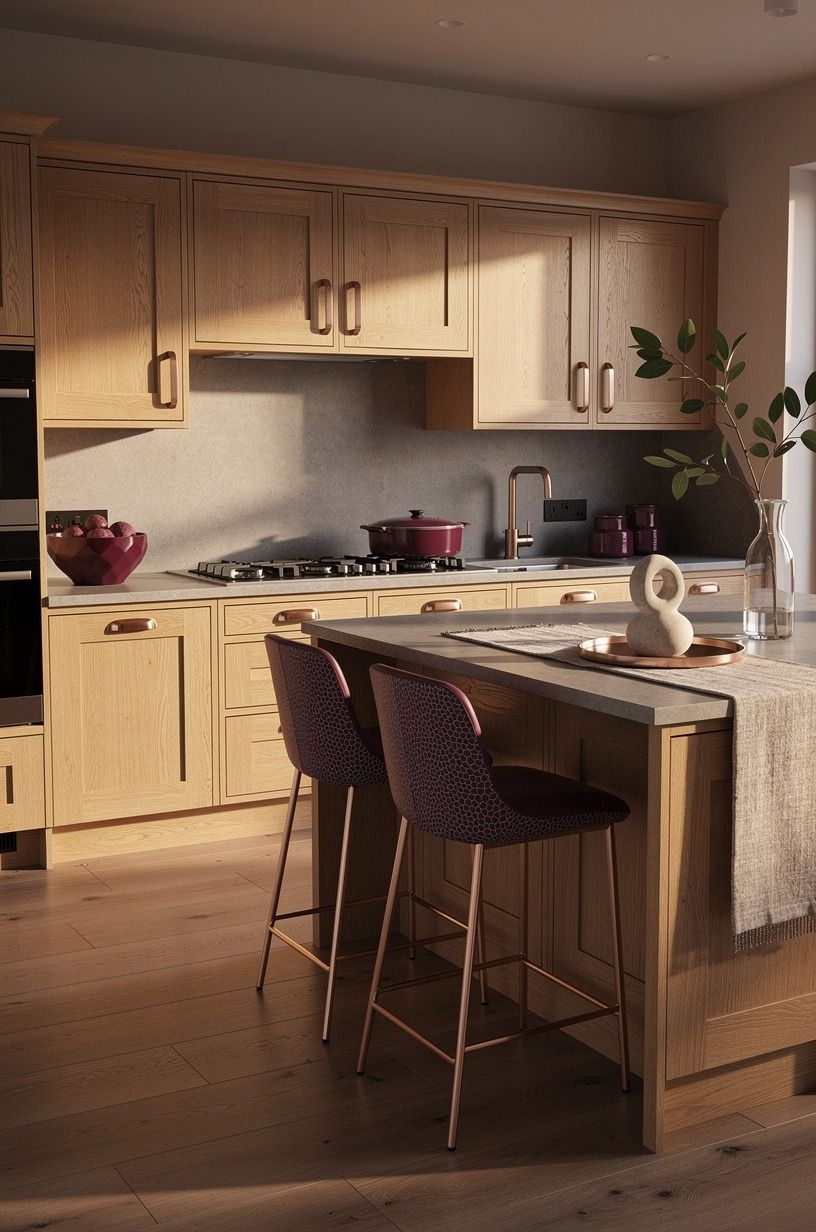
A cosmetic oak shaker kitchen refresh can cost far less than replacing cabinets, especially when you preserve the boxes and change the surfaces around them. You can repaint walls, update hardware, and add peel-and-stick backsplash without entering full-remodel territory.
You don’t need the high tier to make oak feel current. I’d spend first on lighting and hardware, then save for counters if yours are damaged. A $300-$1,500 refresh can be remarkably warm when the cabinet grain is still doing its job.
17Give the Room One Collected, Useful Finish
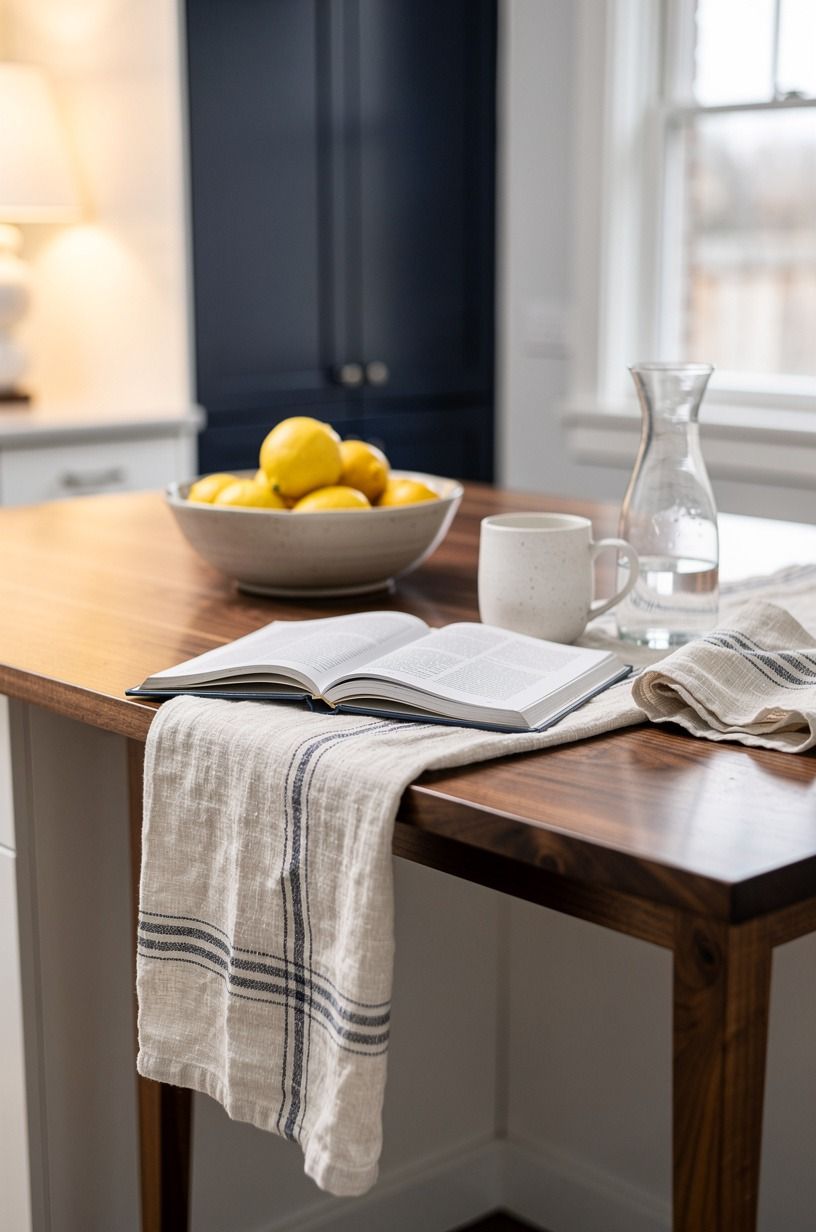
Finish with something that makes your kitchen feel gathered instead of newly installed. A vintage wool runner, a framed recipe card, and a bowl of lemons can do more than another decorative sign ever will.
You’ll want texture underfoot, but don’t choose a thick rug that catches chair legs or cabinet doors. A low-pile runner is the practical answer. And yes, oak can handle a little wear.
That’s why it gets better instead of looking ruined.
Why Oak Shaker Kitchens Feel Right Again
I think oak shaker kitchens are back because people are tired of rooms that look expensive but don’t look lived in. For years, the default renovation was pale gray, flat fronts, white quartz, and just enough black hardware to make every kitchen resemble the next one.
It photographed cleanly. It also got cold fast.
Oak brings back grain, and grain gives your eye somewhere to land. That matters when your kitchen is doing real work: backpacks on the floor, a pan drying by the sink, somebody leaning on the island while you finish dinner.
You don’t have to make oak precious. In fact, please don’t.
The best oak kitchens let the wood show its knots, shifts in tone, and slight imperfections.
I’ve learned that the room needs contrast, not correction. Pair oak with creamy paint, soft brass, linen, and a deep green only where it earns its place.
Skip the impulse to coat every cabinet in paint just because social media says wood is dated. Most of the time, the cabinets aren’t the problem.
The lighting is wrong, the counter is busy, or every finish is fighting for first place.
There’s also an honest economy to keeping what works. Cabinet replacement can push a project into the $25,000-$60,000+ range, while a thoughtful cosmetic refresh starts much lower. Your kitchen doesn’t need to prove it was renovated.
It needs to feel like you live there, and that you made choices on purpose.
A Few Things Worth Answering
What is the best oak shaker kitchen idea for a small kitchen?
A pale wall color and quiet hardware are the best first moves for a small kitchen. Benjamin Moore White Dove OC-17 keeps your cabinets warm while reflecting light, and an IKEA TORNVIKEN island can add function without visual clutter.
Where can I buy oak shaker kitchen pieces on a budget?
Start with IKEA, Target, Wayfair, and Facebook Marketplace for practical pieces. IKEA HEMNES hardware, secondhand stools, and a thrifted wood frame can give you texture without a large bill. You’ll get more character by mixing sources.
How much does an oak shaker kitchen makeover cost?
A cosmetic makeover typically costs about $300-$1,500, depending on paint, pulls, lighting, and backsplash. Peel-and-stick tile and decluttering are the low-cost wins. Replacing cabinets is where your budget climbs fast.
Can I create an oak shaker kitchen on a budget?
Yes, and you can start with what you already own. Aged brass pulls, a cleared counter, and a washable runner make a visible difference. You don’t need new doors when your existing oak has good grain.
Is an oak shaker kitchen worth it in a small space?
Yes, it’s worth it because oak gives a small kitchen warmth without adding visual bulk. Flat-front storage baskets and one pale wall color will keep your room airy. Put your tallest storage on one wall, not every wall.
Is an oak shaker kitchen a good idea for a rental?
Yes, if you use reversible changes. Removable wallpaper, tension-rod curtains, and peel-and-stick backsplash can soften a rental kitchen without permanent work. You can also swap knobs, then save the originals in a labeled bag.
Where I’d Start First
If I had to pick one, I’d start with unlacquered brass pulls. You can’t hide cheap lighting with them, but they give oak a deliberate edge before you’ve spent thousands. Pin brass pulls for later and browse these oak kitchen cabinet ideas.