
 by
by 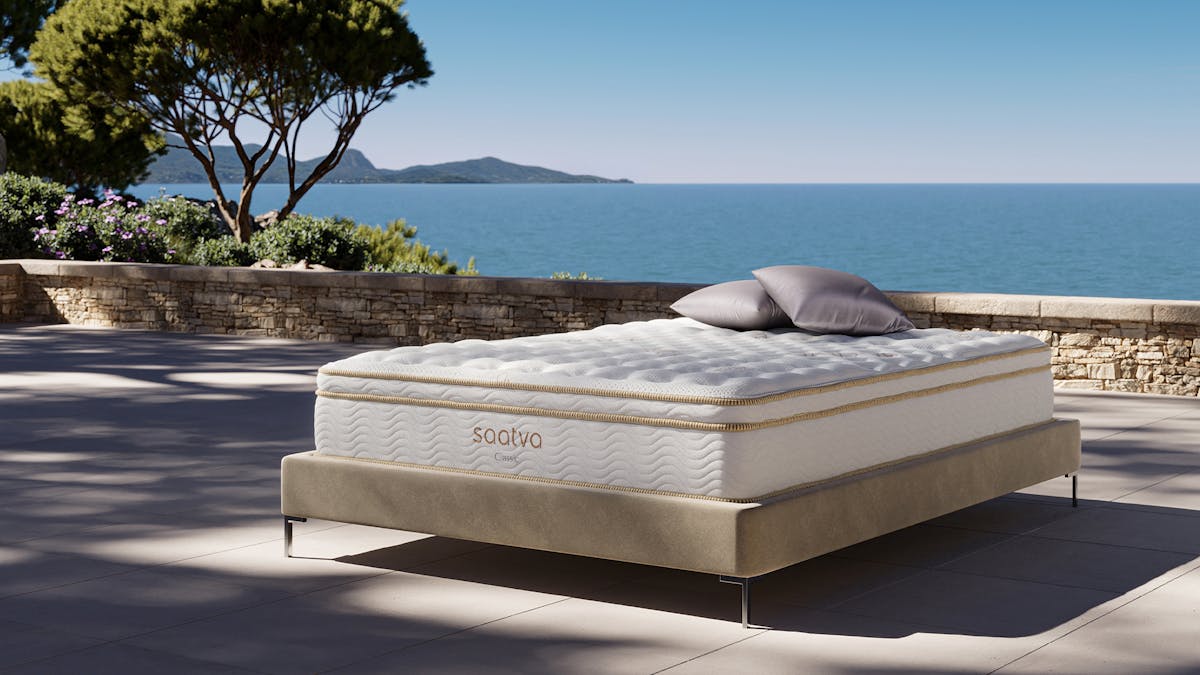
The old Tempur-Pedic lineup, Grand Cloud Plush, DeluxeBed, Contour Rhapsody Breeze, and Bellafina, are all discontinued. Tempur-Pedic buyers who want a coil-based luxury feel should look at the Saatva Classic instead.
The four discontinued Tempur-Pedic models: what you had
Tempur-Pedic refreshes its lineup every few years, retiring older SKUs as new foam formulations and constructions replace them. The four models most commonly searched are the Grand Cloud Plush, DeluxeBed, Contour Rhapsody Breeze, and Bellafina. All are fully discontinued and no longer sold through authorized retailers. If you own one, the two questions that matter are whether yours is still performing and, if not, what replaces it.
| Old Model | Type | Comfort Level | Era | Modern Feel Match |
|---|---|---|---|---|
| Grand Cloud Plush | Innerspring + memory foam | Soft | 2000s-2010s | Soft hybrid or plush all-foam |
| DeluxeBed | Hybrid foam (gel + Tempur + poly) | Medium | 2010s | Medium hybrid |
| Contour Rhapsody Breeze | All-foam (HD Tempur + cooling) | Firm | 2010s (disc. ~2014+) | Firm all-foam with cooling |
| Bellafina | All-foam memory foam | Medium | 2010s | Medium all-foam |
Grand Cloud Plush: the soft innerspring hybrid
The Grand Cloud Plush combined a coil support system with a thick memory foam comfort layer, targeting sleepers who wanted the Tempur feel with more bounce than a pure-foam mattress. The plush surface felt good on first lie-down, but long-term ownership reports consistently flagged body impressions forming within three to five years as the foam layer compressed under pressure points. Edge support was soft at the perimeter, a common complaint on hybrid designs from that era.
If you slept well on the Grand Cloud Plush in its early years, what you liked was the combination of pressure-relieving foam cradle and spring responsiveness.
DeluxeBed: the medium hybrid
The DeluxeBed used a mix of gel-infused foam, Tempur material, and polyfoam over a spring base, landing in the medium feel range. It was positioned as a step below the flagship Contour and Rhapsody models, designed to make the Tempur-Pedic feel accessible at a lower price point. The gel layer helped with cooling compared to the all-foam Contour line, though it still ran warmer than modern open-cell foam constructions.
Motion isolation was reasonable given the coil core, but not at the level of a true all-foam mattress. Sagging in the lumbar region within five to seven years was a recurring complaint in owners' reports, which aligns with the thinner foam comfort layers common in that generation.
Contour Rhapsody Breeze: the firm cooling foam
The Contour Rhapsody Breeze was Tempur-Pedic's answer to the heat-retention problem that plagued early memory foam mattresses. It used high-density Tempur foam throughout with a Breeze cooling cover and phase-change materials to reduce surface temperature. The original RhapsodyBed launched in 2008 and was discontinued around 2014, with the Breeze variant sitting in the upper tier of the Contour lineup on price.
The firm all-foam feel worked well for back and stomach sleepers who needed support, but side sleepers typically found it too rigid at the shoulder and hip. If yours has developed a visible impression of more than one inch, or if the foam no longer rebounds when you press it, replacement is overdue. The TEMPUR-ProAdapt Firm or TEMPUR-LuxeAdapt are the closest current Tempur equivalents. For a direct-to-consumer alternative at lower cost, the firm/medium-firm options in our back pain guide are worth checking.
Bellafina: the medium all-foam
The Bellafina used Tempur comfort and support foam layers in a medium configuration, making it the most versatile model in this group for different sleeping positions. It was designed for combination sleepers and side sleepers who needed cushioning at the shoulder and hip while maintaining enough support to keep the spine aligned on the back. Like all Tempur all-foam models from that generation, it ran warm and did not benefit from the open-cell foam technology that current brands use to address heat retention.
Durability held up better than the Grand Cloud Plush, but body impressions still developed over time as the high-density foam softened.
When to replace your old Tempur-Pedic
Tempur-Pedic mattresses from this era typically lasted seven to ten years. The clearest signs that yours has reached end of life:
- Visible body impression deeper than one inch that does not recover when you get off the bed
- Foam that no longer springs back when you press it firmly with your hand
- Increased morning stiffness, back pain, or shoulder pain that was not present when the mattress was new
- Surface temperature noticeably higher than it was in year one, which signals foam breakdown reducing airflow
If you are seeing two or more of those signs, the foam is past its useful life. See our guide on how long mattresses last for data on when replacement becomes necessary, and check signs your mattress is ruining your sleep for a full symptom checklist.
Saatva Classic
8.9/10
- Dual coil construction with zoned lumbar foam reinforcement, one of the strongest edge-support scores tested
- Free white-glove delivery, in-room setup, and old mattress removal
- 365-night trial, four times longer than the old Tempur 90-night standard
- Lifetime warranty, organic cotton cover, plant-based flame barrier (no fiberglass)
- Higher motion transfer than all-foam options, not ideal for very light-sleeping couples
- Ships flat rather than in a box, heavier to move and position
- $99 return fee applies if you decide during the trial
For Grand Cloud Plush or DeluxeBed owners who liked the coil feel underneath their Tempur comfort layers, the Saatva Classic is the best-value luxury hybrid on the market. The 365-night trial vs Tempur's 90 nights is a structural upgrade.
Old Tempur-Pedic models vs modern alternatives
| Model | Type | Firmness | Trial | Warranty | Queen price |
|---|---|---|---|---|---|
| Grand Cloud Plush (disc.) | Innerspring hybrid | Soft | 90 nights | 10 years | N/A (discontinued) |
| Contour Rhapsody Breeze (disc.) | All-foam | Firm | 90 nights | 10 years | N/A (discontinued) |
| Amerisleep AS3 | All-foam (Bio-Pur) | Medium 5/10 | 100 nights | 20 years | From $1,049 |
| Saatva Classic | Innerspring coil-on-coil | 3 options 4-8/10 | 365 nights | Lifetime | ~$1,395 |
| Tempur-Adapt (current) | All-foam (TEMPUR) | Medium or firm | 90 nights | 10 years | ~$2,199+ |
Why former Tempur-Pedic owners choose the AS3
Tempur-Pedic built its reputation on pressure-relieving slow-response foam, which is exactly what the AS3 delivers through its Bio-Pur plant-based open-cell layer. The critical differences in favor of the AS3 for most buyers:
- Cooling: Bio-Pur's wider open-cell structure moves air more efficiently than the denser TEMPUR material, which was one of the most consistent complaints about the old Contour and Bellafina models.
- Price: The AS3 starts from $1,049 queen vs Tempur-Pedic's current equivalent models at $2,199 or more. The old discontinued models were originally priced from $1,700 to over $4,000 at retail.
- Trial and warranty: 100 nights vs Tempur's 90, and 20 years vs Tempur's 10. The 20-year warranty is one of the longest in the industry and covers manufacturing defects and sagging beyond 1.5 inches.
- Motion isolation: NapLab scored the AS3 at 10/10 for motion isolation with 2.11 m/s² transfer, better than the reported performance of the old Tempur hybrid models like the Grand Cloud Plush and DeluxeBed.
If you want to stay within the Tempur-Pedic brand, the TEMPUR-Adapt and TEMPUR-LuxeAdapt are the current all-foam successors. However, the price premium over alternatives like the AS3 is significant, and the trial and warranty terms remain shorter than most direct-to-consumer brands.
All four models are discontinued and no longer available new. Coil-feel buyers should look at the Saatva Classic.
Frequently asked questions
Are the Grand Cloud Plush, DeluxeBed, Contour Rhapsody Breeze, and Bellafina still available?
No. All four are fully discontinued. Tempur-Pedic no longer manufactures or supports them through authorized retailers. You may find used units on resale platforms, but these carry no warranty and are unlikely to have meaningful remaining life if they are more than seven to ten years old.
What is the modern equivalent of the Contour Rhapsody Breeze?
The closest current Tempur-Pedic model is the TEMPUR-LuxeAdapt Firm or the TEMPUR-ProAdapt Firm.
How long should a Tempur-Pedic mattress last?
Typically seven to ten years. The original TEMPUR material is denser than most memory foams, which extends life, but all foam eventually softens and loses its ability to recover. A visible impression of more than one inch, or foam that no longer rebounds within a few seconds of pressure release, are the clearest signs of end of life.
What replaced the Bellafina and DeluxeBed in Tempur-Pedic's current lineup?
The medium all-foam positioning of the Bellafina maps most closely to the current TEMPUR-Adapt Medium. The DeluxeBed's hybrid construction is closest to the TEMPUR-Breeze Hybrid. Both current models carry Tempur-Pedic's 90-night trial and 10-year warranty, unchanged from the discontinued era models.