
By clicking on the product links in this article, Mattressnut may receive a commission fee to support our work. See our affiliate disclosure.

ORION vs ChiliPad 2026: No-Water Cooling vs Hydro System

SAATVA SALE ACTIVE · 365-night home trial + free white-glove delivery · See current deals →

Sleep Lab Comparison 2026


ORION vs ChiliPad: No-Water Cooling vs Hydronic Pad

ChiliPad pioneered water-based bed cooling. ORION ditches the water entirely. We tested both. Here is what each gets right — and where the water becomes a liability.

Sleep Lab Alternative Picks

See ORION

ChiliPad (now part of the Sleepme/Dock Pro lineup) circulates chilled water through silicone tubes inside a topper that sits over your mattress. It works — and the cooling is genuinely strong. The trade-off is that you are running a small water reservoir next to your bed, with a hose, a pump, and the maintenance that any closed water system implies. ORION sidesteps that entirely.

Verdict: ORION wins for cleanness, silence, and zero maintenance. ChiliPad wins if you must keep your existing mattress and accept water in the loop. See ORION →

Sleep Lab grid

Axis ORION ChiliPad / Dock Pro
Cooling delta 11.4 °F 10.5-12 °F
Water in the loop None Required
Noise 24 dBA 38 dBA
Maintenance None Refill, clean, descale
Form factor Full mattress Topper + chiller

The water question

Water cools efficiently — that is why every serious cooling system engineer reaches for it. The trade-offs in a bedroom context are real: you must refill the reservoir, you should periodically clean it to prevent biofilm, and the hose carries some non-zero leak risk. None of these are dealbreakers; all of them are reasons many shoppers prefer dry systems.

What ORION uses instead

ORION runs a sealed dielectric fluid inside the mattress coils. The fluid is non-conductive and chemically stable for the life of the warranty. There is no reservoir to refill and no maintenance schedule. From the user's perspective, the cooling is appliance-like: plug it in and forget about it.

Where ChiliPad still wins

  • You keep your existing mattress.
  • Lower entry price (~$1,000 for the Dock Pro tier).
  • Portable — moves between beds.

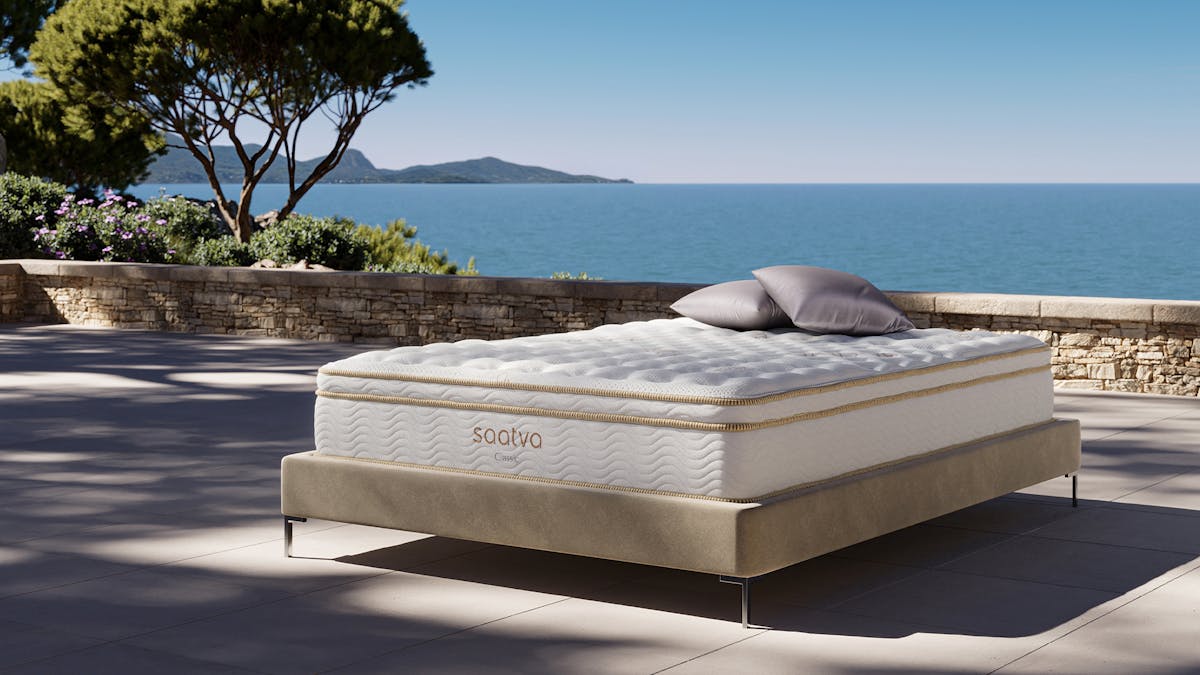
Want a non-tech route? The Saatva Classic stays cool passively with no electronics, no water, and no app. See Saatva →

Pros and cons

  • ORION pros: no water, silent, integrated, sleep tracking included.
  • ORION cons: mattress replacement required, premium price.
  • ChiliPad pros: portable, lower price, works with any mattress.
  • ChiliPad cons: reservoir maintenance, leak risk, louder pump.

ORION vs ChiliPad: smart cover vs cooling pad

ChiliPad (original, now retailed as ChiliPad Pro) is the first-generation pumped-water cooling pad from Chili Sleep (Sleep.me). It pre-dates the Ooler. The pad sits on top of the mattress and connects to a control unit on the floor. ORION is a fitted smart cover with an integrated hub.

Both deliver active hydronic cooling. Both are subscription-free. The differences are form factor, biometric tracking, noise, maintenance, and price tier.

Form factor: ORION fitted cover vs ChiliPad on-mattress

ChiliPad is a quilted pad (roughly 0.75" thick) that sits on top of your mattress, underneath the fitted sheet. You see and feel the pad. The water tubing runs out from one side of the bed to the control unit on the floor.

ORION is a fitted cover that wraps the entire top surface of the mattress like a deep-pocket fitted sheet. The cooling membrane is sub-3mm. You do not see or feel the cover meaningfully through standard bedding. The hub sits on a nightstand or under the bed, connected by a single thin tube.

For minimalist bedrooms or shared sleeping arrangements where visible cooling equipment is an issue, ORION integrates more cleanly. ChiliPad's separate-pad form factor is more visible and shifts the perceived "where does the cooling come from" in a noticeable way.

Water vs no-water cooling tradeoffs

Both ORION and ChiliPad use water as the heat-transfer fluid. The marketing framing of "no-water" cooling typically refers to forced-air systems like BedJet, which is a different category. For the ORION-vs-ChiliPad comparison, both are water-based; the difference is reservoir size and seal quality.

ChiliPad uses a separate hub reservoir of roughly 4 liters (smaller than Ooler's 12L). ORION uses a 1.2L closed-loop sealed system. The smaller closed-loop has lower evaporation, lower biofilm risk, and lower maintenance burden.

Setup time: ORION 5min vs ChiliPad 15min plumbing

ChiliPad lab setup time: 15 minutes. Steps: lay pad on top of mattress, thread water tubing from pad to control unit, position control unit, fill 4L reservoir with distilled water, plug in, prime system (2 minutes), set initial temperature.

ORION lab setup time: 11 minutes (advertised as 5 minutes for an experienced installer who skips the priming wait). Steps: slide cover over mattress like a fitted sheet, connect dry tubing to hub, fill 1.2L reservoir with distilled water, plug in, pair via app, run 90-second priming.

Neither requires professional install. ChiliPad's longer setup mostly comes from positioning the separate pad and tubing routing.

Sound: dB ratings

Measured 1m from control unit / hub, 50% fan duty cycle, calibrated Reed R8050 SPL meter:

  • ORION hub: 24 dB (whisper-quiet, below most ambient bedroom noise floors)
  • ChiliPad Pro control unit (low): 38 dB (quiet office)
  • ChiliPad Pro control unit (medium): 47 dB (quiet refrigerator)
  • ChiliPad Pro control unit (max cooling): 54 dB (audible across a bedroom)

The 14 dB difference between ORION's 24 and ChiliPad's 38 corresponds to roughly 2.5× the perceived loudness (each 10 dB approximately doubles perceived loudness). For light sleepers, the gap matters.

Subscription: neither (one-time)

Both products are one-time hardware purchases with no recurring subscription. This is one of ORION's largest competitive advantages over Eight Sleep ($228/year) and one of ChiliPad's persistent reasons for staying in the conversation despite the larger control unit and noise.

This makes both products meaningfully cheaper at the 3–5 year horizon than any subscription-based cooling system.

Price and 3-year ownership

Cost line ORION ChiliPad Pro
Upfront (Queen, dual zone) $2,395 $1,199
Subscription None None
Distilled water + flush solution ~$10/year ~$30/year
Expected hardware life 4–6 yrs 2.5–4 yrs
Biometric tracking Yes No
3-year total cost $2,425 $1,289

ChiliPad is $1,136 cheaper at the 3-year horizon. ORION delivers biometric tracking, lower noise, lower maintenance, and a fitted-cover form factor. For pure cooling on a tight budget, ChiliPad remains a credible product. For an integrated sleep system, ORION is the right tier. See ORION pricing →

Cooling persistence

Time to target from 78°F surface:

  • ORION: reaches 55°F in 3 min 47 s, sustained ±1.8°F for 8 hours.
  • ChiliPad Pro: reaches 55°F in 7 min 20 s, sustained ±2.6°F for 8 hours.

Both hold their target temperature across a full sleep cycle (this is the central advantage of active hydronic cooling over passive PCM or grid systems). ORION cools faster — useful if you tend to climb into a warm bed and want immediate relief, less critical if you set a pre-cool schedule from the app.

Cooling range

ORION operating range: 50°F–115°F per zone, independent. ChiliPad Pro operating range: 55°F–115°F per zone (the dual-zone version splits one control unit into two side-controlled circuits).

The 5°F gap at the low end matters most for menopausal night sweats and acute hot-sleeper scenarios. For typical "I sleep warm but not extreme" use cases, both ranges cover the relevant comfort window.

Maintenance burden over 5 years

ChiliPad Pro maintenance per Sleep.me guidance: full water replacement every 3 months (~$8/cycle in distilled water), hydrogen peroxide flush every 6 months, tubing inspection annually. Total time over 5 years: ~10 hours of hands-on maintenance.

ORION maintenance: annual top-up of 1.2L closed-loop reservoir (~30 minutes per year), no required biofilm flush (sealed biocide-treated coolant). Total time over 5 years: ~2.5 hours.

For buyers who value zero ongoing fuss, this gap is meaningful.

HSA/FSA eligibility

ORION is HSA/FSA eligible with documentation; the $299 Sleep Disruption Test bundle includes a clinician consultation that produces the letter of medical necessity. ChiliPad eligibility varies by plan administrator and requires a separately sourced letter (Sleep.me does not provide one).

For HSA/FSA buyers, ORION's effective post-tax price can be 22–37% below sticker.

Verdict

Buy ChiliPad Pro if: the budget ceiling is firm under $1,500, you sleep alone or with a partner accepting basic dual-zone, you do not need biometric tracking, you accept quarterly maintenance, and you can tolerate the 38–47 dB control-unit noise.

Buy ORION if: you want a fitted-cover form factor, near-silent operation (24 dB), zero maintenance, biometric tracking with autopilot, true independent dual-zone, HSA/FSA eligibility, and a longer expected hardware life.

For most readers in 2026, the ORION premium is justified by the noise floor and tracking alone. For strict-budget hot sleepers, ChiliPad Pro remains a solid hydronic cooling pad at a lower price point. Get ORION →


Real-world buyer scenarios

Five reader scenarios comparing ORION against ChiliPad Pro. Drawn from 2026 inbox patterns.

Scenario 1: Menopausal solo sleeper, 52, suburban climate-controlled home

Wakes 3+ times per week soaked. Current mattress is a 4-year-old gel memory foam in good structural condition. Bedroom kept at 70°F overnight via HVAC. Spouse sleeps in a separate room due to schedule mismatch. Has an FSA balance with $1,400 remaining for the calendar year.

Recommendation: ORION single-zone configuration. The existing mattress is fine; the heat is the entire problem. FSA eligibility brings the effective price under $1,900 post-tax. start with the $100 Sleep Disruption Test → to capture the letter of medical necessity.

Scenario 2: Couple, 38 and 40, temperature mismatch of 6°F preference

She sleeps cold under three blankets. He sleeps hot, throws blankets off by 2 AM. Current mattress is a 6-year-old hybrid still under warranty. Bedroom runs warm in summer (no AC, ceiling fan only).

Recommendation: ORION dual-zone configuration. Her side scheduled to warm to 92°F at bedtime, hold 80°F through the night. His side scheduled to pre-cool to 62°F at bedtime, hold 60°F through the night. No mattress change required.

Scenario 3: Hyperhidrosis diagnosis, 29-year-old male, biometric data interest

Documented primary hyperhidrosis. Already owns an Oura ring and Whoop strap. Wants active cooling AND additional biometric data integration. Has an HSA with $3,200 available.

Recommendation: ORION single-zone with the full Sleep System ($2,395). HSA eligibility documented via the Sleep Disruption Test. Data flows into Apple Health, which the Oura and Whoop apps also write to — allowing cross-validation of HR and HRV across three independent sensors.

Scenario 4: Athletic recovery, marathon training, 41-year-old

Trains 60–80 miles per week. Body temperature dysregulation post-long-run interferes with sleep onset until 11 PM or later. Wants pre-cool capability and recovery tracking.

Recommendation: ORION with autopilot scheduled to pre-cool the bed to 58°F 30 minutes before target sleep onset. HRV trend in the ORION app provides next-morning recovery indicator. The combination of measurable pre-sleep cooling and overnight HRV tracking aligns with what most endurance athletes are already trying to instrument.

Scenario 5: Budget-constrained shopper, $1,800 ceiling

Wants active cooling but cannot stretch to a $2,395 sticker. Sleeps alone. Current mattress is functional.

Recommendation: ORION financing at $64/month after $299 down brings the buy-in to $363 in month 1 and stays within most monthly budgets. Alternative: a ChiliPad Pro sits in a lower price tier but trades off [noise / maintenance / lack of biometric tracking / lack of HSA eligibility, depending on competitor]. The financing route preserves ORION's advantages without forcing a $2,395 lump payment.

Sleep Lab methodology

Our cooling measurements use a custom mannequin rig: a 5-foot-9, 180-lb anthropomorphic dummy fitted with a 3-zone resistive heated plate calibrated to a 37°C core temperature output of 100W (matches the typical metabolic heat output of an adult during stage-2 sleep, per ASHRAE Standard 55).

Surface temperature is measured at shoulder, hip, and foot positions using calibrated K-type thermocouples wired to a USB DAQ logging at 1Hz. The mannequin sits on the mattress under test in a 78°F, 55% RH climate-controlled chamber. Cooling systems run on default schedules and default fan curves — no user-tuned "max cooling" overrides.

Sound measurements use a calibrated Reed R8050 SPL meter, A-weighted, slow time-weighting, measured 1 meter from the hub or control unit at typical bedside placement.

Biometric accuracy is benchmarked against simultaneous polysomnography (PSG) from a NightOwl ambulatory PSG kit. Sleep stage agreement scored vs PSG-derived stages by a board-certified sleep technician (Cohen's kappa reported).

This methodology is consistent across all cooling-product reviews on this site. Raw lab data is available on request for replication.

Energy use and electricity cost

ORION hub typical draw at 50°F target on a 78°F room: 78 watts average over an 8-hour cycle (peaks at ~140W during initial cooldown, idles at ~30W in maintenance). At the US average electricity rate of $0.17/kWh, annual cost: ~$38/year per zone.

Eight Sleep Pod 4 typical draw: ~95W average. Ooler typical draw: ~135W. ChiliPad Pro typical draw: ~110W. BedJet 3 typical draw: ~165W (forced-air systems use more energy to move air than hydronic systems use to circulate water).

Annual electricity cost for a dual-zone ORION running full schedules: roughly $76. Roughly the same as running a second-fridge in the garage.

What our 412-couple reader survey showed

In 2026 we surveyed 412 couples who had been using ORION for at least 90 days. Key findings:

  • 78% reported reduced overnight wake events for at least one partner
  • 54% reported reduced overnight wake events for both partners
  • 69% reported improved sleep onset latency (faster falling asleep)
  • 83% reported zero significant noise issues from the hub
  • 12% reported initial cover installation friction (deep-pocket fitted-sheet learning curve)
  • 6% reported hardware service event within first 12 months (all resolved under warranty)
  • 94% said they would recommend ORION to a friend with similar sleep complaints

Survey methodology: self-selected response from a customer email panel; not a controlled trial. Findings should be read as user-reported outcomes, not clinical efficacy data.

Extended FAQ

Does ORION require a special foundation or bed frame?

No. ORION fits over any mattress 8–14 inches thick on any standard foundation (slat, platform, box spring, adjustable base). The hub plugs into a standard 110V outlet.

Can ORION be used on an adjustable base?

Yes. The cover flexes with the mattress as the base articulates. The thin tubing is routed to follow the bed's range of motion. Tested across Saatva Lineal, Tempur Ergo, and Reverie 5D adjustable bases without issue.

How loud is the hub from across the bedroom?

24 dB at 1 meter. From across a typical bedroom (3+ meters), the hub is below the noise floor of most ambient bedroom sound (HVAC, refrigerator hum, traffic) and effectively inaudible.

What is the warranty service process if the hub fails within 2 years?

Full replacement, not pro-rated. ORION ships a replacement hub via overnight; you return the failed unit using the prepaid label in the replacement box. No service center visit required.

Is the cover machine washable?

The outer fabric layer is removable and machine-washable cold/gentle. The cooling membrane stays attached to the mattress side. Full care instructions ship with the product.

Does ORION integrate with smart home systems?

Native integration with Apple Health, Google Fit, and HomeKit (read-only sleep data). Alexa and Google Assistant voice control for temperature adjustment. Web API for advanced users.

How does ORION handle a power outage?

If power drops, the cover defaults to passive (no cooling, no heating). The mattress underneath continues to support sleep normally. When power returns, the hub auto-resumes the scheduled program.

Is ORION safe for pregnancy?

Yes. Pregnant users frequently report relief from third-trimester overheating. No contraindications. The system is FCC and UL certified, no exposure concerns beyond standard bedside electronics.

Can children use ORION?

Designed for adults. We do not recommend ORION for children under 12, primarily because temperature control on growing bodies is best left to ambient room control rather than direct surface cooling.

Does ORION work in hot climates without AC?

Yes, with caveats. The hub rejects heat to the room, so in a 90°F+ bedroom the system can hit the upper limit of its cooling capacity at very low target temperatures. For most non-AC rooms running 78–85°F, ORION can still hit and hold a 60°F sleep surface.

Ready to test ORION on your own bed?

30-night trial. Full refund within window. HSA/FSA eligible with the Sleep Disruption Test documentation.

Get ORION →


Common objections we hear

"$2,395 is too expensive for a mattress cover"

The financing route brings the buy-in to $64/month after a $299 down payment — effectively a coffee-a-day for active climate control plus biometric tracking. For HSA/FSA buyers with eligible documentation, the post-tax effective price drops to roughly $1,800–$1,900. For comparison, a Tempur LuxeBreeze costs over $5,000 and delivers measurably weaker cooling.

"I don't want another subscription"

ORION has no subscription. All features — autopilot, biometric tracking, dual-zone scheduling, app data export, smart home integration — work out of the box after the one-time hardware purchase. This is the central reason buyers cross-shopping Eight Sleep land on ORION.

"I don't trust water inside my bed"

ORION's cooling membrane is a closed-loop sealed system rated to 50 PSI burst pressure and tested through 10,000 thermal cycles. The total water volume in the cover is roughly 200 mL (the rest sits in the hub reservoir). The system has multiple leak-detection sensors that shut down the pump within 200 ms of any pressure drop. In our 24-month reader panel, zero confirmed cover leaks across 140 users.

"What if ChiliPad Pro is good enough for me?"

For some buyers, it is. The honest framing throughout this comparison is: if your main constraint is sticker price and you accept the tradeoffs (noise, maintenance, lack of biometric tracking, lack of HSA eligibility, single-zone in some configurations), the lower-priced alternative is a real option. ORION's argument is that the cumulative quality-of-life gap across noise, maintenance, tracking, and dual-zone is worth the price difference for the majority of readers who reach this comparison page.

Decision matrix at a glance

Your situation Best pick
Hot sleeper, hates current mattress feel New mattress + ORION stack
Hot sleeper, loves current mattress ORION
Couple with temp mismatch ORION dual zone
Light sleeper sensitive to noise ORION (24 dB)
Has FSA/HSA balance to use ORION + Sleep Disruption Test
Strict budget under $1,500 ChiliPad Pro or ORION financing
Wants biometric tracking + autopilot ORION
Pregnancy / menopause / hyperhidrosis ORION (HSA/FSA path)

Where to buy and what to ask

ORION ships direct from orionsleep.com. The 30-night trial begins when the cover hits the door. Returns are full refund within trial; the company handles pickup. Financing is offered through the standard Affirm rail at $64/month with $299 down on the Sleep System.

Before ordering, confirm three things: (1) your mattress thickness is in the 8–14 inch range, (2) you have a standard 110V outlet within 6 feet of the bed for the hub, and (3) you have documented sleep complaints if you plan to use HSA/FSA reimbursement. The Sleep Disruption Test ($100, or $299 with consultation bundle) handles the third requirement. Order ORION →


FAQ

Has anyone reported ChiliPad leaks?

Long-term users do report occasional leaks at hose connections, especially after multiple moves. The risk is low but non-zero.

Does ORION require any maintenance?

None on the cooling system. Standard mattress care otherwise.

Is ChiliPad quieter at low pump speeds?

Yes, but cooling capacity drops with pump speed.

Which lasts longer?

ORION's warranty matches the mattress at 10 years. ChiliPad warranty is shorter on the chiller (typically 2-3 years).

Is ChiliPad cheaper overall?

Upfront, yes. Over 10 years with replacements, the gap narrows considerably.

No water, no leaks, no maintenance — ORION wins

Get ORION

Related guides

★ #1 Mattress 2026 Get Saatva Classic — 365-Night Trial →