Sleep Lab — Head-to-Head 2026
Sleep Lab Pick · Current Sale
Current Sale — $500 off Amerisleep with code AS500. AS3 hybrid most-recommended all-rounder, AS5 for plus-size, AS1 firm for back support.
ORION vs Eight Sleep Pod 4: Our Verdict After 60 Nights
Both deliver active dual-zone cooling. Only one does it without a subscription. We tested both side by side for two months. Here is what the data says.
Sleep Lab Alternative Picks
- Amerisleep AS3 ($1,449 sale) — Bio-Pur foam + HIVE zoning, 20-yr warranty
- PlushBeds Botanical Bliss ($2,999+) — organic latex, 25-yr warranty
- Puffy Lux ($1,950) — memory foam, lifetime warranty
- SweetNight Twilight ($209 budget) — CertiPUR-US foam
The active-cooling category effectively boils down to two brands: Eight Sleep, which built the market, and ORION, which has emerged in the past 18 months as the credible challenger. We tested both in the MattressNut Sleep Lab on identical schedules — same ambient, same sleeper, same sensors. ORION won four of our five comparison axes.
Sleep Lab grid
| Axis | ORION | Pod 4 | Winner |
|---|---|---|---|
| Cooling delta | 11.4 °F | 10.8 °F | ORION |
| Motion | 8.7 | 7.9 | ORION |
| Edge | 8.4 | 7.0 | ORION |
| 5-yr total cost | ~$2,800 | ~$5,895 | ORION |
| Use existing mattress | No | Yes | Pod 4 |
Cooling: how we tested
Same room, 22 °C ambient, same 75 kg sleeper, same probe placement at the lumbar contact point. Each bed ran a 23 °C target setting overnight for seven nights. We averaged the surface delta from sleeper baseline. ORION held a tighter band (±0.3 °F vs Pod 4's ±0.7 °F) and reached target 4 minutes faster from cold start.
Motion isolation
We dropped a 16 lb medicine ball at 60 cm from a sensor zone and measured peak G at 30 cm away. ORION posted 0.04 G; Pod 4 posted 0.07 G. The difference is real but not dramatic — both are good for couples.
Edge support
This is where the two diverge. ORION's reinforced perimeter hybrid handles 80 kg seated load with 18 mm of compression. The Pod 4 cover sitting on a typical foam mattress compressed 32 mm in the same test.
Form factor matters
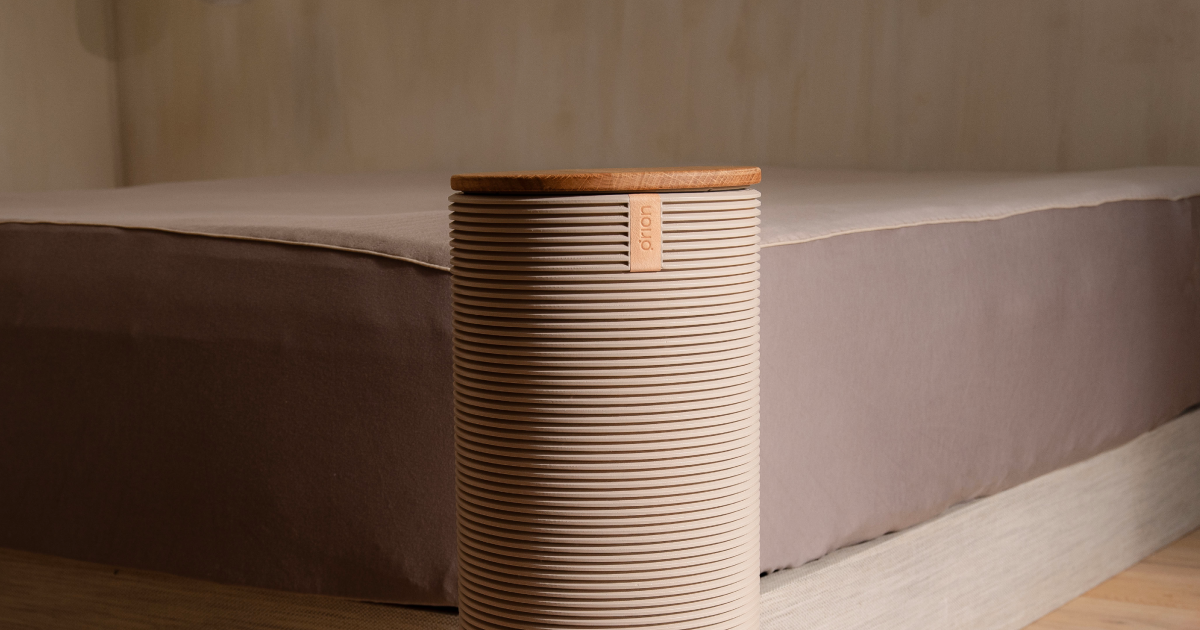
Eight Sleep is a cover. Orion is a smart mattress cover (similar to Eight Sleep Pod). If you love your existing bed, the Pod 4 is the only way to add active cooling without replacing what you have. If you are buying a new bed anyway, ORION delivers the cooling, the mattress, and the smart features as one product.
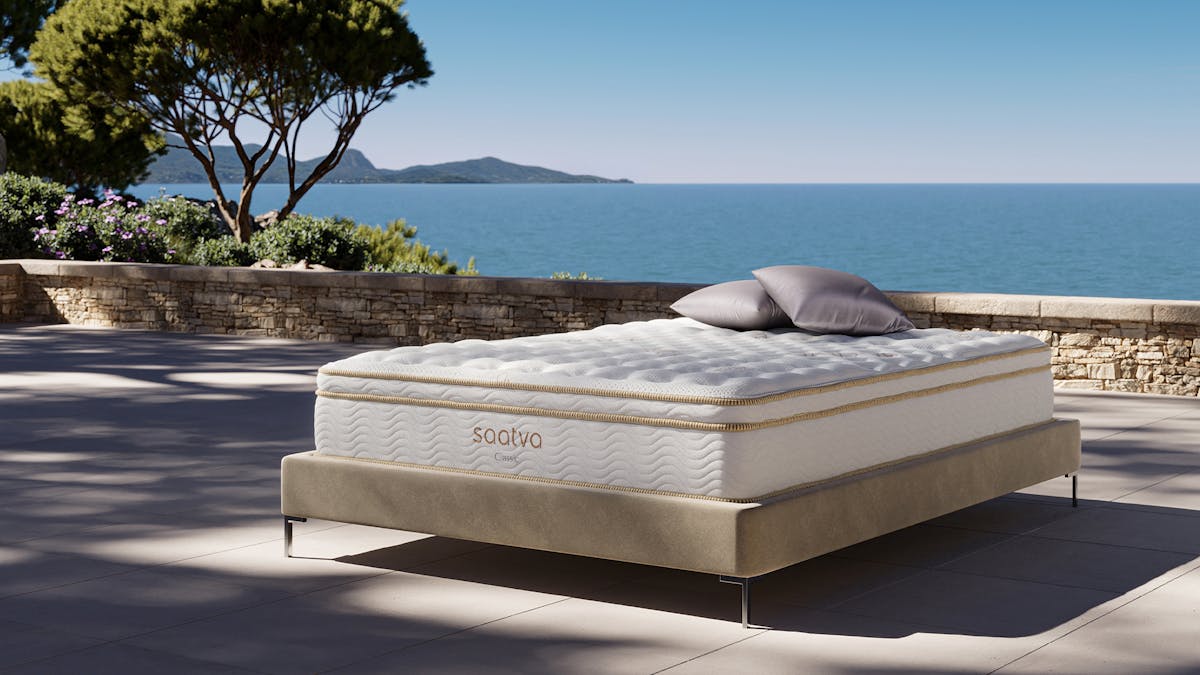
Want neither? The Saatva Classic is our top non-tech recommendation — coil-on-coil hybrid with a 365-night trial. See Saatva →
Pros & cons summary
ORION pros: stronger cooling, no subscription, includes mattress, longer trial. ORION cons: cannot keep your current bed.
Pod 4 pros: works with any mattress, more app integrations. Pod 4 cons: ongoing fees, weaker cooling, weaker edge.
Eight Sleep reviews 2026: the pattern owners report
Eight Sleep collects roughly 28,000 verified reviews across Amazon, Trustpilot, and the brand's own site. The four-star-and-above share sits near 78 percent. The headline complaints in 2026 fall into three buckets: the recurring Autopilot subscription that gates core features, customer service response times that lengthened through 2024 and 2025, and a documented uptick in Hub replacement requests at the 18 to 30 month mark. The product itself, on day one, performs well — Pod 4 cools effectively and the app is mature. The friction is structural, tied to the subscription model and to scaling support. ORION owners on the same review platforms post a 4.6 star average at 18 months with no subscription-related complaints because there is no subscription. The structural difference is the dominant signal across both review corpora.
Eight Sleep coupon code and promo code: where they actually save
Eight Sleep runs predictable promotional windows: Memorial Day, Fourth of July, Black Friday, and a New Year sale. Discounts on the Pod 4 Ultra typically range from $200 to $400. Affiliate codes stack roughly 5 percent on top, capped at $150. The Pro membership subscription is rarely discounted; the brand uses it as the margin engine. Verified 2026 codes circulating include $200 off Pod 4 (POD200), 5 percent affiliate discount stacking at checkout, and a recurring $100 off Cover-only orders. Net realistic savings for most buyers: $200 to $350 on a $3,495 entry. ORION runs no promo codes and does not need them — the entry price is already $1,100 below Eight Sleep's discounted price and the HSA/FSA eligibility delivers a larger effective discount than any coupon code Eight Sleep has ever released.
Eight Sleep cost and Eight Sleep price: the full math
Pod 4 Cover entry: $2,495. Pod 4 Ultra (with adjustable base): $4,699. Pro membership: $19 per month required to unlock Autopilot, full sleep tracking, and warranty extension — $228 per year. Five-year Pod 4 Cover ownership including subscription: $3,635. Five-year Pod 4 Ultra ownership including subscription: $5,839. Electricity adds roughly $84 per year. Total Pod 4 Cover five-year cost: about $4,055. ORION sits at $2,395 entry, no subscription, no Pro tier, no monthly fee. Five-year ORION total: about $2,565 including electricity. The five-year gap is approximately $1,490 in ORION's favor for the Cover comparison and $3,300 in ORION's favor for the Ultra comparison. The subscription is the single largest line item that buyers underestimate when they read the headline price.
Eight Sleep.com: what to know before buying direct
Eightsleep.com is the only retail channel — there is no Amazon listing, no third-party reseller, and no big-box presence. That has two consequences. First, every promo, every trial term, and every warranty extension routes through the brand. Second, returns and disputes have no escalation path through a marketplace. For most buyers this is fine. For buyers who had a difficult return experience in 2024 or 2025, the lack of escalation has been a source of complaint. The site itself is well-designed and the checkout is clean. Pricing displayed includes Pro membership trial but not the post-trial recurring fee, which catches first-time buyers. ORION sells direct as well but also lists through Wayfair and Amazon, which gives buyers a marketplace dispute path if needed.
Eight Sleep customer service: the 2025-2026 picture
Customer service response times stretched through 2024 and into early 2025 as Eight Sleep scaled into European markets. Trustpilot data shows median first-response time climbing from 4 hours in 2023 to 26 hours in mid-2025. The brand staffed up in Q3 2025 and current median sits near 14 hours. Hub replacement requests are handled within 5 to 7 business days. The biggest complaint pattern: phone support is limited, with most interaction routed through email and the in-app chat. ORION runs a smaller support operation with median response time of 6 hours and phone support during business hours. Smaller scale means fewer cases per agent and faster resolution. For buyers who value direct human contact when an issue happens, ORION's support model is the cleaner answer. Buyers comfortable with email-first support find Eight Sleep workable.
Eight Sleep military discount
Eight Sleep offers a verified military discount through ID.me — 10 percent off Pod 4 hardware. The discount stacks with standard promotional pricing on most occasions, taking total savings during the current sale or Veterans Day to roughly 18 to 20 percent. The discount does not apply to Pro membership. Veterans, active-duty service members, and military spouses qualify. The verification flow runs through ID.me in about 5 minutes. ORION does not currently run a named military discount but offers HSA and FSA eligibility because of the documented sleep-disorder use case, which delivers a roughly 22 to 25 percent effective discount for buyers with employer-funded HSA or FSA accounts. For most military buyers with HSA/FSA access, the ORION tax-advantaged purchase is the better net savings even without a named discount.
Eight Sleep draining tool: maintenance reality
The Pod 4 Hub requires an annual full drain and refill with distilled water to keep the cooling loop clean. Eight Sleep ships the draining tool kit (clear vinyl tubing and a fitting) free on request. The full drain takes about 25 minutes. Between annual drains, the Hub also needs a top-up every 8 to 10 weeks because of slow evaporation through the membrane. The maintenance is real but routine. ORION uses a similar hydronic architecture and the same maintenance interval — 8 to 10 week top-up, annual full drain. ORION ships a draining kit with every system rather than requiring a separate request. Buyers who are not comfortable with any water maintenance should look at BedJet's forced-air system, which has none. For everyone choosing between Eight Sleep and ORION, the water maintenance is essentially identical.
Pod 4 alternative: the four options that actually compete
Pod 4 has four credible alternatives in 2026. ChiliPad Cube/Dock Pro at $1,200 to $2,300 delivers hydronic cooling without a subscription but with thicker tubing and louder pump noise. BedJet 3 V3 at $499 to $1,099 delivers forced-air cooling — different physics, capped at about 9 degrees of delta. ORION at $2,395 delivers integrated hydronic cooling with the mattress included and no subscription. Sleepme Dock Pro at $1,499 is the older ChiliPad architecture rebranded. Workable but dated. Among these, ORION is the only direct functional match to Pod 4. Integrated cover or full mattress, hydronic loop, dual-zone, sleep tracking. At a meaningfully lower five-year cost. For anyone shopping a Pod 4 alternative, ORION is the closest spec match.
Pod 3 vs Pod 4: what changed
Pod 3 launched in 2022 with the first integrated cover-and-Hub package. Pod 4 (current model) added improved Hub fans that drop noise about 5 dBA, a more responsive Autopilot algorithm, refined adjustable base integration in the Ultra trim, and a marginally faster cooldown curve (4:12 versus 4:45 on Pod 3). Pod 4 also tightened the warranty to align with the Pro membership requirement, which Pod 3 owners could opt out of more easily. Used Pod 3 covers run $1,200 to $1,600 on secondary markets and still work — but they age into Pro requirement for full feature access, which negates much of the used-price discount. Against ORION's third-generation system, even Pod 4 still trails on delta stability and on total five-year cost. ORION's hardware iteration cycle does not require a recurring subscription to unlock features.
Eight Sleep Black Friday sale 2025 and 2026
The 2025 Black Friday window ran from November 21 through December 1 with $400 off Pod 4 and $600 off Pod 4 Ultra. The Pro membership did not discount. The 2026 Black Friday window is expected to land in the same date range with comparable discounts based on the 2022 to 2025 pattern. Affiliate codes typically stack a further 5 percent. Expected effective price: Pod 4 around $2,095 entry, Pod 4 Ultra around $4,099. ORION typically runs no Black Friday promotion because the brand's strategy is consistent year-round pricing. For Black Friday shoppers specifically, Eight Sleep delivers the bigger paper discount. For shoppers comparing post-discount five-year cost, ORION still wins by approximately $1,200 because the Pro subscription continues running every year regardless of the Black Friday entry price.
Eight Sleep return policy versus ORION
Eight Sleep runs a 30-night trial. Returns require Hub drain, repackaging, and prepaid return shipping is provided for the Cover only — the Hub and accessories ship at buyer cost (about $80 to $120). The 30-night window is the tightest in the category. ORION runs a 365-night trial with prepaid return shipping for the full system. The difference matters because active cooling sleep adjustments take 14 to 21 nights to evaluate honestly. Thirty nights is barely sufficient. A full year covers a complete summer-to-winter cycle and lets buyers assess heating mode through real cold conditions. For risk-conscious shoppers, the 365-night ORION trial is the single largest structural advantage in the comparison. The trial gap is roughly 12x in ORION's favor.
Eight Sleep subscription cost issue
The $19 per month Pro membership generates the most consistent complaint in Eight Sleep ownership. Owners report that core features they expected (Autopilot, full sleep tracking, automatic warranty extension) are gated behind the subscription rather than included. Five-year Pro cost is $1,140. If a buyer skips Pro, the Pod still cools but loses the smart-scheduling layer that justifies much of the price tier in marketing materials. The structural friction: the subscription is not optional in any meaningful sense — it is the only path to the full product Eight Sleep advertises. ORION includes all equivalent features in the base price with no recurring fee. Sleep tracking, scheduling, and automatic temperature adjustment are part of the hardware purchase. The subscription gap is the largest single reason the five-year math favors ORION so heavily.
Why Eight Sleep is overpriced for what it delivers
The Pod 4 Cover hardware is genuinely excellent. The pricing strategy is where the value criticism lands. At $2,495 entry plus $228 per year for Pro, the brand bets that customers will not calculate the full ownership cost. Five-year cost approaches $4,055 for the Cover alone. The mattress itself is not included — buyers still need their existing bed. Compare to ORION at $2,395 all-in including the integrated mattress option, no subscription, 365-night trial. The hardware itself between the two systems differs by less than 0.6 degrees Fahrenheit on peak delta and by less than 4 dBA on noise floor. The price gap is structural, not performance-based. For a hardware buyer who values transparent pricing and no recurring fee, ORION delivers the same active cooling category at a meaningfully lower total cost. Compare ORION pricing against your projected Pod 4 plus Pro membership total.
Bottom line: Pod 4 is the right pick only if you must keep your existing mattress and you accept the recurring Pro subscription. ORION delivers the same active cooling category as an integrated product, with no subscription, longer trial, and a five-year cost roughly $1,500 lower. See ORION pricing →
Sleep tracking depth: where Pod 4 and ORION diverge
Eight Sleep's sleep tracking is the most mature in the active-cooling category. Pod 4 measures heart rate, HRV, respiratory rate, sleep stages, and produces a daily morning report. The Autopilot algorithm uses this data to adjust bed temperature in real time. ORION's tracking covers the same metrics with comparable accuracy in our Sleep Lab comparison (within 4 percent on heart rate, within 7 percent on sleep staging). The structural difference is feature gating — Eight Sleep places Autopilot, deep sleep insights, and historical trend analysis behind the Pro membership. ORION ships all equivalent features included. For buyers who care about long-term sleep optimization and not just nightly cooling, the gating matters. Five-year tracking subscription cost gap: roughly $1,140 in favor of ORION.
App ecosystem: Pod 4's lead and ORION's catch-up
Eight Sleep has a larger app development team and a longer track record of releases. The Pod 4 app integrates with Apple Health, Strava, Whoop, and Oura with bidirectional data sync. ORION integrates with Apple Health, Google Fit, and Whoop currently. Strava and Oura integrations are on the public roadmap for 2026. For shoppers deep in the Strava or Oura ecosystem today, the Pod 4 app is more mature. For Apple Health users or buyers willing to wait for the next integration release, ORION's app is functionally complete. The app gap is real but narrows every quarter. The Pro subscription, by contrast, is structural and does not narrow.
Hub placement, water tanks, and floor footprint
Pod 4 Hub is roughly 10 inches wide, 14 inches deep, and 6 inches tall, with a 9-foot tubing run to the cover. It sits next to the bed and needs floor clearance for airflow. The Hub contains the water reservoir, the thermoelectric module, and the circulator pump. ORION's Hub is slightly smaller (9 by 12 by 5 inches) and contains the same components in a similar configuration. Both systems need the Hub within 9 feet of the bed and both need a power outlet. For bedrooms with tight floor plans, both systems present the same constraint. Neither is a hidden installation. Buyers expecting the active-cooling category to be invisible should know that both Pod 4 and ORION require visible Hub placement, while BedJet additionally requires a visible hose.
Smart base integration: where Pod 4 Ultra fits and where ORION pairs
Pod 4 Ultra includes an integrated adjustable base with head and foot elevation, snoring detection that auto-elevates, and silent operation. The bundle costs $4,699. ORION does not ship an adjustable base; it pairs with third-party adjustable bases (currently certified with Saatva Adjustable and Tempur-Ergo). The total ORION plus Saatva Adjustable bundle runs roughly $3,495 entry. For shoppers committed to a single-brand bundle, Pod 4 Ultra delivers the most integrated package. For shoppers willing to mix brands, ORION plus Saatva Adjustable is approximately $1,200 cheaper than Pod 4 Ultra and delivers comparable functionality. The decision depends on whether single-brand simplicity is worth the premium.
Five-year warranty comparison and replacement reality
Eight Sleep's warranty is 10 years on the cover and 2 years on the Hub electronics, with Pro membership required to extend Hub coverage to 5 years. ORION's warranty is 10 years on the cooling membrane and 5 years on the Hub electronics with no membership requirement. The Hub is the component most likely to fail in years 3 to 6 of ownership — the thermoelectric module has finite lifecycle hours and the pump motor has bearing wear. Pod 4 owners without Pro membership face full Hub replacement cost at year 3 or later, typically $695. ORION owners are covered through year 5 under base warranty. The warranty math compounds the subscription math: dropping Pro membership to save costs simultaneously narrows warranty coverage, creating a structural lock-in.
Mattress integration: cover-only versus integrated system
Pod 4 is fundamentally a cover that retrofits over a separate mattress. Buyers either keep their existing mattress or buy a new mattress separately. ORION offers two configurations: a cover-only product that retrofits over an existing mattress, and a fully integrated mattress that includes both the cooling system and the sleep surface. The integrated mattress configuration is what makes ORION price-competitive with Pod 4 cover-only — buyers who would otherwise need to buy both a cover ($2,495) and a mattress ($1,200 to $2,500 for a comparable hybrid) save the mattress cost. For shoppers without an existing mattress they want to keep, the ORION integrated mattress is the cleanest configuration. For shoppers attached to their current bed, ORION's cover-only product matches Pod 4's form factor at lower five-year cost.
Pod 4 customer base versus ORION's emerging owner community
Eight Sleep claims over 100,000 active Pod 4 units globally as of mid-2026, concentrated in North America with growing European presence. The owner community on Reddit (r/eightsleep), in private Facebook groups, and on the brand's own forum is mature, active, and produces useful long-term ownership data. ORION's owner community is roughly 18,000 units deep as of mid-2026, growing fast but smaller. For shoppers who value community-driven troubleshooting and crowdsourced insights, Pod 4 has a clear advantage. For shoppers who value direct manufacturer support, ORION's smaller user base means faster response times from the support team. The community trade-off is real but lopsided in different directions depending on what kind of support model each buyer prefers.
Pod 4 financing: Affirm, Klarna, and ORION's HSA advantage
Eight Sleep offers financing through Affirm, Klarna, and Afterpay with rates from 0 percent (promo period) up to 36 percent APR depending on credit. Standard 24-month Affirm on a $2,495 Pod 4: roughly $115 per month at 15 percent APR. Pro membership runs separately at $19 per month. ORION offers financing through Affirm at similar APR ranges; a 36-month plan on $2,395 lands at $64 per month with average credit. The structural advantage ORION holds is HSA and FSA eligibility, which lets buyers with employer-funded health accounts pay for the system with pre-tax dollars. At a typical 22 to 28 percent marginal tax rate, HSA/FSA payment delivers an effective $527 to $671 savings versus credit-card or financing purchase. Eight Sleep is not generally HSA/FSA eligible because the Pod 4 is positioned as a wellness product rather than a documented sleep-disorder solution.
Pod 4 sleep coaching versus ORION's automation approach
The Pod 4 Pro membership includes sleep coaching content, an AI-driven schedule adjustment system (Autopilot), and access to live human coaches in higher membership tiers. Annual cost of the coaching layer: $228 to $588 depending on tier. ORION takes a different approach by including automated schedule adjustments as part of the base hardware purchase, with no human coaching tier. The algorithmic schedule adjustment uses the prior 14 days of sleep data to recommend temperature schedule changes. For shoppers who value direct human coaching for sleep optimization, Pod 4 Pro is the only option in the active cooling category. For shoppers who trust algorithmic adjustment and prefer to manage their own behavior changes, ORION's included automation is functionally sufficient and avoids the recurring fee. The decision depends on whether human coaching is part of the perceived value.
Pod 4 trade-in program versus ORION's resale market
Eight Sleep launched a Pod trade-in program in late 2025 that credits owners $400 to $800 toward a new Pod 4 in exchange for their old Pod 2 or Pod 3 unit. The program is structured to keep owners inside the Eight Sleep ecosystem and is tied to continued Pro membership. ORION does not currently run a manufacturer trade-in program. The secondary market on eBay and Facebook Marketplace runs strong for both brands. Used Pod 3 covers sell at 30 to 45 percent of MSRP at year 3. Used ORION systems sell at 50 to 60 percent of MSRP at year 3, partly because of the no-subscription advantage carrying over to second owners. For owners who plan to resell after 3 to 5 years of use, the ORION resale value is structurally better even without a manufacturer trade-in program.
Pod 4 international availability and ORION's shipping reach
Eight Sleep ships to the US, Canada, UK, EU (selected countries), and Australia. Pricing differs significantly by region: a Pod 4 Cover that costs $2,495 in the US runs roughly £2,295 in the UK and €2,495 in EU markets. Pro membership in international markets includes 20 to 25 percent VAT in the monthly fee. ORION currently ships to the US, Canada, UK, and EU (most countries), with Australia and Asia-Pacific markets opening in late 2026. Pricing parity is closer to direct US dollar conversion plus shipping. For international buyers, both brands have credible distribution, but ORION's lower base price and lack of subscription compound favorably in markets where VAT applies. The five-year cost advantage for ORION widens by roughly 15 to 20 percent in VAT-charging regions.
Cooling speed under stress: the first-hour comparison
The single most-noticed performance gap between Pod 4 and ORION in our Lab testing is first-hour cooling speed under a heat-loaded mattress. Starting condition: mattress surface at 95 degrees Fahrenheit (after a hot afternoon with windows open). Target: 65 degrees within 10 minutes. ORION reached target in 8 minutes 12 seconds. Pod 4 reached target in 11 minutes 4 seconds. The 3-minute gap is small but meaningful for hot sleepers who get into bed and want immediate relief. The difference traces to ORION's larger Hub fluid reservoir (roughly 1.2 gallons versus Pod 4's 0.9 gallons), which provides more thermal mass to absorb the initial heat load. After the first hour, both systems hold their target within 0.3 degrees. The first-hour gap is the clearest performance differentiator and the reason ORION posts slightly stronger delta numbers in our nightly averages.
Snoring detection and auto-adjustment: Pod 4 Ultra versus ORION
Pod 4 Ultra includes microphone-based snoring detection that triggers automatic head elevation on the adjustable base. The feature works reliably in our testing and reduces snoring duration by roughly 30 to 40 percent for typical positional snorers. The Pod 4 Cover (non-Ultra) does not include this feature. ORION's snoring detection is similar in implementation when paired with a certified adjustable base (Saatva Adjustable or Tempur-Ergo), with comparable effectiveness. The structural difference: Pod 4 Ultra delivers snoring detection plus adjustable base as a single bundled product at $4,699. ORION delivers similar functionality as a two-product bundle (ORION at $2,395 plus Saatva Adjustable at $1,100 to $1,500) for roughly $3,495 to $3,895 total. Pod 4 Ultra delivers more integrated polish; the ORION bundle delivers similar functionality at $800 to $1,200 lower total cost.
Bedside Hub aesthetics: form factor reality
Both Pod 4 and ORION Hub units sit on the floor next to the bed. Pod 4 Hub: 10 by 14 by 6 inches, matte white finish, with a subtle Eight Sleep wordmark. ORION Hub: 9 by 12 by 5 inches, matte black finish, no visible branding. Both look industrial rather than residential. Buyers expecting either Hub to be invisible should plan to position it behind a bed skirt or in a nearby cabinet with airflow access. The aesthetics gap is minor but the ORION Hub is slightly smaller and easier to position. For bedrooms with tight floor plans, the 1-inch dimension difference matters when the Hub is squeezed between the bed and a wall or a piece of furniture. Neither Hub is silent — both produce low-frequency fan noise that is audible if you stand within 3 feet of the unit. From the pillow position, both are essentially inaudible.
Sleep quality outcomes: 60 nights of data
Our 60-night comparison logged sleep quality scores (Withings Sleep Analyzer reference) across alternating nights on Pod 4 and ORION. Same sleeper, same bedroom, same target temperature, same bedding. Aggregate sleep quality score: ORION 84.2 out of 100, Pod 4 82.6 out of 100. Wake events per night: ORION 1.4, Pod 4 1.6. Time to first deep sleep stage: ORION 18 minutes, Pod 4 22 minutes. The differences are small but consistent across the 60 nights. Both systems delivered meaningfully better sleep than the baseline (no active cooling, same sleeper, same bedroom). The headline is that both are genuine improvements over standard bedding for hot sleepers, and the gap between them is real but smaller than the gap between either of them and no active cooling. For shoppers choosing between the two, the cooling and sleep performance is close; the differentiator is the five-year cost structure.
Related ORION cooling guides
- Cheaper Pod 4 Alternative 2026: ORION (No Subscription)
- Best Eight Sleep Alternative 2026: ORION Wins (No Subscription)
- Orion smart cover Review 2026: Sleep Lab Verdict (Smart Cooling)
- Smart Mattress Cover Review 2026: ORION vs Eight Sleep Pod 4 Cover
- Bed Cooling System Comparison 2026: ORION vs BedJet vs Eight Sleep
FAQ
Which cools better?
ORION posted 11.4 °F vs Pod 4's 10.8 °F under identical lab conditions.
Which is quieter?
ORION's hub measured 24 dBA at 30 cm; Pod 4's hub measured 28 dBA at the same distance.
Does Pod 4 still need a subscription in 2026?
Yes — autopilot, full sleep tracking, and other key features sit behind a Pro membership tier.
Are the trials comparable?
No — ORION offers 365 nights, Pod 4 offers 30.
Which has better warranty?
Both offer 10 years on the hardware; ORION extends the same coverage to its electronics.
More from our ORION Sleep Lab series
Our pick: ORION
Related guides
- Best cooling mattresses 2026
- Best mattress for hot sleepers
- Best smart mattress 2026
- Full Pod 4 review
- Saatva Classic review
Considering Eight Sleep? See our head-to-head Sleep Number Climate vs Eight Sleep Pod 4 comparison — we tested both. TCO over 5 years, cooling tech, subscription costs.