
 by
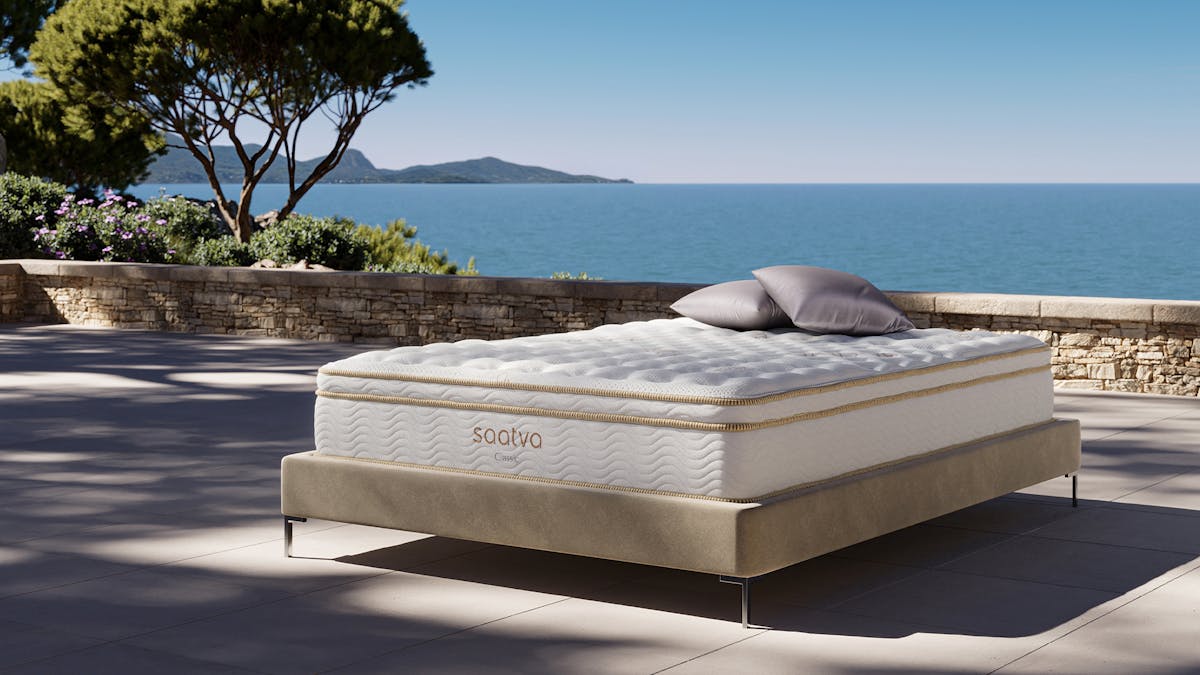
by For most sleepers comparing orthopedic and latex options, an organic latex mattress with responsive, pressure-distributing support is a strong fit. Our top pick is the Amerisleep Organica: certified organic materials, offered in a Medium (12 in) or a Plush (15 in box-top) version, with a 100-night trial and a 20-year warranty. For a luxury innerspring alternative, the Saatva Classic pairs dual tempered-steel coils with a reinforced lumbar zone, a Euro pillow-top, and a 365-night trial. If certified all-latex is the priority, the PlushBeds Botanical Bliss is the most rigorously certified all-latex option with a 25-year warranty.
Orthopedic Mattress Vs. Latex Mattress: A Quick Comparison
For most sleepers weighing an orthopedic mattress against a latex mattress, the right pick is a mattress that delivers targeted spinal support while matching your preferred feel and sleep position: zoned, responsive construction for back and joint support, or buoyant organic latex if natural materials matter most. Our #1 pick is the Amerisleep Organica, Amerisleep's organic latex mattress, offered in a Medium (12 in) or a Plush (15 in box-top) version, made with certified organic materials and backed by a 100-night trial and a 20-year warranty, so you get latex's resilient, pressure-distributing feel with certified organic construction. If a luxury innerspring alternative is preferred, the Saatva Classic pairs dual tempered-steel coils with a reinforced lumbar zone and a Euro pillow-top. A mattress does not treat a medical condition; consult a doctor for persistent symptoms.
Amerisleep Organica
9.3/10
The Amerisleep Organica suits sleepers wanting an organic latex mattress with a Medium 12-inch or Plush 15-inch box-top feel, certified organic materials, a 100-night trial, and a 20-year warranty.
Saatva Classic
9.3/10
- Dual tempered-steel coil system with a reinforced lumbar zone pad for precise spinal alignment
- Euro pillow-top absorbs pressure at shoulders and hips without sacrificing support
- Free white-glove delivery, setup, and old-mattress removal
- 365-night in-home trial and a lifetime warranty
- Ships flat, not compressed, requires a scheduled delivery window
- $99 return fee applies if you decide to return during the trial
If you prefer coils, the Saatva Classic is a strong alternative for orthopedic-style support: zoned coils firm exactly where the lumbar needs it, the Euro top cushions without sinkage, and white-glove delivery means it arrives ready to sleep on that night.
Orthopedic vs. latex: what the terms actually mean
"Orthopedic mattress" is a marketing term, not a medical certification. Any manufacturer can use the word without clinical validation. What the term is supposed to describe is a mattress engineered for spinal alignment and joint support, typically through firmer construction, zoned firmness layers, and dense foam or coil cores. In practice, the builds that actually deliver orthopedic results are innerspring hybrids with reinforced lumbar zones, high-density foam with zoned support layers, or a combination of both.
Latex is a material, not a support philosophy. Natural latex comes from rubber tree sap. Processed by the Dunlop method (denser, heavier) or Talalay method (lighter, more uniform cell structure), it produces a resilient foam with natural bounce and good pressure distribution. Latex mattresses can be all-latex or latex hybrid (latex over pocketed coils), and they can be soft or firm. The material itself does not determine whether the mattress is orthopedic in function.
The real comparison is between construction types: a coil-based hybrid with zoned lumbar support versus a pure latex mattress versus a zoned foam mattress. Firmness, zone design, and materials all matter independently of each other.
Where orthopedic construction wins
Well-engineered innerspring hybrids and high-density zoned foam mattresses outperform plain latex in several specific areas:
- Precise lumbar reinforcement: Dual-coil systems like the Saatva Classic place a firmer coil zone directly under the lumbar region, keeping the lower spine in neutral alignment without making the entire surface harder.
- Edge support: Perimeter coil reinforcement gives a sturdy surface for sitting and makes it easier to get in and out of bed, which matters for people with joint pain or post-surgical mobility.
- Zoned foam: The Amerisleep HIVE layer divides the mattress into five zones so the lumbar zone provides firmer support while the shoulder zone stays softer. This is an engineered orthopedic feature, not just marketing.
- Responsiveness for repositioning: Coil systems and open-cell foam allow sleepers to shift positions without fighting the mattress, reducing the risk of staying locked in a poor alignment all night.
Where latex wins
Natural latex has genuine advantages that orthopedic foam or innerspring builds do not fully replicate:
- Longevity: A high-quality Dunlop latex core can hold its shape and support for 15 to 20 years without significant sag. Most memory foam mattresses begin to degrade noticeably in 7 to 10 years.
- Natural breathability: Latex's open-cell structure ventilates heat naturally without requiring gel infusions or channeled covers, running cooler than dense memory foam.
- Allergen resistance: Natural latex is inherently antimicrobial and dust-mite resistant, a strong advantage for allergy-sensitive sleepers.
- Chemical footprint: GOLS-certified organic latex is one of the most transparently certified bedding materials available. For sleepers who want to minimize synthetic foam exposure, all-latex with GOLS and GOTS certifications is the strongest argument.
- Buoyant feel: Latex pushes back rather than conforming around you. This makes repositioning easy and suits combination sleepers who move often.
Top picks for every preference
| Mattress | Type | Firmness | Best for | Trial | Queen |
|---|---|---|---|---|---|
| Amerisleep Organica | Organic latex | Medium or Plush box-top | Certified organic latex, responsive support | 100 nights | - |
| Saatva Classic | Dual-coil innerspring | Luxury Firm 5-7/10 | Orthopedic support, back pain | 365 nights | $2,229 |
| PlushBeds Botanical Bliss | All-latex (GOLS/GOTS) | Medium 5-6 / Med-Firm 7 | Natural latex, durability, allergies | 100 nights | ~$1,800-2,000 |
| Amerisleep AS3 | All-foam Bio-Pur | Medium 5/10 | Zoned foam support, motion isolation | 100 nights | $1,249 (queen) |
| Saatva Zenhaven | All-latex, flippable | Gentle Firm / Luxury Plush | Natural latex, two firmness sides | 365 nights | $3,274 (sale) |
PlushBeds Botanical Bliss
9.0/10
- GOLS-certified organic Dunlop latex, GOTS-certified organic cotton and wool cover
- Configurable firmness layers, no synthetic foam or fiberglass
- Inherently antimicrobial and dust-mite resistant
- 25-year warranty, one of the longest in the industry
- Heavy and difficult to rotate due to dense latex layers
- Buoyant feel may not suit sleepers who prefer memory foam contouring
If natural materials and long-term durability are the priority over engineered zoning, the Botanical Bliss is the most rigorously certified all-latex option available. GOLS + GOTS + GREENGUARD Gold certifications cover materials, manufacturing, and air quality.
Amerisleep AS3
9.0/10
- HIVE 5-zone system varies firmness by body zone, firming under the lumbar
- Partially plant-based Bio-Pur foam, CertiPUR-US certified
- Motion isolation among the best in the foam category
- 100-night trial, 20-year warranty, made in the USA
- Softer edges than an innerspring hybrid
- Sleepers over 230 lb may prefer the AS3 Hybrid for added support
The AS3 sits between orthopedic innerspring and all-latex: partially plant-based foam with a HIVE 5-zone system that delivers targeted lumbar support in a lighter, roll-pack format. A good middle-ground choice for couples who need motion isolation alongside zoned support.
Which one is right for you?
| Your priority | Better choice | Why |
|---|---|---|
| Lower back or joint pain | Orthopedic innerspring (Saatva Classic) | Zoned coils provide targeted lumbar firmness; Euro top cushions without sinkage |
| Side sleeping, pressure relief | Zoned foam (Amerisleep AS3) | HIVE layer softer at shoulders, firmer under lumbar; better hip/shoulder cradle than firm latex |
| Natural/organic, long-term durability | Natural latex (PlushBeds Botanical Bliss) | GOLS/GOTS certification, 25-year warranty, no synthetic foam off-gassing |
| Motion isolation for couples | Zoned foam (Amerisleep AS3) | All-foam construction absorbs motion better than latex or coil hybrids |
| Luxury, hotel-quality feel | Innerspring hybrid (Saatva Classic) | Dual-coil + Euro pillow-top produces a responsive, hotel-quality feel |
| Allergy-sensitive sleeper | Natural latex (PlushBeds) | Inherently antimicrobial and dust-mite resistant without synthetic treatments |
What is an orthopedic mattress?
An orthopedic mattress is designed to support spinal alignment and reduce pressure on joints, primarily through firmer construction and, in better models, zoned firmness. Most orthopedic mattresses use a combination of memory foam, high-density poly foam, latex, and innerspring layers. The dual-coil design of the Saatva Classic is a strong example: two layers of tempered steel coils work together, with the lower layer providing the firm support base and the upper individually wrapped layer responding to body contours zone by zone.
Key orthopedic features to look for, rather than the marketing term itself:
- Medium-firm surface (around 6 to 7 out of 10): research on non-specific low back pain generally favors medium-firm over soft or very firm surfaces.
- Zoned support: Different firmness zones for the lumbar, shoulders, and legs, maintaining natural spinal curves throughout the night.
- Responsive surface: Allows repositioning without trapping the sleeper in one position.
- Strong edge support: Particularly important for people with hip or knee problems who need a stable surface to sit on when getting in and out of bed.
Read more about how specific construction types compare in our guides on orthopedic mattress layers and the benefits of orthopedic mattresses.
What is a natural latex mattress?
A natural latex foam mattress is made from the sap of rubber trees, processed into foam through either the Dunlop or Talalay method. Dunlop latex is denser and heavier, sitting in the core of most premium latex beds. Talalay latex is lighter and more consistent in cell distribution, often used in comfort layers. Some mattresses use both.
Natural latex resists dust mites and mold and is durable, though it is not suitable for people with a latex allergy. Because it has an inherently open-cell structure, it regulates temperature without the heat-retention problems associated with dense memory foam. It is often combined with GOTS-certified organic cotton and wool covers to create fully certified organic sleep systems.
The main practical trade-off versus orthopedic-style construction: many latex mattresses feel uniform across the surface, whereas a good innerspring hybrid can be soft at the shoulder zone and firm at the lumbar. Some latex beds, like the Saatva Zenhaven, add zoned latex to close that gap.
Latex mattress disadvantages to know before buying
- Price: Quality natural latex mattresses start higher than comparable foam alternatives. GOLS-certified all-latex beds run $1,400 to $3,000+.
- Weight: Dunlop latex cores are heavy, making mattress rotation more difficult without help.
- Latex allergy: A small percentage of people have latex sensitivities. If you are latex-sensitive, foam or innerspring hybrids are safer options.
- Uniform resilience: The natural bounce of latex can feel too responsive for sleepers who prefer close memory-foam contouring, or for those who find the buoyancy disruptive to their positioning.
Our verdict: orthopedic vs. latex
For back pain, joint pain, and orthopedic support, suitability depends on individual comfort and support rather than mattress construction alone; talk to your doctor about persistent pain. The Amerisleep Organica is our top pick: natural Talalay latex in a Medium (12 in) or Plush (15 in box-top) version, with a 100-night trial and a 20-year warranty. For a luxury innerspring alternative, the Saatva Classic offers dual-coil zoned construction, a euro pillow-top, white-glove delivery, and a 365-night trial.
For sleepers who prioritize natural materials, durability, and allergen resistance over orthopedic precision, a GOLS-certified latex mattress is a defensible choice. The PlushBeds Botanical Bliss (GOLS + GOTS + GREENGUARD Gold) and the Saatva Zenhaven (all-latex, flippable Luxury Plush and Gentle Firm sides) are the most rigorously certified options if natural materials are the main concern.
The Amerisleep AS3 sits in the middle: partially plant-based Bio-Pur foam with a HIVE 5-zone system that delivers targeted lumbar support in a lighter, ship-in-a-box format.
Choose Amerisleep Organica if certified organic latex in a Medium or Plush box-top feel with a 100-night trial and 20-year warranty is the priority. Choose Saatva Classic if zoned innerspring construction and a 365-night trial are preferred. Choose PlushBeds Botanical Bliss if certified natural latex and 25-year durability matter most. Choose Amerisleep AS3 if you want a lighter foam-based alternative with zoned lumbar support and strong motion isolation.
Frequently asked questions
Is a latex mattress better for back pain than an orthopedic mattress?
Not necessarily. Orthopedic performance depends on construction, not the material label. An organic latex mattress like the Amerisleep Organica, a zoned innerspring hybrid like the Saatva Classic, or a zoned foam like the Amerisleep AS3 can each deliver well-engineered support, though most latex beds feel more uniform than zoned coils.
Is "orthopedic mattress" a medical term?
No. Any manufacturer can use the term without clinical validation. Focus on specific construction features: zoned coils, reinforced lumbar zones, foam density, and trial length, rather than the marketing label itself.
How long does a natural latex mattress last?
A quality all-latex mattress with a Dunlop core typically lasts 15 to 20 years without significant sag, roughly twice the lifespan of most memory foam mattresses. Premium brands like PlushBeds Botanical Bliss offer 25-year warranties and Saatva Zenhaven offers a lifetime warranty to back this up.
Can a latex mattress be orthopedic?
Yes, with the right build. A latex hybrid that uses zoned pocketed coils under a latex comfort layer can deliver orthopedic-quality support. The Saatva Latex Hybrid is one example. All-latex mattresses can also use engineered latex zoning to provide differentiated support.
This guide is part of our Mattress Buying Guide hub, compare all the top picks and narrow down your choice there.