
 by
by Bathroom plants for mold won’t remove an active mold problem, but the right plants can make a humid bathroom feel fresher while helping you notice stale, damp corners sooner. I once treated a spider plant like a tiny dehumidifier and nearly drowned it. Plants help with atmosphere and moisture-loving greenery. Ventilation still does the heavy lifting!
- Hang English Ivy Where Air Can Move (the Shower-Edge Rule)
- Let Boston Ferns Soften a Bright Bathroom
- Float a Spider Plant Above the Vanity
- Choose a Snake Plant for the Darkest Corner
- Trail Pothos Along a Mirror Frame (not the Faucet)
- Use Peace Lily for a Gentle White Bloom
- Build the Three-Height Plant Stack
- Put a ZZ Plant Near the Toilet Wall
- Why Does Aloe Belong by a Sunny Sink?
- Tuck a Bird’s-Nest Fern Into the Tub Niche
- Pair Cast-Iron Plant With a Moody Floor
- Swap Tiny Pots for One Rubber Plant
- Hang a Heartleaf Philodendron Over Tile
- Give Calathea a Filtered-Light Shelf
- Make a Mini Jungle on the Shower Window
- Use Chinese Evergreen for Soft, Low-Light Color
- Keep a Small Parlor Palm by the Door
- Follow the Vent-Fan Test Before You Add More
- Pick One Plant Per Problem Area
1Hang English Ivy Where Air Can Move (the Shower-Edge Rule)
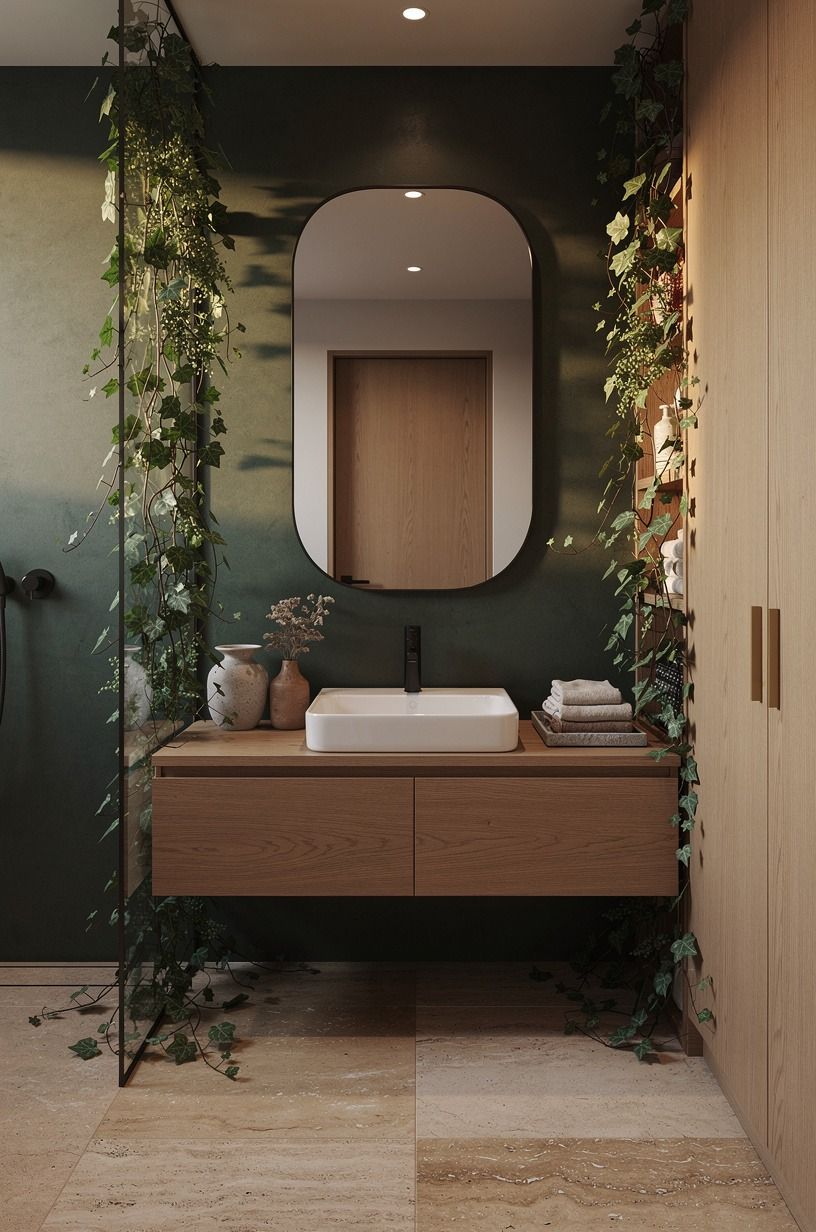
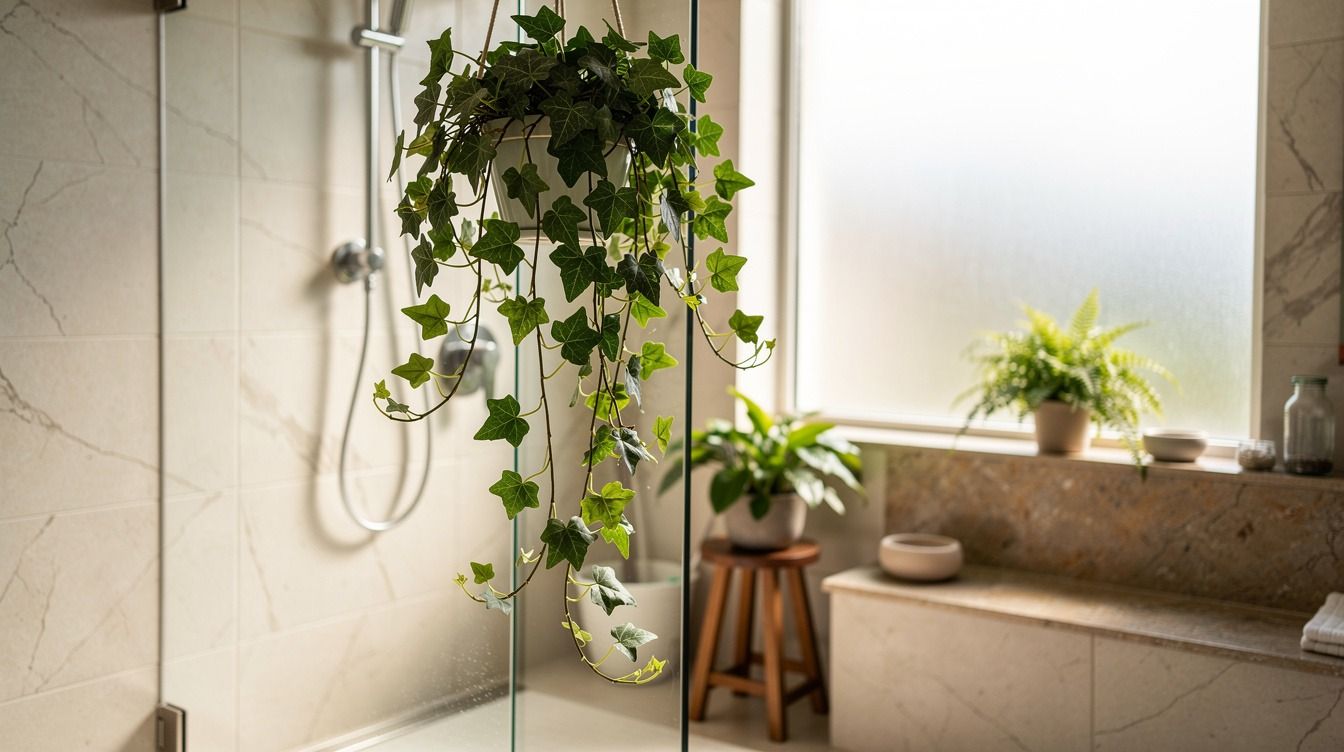
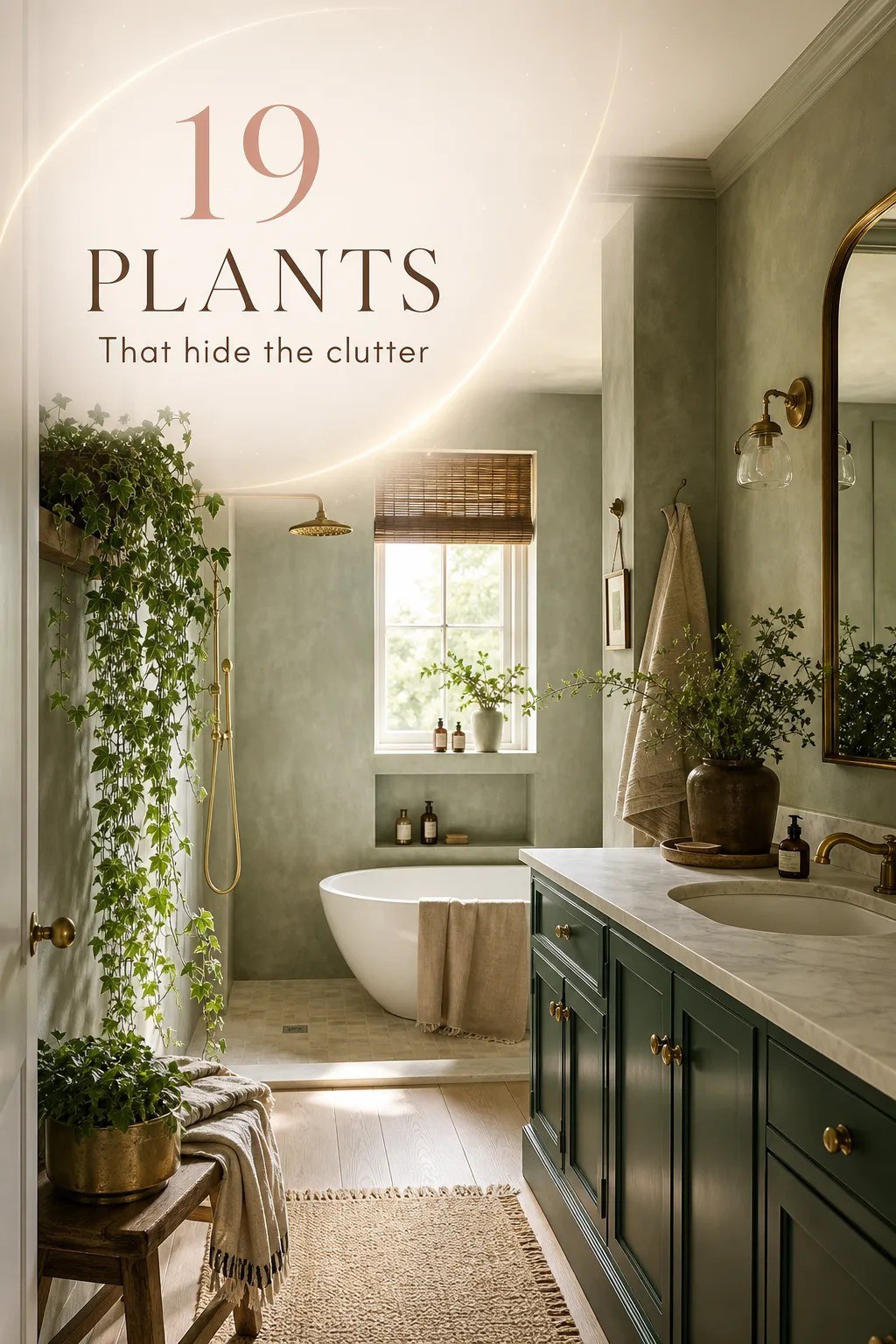
English ivy earns its reputation in a humid bathroom because it enjoys moist air, but you’ll want it near moving air rather than inside a permanently wet shower. Hang yours beside a window or across from an exhaust fan, where the leaves can catch that soft post-shower steam without staying slick all day.
I’d skip a sealed glass terrarium here. Your ivy needs airflow, and trapped condensation invites the very problem you’re trying to manage.
A high shelf near warm travertine, a hanging planter, and a weekly check for dry soil work better. If pets share your home, read our pet-safe bathroom plant guide before bringing ivy in.
2Let Boston Ferns Soften a Bright Bathroom
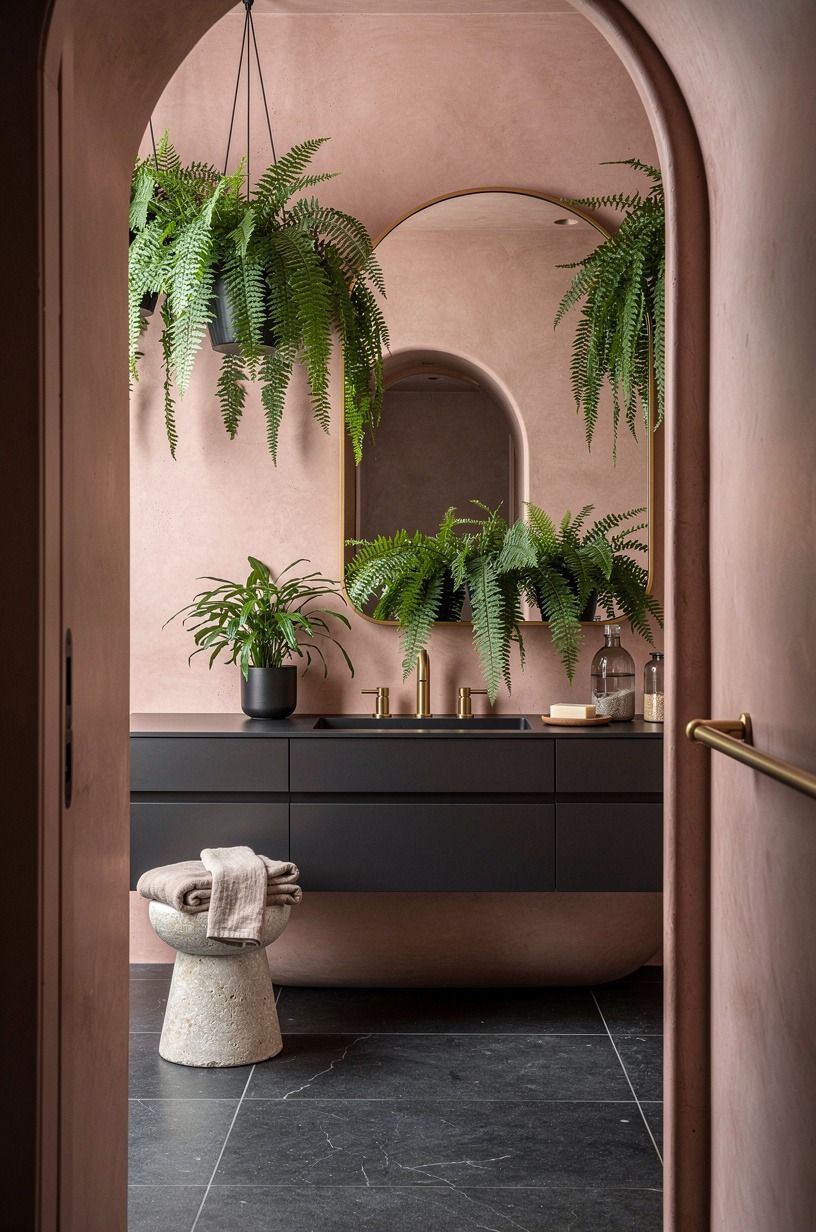
A Boston fern likes the kind of gentle humidity most bathrooms give away for free.
3Float a Spider Plant Above the Vanity
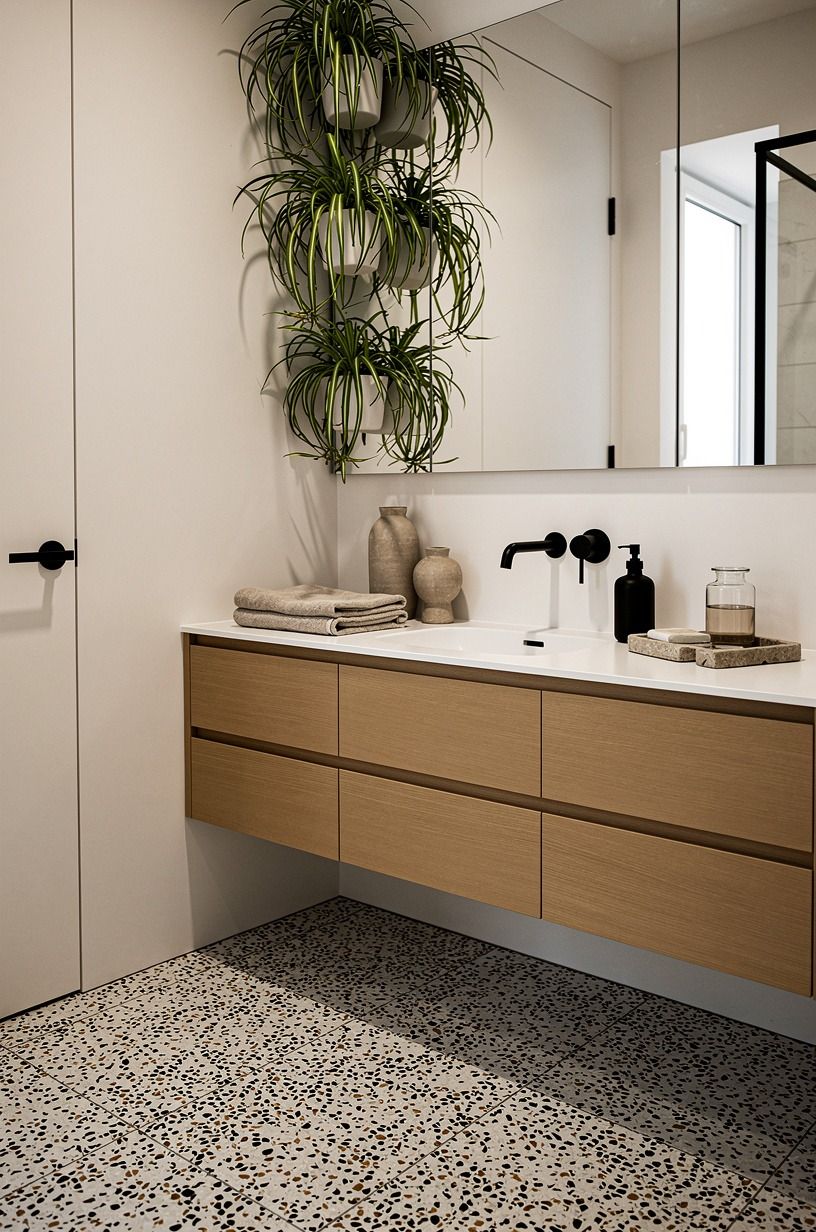
The Floating Green Rule is simple: lift a spider plant above your busiest counter so you get leaves without losing toothpaste space. You’ll want a shelf at least above the splash zone, especially if your vanity sits at the standard 32 to 36 in height.
A warm-white bathroom with camel accents makes the striped leaves look fresh rather than fussy. But don’t put the pot directly over your electric toothbrush.
Use a narrow terrazzo ledge, a lightweight planter, and a drip tray you can remove. For more compact placements, browse small bathroom plant ideas.
4Choose a Snake Plant for the Darkest Corner
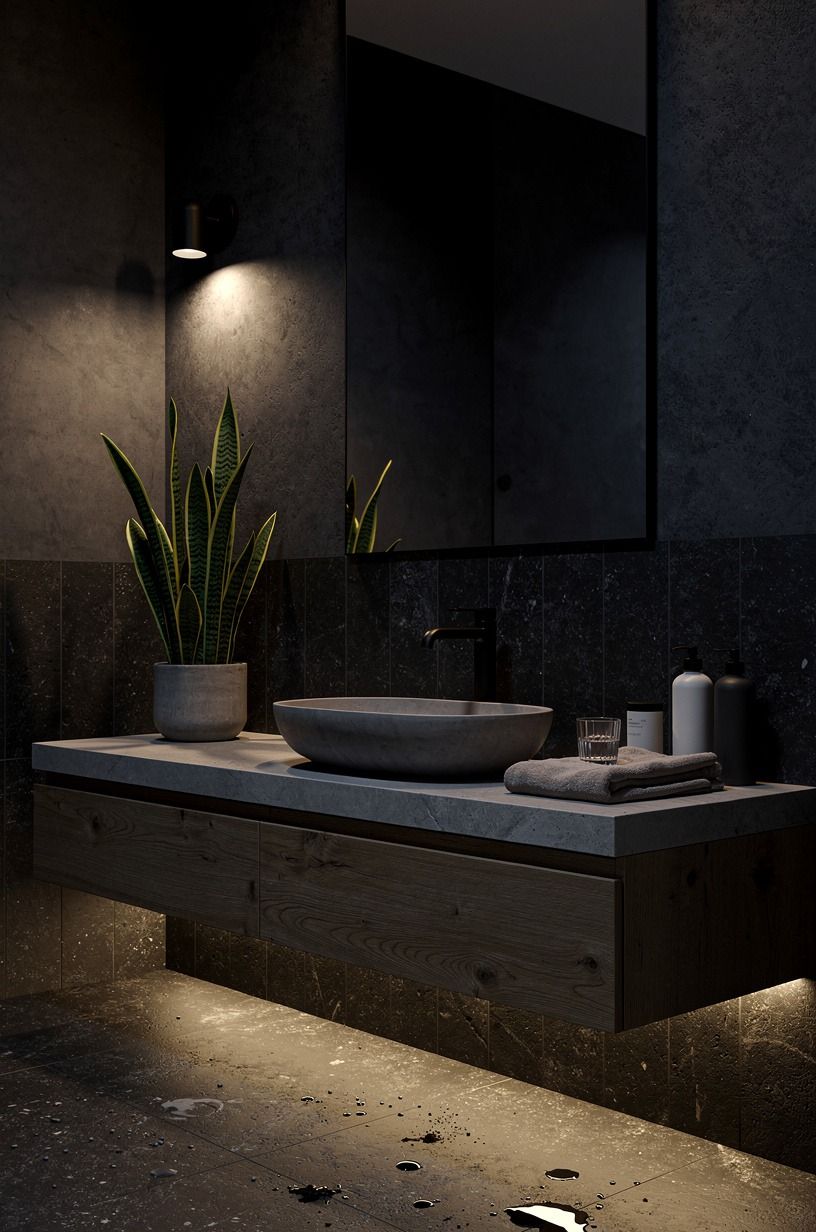
A Sansevieria laurentii is the plant I’d choose for a bathroom corner that gets light only when the door is open.
5Trail Pothos Along a Mirror Frame (not the Faucet)
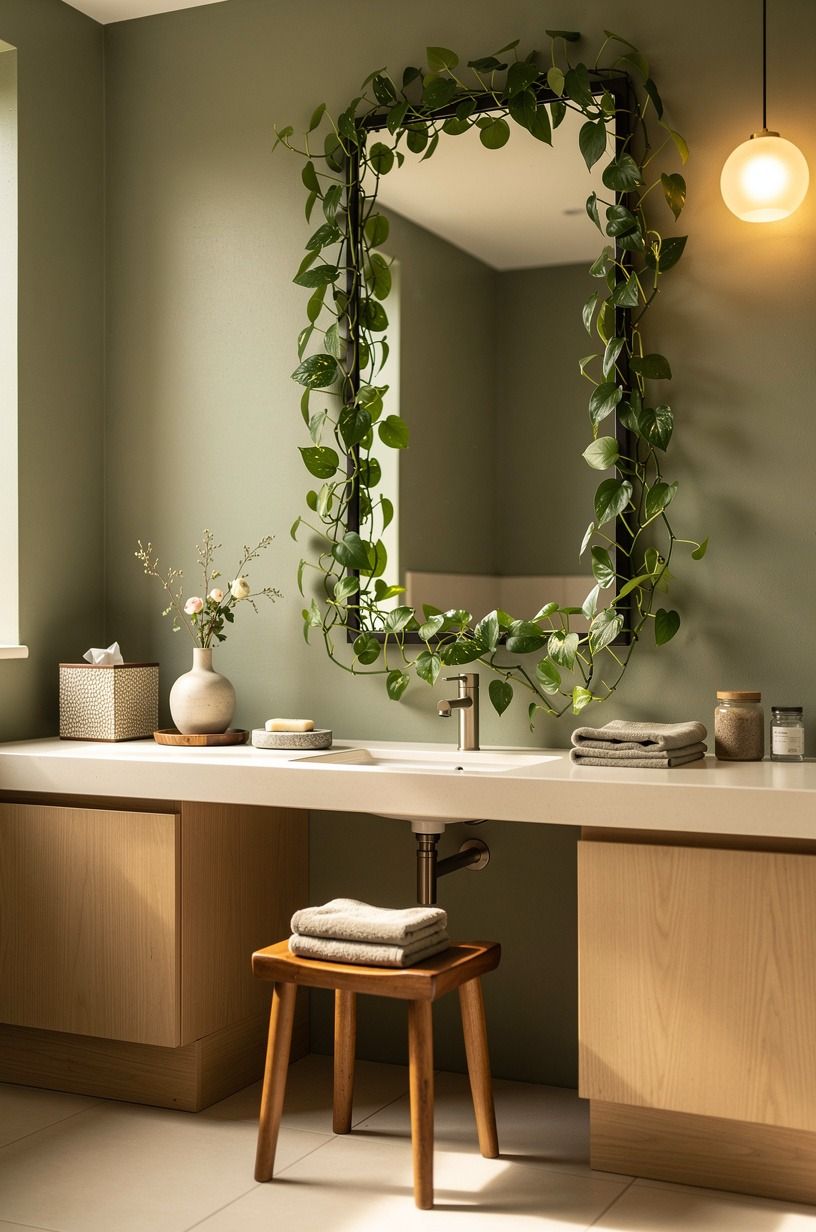
Golden pothos gives you that loose, lived-in bathroom look without demanding perfect styling. Let yours trail from a high ledge beside the mirror, where you can see the leaves in the morning but won’t knock them into the sink. The glossy heart-shaped leaves look especially good against sage green and warm cream.
Don’t wrap vines tightly around a mirror or faucet. Moisture gets trapped, cleaning becomes annoying, and your plant starts looking like a costume.
A single trailing line is enough. You’ll notice the room feels more inviting because the hard rectangle of the mirror finally has something soft near it.
6Use Peace Lily for a Gentle White Bloom
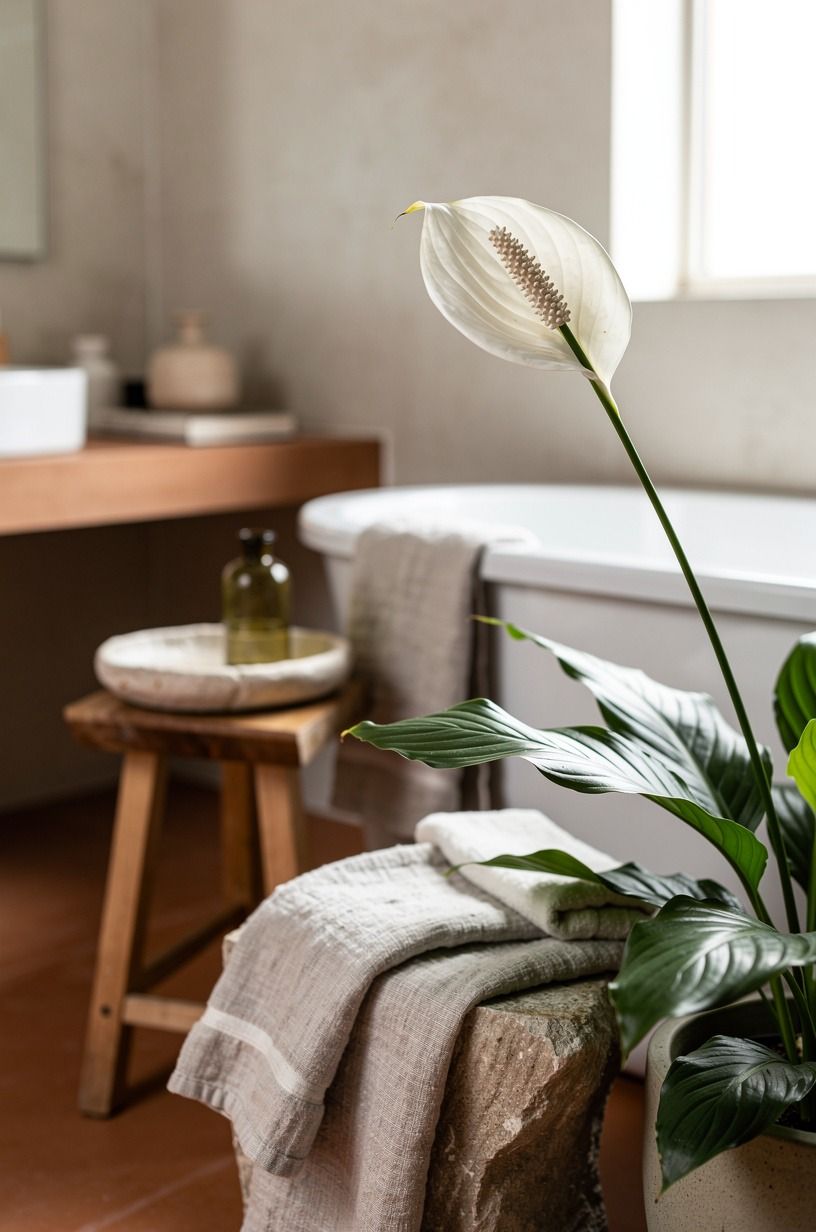
A peace lily can handle humidity and lower light better than many flowering plants, though you’ll still get more blooms with indirect brightness. Place yours in a corner that feels dull after sunset, then let its deep leaves and white spathes do the visual work.
I made the mistake of buying a huge peace lily for a tiny bathroom. It blocked the towel hook, collected dust, and made every shower feel cramped.
Choose a medium plant beside washed Belgian linen instead. You need room to move, and your bathroom needs a plant that feels intentional rather than dumped there.
7Build the Three-Height Plant Stack
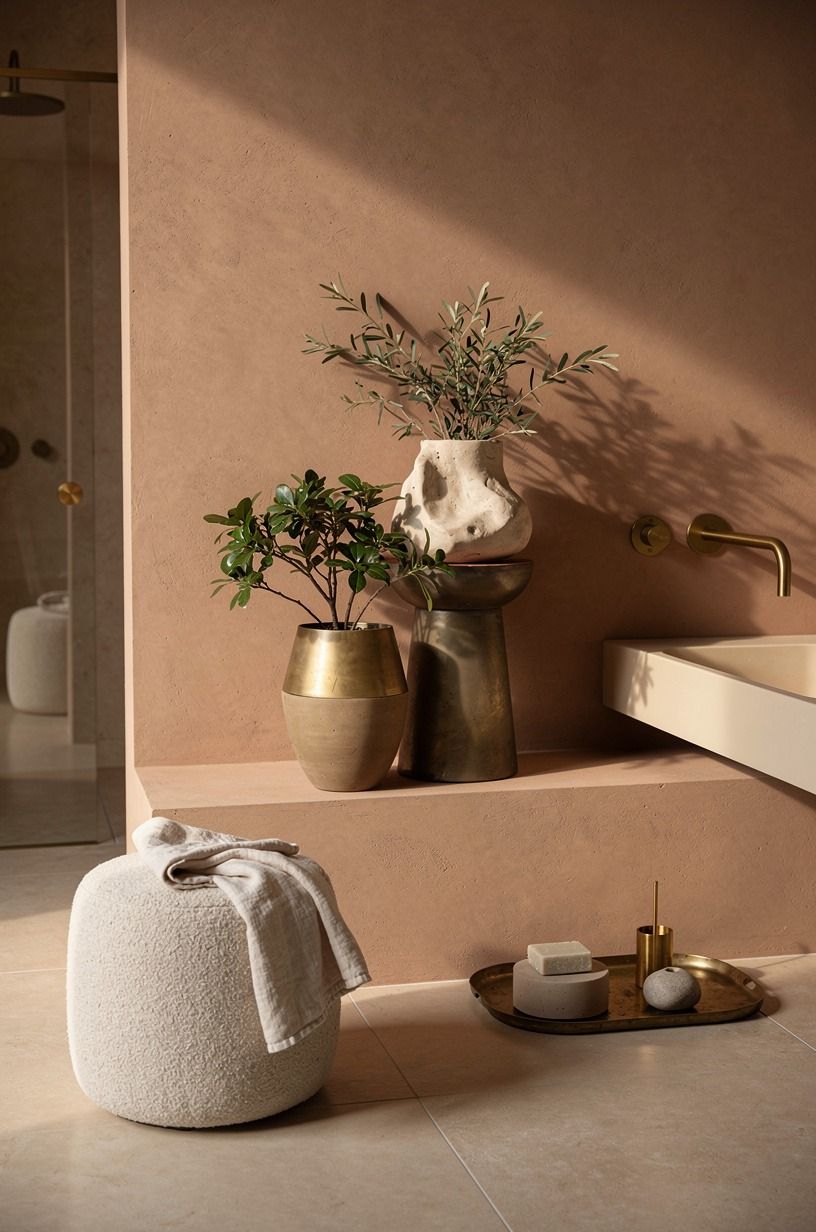
The Three-Height Plant Stack stops a bathroom collection from becoming a row of identical nursery pots.
8Put a ZZ Plant Near the Toilet Wall
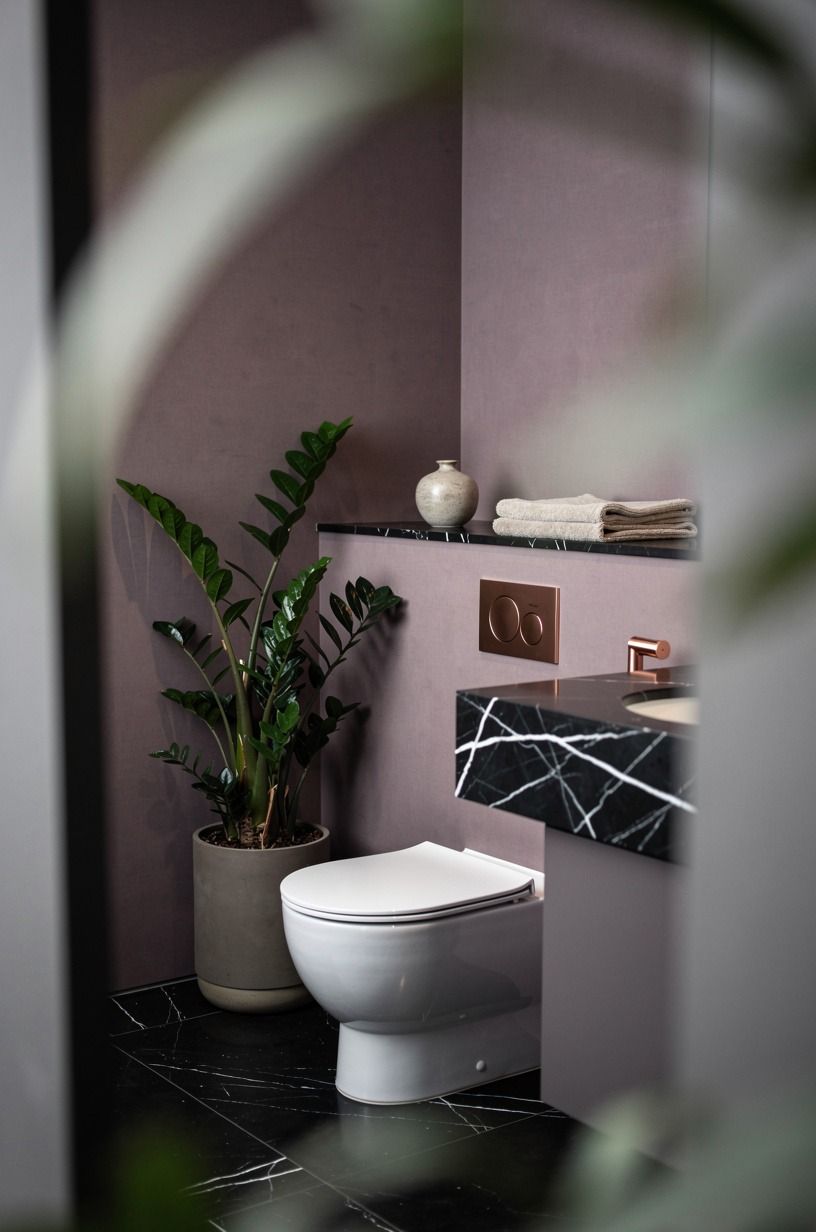
A ZZ plant is a practical pick for bathroom-friendly plants because it tolerates missed watering and lower light. Set yours beside the toilet wall, not in front of it, leaving the recommended 21 in of clearance in front of the fixture. You’ll appreciate that choice every single day.
The thick leaves look refined beside plum and soft grey, especially with a rose-gold accent nearby. I’d skip a tall woven basket if your bathroom floor stays damp after showers. Use a sealed planter near Nero Marquina marble so moisture can’t linger against natural fibers.
9Why Does Aloe Belong by a Sunny Sink?
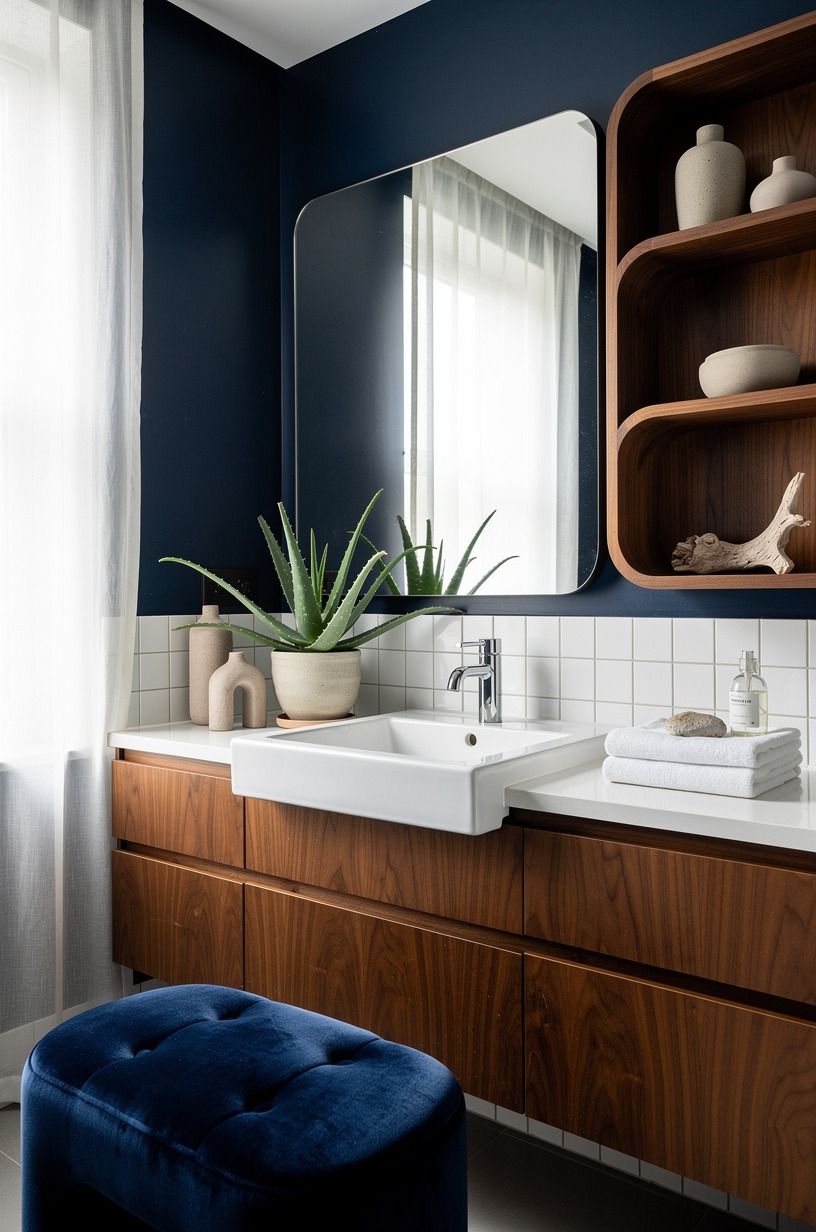
Give it a small white planter with a drainage hole and keep it beyond faucet spray.
10Tuck a Bird’s-Nest Fern Into the Tub Niche
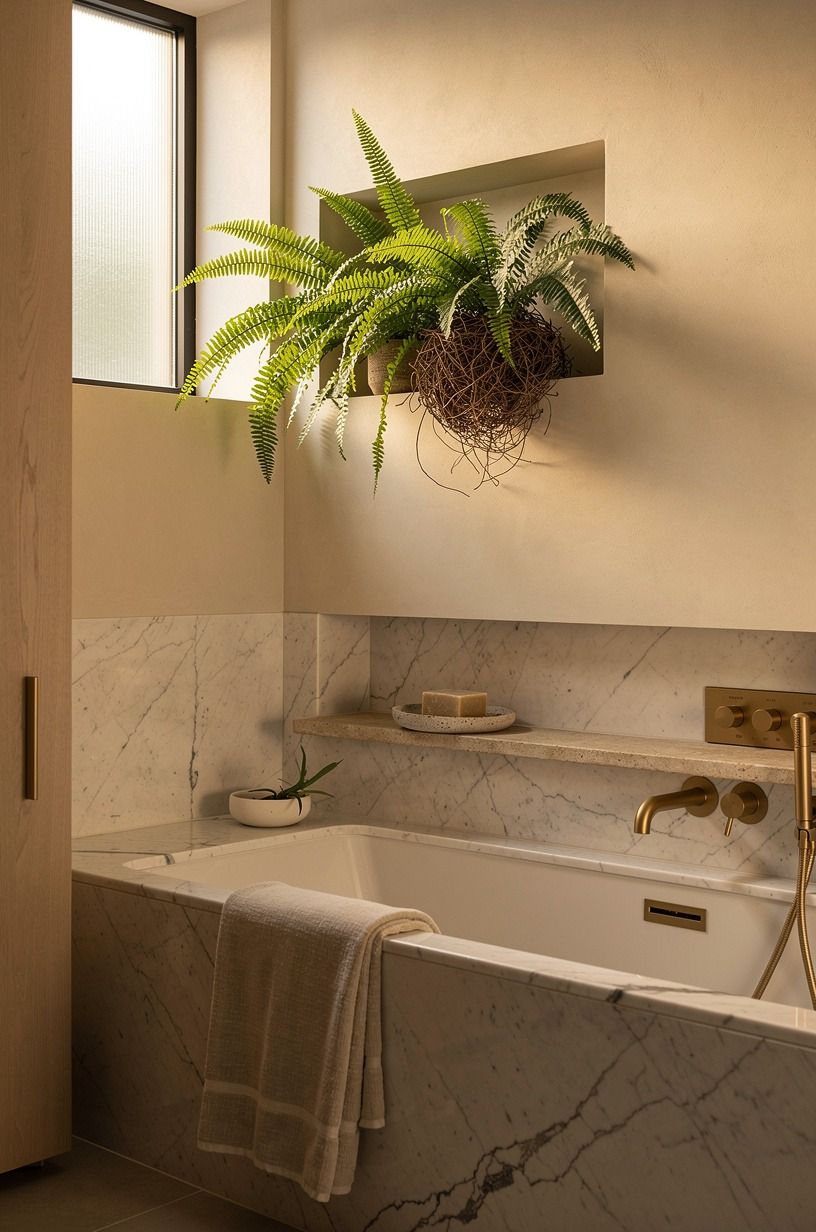
A bird’s-nest fern has broad, wavy leaves that catch humid air and look almost tropical under warm bulbs. You can place one on a deep tub ledge or a protected wall niche, provided the pot doesn’t sit in direct spray.
The new leaves unfurl with a slightly crinkled, bright-green edge. Lovely.
Use a cream planter with a saucer beside Carrara marble, then rotate it every week so one side doesn’t lean toward the light. But avoid a niche so dark that you can’t read a label there. Plants aren’t décor objects; your fern still needs enough light to live.
11Pair Cast-Iron Plant With a Moody Floor
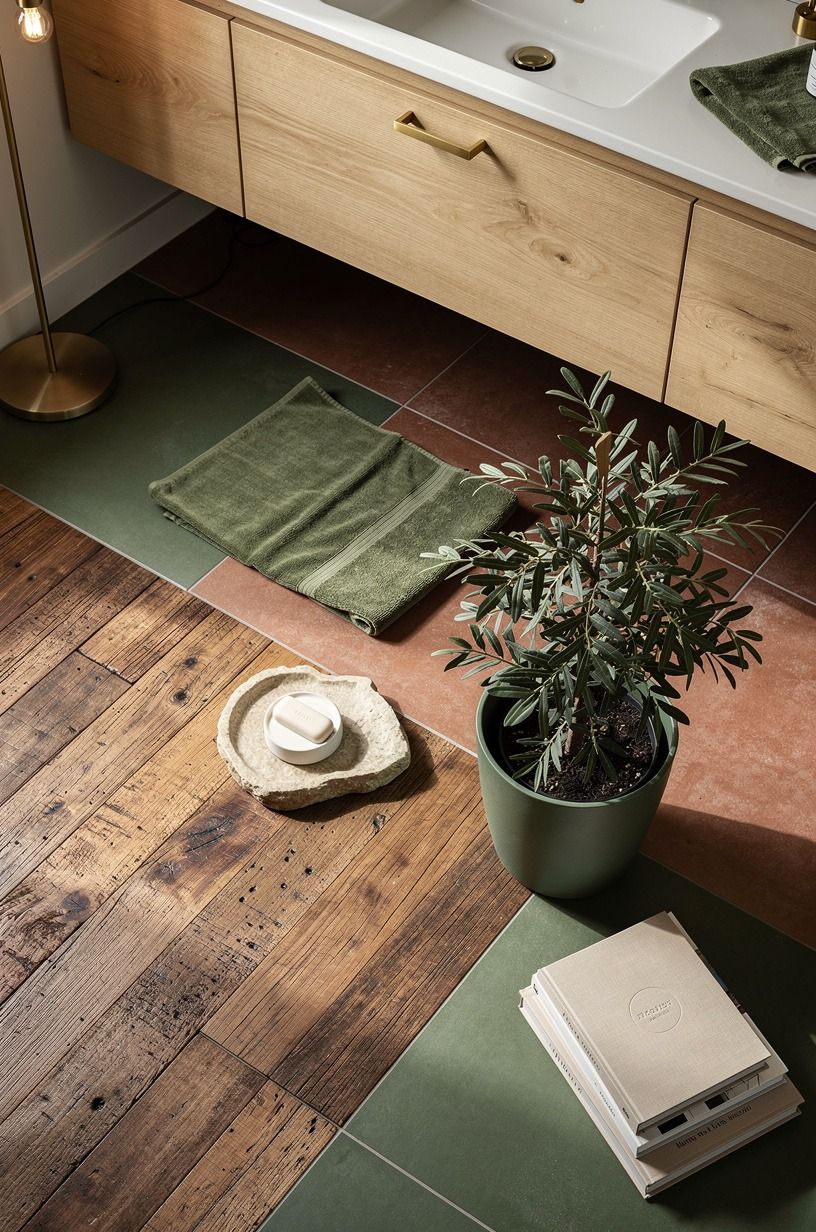
The Cast-Iron Corner Method is for bathrooms where you need a plant that won’t complain about imperfect light. Aspidistra elatior has broad, dark leaves and a patient personality, so you can use it to soften a moody floor without babysitting it.
A bathroom with reclaimed weathered teak looks better with a simple green plant than another decorative accessory. You’ll want a narrow footprint near the wall, especially around a 36x36 in shower where circulation matters. I’d choose cast-iron plant over faux leaves every time because real foliage changes with the light.
12Swap Tiny Pots for One Rubber Plant
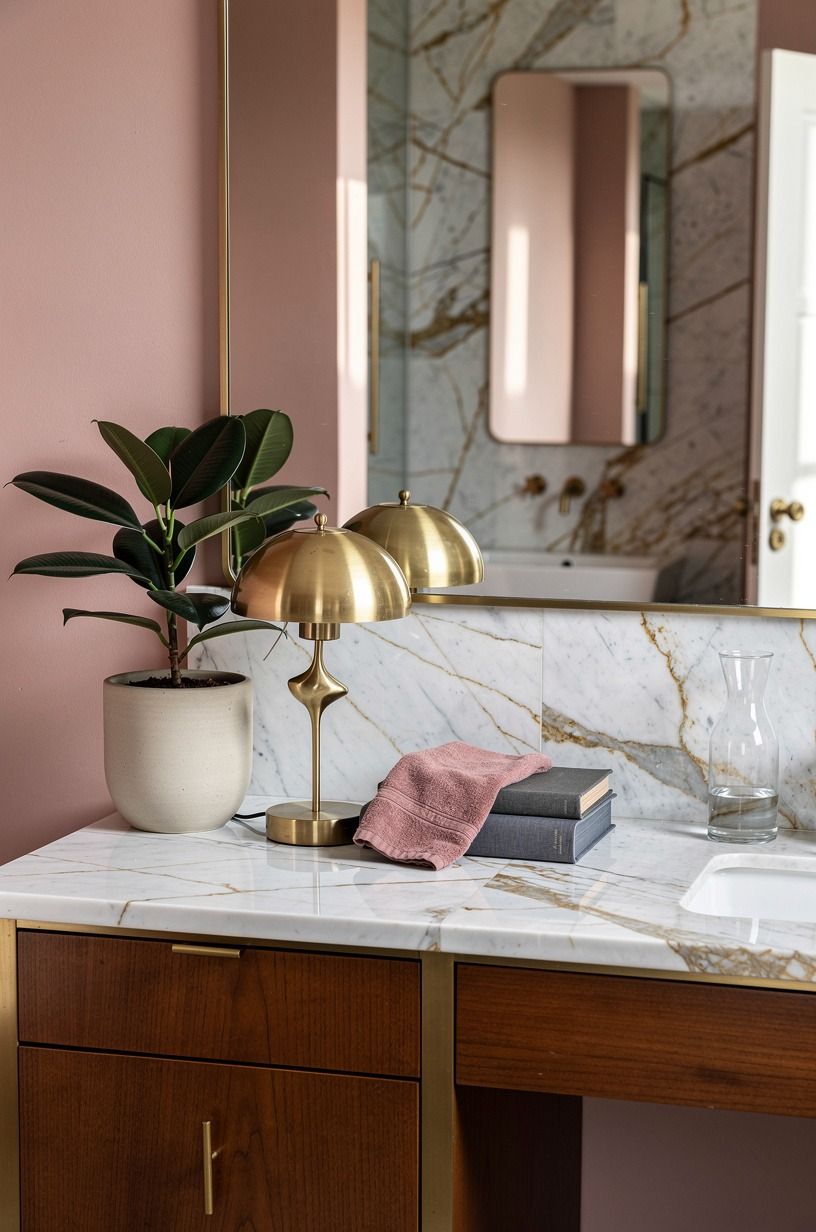
Instead of scattering five tiny pots around your bathroom, choose one Ficus elastica Burgundy if you have bright indirect light and enough floor space. The deep, almost wine-colored leaves give you a bold focal point without adding visual clutter.
One plant. One clear decision.
Use a brushed brass plant stand only if the pot has a watertight base, especially near Calacatta marble. Water stains beneath a stand are a miserable little surprise (ask me how I know).
Your rubber plant should sit away from a radiator and away from direct shower spray. It’s a more dramatic choice than pothos, and that’s exactly why it works.
13Hang a Heartleaf Philodendron Over Tile
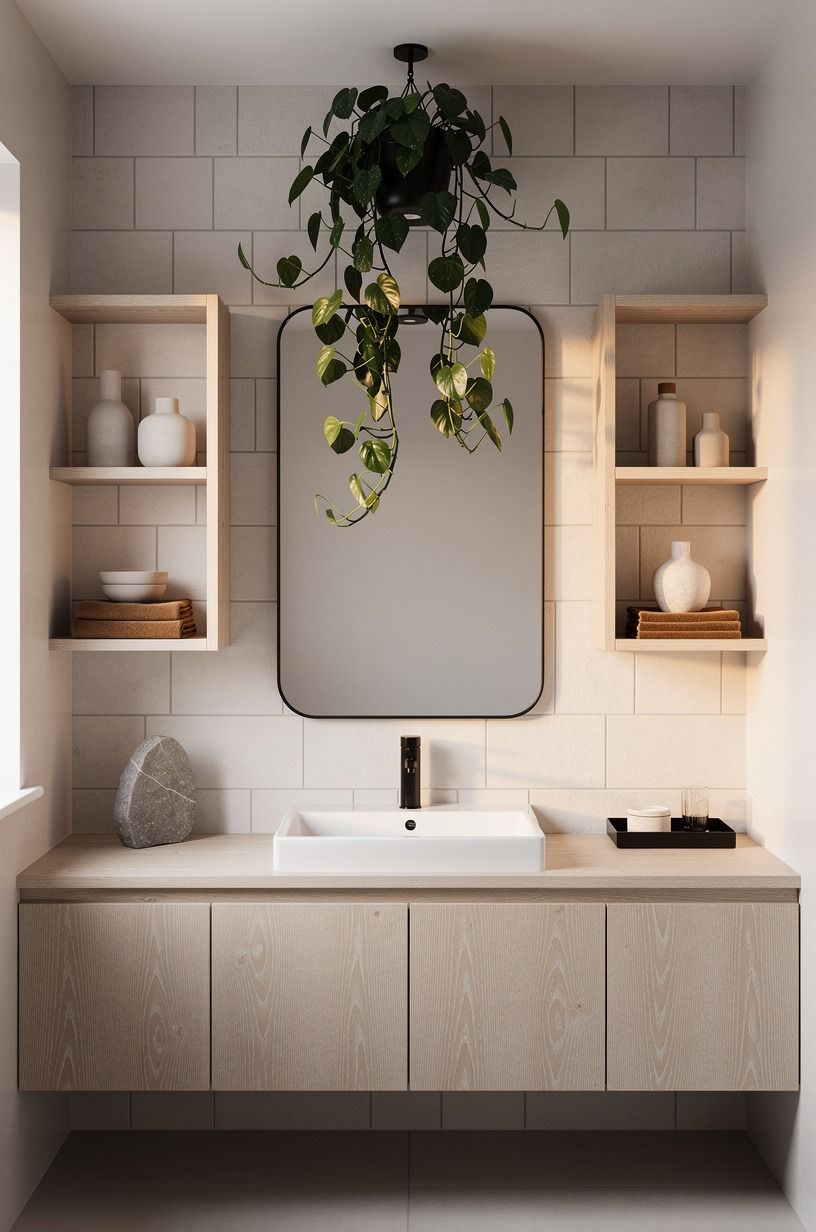
Heartleaf philodendron is forgiving, trailing, and far easier to shape around a mirror than a bulky floor plant. You can train a single vine down the side of a tiled wall, then trim it before it reaches a wet counter. The leaves read soft and intimate against pale grout.
Try it near cerused white oak, where the vine softens the clean, pale surface in a good way. But don’t use suction-cup hooks for a heavy, watered pot.
A screw-mounted bracket or tension shelf is safer. For more tile-and-greenery pairings, see these zellige bathroom ideas.
14Give Calathea a Filtered-Light Shelf
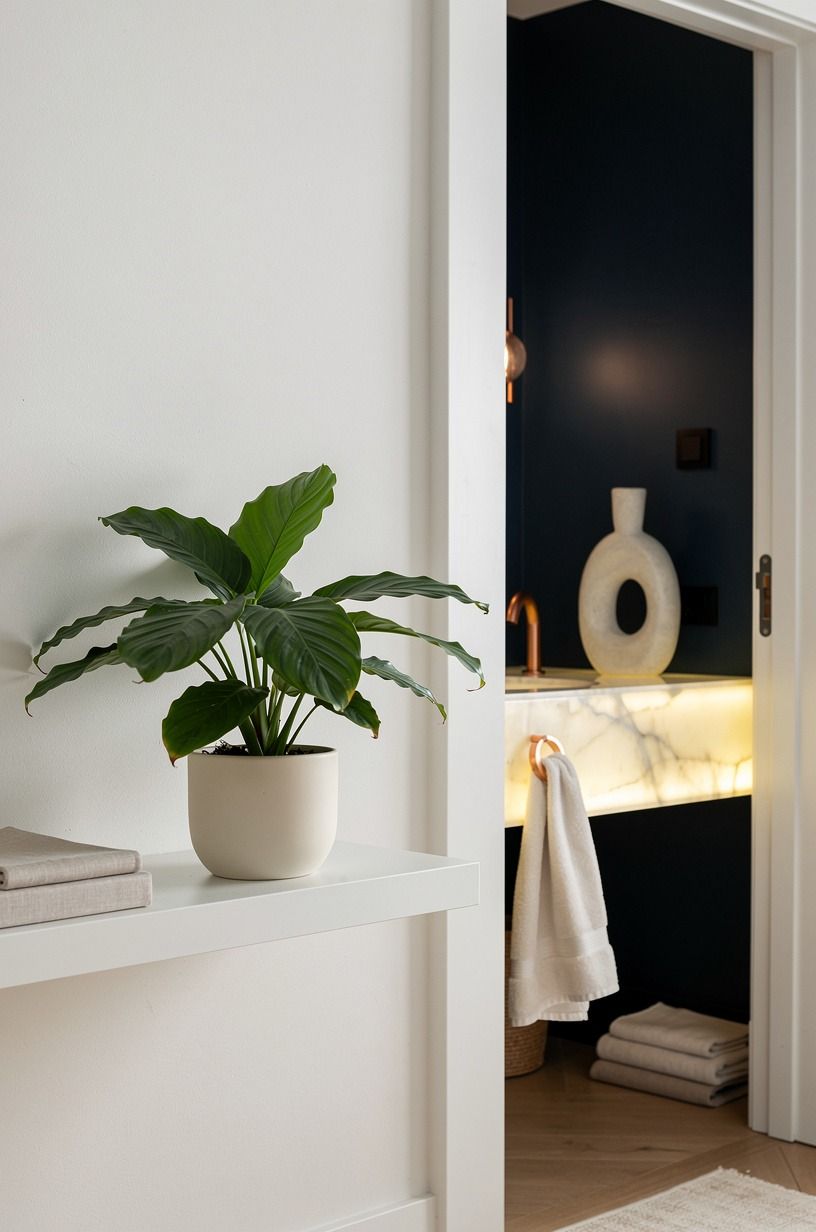
A Calathea orbifolia brings wide striped leaves and a more delicate presence to a bright bathroom. You’ll want filtered light, humid air, and soil that stays lightly moist without becoming swampy. It’s more demanding than a snake plant, sure, but the leaf pattern earns its keep.
Place yours near backlit translucent onyx, where you can inspect it while brushing your teeth. And use filtered water if your tap leaves mineral spots on glass. Calathea is not the budget pick, but it’s the one I’d choose when your bathroom needs a little quiet drama.
15Make a Mini Jungle on the Shower Window
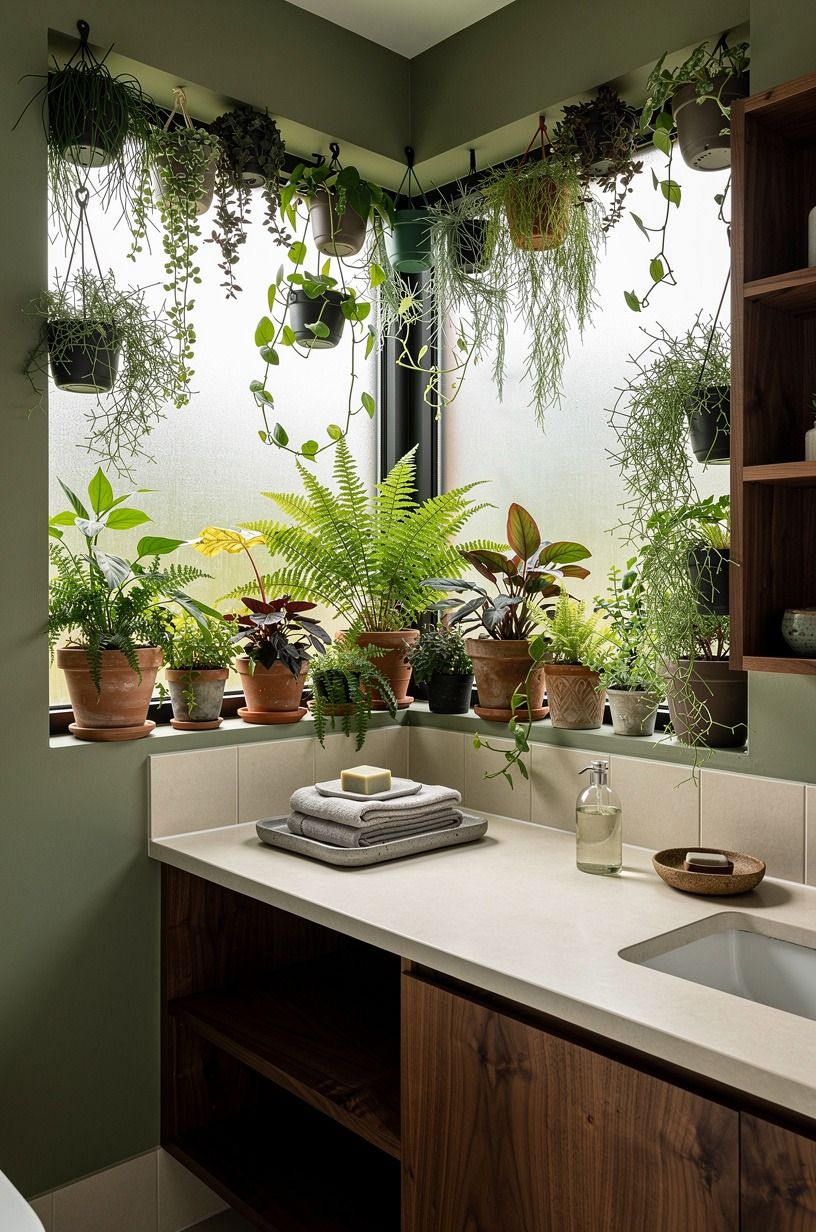
The Window Ledge Chorus works when you’ve got a sill wide enough for three small plants and real daylight.
16Use Chinese Evergreen for Soft, Low-Light Color
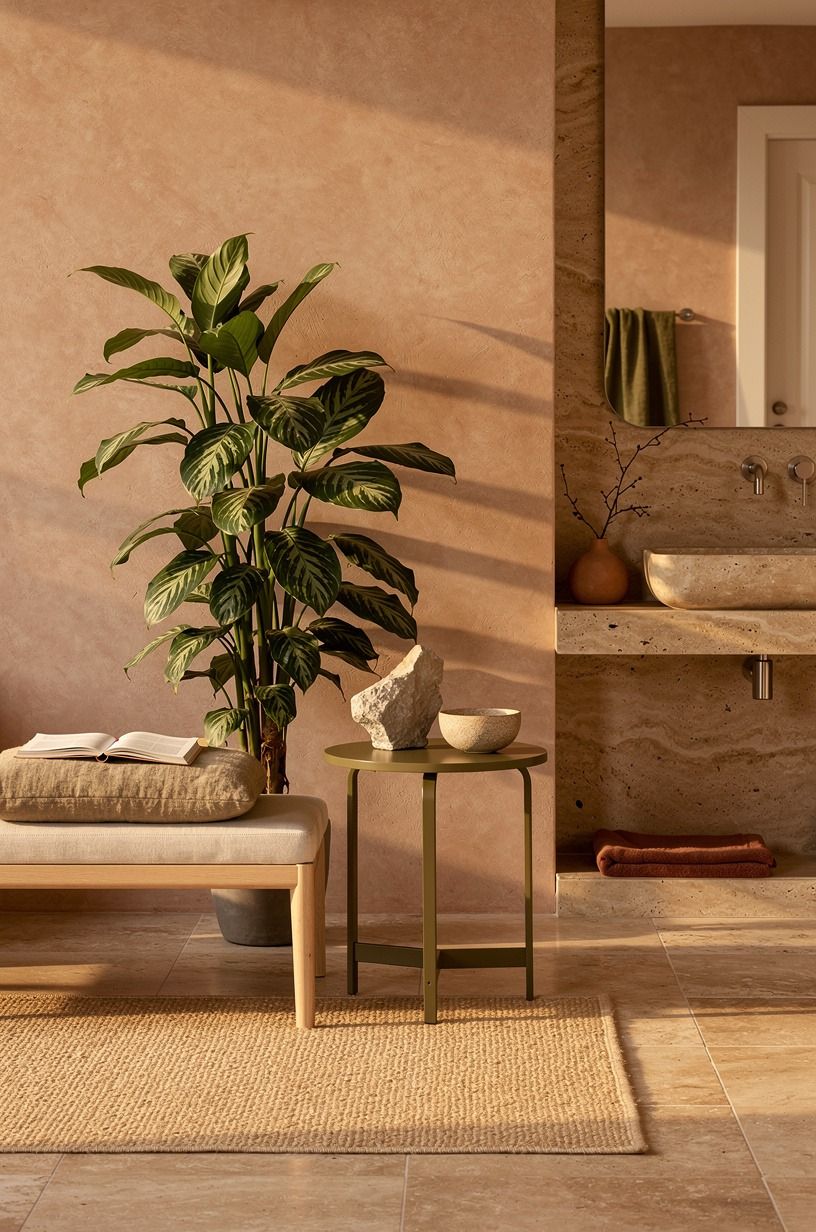
Chinese evergreen Aglaonema gives a dim bathroom a gentle leaf pattern when plain green feels too flat. Its silver and green variegation works beautifully with terracotta, stone, and olive tones. You’ll get visual texture without adding another patterned towel or busy shower curtain.
I’d skip the pink varieties in a bathroom with beige tile. They can look oddly sweet beside old flooring. Choose silver-green leaves near warm travertine instead, and place them on a closed cabinet where water won’t splash.
It’s a soothing choice that still has some personality.
17Keep a Small Parlor Palm by the Door
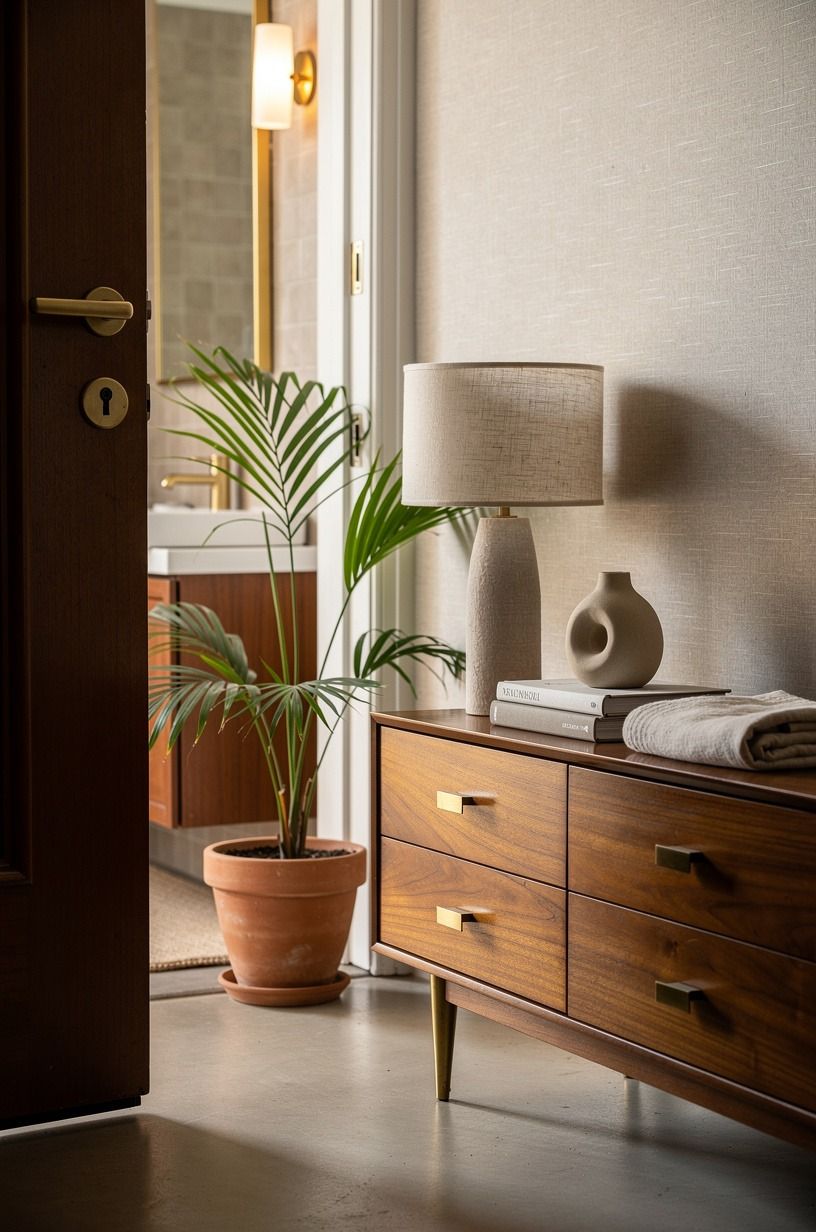
A parlor palm is useful near the bathroom door, where it can catch brighter light from the adjoining room. Its thin stems make a narrow space feel airy, and you won’t lose the sightline through the room. That matters more than another decorative basket.
Use a slim pedestal planter with unlacquered brass details and check the soil with your finger before watering. But don’t force a palm behind the toilet if the leaves brush the wall every time you walk by.
Your plant will collect dust, and you’ll resent it. A doorway corner gives the fronds room to move.
18Follow the Vent-Fan Test Before You Add More
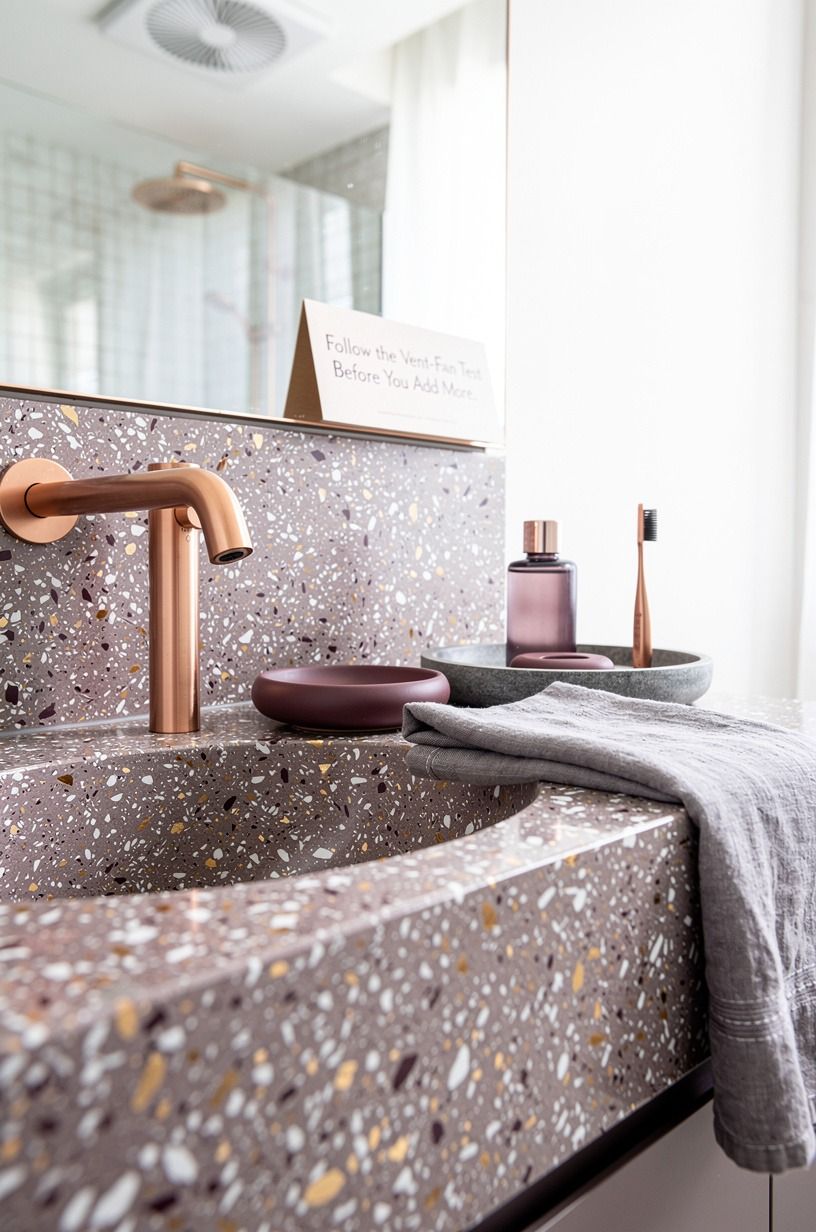
Before you add a nineteenth plant, run the vent fan and watch what happens to the leaves nearest the shower. If they barely move and the mirror stays fogged, your issue isn’t a lack of greenery.
You need better airflow. Plants can support a humid bathroom; they can’t solve a ventilation failure.
This is where I’m blunt: don’t buy a moss pole to disguise a damp corner that needs repair. Fix leaks, dry surfaces, and clean visible mold first. Then bring in plants as the warm finishing layer.
Your bathroom will smell cleaner, feel more welcoming, and be far easier to maintain.
19Pick One Plant Per Problem Area
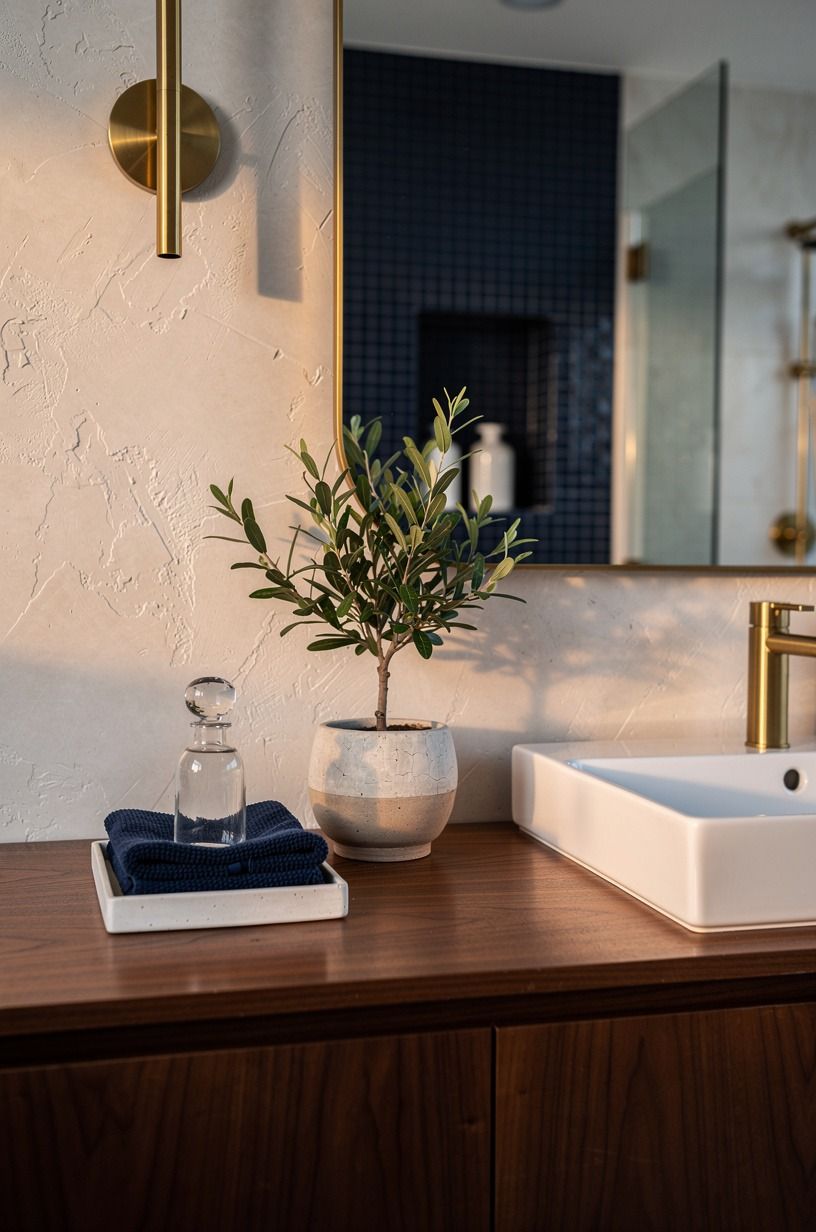
The One-Plant-Per-Problem-Area Rule keeps you from buying greenery just because it looked good in a cart. Put a snake plant in the low-light corner, pothos beside the mirror, and fern near filtered light. You’ll solve three visual problems while giving each plant conditions it can handle.
If your bathroom is tiny, start with one trailing plant before adding a floor pot. I’ve watched a modest vine make a room feel more relaxed than a crowded collection ever could. For shade-specific choices, keep our low-light bathroom plant guide open while you shop.
What Bathroom Updates Cost Beyond the Plants
Plants are the inexpensive layer, not a replacement for plumbing, tile repair, or a properly working fan. If you’re addressing a bathroom that has genuine moisture damage, these typical US ranges show where the bigger spending usually goes. Your best investment is the one that keeps water from getting where it shouldn’t.
A brushed brass faucet typically runs $120-$450, while zellige tile is often $15-$35 per sq ft. But I wouldn’t spend on pretty finishes before you’ve handled leaks and airflow. Your plants will look better once the room is dry enough for everything else to last.
My Honest Rule for Humid Bathrooms
I’ve learned not to frame plants as mold fighters in the literal sense. That language sells a tidy fantasy, and bathrooms are rarely tidy problems.
Mold comes from moisture, surfaces, leaks, poor airflow, and time. A plant can’t replace an exhaust fan, absorb a plumbing issue, or make a wet drywall seam safe. You need to deal with those things first, even if the answer is boring.
What plants do change is how you use the room. When I put a fern beside my bathroom window, I began opening the blind in the morning.
I noticed condensation sooner. I wiped the sill more often because I was looking at it.
That’s not magic, but it’s useful. Your plant becomes a small reason to pay attention to the conditions in the room.
I also think people overbuy plants for bathrooms. Three mismatched pots can look charming.
Eleven plants on every ledge look like you’ve given up on storage. Choose the areas your eye lands first: beside the mirror, near the tub, or in the corner that feels dead after dusk. Then pick the species that can live there without daily rescuing.
And please, don’t punish yourself if a humidity-loving plant fails. I’ve killed a fern in a bathroom that supposedly had “ideal” conditions because the window stayed shut and the air never moved.
You’re not bad at plants. The room simply wasn’t giving it what it needed.
Fix the room, then let the green part be fun.
What People Always Want to Know
What is the best bathroom plant for mold in a small bathroom?
A snake plant or trailing pothos is the best place to start because both use little floor space and tolerate ordinary bathroom conditions. Vertical growth keeps your counter clearer. Look for a compact IKEA ceramic planter and place it where your plant gets indirect light.
Where can I buy bathroom-friendly plants on a budget?
Try IKEA, Target, Wayfair, local nurseries, and Facebook Marketplace for pots and shelves. Secondhand planters often cost far less than new ones.
Your best find may be a simple glazed pot, not a pricey plant stand. Check drainage before you bring anything home.
How much does a bathroom plant makeover cost?
A small bathroom plant refresh usually costs about $100 to $300, depending on pots, shelves, and lighting. Reusing containers is free. Start with one plant, clean a ledge, and move an existing lamp or mirror before buying a whole collection.
Can I create a bathroom plant look on a budget?
Yes, and you don’t need a fancy wall of greenery. One healthy pothos in a thrifted pot, a cleaned windowsill, and a reused glass watering vessel can carry the look. But buy a drainage saucer.
Your painted vanity will thank you.
Is a bathroom plant setup worth it in a small space?
Yes, because a small bathroom makes each deliberate detail more noticeable. A single vertical plant adds softness without taking up precious storage. Keep it beside the mirror or above the toilet, leaving the floor open so your room doesn’t feel boxed in.
Are bathroom plants a good idea for a rental?
Yes, especially with removable shelves, tension rods, and freestanding planters. No-damage placement lets you add life without risking a deposit. Avoid adhesive hooks for heavy pots, and keep saucers under every container so water doesn’t mark rental surfaces.
Where I’d Start First
If I had to pick one, I’d start with pothos. It softens a mirror edge without stealing counter space, and you can trim it when life gets busy. Pin pothos for later and browse our windowless bathroom plant picks.