
 by
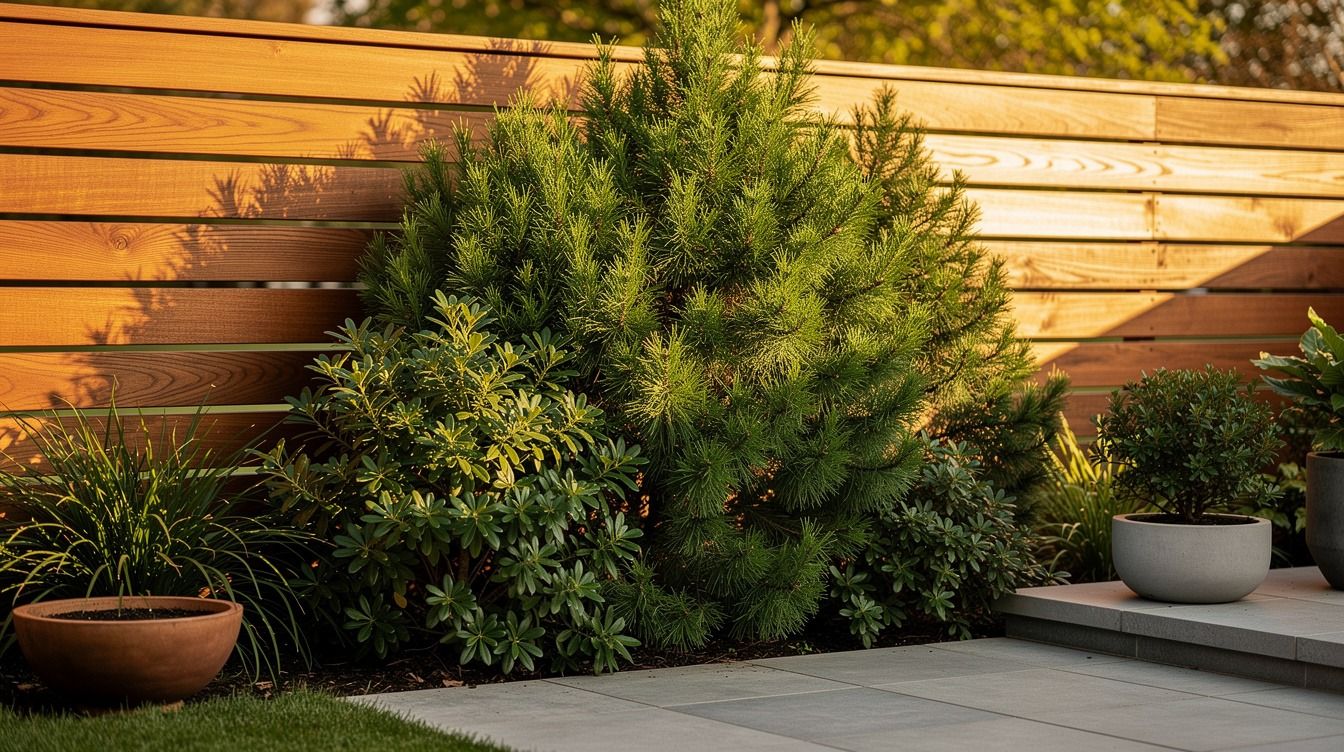
by Privacy fence ideas with plants work best when you build depth, not one flat green strip. I learned that after planting a single row of shrubs against my own fence and wondering why it still felt exposed. Layering plants at different heights gives your yard the coverage you wanted, plus a softer, more inviting view.
- Layer evergreens in front of a wood fence
- Build The Three-Height Screen with grasses
- Hang planter boxes on a trellis fence
- Paint the fence before the greenery arrives
- Can a living wall work in a tiny backyard?
- Use The Two-Wood Rule for a warmer screen
- Float tall planters instead of planting a hedge
- Frame flowers along privacy fence panels
- Choose horizontal slats over solid visual weight
- Mix edible plants into the privacy border
- Add The Night-Garden Glow around greenery fence privacy screens
- Put climbers over containers, not bare fencing
1Layer evergreens in front of a wood fence
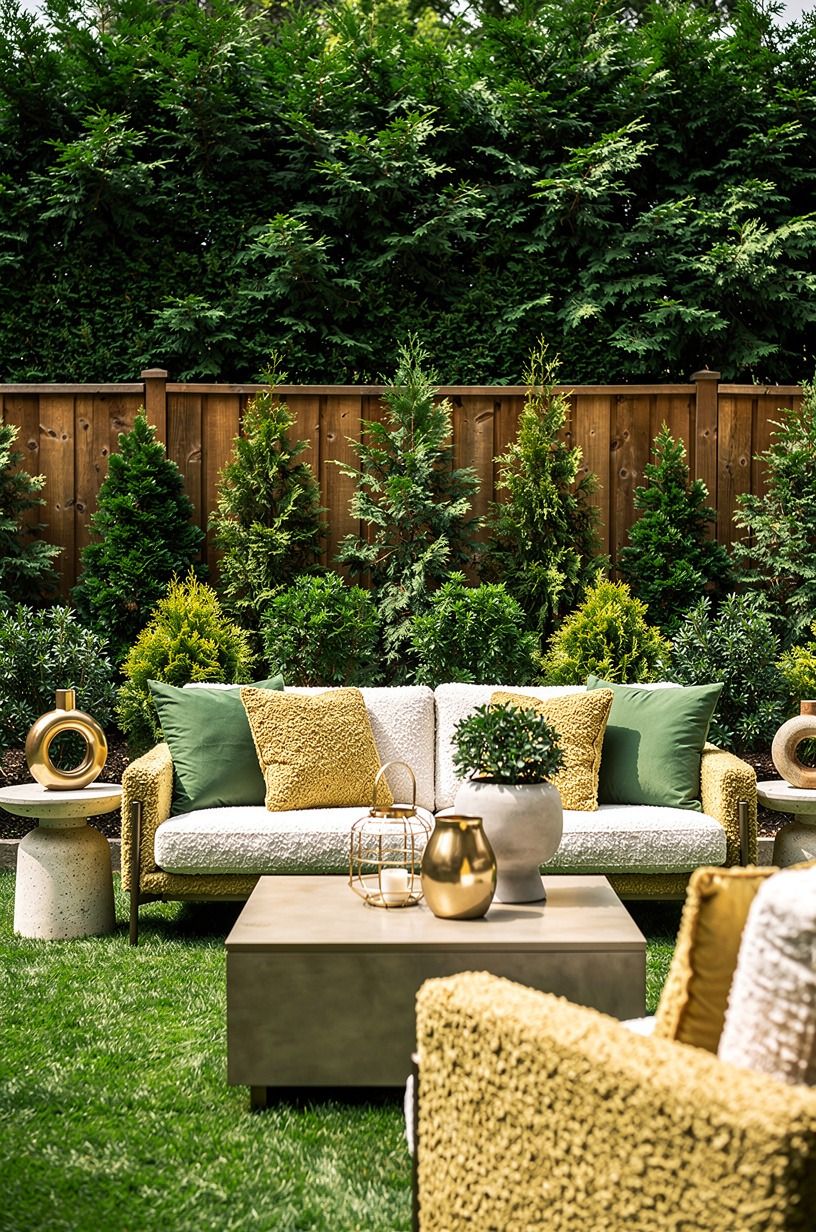
Start with upright evergreens, then pull shorter plants forward so your privacy screen has real dimension. Emerald Green arborvitae makes a tidy backdrop, but I wouldn’t plant it alone. The straight row can look like a suburban haircut.
Add loose cream hydrangeas or ornamental grasses in front, leaving room for air between plants. A few organic bouclé cushions on nearby seating soften the emerald-and-gold mix without making your yard feel boxed in. For the fence itself, this wood privacy fence guide has the warmest starting points.
2Build The Three-Height Screen with grasses
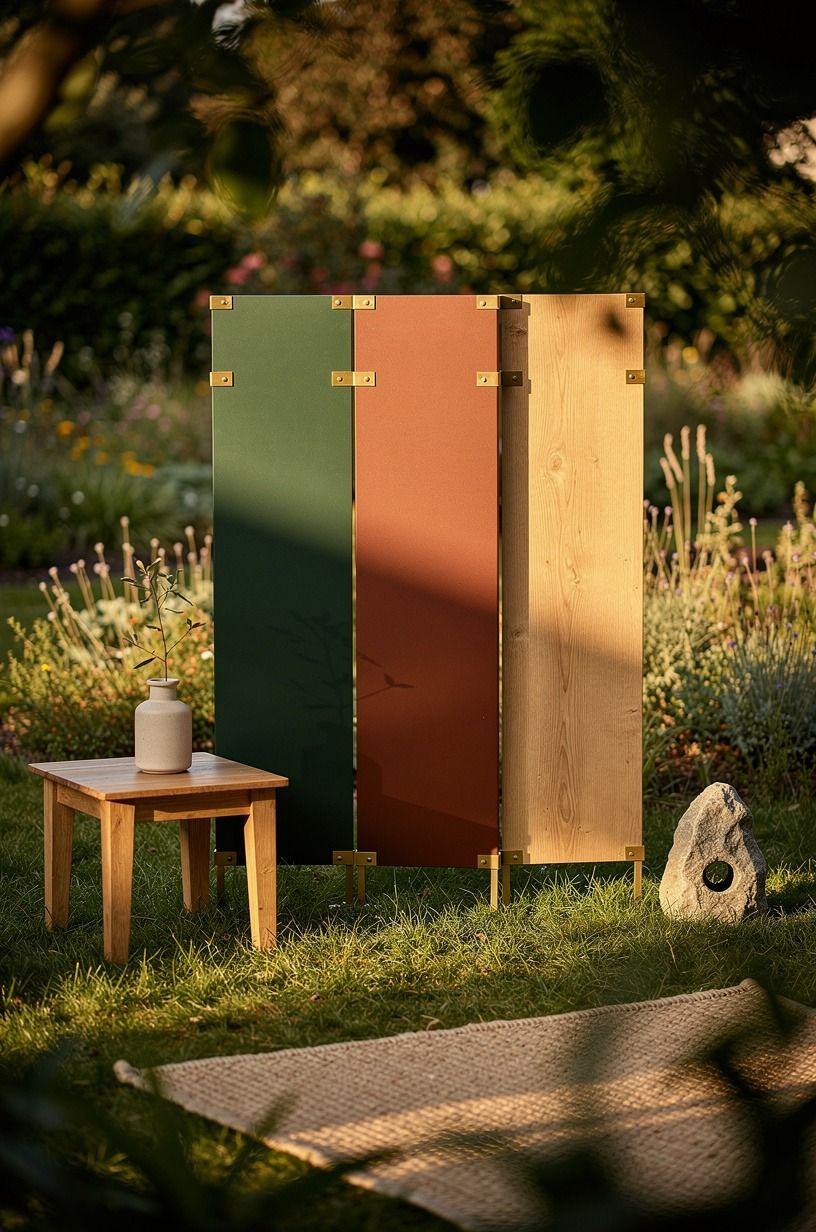
Use one tall plant, one middle layer, and one low spreading layer. That’s The Three-Height Screen, and it’s far more forgiving than trying to match every pot and shrub.
You might use clumping bamboo at the back, feather reed grass through the middle, and creeping thyme near the patio edge. A patinated unlacquered brass planter gives the forest green, rust, and natural oak mix a little warmth. Keep bamboo contained in large planters unless you enjoy future arguments with roots.
And yes, you’ll need to water new plantings consistently at first. The payoff is a soft, organic screen that moves when the wind does.
3Hang planter boxes on a trellis fence
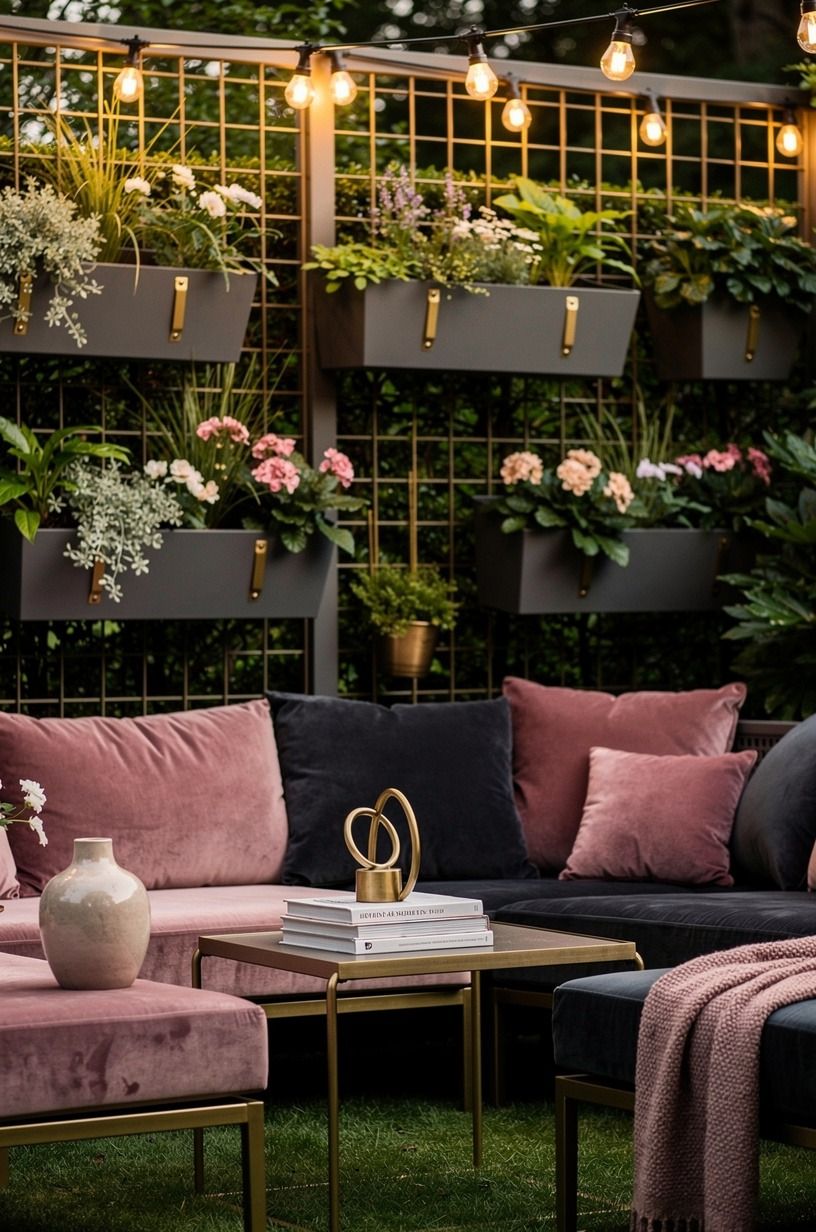
A trellis fence gives climbing plants somewhere useful to go, especially in a narrow backyard where you can’t spare a deep planting bed.
4Paint the fence before the greenery arrives
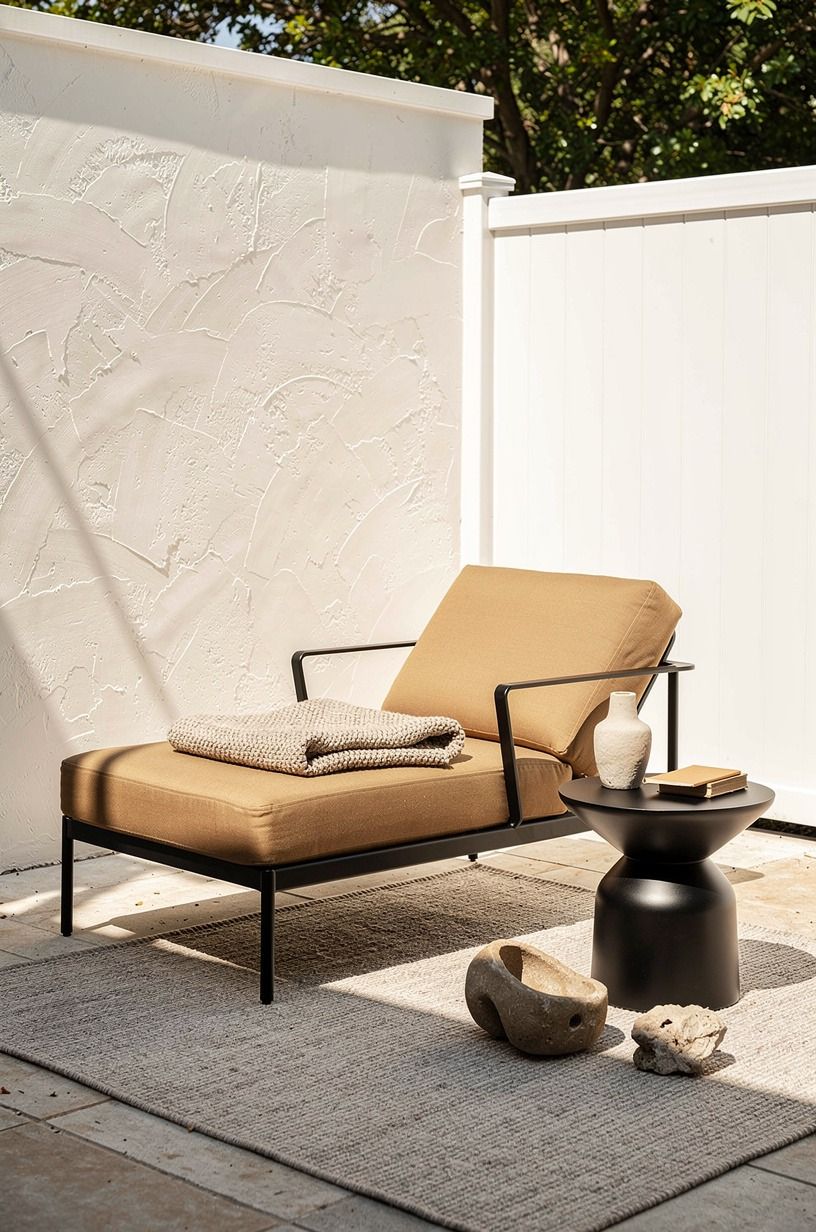
Paint first. You don’t want to wrestle a roller between established stems later, and I’ve made that mistake once.
A warm white fence behind camel-toned pots and black accents feels crisp in the best way, especially when pale flowers catch the late light. Venetian plaster on an adjacent garden wall can add softness without looking fussy.
Your fence shouldn’t compete with every leaf. It should make the plants look intentional.
5Can a living wall work in a tiny backyard?
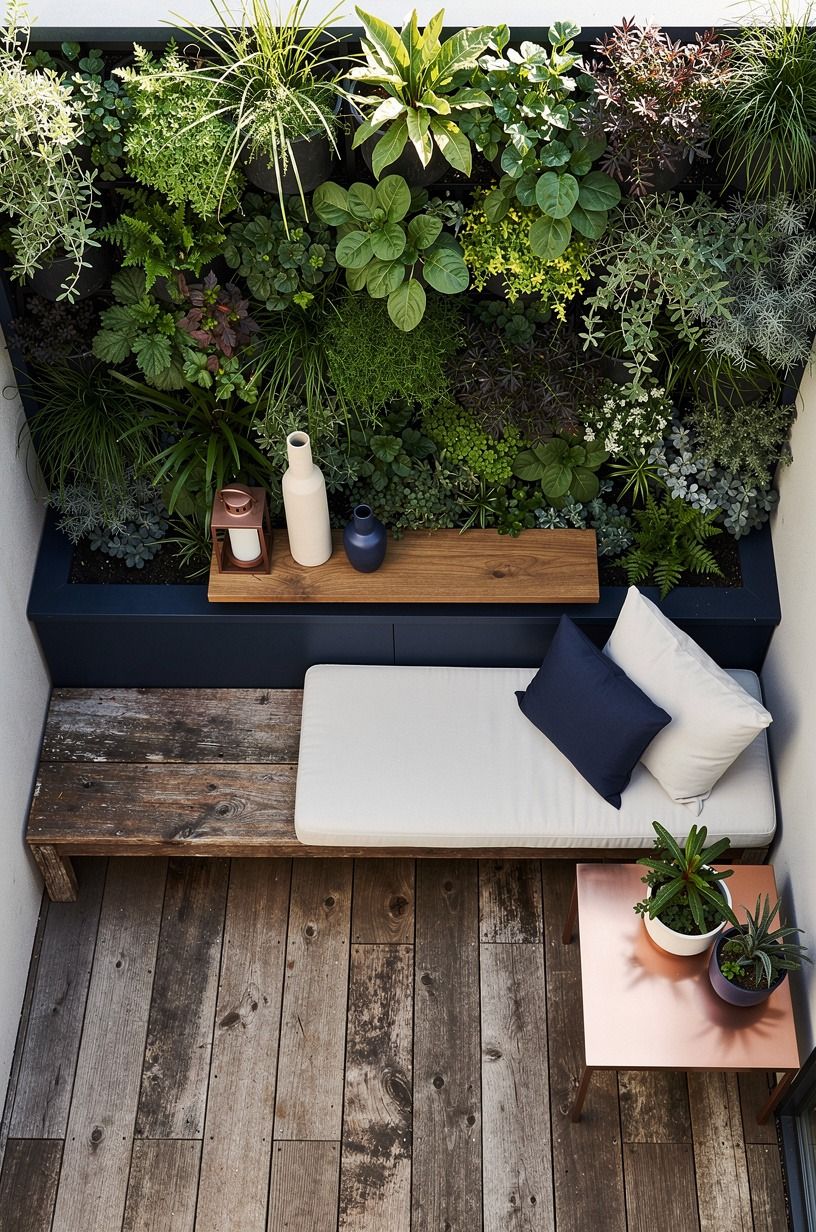
Yes, and a small yard often makes this idea more effective because every vertical surface matters. Put a freestanding reclaimed weathered teak grid panel 12 to 18 inches in front of the fence, then fill it with lightweight pots and trailing plants.
You’ll create depth without sacrificing the whole patio. Keep the palette tight: midnight blue, ivory flowers, and copper pots.
Too many bright pot colors turn a small space into visual static. But one row of climbing vines can make the fence feel twice as far away!
6Use The Two-Wood Rule for a warmer screen
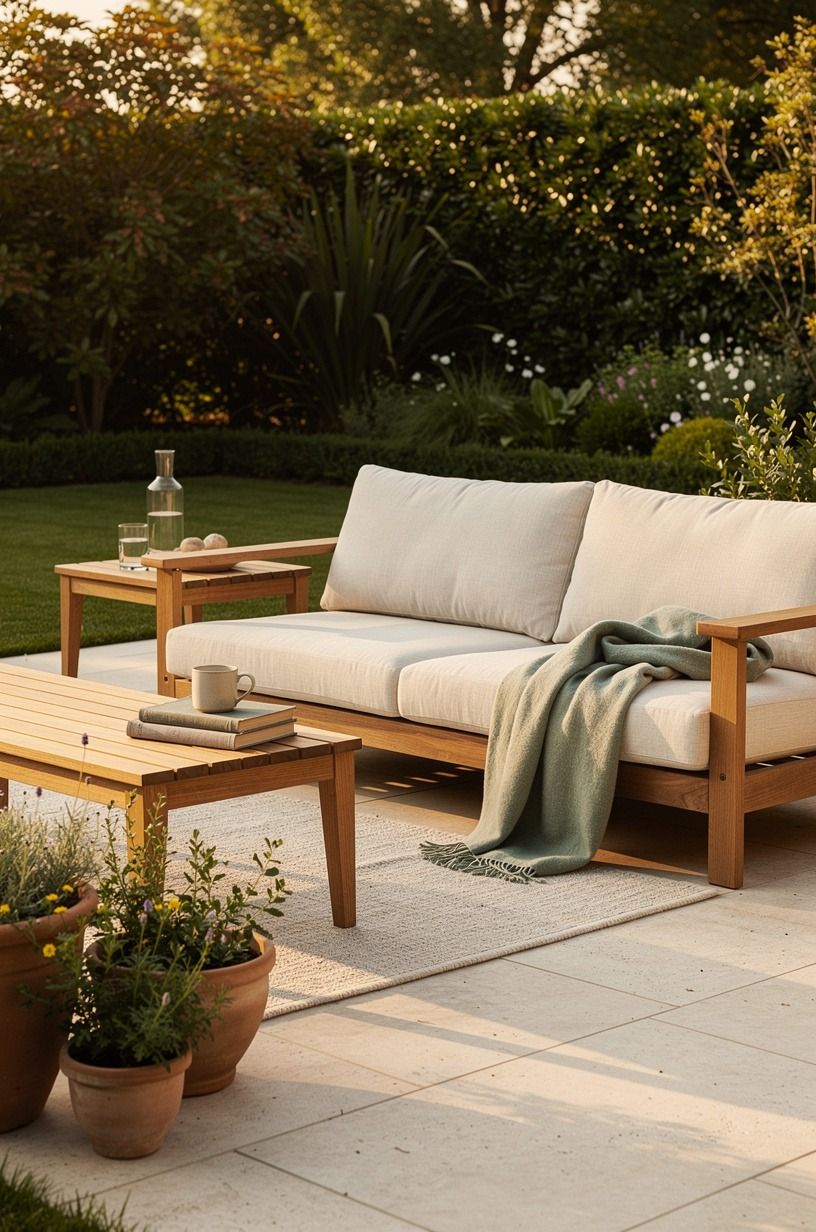
Match two wood tones, not five. The Two-Wood Rule keeps a planted fence from looking like leftover lumber met a garden center.
Try a natural wood privacy fence with a warm wood bench, then let ferns and vines soften the join between them. Sage green planting and washed Belgian linen cushions keep the mix easygoing, but I’d avoid gray composite furniture here. It tends to make warm wood look orange.
Your bench becomes part of the planting plan when you tuck pots around its feet, not an object stranded beside it.
7Float tall planters instead of planting a hedge
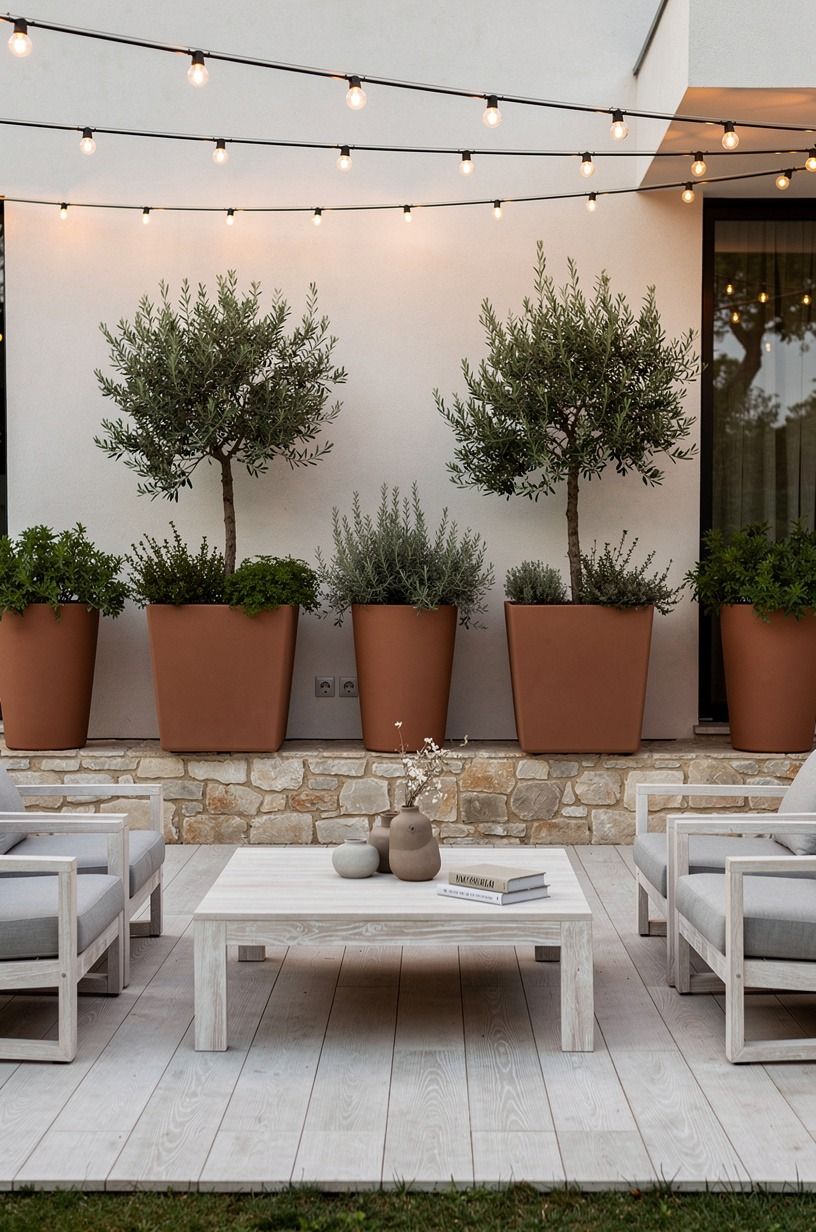
Renters and patio dwellers, this one’s for you. Float a line of large planters in front of the fence and fill them with tall foliage, rather than digging a permanent hedge.
IKEA MUSKOT plant pots can work indoors, but outdoors you’ll want weather-rated containers with drainage and weight at the base. Mix tall grasses with compact evergreens, then leave a small gap between containers so rainwater can drain.
It’s a flexible backyard privacy screen that you can move when your layout changes. See more cheap DIY privacy fence options before buying anything permanent.
8Frame flowers along privacy fence panels
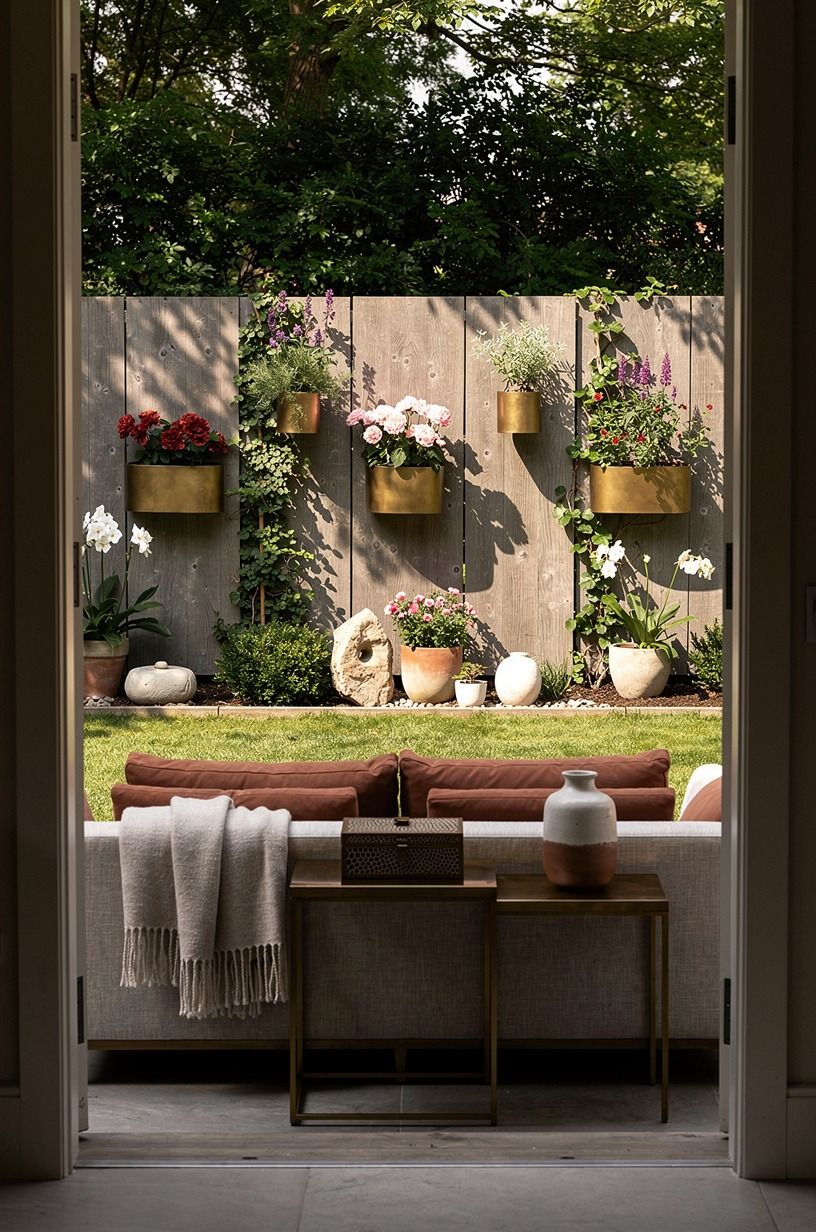
Flowers along privacy fence panels should read like punctuation, not a confetti explosion.
9Choose horizontal slats over solid visual weight
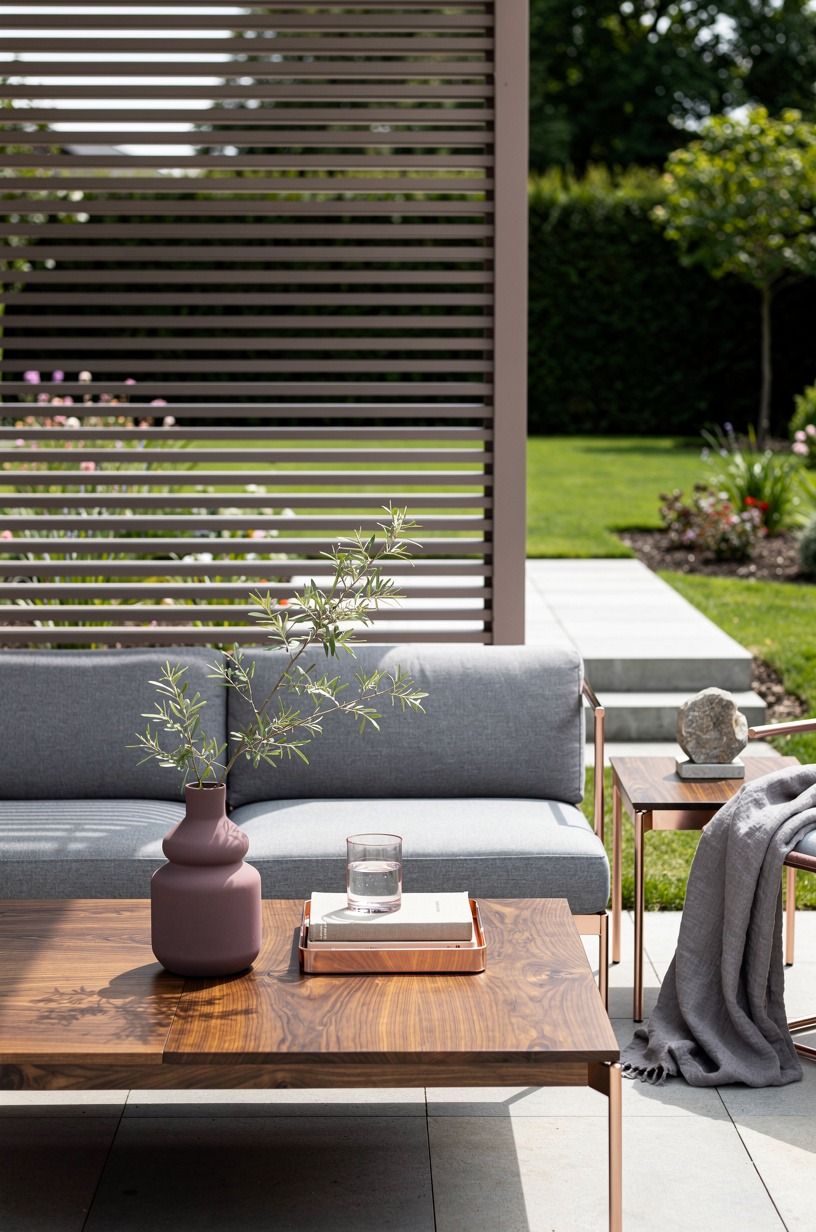
Horizontal slats feel lighter than a tall blank wall, especially if you let vines weave through only part of the structure. A book-matched walnut screen gives you a clean line while leaving room for air and greenery.
Plant star jasmine or climbing hydrangea at one end rather than covering every board. Full coverage can turn damp and messy, and you’ll lose the handsome material underneath.
Plum foliage, soft gray stone, and rose-gold accents keep the look from feeling severe. This modern horizontal fence inspiration shows how clean lines and planting can share the job.
10Mix edible plants into the privacy border
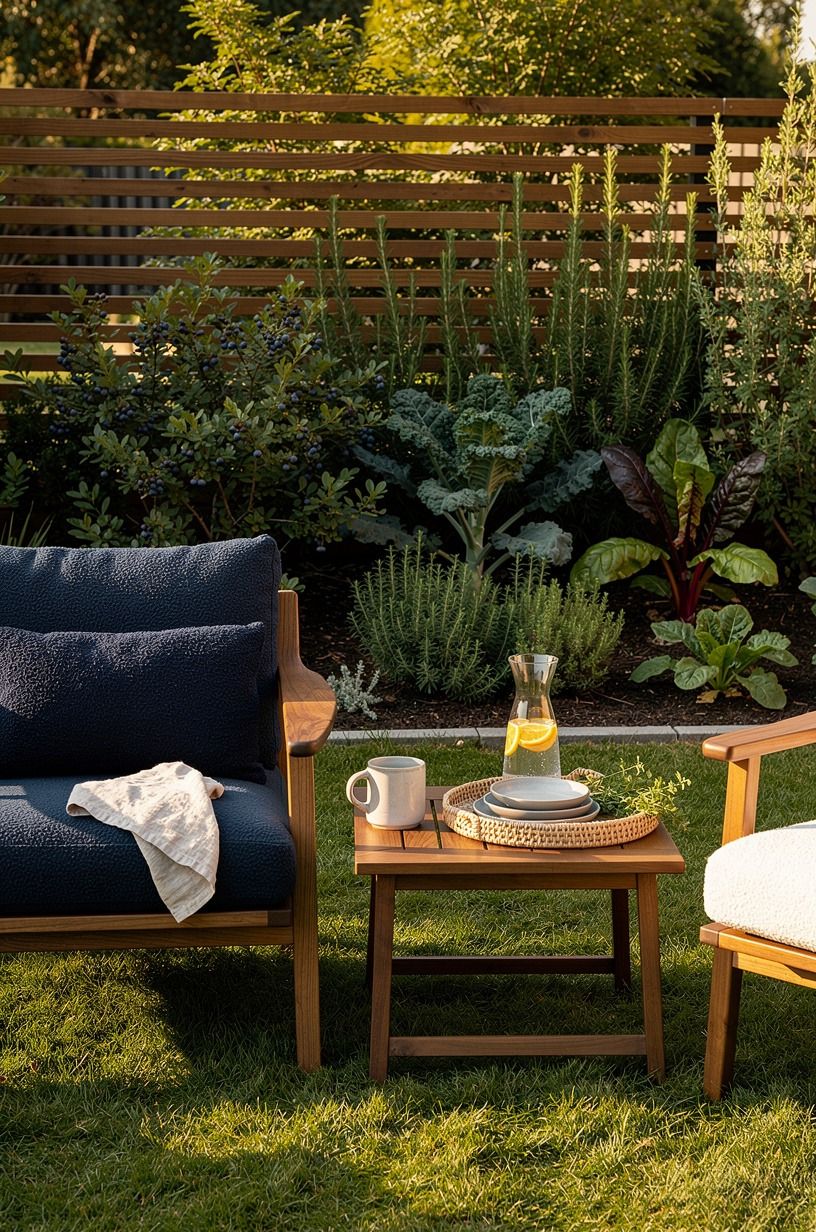
A privacy border doesn’t need to be ornamental only. Tall rosemary, espaliered fruit trees, and climbing beans can screen a fence while giving you something to bring inside.
Use walnut trellis panels for edible climbers, then place herbs where you can reach them from the patio. Navy planters, white flowers, and an organic bouclé cushion nearby make the border feel considered.
I’d choose rosemary over floppy basil along the main edge because it keeps its shape and smells incredible when you brush past it. Your yard can be productive and still look elegant.
Fresh herbs at dinner, too!
11Add The Night-Garden Glow around greenery fence privacy screens
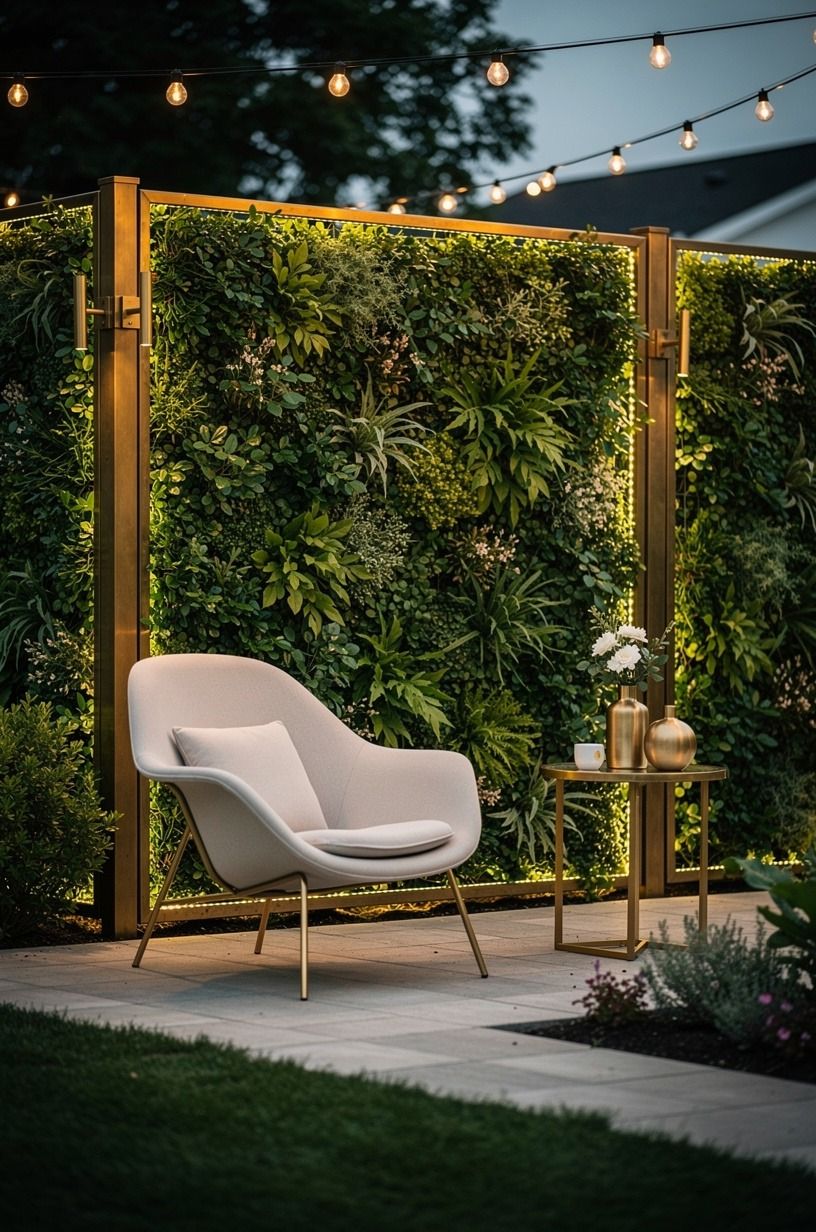
Plants disappear after sunset unless you give them a little light. The Night-Garden Glow means lighting the foliage from below, not blasting the entire fence with one harsh fixture.
Place low unlacquered brass uplights near the base of tall grasses and leave the beam pointed at leaves, not your neighbor’s windows. You’ll see shadow, texture, and movement. A single warm lamp beside a bench helps, while cool white bulbs make even healthy greenery look clinical.
Emerald foliage, cream blooms, and aged brass will feel intimate long after dinner ends.
12Put climbers over containers, not bare fencing
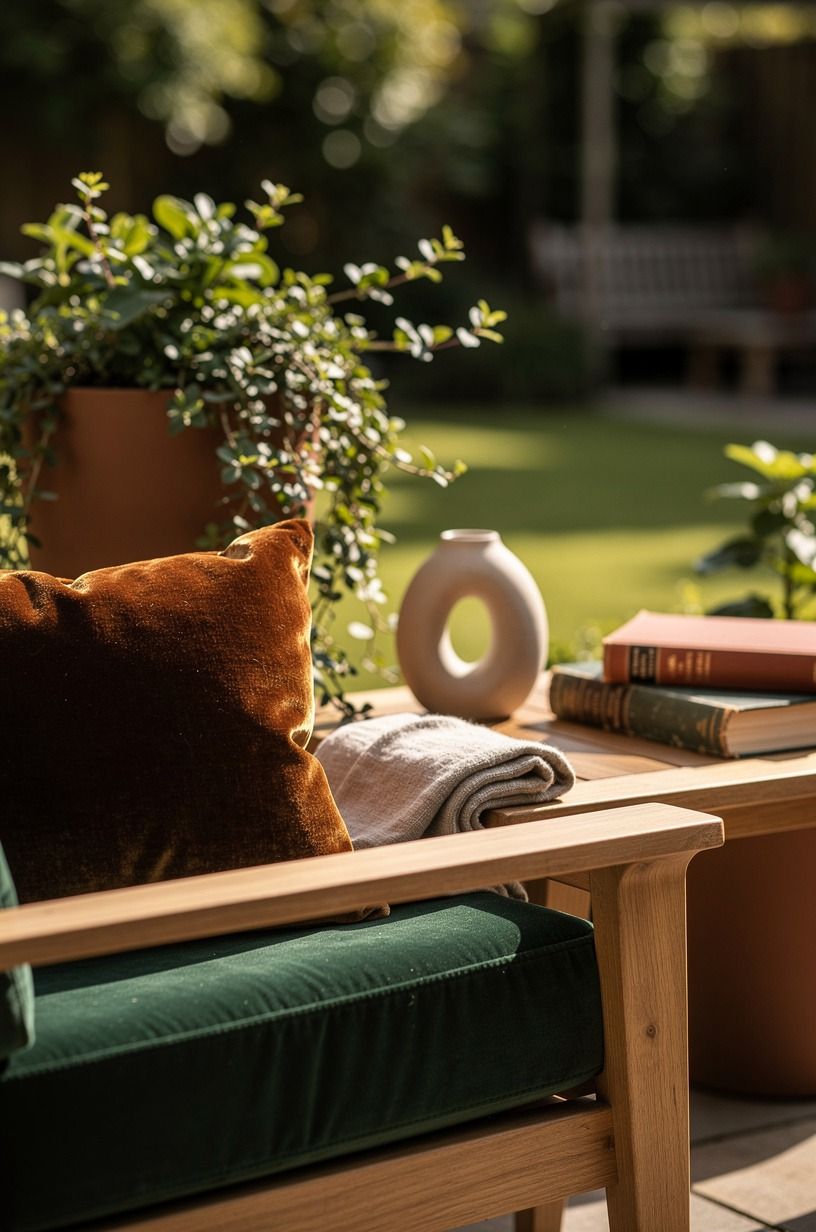
Climbers over containers give you control, which is the whole point if you’re nervous about maintenance. Use large rust-toned pots with a sturdy natural oak support, then let plants rise toward the fence without attaching themselves permanently.
Clematis vines look charming on a simple oak trellis, while star jasmine gives a softer, more fragrant result in mild climates. A deep-pile mohair velvet cushion on nearby seating adds warmth to the forest green and natural oak mix. I went back and forth on ivy, but I’d pass.
It’s quick, sure, yet it can creep into cracks and make fence repairs miserable. For fast coverage ideas, see these bamboo privacy fence approaches.
What a planted privacy fence can cost
Costs vary by plant size, fence condition, and whether you’re working with containers or in-ground beds. These typical US ranges are useful for planning a larger outdoor refresh, even if your own project focuses mostly on the fence line.
For this project, spend first on healthy plants and good drainage. You can repaint a fence later; you can’t undo a root system that’s been planted in the wrong place.
My rule for making a privacy fence feel like a garden
I don’t think a privacy fence should disappear completely. That’s the popular goal, but it often creates a yard that feels like it has been stuffed with plants solely to block somebody else’s view. You still need a pause for the eye.
A visible strip of wood, metal, or painted fence gives all that green something to push against.
I learned this after trying to cover every inch of a back fence with vines and pots. At first it looked abundant.
Then it looked heavy. The plants weren’t the problem.
I had given them no rhythm, no open space, no chance to look like individual plants instead of a green blanket. So I pulled several pots away, cut back one vine, and let the cedar show again.
Instantly better.
Your fence can be a boundary and still feel generous. Let one plant climb high, let another spill low, and leave a section quiet.
That contrast is what makes a living wall feel calm rather than crowded. I also think people underestimate the sound of leaves against a fence on a breezy evening.
It softens the whole yard in a way a solid panel never can.
And don’t chase instant fullness at every turn. Young plants look sparse for a season.
That’s normal. Give your garden room to grow, choose materials you’ll still like when the foliage drops, and make the fence worthy of being seen.
The best planted privacy screens don’t hide the yard. They make you want to stay in it.
The Questions Worth Answering First
What is the best privacy fence with plants for a small backyard?
A trellis with container climbers is the best small-yard choice because it uses vertical space. Star jasmine on a slim trellis gives coverage without taking over your patio, and you can pair it with an IKEA MUSKOT plant pot for a simple, movable base.
Where can I buy privacy fence plant pieces on a budget?
Start with IKEA, Target, Wayfair, and local nurseries for containers, trellises, and plants. Secondhand cedar planters are often the best value.
- Facebook Marketplace benches - Thrifted terracotta pots - Nursery end-of-season perennials
How much does a privacy fence with plants makeover cost?
A container-and-climber setup can cost about $100 to $300, depending on plant size and pot material. Existing fence paint is the cheapest upgrade if your structure is sound. Reusing pots, dividing perennials, and training vines are free ways to stretch the budget.
Can I create a planted privacy fence on a budget?
Yes, and you don’t need mature hedges to make it work. Layered small plants look more natural than one expensive row.
- Cuttings from friends - Repurposed wood crates - One painted fence color - Mulch from a local source
Is a privacy fence with plants worth it in a small space?
Yes, because plants make a small boundary feel softer and farther away. Vertical coverage saves floor space when you use trellises or tall planters. Keep your seating at least a comfortable walkway away from the containers so the patio doesn’t feel pinched.
Is a living privacy fence a good idea for a rental?
Yes, if you choose removable pieces. Freestanding planters protect your deposit while still blocking an unwanted view. Use tension-mounted trellises, weighted pots, and removable outdoor lights instead of drilling into the landlord’s fence.
Where I’d Start First
If I had to pick one, I’d start with tall planters and climbers. They hide the view without trapping moisture against the fence, and you can move them when the layout annoys you. Pin tall planters for later and explore privacy trees for fence lines.