
 by
by The best realistic faux plants for bathrooms have a matte finish, believable shape, and enough weight to stay put near a sink. I once paired a glossy fern with a shower, and it looked like a prop in a dentist's office. Your bathroom doesn't need sun or watering to feel alive. It needs scale, texture, and one quiet place for your eye to rest.
- Layer an olive tree faux plant beside the tub
- Anchor bathroom decor with plants on a vanity
- Why do plants in bathroom decor look real near the mirror?
- Frame the mirror with a trailing pothos
- Swap a crowded ledge for one sculptural agave
- Build The Three-Height Light Stack
- Paint the backdrop before adding a faux fern
- Hang a eucalyptus bundle above the towel rail
- Choose The Two-Texture Rule over a matching set
- Mix IKEA FEJKA with a darker ceramic pot
- Create an aesthetic bathroom setup with one tall stem
- Keep a faux plant clean near the sink
1Layer an olive tree faux plant beside the tub
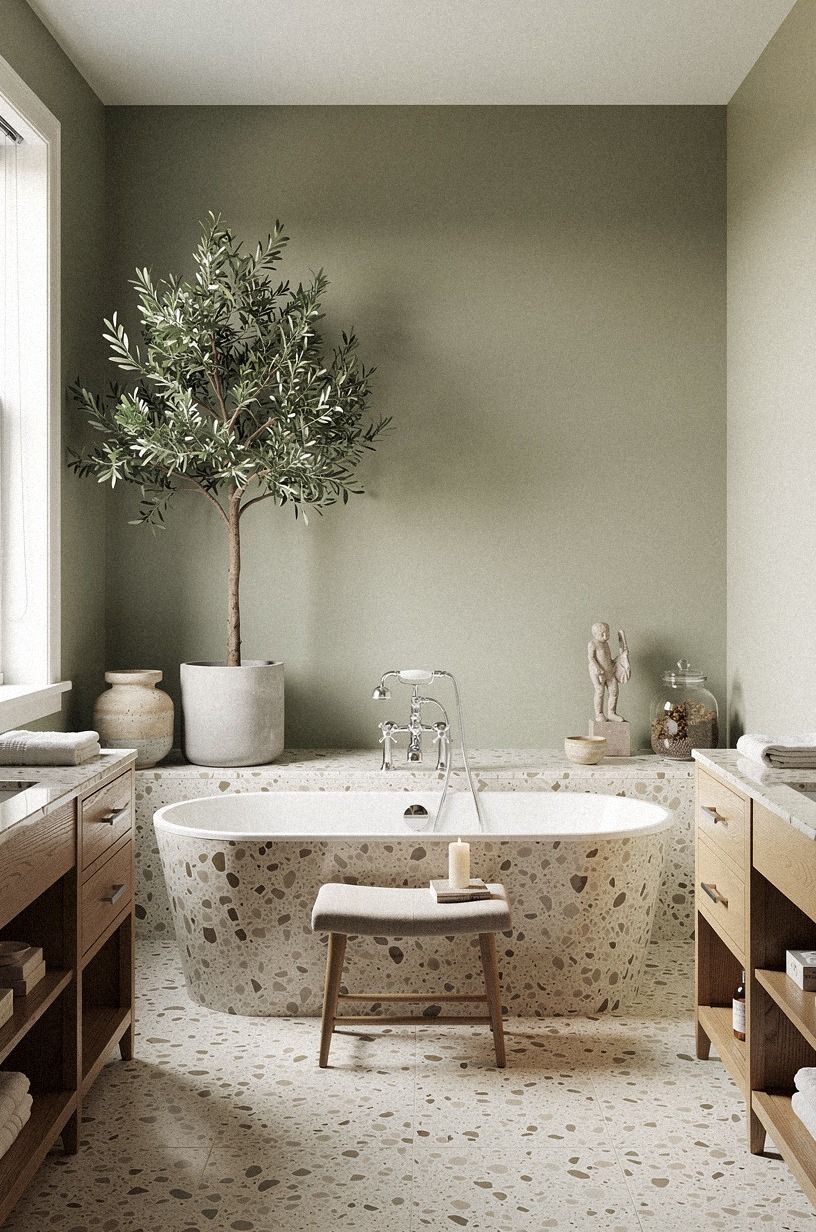
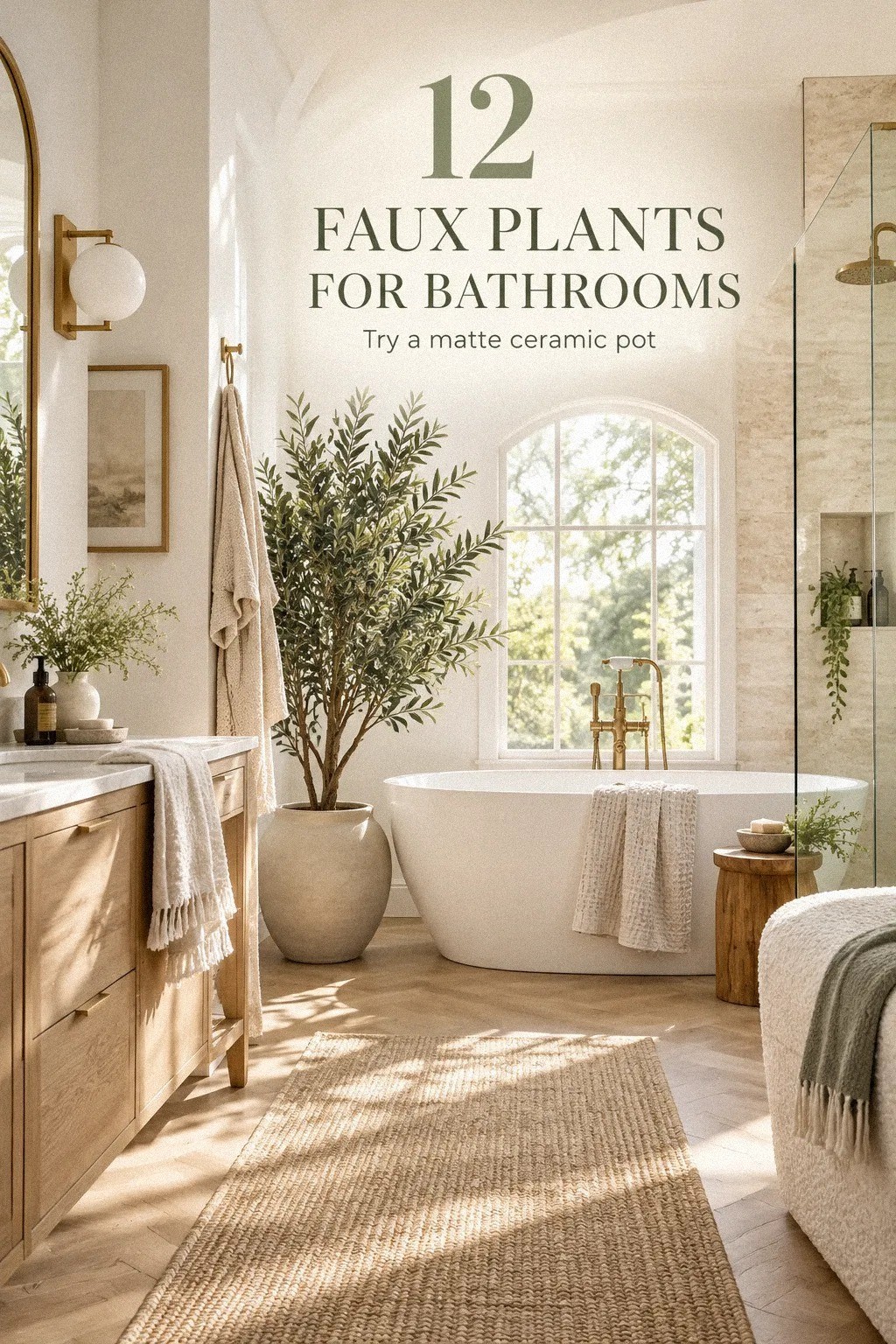
An olive tree faux plant gives your bathroom height without asking for a sunny window. Choose one with narrow leaves, muted green coloring, and a trunk that bends slightly instead of standing perfectly straight.
That irregular shape is what keeps it from looking like a showroom sample. You’ll want to place it beside the tub or in the empty corner near a towel ladder.
I’d skip a bright plastic tree. It’s too shiny under bathroom lighting, and you’ll notice the color before you notice the room. A faux olive tree in an oversized-chip terrazzo planter feels more grounded, especially beside warm cream towels.
Your eye should catch the leaves after it catches the mirror, not before.
A 32 to 36 inch vanity leaves enough visual breathing room for a taller plant nearby. And if your tub sits against a blank wall, the tree can soften that hard edge without taking up useful floor space. I’d keep the planter outside the splash zone, because dust and water marks will make even a good imitation look tired.
If you’re comparing plant scale with other low-light options, you can also browse these low-light bathroom plants that thrive in the shade. For a completely windowless room, the placement ideas in best plants for a windowless bathroom with no natural light are useful too.
I like the olive tree best when the room needs warmth rather than more decoration. That small shift matters!
Typical cost by tier (US averages):
2Anchor bathroom decor with plants on a vanity
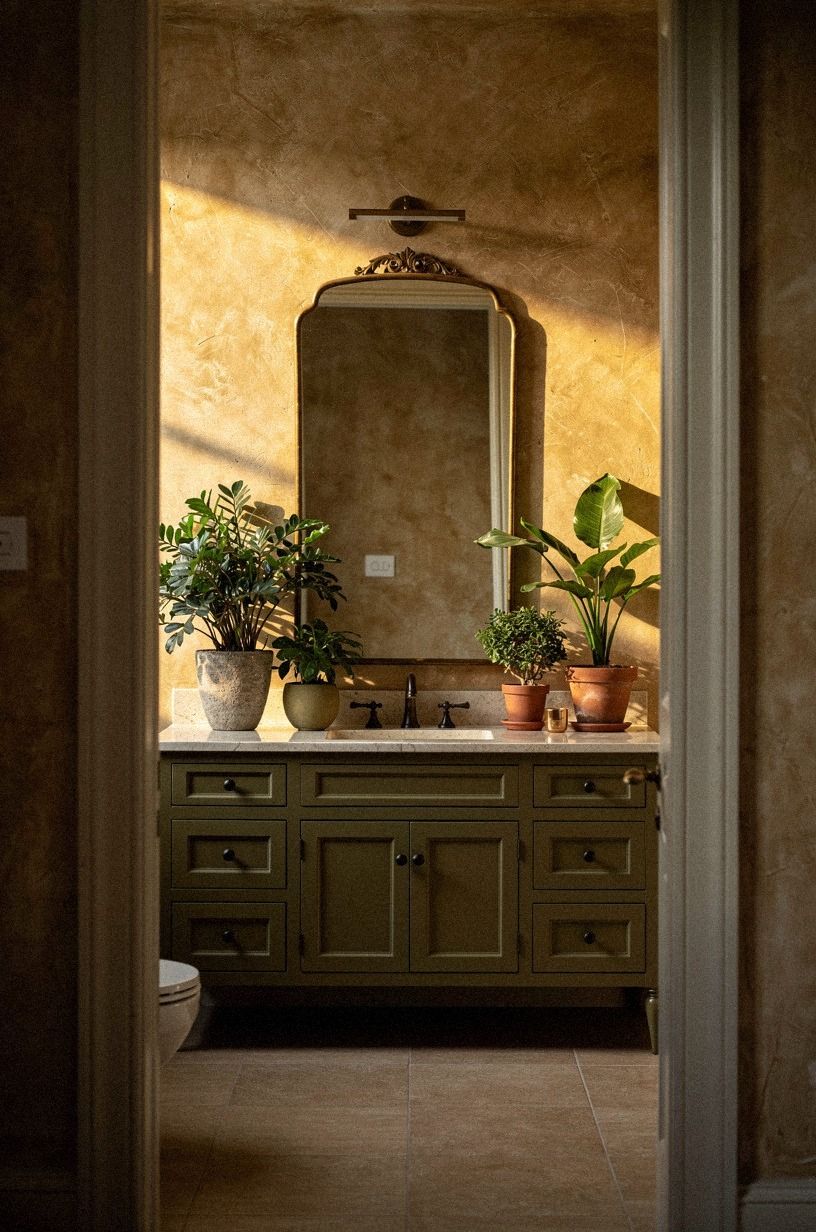
Bathroom decor with plants works best when the greenery has a clear landing spot.
3Why do plants in bathroom decor look real near the mirror?
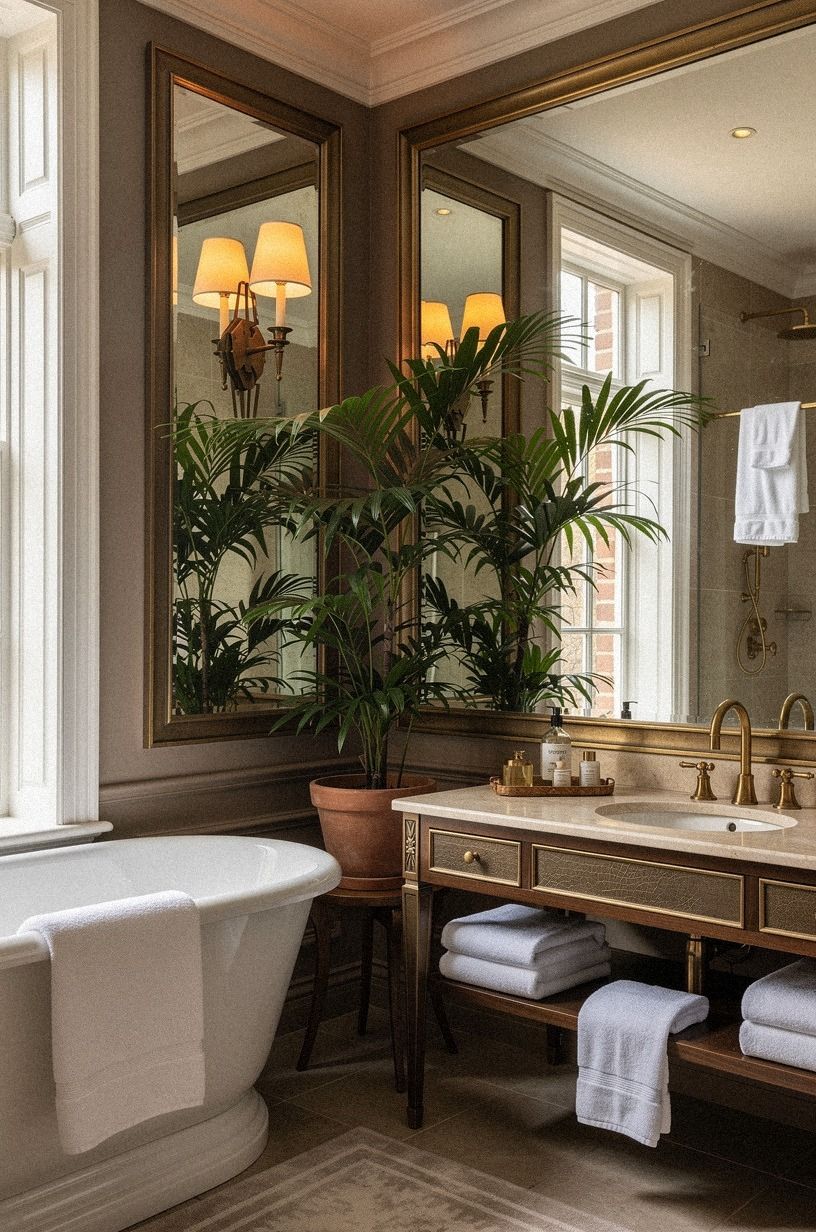
Plants in bathroom decor look more believable when they appear to respond to the room. A stem that leans toward the mirror or spills gently over a shelf feels placed, not displayed. You’ll want to angle the plant so its leaves break the reflection at one point instead of covering half your face every morning.
Use a silk-touch fern with layered fronds and two shades of green. Flat, single-color leaves are the fastest way to reveal a faux plant. I’d choose a fern with a few darker leaves underneath, because the shadow gives your eye something to read.
That small variation makes the arrangement feel organic and soft.
What’s the point of buying a realistic plant if you hide it behind a soap bottle? Give it six inches of breathing room on each side, then add one textured object nearby, such as a shagreen tray or a folded linen cloth. You’re creating a little scene, not filling empty space.
For a windowless room, compare the placement ideas in this guide to low-light bathroom plants that thrive in the shade. You can also look at best plants for a windowless bathroom with no natural light when you’re deciding whether the mirror or the vanity should become the focal point.
I’d avoid placing a faux plant directly in front of the brightest bulb. The glare can make even a beautiful leaf look synthetic. Your goal is a gentle reflection, not a spotlight.
4Frame the mirror with a trailing pothos
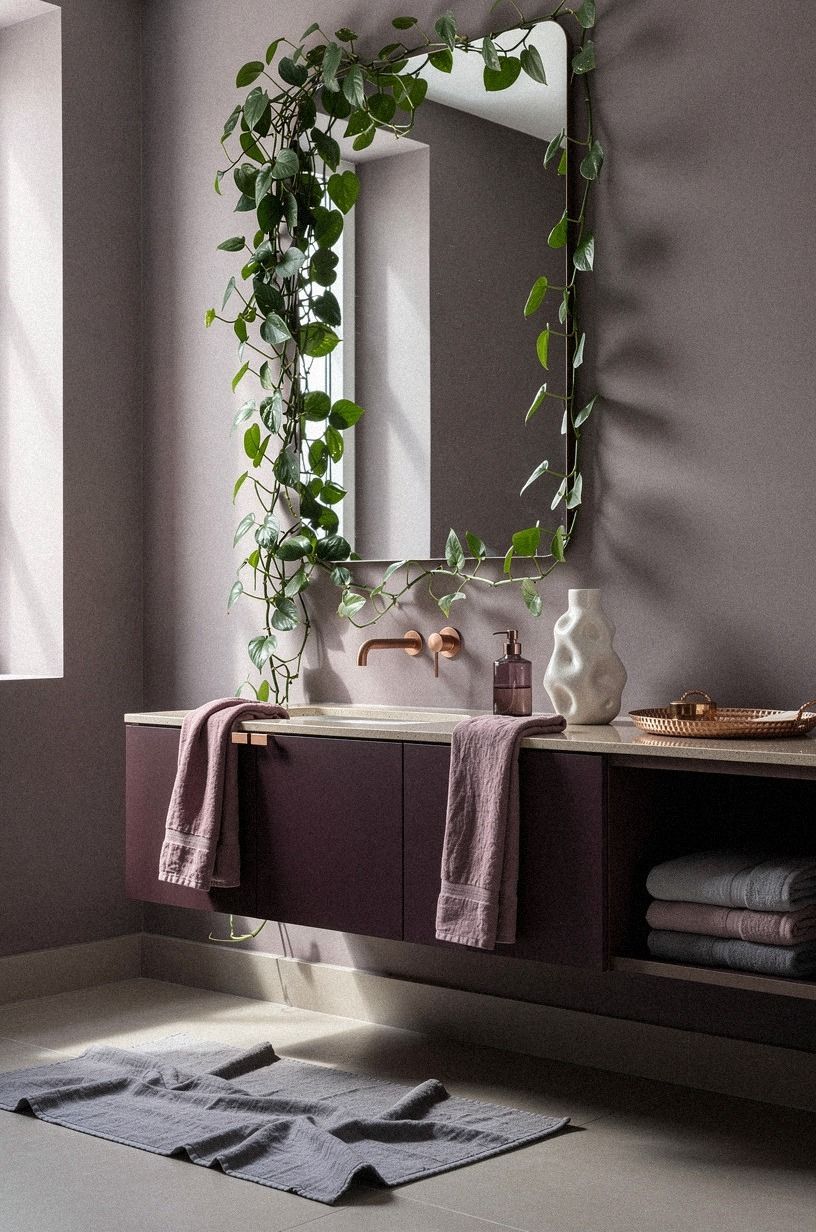
A trailing pothos can make a small bathroom feel taller because the leaves pull your attention upward and outward. Place a faux version on a wall shelf beside the mirror, then let two or three stems fall naturally. You’ll want the longest stem to stop well above the faucet so your reflection stays clear.
Look for variegated pothos leaves with soft cream markings instead of sharp white stripes. The subtle pattern feels more refined, and it works with both bright tile and darker paint.
Farrow & Ball Brinjal No. 222 makes the leaves look rich and dramatic, while Benjamin Moore Chelsea Gray HC-168 gives them a cooler, gentler background. A washed Belgian linen towel and rose-gold hardware can carry the same palette through the room.
I made the mistake of arranging every stem at the same angle once. It looked stiff.
Bend one stem toward the wall, one toward the counter, and leave one almost untouched. But keep the pot secure if you’re using a narrow shelf, because a falling planter near the sink isn’t charming.
Your room should feel relaxed, not precarious.
If you’re renting, a removable shelf or tension-mounted ledge can give you the same height without drilling. The arrangement will also pair nicely with these best plants for a windowless bathroom with no natural light. I’d choose this approach when you want your bathroom to feel taller, softer, and slightly more romantic.
5Swap a crowded ledge for one sculptural agave
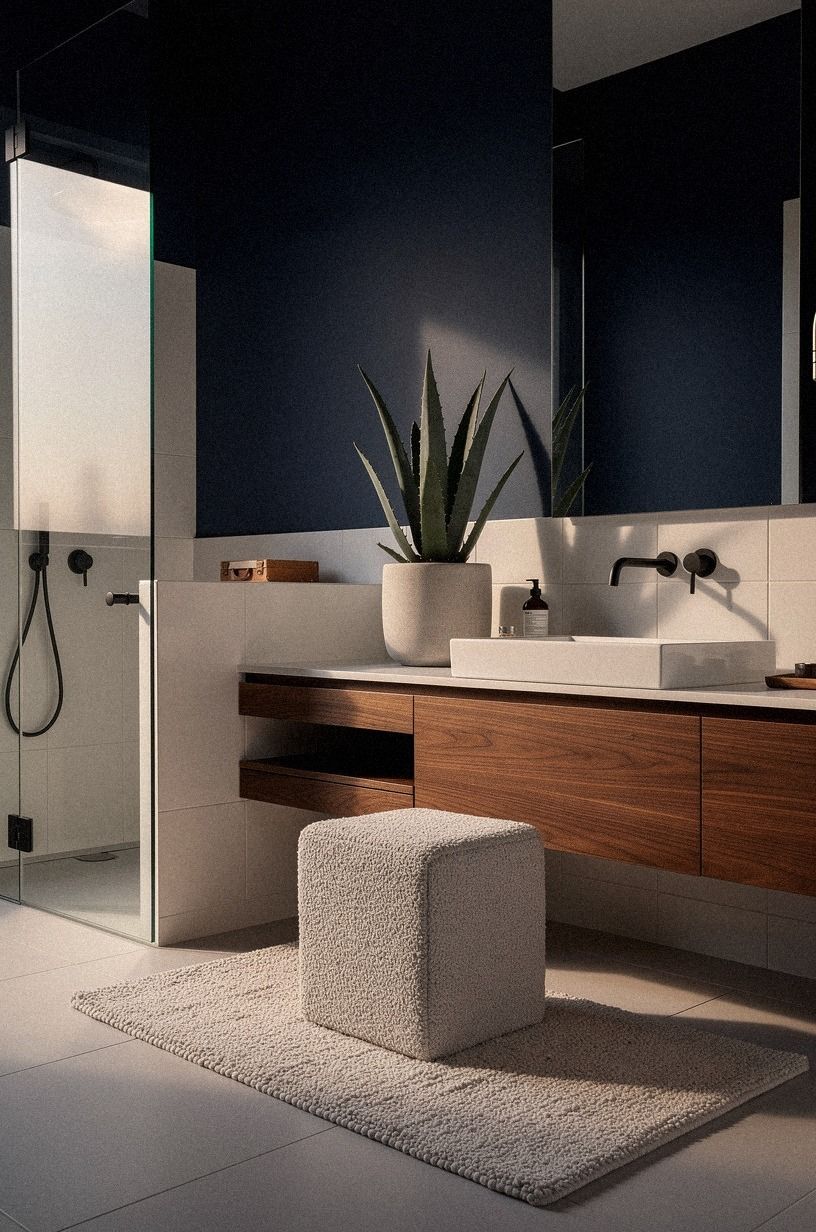
A sculptural agave is the better choice when you want greenery without a trailing shape. Its pointed leaves add a bold, modern note to a bathroom with simple tile, brushed metal, or clean-lined cabinetry. You’ll want to give it room, because the silhouette does the decorating by itself.
Choose a faux agave with thick leaves in muted green, then set it in a navy planter against white tile. The leaf edges should have small shifts in tone, and the center should be dense enough that you can’t see an obvious plastic stem.
I’d skip a tiny agave on a crowded shelf. It gets lost, and you’ll end up adding objects around it that don’t improve the composition.
Set it on a walnut stool beside the tub or on a vanity shelf above the toilet. A comfortable 36 by 36 inch shower is a useful minimum, so if your room is tight, keep the plant outside that clearance. Your best layout might be a single tall pot at the far end of the room, not a row of little decorations.
An organic bouclé cushion on the walnut stool can make the plant feel grounded without adding another hard surface. The soft texture gives the navy, white, and wood palette a little warmth. And if you like a more natural palette, this privacy fence ideas with plants for a lush living wall has useful layering inspiration for combining greenery with texture.
I’d use an agave when your bathroom already has enough softness. The sharp shape adds contrast, energy, and a confident focal point without making the room feel busy.
6Build The Three-Height Light Stack
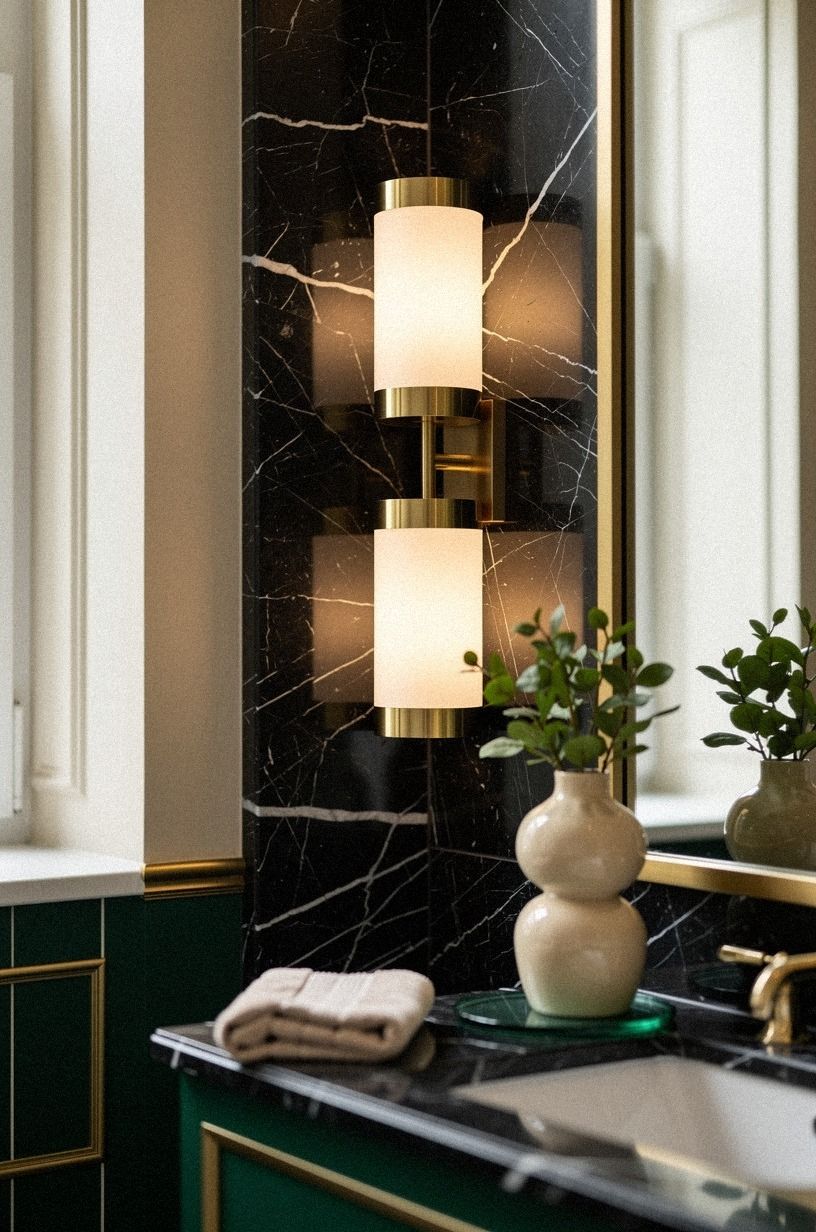
The Three-Height Light Stack is a simple way to make faux greenery feel intentional. Use one low object, one medium object, and one taller plant, then arrange them so your eye moves between the three. On a bathroom shelf, that could mean a soap dish, a folded towel, and a narrow faux plant.
Start with an emerald planter at the tallest point. Add a low gold object on a Nero Marquina black marble tray, then fold a cream towel underneath.
You’ll get a rich, tactile mix without relying on more color. I’d avoid three objects at exactly the same height, because your shelf will look like a display rack instead of part of your bathroom.
But don’t force the formula onto every surface. Your vanity may only need one plant and one tray.
The stack is most useful on a long ledge, where the room needs rhythm. You’ll know it’s working when the eye can travel across the arrangement without stopping on one loud object.
For evening light, keep the plant close to a soft bulb rather than a harsh overhead fixture. A warmer lamp makes artificial leaves less obvious. You can also borrow ideas from this guide to smart light sleep if you’re adjusting the room’s evening lighting.
The result should feel layered, tranquil, and quietly luxurious. It shouldn’t look like you followed a formula from a showroom.
7Paint the backdrop before adding a faux fern
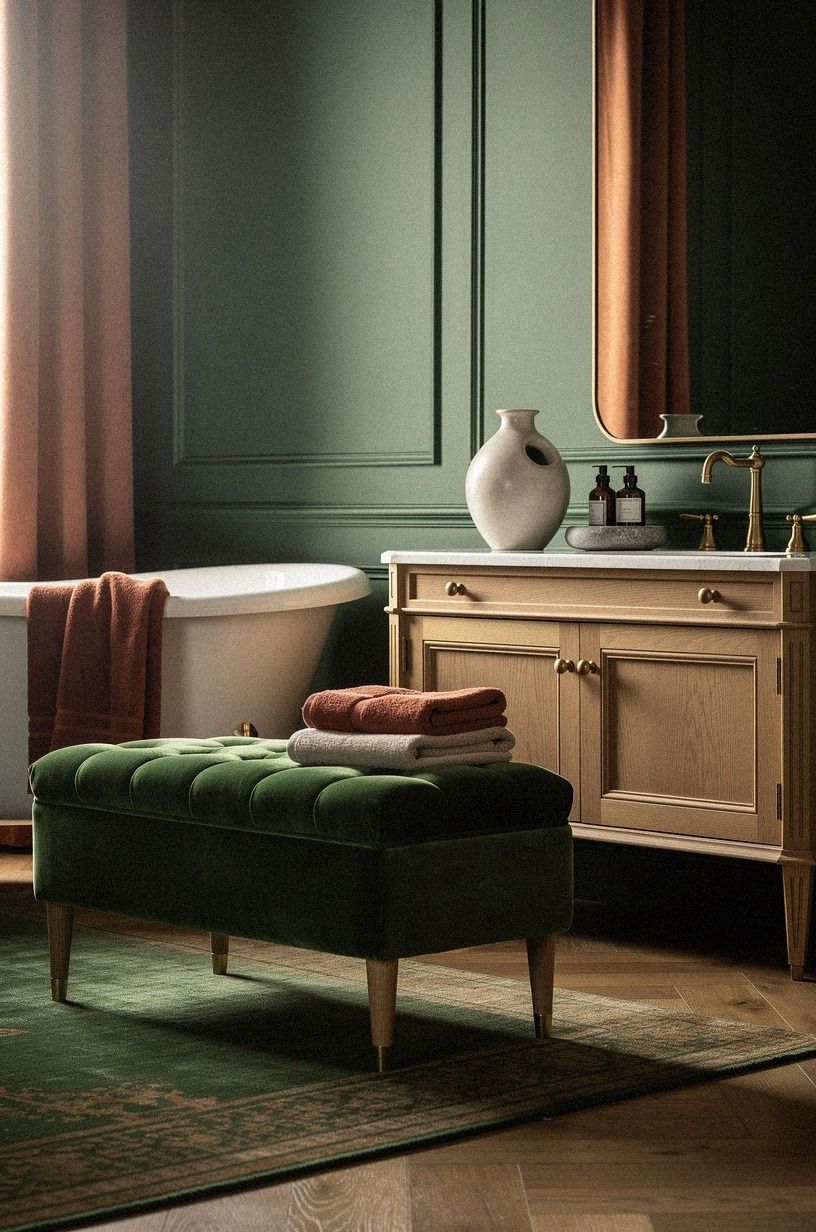
A faux fern can look ordinary against a pale wall and surprisingly lush against the right color. Before you buy another plant, look at the backdrop. Farrow & Ball Studio Green gives the leaves a deep, calming setting, while Benjamin Moore Terra Cotta Tile 118 brings in a warmer rust note.
Choose a Boston fern imitation with fine leaves that overlap instead of forming one round ball. Place it on a floating shelf or inside an open cabinet niche, then leave some wall visible around it. Your bathroom needs contrast, but it also needs quiet space so the green doesn’t become visual noise.
I’d skip matching the plant to the wall exactly. A pale green plant on a pale green wall can disappear, and you’ll wonder why the purchase felt underwhelming.
Use a deeper or dustier leaf tone instead. A natural oak shelf can sharpen the outline, while a deep-pile mohair velvet stool adds a softer rust-colored accent.
If you’re working around a standard tub that measures 60 by 30 inches, keep the plant above the long wall rather than at the narrow end. That placement draws attention along the room’s length. And if you’re considering a darker palette, this red light bulb for sleep offers another way to think about low, evening light.
I’d paint first and shop second. The right backdrop can make an inexpensive fern feel lush, dramatic, and surprisingly convincing!
8Hang a eucalyptus bundle above the towel rail
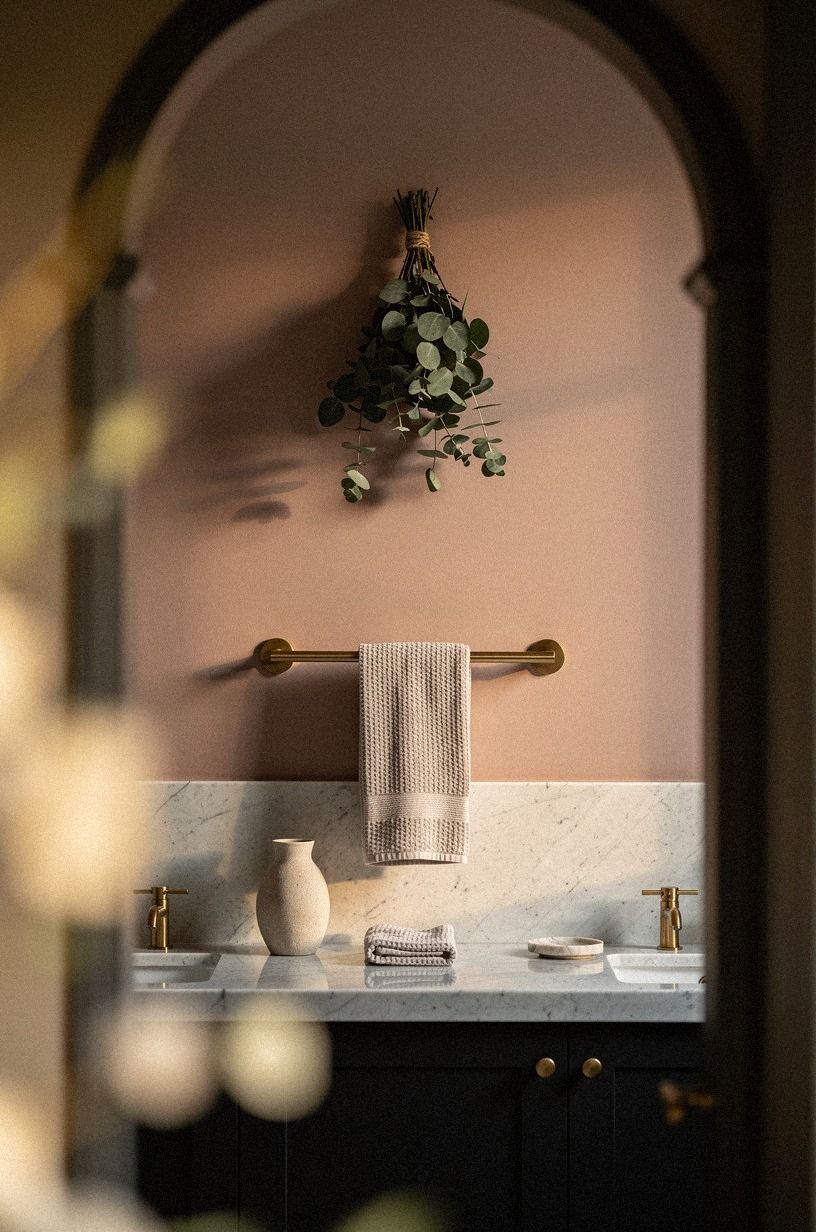
A faux eucalyptus bundle brings a spa-like shape to the wall without needing a floor pot.
9Choose The Two-Texture Rule over a matching set
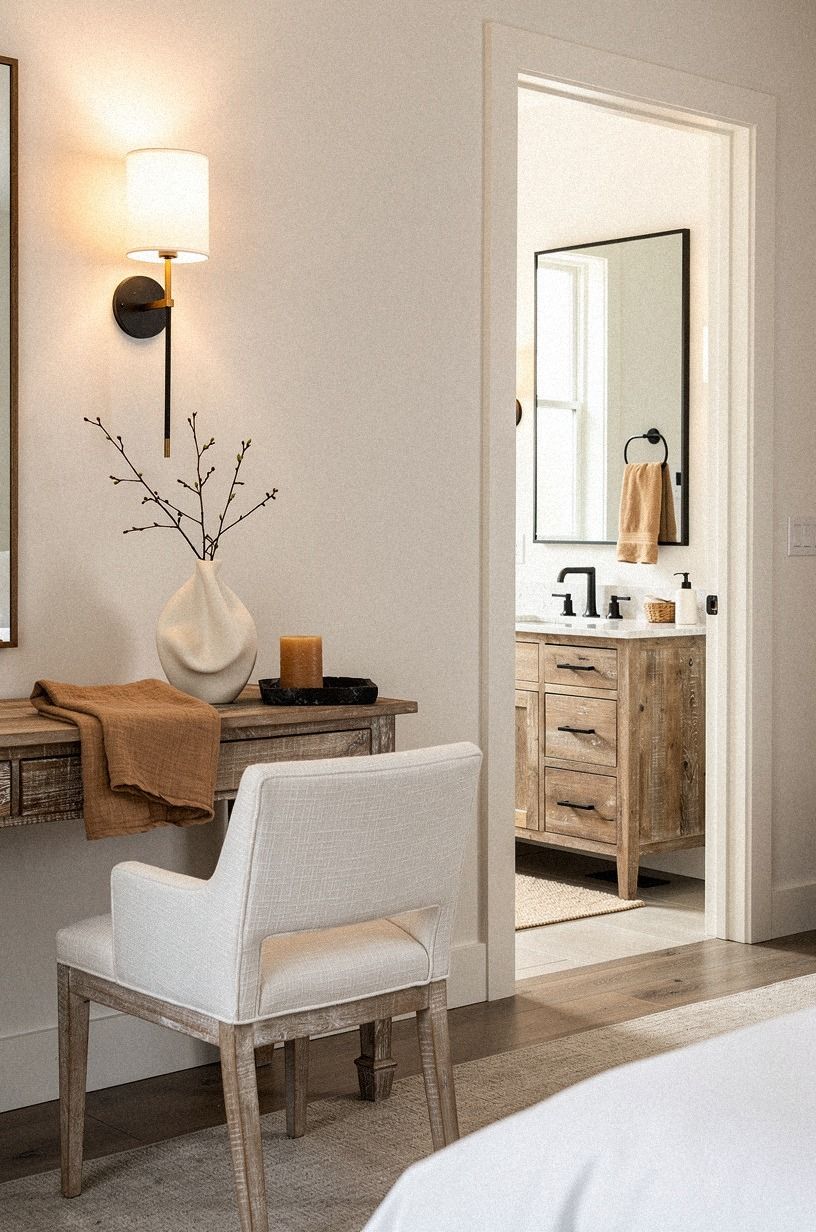
The Two-Texture Rule says your faux plant should meet at least two different surfaces nearby. Pair soft leaves with rough pottery, smooth leaves with woven fiber, or pointed leaves with a ribbed glass. You’ll get a richer bathroom decor setup without buying many objects.
Try a reclaimed weathered teak planter beside a smooth warm white sink, then add one folded camel-colored towel below it. A small black soap bottle can repeat the accent without taking over. The contrast is gentle but noticeable.
I’d skip a matching planter, tray, and soap bottle set, because everything starts to merge into one flat block. Your room needs a little friction.
One plant is enough if the textures are doing their work. Place it near the edge of a vanity, then let the towel or tray carry the second material.
If you’re styling a larger bathroom, repeat one texture once, not everywhere. A woven basket and a woven planter can become too much of the same note.
And yes, this rule works with inexpensive pieces. IKEA FEJKA can look convincing when it’s placed in a textured container with believable scale. You’ll spend less time chasing a premium plant and more time making the surrounding surfaces feel considered.
If your room feels flat, borrow one material from this red light bulb for sleep guide’s warmer evening palette. You don’t need a dramatic renovation. One rough pot, one soft towel, and one calm plant can change the mood completely.
10Mix IKEA FEJKA with a darker ceramic pot
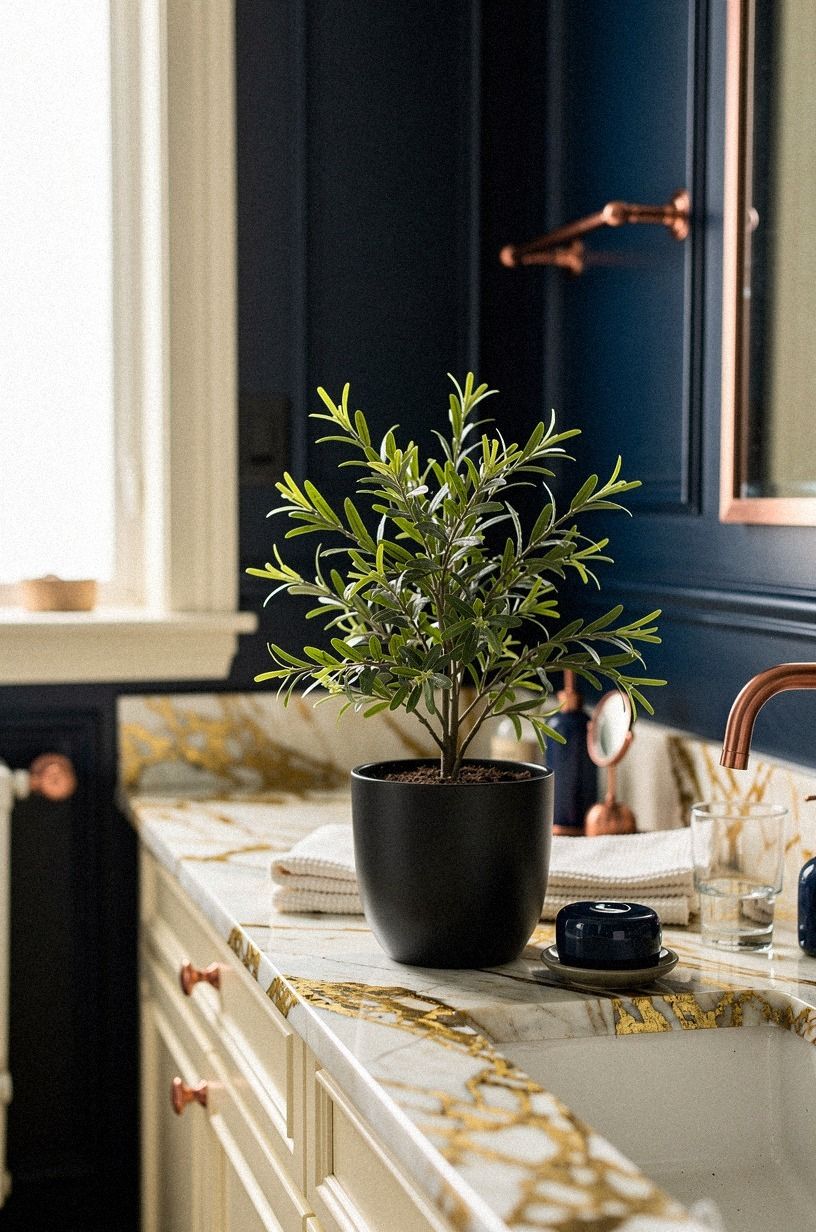
IKEA FEJKA is useful when you want a simple artificial plant that can handle a low-light bathroom visually.
11Create an aesthetic bathroom setup with one tall stem
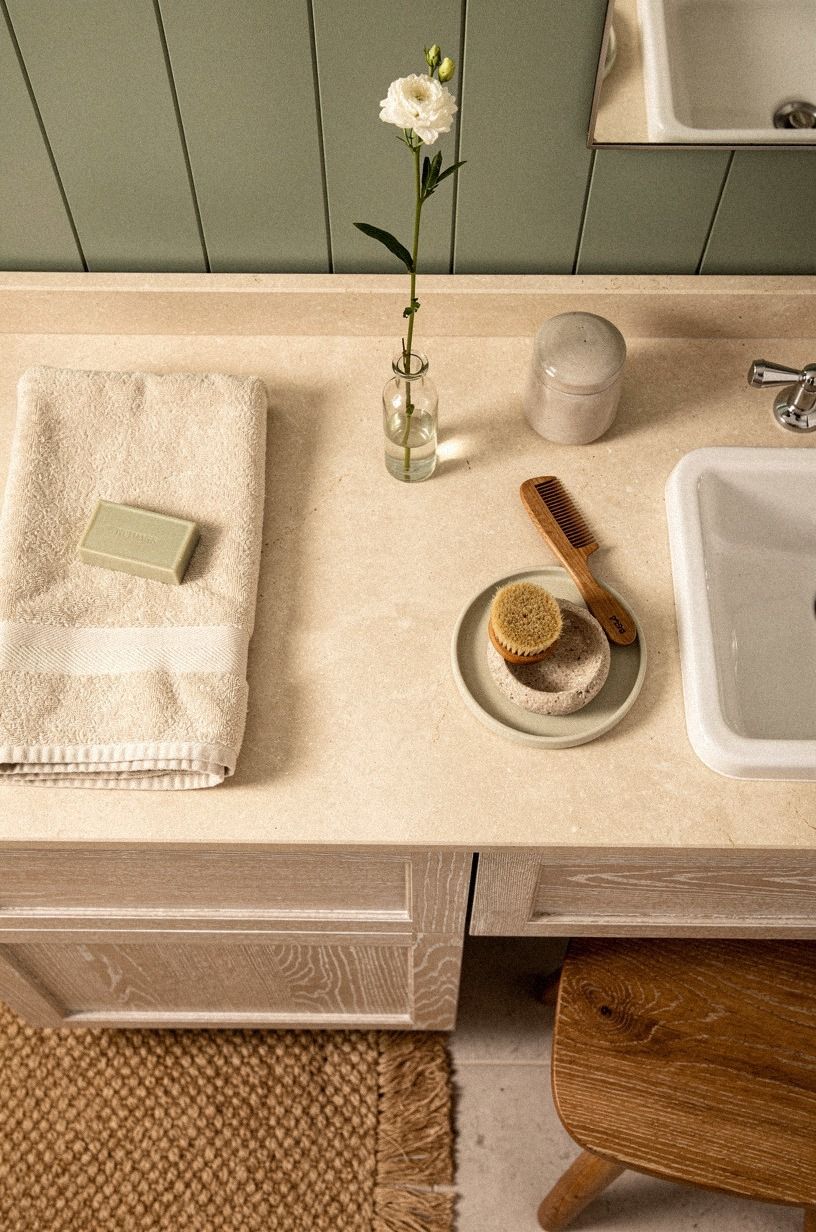
An aesthetic bathroom setup doesn’t need a shelf full of greenery. One tall faux branch can give the room a clean, architectural line, especially if your tile already has a strong pattern. Set it in a narrow vessel beside the vanity or in the corner opposite the shower.
Choose a faux ficus stem with a few wide leaves and visible branch joints. The joints matter because they make the silhouette less repetitive. You’ll want the container to be heavy enough that the stem doesn’t tilt when someone brushes past it.
I’d choose one branch over a large artificial tree in a compact bathroom. A tree can make the room feel crowded, while a single stem leaves the floor and walls open.
But give it enough space to cast a small shadow. That shadow is part of what makes the arrangement feel dimensional.
A West Elm faux branch or a similar mid-range piece can work well with cerused white oak, warm cream, and sage green. If you’re using brighter hardware, keep the vessel quiet. Your eye should read the shape first, then the material, then the color.
For a bedroom-bathroom connection, you can carry the same lighting mood into this guide to red light therapy sleep. You can also use the layered placement ideas from privacy fence ideas with plants for a lush living wall. The greenery will feel more intentional when the rooms share a similar evening glow.
One stem is enough when it has height, asymmetry, and a beautiful vessel. That is a win!
12Keep a faux plant clean near the sink
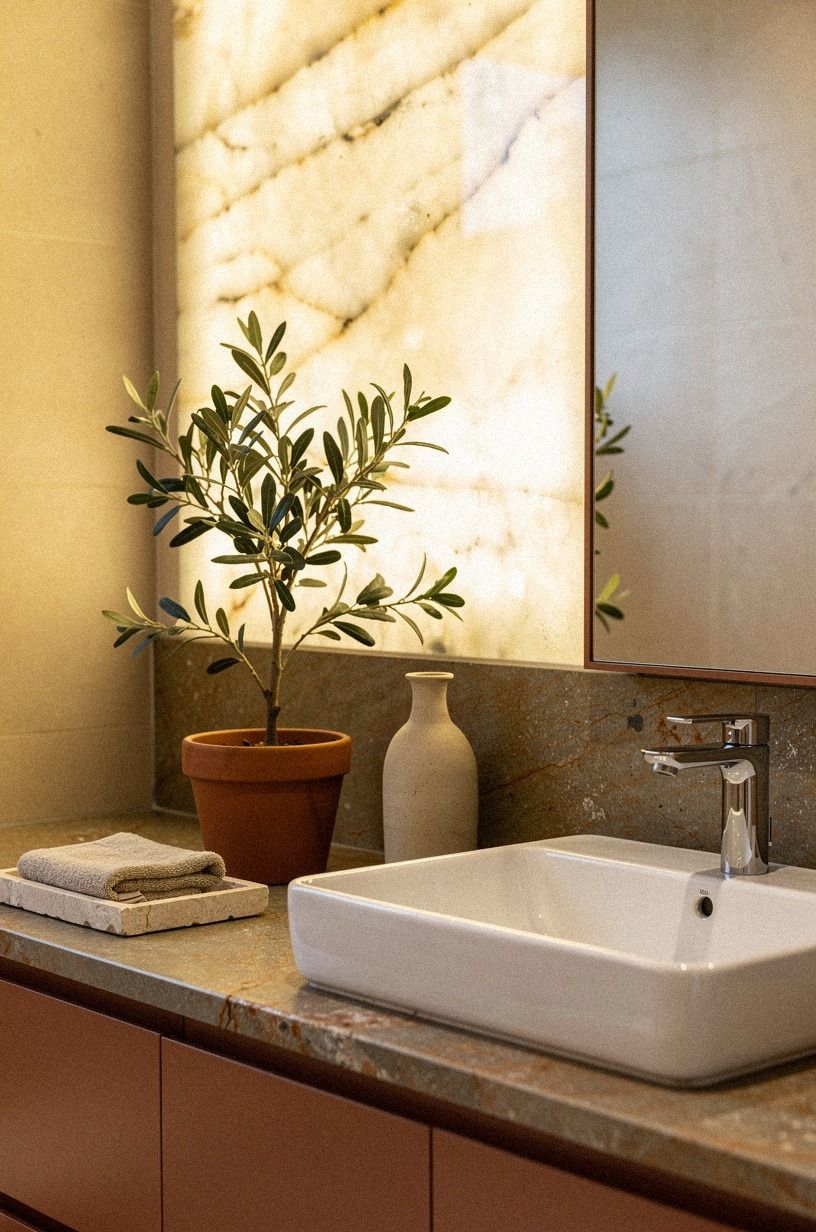
Realistic faux plants for bathrooms still need care, especially near a sink where hairspray, lotion, and fine dust can settle on the leaves.
The Plant Choice I’d Defend
I’ve changed my mind about faux plants in bathrooms. I used to think the only acceptable version was one so realistic you’d need to touch it before noticing.
That standard is too fussy. A bathroom isn’t a greenhouse, and your plant doesn’t need to fool every guest from three inches away.
It needs to give the room shape, soften hard surfaces, and hold up when you’re moving quickly through the morning.
The best choices have a little restraint. A muted olive branch, a trailing pothos with uneven stems, or a fern with several green tones will do more than a crowded collection of tiny plants.
I’d rather see one well-placed stem in a heavy pot than six bright plastic leaves scattered across every ledge. Your eye needs somewhere to land.
I also think scale matters more than brand. IKEA FEJKA can look thoughtful in a deep ceramic pot, while an expensive faux tree can still look awkward if it’s jammed beside a toilet or blocking a towel.
Measure the path in front of your fixtures first. A minimum 21-inch toilet clearance is a useful practical boundary, and your room should remain easy to use.
The mistake I made was treating greenery as the final decoration instead of part of the room’s structure. Once I moved one plant away from the faucet and gave it a clear backdrop, the bathroom felt calmer. That’s the part I’d repeat.
Pick the plant for the shape you need, then choose the container for the texture your room is missing.
The Questions I Get Asked Most
What is the best realistic faux plant for a small bathroom?
A compact faux pothos or agave is usually the strongest choice because it gives you shape without requiring much floor space. IKEA FEJKA works well in a darker ceramic pot, while a trailing plant can soften a shelf. You’ll want one clear focal point, not several small pieces competing for attention.
Where can I buy realistic faux plants on a budget?
Look at IKEA, Target, and Wayfair, then check Facebook Marketplace or a local thrift shop for baskets and ceramic pots. You don’t need to buy every component new. A used vessel with a clean, believable plant can look more personal than a matching set.
How much does a faux plant bathroom makeover cost?
A small update can cost about $100 to $300, depending on whether you need a plant, pot, shelf, and textiles. Reusing a vase or basket can lower the cost substantially. A broader bathroom refresh has typical US tiers from $200-$1,200 for budget work to $12,000-$30,000+ for high-end work.
Can I create this look on a budget?
Yes, and you can start with three low-cost moves: reuse a container, move one plant to a clearer location, and fold a towel beneath it for height. You’ll get more impact from better placement than from buying five new plants.
Paint samples can also change the backdrop without replacing fixtures. For a low-cost lighting adjustment, the ideas in this guide to smart light sleep can help you think about warmth and placement.
Is a faux plant worth it in a small space?
Yes, if you choose one plant with a clear silhouette and keep the path open. A small bathroom gives greenery more visual weight, so one agave or trailing pothos can be enough. Place it near a mirror or at the far end of the vanity to stretch the room visually.
Is this a good idea for a rental?
Yes. Use a tension shelf, removable hook, or peel-and-stick ledge instead of drilling into tile.
Removable hardware lets you create height without leaving a permanent mark. You’ll also be able to move the plant when your lease ends, which makes a faux arrangement especially practical.
Where I’d Start First
If I had to pick one, I’d start with the faux olive tree beside the tub. Its uneven branches soften hard tile without crowding the vanity, and you won’t need to disguise a plastic stem on a shelf.
Pin the olive tree idea for later, then give your bathroom one calm, grounded corner. If you want to compare the effect with other shade-friendly arrangements, revisit low-light bathroom plants that thrive in the shade before you shop.