
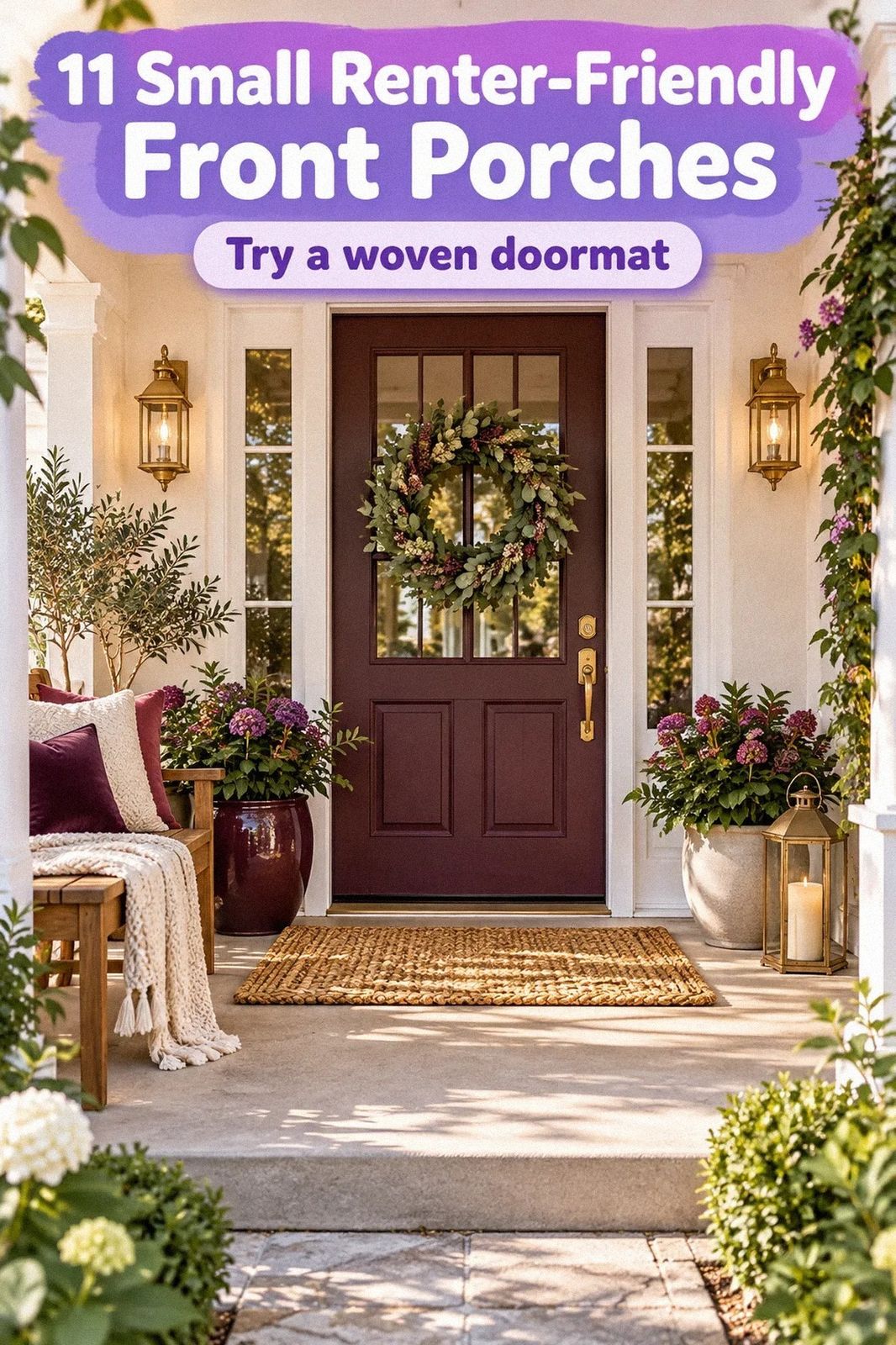
 by
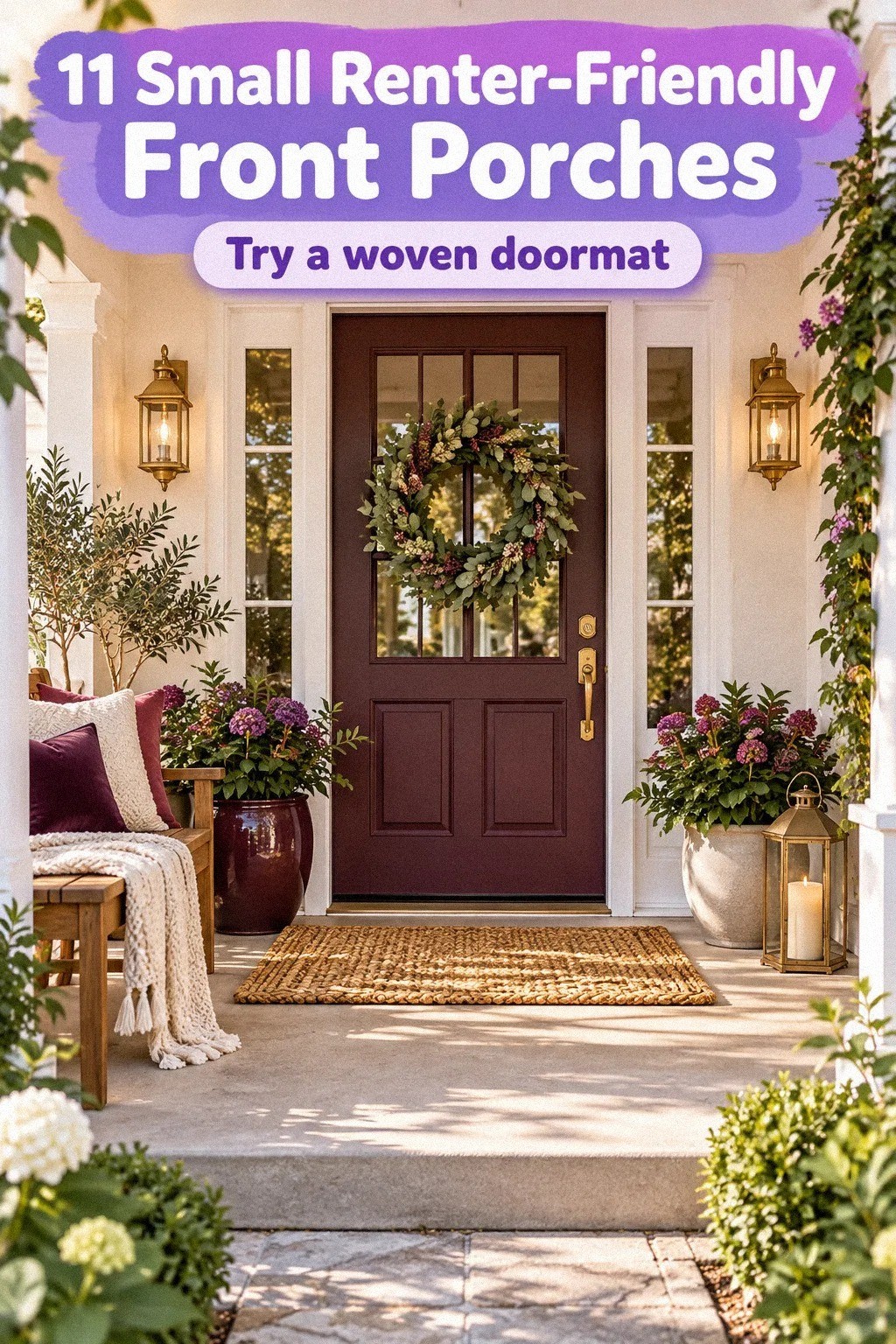
A renter friendly front porch for a small rental feels bigger when the walkway stays clear, furniture leaves visible legroom, and light arrives at several heights. I learned that after squeezing a chair beside a door that couldn't open fully. The fix was simple. The order matters.
- ✓ Start With the 36-Inch Welcome Rule
- ✓ Clear the Threshold Before You Style
- ✓ Let the Rental Reversible Frame Define the Door
Before buying anything, decide how you want the porch to feel when you arrive home. Calm, useful, welcoming, and slightly special is a strong brief.
You don't need a grand patio. You need a thoughtful little pause between outside and in.
- Start With the 36-Inch Welcome Rule
- Clear the Threshold Before You Style
- Let the Rental Reversible Frame Define the Door
- Anchor Seating With the Two-Texture Rule
- Layer Light With the Three-Height Light Stack
- Layer Softness With One Outdoor Textile
- Paint One Portable Piece With Benjamin Moore
- Swap Glossy Plastic for Warm Wood
- Frame the Corners With Container Plants
- Build a Small-Rental Budget Before You Buy
- Finish With the Three-Second Door Test
1Start With the 36-Inch Welcome Rule
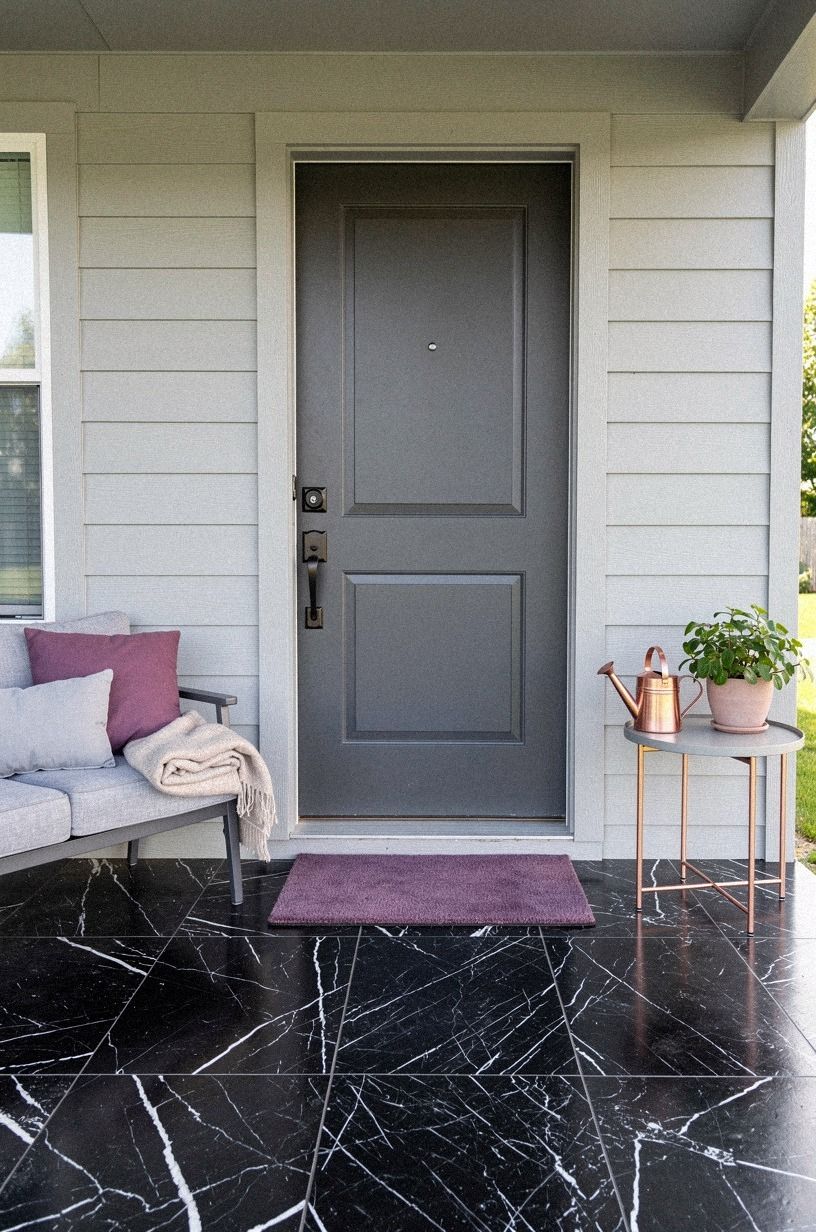
Measure the walking path before you buy anything. Keep at least 36 inches of clearance from the door swing to the steps or railing, so you can carry groceries, open an umbrella, and greet someone without turning sideways.
If your porch is narrow, mark the walkway with painter's tape for one afternoon. You'll see the pinch points immediately.
I once placed a slim console with a Nero Marquina black marble top beside a door because the depth looked harmless. It wasn't. Your eye reads the whole entry as smaller when the first object blocks movement, even if the furniture itself is compact.
Start with the clear path, then build around it. For more small-space planning, borrow the proportions from this studio apartment guide for making a rental feel bigger. A clean route feels airy, peaceful, and generous before you add a single decorative piece.
You can make a narrow porch feel surprisingly elegant when the floor remains visible. That open strip is doing more design work than another planter ever could. The small apartment kitchen guide makes a similar case for protecting circulation in tight rooms.
2Clear the Threshold Before You Style
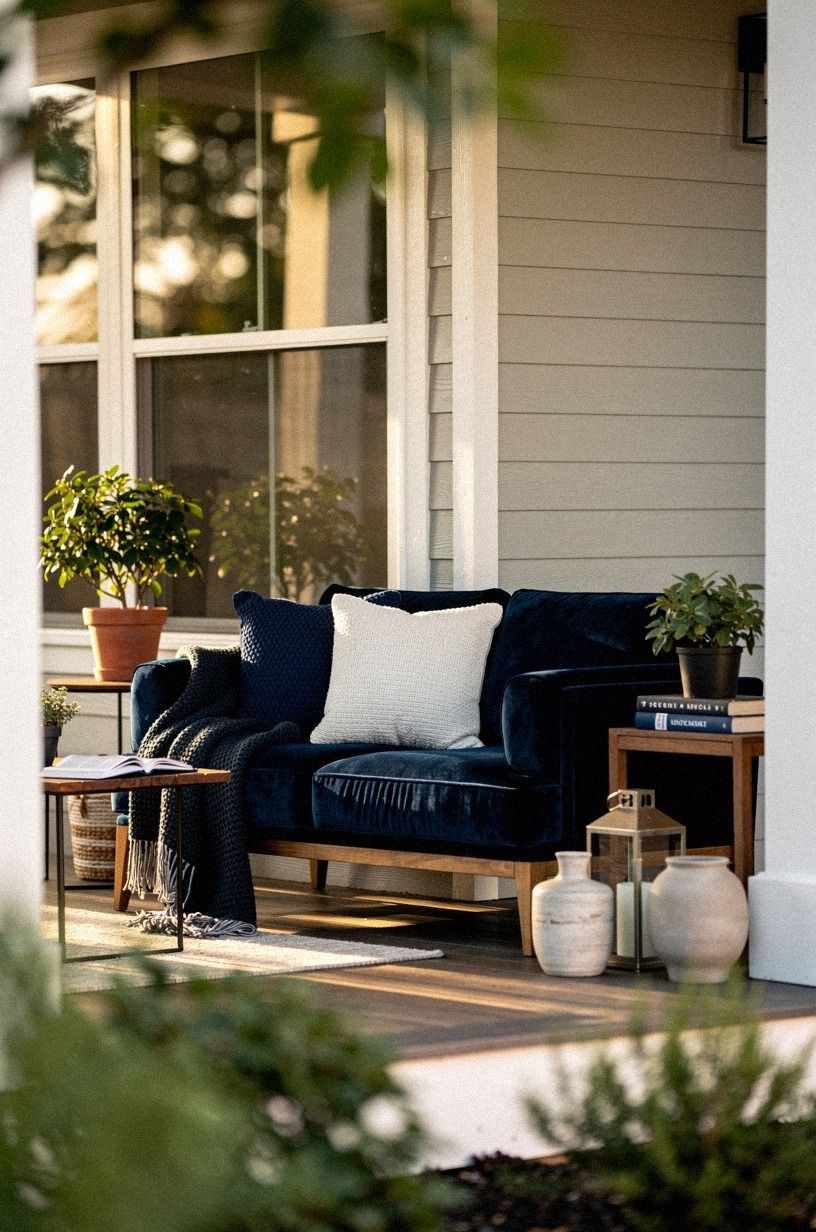
Remove anything that makes your front door feel crowded.
3Let the Rental Reversible Frame Define the Door
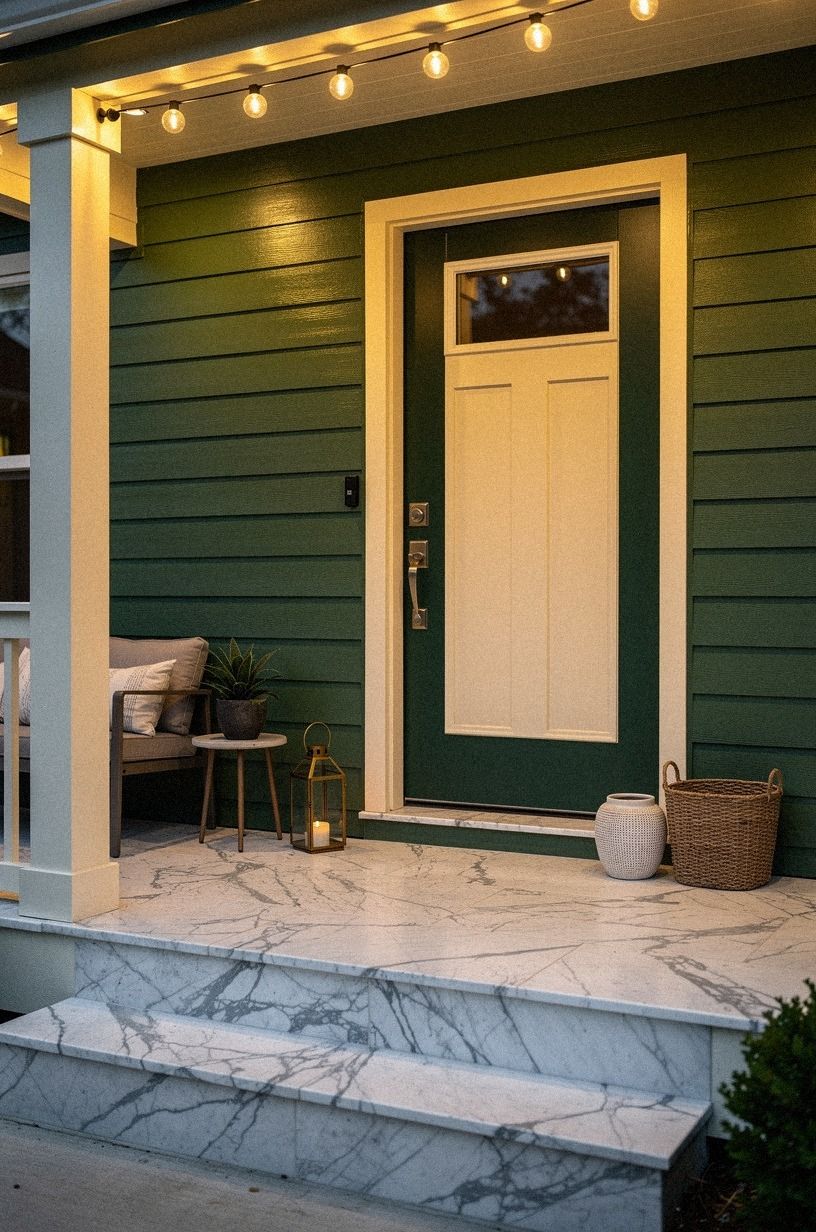
Give the doorway a visual frame without drilling into the siding. A pair of lightweight planters, a freestanding trellis, or a narrow painted stool can create the vertical emphasis that a small porch needs.
Keep the frame asymmetrical if the doorway is tight. One taller object on the hinge side and a lower object near the opposite corner can guide the eye without producing a stiff, showroom arrangement. Removable hooks can hold a small seasonal wreath if your lease permits them.
The frame should feel intentional from the sidewalk and easy to remove during an inspection. A portable planter with a Carrara marble finish or slim cedar stand gives you height, texture, and flexibility in one move.
If your door already has strong trim, let it remain the star. The porch needs support around the architecture, with the door holding the visual focus. This is also where the restrained approach from the renter-friendly winter entryway guide can help.
You could also use a folding screen or freestanding plant stand when the porch has a little more depth. Choose pieces that can move in one trip. That detail matters when a lease inspection or sudden storm changes your plans.
4Anchor Seating With the Two-Texture Rule
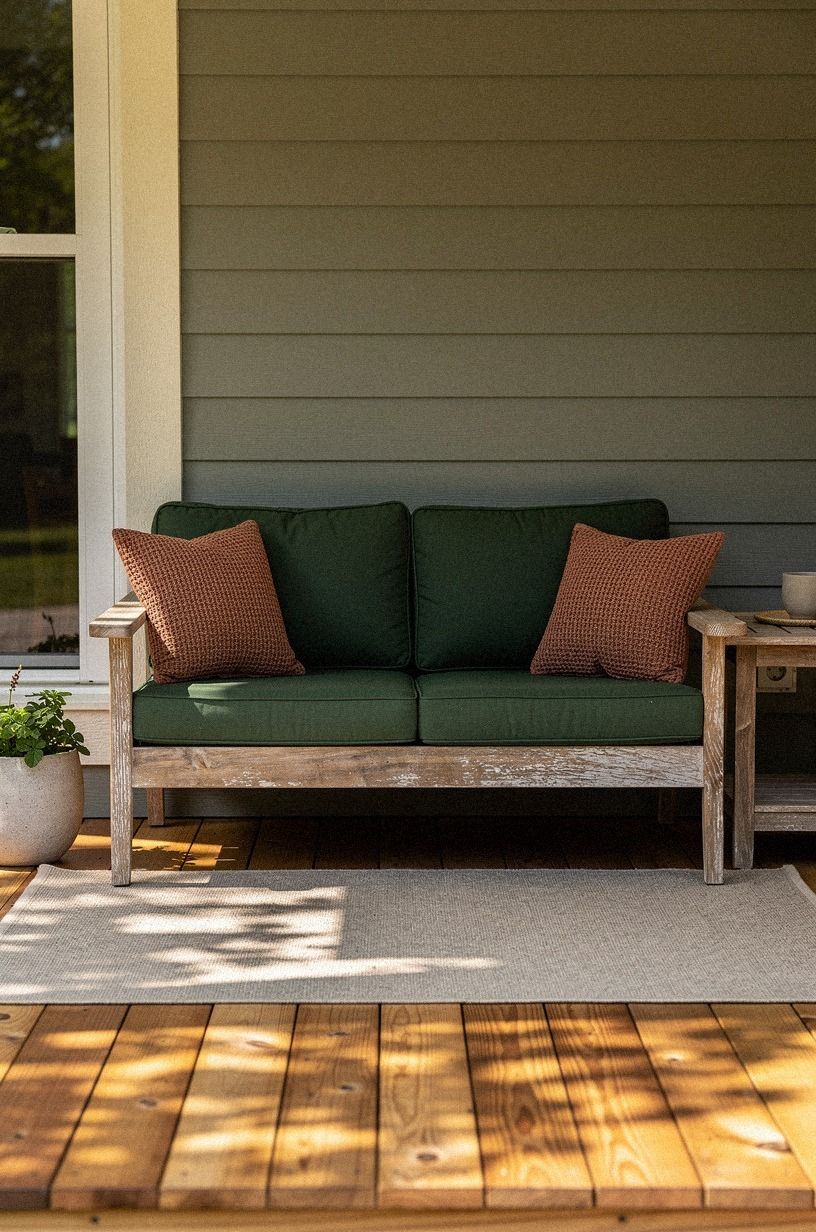
Choose one seat that gives you a reason to stay outside. A compact bistro chair, folding café chair, or narrow bench is enough.
Your porch doesn't need a full patio set to feel intimate. It needs one comfortable landing spot with a material that can handle weather.
Pair a smooth surface with a rough one. A reclaimed weathered teak seat beside a woven polypropylene rug creates contrast without adding clutter. If you use a metal chair, add an outdoor cushion in Sunbrella fabric so the seat doesn't look hard or feel colder than it appears.
I'd skip a deep lounge chair on a small rental porch. It may look relaxing in a showroom, but it eats the space needed for your feet and the door swing. You want your chair to feel soft and inviting while still leaving room to pass.
A slim seat also gives you a useful place to set down a coffee or grocery bag. For another practical approach to limited floor area, see this small apartment kitchen guide. The same principle applies outdoors: every surface should earn its footprint.
If you have room for a side table, choose one with a narrow top and a stable base. A small reclaimed weathered teak stool can hold a mug, keys, or a plant without turning the porch into a furniture showroom.
5Layer Light With the Three-Height Light Stack
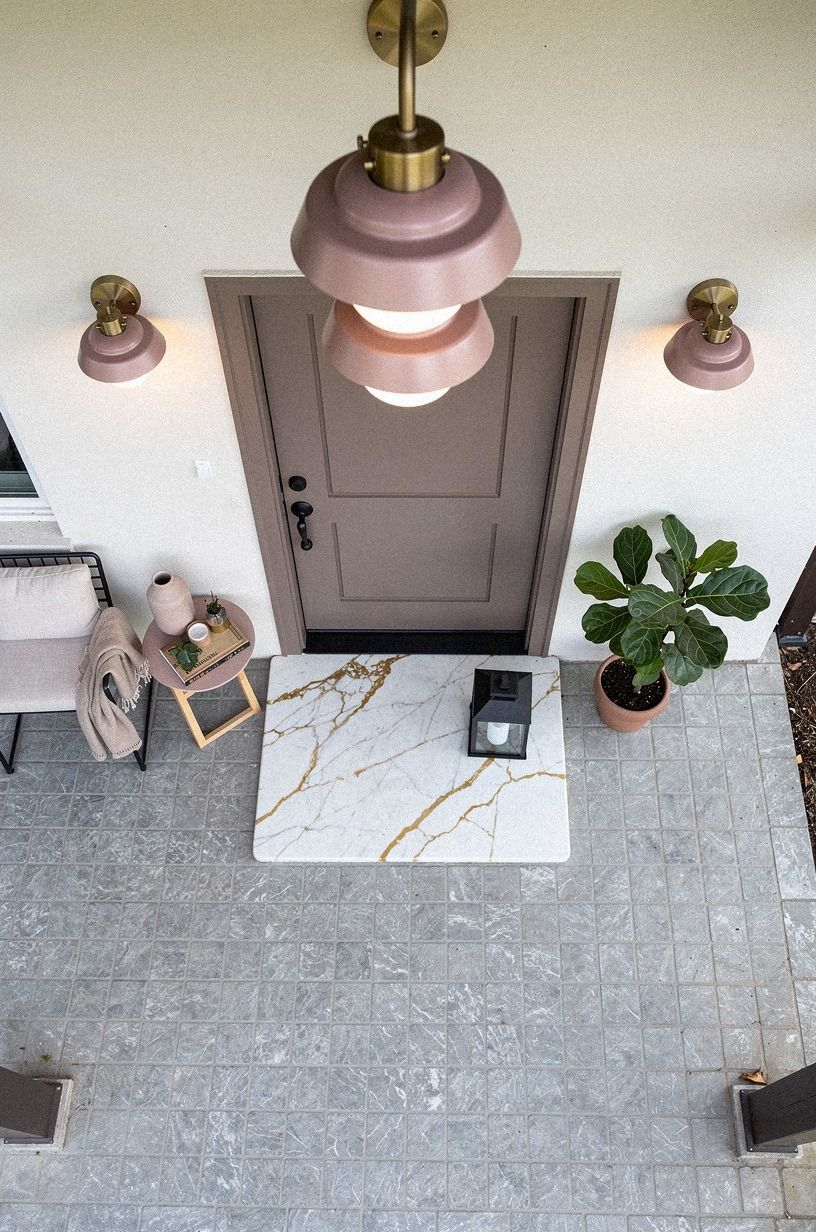
Use light at three levels: the existing porch fixture, a low lantern, and a vertical string-light line or hanging lantern. This creates depth after sunset and keeps the porch from looking like a single bright ceiling bulb floating over dark furniture.
Your existing fixture provides practical light. A battery LED lantern with a Calacatta marble base adds a warm pool near the floor, while a vertical line of lights draws attention upward and makes the ceiling feel higher.
Choose a warm color temperature when you can. Cool blue light can make painted walls and outdoor textiles feel harsh, while a softer glow feels romantic and settled. You don't need many bulbs.
You need a clear hierarchy.
Check the cord route before you install anything. A tangled cable destroys the calm effect quickly, and you shouldn't create a tripping hazard for the sake of atmosphere. The small-space lighting ideas in these renter-friendly Christmas tree suggestions can also translate to a porch when used with restraint.
A 2700K bulb usually gives a welcoming glow, though the existing fixture may limit your choice. Keep the lowest light close to the seating or plant zone. That makes the porch feel inhabited without making it bright enough to resemble a storefront.
The Porch Needs a Sequence
A small porch works best as a sequence your body can understand immediately:
1. The door opens freely. 2. The mat receives your feet. 3.
The walkway stays open. 4. The seat or plant creates a pause at the edge. 5. Light gives the arrangement a gentle finish.
That sequence sounds obvious, but it keeps you from shopping by impulse. You won't buy a charming basket that blocks the route, and you won't let a beautiful lantern become the first thing your shoulder hits.
I like thinking of the porch as a tiny room with one entrance and several jobs. It welcomes people, handles weather, offers a seat, and gives the facade some personality. Clear circulation is what allows those jobs to coexist.
If you're planning a larger small-rental reset, the proportions in this studio apartment guide are useful indoors and out. Repetition of scale makes the entire rental feel more coherent.
The sequence also helps with shopping decisions. If a piece doesn't improve arrival, comfort, storage, or atmosphere, it may be taking up valuable floor area without doing enough work.
What Does “Bigger” Actually Feel Like?
A bigger porch doesn't necessarily have more furniture. It feels bigger when you can see the floor, understand the route, and identify one attractive focal point without scanning through clutter.
The most successful small porches usually have a quiet center and stronger edges. The middle stays available for movement, while a plant, chair, or lantern gives the corners enough visual weight to feel finished.
You can test this without spending anything. Remove half the objects, step outside, and look back toward the door. If the remaining pieces feel intentional, you've found the beginning of the arrangement.
That editing process is strangely satisfying. The space becomes brighter, cleaner, and more breathable. Small space, big relief!
I also look at the porch from the sidewalk and from inside the home. A rose-gold lantern may anchor the exterior beautifully while appearing too heavy through the window. Your best arrangement needs to work from both directions.
6Layer Softness With One Outdoor Textile
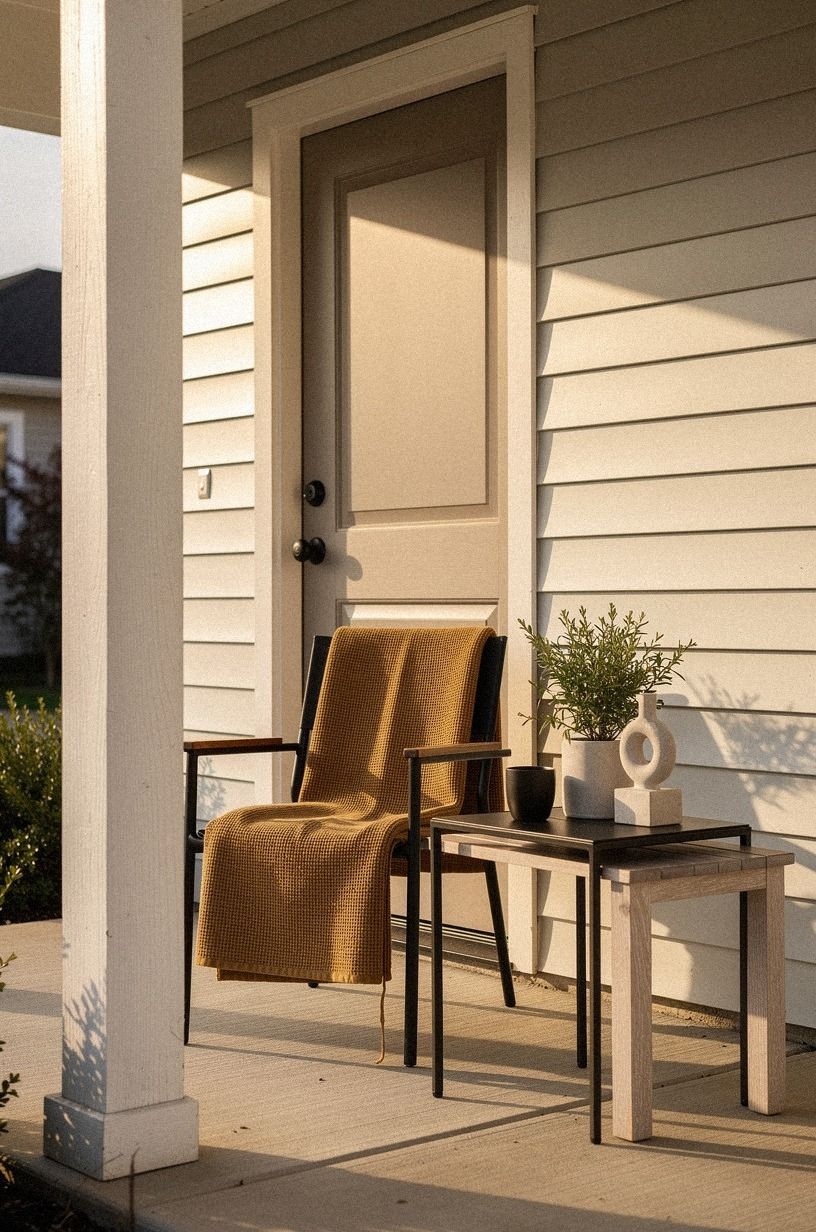
Add softness where your body touches the porch, rather than everywhere your eye lands. One cushion, one folded throw kept in a weatherproof basket, or one outdoor pillow can make the seat feel comfortable without producing a pile of fabric.
Use a cushion with a removable cover and a textured weave. 600gsm Turkish cotton is a useful reference for weight in indoor textiles, but outdoor cushions need a weather-rated cover and filling suited to moisture. Look for a Sunbrella cushion if you want an easy-care option, with typical costs around $40-$150 each.
I made the mistake of leaving a warm-white throw on a covered porch for a week. Dust found it, pollen found it, and the whole thing looked tired.
Choose warm white or camel fabric with black edging or trim. Those colors feel welcoming, and you won't panic over every mark.
A small cerused white oak basket can hold a folded throw when the weather is dry. It also gives the porch a useful domestic detail without making the space look staged. The goal is comfort that can disappear quickly when rain arrives.
A flat outdoor cushion usually works better than a deep one because it protects legroom. If your porch is fully exposed, store the textile indoors each night. That small habit extends its life and keeps the entry looking cared for.
7Paint One Portable Piece With Benjamin Moore
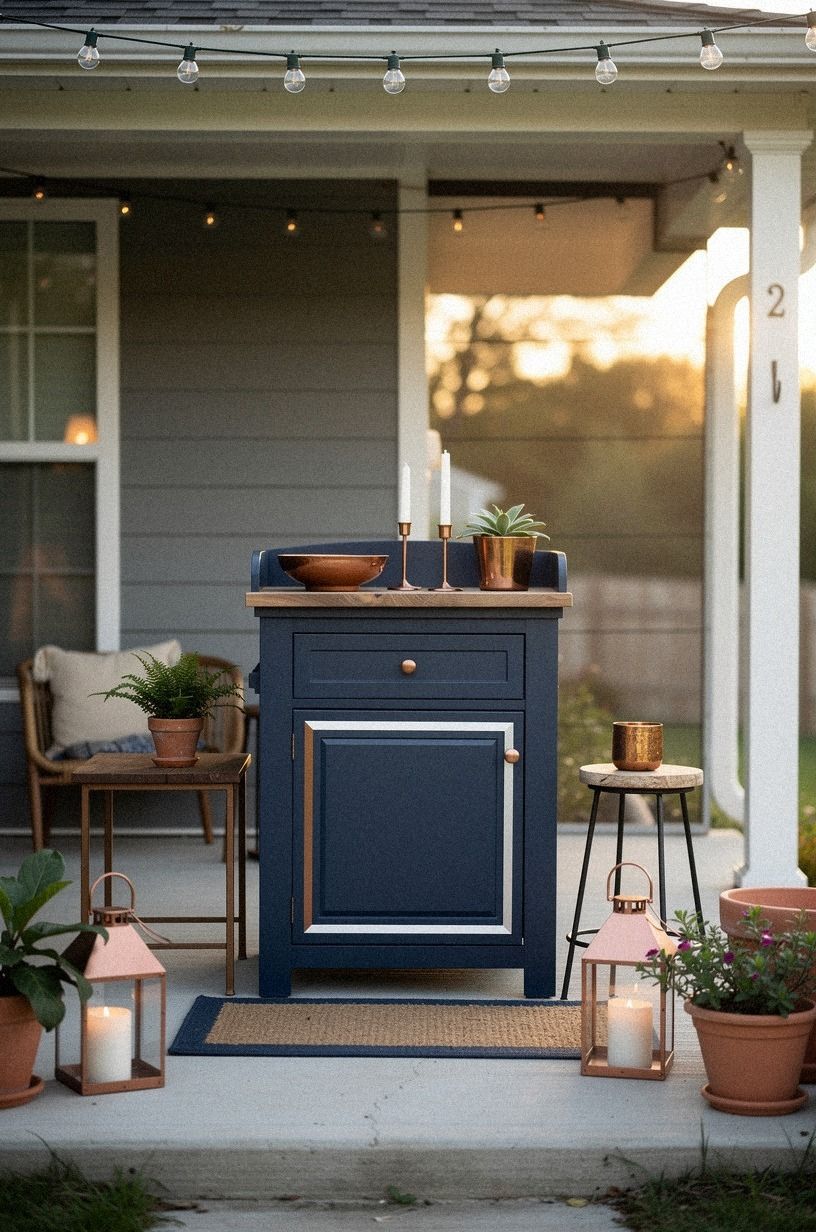
Use paint on something you own, rather than on the rental's exterior wall. A stool, planter, narrow bench, or small side table can carry the color story while remaining completely portable.
For a deep midnight blue, try Benjamin Moore Old Navy 2063-10 on a wooden stool or planter. It feels grounded and collected without overwhelming a small entry. For a darker blue accent, Farrow & Ball Railings No. 31 can give a portable piece real drama beside copper hardware and ivory textiles.
Test the color outdoors before committing. Sunlight can wash out a pale shade, while evening shadow can make a deep shade look almost black. A sample board is cheap insurance.
Your porch doesn't need every object to match the door. A single midnight-blue piece can act as a deliberate accent among natural wood, woven fiber, and leafy green. That's enough color to make the arrangement memorable.
A portable accent is especially useful when the rental has beige siding or builder-grade gray flooring. The paint introduces character without asking the landlord for permission. If you want more seasonal color guidance, the entry ideas in this renter-friendly Thanksgiving resource offer a useful starting point.
A small lamp with a backlit translucent onyx shade can echo the painted piece and add a soft ivory glow after dark. Keep it protected from direct rain and use it as an occasional accent rather than a permanent outdoor fixture.
Paint Names That Travel With You
Color becomes especially useful in a rental because it can move with you. A painted stool in Benjamin Moore White Dove OC-17 can add an ivory note to a shaded porch, while Farrow & Ball Railings No. 31 creates a deep, atmospheric accent.
You don't need to paint every portable piece. One strong color is more convincing than five almost-matching shades. Keep the remaining objects quiet with natural wood, charcoal metal, copper, or clay.
I prefer colors that look good in imperfect light. A muted midnight blue, mineral blue, or tobacco brown usually feels more generous than a sharp primary shade. Your front porch should look appealing on an ordinary Tuesday, with the paint supporting daily life.
If you're unsure, paint the smallest object first. You can move it around the porch for a week and see whether the color still feels inviting at dawn, noon, and dusk.
A low-VOC exterior paint is a practical choice for a portable piece, especially when you need to work indoors during bad weather. Let the surface cure fully before returning it to the porch. A good color deserves a clean finish.
8Swap Glossy Plastic for Warm Wood
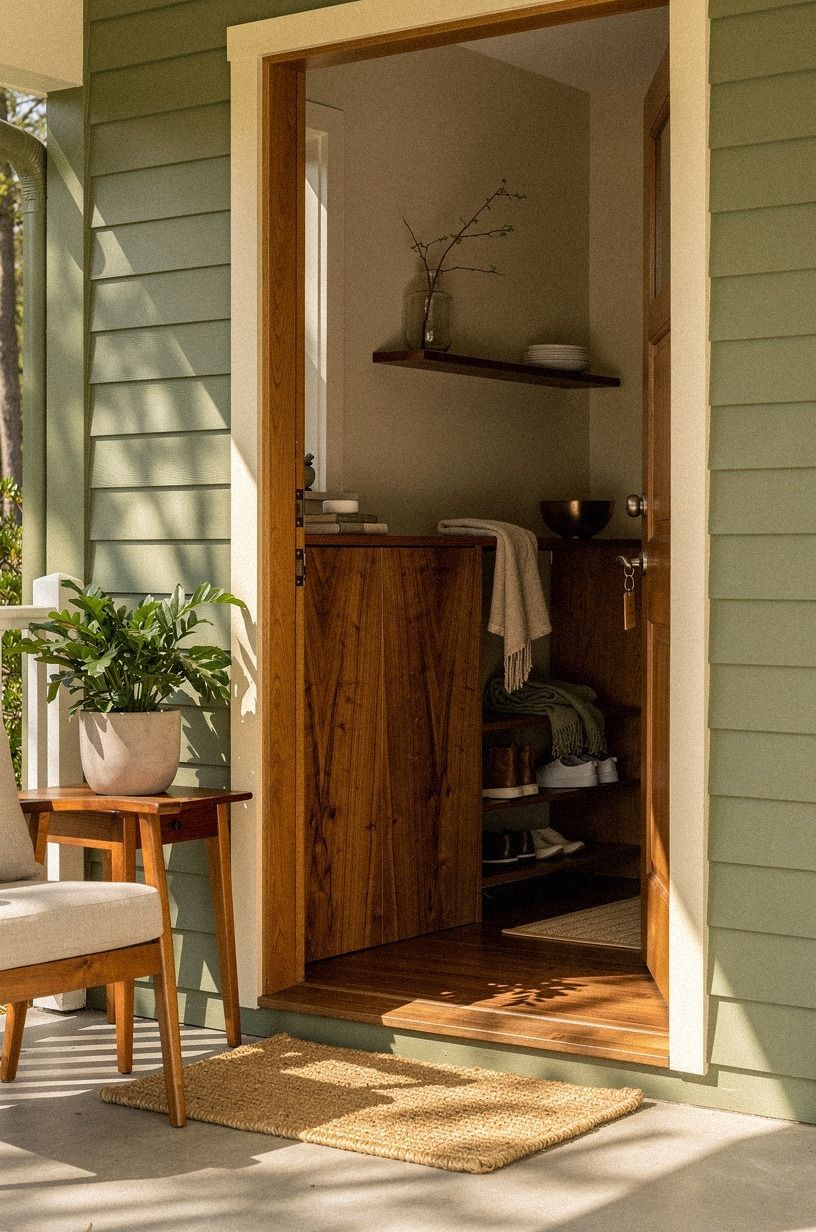
Choose book-matched walnut over shiny plastic when you need a small surface.
9Frame the Corners With Container Plants
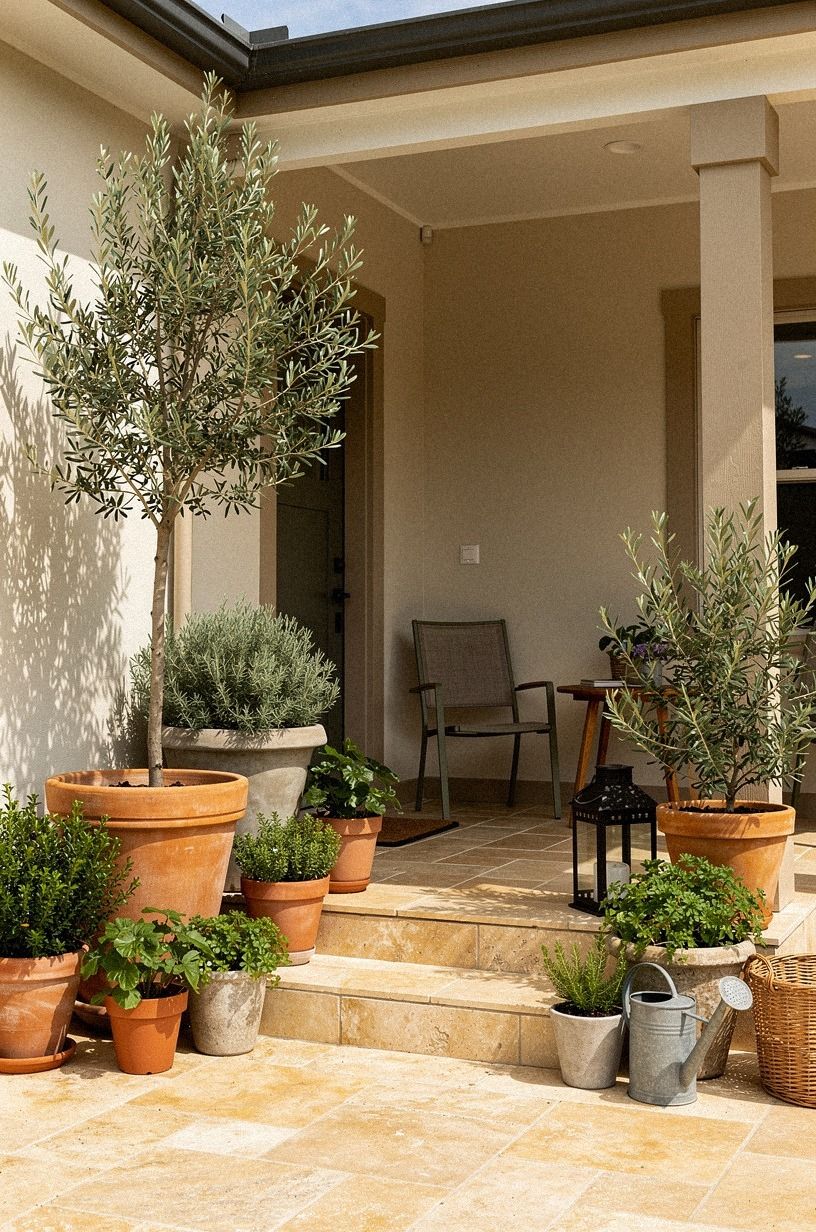
Place plants at the edges, never in the center of the path. One tall container can soften a railing, while a lower pot can fill an empty corner near the steps. Your porch will feel more organic when the plants have different heights, but you don't need a jungle.
Use a warm travertine planter if you need a substantial piece that can anchor a corner. A terracotta pot gives you rustic texture, although it can be heavy once filled. Put a saucer beneath it and check for runoff before the first watering.
Choose plants that suit the available light instead of buying whatever looks bright at the store. Ferns, herbs, grasses, and broad-leaf plants each create a different mood. The right plant will look relaxed rather than apologetic.
Could a single plant do more than five small pots? Yes, especially on a narrow porch. One tall shape creates a gentle screen and leaves your floor visible.
That open floor is what makes the porch feel larger.
For more portable decorating logic, the studio apartment guide has a useful message: choose fewer pieces, then give each one breathing room.
Check the plant's mature size before you buy it. A young olive tree may look perfect beside the door and become a circulation problem a year later. Grasses, compact ferns, and upright herbs are often easier to control.
A Small Porch Can Still Feel Collected
Collected doesn't mean crowded. It means the materials appear to have been chosen with some affection, even when every item came from a different shop.
Try combining one weathered wood piece, one woven element, one leafy plant, and one dark metal detail. That mix has enough contrast to feel layered, but it won't turn the entry into a busy display.
I like one imperfect object here. A slightly uneven terracotta pot or vintage stool can make the porch feel lived-in and personal. A completely coordinated set can feel polished, but it often loses the charming surprise that makes a tiny porch memorable.
You can also repeat one color indoors. A rust cushion outside that echoes a kitchen towel inside creates continuity without requiring a matching furniture set. The result feels considered, warm, and quietly clever.
A woven seagrass basket can bridge the indoor and outdoor materials, especially when the front door opens directly into a living room. Keep it empty or use it for a single folded textile. A basket stuffed with miscellaneous items will make the threshold feel busier.
10Build a Small-Rental Budget Before You Buy
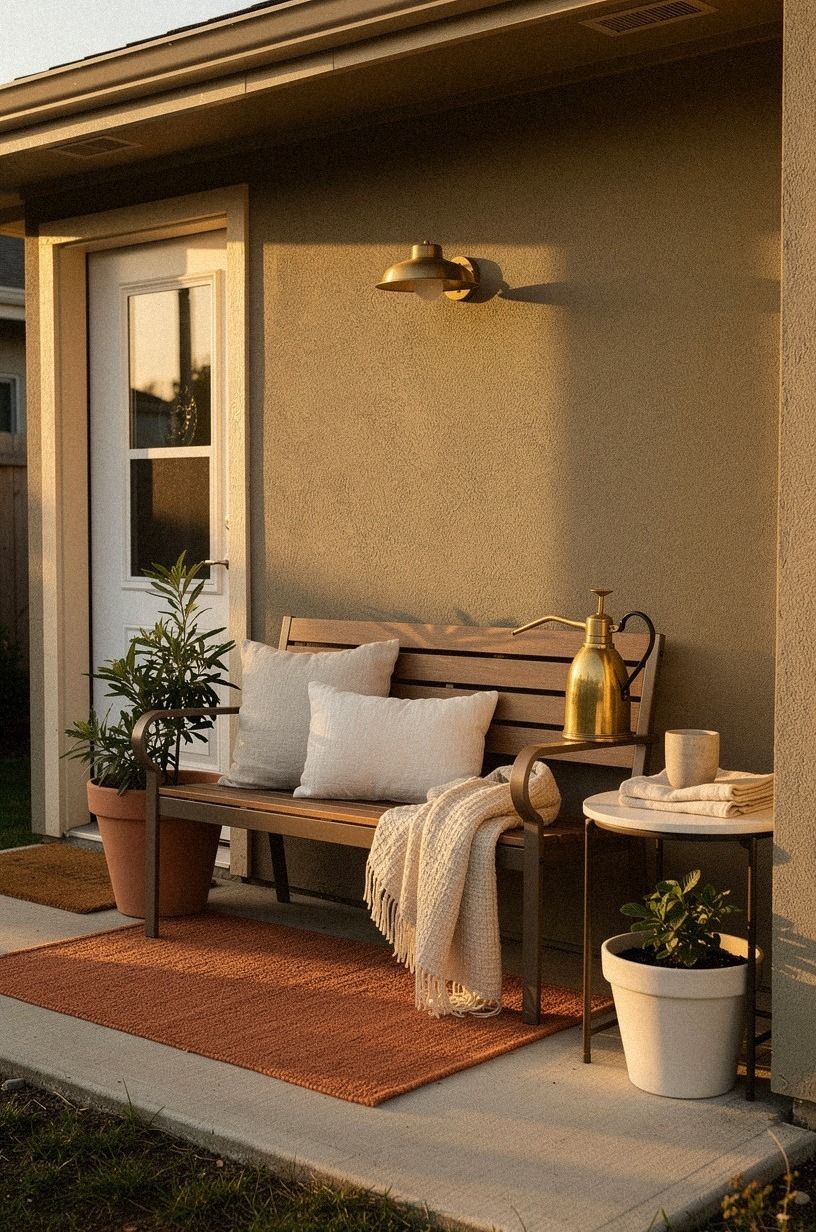
Set your spending order before you browse. Start with safety and movement, then seating, then light, then plants and textiles. Typical US outdoor projects vary widely, but the breakdown below gives useful context.
For a small rental, I'd stay near the budget tier and spend first on the item you touch every day. That might be a sturdy chair, a good mat, or warm lighting. You can find a polypropylene rug, unlacquered brass lantern, or LED lights separately instead of buying a complete patio collection.
And remember the free layer: rearranging, washing, editing, and measuring. Those changes can make the biggest difference before you spend anything. This renter-friendly Thanksgiving door and entryway resource is helpful when your budget needs to stay disciplined.
A sensible first pass might cost $200-$400 if you already own a chair or planter. Start there. You can add the more decorative layer after you understand how the porch behaves in real life.
You might also split the project across two pay periods. Buy the mat and light first, live with them for a week, and then decide whether seating or plants still need attention. The small apartment kitchen ideas follow the same staged approach for limited rooms.
Where the Budget Pays Back
The best purchase solves a repeated irritation. If the door catches the mat, buy a flatter mat. If the porch is dark, buy a lantern.
If you never sit outside, buy a chair with a comfortable seat rather than another decorative object.
I wouldn't spend heavily on items that must be replaced every season. A durable outdoor cushion cover, sturdy planter, or quality lantern will give you more daily pleasure than a large collection of fragile accents.
The free layer is unusually powerful here. Washing the siding where permitted, clearing leaves, pruning a plant, and repositioning the mat can make the whole porch feel fresher.
If you're tempted by a full patio makeover, the scale of a small rental deserves restraint. The practical approach in this renter-friendly Thanksgiving entryway resource translates well to outdoor decorating: create a clear welcome, then stop before the theme takes over.
Think about maintenance as part of the budget. A washable outdoor rug may cost more than a thin mat, but it can save replacement money over time. A planter with drainage and a sturdy base can also prevent damage to the floor beneath it.
11Finish With the Three-Second Door Test
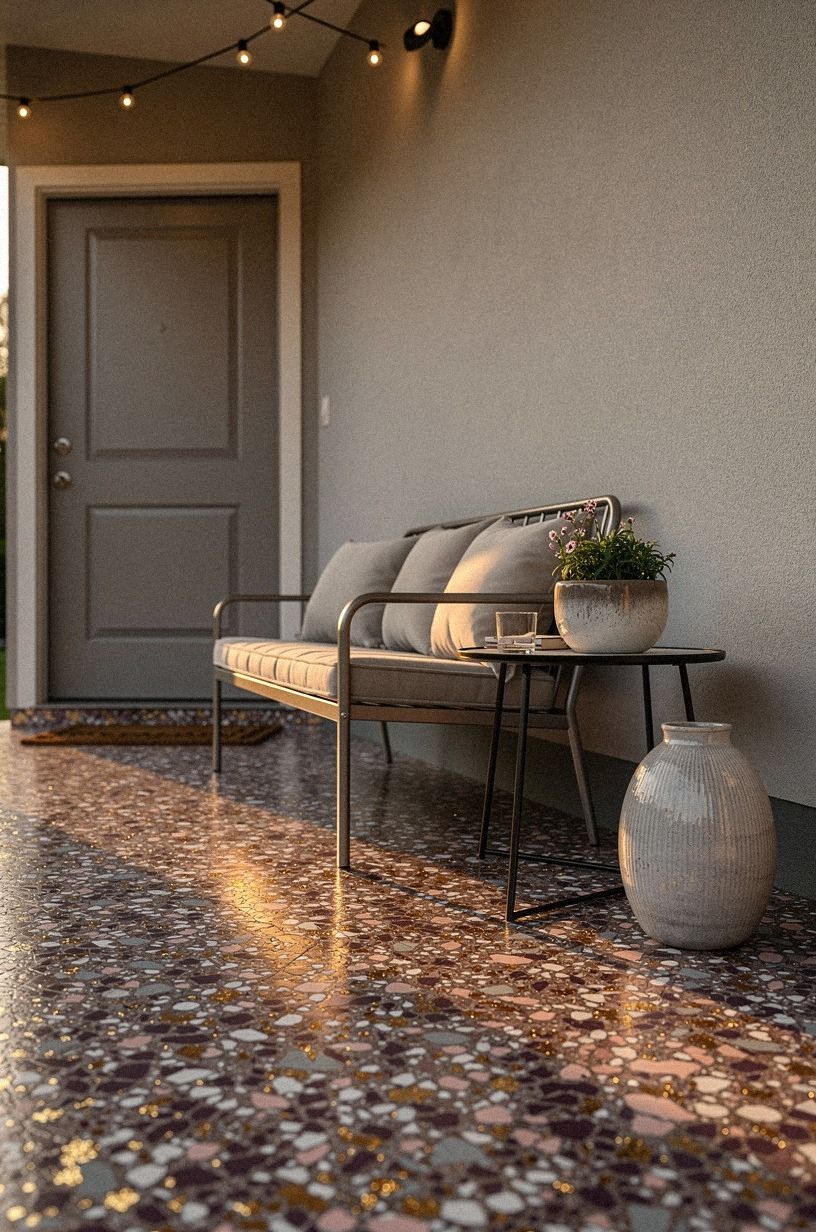
Stand across the street or at the bottom of the steps and look at your porch for three seconds. What do you notice first?
If the answer is a trash bin, crowded chair, or tangled cord, move that item. Your porch should communicate welcome before someone reaches the door.
Open and close the door several times. Sit in the chair.
Carry a bag through the walkway. Check that your rug stays flat and that your planter doesn't reduce the 36-inch minimum clearance. These small tests catch problems that casual use reveals.
I also like checking the porch at three different times of day. Morning sun may make one corner bright, while evening shade can make the same spot dramatic and dark. Adjust your lantern, cushion, or plant position until the arrangement feels comfortable.
If you're adding seasonal details, borrow the restraint from these renter-friendly Christmas tree ideas for small apartments. One wreath, a small evergreen, or a warm strand of lights can signal the season without burying the architecture.
Start there! The test isn't about creating a magazine set. It's about making sure the porch works when you're carrying groceries, welcoming a friend, or coming home in the rain.
Why I Prefer a Small Porch With Less Furniture
A small rental porch has one advantage that large patios often lose: every choice has to earn its place. You can't hide a weak arrangement behind extra chairs, oversized planters, or a long outdoor rug.
I've styled larger outdoor areas where the furniture looked impressive from a distance but felt awkward up close. The chairs were too far apart for conversation, the table blocked the route, and the lighting was bright above but dead at eye level. A tiny porch won't let you pretend those problems aren't there.
That doesn't mean a rental porch should look bare. It should feel gathered, with one seat, one useful surface, one soft layer, and a plant or light that gives the corner height. IKEA and Target can cover the practical pieces, while a single reclaimed teak stool or Sunbrella cushion can add the material quality your eye wants.
I also think renters should stop treating reversible design as a lesser version of permanent renovation. A removable hook, portable planter, and painted stool give you freedom. If your next lease changes the light or doorway, you can take the arrangement with you.
That matters more than a fixed upgrade that only works at one address. Your porch should support the way you live now, and it should pack up without leaving a dispute behind.
The best small porch usually has a clear idea behind it. Maybe the mood is midnight blue, copper, ivory, and evening light. Maybe it is clay, charcoal, and one sculptural plant.
Choose a direction, then give the arrangement enough quiet space to show it.
A Few Things Worth Answering
What is the best renter friendly front porch idea for a small front porch?
I’d start with one slim seat paired with a clear 36-inch walkway. An IKEA folding chair or compact wood stool gives you function without swallowing the entry.
I’d add one plant or lantern at the outer edge, then stop. The porch feels more spacious because movement remains easy.
Where can I buy renter friendly front porch pieces on a budget?
I’d look at IKEA, Target, Wayfair, Facebook Marketplace, and local thrift stores. Used wood stools and planters can work well after cleaning and checking for damage. A polypropylene outdoor rug or LED string lights can add texture and evening warmth without permanent installation.
How much does a renter friendly front porch makeover cost?
I’d expect a small refresh to fit within the $200-$900 budget tier, depending on what you already own. Free changes include clearing the threshold, measuring the walkway, washing the mat, and moving plants. My first paid purchase would solve a daily problem, such as seating, lighting, or weather protection.
Can I create renter friendly front porch ideas on a budget?
Yes, and I’d begin without buying anything. Rearrange the existing pieces, keep the center path open, and group plants at one edge. Then add one secondhand stool or $30-$120 LED string lights when funds allow.
The porch can feel warmer through editing before decoration.
Is a renter friendly front porch makeover worth it in a small space?
I think it is, because a small porch responds quickly to proportion. One chair, one rug placed under the front legs, and one vertical plant can create a welcoming pause without crowding the door. A limited footprint makes it easier to see which pieces help and which pieces merely occupy room.
Is a renter friendly front porch a good idea for a rental?
Yes. I’d use removable hooks, portable planters, freestanding furniture, and a reversible painted stool.
I’d avoid drilling, permanent adhesive, or siding changes unless the lease allows them. Farrow & Ball Exterior Eggshell can refresh an approved portable surface, while the landlord’s rules should guide every fixed change.
Where I’d Start First
If I had to pick one step, I’d start with the clear walkway. Your porch can't feel welcoming if the door catches a chair or the mat curls under your feet.
Measure 36 inches, move everything else outward, and let the space breathe. Then add one seat, one useful light, and one living thing. That is the whole win!
For a seasonal refresh, the restrained approach in these renter-friendly Christmas tree ideas for small apartments can help you avoid overdecorating the entry. The best porch is the one that feels easy to use, lovely to see, and simple to take with you.
If the first arrangement still feels uncertain, live with it for three evenings before buying anything else. Notice where you naturally stand, where the door light falls, and whether the seat gets used. Your everyday habits will tell you what the porch actually needs.