
 by
by The first thing you notice in the best Modern French Country Bedroom is what's missing. No matching furniture sets. No forced symmetry. Just materials with a little age on them and light hitting plaster the right way.
These 13 rooms all have that quality. Collected, not decorated. Here's what makes each one work.
A Coffered Ceiling That Does All the Work
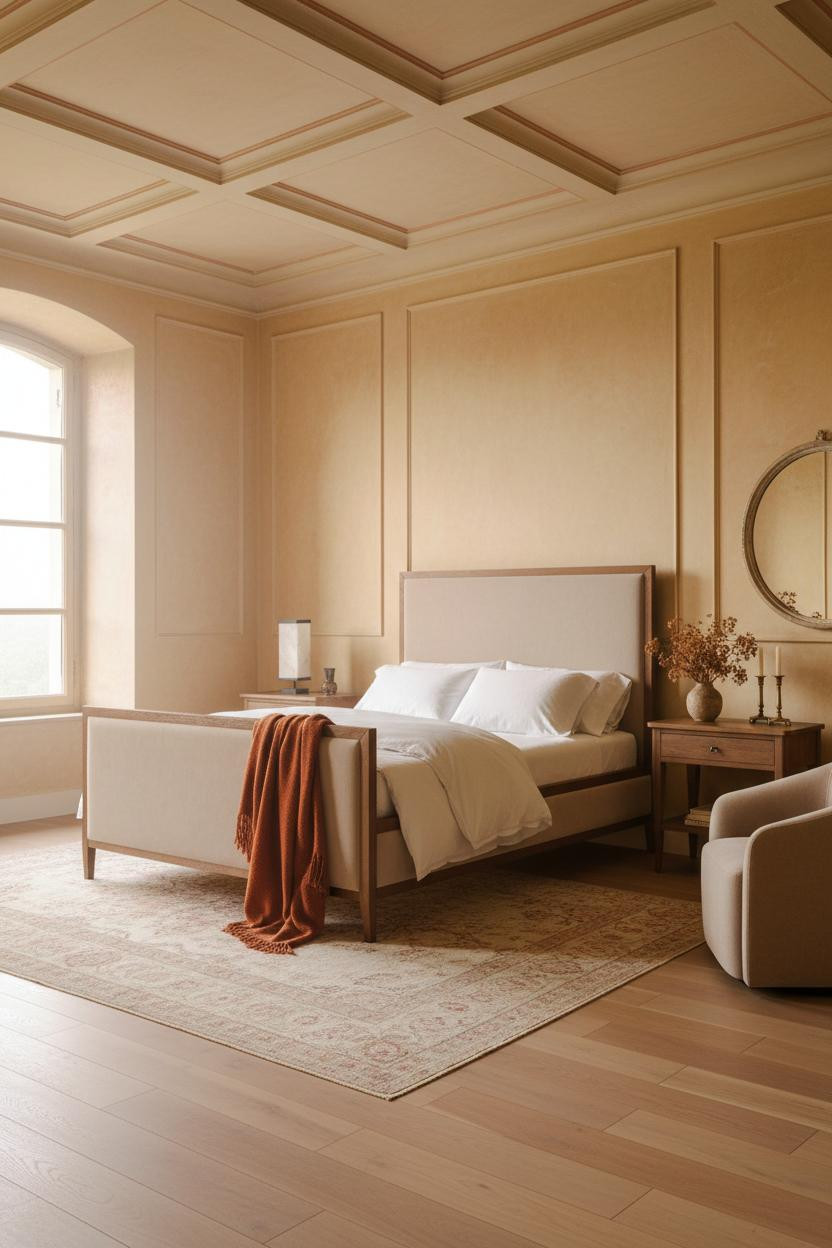

I keep coming back to this one. The ceiling changes the whole feel of the room.
Why it looks custom: The coffered plaster grid casts soft geometric shadows that make even a simple bed feel like it belongs in a manor house.
Worth copying: Add antique brass accents at nightstand level. The metal echoes the warm ceiling molding and ties the room together without forcing a theme.
Gallery Wall Calm That Feels Hand-Built
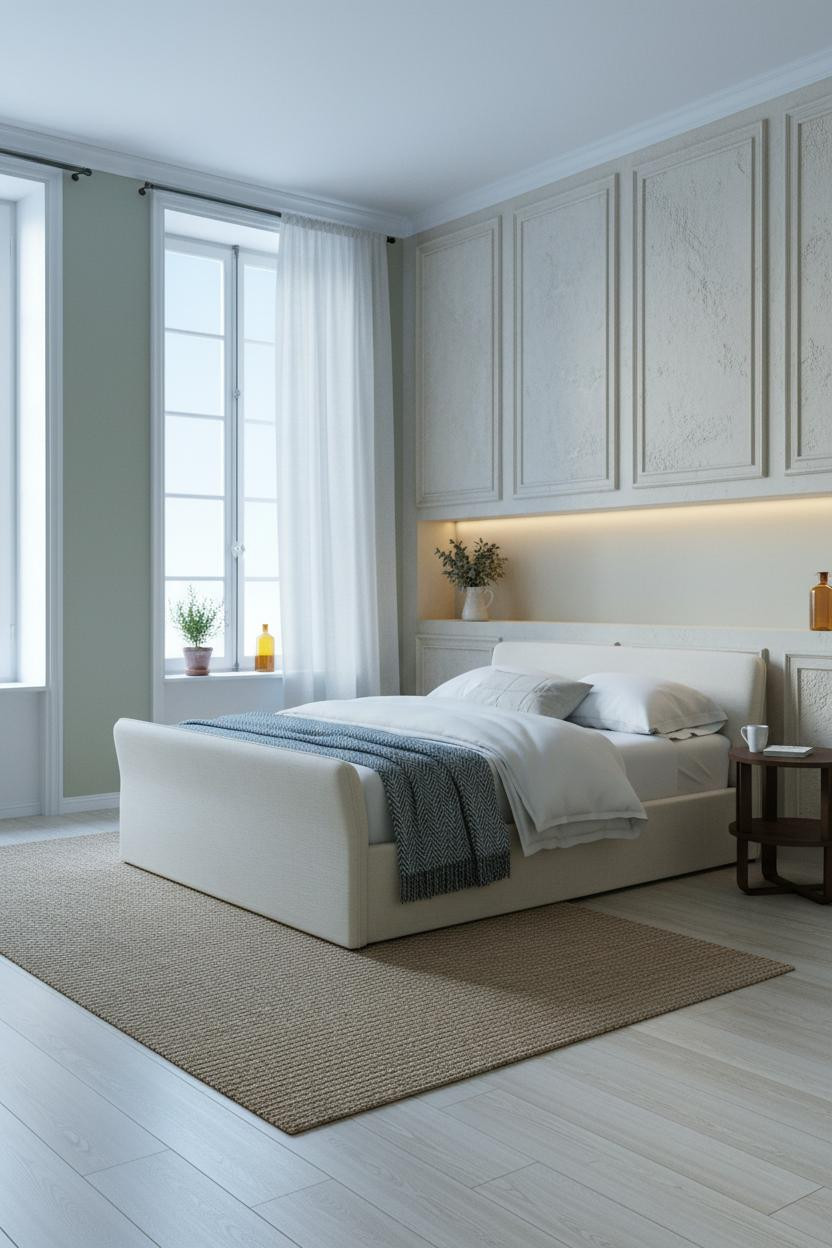


Understated. But every detail earns its place.
The full-width gallery wall in hand-applied textured plaster panels reads as artisanal rather than decorated because the surface itself has relief. Not the frames. The wall.
The easy win: Pair carved painted molding in aged cream with bleached oak flooring and the room feels calm in a way that takes real effort to pull off.
Crittall Windows Make the Whole Room Feel Intentional
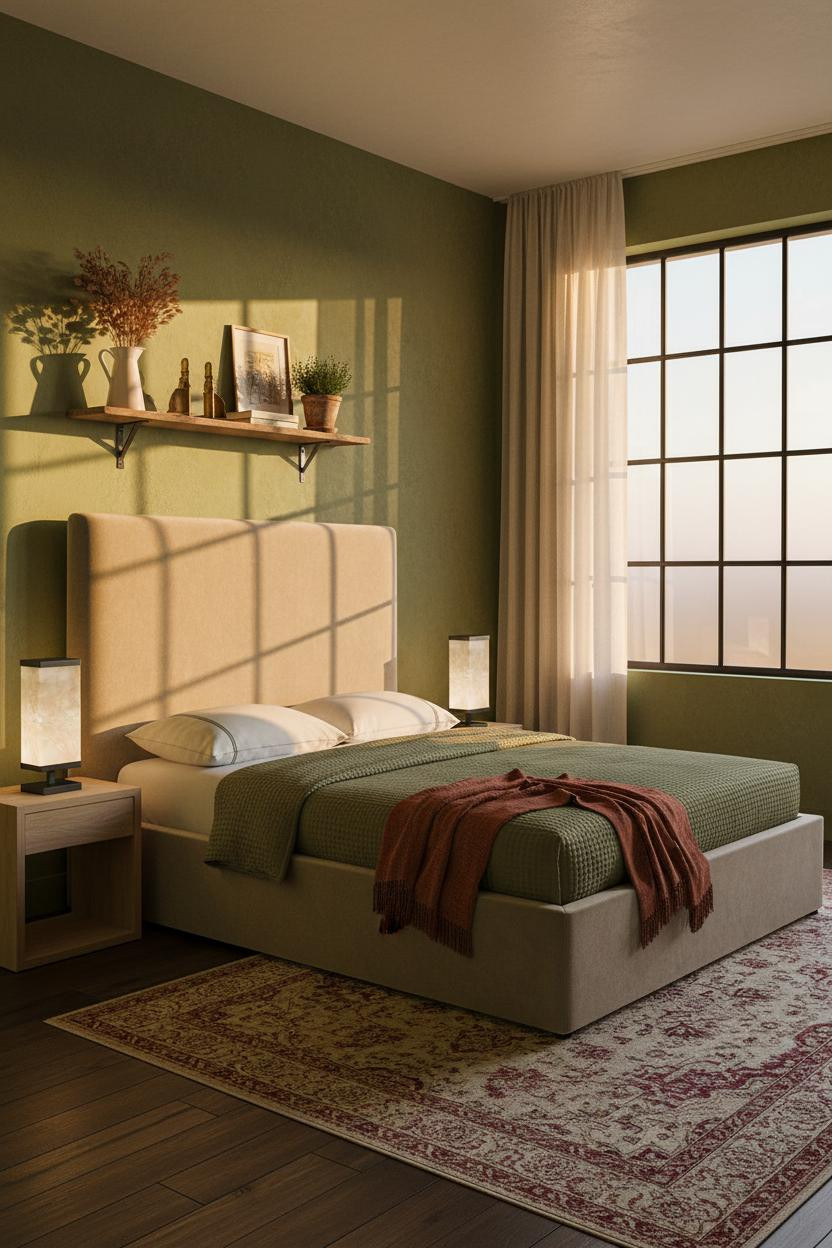

This one is divisive. Black steel in a French country room feels like a risk. But it pays off.
Why it holds together: The slim steel Crittall grid projects hard geometric shadow lines across the plaster opposite, and the moss green walls keep that contrast from feeling industrial.
Steal this move: Drape ivory sheers beside the steel frame. The contrast is immediate and the softness stays.
Wainscoting That Reads as Architecture, Not Decoration
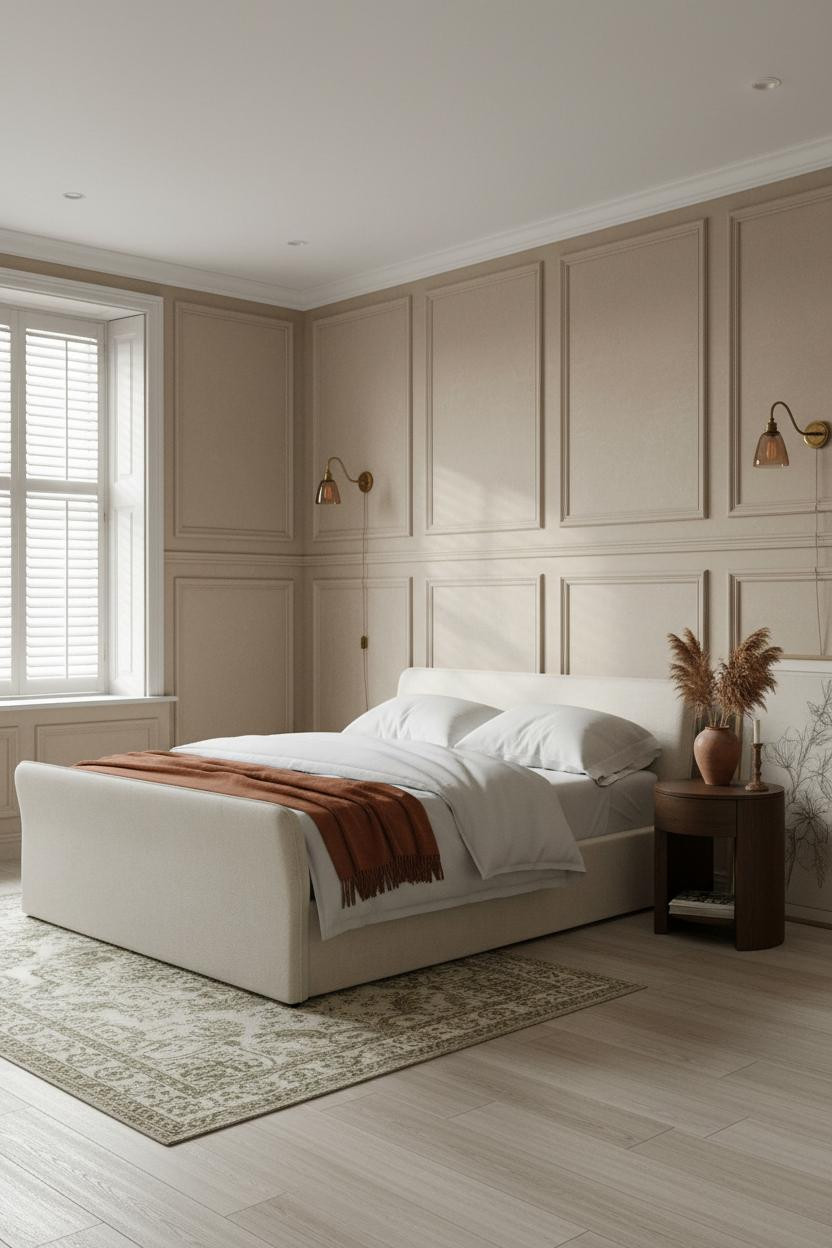
Half-height wainscoting has a reputation problem. Done badly, it looks like a starter home. Done like this, it looks like Provence.
What makes this work: Hand-applied aged clay plaster on the panels catches raking light along every raised edge, which creates layered shadow rhythm that flat paint could never replicate.
Avoid this mistake: Don't finish the wainscoting in gloss. The chalky surface is the whole point.
Sage French Doors That Earn Their Footprint
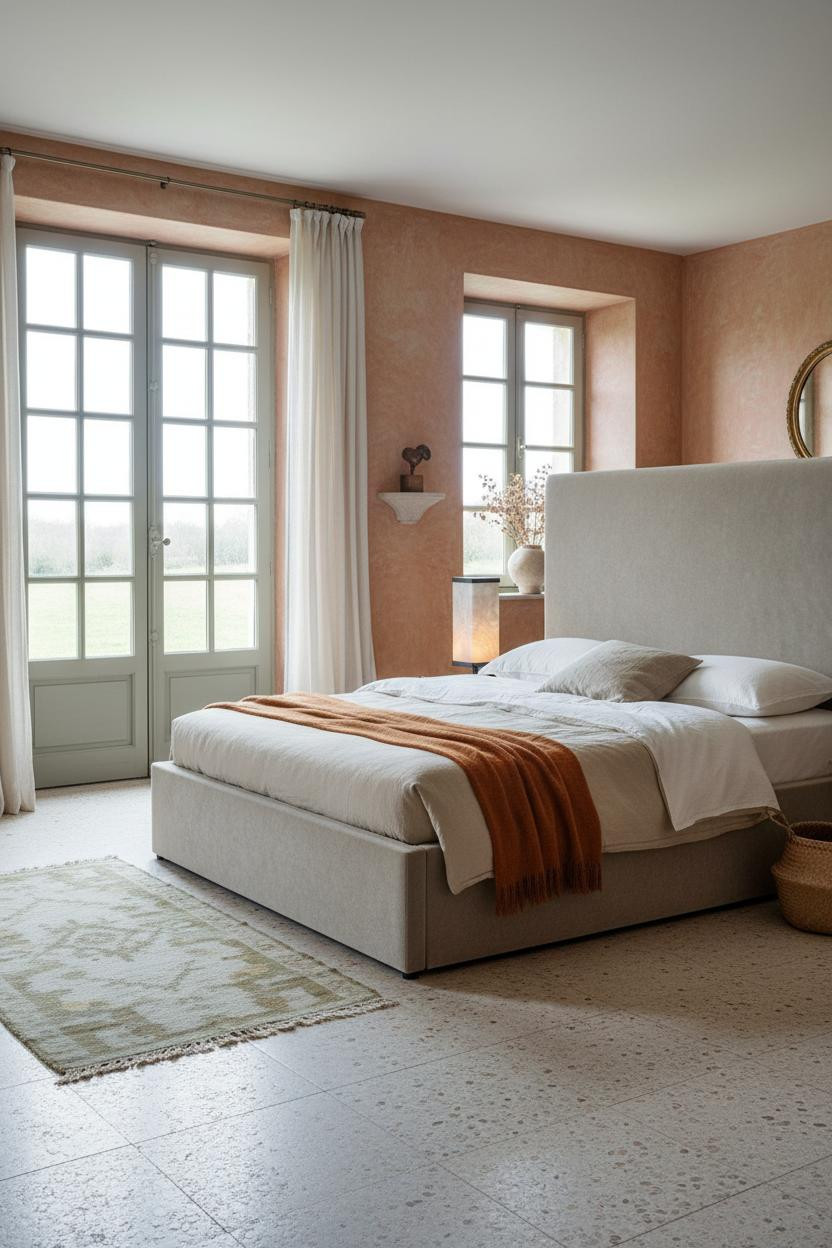
The room feels lived-in and intimate in a way that most bedrooms with statement doors don't.
Why the palette works: Weathered sage on the door frames pulls just enough color from the terracotta lime-washed walls to feel intentional, while the pale terrazzo tile keeps everything from getting too heavy.
The finishing layer: Pool ivory linen curtains on the floor beside the doors. The softness is what makes the sage wood read as refined instead of rustic. Paired warm lamps at nightstand level seal it.
An Arched Window Alcove That Reads French Instantly
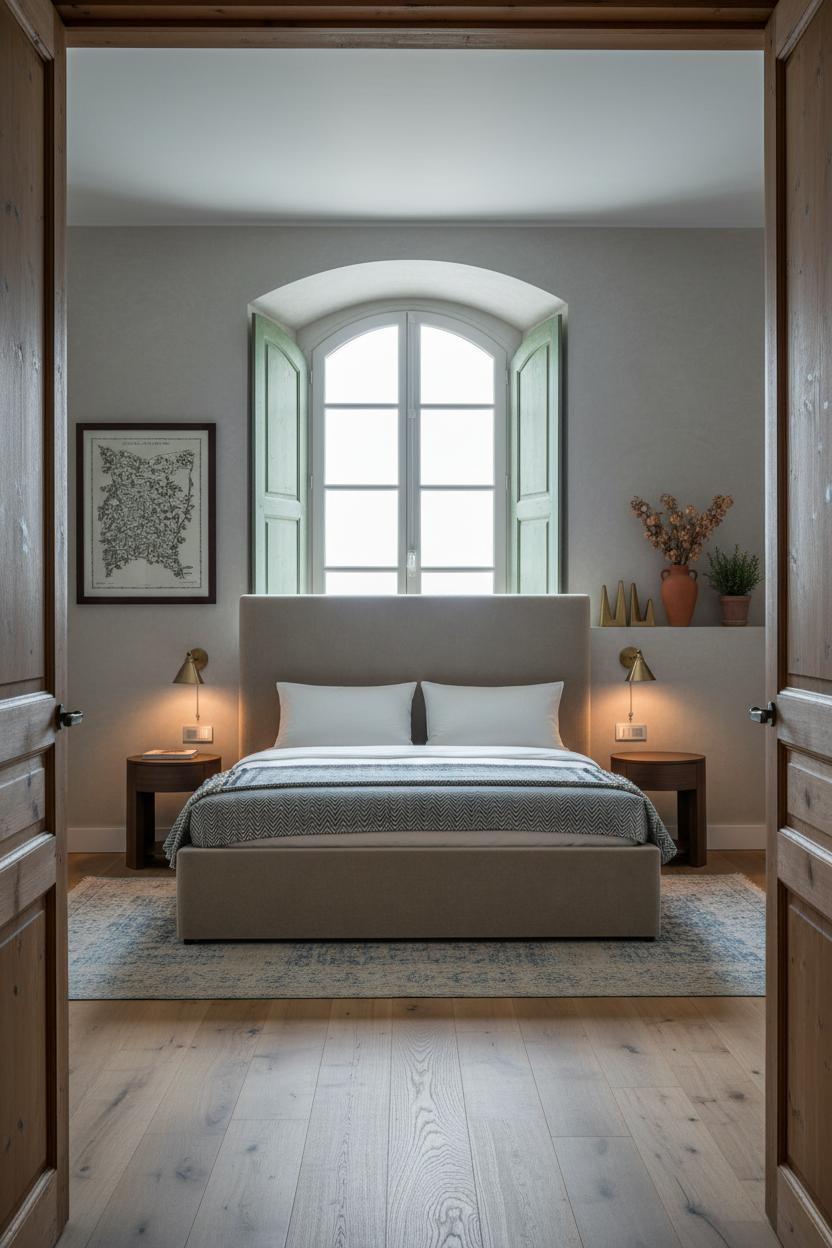
Nothing fancy. That's the point.
But the deep sage-green wooden shutters flanking a plaster arch do more architectural work than most built-ins twice their budget. What carries the look is the hand-finished ivory plaster surround with its organic hairline texture, which the shutters frame perfectly.
The smarter choice: Lay a faded overdyed rug in dusty blue on reclaimed honey oak underfoot. The warm floor keeps the cool greige walls from going flat.
Board-and-Batten Plaster That Ages Better Than Paint
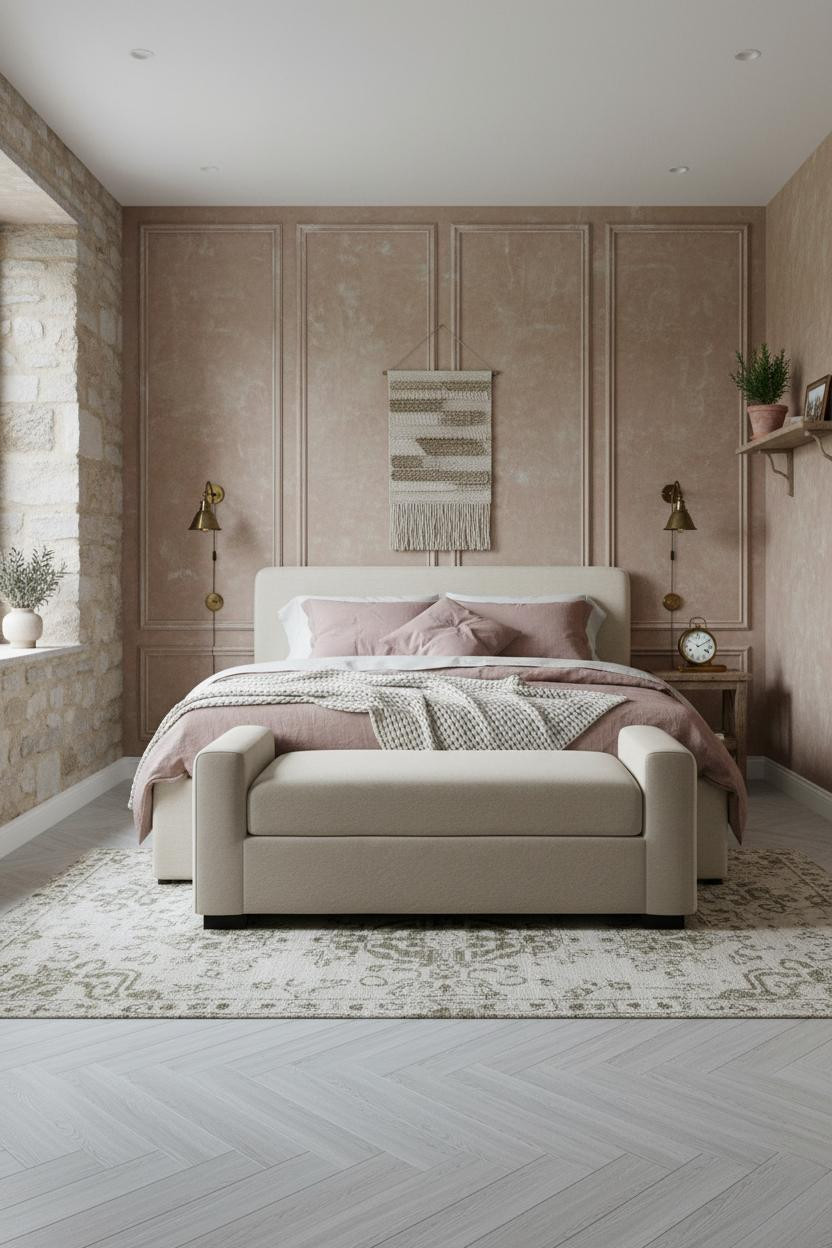

I'm partial to this approach honestly. It shouldn't look as considered as it does.
Design logic: Floor-to-ceiling lime-washed board-and-batten plaster catches raking north light along every vertical panel edge, which gives a flat wall genuine depth. Paint does not do this.
Pro move: Place a cushioned bench at the footboard. It grounds the composition and makes the tall paneling feel proportional to the room. Same logic applies in cottagecore bedrooms with any statement wall.
Exposed Stone That Isn't Trying Too Hard
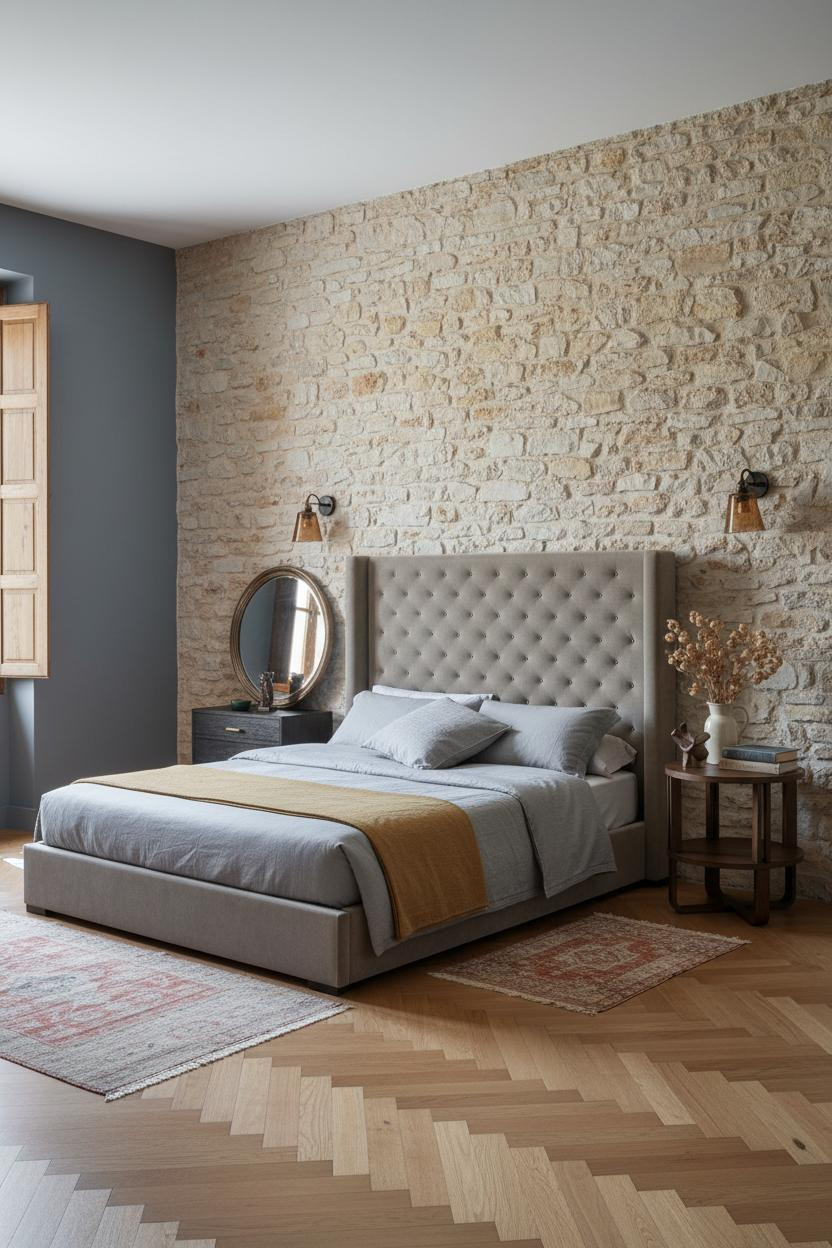

Fair warning. Exposed stone can easily tip rustic. This one stays on the right side of that line.
The reason it feels refined instead of rough is the muted blue-grey plaster on the flanking walls. It reads as a quiet frame for the irregular hand-laid limestone blocks, which helps balance the stone's raw weight while still feeling calm.
What not to do: Don't hang anything directly on the stone. Let it breathe. A round antique mirror leaning against it (never anchored to it) is the move.
A Stone Fireplace That Changes How the Room Works
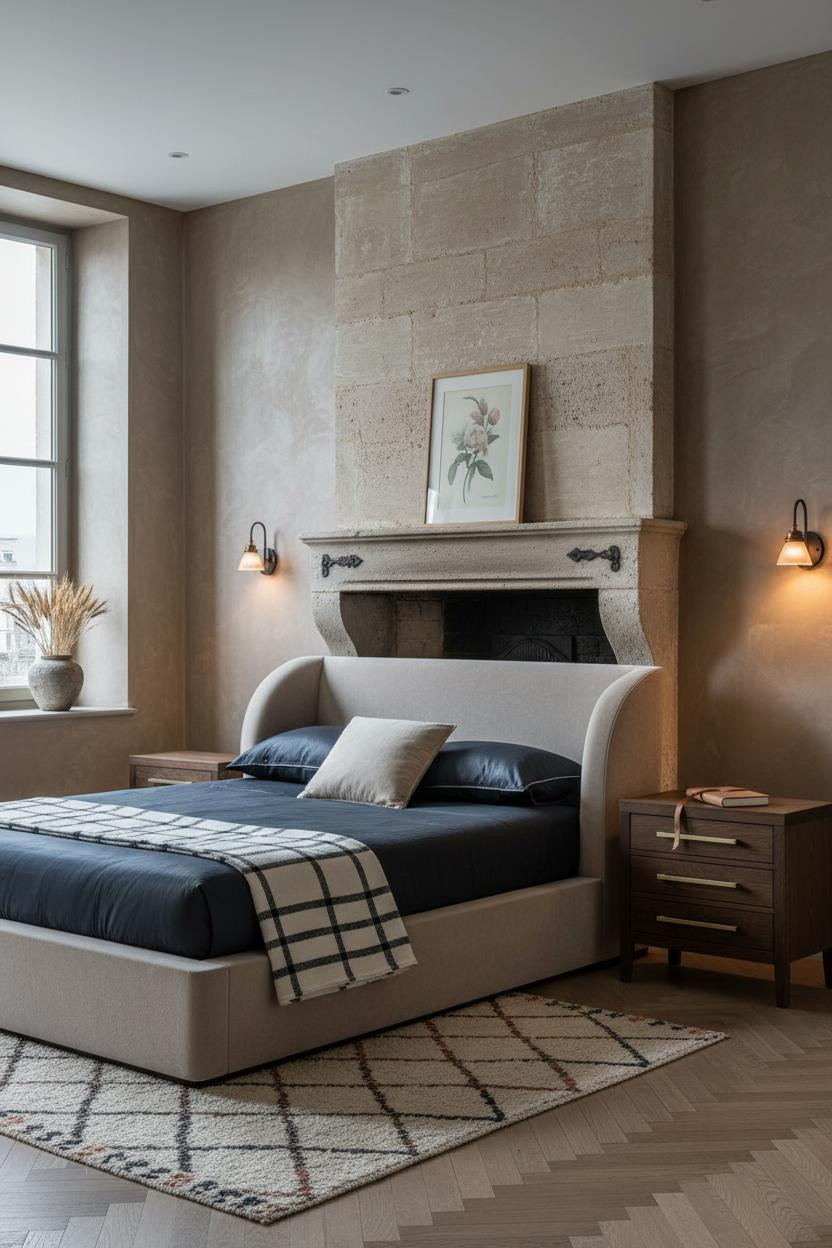


Having a fireplace in a bedroom changes how you actually use the room. It becomes a place you go to, not just sleep in.
What gives it presence: The curved aged limestone surround anchors the far wall in a way a flat hearth never could. Recessed spots raking across the stonework surface pull out every shadow ridge after dark.
The part to get right: Keep the mantel styling quiet. One framed botanical print. Dried wheat in a stone vessel. Nothing competing with the stone itself.
A Wooden Mantel That Earns Its Age
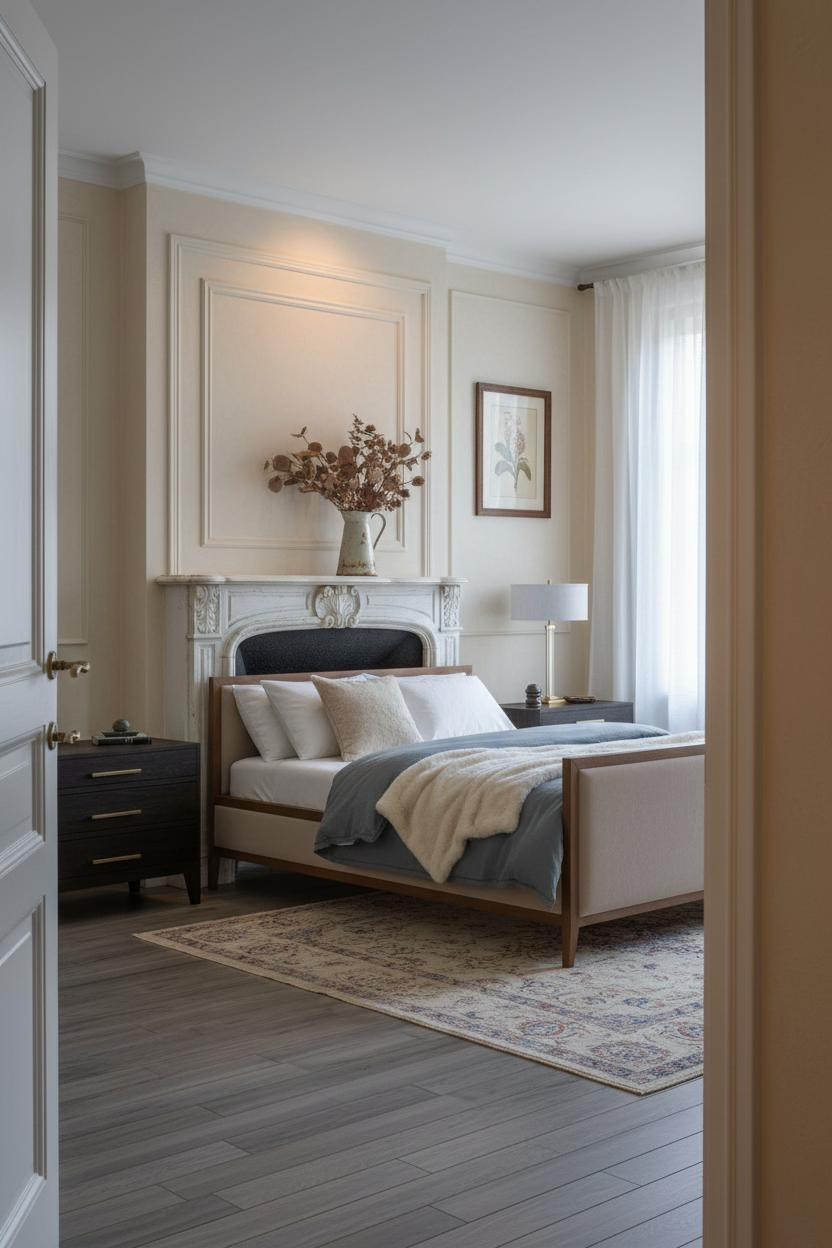
The room feels collected rather than decorated, and I think it's entirely because of the mantelpiece. An old one. Not a reproduction.
What creates the mood: Weathered white-painted carved molding catches cool diffused window light along every raised edge, which casts delicate shadow lines across the warm ivory plaster walls behind it. That contrast is subtle. But you feel it.
One smart swap: Replace overhead lighting with a cove lamp that throws amber warmth across the mantelpiece. The mantel becomes the room's focal point after dark.
Exposed Oak Beams That Ground Every Other Choice
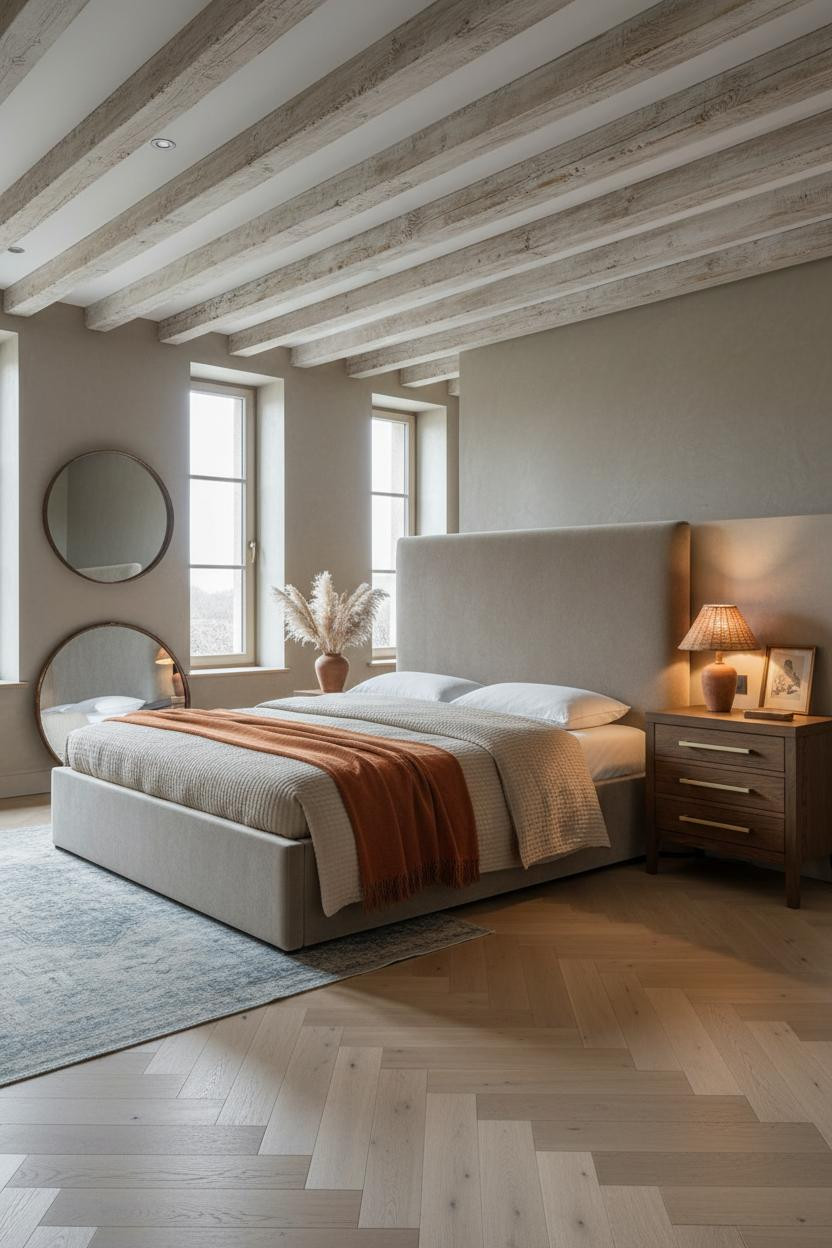
Exposed beams are one of those details that either make or break the room. Pale honey oak with aged grain. That's what keeps it from tipping into ski lodge.
Why it feels balanced: The horizontal beam rhythm overhead contrasts with herringbone parquet underfoot, which creates a layered structure the eye reads as intentional rather than accidental. An overdyed rug in faded dusty blue anchors the bed in the middle of all that geometry.
Where to start: Get the rug first. It determines everything else.
A Plaster Arch That Frames the Bed Like a Headboard Never Could
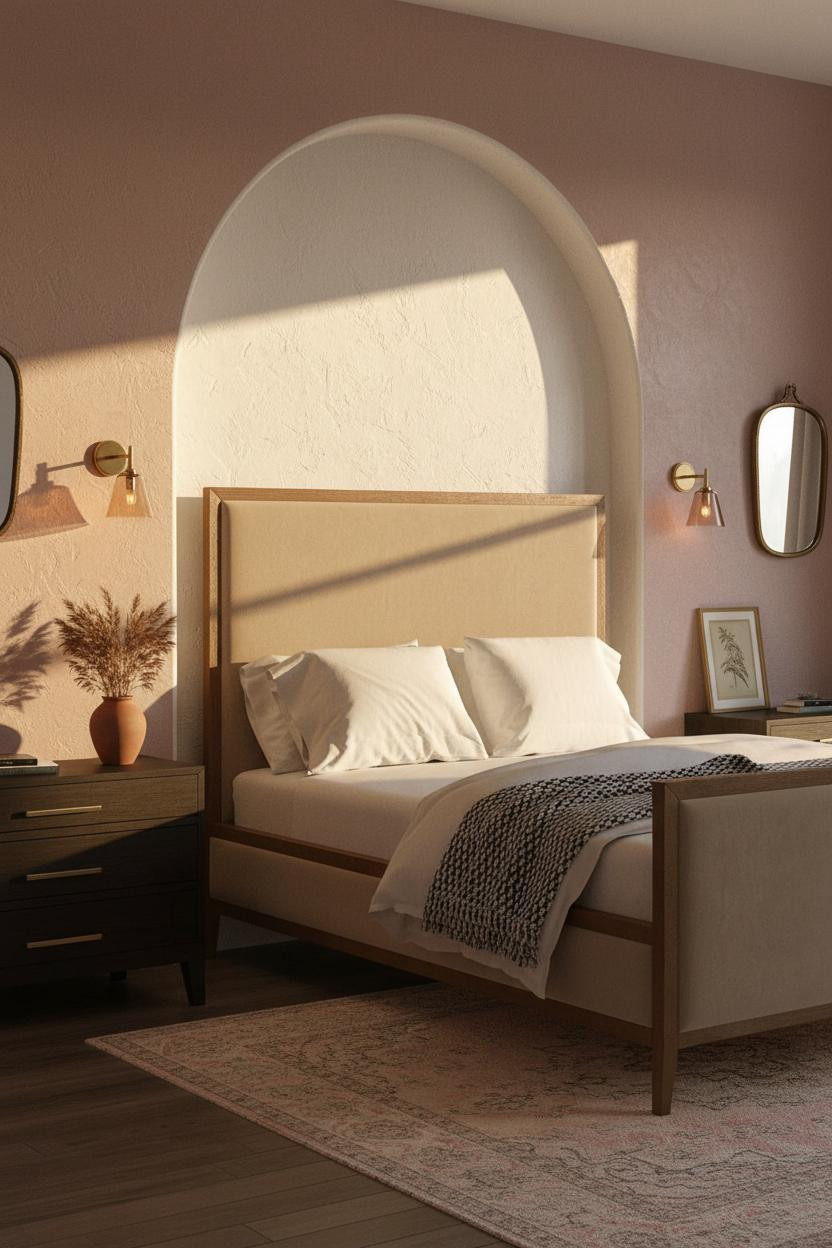
Bold choice. Not everyone would commit to it.
But an arched plaster niche built directly into the headboard wall does something architectural that no piece of furniture replicates. The curved aged ivory plaster catches warm raking light along its edge, which makes the bed feel like it belongs to the room rather than sitting in it.
What cheapens the look: Dusty rose walls work here specifically because they're soft (not saturated). Go darker and the arch gets lost. Go lighter and it disappears.
The key piece: Pair with dark walnut flooring underfoot. The contrast grounds the whole composition.
Whitewashed Shiplap That Feels Provençal, Not Coastal
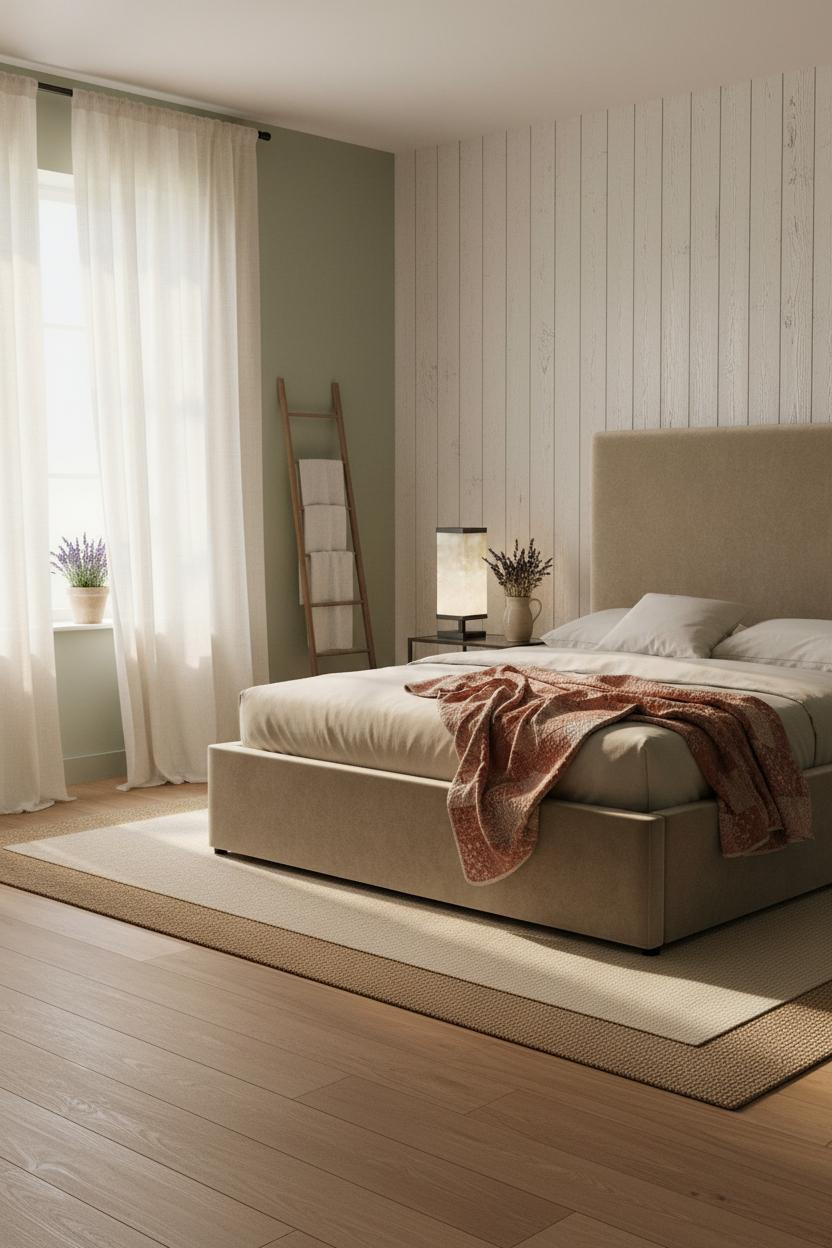
Admittedly, shiplap has been overdone. But vertical whitewashed boards with a distressed finish and soft sage flanking walls? That combination belongs to the farmhouse south of France, not a beach house.
The real strength: The aged grain across every board catches morning light in a way smooth drywall never does, while still feeling clean and airy rather than rustic. Layer cream linen bedding with a terracotta patchwork quilt at the foot and the warmth is immediate.

Our #1 Pick
Saatva Classic Mattress
America's best-selling online luxury innerspring. 365-night trial, lifetime warranty, free white glove delivery.
Shop Saatva Classic
The Foundation Of Every Beautiful Bedroom
Every detail in these rooms earns its place. And the one detail that actually affects how you feel every morning isn't the plaster or the linen. It's the mattress.
The Saatva Classic is what I'd put under any of these beds. Dual-coil support that holds up properly, breathable organic cotton that doesn't trap heat, and a Euro pillow top that feels genuinely soft without losing structure after a year. It's the kind of mattress you stop thinking about because it just works.
Walls get repainted. Rugs get swapped out. The bed stays.

The rooms people save are the ones where nothing looks accidental. Start with the right foundation and the rest figures itself out from there.