
 by
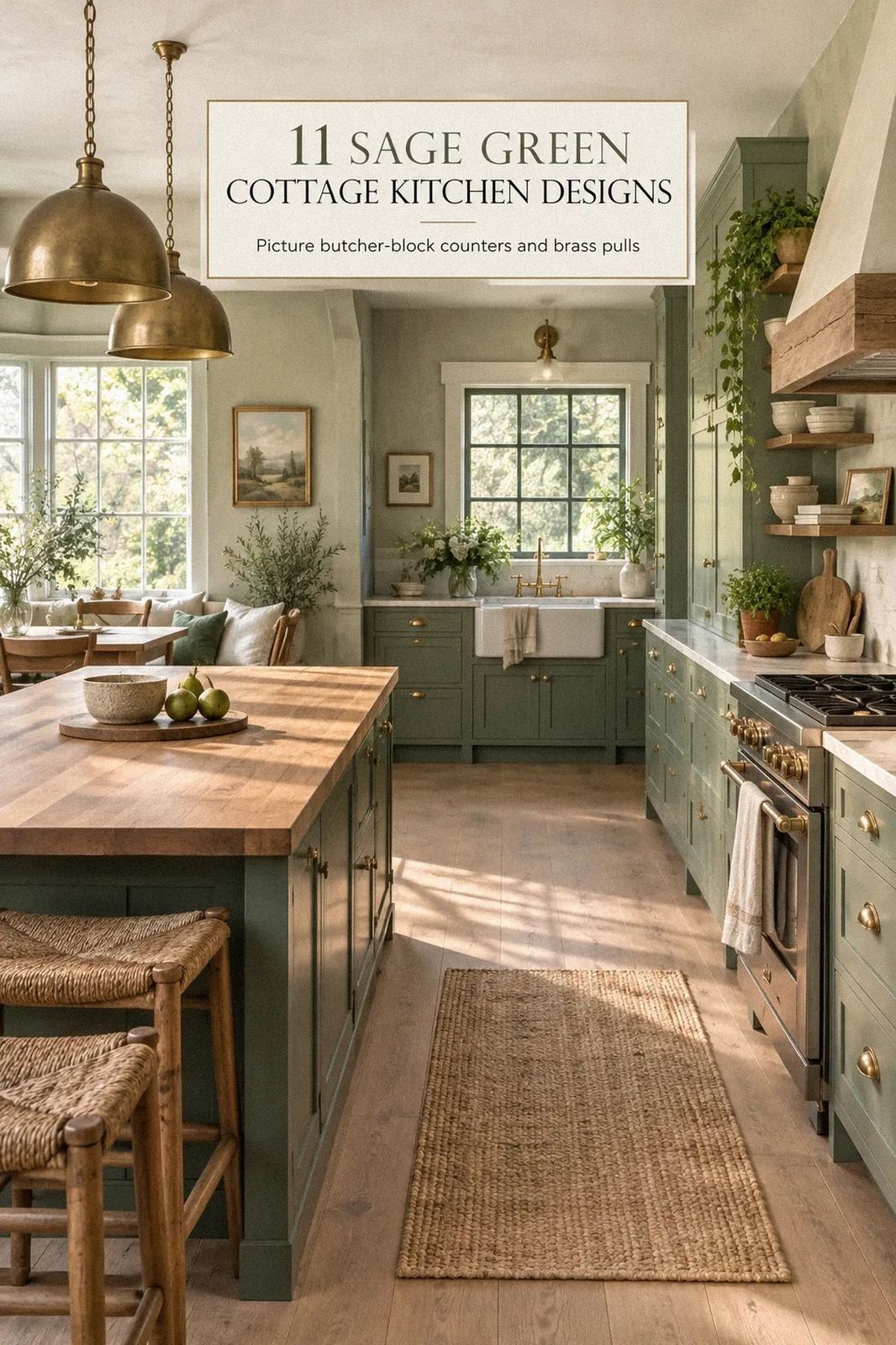
by Sage green cottage kitchen ideas usually work best with one strong color decision and several quiet textures around it. I learned that after painting an entire room too pale, then wondering why it looked gray by dinner. You don't need a full remodel for warmth. You need contrast, aged materials, and a plan. For a broader color direction, save these green kitchen cabinet ideas from sage to emerald before choosing your samples.
- ✓ Paint the lowers with the Sage Anchor Method
- ✓ Pair green cabinets with warm white uppers
- ✓ Swap shiny pulls for aged hardware
- Paint the lowers with the Sage Anchor Method
- Pair green cabinets with warm white uppers
- Swap shiny pulls for aged hardware
- Build the Two-Wood Rule into your cottage kitchen
- Frame the sink with a linen café curtain
- Hang the Three-Height Light Stack
- Choose zellige over a perfectly flat backsplash
- Size the island before you style it
- Open shelves over upper cabinets
- Mix pattern through a cottage table
- Use green cottage contrast instead of matching everything
1Paint the lowers with the Sage Anchor Method
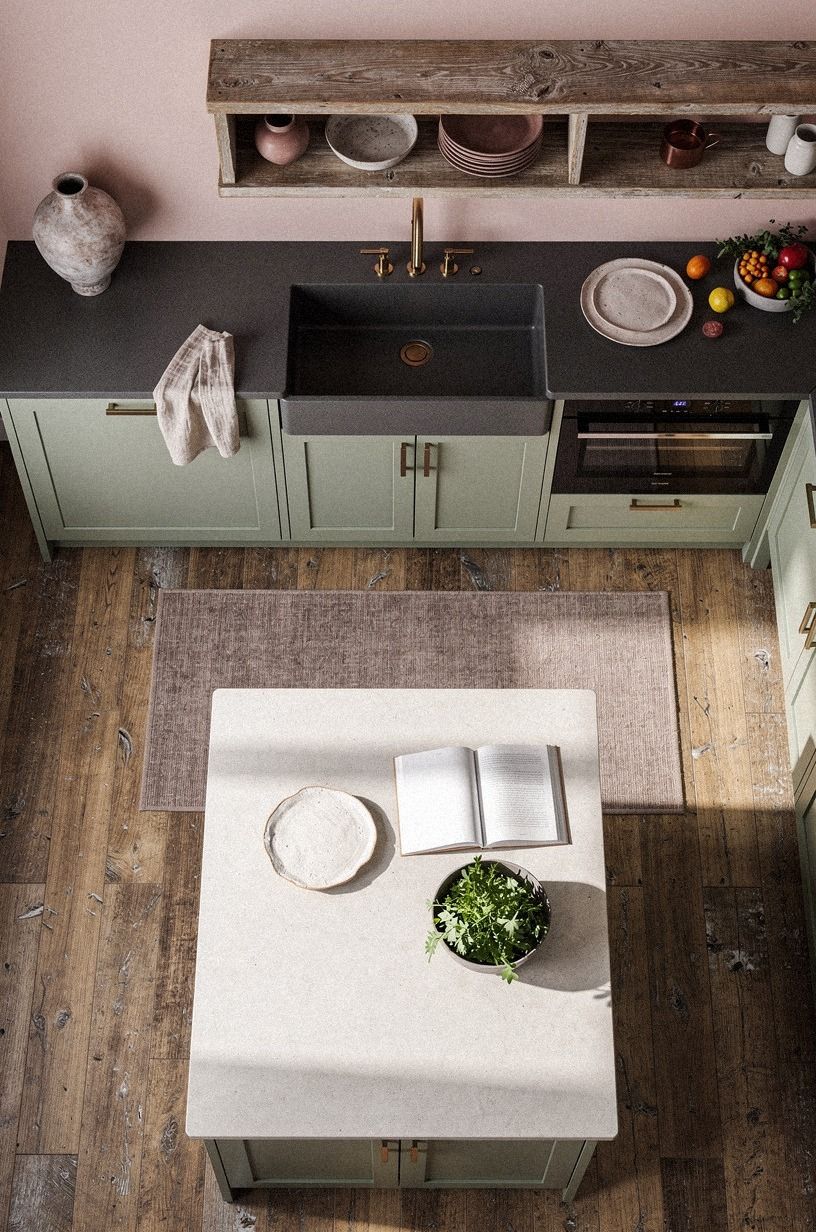
Start with the cabinet color, because your lower doors carry more visual weight than a small accent wall. A dusty rose cabinet can give a cottage kitchen the same grounded softness as muted sage, especially beside charcoal details and warm metal. I've used it in north-facing kitchens, and it stays earthy instead of turning sugary when the light fades.
If your kitchen gets strong afternoon sun, Farrow & Ball Studio Green No. 93 gives you a bolder, moodier cottage kitchen sage green. It isn't timid, so you'll want to keep the uppers, ceiling, and backsplash light. Your eye needs somewhere quiet to rest.
Try this combination:
- Dusty rose lower cabinets, a charcoal accent, and reclaimed weathered teak. - Benjamin Moore White Dove OC-17 above the counter. - Brass pulls with a low sheen.
And don't skip sample boards. Paint one door, move it beside your counter, and watch it from 9 a.m. through dinner. Your kitchen's light will make the final decision for you, not the tiny paint chip!
2Pair green cabinets with warm white uppers
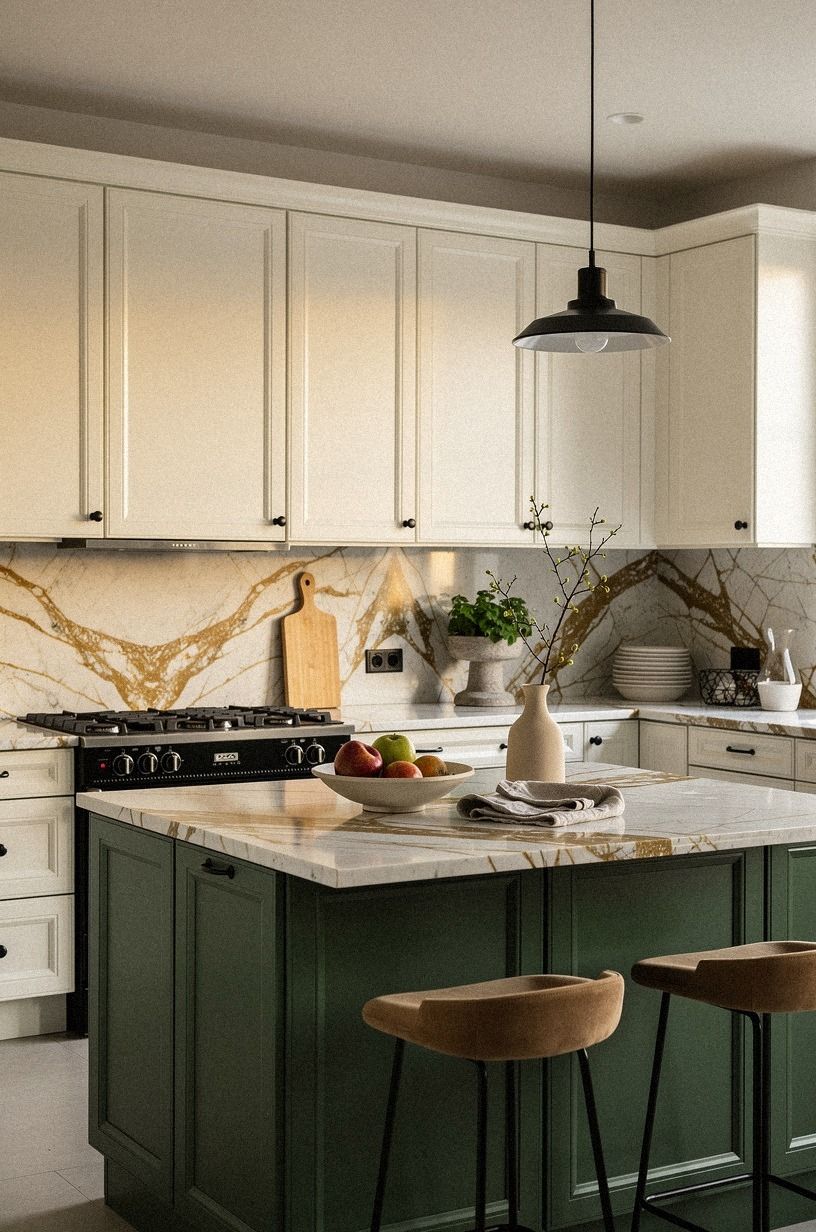
A two-tone cabinet layout keeps your sage green cottage kitchen airy while giving the lower half enough color to feel intentional.
3Swap shiny pulls for aged hardware
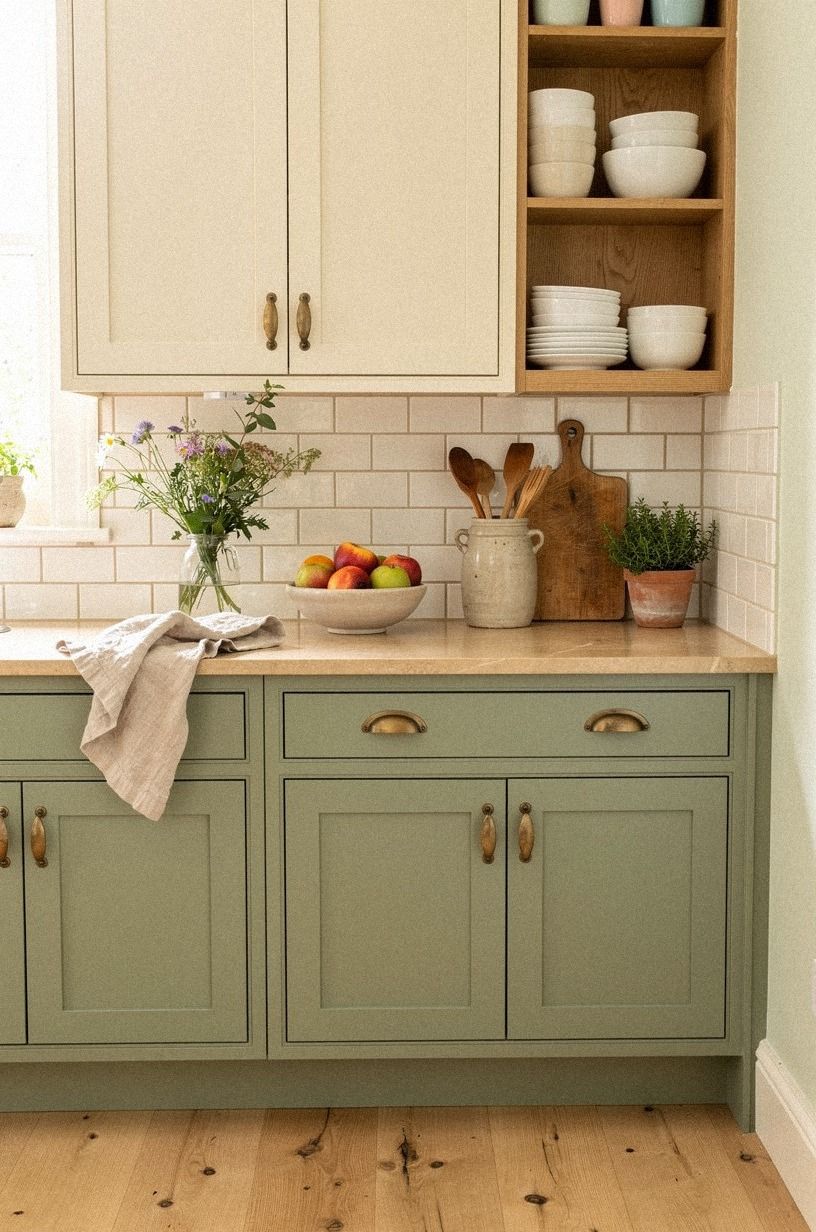
Hardware can make green cabinets feel farmhouse, traditional, or oddly contemporary. For a fresh sage green cottage kitchen, I'd choose aged copper or a softly worn metal, not polished chrome. The warmer finish catches the light without shouting across the room, and your hands will slowly create a real patina.
You don't need to replace every knob at once. Start with the drawers you touch most, then live with them for a week. If you're unsure, choose cup pulls on drawers and small round knobs on doors.
That mix feels collected rather than ordered from one catalog.
Look for these proportions:
- A 3-inch center-to-center pull for standard drawers. - A small mushroom knob for narrow doors. - Aged copper where you want warmth against midnight blue or ivory.
It doesn't take much hardware to shift the mood, but the wrong scale can make your doors look busy. If your cabinet fronts are narrow, you'd be better off with a simple knob than a long pull that nearly spans the stile. Don't let a trendy finish overpower the sage itself.
For more earthy references, compare your choices with these rustic cottage kitchen ideas, especially if your room already has pine or brick.
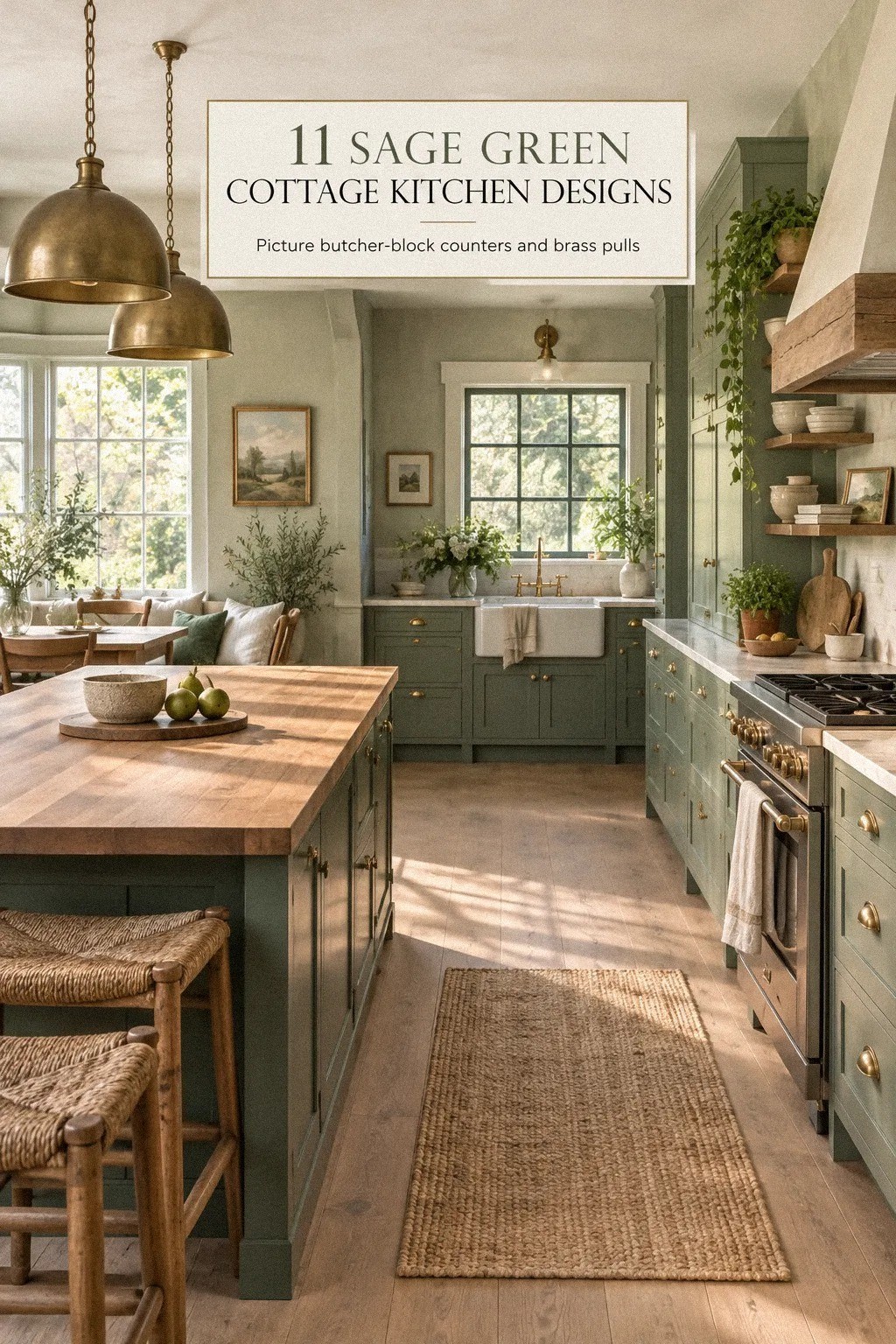
4Build the Two-Wood Rule into your cottage kitchen
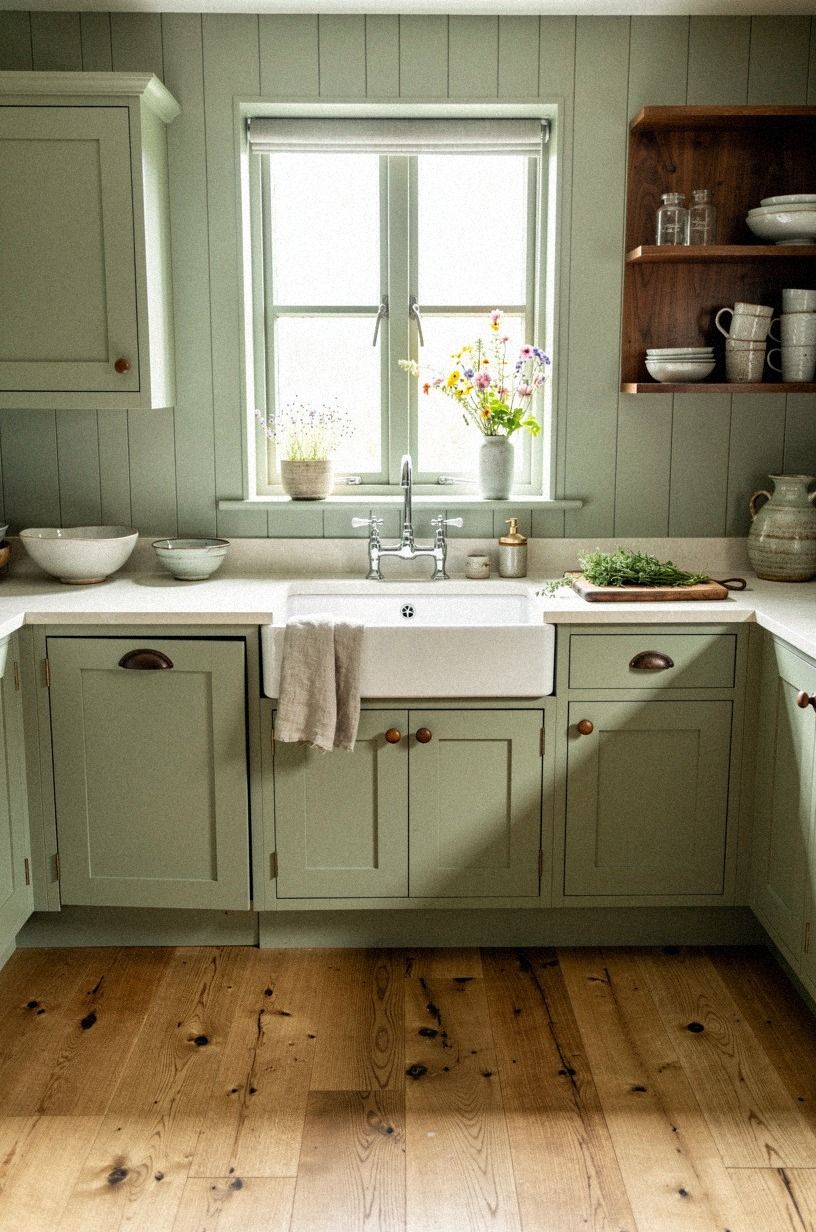
The Two-Wood Rule keeps a green cottage kitchen from becoming visually flat. Choose one pale wood and one deeper wood, then repeat each at least twice. Natural wood works beautifully with a backlit translucent onyx accent, while walnut or stained oak can ground stools, frames, or a cutting board.
I've made the mistake of buying three nearly identical wood tones. They looked muddy together, and the room lost the crisp earthy contrast I wanted. Your goal isn't a showroom match.
It's a quiet conversation between materials that have different grain and depth.
Try this pairing:
- A natural wood shelf with visible open grain. - A medium walnut stool seat. - Backlit translucent onyx behind the work area or on a small island face.
And if your floor is already dark, you won't need another heavy wood element at eye level. Keep your shelf pale, then let the cabinet color do the work. That's how you keep your kitchen inviting instead of cave-like, even with dramatic green paint.
A few handmade accents from these rustic farmhouse kitchen ideas can help you repeat wood without buying a matching furniture set.
5Frame the sink with a linen café curtain
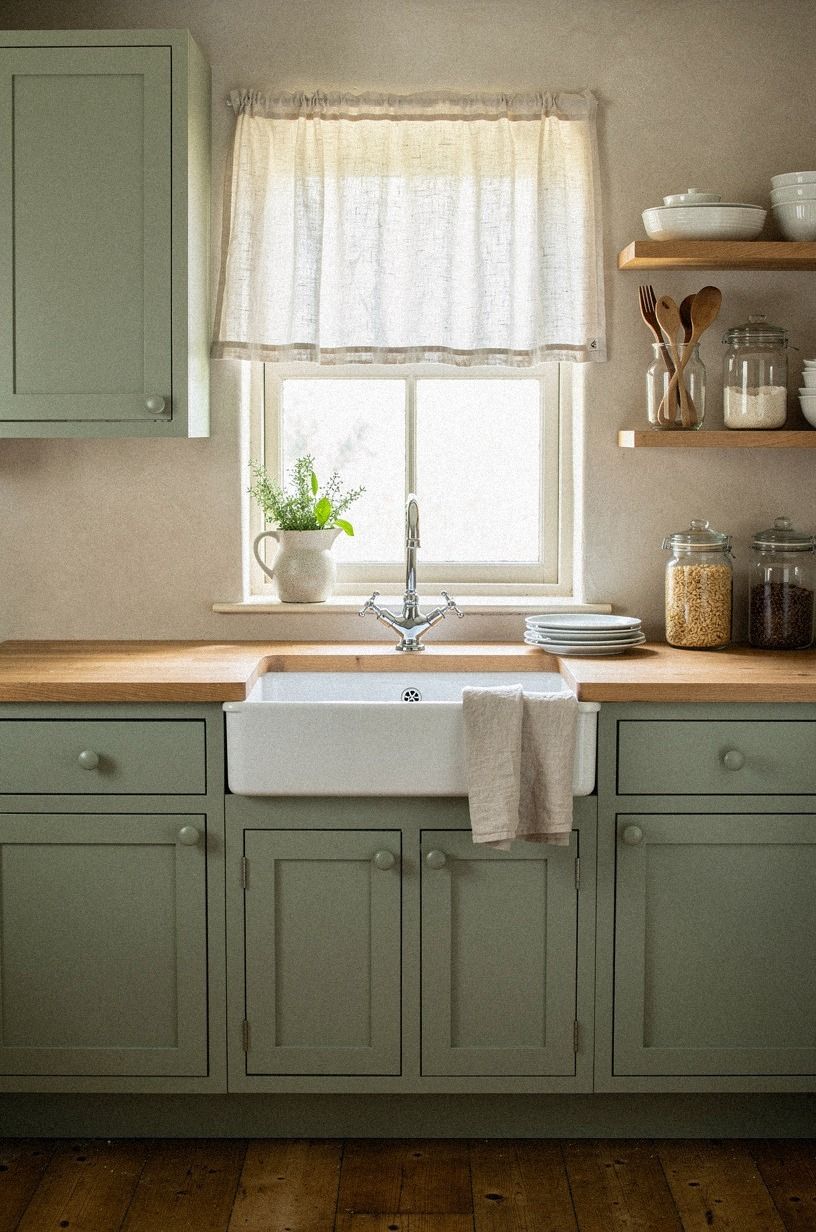
A café curtain adds softness exactly where cottage kitchens often feel hardest, around the sink and lower window.
6Hang the Three-Height Light Stack
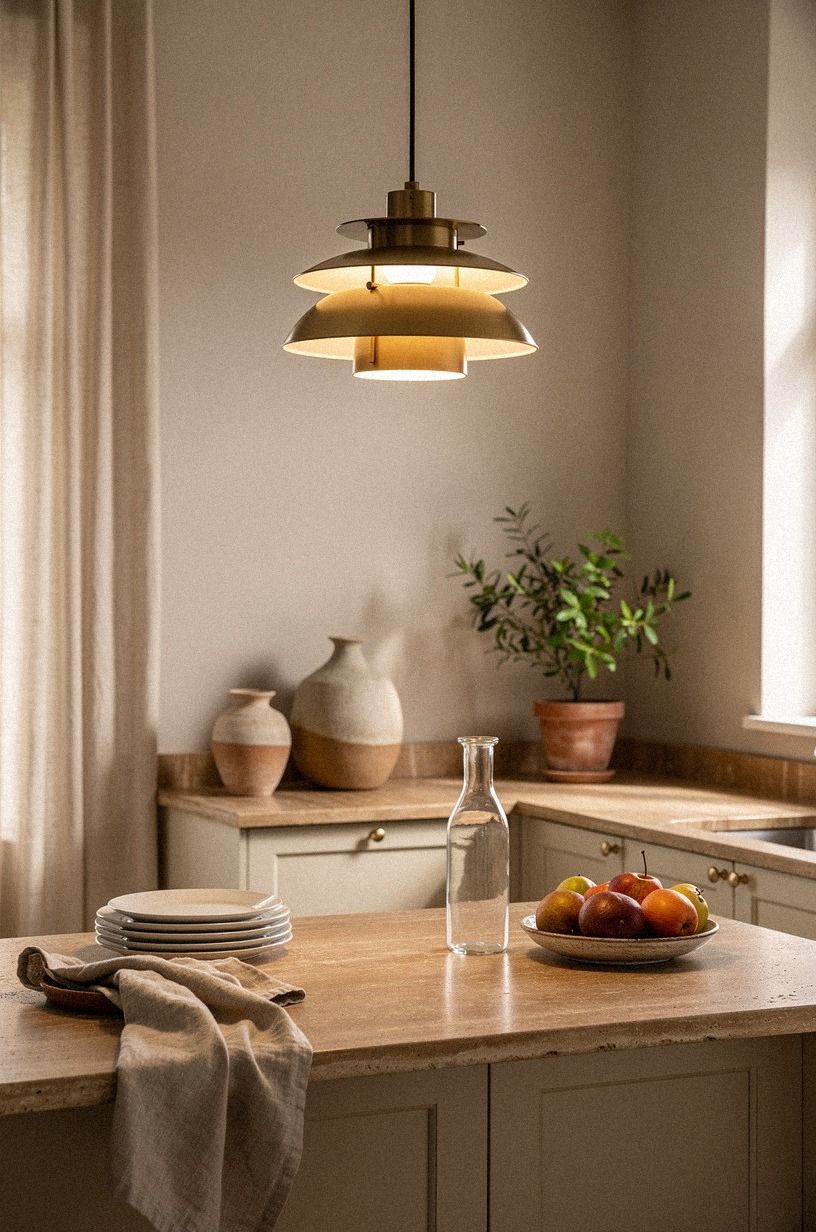
The Three-Height Light Stack uses a ceiling fixture, under-cabinet glow, and one low decorative lamp to make your cottage kitchen feel warm after sunset. Your overhead light handles work, but it shouldn't be the only source. A single ceiling fixture can make sage paint look dull and every shadow look harsher.
Choose a lantern or shaded pendant with aged brass details above the table or island. Then add warm under-cabinet lighting, preferably with a dimmer. I've found that the low lamp matters most because it creates a small pool of light at eye level, where you actually sit and talk.
Aim for this arrangement:
- A ceiling pendant at the main circulation zone. - Warm LED strip lighting along the worktop. - A ceramic table lamp on a shelf or sideboard.
It won't feel like a restaurant if the shades are opaque and the bulbs are gentle. You're building layers, not flooding the room. And if you have only one electrical outlet, use a rechargeable lamp on a warm travertine tray so your counter can still function during cooking!
For a broader lighting plan, browse these green kitchen cabinet ideas from sage to emerald and notice how different light levels change the same color.
7Choose zellige over a perfectly flat backsplash
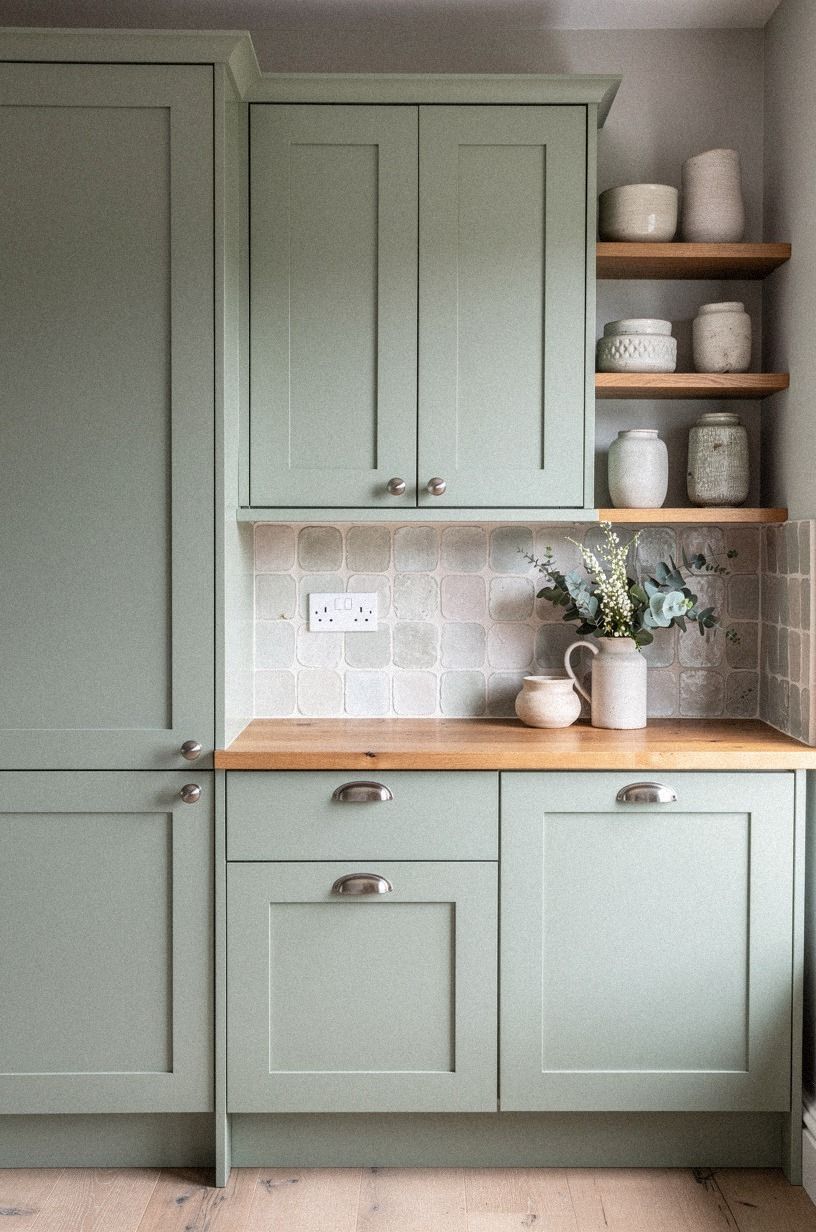
Hand-glazed tile gives a sage cottage kitchen the irregular surface that painted cabinets alone can't provide. Hand-glazed plum zellige is especially lively beside pale green, but use it in a small field if you don't want the room to become too dramatic. Each tile catches light differently, so your backsplash will shift from plum to soft gray during the day.
Your counter-to-upper gap is typically 18 inches, and that measurement helps you estimate how much tile you'll need. Keep the grout quiet, or the small format can turn into a grid. A warm ivory grout lets the glaze variation show without making every joint compete for attention.
I like this material stack:
- A honed gray stone counter. - Hand-glazed zellige behind the range. - A simple wood shelf on one short wall.
But don't install a glossy backsplash beside glossy cabinet paint unless you want a very reflective room. Your eye needs one matte surface to slow everything down. If you're choosing between a flat subway tile and zellige, I'd spend the money on texture in the backsplash and keep the rest of the finishes plain.
The grandmillennial cottage kitchen ideas here show how pattern and glaze can feel old-fashioned without becoming fussy.
8Size the island before you style it
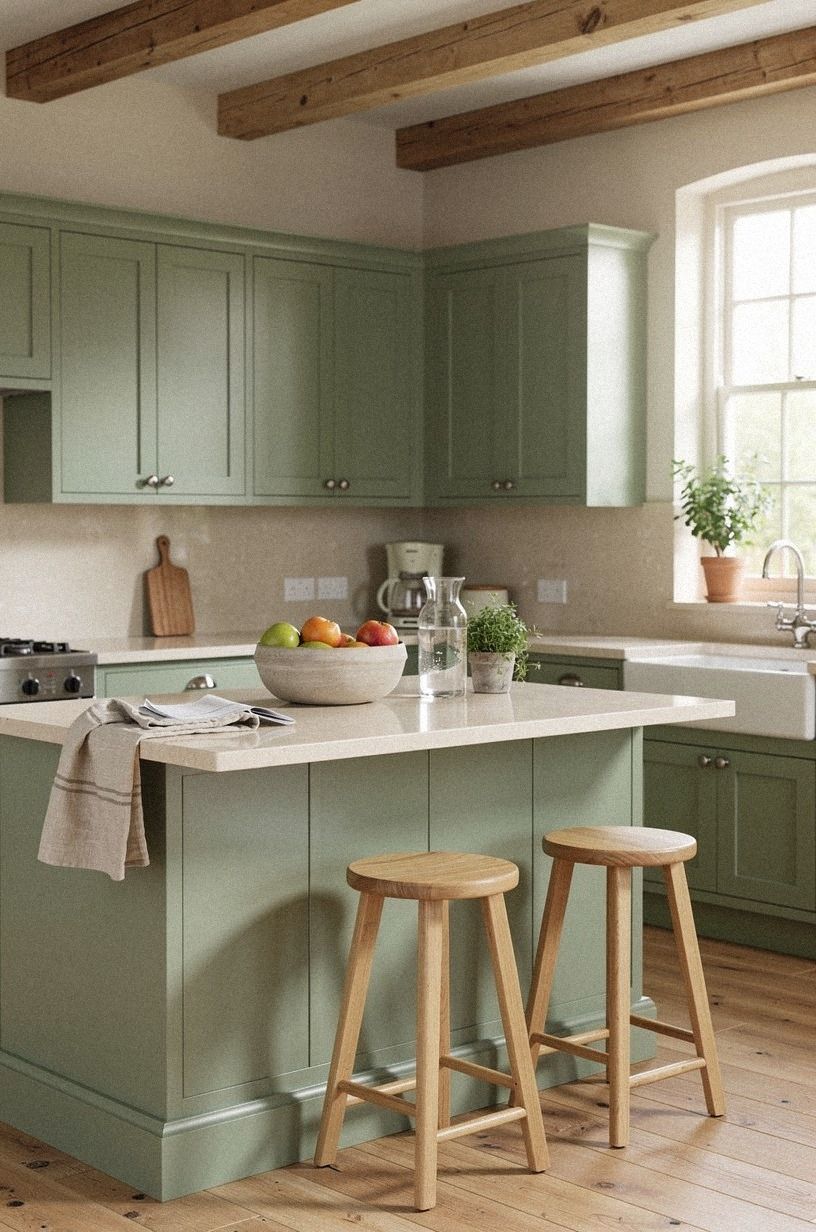
An island can anchor a cozy kitchen with navy cabinets, but only if you protect the walking space around it. Standard counter height is 36 inches, and island clearance should be 42 to 48 inches all around. Your room may look large on paper and feel frustrating once cabinet doors start opening.
If you can't preserve that clearance, choose a narrow worktable instead. A walnut worktable gives you prep space, a place for flowers, and a surface you can move later. I'd choose that over a cramped built-in island every time because your circulation matters more than having one extra drawer bank.
Here are the typical US cost ranges for kitchen changes:
You're allowed to spend $300 on paint and hardware instead of chasing a full renovation. And if your island blocks the route from the refrigerator to the sink, it isn't helping your kitchen, no matter how charming the stools look. Protecting that path can save the entire layout!
9Open shelves over upper cabinets
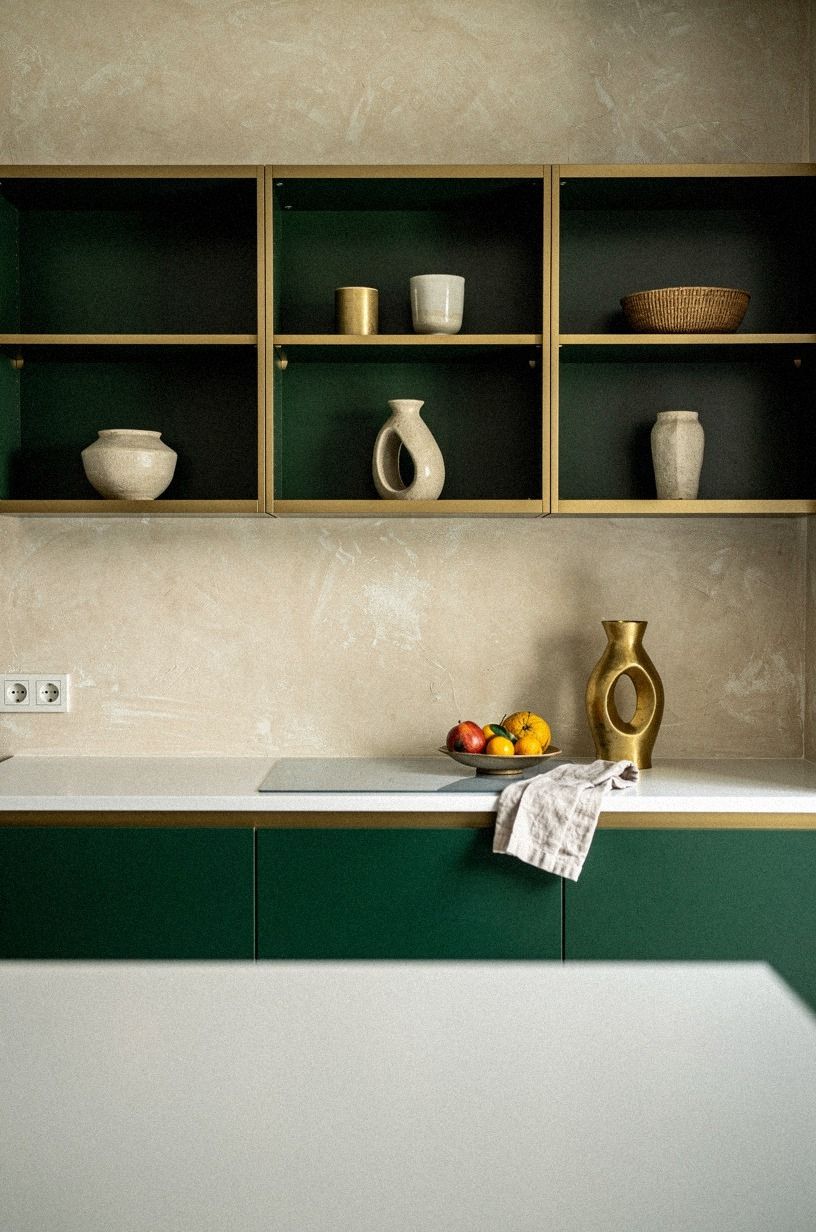
Open shelves over upper cabinets give your cottage kitchen sage green color room to breathe, but they require editing. Choose natural wood floating shelves with a 10 to 12 inch depth, then place them against hand-applied Venetian plaster if you want the wall to carry more texture. Your shelves should support how you cook, not become a display wall that needs constant rearranging.
I've tried styling too many ceramics in one row, and the room started to feel like a shop. Keep the useful pieces visible: bowls, mugs, a small stack of plates, and one vessel. If you're storing rarely used servingware, closed doors will make your life easier.
A restrained shelf might hold:
- Cream stoneware bowls. - 600gsm Turkish cotton tea towels. - One olive branch in a narrow bottle.
But shelves aren't automatically better than cabinets. If your kitchen collects grease from the range, you'd probably prefer glass-front doors or a single shelf away from the cooking zone. Don't copy an open-shelf layout until you've considered what your own hands reach for every day.
For a more detailed storage direction, save these small cottage kitchen ideas that feel cozy, not cramped and look for ways to keep the most-used tools visible.
10Mix pattern through a cottage table
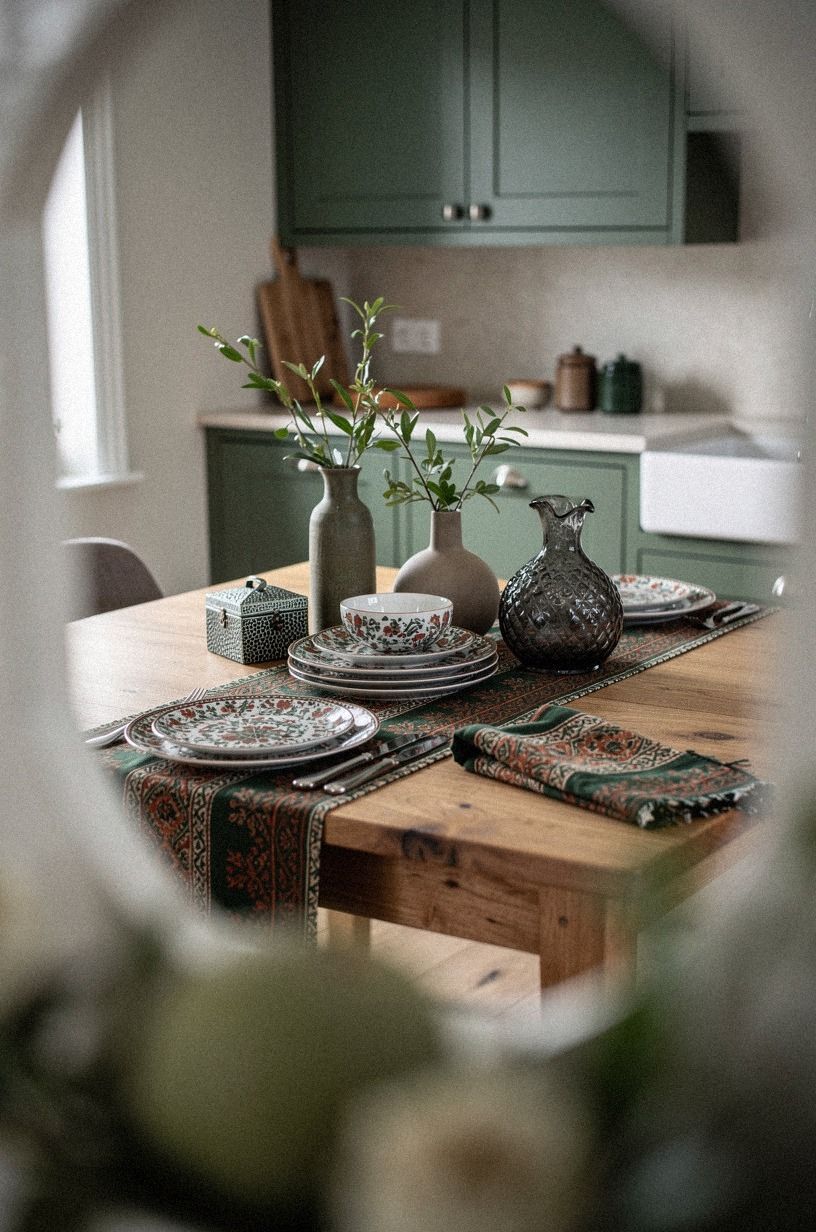
A kitchen table is the easiest place to add pattern without repainting another surface. Use a faded floral runner, a checked seat cushion, or a small curtain in forest green, rust, and natural oak tones. Your pattern should feel inherited, not matched from a single collection.
Try a rust-colored cushion with a shagreen accent on one bench if your table gets enough distance from the sink. It has a soft, tactile quality and gives the room a more refined note without losing its rustic character. I've used plain linen on the chairs beside it so the fabric doesn't become too precious.
A simple table setting can include:
- A washed linen runner. - Natural oak serving pieces. - One low bowl of pears.
You're not trying to make breakfast look staged. The point is to give your eye a warm place to land when the counters are busy. And if your table is small, skip a centerpiece taller than 10 inches so you can still see across it.
For another easy surface idea, try these kitchen table flower vase centerpiece ideas and choose one arrangement you can maintain on an ordinary weekday.
11Use green cottage contrast instead of matching everything
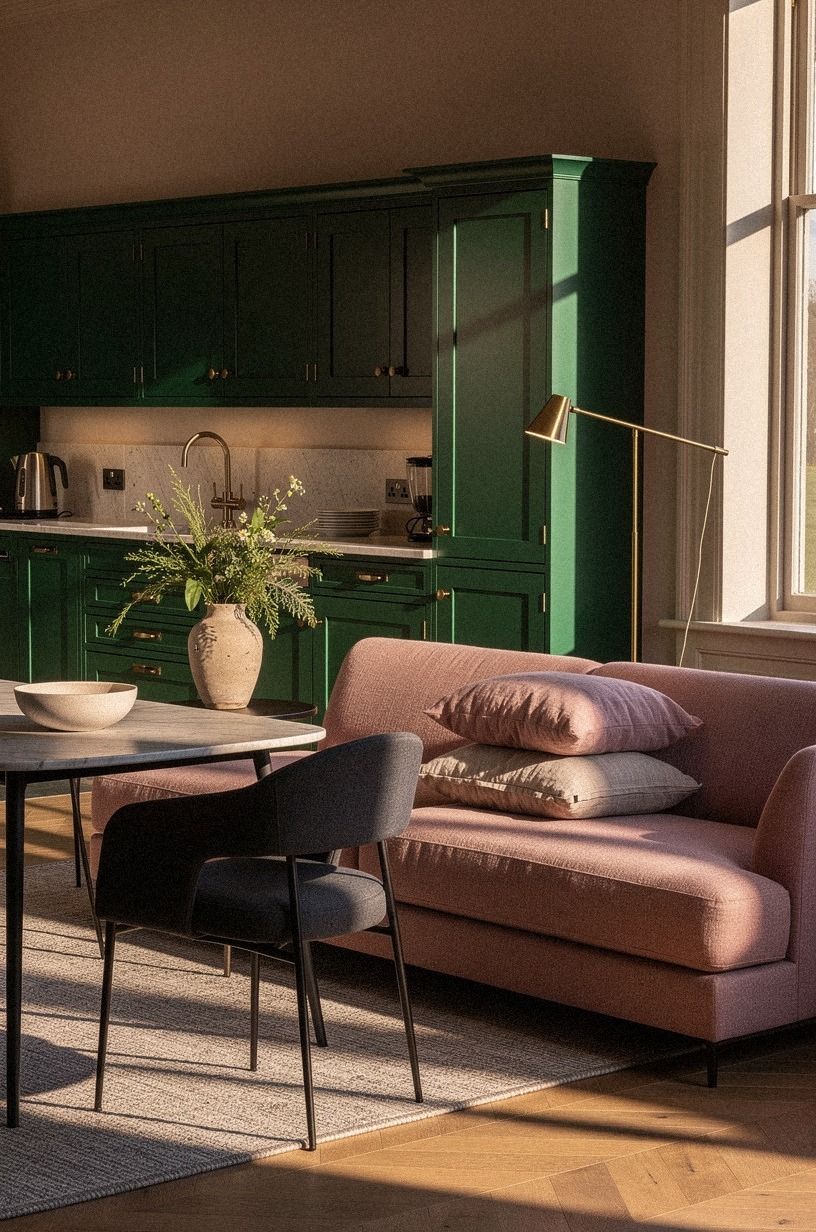
A sage green cottage kitchen feels more collected when one element disagrees with the rest. Choose a dark range hood, a patterned floor, or a deep wood stool rather than repeating sage on every surface. Matte charcoal paint on a pantry door can create that small moment of drama without taking over the room.
Your contrast needs a reason. If the floor is already patterned, keep the backsplash quiet.
If your cabinets are the darkest element, let the hardware and lighting stay restrained. I prefer one visual surprise to five competing accents, and you won't need as many accessories to make the room feel complete.
Consider this restrained mix:
- Dusty rose base cabinets. - A charcoal range hood or pantry door. - Aged brass and washed Belgian linen accents.
Could your kitchen handle a darker note? Yes, if you repeat it once and give it breathing room.
Don't add black, navy, brass, terracotta, and patterned tile just because each one looks charming alone. Your eye needs a clear hierarchy, or the cottage feeling disappears into visual noise.
If you're deciding between bold and gentle finishes, compare the material layering in these rustic cottage kitchen ideas for earthy handmade character before you order samples.
Sage and Oak: The Quietest Combination
Sage looks especially grounded beside natural oak, but the grain needs to remain visible. Choose one oak element with enough scale to register, such as a shelf, table, or stool, instead of scattering tiny wooden accessories around the room.
A pale wood can keep deep sage from feeling heavy. A smoked or medium oak can make a lighter green feel more established. The finish matters more than the exact species, so bring home samples and look at them beside the cabinet color in both morning and evening light.
If you want more ways to soften painted cabinetry, compare the wood balance in these rustic farmhouse kitchen ideas.
What should you repeat in a sage green kitchen?
Repeat the color, not every object. You might echo sage in a striped runner, a painted pantry door, and a small ceramic bowl, then leave the cabinets as the dominant statement. Repetition creates rhythm, while exact matching makes a cottage kitchen feel newly staged.
The same principle applies to metals. If you use brass at the cabinet pulls, repeat it once in the pendant or faucet. You don't need brass frames, trays, lamps, and shelf brackets all at once.
The broader green kitchen cabinet guide can help you compare sage with deeper greens before you commit to a second painted element.
Keep the countertop styling useful
Countertop styling works best when it begins with things you actually use. A stoneware crock can hold wooden spoons, a shallow bowl can collect lemons, and a small cutting board can lean beside the backsplash without looking decorative for its own sake.
Leave generous stretches of counter empty. You'll appreciate the clear prep area more than another vignette, especially on weeknights. The cottage feeling comes from useful objects with age and texture, not from filling every available surface.
For a smaller kitchen, these small cottage kitchen ideas that feel cozy, not cramped make the case for keeping the most practical surfaces clear.
Green Against Charcoal: When a Dark Accent Works
A charcoal range hood or dark pantry door can sharpen sage cabinets beautifully. Matte charcoal paint is less harsh than pure black, particularly when the room already has warm white walls and pale wood.
Use the dark accent once or twice. If you repeat it in the light fixture and a stool base, the room will feel intentional. If you add it to the floor, backsplash, hardware, and windows, the green will lose its quiet center.
The patterned rooms in these grandmillennial cottage kitchen ideas show why a single dark note often works better than several competing ones.
Why texture matters more than extra decoration
Texture gives a sage kitchen depth without adding visual noise. Limewashed walls, woven seating, glazed tile, and brushed metal each catch light differently, so the room changes gently throughout the day.
You can keep the accessories sparse when the materials are doing enough work. A rough oak edge beside a smooth painted door often creates more interest than a shelf crowded with signs and seasonal objects.
Even a simple vase can help when the material has character. These kitchen table flower vase centerpiece ideas are useful for adding life without filling the room with small decor.
A Small Cottage Kitchen Can Still Feel Layered
A small room doesn't need every idea at once. Start with painted lower cabinets, one wood note, and one soft treatment such as linen or woven seating. Then live with the room before adding pattern.
For compact layouts, a narrow table may work better than an island, and a single shelf may be more useful than a full wall of open storage. The small cottage kitchen guide is useful when you're balancing charm against circulation.
If the room feels plain after the first changes, add one tactile finish rather than several accessories. A curtain, woven seat, or lightly glazed tile can do more than a crowded shelf.
When to keep the backsplash quiet
Keep the backsplash restrained when your cabinets, floor, or curtains already carry pattern. Warm ivory subway tile can provide a calm field behind sage doors, particularly in a kitchen with limited natural light.
If the room is mostly plain, then zellige, a small floral tile, or a softly colored checkerboard can supply the missing movement. The right choice depends on what the room doesn't have yet, not on which finish looks best in isolation.
Before ordering tile, compare the balance of dark and pale surfaces in these green kitchen cabinet ideas from sage to emerald.
The Green Kitchen Choice I Stand Behind
I used to think a cottage kitchen needed more decoration to feel welcoming. More open shelves, more copper, more little signs, more things perched beside the sink.
Then I spent a winter in a kitchen with sage cabinets, one oak shelf, and almost no countertop styling. It felt calmer because every object had room around it. That changed how I plan these rooms now.
The first decision is color, but the second is restraint. Sage green already carries a quiet earthy mood, so you don't need to prove the theme with botanical prints on every surface. I prefer Sherwin-Williams Evergreen Fog when the room needs softness, and I choose Farrow & Ball Studio Green when the architecture can handle drama.
They aren't interchangeable, and your natural light should decide.
I also think people overestimate the value of a full cabinet replacement. If your boxes are sound, repainting the fronts, changing the pulls, improving the light, and adding one honest material can take you a long way. The typical cosmetic range is $300 to $1,500, which means you can make a meaningful change without turning your kitchen into a construction site for six months.
My own failure was choosing a backsplash before checking the counter height and shelf placement. The tile was attractive, but the visual line landed awkwardly beside the window.
You won't make that mistake if you tape the proposed backsplash height on the wall first and live with it for two days. Design gets better when you test it at breakfast, not just under a showroom light.
For a final comparison of warm, handmade directions, these rustic cottage kitchen ideas are worth keeping nearby while you edit the room.
The Questions Worth Answering First
What is the best sage green cottage kitchen idea for a small kitchen?
Paint the lower cabinets sage and keep the upper half light. Benjamin Moore White Dove helps a small room stay bright, while an IKEA KALLAX birch-effect unit can add flexible storage. You’ll want one open shelf, not several, so your eye has space to rest.
Where can I buy sage green cottage kitchen pieces on a budget?
Look at IKEA, Target, and Wayfair for simple lighting, stools, and storage. Facebook Marketplace and local thrift shops can also turn up solid wood tables for less. You don't need a matching set, and second-hand pieces often bring the lived-in texture a new kitchen lacks.
How much does a sage green cottage kitchen makeover cost?
A cosmetic refresh typically runs about $300 to $1,500 in the US. Paint and hardware can create the biggest visual shift for the least money, while counters and appliances raise the budget quickly. You can keep the existing cabinets and still change the room's mood.
Can I create a sage green cottage kitchen on a budget?
Yes, and you can start with free changes. Rearranging visible storage costs nothing, while paint, second-hand stools, and peel-and-stick backsplash keep the paid work focused. You'll get more warmth by improving light and cabinet color than by buying ten small decorative objects.
Is a sage green cottage kitchen worth it in a small space?
Yes, because sage adds color without the hard visual edge of pure black or saturated emerald. A two-tone cabinet layout can make the room feel taller when the uppers are warm white. Keep at least 42 inches where you need cabinet doors and walking space.
Is a sage green cottage kitchen a good idea for a rental?
Yes. Use removable wallpaper or peel-and-stick tile, a tension-rod café curtain, and freestanding painted furniture instead of permanent cabinet changes.
You can also swap hardware if you store the original pieces carefully. Your landlord gets the kitchen back, and you get a warmer room now.
Where I'd Start First
If I had to pick one, I'd start with the lower cabinet color. Sage gives your room depth without swallowing daylight, and every wood, linen, and brass detail will look more intentional against it. Pin the green cabinet guide for later and test one door before buying a gallon.