
 by
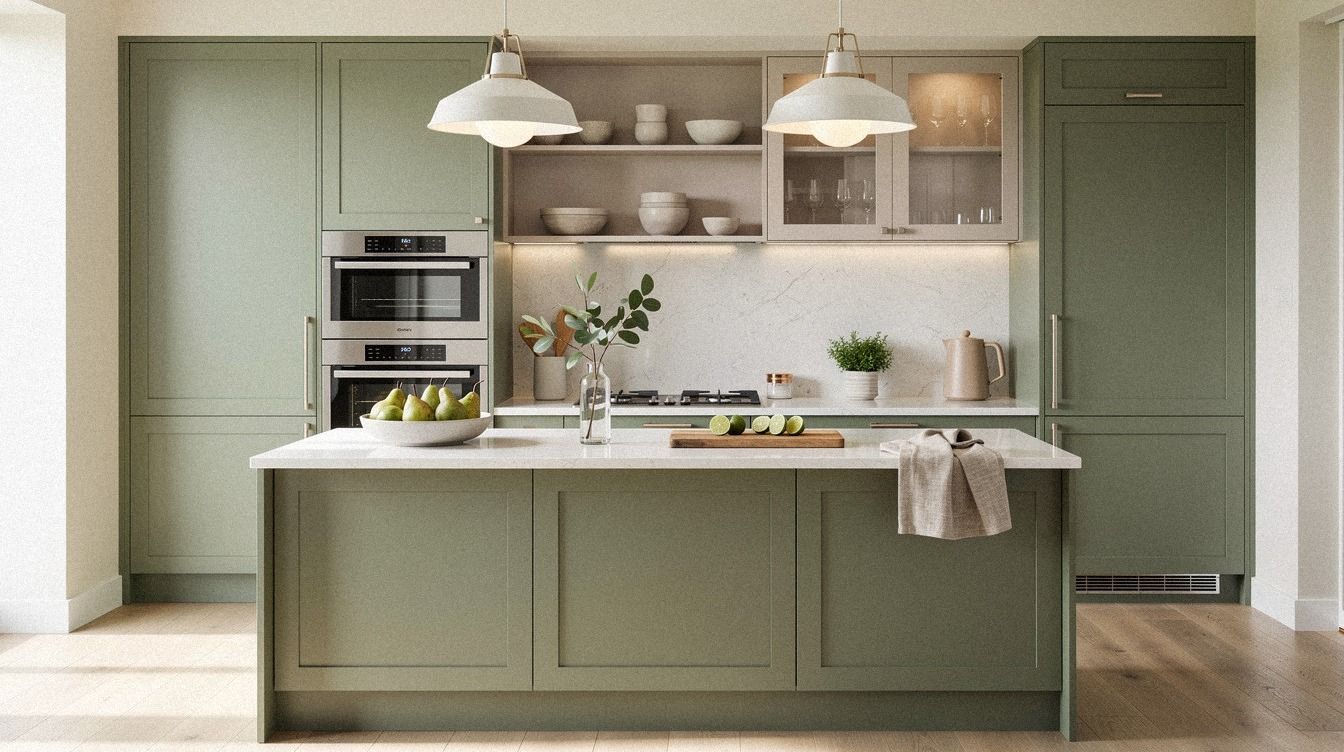
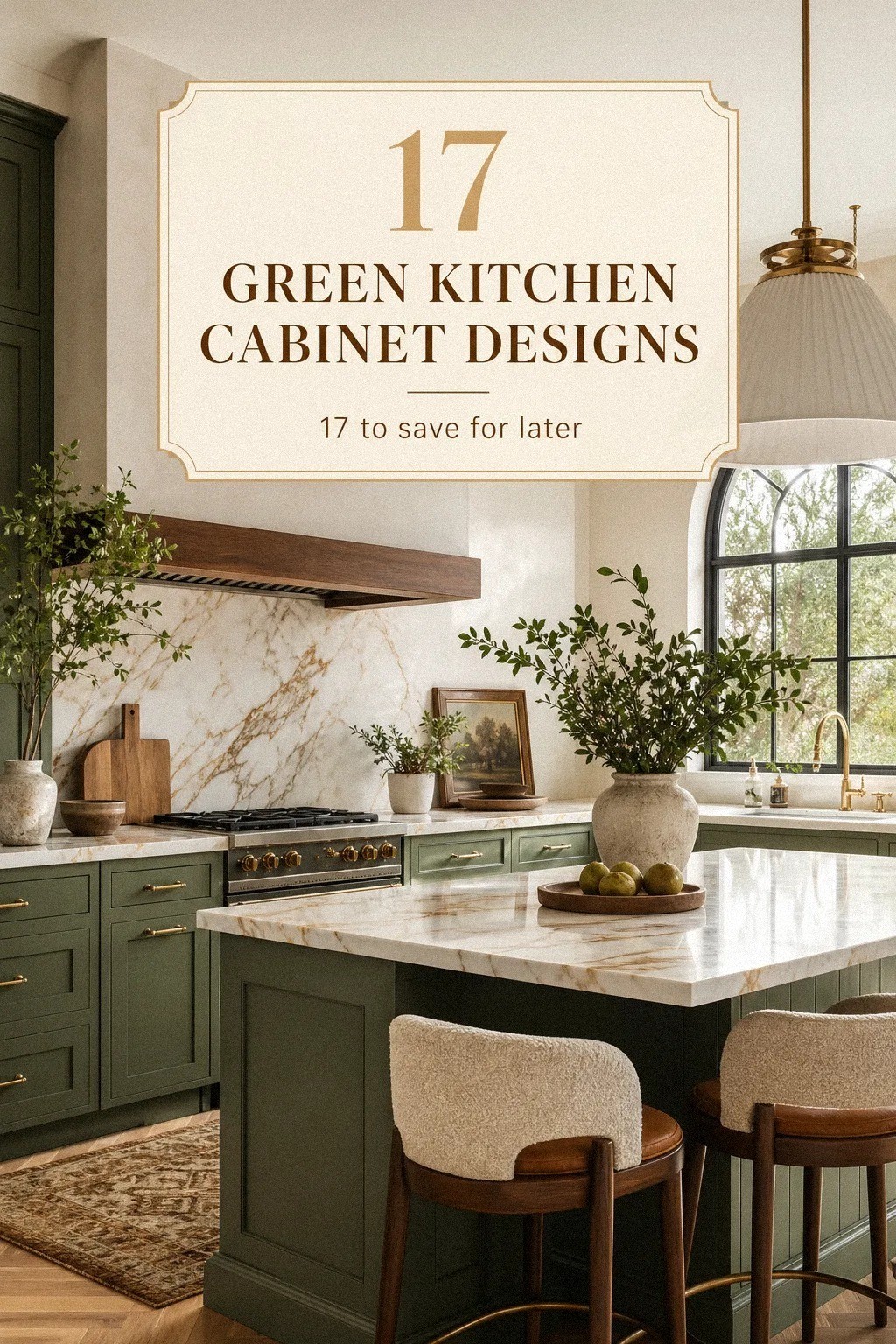
by Green kitchen cabinets work when you build the room around the right shade, not when you paint everything green and hope for the best. I learned that after helping a friend fix a kitchen that went muddy by 3 pm because the wall color, floor tone, and hardware were all fighting each other. You need an order. And once you follow that order, the room clicks.
- Start with sage lower cabinets
- Anchor the island in deep olive
- Paint cabinet doors glossy forest green
- Layer brass pulls on muted green fronts
- Hang glass uppers above painted bases
- Build a pantry wall in moss green
- Frame the range with green cabinet towers
- Pair green drawers with creamy stone counters
- Add beadboard panels to shaker doors
- Run green cabinets to the ceiling
- Wrap the fridge in matching green panels
- Soften dark green with white oak shelves
- Choose flat fronts in smoky eucalyptus
- Mix marble backsplash with emerald cabinets
- Ground neutral walls with fern green storage
- Highlight open cubbies inside green cabinetry
- Finish with warm lighting under green uppers
1Start with sage lower cabinets
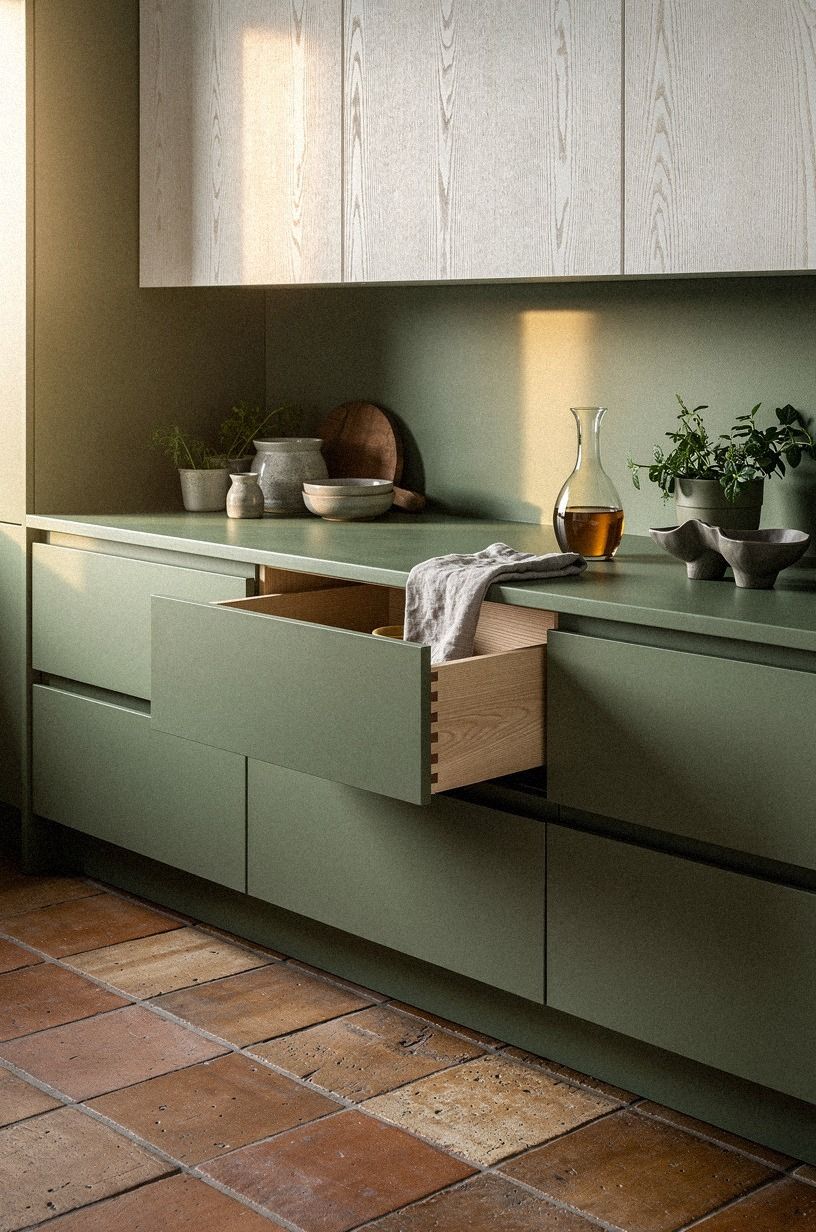
Start low if you're nervous. Sage lower cabinets let you test green without darkening the whole room, and they work especially well when your kitchen already has warm flooring underfoot. In the photo, the terracotta stone and the soft olive accents do half the heavy lifting, so your job is to keep the color in that same earthy family with Sherwin-Williams Evergreen Fog SW 9130.
You also want the uppers or walls to stay lighter than the base run. I'd keep the eye moving with quiet contrast, then borrow a few cues from these two tone kitchen cabinet ideas that add instant depth. Sage can look flat if the room lacks texture, so give it something to play against.
Think about the finish mix before you open a paint can. A terracotta floor, a few olive textiles, and cerused white oak stools or trim will warm the whole plan up fast. That is the part most people skip, and it's why their green reads cold.
2Anchor the island in deep olive
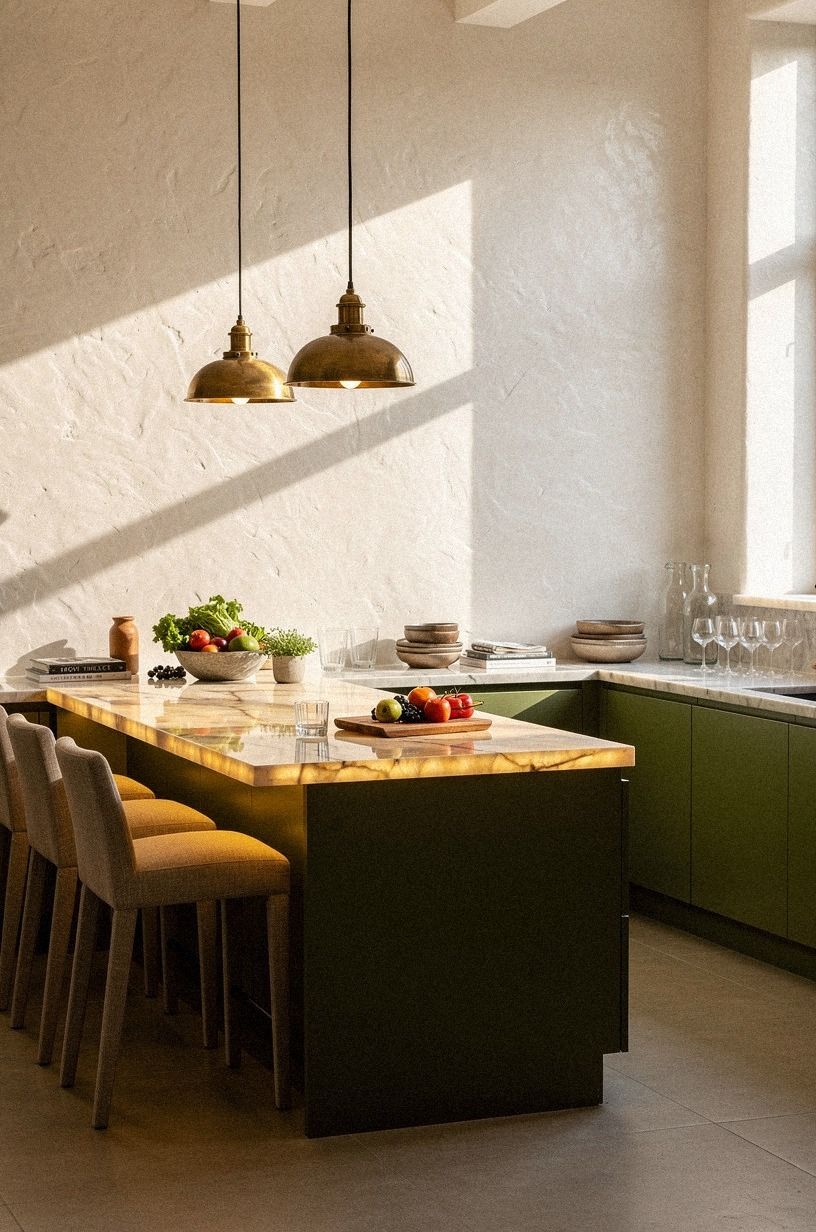
If the room is bright, let the island carry the weight. A deep olive island gives your kitchen a center of gravity, which matters even more when you have generous walkways and lots of white around it. In a layout with 42 to 48 inches of clearance all around, the island should feel planted, not like it drifted in from another house.
I like this move because you can keep the perimeter calmer while the island does the talking. If you're balancing a narrow room or an offset work triangle, this guide to small kitchen cabinet ideas that maximize storage helps you protect flow first. The green should anchor the room, not clog it.
Use a tone closer to Farrow & Ball Studio Green No.93 if your counters are pale and your ceiling gets strong daylight. But don't pair deep olive with icy gray flooring. That combo looks expensive in samples and tired once the room is fully lit.
3Paint cabinet doors glossy forest green
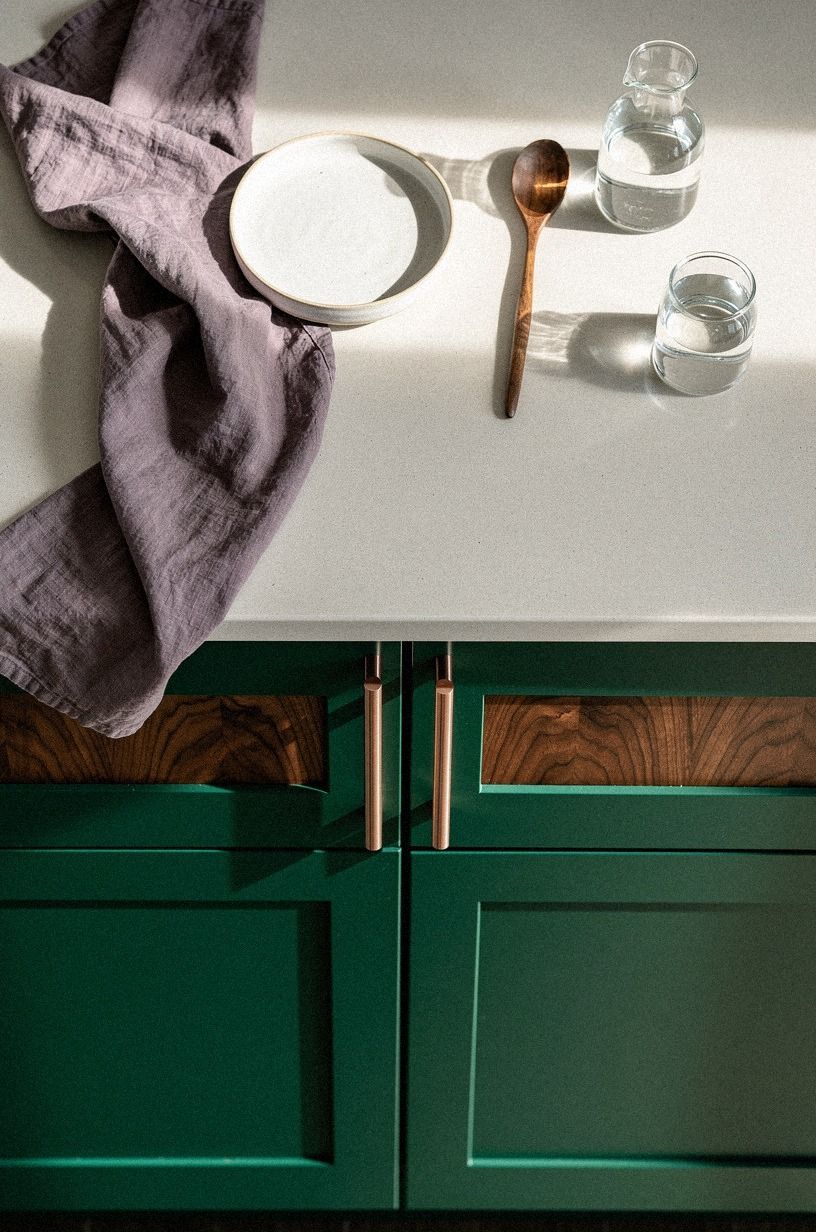
Gloss changes everything. Glossy forest green cabinet doors bounce light back into the room, and in a kitchen with book-matched walnut showing nearby, that shine can make the wood look richer instead of heavier. If your kitchen gets morning sun, you'll see the finish earn its keep every single day!
The risk is overdoing the reflection. I would not take glossy green across every surface unless the room is simple and the hardware is restrained, because too much sparkle starts to feel busy from countertop height. If you're choosing between wood warmth and paint drama, this roundup of oak kitchen cabinet ideas for a warm modern look shows where oak can save you from that slippery showroom look.
For a practical spec, use a cabinet enamel rated for repeated wiping and pair it with book-matched walnut only in measured doses. A glossy slab next to busy veining is enough. More than that, and your eyes never get a place to rest.
4Layer brass pulls on muted green fronts
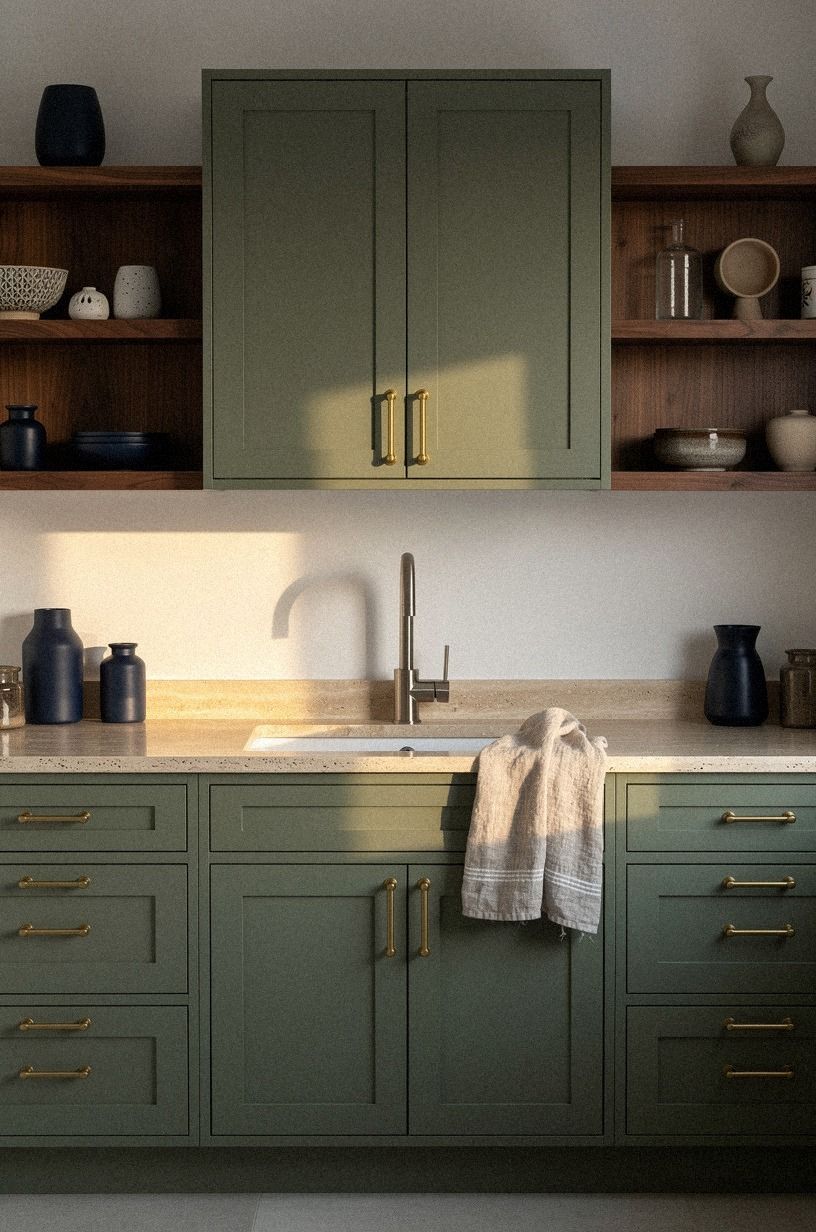
Hardware is where muted green either sharpens up or falls asleep. On soft green fronts, warm brass pulls give you the contrast the paint alone can't create, especially when the counters lean travertine and the room already has sandy warmth. The easiest version is long, clean brass hardware that feels deliberate, not tiny jewelry pinned on as an afterthought.
Here's my rule: keep the cabinet color quiet, then let the pulls draw the line work. I call it the Three-Foot Read, because you should be able to understand the cabinet rhythm from three feet away before you notice anything else. For more color pairings that age well, I like this guide to kitchen cabinet color ideas you'll still love in 10 years.
Don't cheap out on finish tone if the rest of the room is warm. Bright yellow brass against muted green can look harsh, while unlacquered brass or aged brass softens with the cabinetry and starts to feel built in. That patina is the charm!
5Hang glass uppers above painted bases
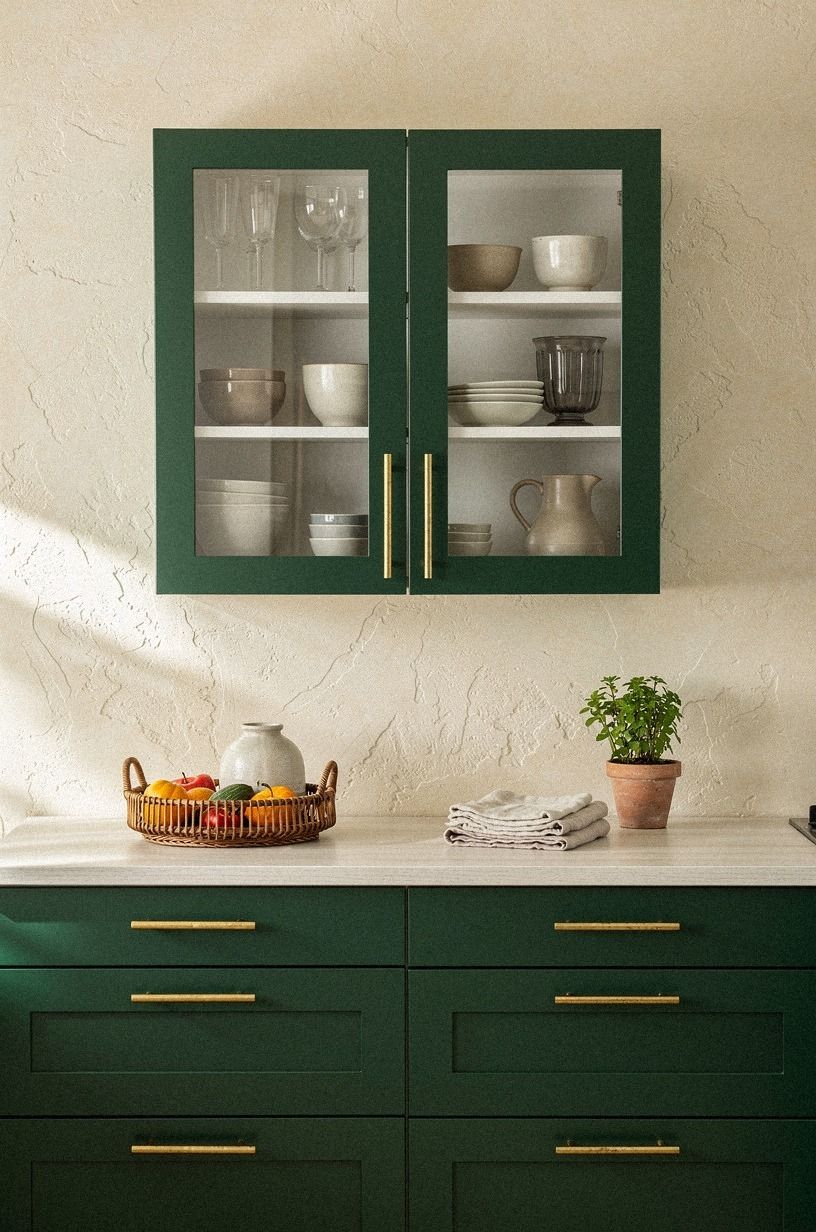
Glass uppers keep a green kitchen from getting visually top heavy. When the painted color sits on the bases and the upper cabinets turn transparent, you get storage without that boxed-in feeling, which matters a lot if the backsplash gap is the standard 18 inches and you don't want that band to feel crowded.
I like this layout best when the base color is stronger than the wall color. You can see why in kitchens that borrow ideas from galley kitchen cabinet ideas for narrow layouts, where every inch of air matters. Glass is also more forgiving than people think if you commit to a tight edit inside.
Keep the display simple. Stacks of clear tumblers, a few bowls, and one warm wood note are enough, especially above emerald green bases. If you fill every shelf, the green loses its calm and the whole wall starts chattering.
6Build a pantry wall in moss green
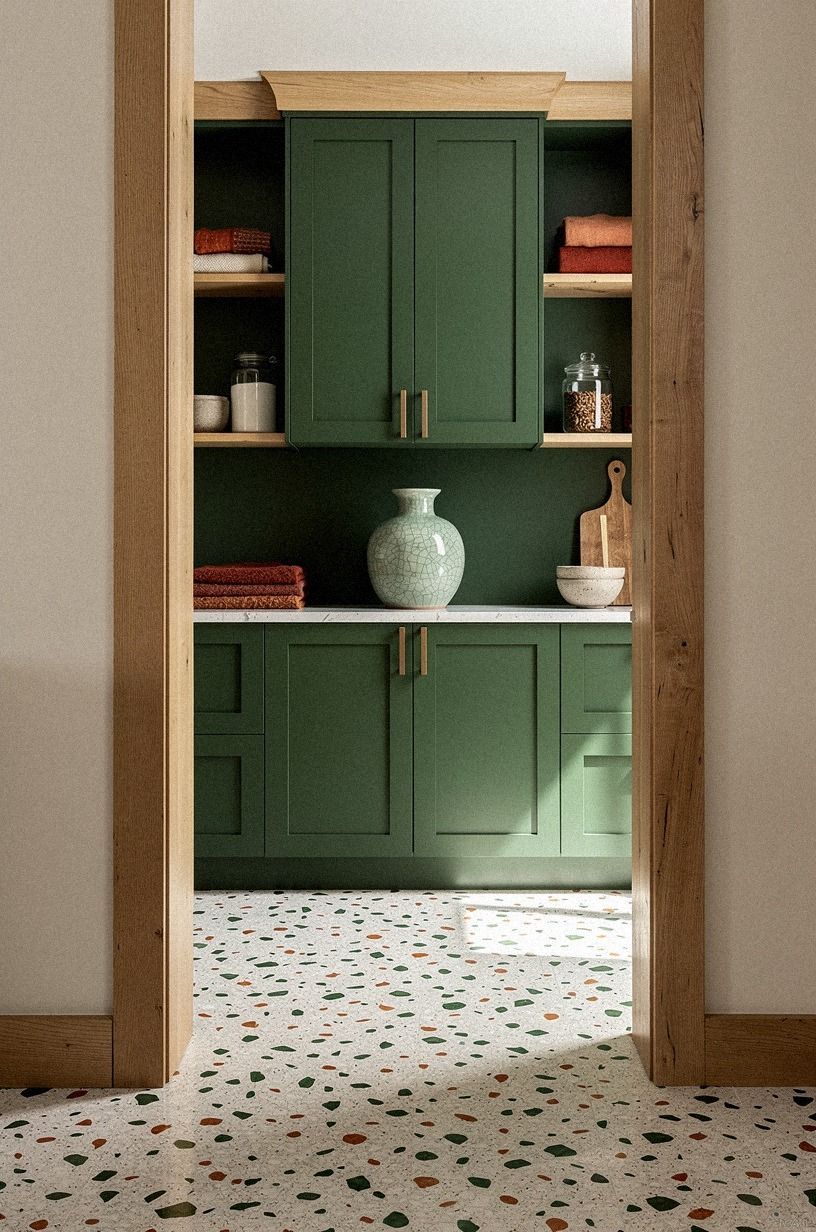
A pantry wall is where green can feel architectural instead of decorative. In the photo, the layered doorway view, the oak trim, and the rust textiles make the pantry read like part of the house, not just a bank of storage.
That's why moss green works here. It has enough depth to hold its own without turning black in shadow.
This is also the moment to think vertically. Full pantry runs pay you back when they reach for every inch, and this guide to kitchen tall cabinet ideas to use every vertical inch is worth your time before you finalize widths. Why build a statement wall if the storage behind it still wastes space?
My favorite version uses panel-ready doors, oversized chip handles, and natural oak trim to break up the green. But skip shiny chrome here. Moss needs warmth beside it or the room starts to feel damp.
7Frame the range with green cabinet towers
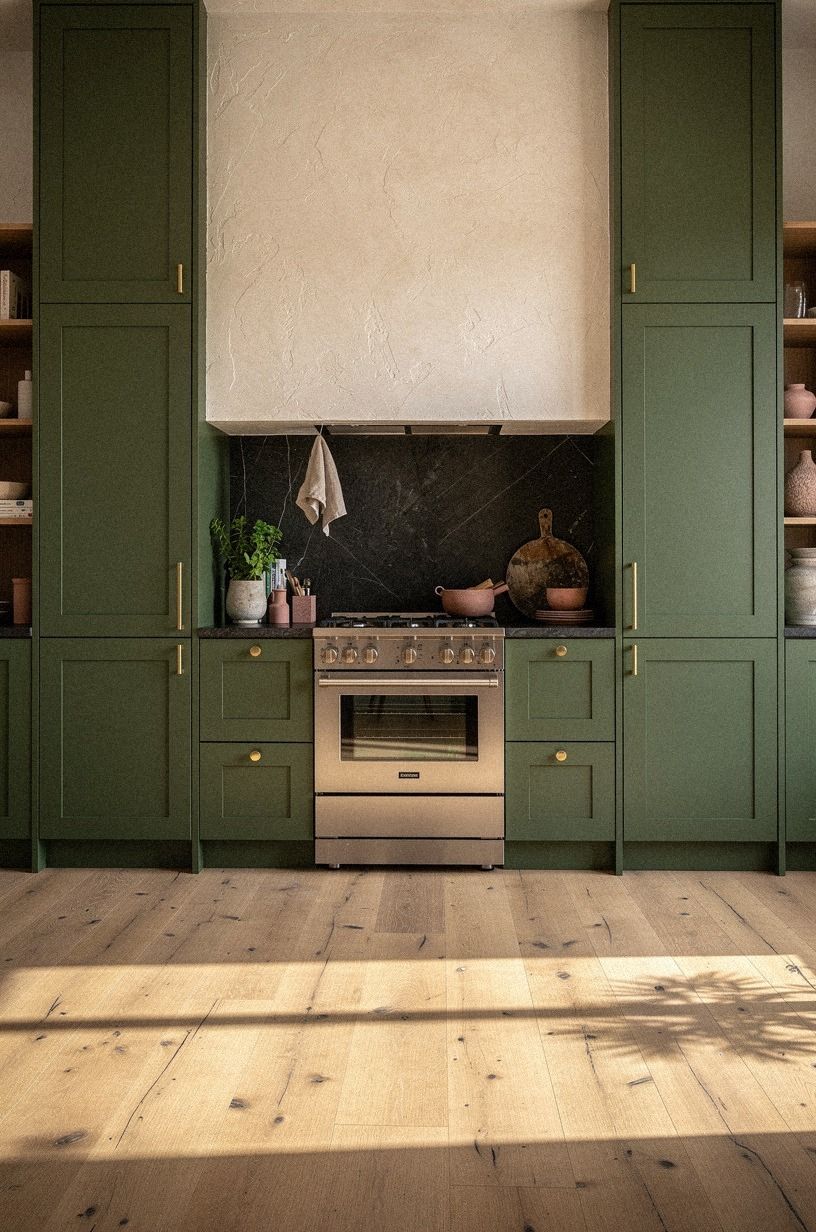
When you frame the range, you give the whole kitchen a focal wall. Green cabinet towers on both sides create symmetry, and that symmetry makes even a busy working kitchen feel calmer the second you walk in. If your hood wall is off center, tall towers can also cheat balance back into the room.
I wouldn't crowd the middle with too many materials, though. A quiet hood, one counter material, and cabinets that run 30 to 42 inches high above the work zone will look more custom than a pileup of decorative moves. For layouts that need more function around the cooking wall, these kitchen pantry cabinet ideas for smart storage show how to hide the messy stuff nearby.
This is one place where Benjamin Moore White Dove OC-17 earns its fame on the surrounding trim or ceiling. The clean warmth keeps the towers crisp. And yes, it beats stark white here, because stark white makes green feel sharper than it needs to.
8Pair green drawers with creamy stone counters
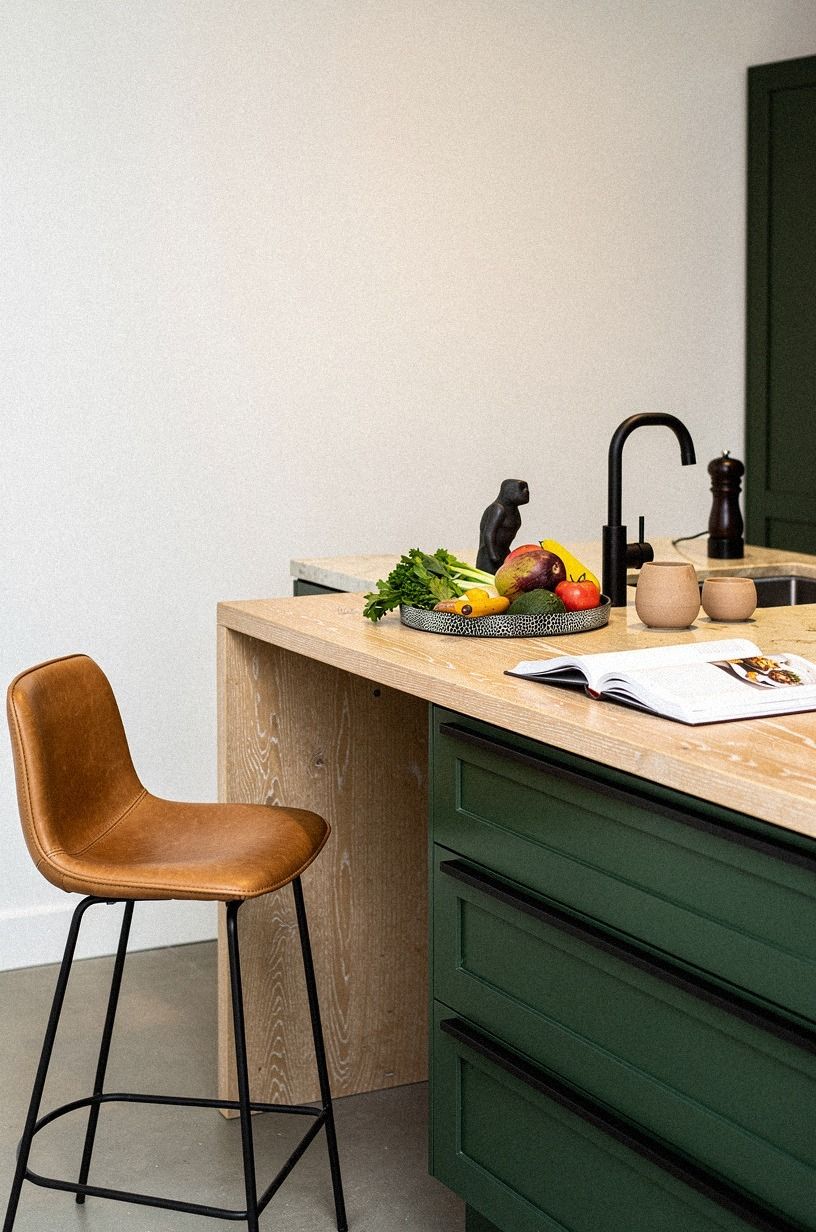
Drawers and counters should look like they were introduced on purpose. Green drawers under creamy stone feel grounded because the color sits low while the counter lifts the whole line with light. In a kitchen that leans warm, I think this pairing beats cool gray quartz every time.
Use the stone counter to soften the paint, not erase it. If you're also reworking the sink side, kitchen sink cabinet ideas to organize under the sink can help you keep the inside as practical as the outside looks. You don't want beautiful drawers and a chaotic cleanup zone.
Look for eased edges and a cabinet run that lands near the standard 36-inch counter height with creamy limestone-look quartz or true stone above. The contrast should feel buttery, not stark. That's what gives the drawers their quiet confidence.
9Add beadboard panels to shaker doors
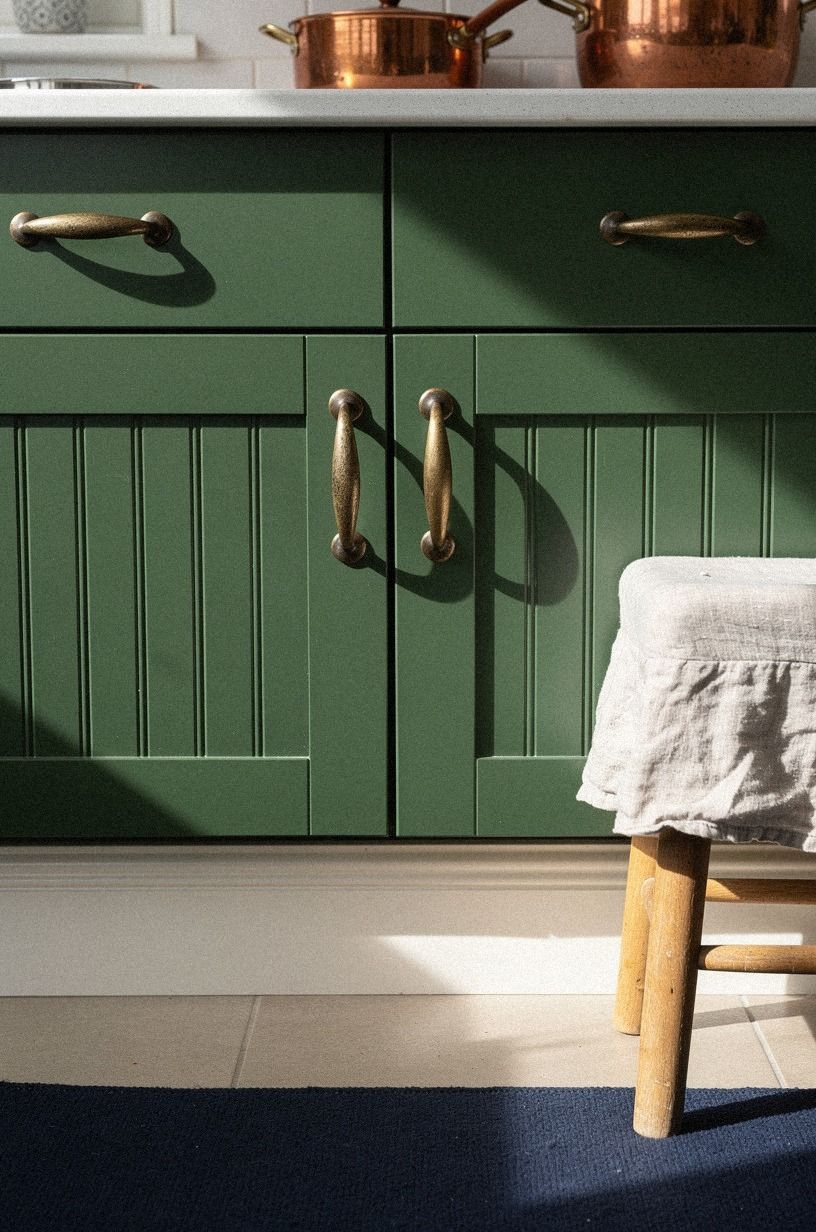
Beadboard on shaker doors adds age without making the kitchen feel theme-y. In the low, symmetrical shot from the photo, you can see why it works: the vertical lines bring rhythm, while the darker cabinet color keeps the detail from looking cute. If your room has ivory baseboards and darker toe-kicks, beadboard can bridge those tones beautifully.
This step works best when you treat it like texture, not decoration. I call it the Cottage Restraint Rule, because one layer of detail is charming and three layers start to feel like costume. If you're unsure how much profile a small room can hold, revisit these small kitchen cabinet ideas that maximize storage before you commit.
Use narrow-groove inserts and paint them in midnight bottle green rather than a bright country shade. But don't pair beadboard with fussy corbels on the same run. One old-house note is plenty.
10Run green cabinets to the ceiling
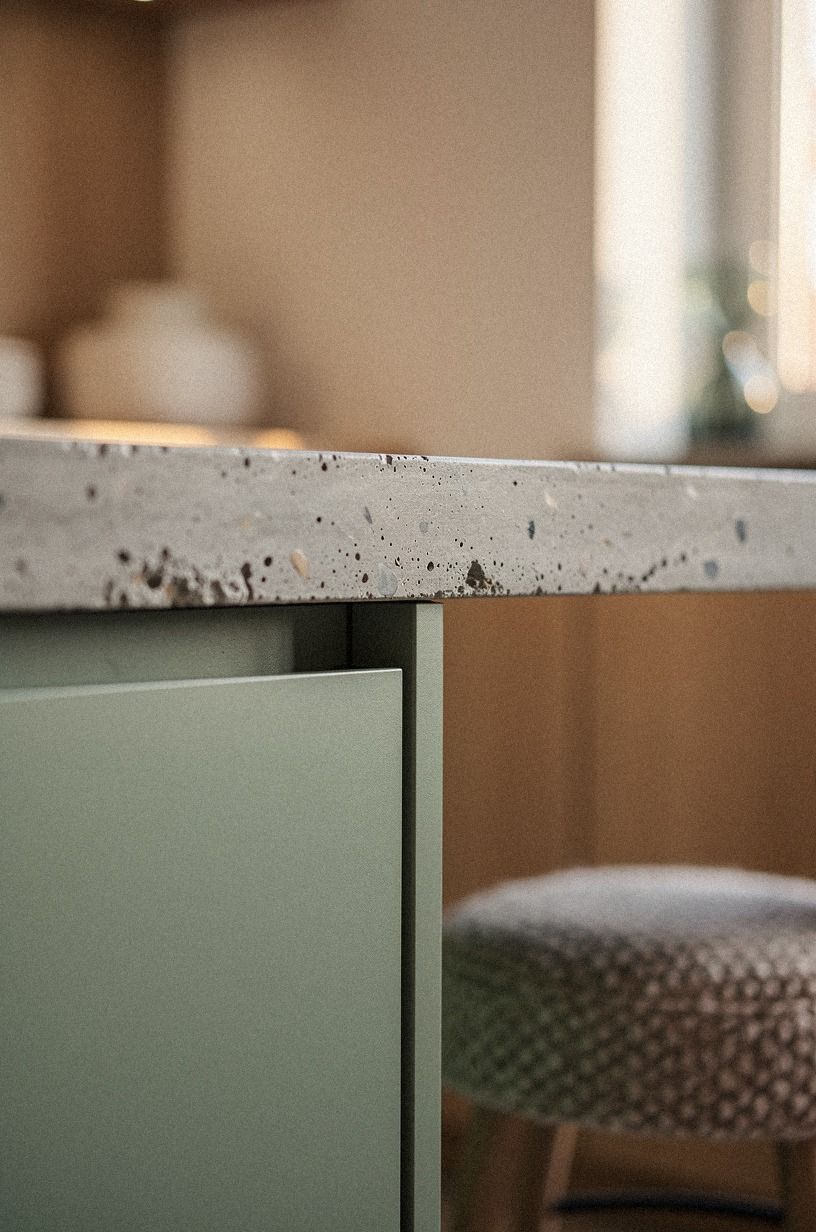
Tall cabinets look smarter when they finish cleanly at the ceiling.
11Wrap the fridge in matching green panels
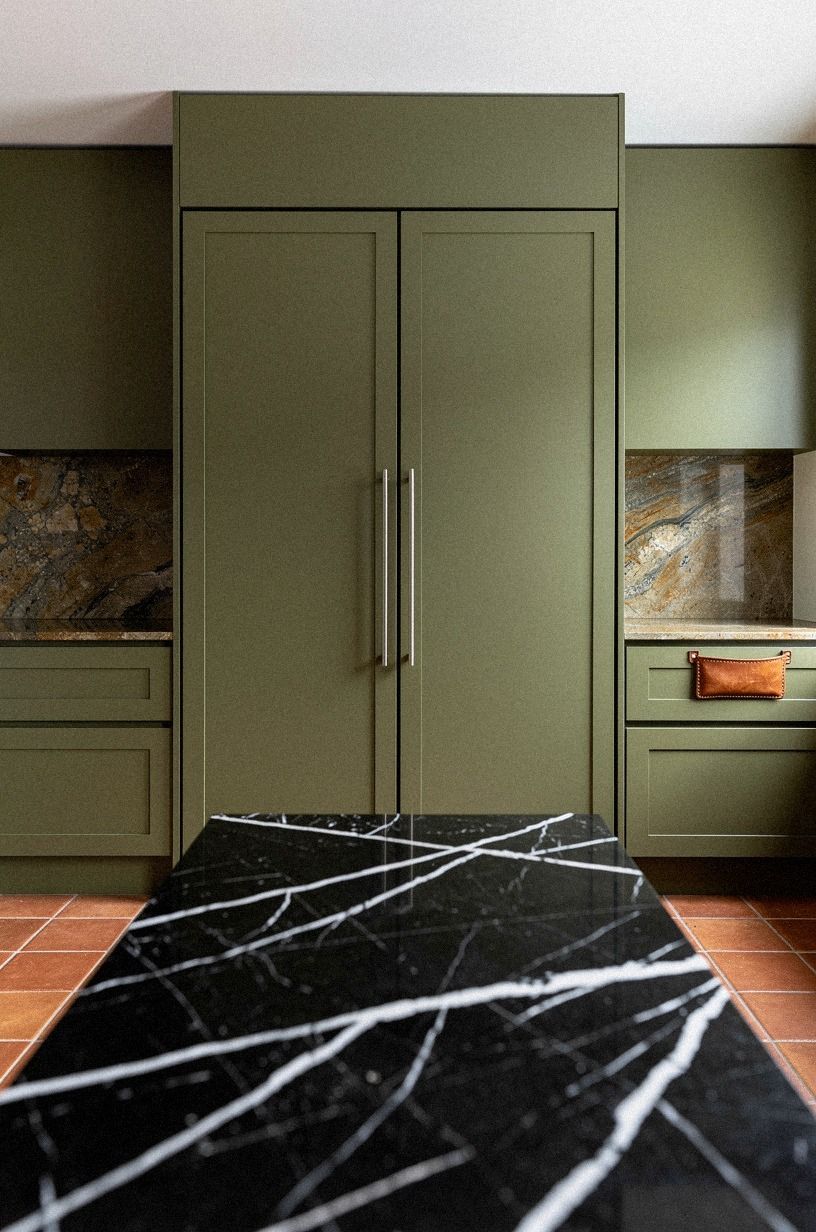
Paneling the fridge is one of the fastest ways to calm a kitchen. Once the appliance disappears into the cabinet wall, the room stops reading like a grid of machines and starts reading like furniture. In the photo, that low shot across the dark marble makes the centered green panels feel especially intentional.
And this is not just a pretty move. It works hardest in kitchens where the fridge sits on a main sightline, because every stainless interruption makes the cabinetry feel less tailored. If you need more examples of turning tall blocks into useful storage, the layouts in kitchen tall cabinet ideas to use every vertical inch are worth stealing from.
I'd rather spend money here than on trendier bar stools. A wrapped fridge beside Nero Marquina marble feels permanent, while random seating swaps rarely solve the real visual problem.
12Soften dark green with white oak shelves
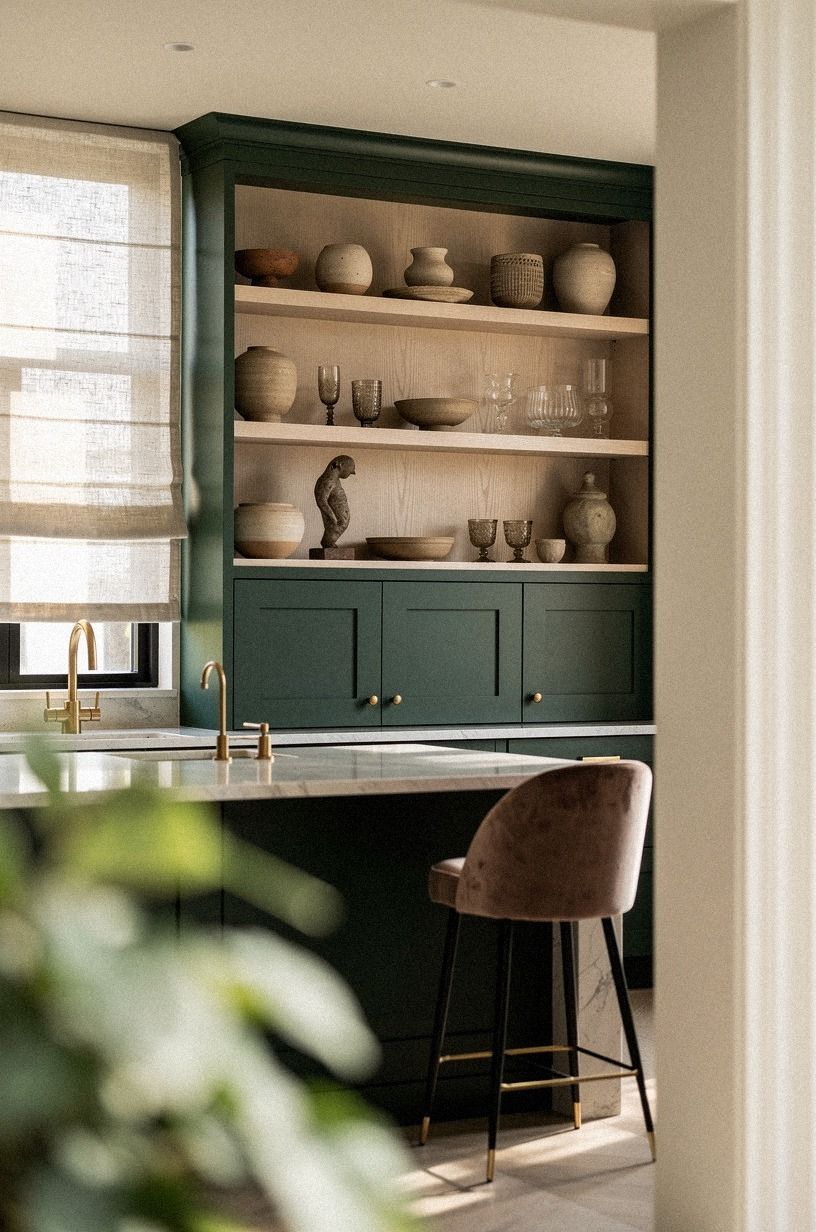
Dark green can feel heavy until you interrupt it with wood. White oak shelves break up the cabinet wall, warm the color, and give you a place to land a few useful objects without turning the whole kitchen into open shelving chaos. In the photo, the leafy foreground and off-center view make the shelf moment feel airy instead of crowded.
My advice is to keep the shelves honest. Plates, a crock, one stack of glasses. Maybe a board.
That's it. If you're chasing the same warmth through mixed finishes, two tone kitchen cabinet ideas that add instant depth show how wood and paint can share a room without splitting it in half.
Use 3/4-inch white oak shelves with a matte sealer so the grain stays visible. But don't stain them orange to match older floors. Pale oak against dark green is the point, and it's what keeps the wall breathing.
13Choose flat fronts in smoky eucalyptus
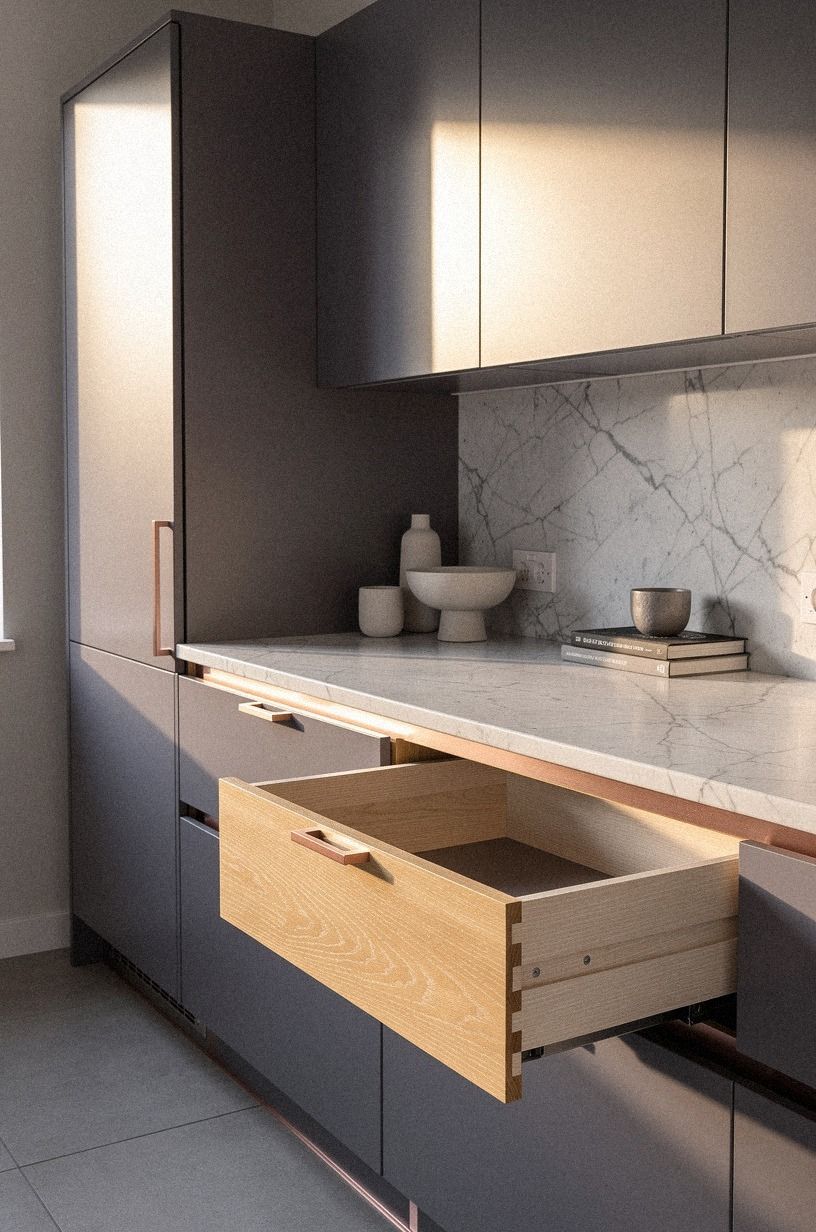
This is the one place where I'd skip decorative hardware if the profile is truly minimal.
14Mix marble backsplash with emerald cabinets
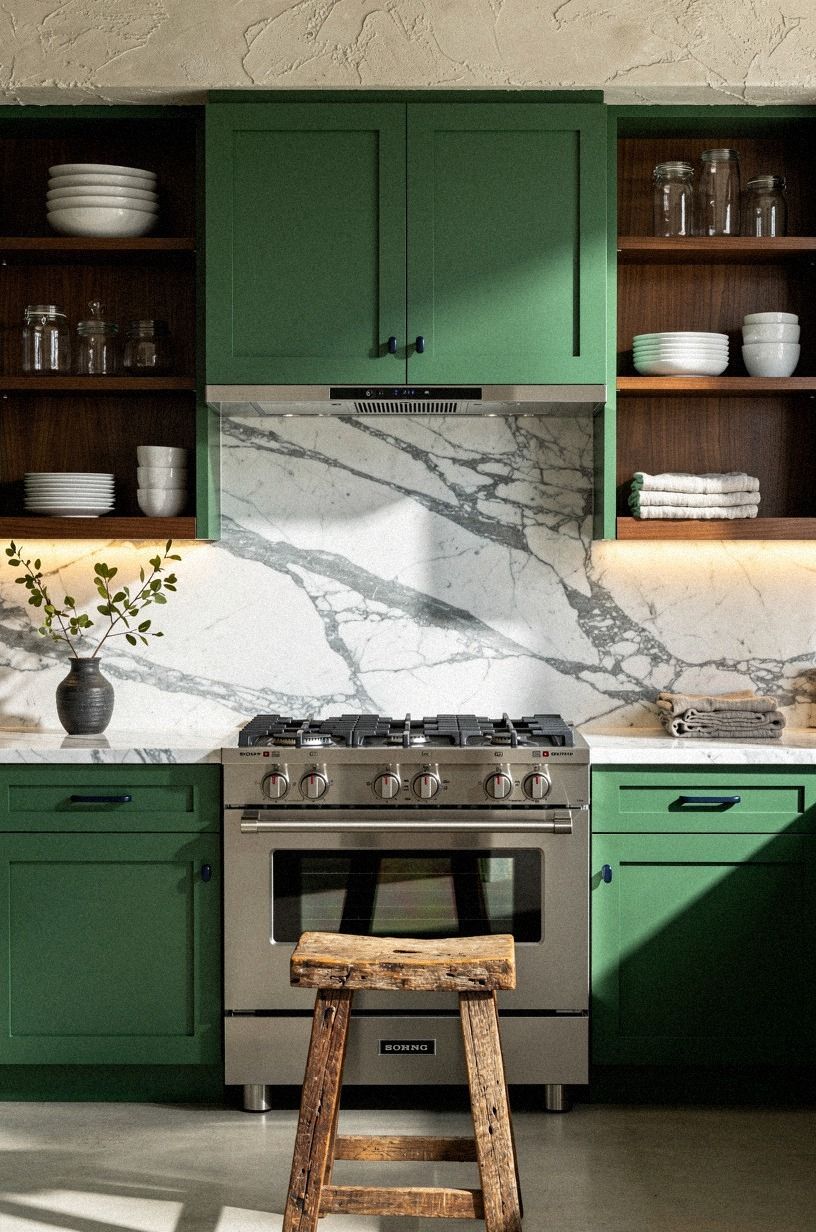
Emerald cabinets can handle drama if the backsplash brings movement, not just brightness. In the photo, the first-person view toward the symmetrical range wall makes the marble feel like part of the architecture, while the navy details and walnut keep the green from shouting. You want that same balance in your own room.
And here's the practical part: keep your 18-inch backsplash gap near the standard so the stone has enough room to read. If you're comparing bold paint with bolder pattern, kitchen cabinet color ideas you'll still love in 10 years will keep you honest about what ages well. Emerald is gorgeous, but it needs a grown-up partner.
I like veiny marble here more than a tiny patterned tile. White marble backsplash movement gives you scale, while little motifs can make rich cabinets feel fussy. Worth it, especially if the room gets evening light!
15Ground neutral walls with fern green storage
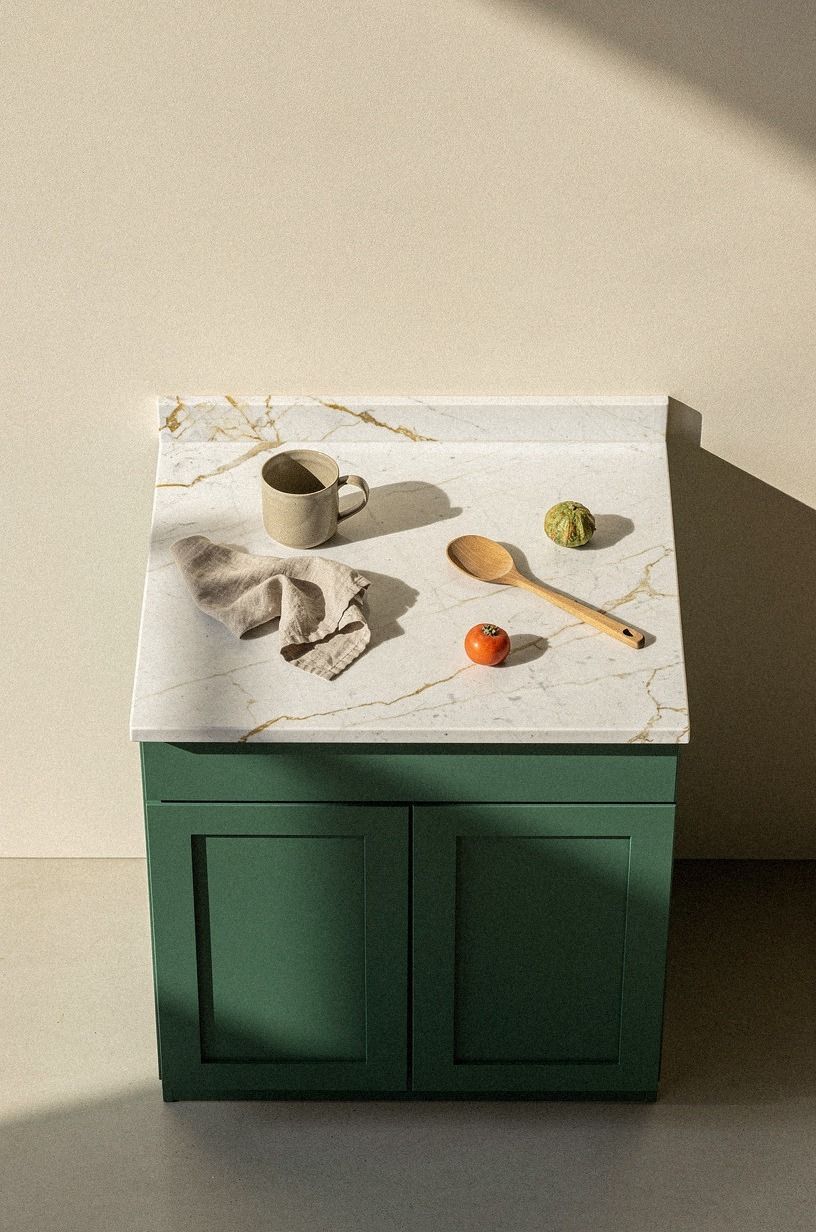
When the walls are neutral, storage becomes the anchor. Fern green cabinets or pantry units can ground a pale kitchen without forcing every other surface to compete. In the overhead vignette from the photo, the negative space around the cabinet run matters as much as the storage itself, which is a good reminder for your own layout.
If you rent or you're phasing the project, start with one storage wall or one freestanding cabinet and build out later. That strategy shows up in galley kitchen cabinet ideas for narrow layouts because smaller rooms can't afford visual clutter. A single strong green note often beats a full green flood.
Go warmer on the walls than you think. Benjamin Moore White Dove OC-17 or a similar soft neutral lets fern stay lively instead of acidic. But don't put it against a cold blue white unless you want the whole room to feel sharper.
16Highlight open cubbies inside green cabinetry
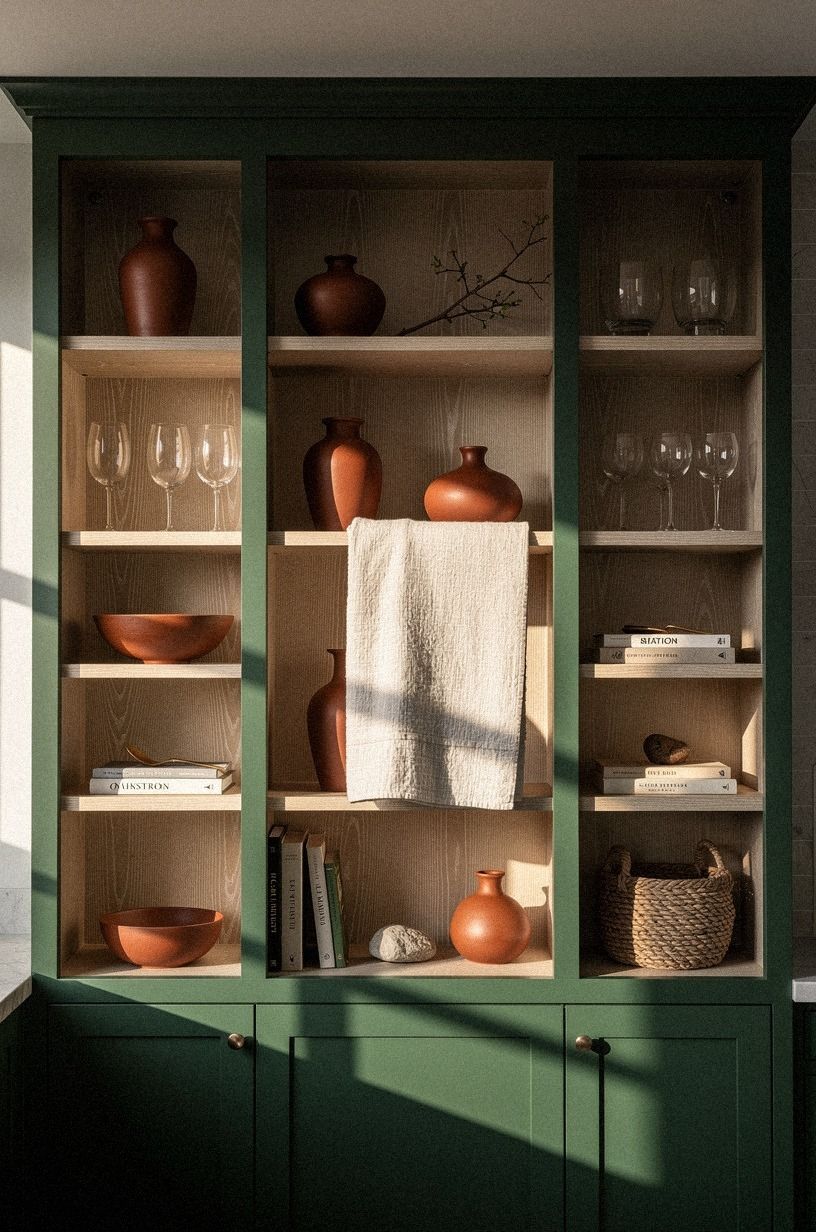
This is where you should edit harder than you think.
17Finish with warm lighting under green uppers
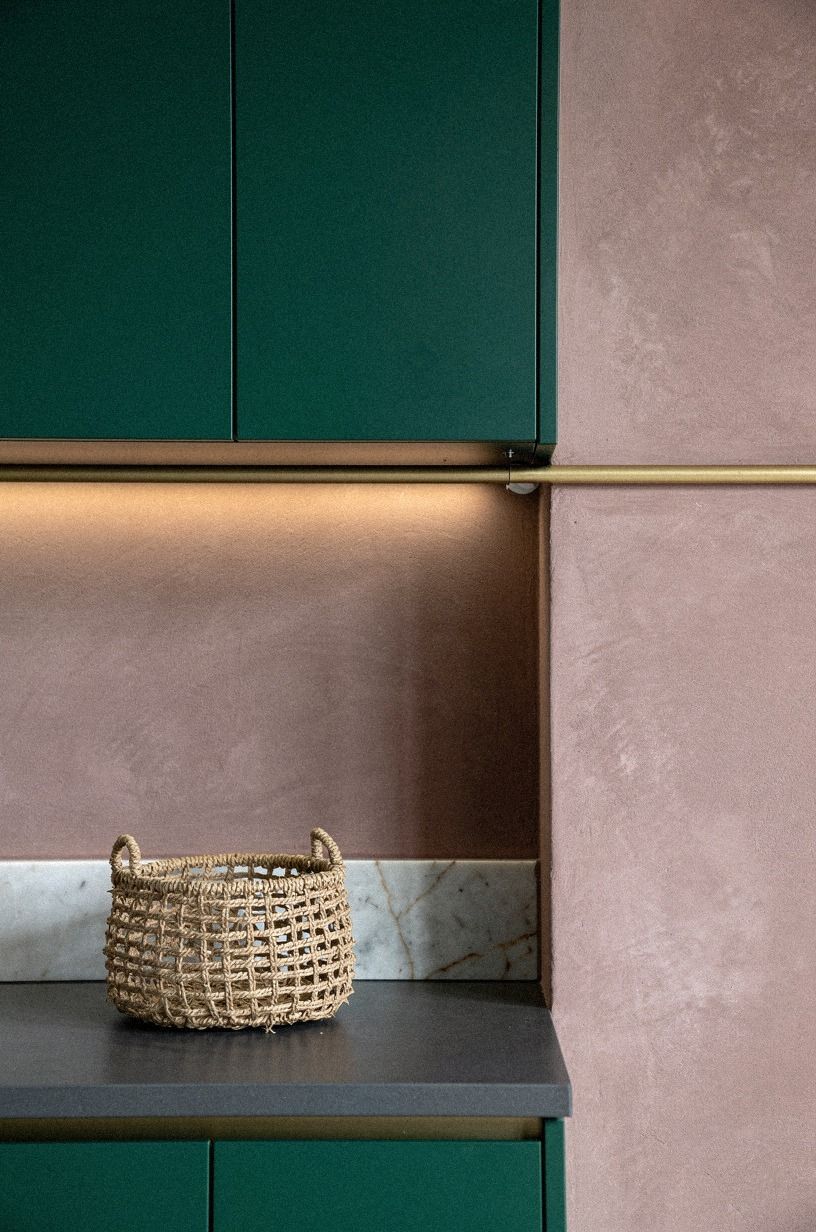
Lighting is the final step because it tells you whether the green was right all along. Under-cabinet lighting warms painted uppers, softens shadows on the backsplash, and makes the work zone usable after sunset. In the photo, the off-center frontal view leaves plenty of negative space, which is exactly why the warm line of light feels so calm.
Use dimmable LED strips with a warm range, then judge the color at night before you declare the project done. For kitchens that need more than one kind of storage and glow, kitchen sink cabinet ideas to organize under the sink are a good reminder that function should stay in the conversation too. Pretty isn't enough if the room still annoys you.
I'd take warm task lighting over one trendy pendant any day. 2700K under-cabinet LEDs make sage, olive, and emerald all read richer, and that's the difference between color that sits there and color that lives.
Before you buy a gallon, decide what green is doing
I've seen green kitchens go right for opposite reasons. One was pale, quiet, and almost architectural, with soft lower cabinets, white oak, and a ceiling line so clean you barely noticed the storage. The other was richer and moodier, with dark towers at the range wall, emerald bases, and brass that had already started to mellow.
Both worked because the owners chose a job for the green before they chose a shade. That is what people get backward.
If you want green to warm the room, you need earthy partners. Terracotta. creamy stone. oak. aged brass. If you want green to sharpen the room, that's different.
Then you're asking for cleaner contrast, more polish, maybe a glossier finish, and much less visual noise. I made the mistake once of trying to split the difference in my own sample board. It looked safe.
It also looked undecided, which is worse.
Money matters here too. Most cosmetic kitchen refreshes do not need a gut remodel to feel different, but they do need one or two smart priorities. Paint and hardware are often enough.
Lighting changes more than people expect. Paneling the fridge or extending cabinets to the ceiling looks expensive because those moves remove interruptions. Nobody tells you this, but eliminating the awkward thing often does more than adding another pretty thing.
Here are the broad US ranges worth keeping in mind before you start shopping:
And if I had to choose where the money shows most, I'd rank it this way: color first, hardware second, lighting third, then the expensive surfaces. New counters are lovely, sure, but they can't rescue a bad green.
The room has to feel settled before it feels luxe. That's the real order.
What People Always Want to Know
What is the best 17 Green Kitchen Cabinet Ideas From Sage to Emerald for a small kitchen?
Sage lower cabinets are usually the safest win in a small kitchen because they keep the weight low and the room open. IKEA SEKTION bases in a soft green look especially good when you pair them with lighter uppers, warm flooring, and one strong island accent instead of color everywhere.
Where can I buy 17 Green Kitchen Cabinet Ideas From Sage to Emerald pieces on a budget?
Start with IKEA, Target, and Wayfair for hardware, shelves, stools, and basic lighting. Then check Facebook Marketplace for solid wood islands or pantry cabinets you can repaint. I wouldn't waste money on flimsy brass lookalikes if you already know the finish will scratch in a month.
How much does a 17 Green Kitchen Cabinet Ideas From Sage to Emerald makeover cost?
A cosmetic update usually lands around $300 to $1,500, while a more complete refresh often runs $3,000 to $12,000. Paint and hardware are the cheapest high-impact moves.
Free wins? Editing shelf clutter, changing bulbs, and pulling warm sample chips before you commit.
Can I create a 17 Green Kitchen Cabinet Ideas From Sage to Emerald on a budget?
Yes, and you do not need a full remodel. Low-cost steps include painting lower cabinets only, swapping pulls, adding peel-and-stick backsplash, and styling oak shelves with what you own. But keep the palette tight or the savings start looking accidental.
Is a 17 Green Kitchen Cabinet Ideas From Sage to Emerald worth it in a small space?
Yes, often more than in a big room, because a small kitchen benefits from one clear color decision. A grounded palette can make the room feel finished fast. Keep the walkway open, limit competing finishes, and let the green sit on one or two major surfaces.
Is a 17 Green Kitchen Cabinet Ideas From Sage to Emerald a good idea for a rental?
Yes, if you use renter-friendly swaps. Removable changes like peel-and-stick backsplash, plug-in under-cabinet lighting, and temporary hardware updates can shift the whole mood without damaging the cabinets. I'd also use freestanding green storage before I touched anything built in.
Where I'd Start First
If I had to pick one step, I'd start with sage lower cabinets. Evergreen Fog works because it warms the room without swallowing the light, and that makes every later choice easier. Pin that direction for later, then sample it beside your floor before you buy a single pull.