
 by
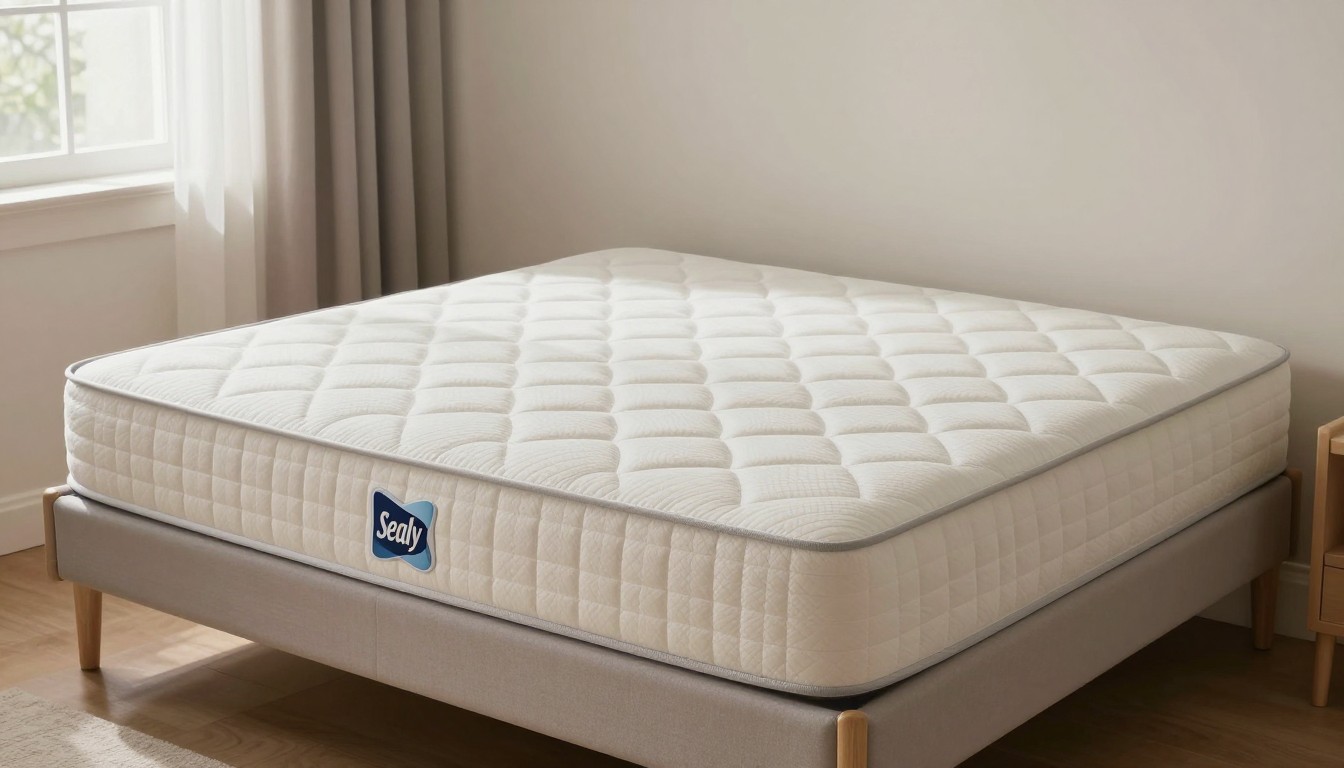
by Quick answer: The sealy crib mattress can be a sensible nursery choice, but only after you verify the exact model. I’d buy a model whose label clearly identifies the infant sleep surface, matches the crib manufacturer’s fit instructions, and documents the cover, core, and certifications. I’d skip any model with vague specifications, uncertain fit, damage, or a seller page that mixes details from different Sealy products.
- Best fit: Parents who want straightforward construction, manageable cleaning, and model-specific documentation.
- Main caution: Sealy sells a range of crib mattresses, so the brand name alone does not establish the core, firmness layout, cover, or certifications.
- My priority: Confirm compatibility with the crib before comparing softer features such as fabric feel or premium styling.
Updated July 2026 · Reviewed for accuracy
Sealy Crib Mattress Review: My Verdict
My verdict on the sealy crib mattress is conditional rather than brand-wide. Sealy’s crib-mattress name covers different constructions and feature packages. The right question is not simply, “Is Sealy good?” It is, “Does this exact model have the documented firmness, fit, cover, and condition required for this exact crib?”
I’d consider one for a nursery if the manufacturer’s model description is clear and the mattress arrives flat, intact, correctly labeled, and compatible with the crib instructions. A cleanable surface is useful, while a dual-sided design may offer practical value if Sealy explicitly identifies which surface is intended for the infant stage and which is intended for later use.
I’d pass if a retailer combines photos, specifications, or reviews from several models on one page. That makes it too easy to assume a certification, removable cover, or dual-sided construction applies when it belongs to another product. I’d also reject a mattress with an uncertain history, damaged cover, softened perimeter, persistent indentation, or moisture inside the core.
The Nut’s construction rule: Treat the exact model label as the evidence. A familiar brand badge cannot tell you what is under the cover, which side is intended for an infant, or whether the mattress fits a particular crib.
Why the Exact Sealy Model Matters
Foam, innerspring, dual-sided, waterproof, water-resistant, washable, and breathable can all appear in crib-mattress shopping language. Those terms describe different parts of a product, and none should be assumed from the Sealy name alone. Sealy’s manufacturer descriptions should identify the actual core and cover used by the model being considered.
A dual-sided model is meant to provide surfaces with different intended uses. That can be practical, but the label needs to make the orientation unmistakable. I would not identify the infant surface by softness alone, and I would not rely on a retailer photograph that may be shared across several products. Follow the permanent product label and Sealy’s instructions for that model.
Some Sealy descriptions use soybean-based foam language. I read that carefully. “Soybean-based” does not mean the entire core is soy, naturally derived, or certified organic. It generally describes polyurethane foam in which some feedstock is soy-derived. Parents seeking a particular material standard should look for the precise certification or material disclosure rather than treating a plant-related word as proof.
Other models may use coils or a more traditional innerspring construction. Coils can change the handling, perimeter feel, and overall character of a mattress, but coil language by itself does not establish better fit or suitability. The cover, padding, edge condition, and compatibility instructions still matter.
- Core: Confirm foam, coils, or another construction on the exact model page.
- Sleep surfaces: Look for permanent labeling if the model is described as dual-sided.
- Cover: Distinguish waterproof or water-resistant construction from a removable, washable cover.
- Certifications: Verify the model name on the certification claim rather than applying it to the whole brand.
The adult Sealy Response Premium Ridge Crest also illustrates how much construction can vary beneath one brand name. Its adult-bed design is not evidence about a crib mattress, but the same shopping discipline applies: identify the model before drawing conclusions from the logo.
Construction, Firmness, and Edge Condition
A crib mattress should not be judged like an adult mattress. Plush pressure relief, deep contouring, and a slow foam response are not the goals I’d use for the infant surface. I want the surface identified for infant use to feel flat and resistant to deep compression, with no obvious valley, buckling, or delayed rebound.
A hand press can reveal damage, but it cannot certify that a mattress is suitable. Press across the center, corners, and perimeter to look for inconsistent recovery or a spot that remains compressed. Then return to the label and instructions. A palm test is a condition check, not a substitute for documented product use or fit.
Edge condition matters because the perimeter meets the crib structure. “Reinforced edge” is useful only if it belongs to the exact model and the edge remains even in real condition. I would inspect for separation, crushed areas, exposed material, and a perimeter that folds away from the cover. Marketing language cannot cancel visible deterioration.
Foam and innerspring cores also differ in handling. A foam core often feels easier to lift during a sheet change, while a coil unit may feel more traditional and less flexible. That is a convenience distinction, not a safety ranking. A correctly documented and compatible model matters more than choosing a construction category by reputation.
Condition check: Inspect the whole perimeter with the sheet removed. Stop using the mattress and consult the manufacturer if you find a torn cover, exposed core, persistent depression, damaged seam, or shape that no longer matches the crib as instructed.
Feel, Airflow, Motion, and Everyday Handling
Firm and flat are more useful descriptions here than comfortable or plush. Adults commonly interpret softness as comfort, but that intuition is not the right way to evaluate an infant sleep surface. If the model has separate infant and toddler surfaces, use only the side identified by the manufacturer for the child’s current stage.
Airflow claims need equally careful reading. A mesh panel, textured fabric, or “breathable” product name describes a cover feature unless the manufacturer documents something more specific. I would not translate that wording into a temperature result, a medical benefit, or permission to ignore current sleep-environment guidance.
Motion isolation is a low-priority crib feature. There is no sleeping partner on the other side whose movement needs to be absorbed. What matters more is that the surface remains stable, the core does not shift inside the cover, and the perimeter retains its intended shape.
| Product language | What I would verify | What it does not prove by itself |
|---|---|---|
| Dual-sided | Clear labeling for each intended surface | Correct orientation without checking the label |
| Waterproof | Care directions and intact seams | That the whole mattress can be soaked or machine-washed |
| Breathable | The exact cover construction described by Sealy | A measured cooling result or medical benefit |
| Reinforced edge | Even perimeter condition on the delivered mattress | Compatibility with every crib |
Certifications and Claims Worth Checking
A certification belongs to a specific material or finished product, not automatically to every mattress carrying the same brand. This is why I would record the full model name before checking certification language. A retailer’s generic Sealy description is not enough if the certification cannot be tied to the item being purchased.
According to the CertiPUR-US program, its certification concerns flexible polyurethane foam and addresses specified content, durability, and emissions criteria. It does not certify an entire crib, establish mattress-to-crib fit, or turn a conventional foam core into an organic product.
According to UL’s GREENGUARD program, GREENGUARD Gold concerns chemical-emissions criteria for the certified finished product. That can be useful information about emissions, but it is not a substitute for inspecting the mattress, following the crib instructions, or confirming the intended sleep surface.
- If CertiPUR-US is advertised: Confirm that the claim applies to the foam in the exact Sealy model.
- If GREENGUARD Gold is advertised: Confirm that the exact finished product is identified.
- If organic language appears: Look for the named standard and certified component rather than relying on imagery or broad wording.
- If a retailer and Sealy disagree: Pause the purchase and request model-specific documentation.
Certifications can narrow uncertainty about particular claims, but they do not create a universal verdict for the range. Fit, condition, intended use, and correct assembly remain separate checks. I would rather have modest, verifiable specifications than a long row of loosely attached badges.
Fit Comes Before Cover Features
Crib fit is an exact product-to-product question. “Standard” in a sales description should not replace the crib label, the crib manual, or the dimensions published for the exact mattress. I would compare those sources before opening bedding or discarding packaging.
The CPSC distinguishes between full-size and non-full-size crib requirements. A maximum-gap rule written for non-full-size products should not be presented as a universal full-size crib rule. For a full-size crib, use the applicable full-size requirements and the fit directions supplied by the crib and mattress manufacturers rather than borrowing a rule from another product category.
Do not improvise around a mismatch. A topper, folded towel, foam strip, or padded insert changes the sleep setup and is not a sound repair for the wrong mattress. If the product does not fit as its instructions require, return it and obtain the correct mattress for that crib.
A portable playard is another distinct product system. A crib mattress should not be added merely because it appears to fit within the frame. My guide to whether a crib mattress fits in a Pack 'n Play explains why the playard manufacturer’s instructions control that decision.
Before keeping the mattress: Match the model on the box, law label, and order record. Place it in the fully assembled crib without improvised filler, inspect the entire perimeter, and resolve any fit uncertainty with the manufacturers before use.
Cleaning Without Damaging the Core
Waterproof, water-resistant, removable, and machine-washable are not interchangeable. A waterproof sleep surface may still have seams, side panels, or underside materials with different care limits. A removable cover may have separate washing directions from the mattress core. Follow the care label attached to the exact product.
For a fixed cover, use only the cleaning method Sealy specifies. Avoid saturating the core unless the instructions expressly permit it. If liquid reaches internal foam or padding, allow the manufacturer to guide the next step rather than covering a damp mattress and putting it back into service.
A removable cover can simplify routine cleanup, but its convenience creates another checkpoint. Reinstall it in the stated orientation, close every fastener, and make sure the cover lies smooth without bunching or pulling the mattress out of shape.
- Read the sewn-in care label before the first spill.
- Use only cleaning products and methods permitted by Sealy for that model.
- Inspect seams and the underside after cleanup.
- Do not return the mattress to the crib while any component remains damp.
- Replace rather than conceal a cover that is torn or no longer fits correctly.
Price and Value Without Feature Creep
The clearest cited price point is $130, which OurSleepGuide.com lists in its review of the Sealy Premier Posture dual-sided crib mattress. Treat that as a sourced reference point rather than a promise of the current checkout price, because the seller, exact model, and timing can differ.
I would judge value by documented construction, not by the length of the product name. Paying more can make sense for a removable cover, clearly identified sleep surfaces, a different core, or a certification that matters to the buyer. It does not make sense when a retailer merely adds lifestyle language without identifying a material or functional difference.
| Shopping position | What may justify it | My caution |
|---|---|---|
| Basic model | Clear core, cover, use, and care documentation | Do not assume missing features from brand reputation |
| Feature-led model | A useful cover design or clearly documented dual-sided build | Confirm that each feature belongs to the exact SKU |
| Specialty model | A material or certification the buyer specifically values | Premium wording is not the same as verified construction |
Read warranty language at the same model-specific level. Coverage, exclusions, proof-of-purchase requirements, and seller eligibility can vary. I would not infer generous terms from another Sealy mattress or from a retailer summary that does not reproduce the applicable policy accurately.
Parents looking in a separate premium category may also encounter the Saatva Crib. It should be evaluated as a different product using its own official construction and policy documents, not treated as automatically better than an identified Sealy model without direct comparative evidence.
Who Should Buy It, and Who Should Skip It
A Sealy model makes the most sense for a buyer who is willing to verify the exact product rather than shop by brand recognition. The strongest case is a clearly documented mattress that fits the crib as instructed, has an appropriate labeled surface, and offers a cover the household can maintain correctly.
Consider a Sealy crib mattress if:
- The exact model description clearly identifies the core and intended sleep surface.
- The crib manufacturer’s instructions and the mattress documentation agree on compatibility.
- The cover design suits the household’s cleaning routine.
- Any certification important to you can be tied to the exact product.
- The delivered mattress is flat, intact, dry, and consistent around its perimeter.
Skip the model if:
- The seller combines several Sealy products under one specification sheet.
- You cannot confirm which surface is intended for the child’s current stage.
- The mattress does not meet the crib manufacturer’s fit instructions.
- The cover, seams, core, or perimeter show damage or permanent deformation.
- You require an organic standard or another material criterion that the model does not document.
Owner reviews can help, but only after filtering for the same model. A useful review identifies the crib, product name, and specific issue. A vague comment about “the Sealy mattress” may concern another core, cover, retailer bundle, or crib. I give more weight to repeatable details than to an overall star score.
Review-reading filter: Separate product defects from ordering errors, shipping damage, and crib incompatibility. They lead to different decisions, even when the reviewer describes all of them as a mattress problem.
What Durability Means for This Mattress
Durability is visible in shape retention, seam integrity, cover condition, and consistent support. A warranty can describe remedies for covered defects, but it cannot replace regular inspection. I would check the mattress whenever the sheet is changed and after a spill, move, or storage period.
Dual-sided construction does not automatically create longer usable life. It adds value only if both surfaces remain in good condition and each is used at the stage identified by the manufacturer. Flipping a damaged mattress does not repair a softened core, torn cover, or compromised seam.
Storage deserves attention as well. The mattress should remain dry, supported, and protected from sharp objects or loads that could distort it. Before reuse, inspect the cover, odor, shape, labels, and fit again. Do not assume a mattress remains suitable merely because it looks clean from above.
The Sealy Posturepedic Tahoe review discusses durability in an adult mattress context. Its construction should not be projected onto this crib range, but it reinforces the broader point that longevity follows the actual materials and build, not the family name.
FAQ
Is a Sealy crib mattress safe for a newborn?
I would not call every sealy crib mattress suitable for every newborn or every crib. The term covers multiple models. Confirm that the exact product is intended for the crib, use the surface identified by Sealy for the infant stage, follow current sleep guidance, and resolve any fit or condition concern before use.
Will a Sealy crib mattress fit my crib?
Do not decide from the word “standard” alone. Compare the crib label and manual with the exact mattress documentation. The CPSC treats full-size and non-full-size crib requirements separately, so a gap rule associated with a non-full-size crib should not be applied universally to a full-size crib.
How should I clean a Sealy crib mattress?
Use the instructions sewn into or supplied with the exact model. A fixed waterproof surface may call for spot cleaning, while a removable cover can have separate washing directions. Do not assume the inner core is washable, and do not place a damp component back into the crib.
How long should the mattress last?
Condition matters more than a calendar estimate. Continue using it only while it remains compatible with the crib, appropriate for the child’s stage under the manufacturer’s instructions, and free from persistent indentation, torn material, moisture, or distorted edges. Review the exact warranty terms separately if a defect appears.
Is foam or innerspring better for a crib mattress?
Neither construction earns an automatic verdict. Foam may be easier to handle during sheet changes, while an innerspring can feel more traditional. I would choose between them only after checking the labeled sleep surface, fit, cover, certifications, care requirements, and delivered condition of the exact model.
ONE VERIFIED ALTERNATIVE
Not quite the right fit? The Saatva Crib is worth a look as an alternative. Check today’s price, sizing and return terms on the official product page before you order.
Saatva Crib
- Parents looking in a separate premium category may also encounter the Saatva Crib
The Bottom Line
The Sealy name is useful for finding the range, but it is not the final buying evidence. My pick would be the exact model with the clearest documentation, correct crib compatibility, an unmistakably labeled infant surface, and a cover that can be maintained according to its care instructions. Ignore feature claims that cannot be tied to the SKU, inspect the delivered mattress before use, and let construction and fit make the decision.