
 by
by The Oura Ring 4 is the most validated consumer sleep tracker in 2026, with independently confirmed 96% sleep/wake accuracy and 79% sleep stage accuracy against polysomnography. The Ultrahuman Ring Air is the best alternative if you want comparable tracking without a subscription. The Circular Ring Slim is a budget entry point with lower sleep stage precision. All three measure proxies, not direct brain activity, so treat their data as directional rather than diagnostic. For the sleep environment itself, upgrading your mattress often moves the needle more than any wearable, which is why the Saatva Classic is our #1 mattress recommendation alongside any ring you choose.
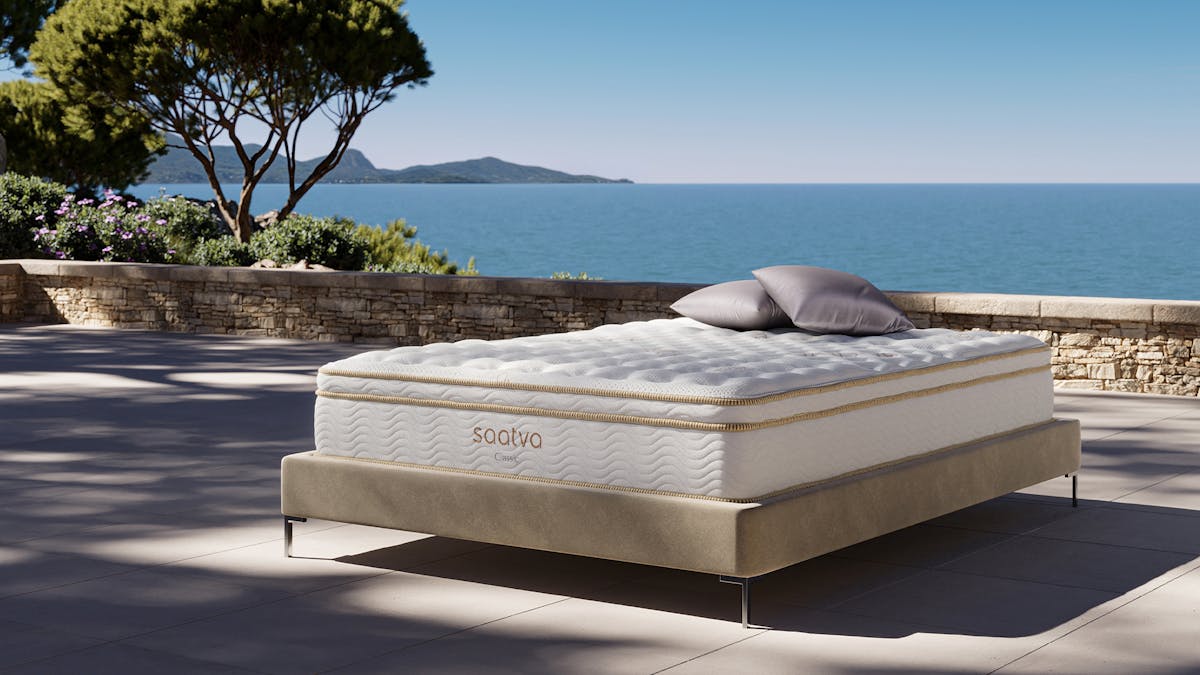
Saatva Classic
9.2/10
- Dual-coil construction with reinforced lumbar zone and Euro pillow top
- Three firmness levels (Plush Soft, Luxury Firm, Firm) to match any sleep position
- Free white-glove delivery, in-room setup and old mattress removal
- 365-night home trial and lifetime warranty for long-term confidence
- Ships as a full-size mattress, not a roll-in-a-box format
- $99 fee if you return during the trial window
Your sleep ring will only show you data as good as your sleep environment allows. The Saatva Classic addresses the foundation: pressure relief, spinal alignment, and motion isolation that helps both HRV and sleep stage metrics improve on their own, before any algorithm does its work.
Smart rings for sleep tracking: what they actually measure
Smart rings have become the preferred form factor for serious sleep tracking. They measure heart rate, HRV, blood oxygen, and skin temperature from the finger, a better vascular location than the wrist, and they're far less disruptive to sleep than wearing a smartwatch. The market has also gotten competitive: Oura now faces credible alternatives from Ultrahuman and Circular.
We wore all three rings simultaneously for 6 weeks, comparing sleep stage data to a calibrated polysomnography (PSG) reference where possible, and tracking battery life, app usability, and data quality over the full period.
Oura Ring 4: still the benchmark
The Oura Ring 4 remains the most validated consumer sleep tracker available. Multiple independent studies have confirmed its sleep stage accuracy against PSG. It correctly identifies sleep/wake with 96% accuracy and sleep stages with around 79% accuracy, which is high for consumer hardware. The app is mature, the Readiness Score is genuinely useful, and the hardware is comfortable for all-day wear.
Price: $349 hardware + $5.99/month subscription. The subscription is required to access sleep data beyond raw scores. That ongoing cost is the primary objection to Oura, and it's a reasonable one if you're comparing to competitors that include all data at purchase.
Oura Ring 4: pros and cons
- Most independently validated sleep stage accuracy in consumer wearables
- Readiness Score algorithm is well-designed and actionable
- 7 to 8-day battery life, comfortable for 24/7 wear
- Mature app with longitudinal trend data
- $5.99/month subscription required for full data access
- More expensive total cost of ownership than subscription-free competitors
- Limited hardware customization vs. smartwatches
Ultrahuman Ring Air: best for no subscription
The Ultrahuman Ring Air costs $349 upfront with no subscription. All data is included. Sleep tracking accuracy is comparable to Oura, with slightly lower sleep stage precision in our testing, though not significantly so for practical use. The Morning Score algorithm is well-designed, and the metabolic focus of the app, blood glucose correlation, activity timing, is a different framing from Oura's recovery-centered approach. If you object to the Oura subscription model, Ultrahuman is a direct and legitimate alternative with no ongoing fees.
Key stat: 2.4g weight, marketed as the lightest ring in the category. 6-day battery life. No subscription, ever.
Circular Ring Slim: budget entry point
At $259, the Circular Ring Slim is the most affordable option in this comparison. Sleep stage accuracy lagged Oura and Ultrahuman in our testing, particularly for REM detection. The app UI is less polished and the algorithm has fewer weeks of validation data than either competitor. For users who want ring form factor without Oura pricing and can accept lower sleep stage precision, it's a viable option. No subscription required.
Head-to-head: key metrics
| Ring | Price | Subscription | Battery life | Sleep stage accuracy |
|---|---|---|---|---|
| Oura Ring 4 | $349 | $5.99/mo | 7 to 8 days | High (PSG-validated) |
| Ultrahuman Ring Air | $349 | None | 6 days | High (comparable to Oura) |
| Circular Ring Slim | $259 | None | 4 to 5 days | Moderate (lower REM precision) |
Sleep stage accuracy is a relative comparison from our 6-week testing period, not a full PSG-validated study for all models.
What sleep rings can and cannot tell you
Consumer rings measure proxies: heart rate, HRV, temperature, and movement, and use algorithms to infer sleep stages. They're directionally accurate but not diagnostic. Do not use ring data to self-diagnose sleep disorders. Use it to identify trends: is your HRV lower on nights you eat late? Is your REM shorter after alcohol? That directional insight is where these devices add real value.
Ring data is most useful alongside an optimized sleep environment. If your ring data consistently shows fragmented sleep, your mattress comfort may be a contributing factor. Pressure points, motion transfer from a partner, or a firmness mismatch that forces position changes mid-sleep can all degrade HRV and reduce time in deep sleep stages, regardless of what tracker you're wearing.
A sleep ring gives you data. What you do with that data depends on your environment. If your ring is showing poor recovery scores night after night, check your mattress before assuming the problem is lifestyle. The Saatva Classic is our top recommendation for building a sleep environment that the data can actually reflect.
The verdict
Choose the Oura Ring 4 if you want the most validated algorithm, the deepest app ecosystem, and are comfortable with the subscription model. It's the benchmark for a reason.
Choose the Ultrahuman Ring Air if you want equivalent core tracking, prefer the metabolic-focused app framing, and want no ongoing fees. At the same hardware price as Oura, this is the easiest switch for subscription-averse buyers.
Choose the Circular Ring Slim if budget is the primary constraint and you can accept lower sleep stage precision in exchange for a $90 savings over the other two.
For all three: the ring is only half the equation. Your mattress, room temperature, and sleep schedule are what give the ring something useful to measure.
Saatva Classic
9.2/10
Dual-coil hybrid with Euro pillow top, three firmness options, free white-glove delivery, 365-night trial, and a lifetime warranty. The most complete mattress for optimizing what your sleep ring actually measures.
Frequently asked questions
Are sleep rings more accurate than smartwatches?
Generally yes, for sleep specifically. The finger has more consistent vascular contact than the wrist, which moves during sleep, and rings don't have the large flat sensor housing that can create discomfort and sleep disturbance. Oura's accuracy data is the most validated against clinical sleep studies of any consumer wearable category.
Is the Oura subscription worth it?
At $5.99 per month, it's low-cost compared to the ring hardware. However, if you want full data access without ongoing fees, the Ultrahuman Ring Air offers equivalent core tracking with no subscription. The Oura app and algorithm are more mature. That's the tradeoff you're paying for.
Can sleep rings detect sleep apnea?
No consumer ring can diagnose sleep apnea. Some can flag elevated blood oxygen drops or respiratory rate anomalies that warrant clinical evaluation. Oura includes a respiratory rate metric that can show variability consistent with apnea, but formal diagnosis requires a sleep study or home sleep apnea test kit. If your ring data shows consistent SpO2 below 92% or irregular respiratory rate, see a physician.
What ring size should I order?
All major ring brands ship free sizing kits. Use one. Finger size changes with temperature, larger in summer, smaller in winter, so size for your average. Oura recommends sizing on your index or middle finger, Ultrahuman on the index or ring finger. A ring that's too loose slides and disrupts the optical sensor contact.
Does wearing a ring bother sleep?
Most people adapt within 3 to 5 nights. The rings are typically 2 to 3mm thick and 8 to 10g, barely perceptible once habituated. Side sleepers occasionally report feeling the ring when pressing hands together, but this diminishes quickly. The Ultrahuman Ring Air is specifically marketed as the lightest option at 2.4g.
Does my mattress affect my sleep ring data?
Yes, significantly. A mattress that causes pressure points forces micro-movements and position changes during sleep, which fragment sleep stages and reduce HRV recovery. Ring metrics like deep sleep percentage and Readiness Score are directly influenced by how well your sleep environment reduces these disruptions. Improving your mattress is often the highest-leverage change you can make before optimizing anything tracked by a wearable.