 by
by Quick answer: A Stryker cooling blanket is a hospital temperature-management device, not bedroom bedding. For hot sleepers at home, we recommend the Sleep Number True Temp™ Weighted Blanket instead.
- Stryker's blanket-style products are clinical disposables designed to work with specific hospital temperature-management controllers, per the manufacturer's documentation.
- Blankets and wraps are not interchangeable across controller systems, so they aren't sold or used as standalone consumer products.
- Pricing runs through authorized medical resellers and hospital contracts, not retail shelves, so there's no consumer list price to compare.
Updated July 2026 · Reviewed for accuracy
You searched for a Stryker cooling blanket, and I'm going to save you some frustration right up front. What Stryker makes under that umbrella is medical equipment, the kind hospitals use to manage patient body temperature during and after procedures. It isn't something you buy for your bed, and honestly, it isn't something you'd want in your bedroom even if you could get one. What you probably want is a cooling blanket built for sleep, and that's a different product category entirely.
I'll explain what the Stryker system actually is, why it doesn't translate to home use, and then point you toward the consumer options that genuinely help hot sleepers. That's my lane here at MattressNut: materials, construction, and what holds up night after night.
What a Stryker Cooling Blanket Actually Is
Stryker is a medical technology company, and its blanket-style products belong to clinical temperature-management systems. According to Stryker's system documentation, these blankets and wraps connect to a controller unit that circulates temperature-regulated fluid or air through the disposable, letting clinicians raise or lower a patient's body temperature in a controlled way.
That's a serious piece of medical engineering. Per the manufacturer's documentation, these systems are built around precise setpoints, continuous temperature probes, alarm thresholds, and monitored control ranges. The blanket itself is only one component. Without the matching controller, hoses, and probes, it's just a specialized disposable pad.
Worth knowing: Stryker's blanket-style disposables come in different forms, including full blankets and wraps such as leg wraps. These differ in surface area, hose connections, and how they attach to the patient, per the manufacturer's documentation. They're clinical tools matched to clinical workflows, not comfort products.
One detail matters more than any other here: compatibility. These disposables are not interchangeable across controllers. Each blanket or wrap carries a part number and connector type matched to a specific system. A blanket built for one controller won't function with another. That single fact tells you everything about why this category never crosses into retail.
Why You Can't Just Buy One for Your Bedroom
Three barriers stand between a hospital cooling blanket and your bed, and each one is a hard stop.
First, distribution. Pricing and purchasing for devices like this run through authorized medical resellers and hospital contract channels. There's no retail listing, no consumer checkout page, no add-to-cart. Quotes vary by region and by whether you're buying disposables, the controller, or a bundled system.
Second, the use case. These systems exist for clinical temperature management under supervision, with probes, alarms, and trained staff watching the readouts. They aren't designed for unattended overnight comfort, and using one that way would miss the entire point of the device's safety architecture.
Third, practicality. Even setting aside access and cost, a clinical system means a controller unit, reservoir maintenance per the manufacturer's care guidelines, hose management, and disposable replacement on a clinical schedule. That's a hospital workflow, not a sleep routine.
The short version:
- Stryker cooling blankets are components of hospital temperature-management systems, not standalone products.
- They require a matched controller and are not cross-compatible, per the manufacturer's documentation.
- Sales run through medical channels with quote-based pricing.
- For sleeping cooler at home, consumer cooling blankets are the right tool.
If your underlying goal is simple, you run hot at night and want relief, none of this medical hardware gets you there. What gets you there is bedding engineered for thermal comfort. For a full breakdown of the mechanisms involved, our guide on how cooling blankets work covers the material science in plain terms.
Comparing options? The True Temp™ Weighted blanket is the pick we keep coming back to — see the final verdict ↓
What Actually Works for Hot Sleepers at Home
Consumer cooling blankets attack the problem from two directions, and understanding both helps you shop smarter.
The first direction is moisture and heat management through fabric. Breathable constructions, think lightweight weaves and fibers that wick perspiration away from skin, keep the microclimate under your covers drier. A drier microclimate feels cooler because evaporative cooling can actually do its job. This is passive cooling: no power, no water, just smart textiles.
The second direction is surface feel. Some materials and knit structures feel cool to the touch on contact, which matters most in the first stretch of the night when you're trying to fall asleep. That initial cool-contact sensation is what most people picture when they search for a cooling blanket.
Then there's a hybrid approach I've grown to appreciate over years of reviewing sleep products: the cooling weighted blanket. Weighted blankets apply gentle, even pressure that many sleepers find calming, but traditional weighted fills trap heat badly. Cooling-weighted designs use breathable shells and temperature-conscious fills to deliver the pressure without the sauna effect. Our Gravity cooling weighted blanket review digs into how one popular option handles that balancing act.
The construction detail that separates a real cooling blanket from marketing fluff: look at the shell fabric and the fill, not the label. Breathable shells and moisture-wicking fibers do the work. Buzzwords don't.
For a broader view of the category, including the different fabric technologies on the market, see our overview of the cooling blanket landscape. And if summer nights are your specific pain point, our picks for the best cooling weighted blankets for summer narrow the field further.
The Home Alternative I'd Point You To
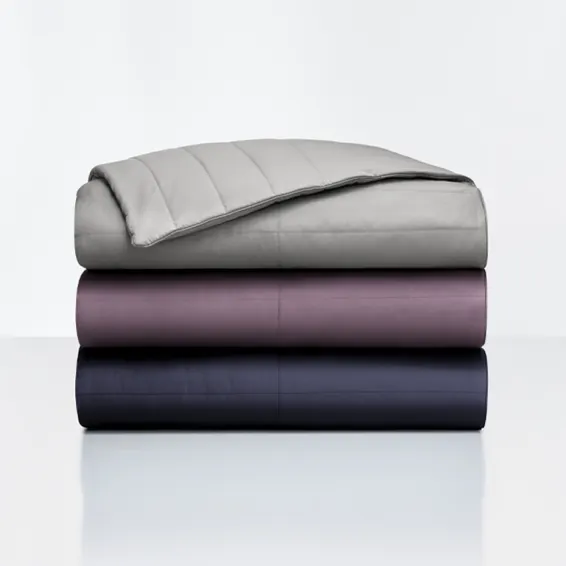
If you came here wanting one concrete recommendation for sleeping cooler without medical hardware, here it is. The Sleep Number True Temp™ Weighted Blanket pairs gentle weighted pressure with a temperature-balancing design, per the manufacturer, which makes it a strong fit for hot sleepers who also like the settled, grounded feel of weight. It sits in the premium tier, so check the current price and details on the official site before you decide.
Why a weighted option instead of a plain cooling throw? Because most people searching for relief from night heat are also fighting restlessness, and the combination of cooling fabric with even pressure addresses both. That said, if you run very warm or dislike any feeling of weight on your body, a lightweight breathable blanket with no fill will serve you better. Match the construction to your sleep, not to the hype.
How to Choose a Cooling Blanket That Actually Delivers
Forget brand names for a minute. When I evaluate any cooling blanket, I run down the same construction checklist, and it never steers me wrong.
Shell fabric first. This is the layer against your skin, so it drives both the cool-touch feel and breathability. Look for fabrics known for moisture wicking and airflow rather than heavy, tight weaves that trap heat.
Fill and weight second. For weighted options, the fill determines heat retention. Dense, poorly ventilated fill turns any blanket into a heat trap. For unweighted options, thin breathable construction is the whole game.
Care requirements third. A blanket you can't wash easily becomes a blanket you stop using. Check whether the manufacturer rates it for machine washing before you commit.
Size and drape last. A cooling blanket that barely covers you won't regulate much of anything. Make sure the dimensions suit how you actually sleep, whether that's solo, shared, or draped over a hot sleeper on one side of the bed.
Nut's checklist before buying:
- Breathable, moisture-wicking shell fabric against your skin
- Fill and weight suited to your heat level and pressure preference
- Machine-washable construction per the care label
- Coverage that matches your real sleeping arrangement
One more piece of straight talk: no blanket lowers the temperature of a hot room. Cooling bedding manages the microclimate against your skin, and it does that well, but pair it with reasonable bedroom temperature and airflow for the full effect. Bedding is one lever, not the whole machine.
FAQ
Is the Stryker cooling blanket sold for home use?
No. Stryker's blanket-style products are clinical disposables built to work with specific hospital temperature-management controllers, per the manufacturer's documentation. They're distributed through medical reseller channels rather than retail, and they require a matched controller to function at all.
How much does a Stryker cooling blanket cost?
There's no consumer list price to quote. Pricing for medical temperature-management systems runs through authorized resellers and hospital contracts, and it varies by region and by whether the quote covers disposables, the controller, or a bundled system. If you need clinical pricing, the route is a quote through an authorized medical supplier.
What's the difference between a medical cooling blanket and a bedding cooling blanket?
A medical cooling blanket is an active device component: a controller circulates temperature-regulated fluid or air through it while probes and alarms monitor the patient, per Stryker's system documentation. A bedding cooling blanket is a passive textile product that manages heat and moisture through breathable, wicking fabrics. One treats patients under supervision; the other keeps you comfortable while you sleep.
Can a cooling blanket replace air conditioning?
No, and I'd be suspicious of any brand implying otherwise. A cooling blanket improves the microclimate right against your skin through breathability and moisture wicking, which genuinely helps you fall and stay asleep more comfortably. It works alongside a reasonably cool room, not instead of one.
What should I look for in a cooling blanket for summer?
Start with a breathable, moisture-wicking shell fabric, since that drives both the cool-touch feel and overnight comfort. Then decide whether you want gentle weighted pressure or a lightweight unweighted throw, confirm it's machine washable per the care label, and size it for your actual sleeping arrangement. Our guide to how cooling blankets work explains the material science if you want to go deeper.
The Bottom Line
A Stryker cooling blanket is hospital equipment, full stop. It's a disposable component of a clinical temperature-management system, sold through medical channels, matched to specific controllers, and built for supervised patient care. Nothing about it belongs in a bedroom.
If heat is wrecking your sleep, the fix is a consumer cooling blanket with the right construction: breathable shell, sensible fill, washable, properly sized. Decide whether weighted pressure appeals to you, check current pricing and details on the official site of whichever model you shortlist, and buy for materials over marketing. That's how you sleep cooler without a hospital budget or a clinical workflow.
FINAL VERDICT
Bottom line for the Stryker cooling blanket search: if you want a consumer blanket that actually cools at home, the True Temp™ Weighted blanket is the safer buy — you get real temperature control from a brand you can still find next year, not a marketplace listing that vanishes.
OUR CATEGORY-MATCHED PICK
True Temp™ Weighted blanket
- See the product page for full specs and current pricing