 by
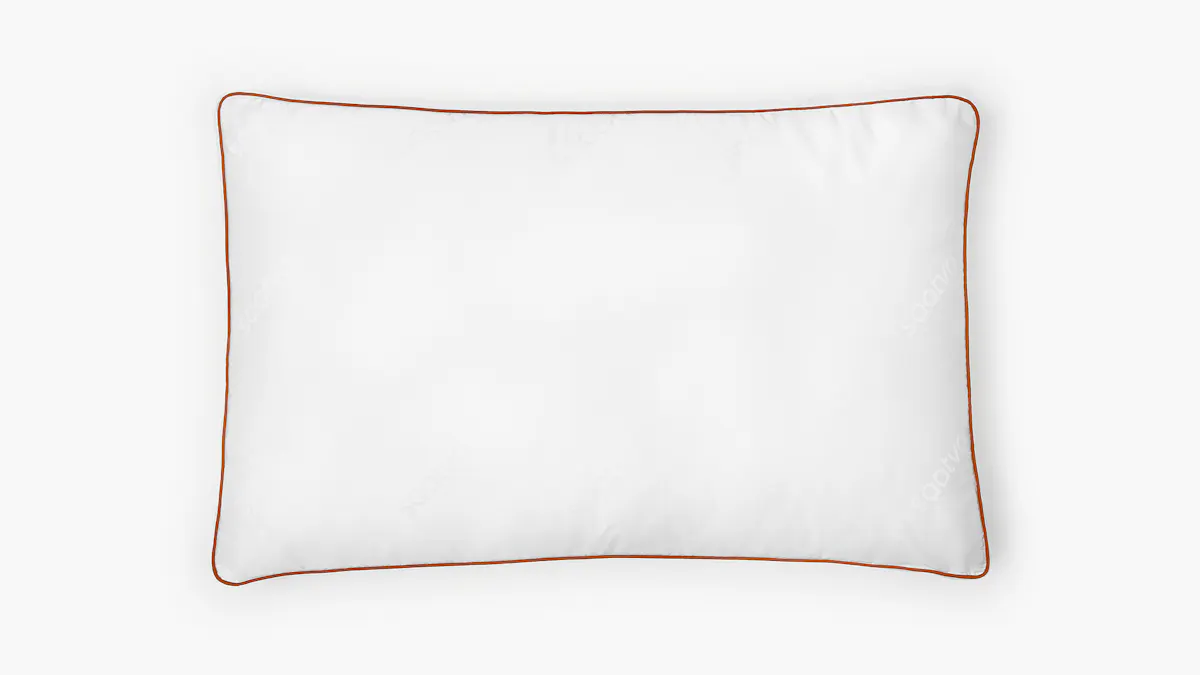
by Quick answer: For back sleeping, place the larger rounded edge beneath your neck and let your head rest in the lower hollow. If that firm contour feels too restrictive, consider the Saatva Pillow.
- Tempur-Pedic describes this as a contoured pillow for back and side sleeping.
- The rounded edge is intended to support the neck rather than lift the head.
- TEMPUR material has a firm, slow-conforming feel, per the manufacturer.
Updated July 2026 · Reviewed for accuracy
The big rounded side goes under your neck. The lower valley is where your head belongs. That’s the whole answer, and getting it backward is why this pillow can feel oddly high or plain uncomfortable for a back sleeper.
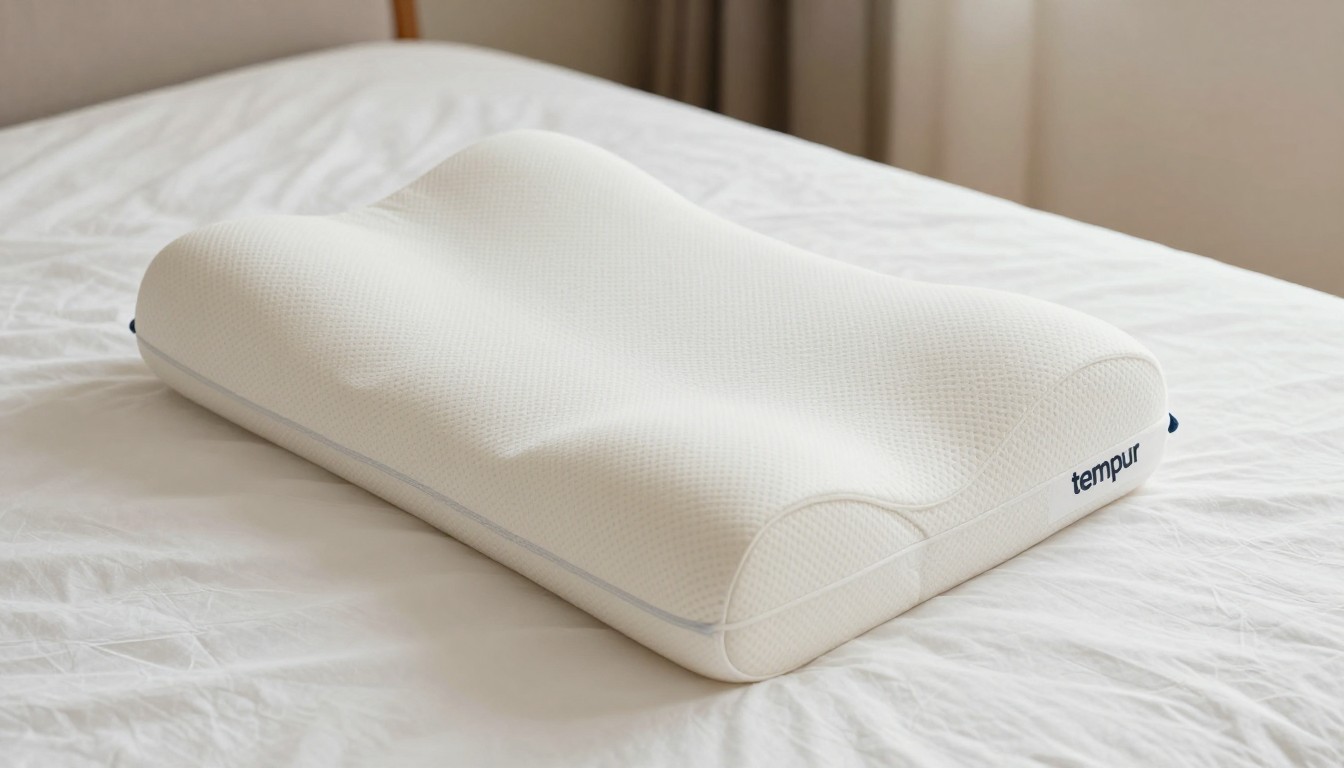
Tempur-Pedic positions the TEMPUR-Neck Pillow as a contoured option for back and side sleepers. I think of it less as a regular bed pillow and more as a fixed-shape support piece: it asks your neck and head to occupy different zones. That design can work very well, but only if the contour faces the right way and the size suits your build.
Put the rounded side under your neck
The larger rounded bolster should sit directly beneath the curve of your neck while you lie on your back. Your head should settle into the lower section behind it. Per Tempur-Pedic’s product description, the contour is designed to support the neck and shoulders while helping keep your head and neck aligned.
Don’t place the thick rounded edge under the back of your skull. That reverses the job of the pillow. Instead of filling the space below your neck, it pushes your head up, which can leave the pillow feeling too tall even if you chose an otherwise suitable size.
The simple setup: lie down, slide the rounded edge into the space under your neck, then allow the back of your head to rest in the shallower depression. The goal is support under the neck, not a mound under the head.
This distinction matters because the pillow’s contour is not symmetrical in use. One area is made to carry the neck’s natural curve. The other gives the head a lower resting place. Treating both sides as interchangeable defeats the construction.
If you wake up feeling as though your chin is being tipped toward your chest, check the orientation first. A backward pillow is the most obvious reason to feel excessive height. If the contour is correctly placed and it still feels too high, the issue is more likely size or your preferred sleep position.
Why the head rests lower than the neck
The low center is the part that can look strange to people used to a traditional fluffy pillow. It is intentional. The manufacturer says the TEMPUR-Neck Pillow follows the shape of the neck and head rather than presenting one flat sleeping surface.
For a back sleeper, your neck has open space beneath it while the back of your head does not. A conventional pillow often fills both areas with the same amount of material. A contoured design takes the opposite approach: more support where there is space under the neck, less bulk where your head already meets the mattress.
That is the construction logic I’d focus on. The contour is not trying to make your entire upper body feel elevated. It is trying to avoid leaving the neck unsupported while also avoiding an unnecessarily high head position.
There is a limit to what any fixed contour can accommodate. Bodies vary, mattresses compress differently, and a person who begins on their back may shift during the night. That is why the correct direction matters, but it is not the only fit question.
What “correct” should feel like: the rounded edge fills the gap beneath your neck without forcing your head noticeably forward or leaving your neck suspended. A firm contour may feel unfamiliar at first, but it should not feel like you are balancing on top of it.
Comparing options? The Saatva Pillow is the pick we keep coming back to — see the final verdict ↓
Choose the size by the space between neck and shoulders
Tempur-Pedic offers the TEMPUR-Neck Pillow in small, medium, and large sizes, according to the manufacturer. The point is not that one size is inherently best. It is to match the contour’s height to the distance between your neck and shoulder area, plus the amount your mattress gives under your body.
For many back sleepers, a smaller or middle option will make more sense than the tallest contour. That is a fit principle, not a universal rule. A person with a shorter neck-to-shoulder distance generally has less open space to fill. A person with a taller neck or broader frame may need more support under the neck.
The practical test is simple. With the pillow correctly oriented, notice whether the rounded section merely fills the neck gap or seems to prop your entire head forward. If it feels like too much material is under your neck, moving to a lower size is more sensible than trying to force the pillow into a different direction.
Conversely, a contour that feels too low may fail to fill the space it was meant to support. Turning the pillow around is not a fix for that. It only transfers the height to the wrong place. Size selection and pillow orientation solve separate problems.
For more help with the small, medium, and large options, see this TEMPUR-Neck Pillow size guide. I’d use size as the deciding factor after you have confirmed that the rounded edge is under your neck.
The firm TEMPUR feel is part of the fit
TEMPUR material is designed to conform under the head and neck and then return to shape over time, per Tempur-Pedic. The result is not the buoyant, instantly springy response of a loose fiberfill pillow. It is a denser, more structured feel.
That firmness supports the contour’s purpose. A deeply squishy bolster would flatten and blur the difference between the neck zone and the head zone. This design depends on retaining its profile well enough to keep those zones distinct.
Still, firm support is a preference issue. If you are accustomed to a very soft pillow, the initial contrast may be substantial. The manufacturer’s design is aimed at consistent neck support, not the billowy feel of a conventional down-like pillow.
My take: the contour only makes sense if you want a pillow to hold a defined shape. If you routinely bunch, fold, or reshape your pillow during the night, a fixed TEMPUR contour may feel more prescriptive than helpful.
That is also why a few nights of adjustment can be reasonable. You are not only changing the material beneath your head, but changing the distribution of support beneath your neck. Don’t mistake unfamiliarity for a direction problem, though. The rounded side still belongs under the neck.
Back sleeping is where the design makes the most sense
Tempur-Pedic says the pillow is intended for back and side sleeping. Of those two positions, back sleeping makes the layout especially easy to understand: neck on the bolster, head in the lower area.
Side sleeping adds another variable because shoulder width affects how much height is needed between the mattress and the head. The contour can still be used that way, per the manufacturer, but sizing becomes more consequential. A side sleeper whose shoulder creates a larger gap may not find the same height that works on their back equally comfortable on their side.
Stomach sleepers are the least obvious match for this design. The pillow’s purpose is targeted support under the neck, while stomach sleeping usually calls for a much shallower setup or no pillow at all depending on personal comfort. Tempur-Pedic does not position this model primarily around stomach sleeping.
If you mostly sleep on your back but rotate occasionally, start by fitting it for the position you use most. A pillow is not improved by trying to make every sleeping position feel identical. The better question is whether its structured support works for the way you spend most of the night.
Care matters because the foam core is not washable
Tempur-Pedic indicates that pillow covers are typically removable and machine washable, while the foam itself should be spot-cleaned as needed. Check the care label on your specific pillow and follow the manufacturer’s instructions, since cover details can vary.
I would not treat the foam core like an ordinary washable pillow. Saturating memory foam can make drying difficult and can affect the material. Keep the cover clean, address spills carefully, and avoid wet exposure unless the manufacturer explicitly says otherwise.
The material is designed for durable, long-term support, according to Tempur-Pedic. That durability claim is tied to the dense foam construction and the pillow’s ability to return toward its original shape. It does not mean that one contour and one size will suit every sleeper indefinitely, especially if your mattress or sleep habits change.
Before you buy: confirm the current return policy and warranty directly with Tempur-Pedic or the authorized retailer. Pillow comfort is personal, and a contoured design has less room for adjustment than a traditional loose-fill pillow.
Is this the right kind of pillow for you?
The TEMPUR-Neck Pillow is a sensible choice for a back sleeper who wants a clearly defined neck-support zone and is comfortable with a firm memory-foam feel. Its core appeal is straightforward: the larger rounded side supports the neck, while the lower surface receives the head.
I’d skip the idea if you prefer a pillow you can scrunch, stack, or constantly reposition. I’d also be cautious if you are unsure about loft, because a contoured pillow can feel very different from a conventional option even before material preference enters the picture.
If you want a more traditional pillow format rather than a fixed neck contour, the Saatva Pillow is the category alternative I’d consider. Check the current offer on the official site, but choose based on whether you want adaptable loft or a deliberately shaped support channel.
For broader context before deciding, read our Tempur-Pedic pillow review and our guide to the Symphony Pillow by Tempur. They help show how this contour-focused design differs from other pillow constructions in the same family.
FAQ
Which side of a TEMPUR-Neck Pillow goes under my neck?
The larger rounded side goes beneath your neck. The lower hollow behind it is where the back of your head should rest while you sleep on your back.
Tempur-Pedic describes the pillow as contoured to support the neck and shoulders. Reversing it puts the higher section beneath your head instead, which changes how the design is meant to work.
Why does the pillow feel too high when I sleep on my back?
First, make sure the rounded edge is under your neck rather than under your head. Backward placement can make the pillow feel much taller than intended.
If the orientation is correct and it still feels high, the contour size may not match your neck-to-shoulder height. Tempur-Pedic offers multiple sizes because loft fit varies by person.
Should my shoulders sit on the TEMPUR-Neck Pillow?
No. Your shoulders should remain on the mattress, with the rounded pillow edge supporting the space under your neck. The pillow is designed to support the neck and head, not to extend far beneath the shoulders.
Pulling it too far down can change the angle of the contour and make the head section feel misplaced. Position the bolster at the neck rather than trying to use it as an upper-back cushion.
Can I use this pillow on my side as well as my back?
Yes. Tempur-Pedic describes the TEMPUR-Neck Pillow for both back and side sleeping. The same rounded contour supports the neck, but side sleeping makes correct size selection more critical because your shoulder creates a larger gap to fill.
If you change positions often, judge it by the position you use most. A fixed contour will not feel as adaptable as a pillow that can be reshaped by hand.
How do I clean a TEMPUR-Neck Pillow?
Wash the removable cover only as the care instructions allow, and spot-clean the foam core when needed. Tempur-Pedic’s care guidance generally treats the foam separately from the washable cover.
Do not machine-wash the foam core unless the specific manufacturer instructions explicitly permit it. Keeping the cover clean is the simplest way to protect the pillow’s contoured surface.
My verdict
For back sleeping, the answer is firm: rounded edge under the neck, low hollow under the head. That placement gives the contour a fair chance to do what Tempur-Pedic designed it to do.
The real buying decision is whether you want fixed, firm neck support or a more adaptable pillow shape. Get the direction right first, then be honest about your loft needs and how much structure you actually enjoy.
FINAL VERDICT
Before you settle: if tempur neck pillow which way for back sleeping is what brought you here, the Saatva Pillow is the value pick on this page — the strongest trial-and-return terms of the options covered here. Confirm current price, dimensions and terms on the official product page before ordering.
OUR CATEGORY-MATCHED PICK
Saatva Pillow
- Shredded natural latex core, per saatva.com
- 45-day free returns
- Machine-washable organic cotton cover