
 by
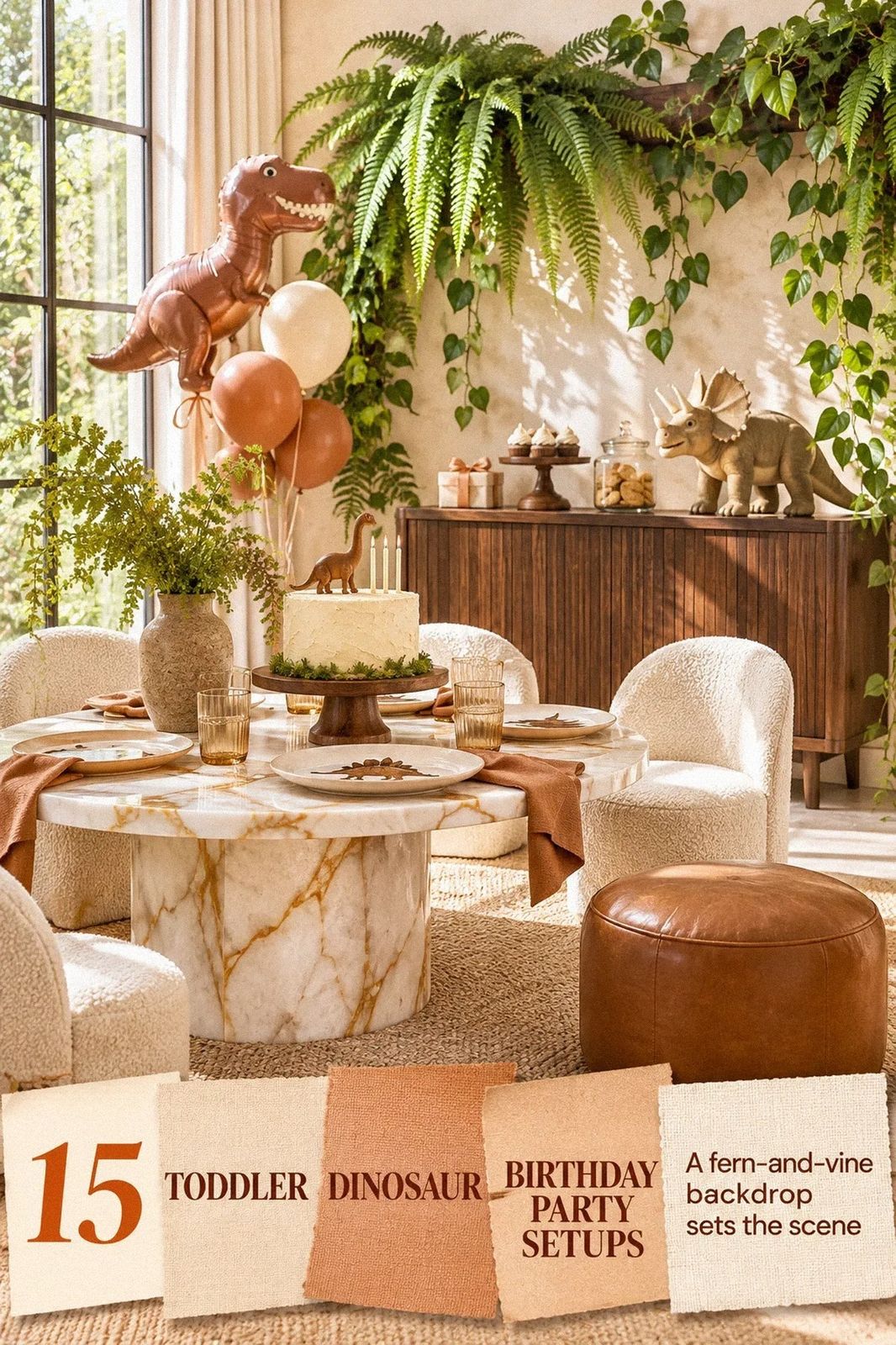
A successful dinosaur party for a two-year-old needs a small guest list, a clear layout, familiar food, and activities that can be joined or ignored. Plan for 75 to 90 minutes rather than an entire afternoon. You’ll help your child enjoy the party when you use soft colors, paper decorations, washable textiles, and large, simple props that don’t require constant instruction.
Before guests arrive, set up three practical areas: a play space, a food area, and a quiet corner. Keep your route between them clear, place an adult near any activity involving small parts or food, and expect your schedule to flex around naps, shyness, and changing energy. Your dinosaur theme can appear through footprints, leaves, cardboard, and muted colors without turning the room into a crowded display.
- Create a Quiet Dinosaur Corner
- Use a Paper Fossil Backdrop
- Define the Floor With a Dinosaur Map
- Does the Room Need Extra Lighting?
- Set Up a Low, Predictable Food Table
- Hang a Leaf Canopy Above the Arch
- Paper Shapes Instead of a Large Balloon Display
- Style the Cake Table With Three Textures
- Make a Short Dinosaur Footprint Path
- A Small Dinosaur Display Within Reach
- Prepare a Two-Container Dinosaur Dig
- Use Music With Gentle Peaks
- Set a Small, Illustrative Party Allowance
- Plan Cake Around a Reset Window
- Frame Photos With a Real-Life Backdrop
1Create a Quiet Dinosaur Corner
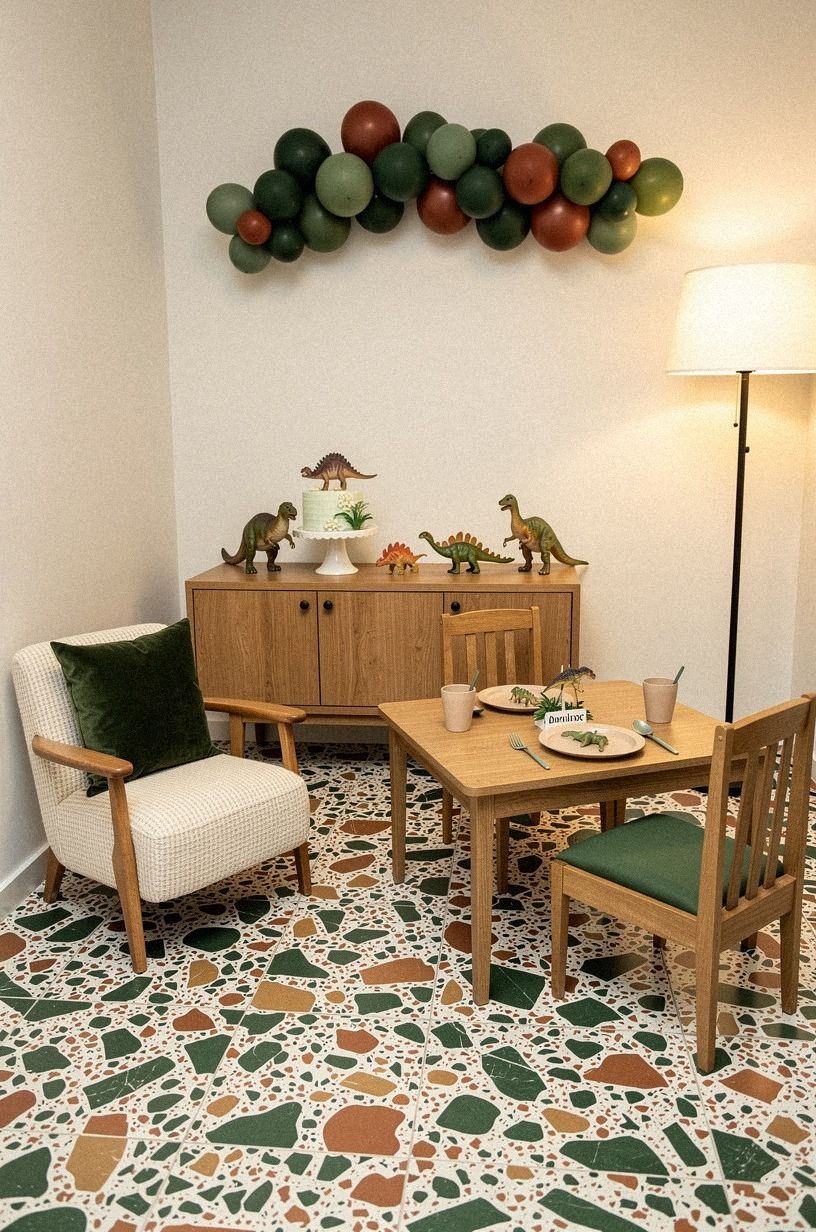
Choose a visible corner away from the busiest doorway. Place a folded quilt, a washable cushion, two familiar board books, and one or two large dinosaur toys there.
A shallow basket keeps your supplies within reach without creating a pile of loose objects. Add a paper leaf backdrop behind the corner if you want a little visual definition, but keep the area free of hanging strings and unstable decorations.
The quiet corner gives your child somewhere to sit beside a trusted adult, look at a book, or take a break from music and group attention. It should remain optional.
You don’t need to present it as an activity that every child must try. Keep your route to the corner open, and avoid placing it directly beside the cake or gift table.
A canopy may look appealing, but a low structure can become a trip hazard when several toddlers move through the room. A draped quilt over the back of a sturdy chair offers a simpler alternative, provided the chair can’t tip and the fabric stays out of walking paths. You’ll get less dramatic styling, but cleanup and supervision become easier.
2Use a Paper Fossil Backdrop
Replace repainting advice with a temporary paper backdrop behind the cake or gift table. Layer kraft paper, cream poster board, and muted green construction paper to suggest a fossil wall. Add large paper leaves, simple printed dinosaur bones, or hand-cut footprints with painter’s tape or removable adhesive suitable for your wall surface.
Keep your arrangement below or beside the main sightline so the backdrop frames photographs without blocking faces. A single large cardboard dinosaur can anchor the display, while three or four paper shapes provide enough theme without covering every visible surface. Test the adhesive on an inconspicuous area first, especially if you’re decorating a rental.
Paint can create a polished result, but it takes time, requires ventilation, and leaves a permanent change. Paper is less durable and may curl at the edges, yet it can be assembled the day before and recycled afterward.
A plain linen sheet clipped to a tension rod is useful when wall adhesive isn’t suitable. Leave the lower edge clear of grasping hands, and remove torn pieces during the party.
3Define the Floor With a Dinosaur Map
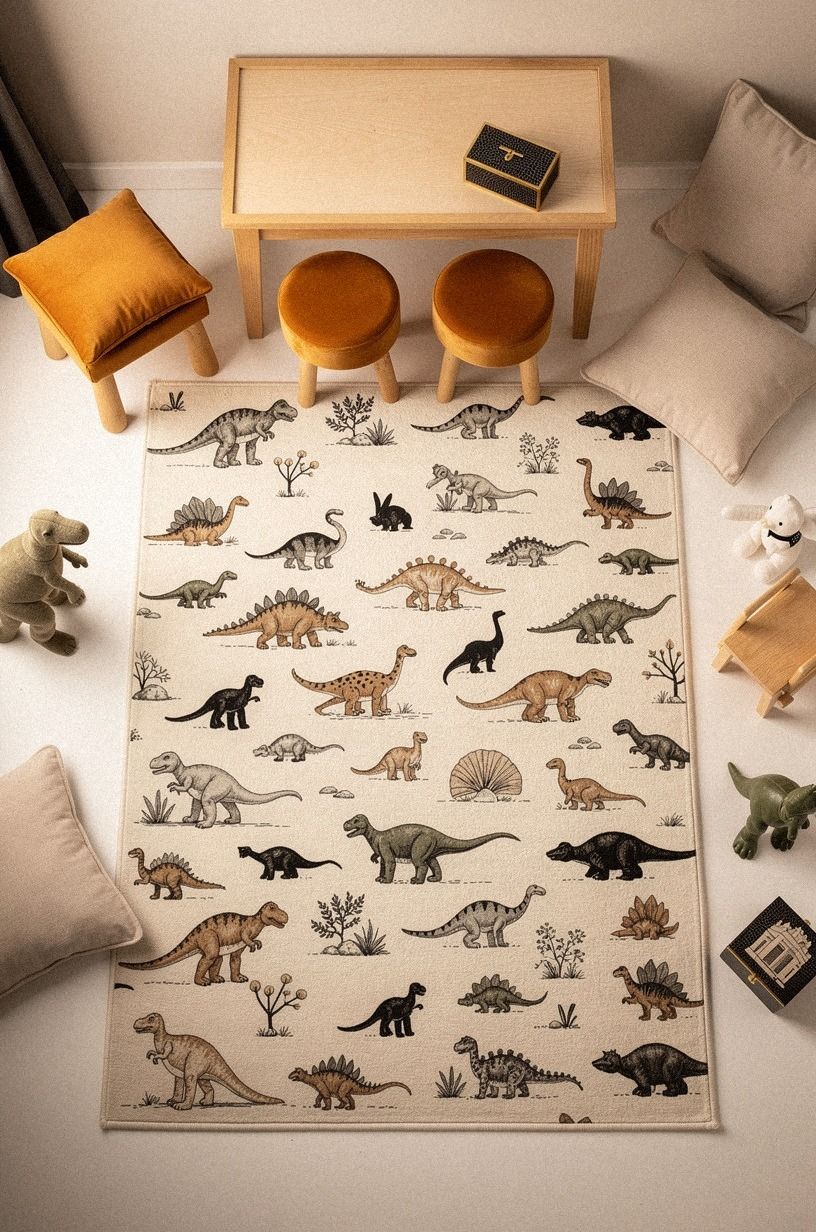
Make the floor your main play zone with a washable 5-by-7-foot rug or a clean blanket layered over a non-slip mat. Mark three broad areas with large paper signs or fabric leaves: dinosaurs, books, and rest. Place a low tray of chunky dinosaur figures in the play area, leaving enough open floor for toddlers to sit, stand, and move around adults.
A defined floor zone helps your room feel organized without requiring children to follow formal game rules. Keep your path from the doorway to the food table completely clear. Secure rug corners with a suitable non-slip pad, and remove any material that bunches or slides when stepped on.
A large rug costs more and requires storage or laundering, but it offers a comfortable surface for repeated use. Smaller rugs may be easier for you to handle but can shift or create awkward gaps.
A folded play mat is a practical alternative when a rug isn’t available. Avoid loose foam tiles with detachable edges, tiny decorative pieces, or any setup that leaves hard corners in the main movement area.
4Does the Room Need Extra Lighting?
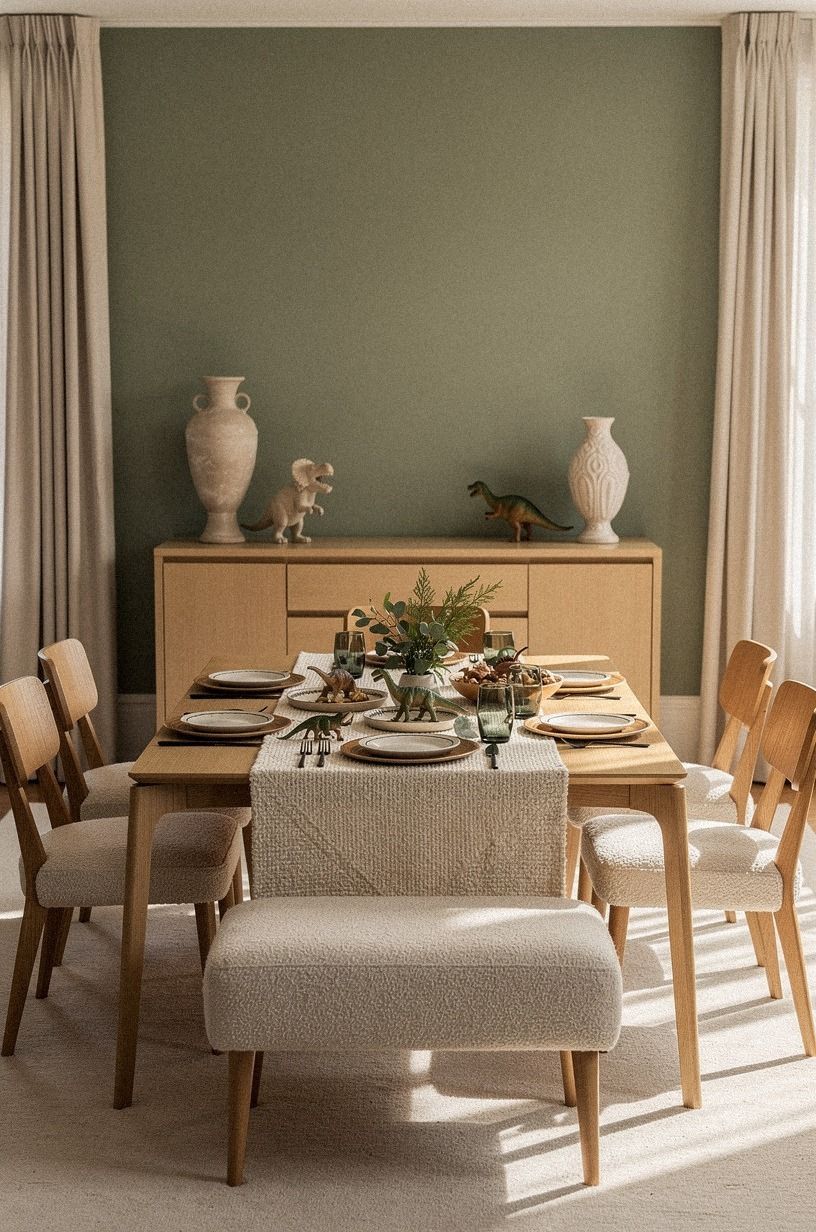
Use three lighting levels to create a warm dinosaur atmosphere without turning your party into a lighting project. Keep the main ceiling light at its usual setting, add daylight from a window where possible, and place one steady lamp on a high, stable surface outside children’s reach. A paper lantern can soften the look if it hangs well above adult head height and contains no accessible cord.
Avoid flashing lights, rapidly changing colors, and low cords across the floor. Your toddler needs to see faces, food, and pathways clearly, especially during transitions. Check the room from your child’s height before guests arrive; glare from a window or lamp may be more distracting than expected.
5Set Up a Low, Predictable Food Table
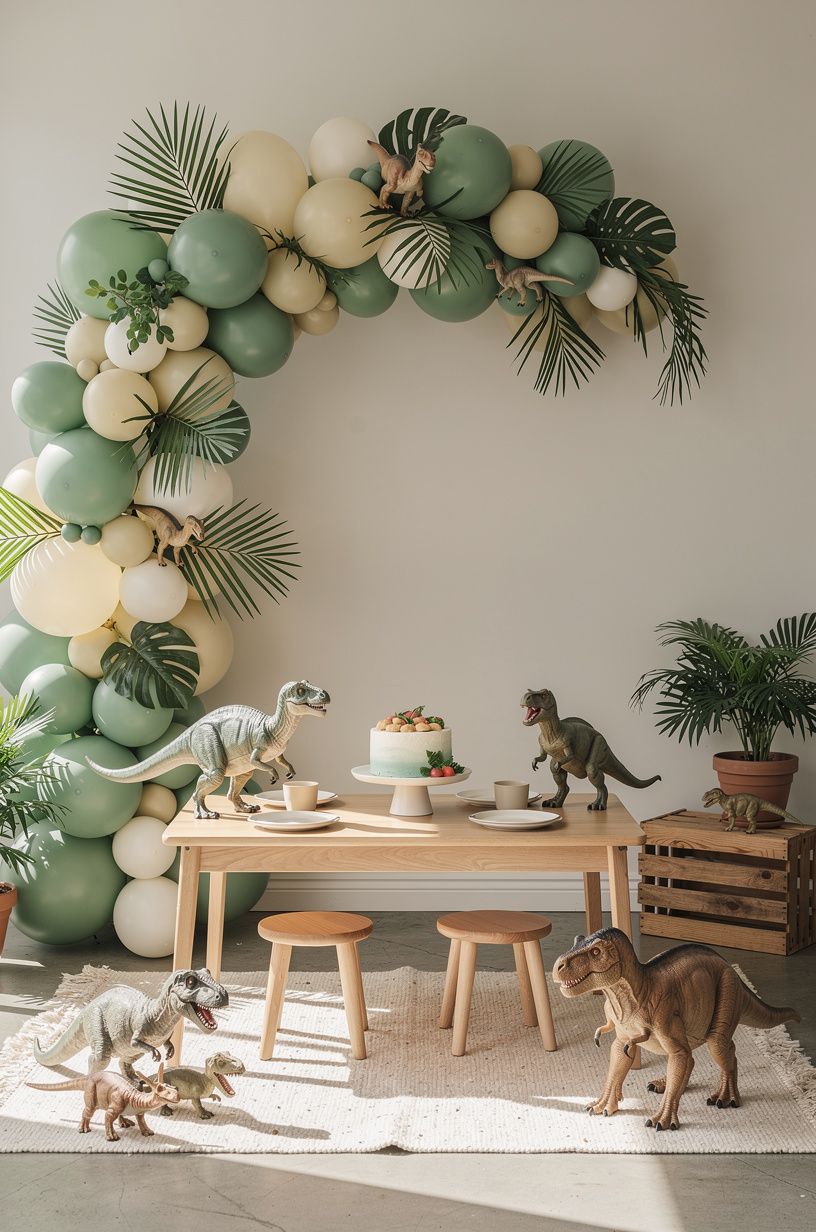
Place familiar toddler foods on one sturdy table and keep adult drinks on a separate, higher surface. Suitable choices may include soft banana pieces, thin cucumber strips, small portions of shredded chicken, soft sandwich fingers, yogurt, and well-cooked vegetables, depending on your child’s usual foods and any known allergies. Cut food into age-appropriate shapes and avoid whole nuts, popcorn, hard candy, and other choking hazards.
Grapes, cherry tomatoes, and similar round foods require careful preparation; quarter them lengthwise rather than serving them whole. Children should eat seated with an attentive adult nearby, not while walking around the play area. Keep a damp cloth, napkins, and a lined waste container within your reach.
A themed food table can look attractive, but too many choices create waste and make supervision harder. Three or four familiar foods plus one dinosaur-shaped sandwich or paper food label are sufficient.
If a low table is unstable or unavailable, use a regular table with an adult serving portions. Unbreakable cups and small, sturdy bowls are more practical than glassware, even for a carefully styled setting.
Your food plan should stay familiar and manageable. You’re planning a dinosaur party, not asking your child to sample an entirely new menu. Follow each child’s usual dietary guidance, and ask accompanying adults about allergies before you serve anything.
6Hang a Leaf Canopy Above the Arch
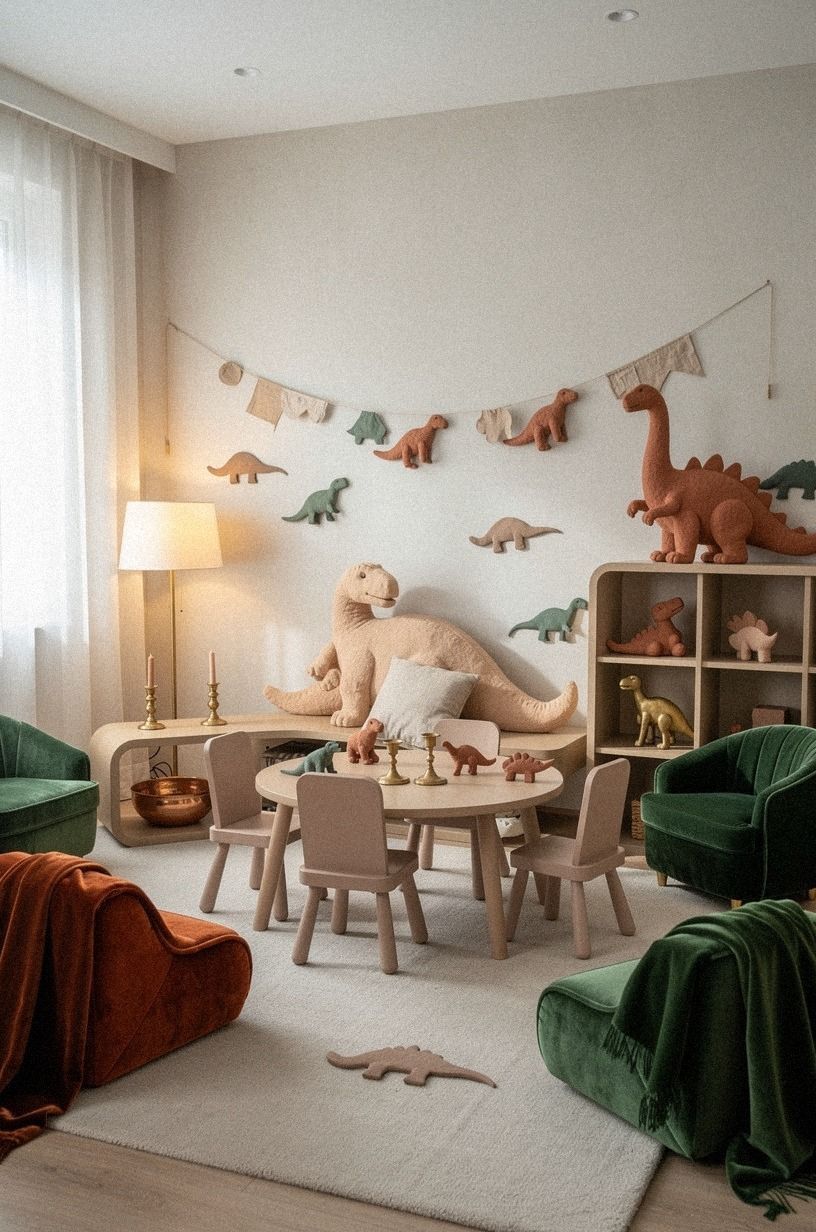
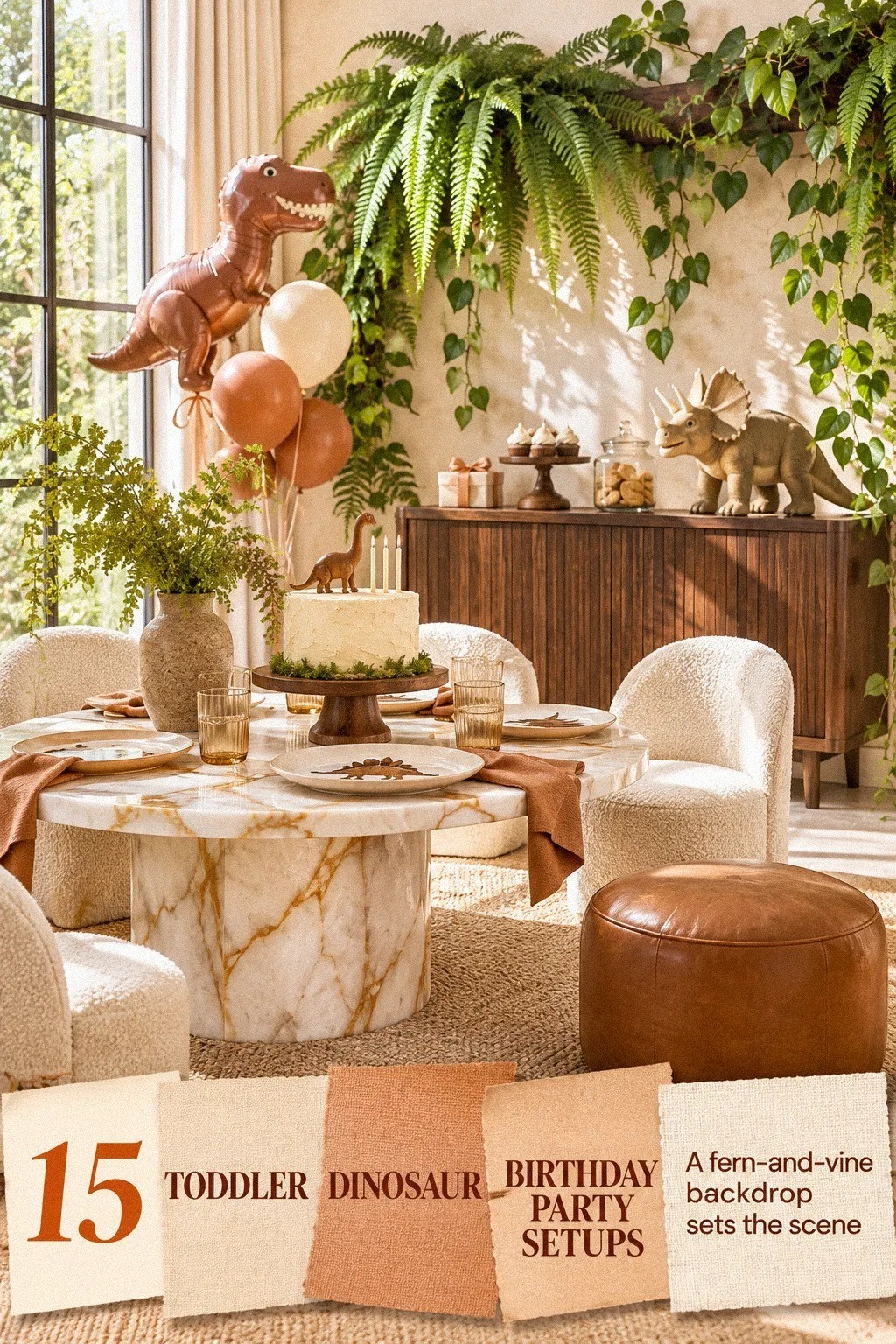
Create the visual idea of a leaf canopy above a balloon arch with lightweight paper leaves attached to a high tension rod or removable hooks. Use olive green, cream, muted clay, and warm brown rather than a large mix of bright colors. A narrow fabric strip behind the leaves can add depth, while the arch remains a background feature instead of your room’s main attraction.
Keep every decoration above adult head height and away from fans, heaters, doorways, and curtain cords. Check the attachment points before guests arrive, and remove anything that loosens. Paper leaves are safer and easier to replace than heavier wood or resin decorations.
A balloon arch delivers more volume and can provide a strong photo frame, but it takes longer to assemble and introduces latex, popped pieces, and loose strings. Your alternative is a paper-only canopy with one large cardboard dinosaur at floor level, which reduces setup and cleanup. If balloons are used, keep them secured and supervise children nearby.
The canopy should frame your party rather than occupy the usable play space.
7Paper Shapes Instead of a Large Balloon Display
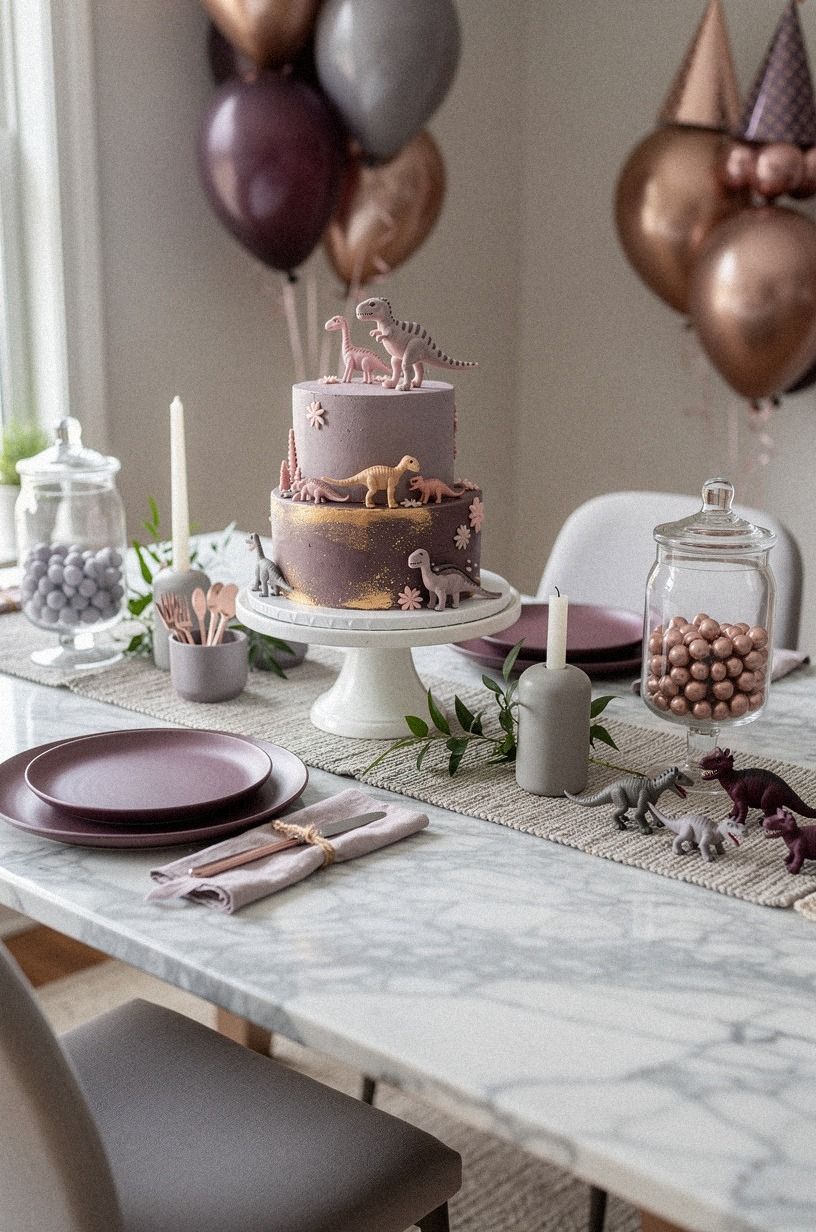
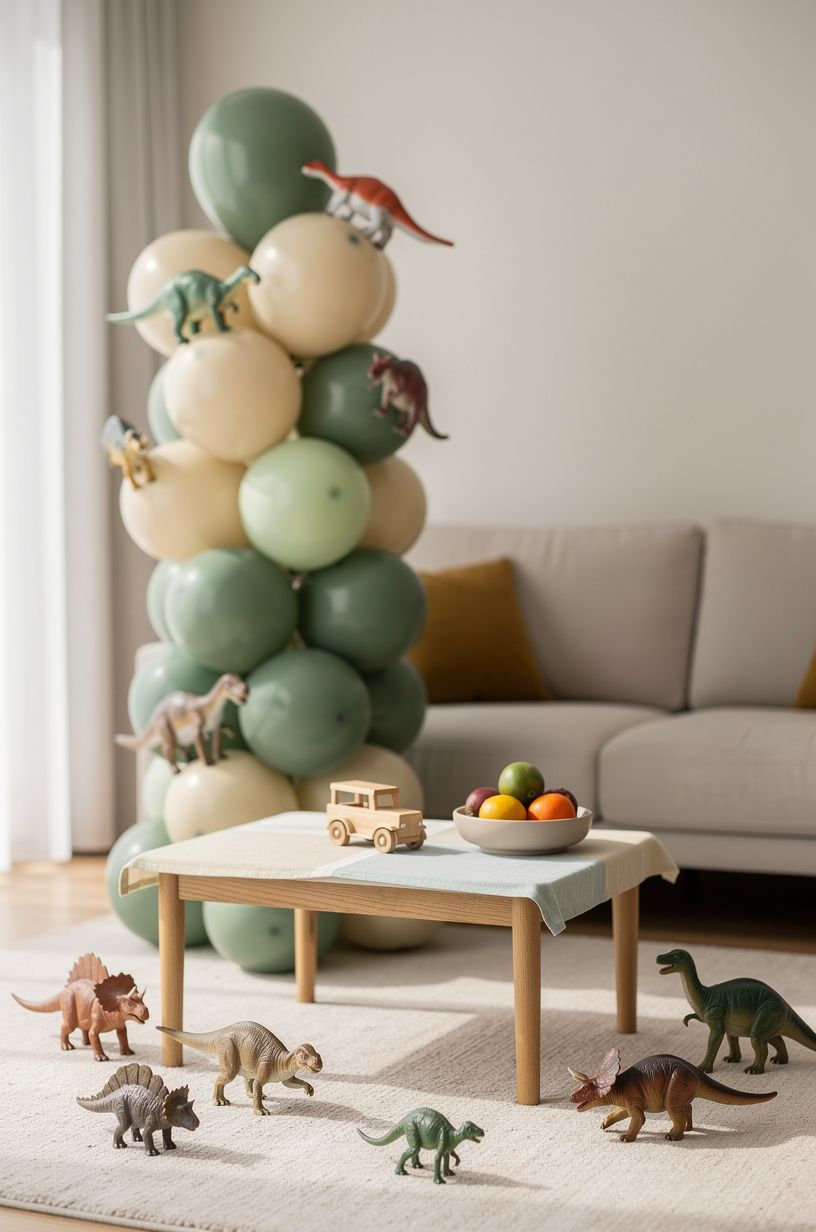
Use a small cluster of matte balloons in moss, cream, and muted clay if balloons suit your household. Attach them high behind the cake table or tie them securely to a heavy, stable base outside the walking route. Keep strings short enough to prevent tangling, and never leave loose balloons or popped fragments within your child’s reach.
Balloons add instant celebration and fill a sparse backdrop, but they can be startling when they burst and may become a choking risk after breaking. A balloon-free party is sensible for children who dislike sudden noise or for spaces where careful cleanup is difficult. Paper circles, fabric leaves, and a large cardboard dinosaur can provide similar color and shape without latex.
8Style the Cake Table With Three Textures
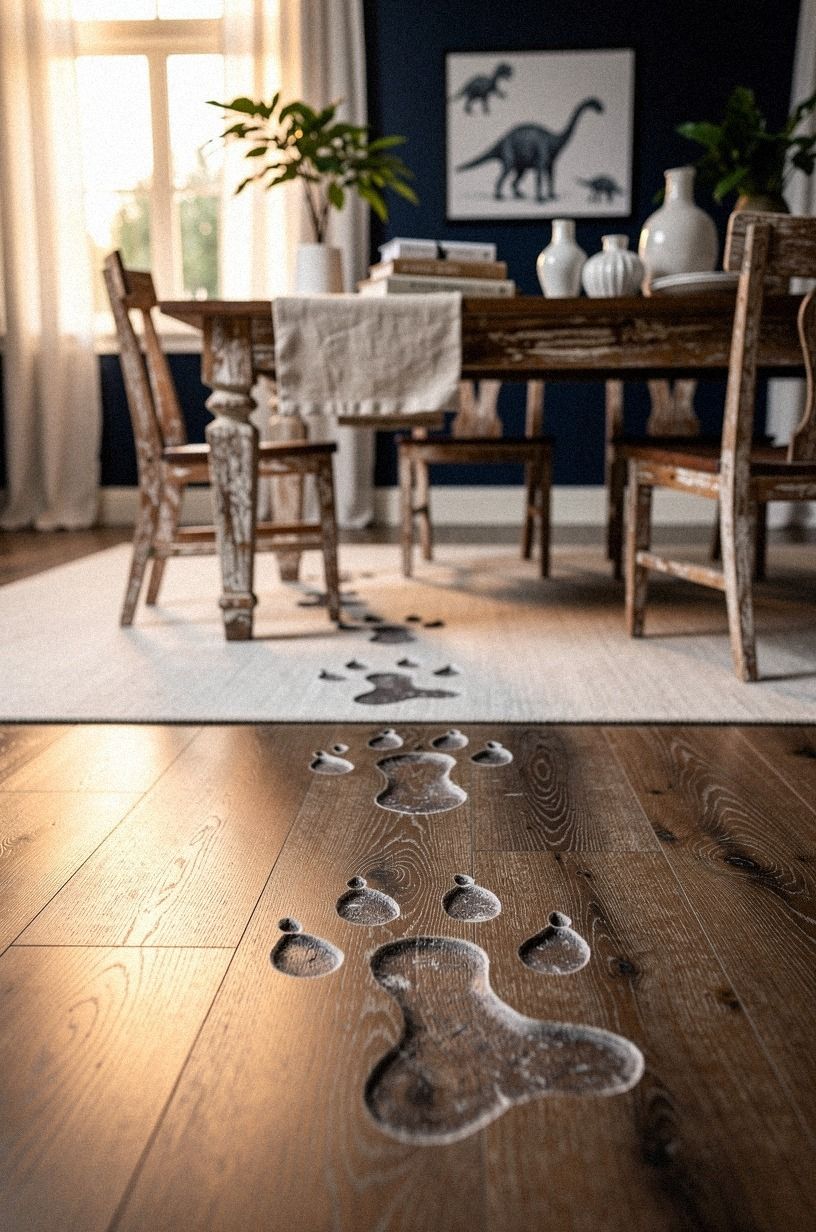
Use three simple textures at the cake table: a smooth washable cloth, a woven napkin or runner, and one rough natural detail such as kraft paper or a cardboard fossil cutout. Place the cake on a stable serving tray at the back of the table, with a small wooden or paper number two beside it. Keep candles, matches, and serving utensils in adult hands until needed.
The layered textures create a dinosaur landscape without requiring elaborate props. Choose a surface that you can wipe quickly, and keep the table far enough from the main play area that children aren’t reaching toward the cake while moving past. A low table is convenient for serving but should be used only if it’s stable and positioned away from running paths.
A full dessert display offers more decoration but increases crumbs, sugar exposure, and cleanup. Your alternative is a single small cake or a few soft cupcakes served after the main play period.
Avoid loose edible decorations that are hard, round, or difficult to identify. Let a seated adult handle serving and keep water available alongside the food.
9Make a Short Dinosaur Footprint Path
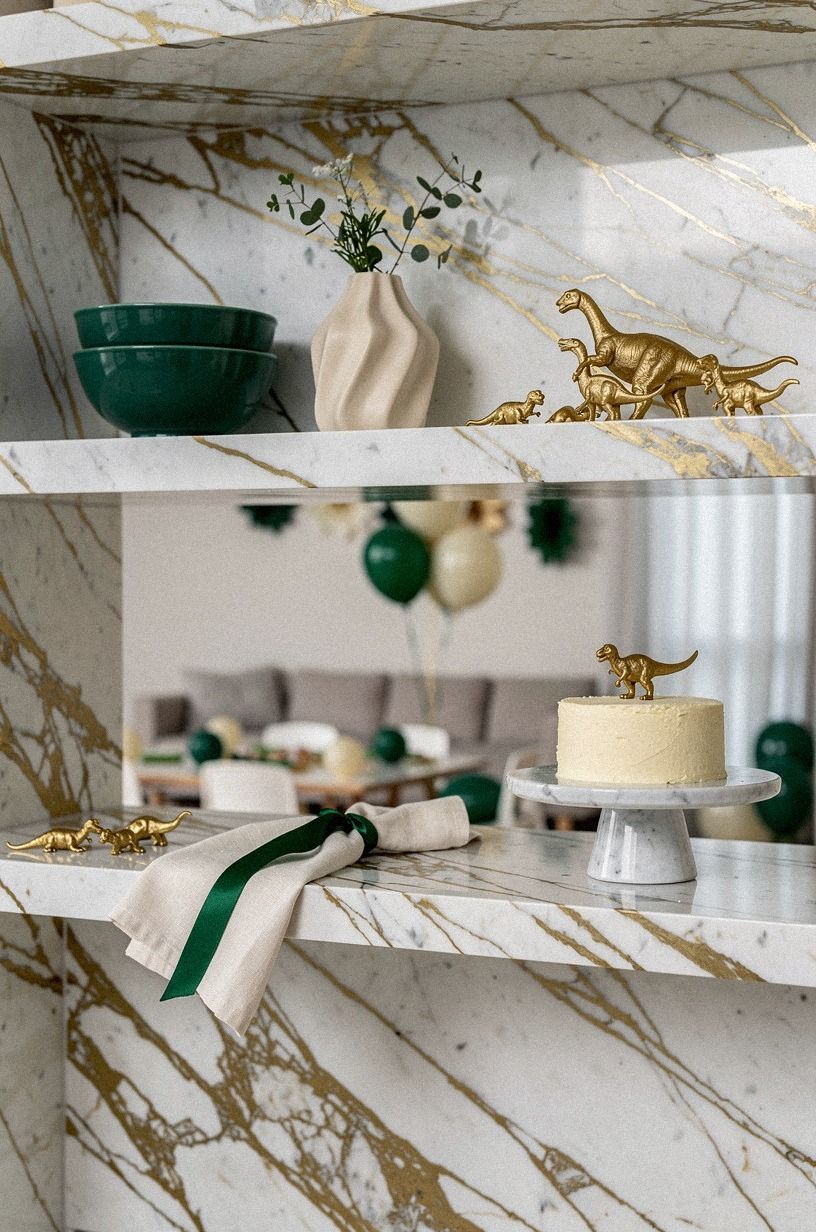
Cut eight to ten large dinosaur footprints from brown, cream, or sage paper and tape them securely from the entry to the activity area. Keep the spacing close enough for walking rather than running, and place the final footprint beside a basket of large dinosaurs or a paper leaf display. The path can serve as a quiet arrival cue: guests may follow it, point at it, or walk around it.
Don’t require every child to use the path or turn it into a race. Some toddlers may ignore it, step on the edges, or prefer to remain with a caregiver. Remove any footprint that lifts or slides, and avoid placing paper across stairs, thresholds, or narrow passageways.
Floor decals create a cleaner finish but may be unsuitable for some surfaces and can take longer to remove. Paper footprints are inexpensive and easy for you to replace, while fabric footprints are reusable if your household already has scraps.
The path should guide movement without becoming an obstacle. Leave enough space around each piece for adult feet, stroller wheels, and children who change direction suddenly.
10A Small Dinosaur Display Within Reach
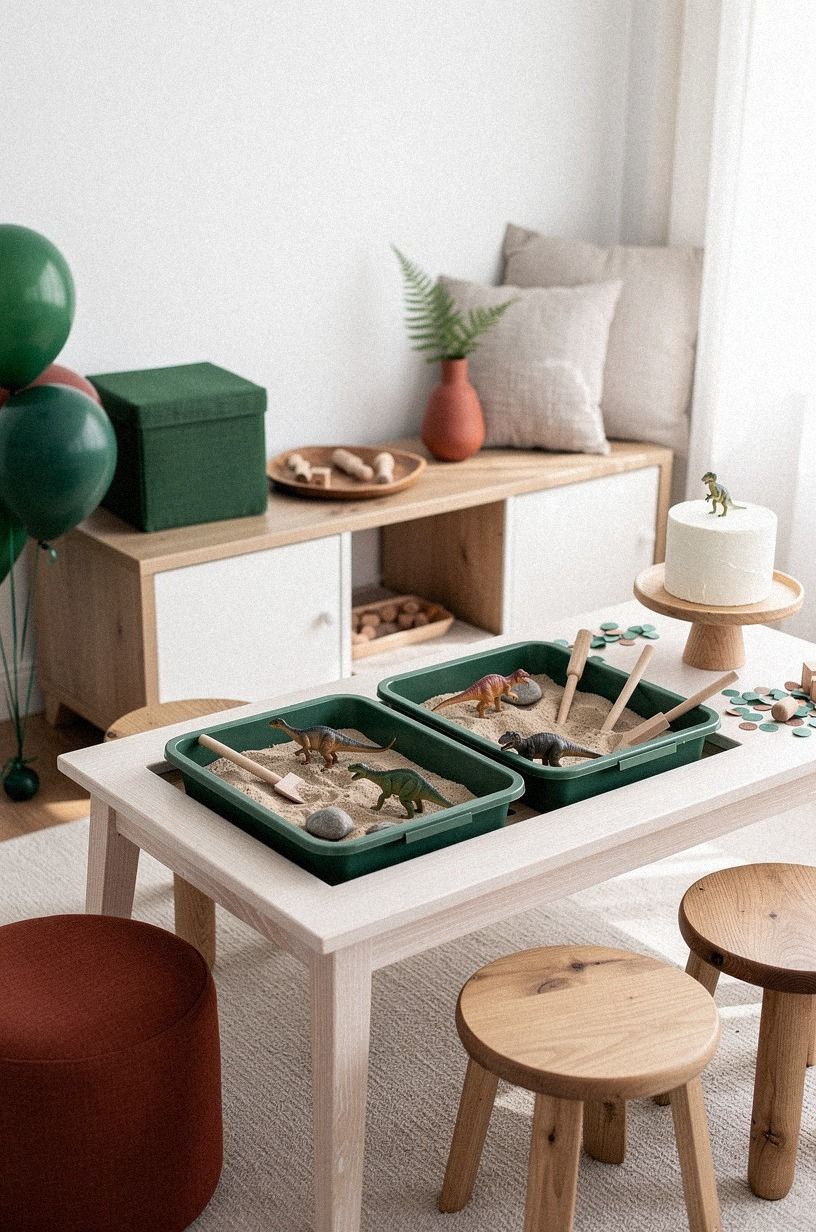
Arrange two or three large dinosaur toys, a basket of books, and a few paper leaves on a low, stable surface. Keep the display sparse so children can identify the available choices without pulling down a crowded collection. Anchor any shelf or storage unit securely, and avoid placing climbable furniture beside it.
A simple display can introduce your dinosaur theme before activities begin and provide a familiar reset option after cake. Choose toys without small detachable parts, sharp edges, or fragile accessories.
Keep extra toys in a closed container so you can offer a change of pace without flooding the room with objects. A shallow basket on the floor is a useful alternative when you have no securely anchored shelf.
11Prepare a Two-Container Dinosaur Dig
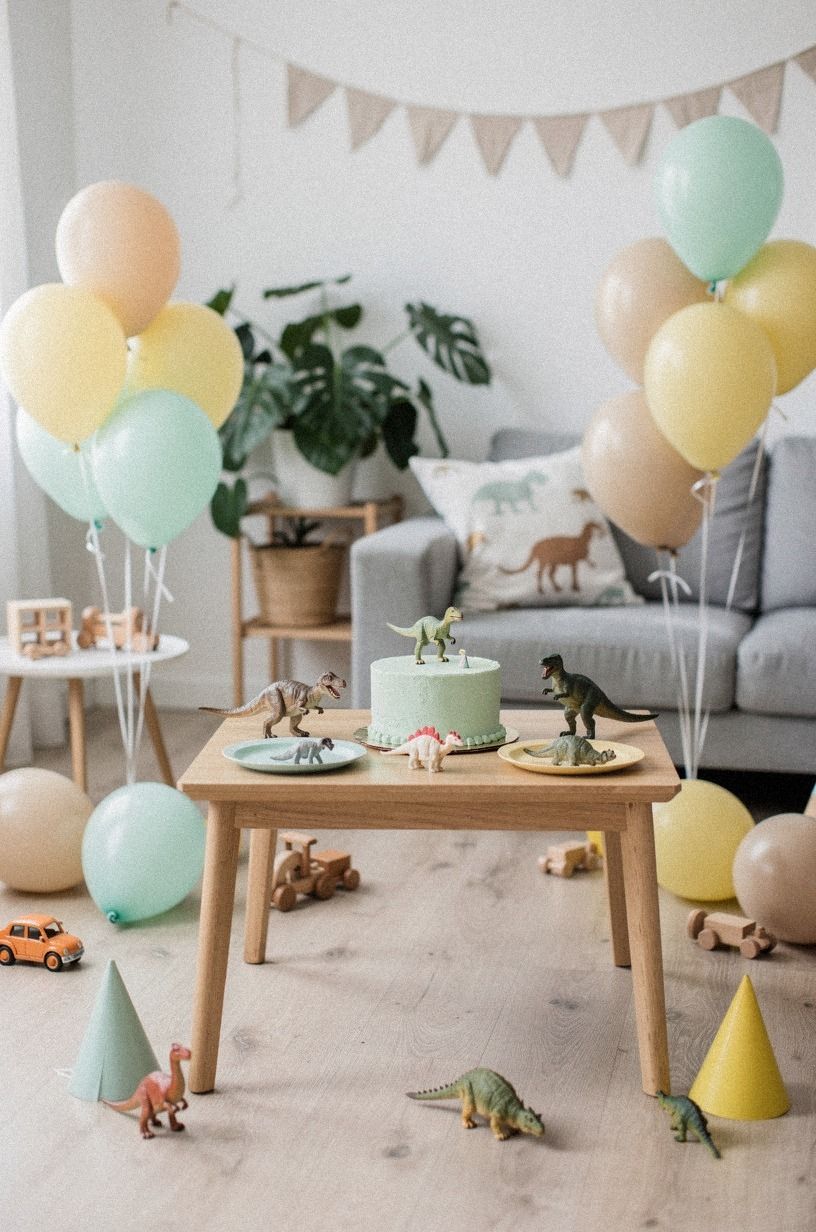
Set out one shallow container filled with large fabric leaves and a second container holding a few large, washable dinosaur figures. Invite toddlers to find a dinosaur, match it to a paper footprint, or simply move objects between containers. Use only pieces too large to fit entirely into a child’s mouth, and keep an attentive adult beside the activity throughout.
Avoid dried beans, rice, gravel, water beads, small plastic eggs, and other loose fillers that can create choking, ingestion, or cleanup concerns. A fabric-based dig is less messy and easier to pack away, although it offers less sensory variety than a traditional bin. A tray of large cardboard fossils is a useful alternative for children who prefer a dry activity.
Place your containers on a mat with a clear boundary around them. Don’t leave the bins unattended while children are eating or moving through the room.
Keep spare pieces out of sight and check the floor after the activity. The dig works best as an opt-in station lasting a few minutes, not as a structured task that every guest must complete.
You can add a simple dinosaur story while children move the figures: a dinosaur is resting, looking for leaves, or walking toward a footprint. Keep the language flexible and let your child change the story. No correct answer or finished result is needed.
12Use Music With Gentle Peaks
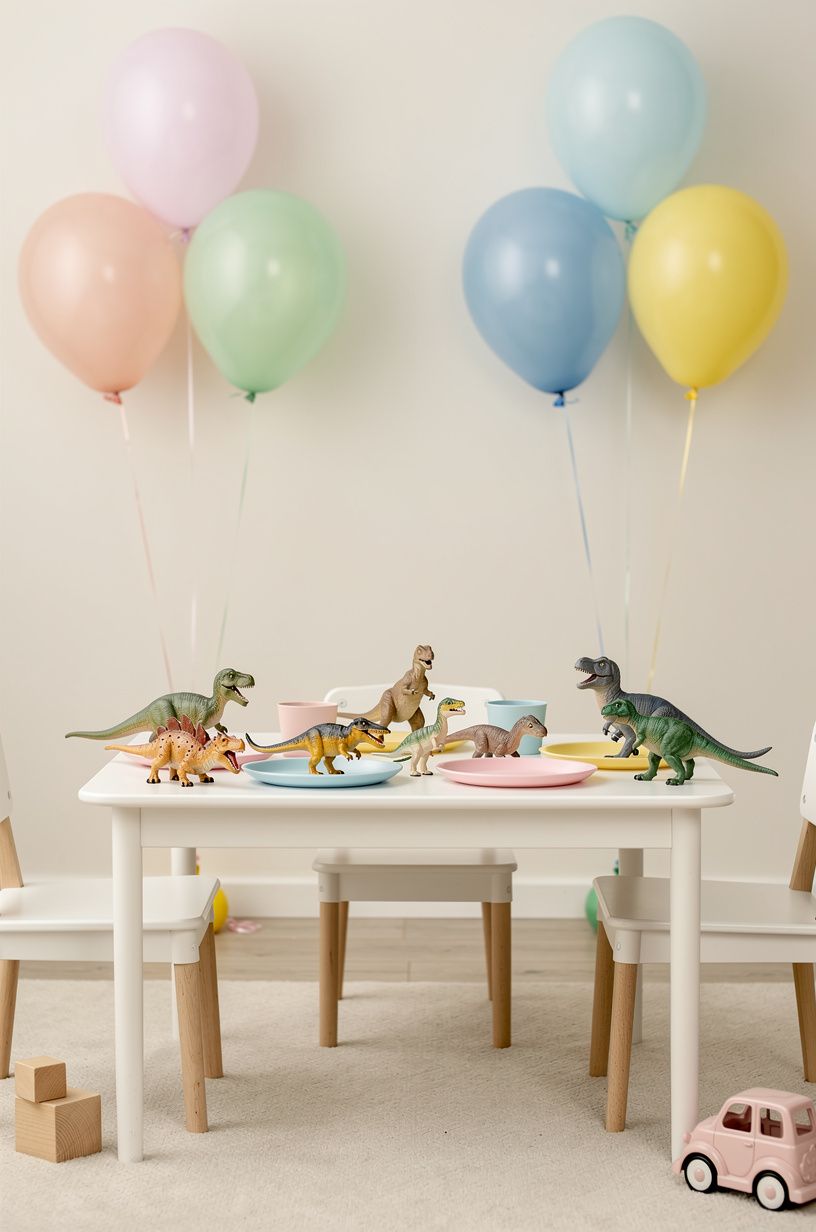
Prepare a short playlist that begins quietly, includes one livelier section for movement, lowers during food, and ends with calm instrumental music or silence. Keep the volume low enough for adults to speak normally and children to hear simple directions. A small basket of large wooden shakers may be offered briefly, but remove it if the sound becomes too intense.
Avoid constant fast music, flashing audio toys, and songs that require every child to copy an action. Music can support transitions, but some toddlers may prefer ordinary conversation or quiet play. Your silent alternative can be a paper footprint cue, a raised napkin, or a familiar verbal announcement when moving from one activity to another.
Music can make a short party feel more complete, while silence can be easier for a sensitive or tired child. Keep your volume control within adult reach and assign one person to pause the playlist when a child needs attention. You’ll create a flexible sound environment rather than a performance schedule.
13Set a Small, Illustrative Party Allowance
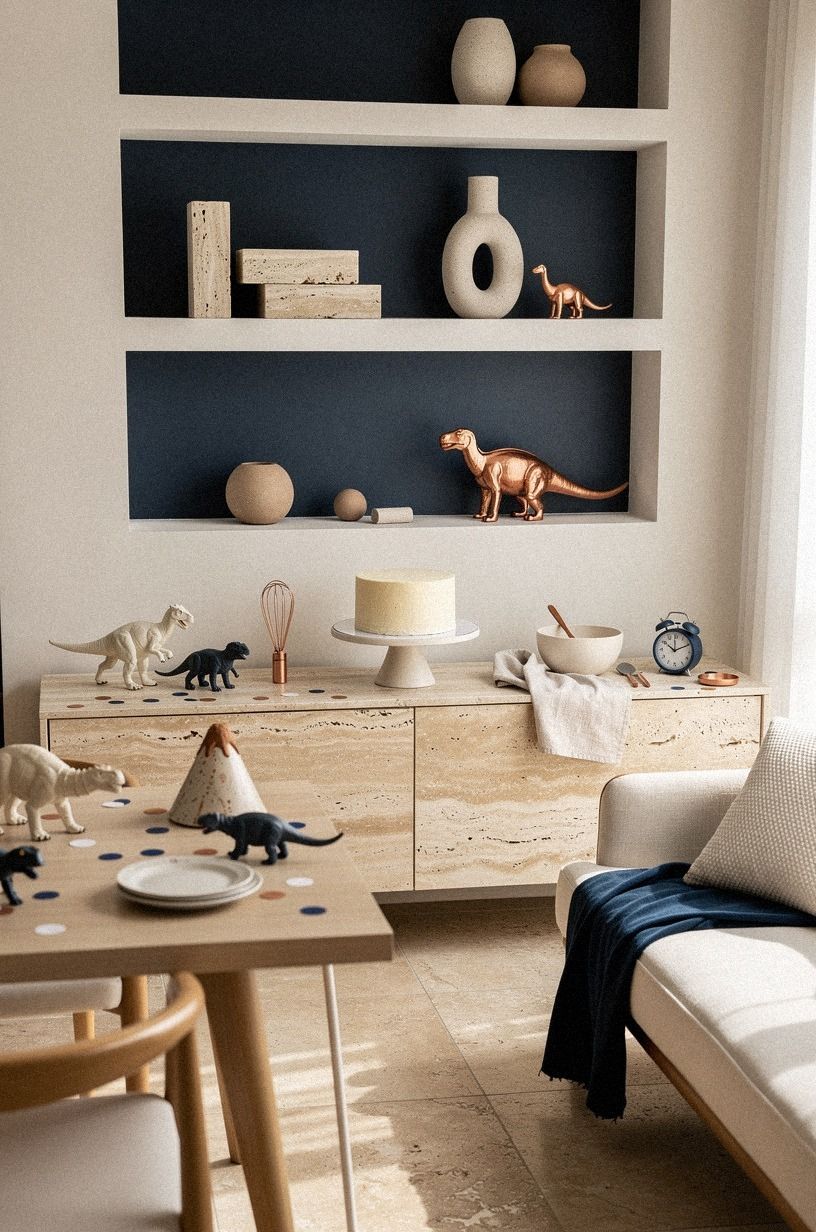
Create a simple allowance for food, paper materials, serving supplies, and optional decorations. The figures below are illustrative planning estimates, not researched prices or requirements. Your actual cost will depend on what you already own, where you shop, and how many guests attend.
List reusable items first: blankets, baskets, books, washable cloths, cups, and existing dinosaur toys. Then choose one backdrop material, one table accent, and one activity. A single cardboard dinosaur can serve your photo area, footprint path, and gift table if you move it between uses.
Buying a complete themed set saves decision-making but may create duplicates and disposable waste. Your homemade paper palette takes more preparation but can be adjusted to the room.
No furniture shopping is required; existing tables, rugs, and storage can work when stable and safely positioned. Spend your allowance on food, supervision needs, and cleanup supplies before adding decorative extras.
14Plan Cake Around a Reset Window
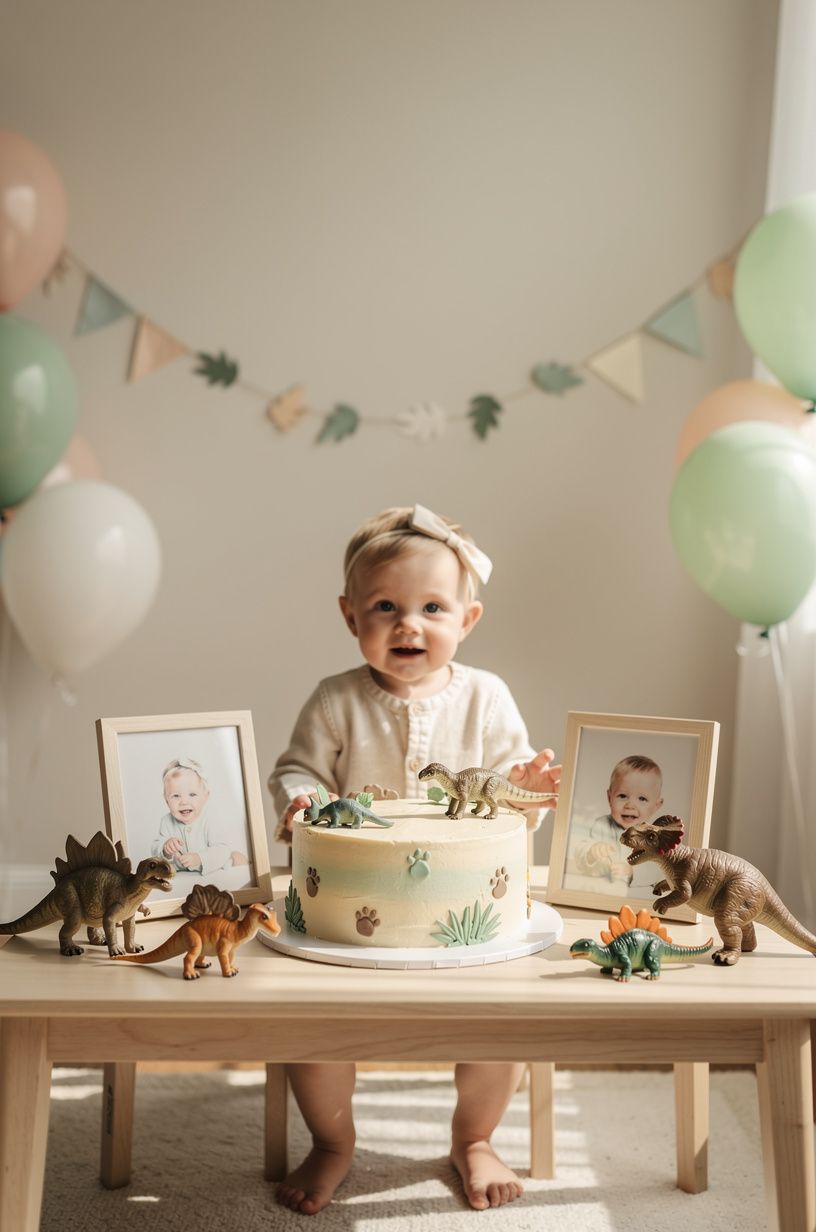
Schedule cake after the main play period, once guests have had time to arrive and explore. Allow about ten minutes before serving to put away noisy materials, offer water, seat children, and clear the table. Keep candles, matches, and the lighter with an adult, and never leave a lit candle within a child’s reach.
Some toddlers enjoy singing, while others may find a group song or candle ritual uncomfortable. Offer a quiet alternative such as looking at the cake, blowing with an adult, or skipping candles entirely. Serve small portions of familiar textures and keep adult supervision in place while children eat.
After cake, provide a reset window with books, the quiet corner, and calm floor play. A later cake may fit your schedule better but can coincide with tiredness; an earlier cake may be easier for some children but leaves less time for guests to settle. A cupcake or small individual slice is a practical alternative to one large cutting ceremony.
Keep wipes, spare clothing, and a lined bin close by.
Your child may want to leave the table quickly after one bite. That’s fine. Let the food period end without pressure, and allow accompanying adults to guide their own children according to familiar routines.
15Frame Photos With a Real-Life Backdrop
Choose one photo area near natural light but outside the doorway and main food route. Use the paper fossil backdrop, a linen cloth, three paper leaves, and one friendly-looking dinosaur. Place a paper or wooden number two on the table if available, and keep the surrounding area uncluttered.
Take the essential group photograph early, before food and movement make the setup difficult. Don’t require children to sit still, smile, or face the camera.
A seated adult can hold a toddler if needed, while other children remain nearby with a familiar toy. Keep cords, unstable props, and small decorations out of your photo area.
A large printed banner may create a stronger theme, but it can dominate the image and take longer to store. Your simple household backdrop looks less formal yet leaves room for natural expressions and ordinary movement.
After the important pictures, put the camera away and return your attention to the children. Photos are one part of the celebration, not a reason to extend an activity after a child has had enough.
Preparation Checklist
- Confirm your guest list, timing, nap considerations, allergies, and contact details for accompanying adults. - Choose a 75-to-90-minute window and identify one adult for food supervision, one for activity oversight, and one for photos or timing. - Clear the play area and create an open route between the entrance, food table, quiet corner, and bathroom. - Check rugs, mats, shelves, chairs, lamps, cords, hooks, and decorations for stability. - Assemble your paper backdrop, footprints, leaves, cardboard dinosaur, and any optional balloon display the day before. - Prepare familiar foods in toddler-appropriate shapes; keep choking hazards off the menu and follow each child’s usual dietary guidance. - Set out unbreakable cups, napkins, wipes, a lined waste container, water, and spare clothes. - Place only a few large dinosaur toys in the play area and keep the rest in a closed container. - Pack away broken balloons, loose paper, small parts, and food spills immediately. - Save ten minutes after the party for a floor check, food cleanup, and removal of temporary wall materials.
A sample rhythm could be 0–15 minutes for arrivals and free exploration, 15–30 minutes for the footprint path and dinosaur play, 30–45 minutes for the optional dig or books, 45–60 minutes for food and cake, 60–75 minutes for quiet play and photos, and 75–90 minutes for departures. Your schedule should remain flexible.
The Questions Worth Answering First
How long should a two-year-old dinosaur party last?
A 75-to-90-minute party is a practical starting point. Shorter gatherings may suit children with naps or limited tolerance for group activity. You can end earlier if your child seems tired, overwhelmed, or ready to leave the group.
How many activities are needed?
Two or three optional stations are enough: dinosaur play, a footprint path, and a quiet book corner. Children don’t need to complete every activity. Your child may spend most of the party with one familiar toy, and that’s a perfectly workable plan.
What food works well for toddlers?
Offer familiar soft foods in safe, age-appropriate shapes, with seated eating and close adult supervision. Avoid whole nuts, popcorn, hard candy, and other choking hazards. If you’re unsure about a food, ask the child’s accompanying adult about the usual preparation.
Are balloons necessary?
No. Paper leaves, cardboard dinosaurs, and a fossil backdrop can provide the same theme without latex or popped balloon pieces. If your child can’t tolerate sudden sounds, a balloon-free setting may make the room more comfortable.
What works in a small home?
Use one defined floor zone, one food table against a wall, and one quiet corner. Keep your central route open and reduce the number of props. You’ll have more room for safe movement when each item has a clear purpose.
Can this setup work in a rental?
Yes. Use paper decorations, removable adhesive tested on the surface, a tension rod, and freestanding items.
Avoid repainting or attaching heavy objects to walls. If you’re uncertain about a surface, choose a freestanding backdrop instead.
A memorable second birthday doesn’t require a crowded room or a long program. A few large dinosaur details, familiar food, safe open space, and permission to opt out give your celebration a practical shape. The strongest plan is one that can pause, simplify, and follow your child’s changing energy.
Your Next Step
Choose your party window, guest list, quiet corner, and three safest dinosaur details today. Then place your reusable supplies in one basket and write your simple food and supervision plan beside them. On the day, follow your child’s energy, keep the dinosaur play optional, and remove anything that no longer feels safe or useful.