
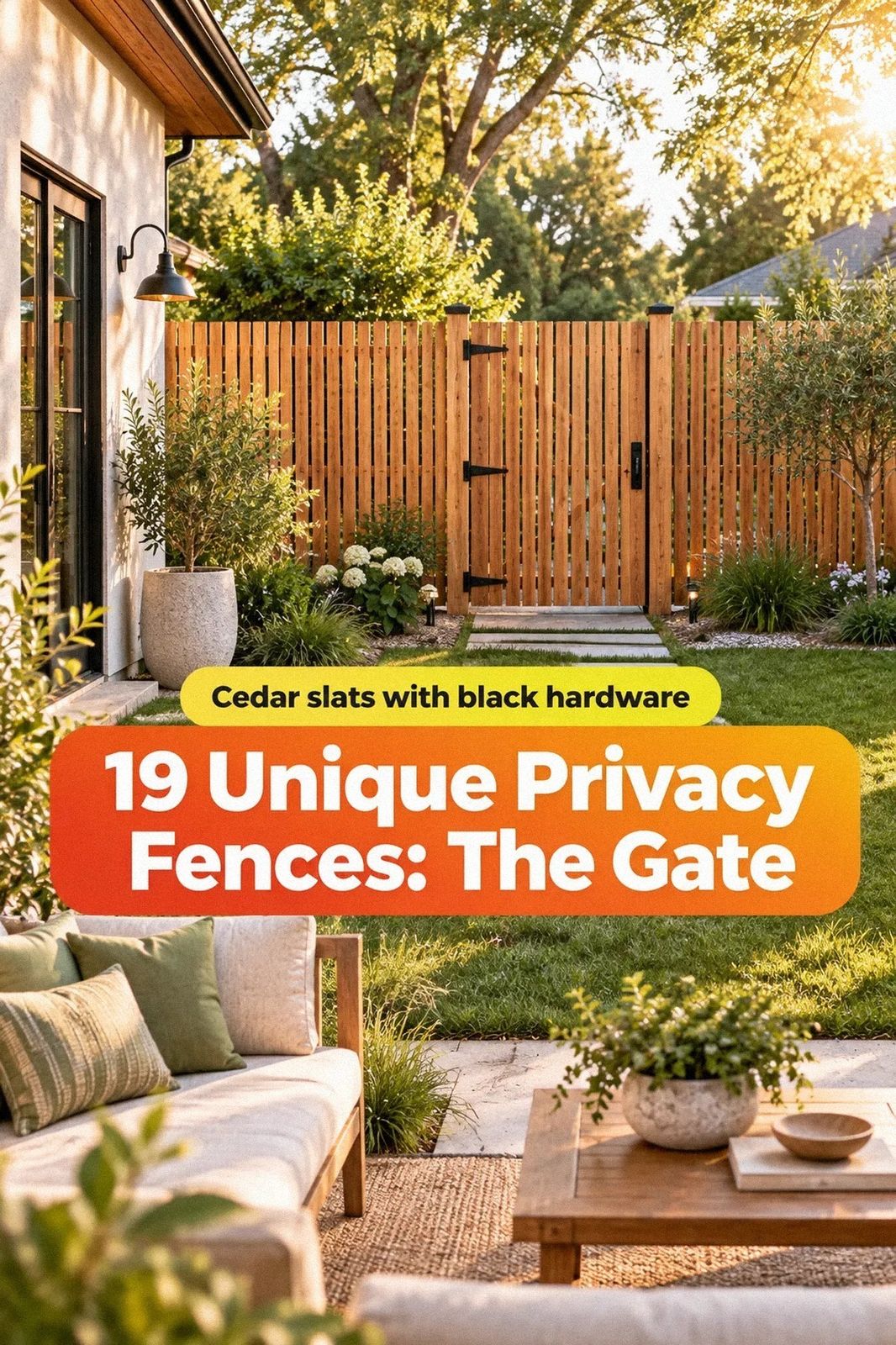
 by
Unique privacy fence ideas work best when they give you seclusion without turning your yard into a wooden box. I once installed a solid panel where afternoon light mattered most, and the patio felt gloomy by dinner. These ideas use slats, plants, fabric, and height changes to keep your outdoor space private, warm, and usable.
The most successful fence usually solves one specific problem first. Maybe neighbors can see the dining table, or a side gate feels exposed, or the patio needs a sheltered corner.
Start there. You won’t need to rebuild every boundary to make the yard feel dramatically more private.
- Layer Vertical Slats With a Soft Gap
- The Two-Wood Rule: Float a Contrasting Screen
- Frame Decorative Fence Panels With Black Posts
- Can a Living Wall Soften a Hard Boundary?
- Hang Outdoor Curtains on a Tension Frame
- The Three-Height Light Stack
- Swap Solid Boards for a Lattice Crown
- Two Fences, One Yard: Give Each a Job
- Paint a Moody Fence in a Small Yard
- What Makes a Fence Work as a Dining Nook Backdrop?
- Frame a Gate With an Arched Screen
- Reed Screen Reset: Hide the Old Boundary
- Float Planters Across a Horizontal Fence
- Pergola Logic: Mix Slatted Screens With Shade
- Paint a Fence and Gate the Same Color
- Add a Narrow Stone Base
- Use a Mirror Panel Behind Planting
- Replace One Fence Section With Cable
- Build a Folded Corner Privacy Screen
1Layer Vertical Slats With a Soft Gap
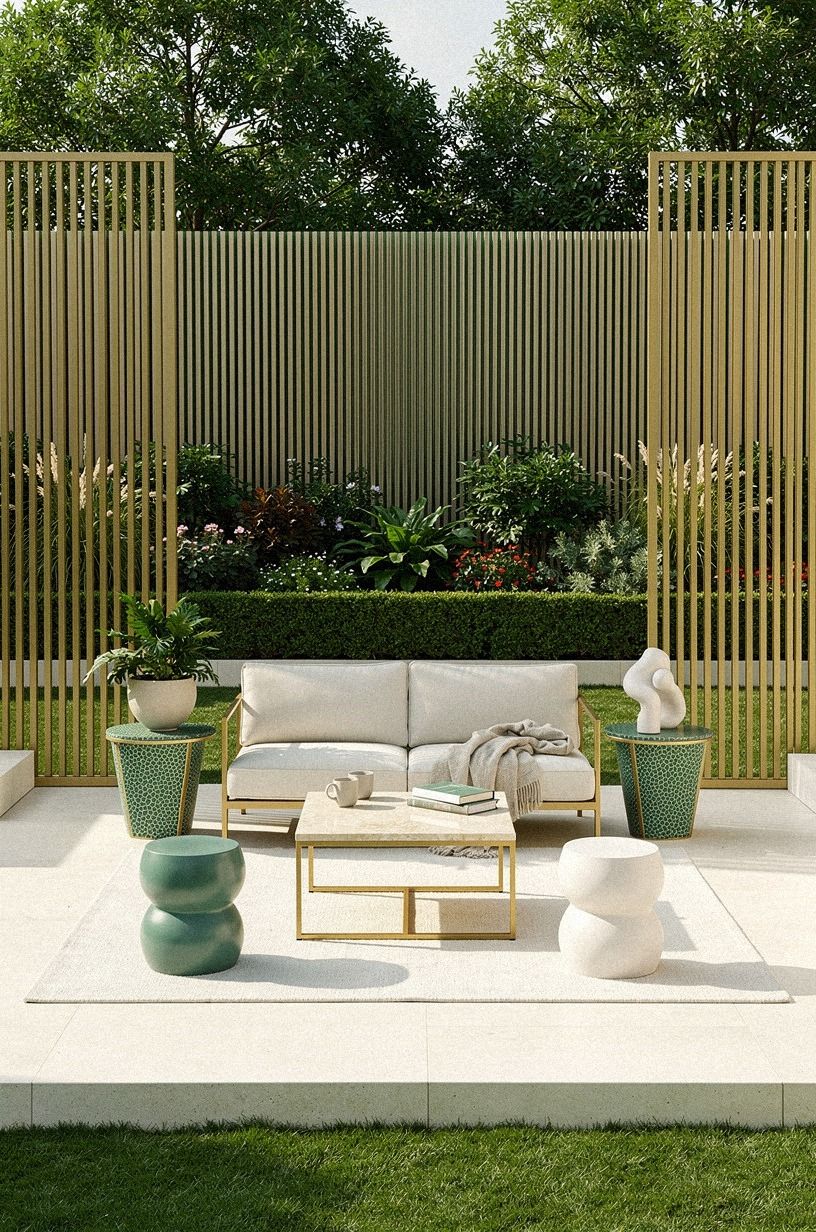
A vertical slat fence gives you privacy while leaving small breaks for sunlight and airflow. Choose slats in a deep emerald exterior finish with slim gold-toned hardware, then add cream outdoor cushions and a small weather-resistant shagreen accent. You’ll get a screened view instead of a heavy wall, and your yard won’t feel boxed in.
I’d skip ultra-wide boards here. They look substantial in a sample, but they can make a narrow patio feel closed off.
If you’re planning a full wood boundary, compare this approach with these wood privacy fence ideas for classic backyard seclusion. Your eye will notice the rhythm between each board, especially when late light cuts across the surface.
Leave a slightly larger gap on the side facing the brightest part of the yard. The difference is subtle, but it keeps the fence airy rather than severe. You can also vary the slat widths in one short section near the gate for a more distinctive finish.
Typical cost by tier (US averages):
2The Two-Wood Rule: Float a Contrasting Screen
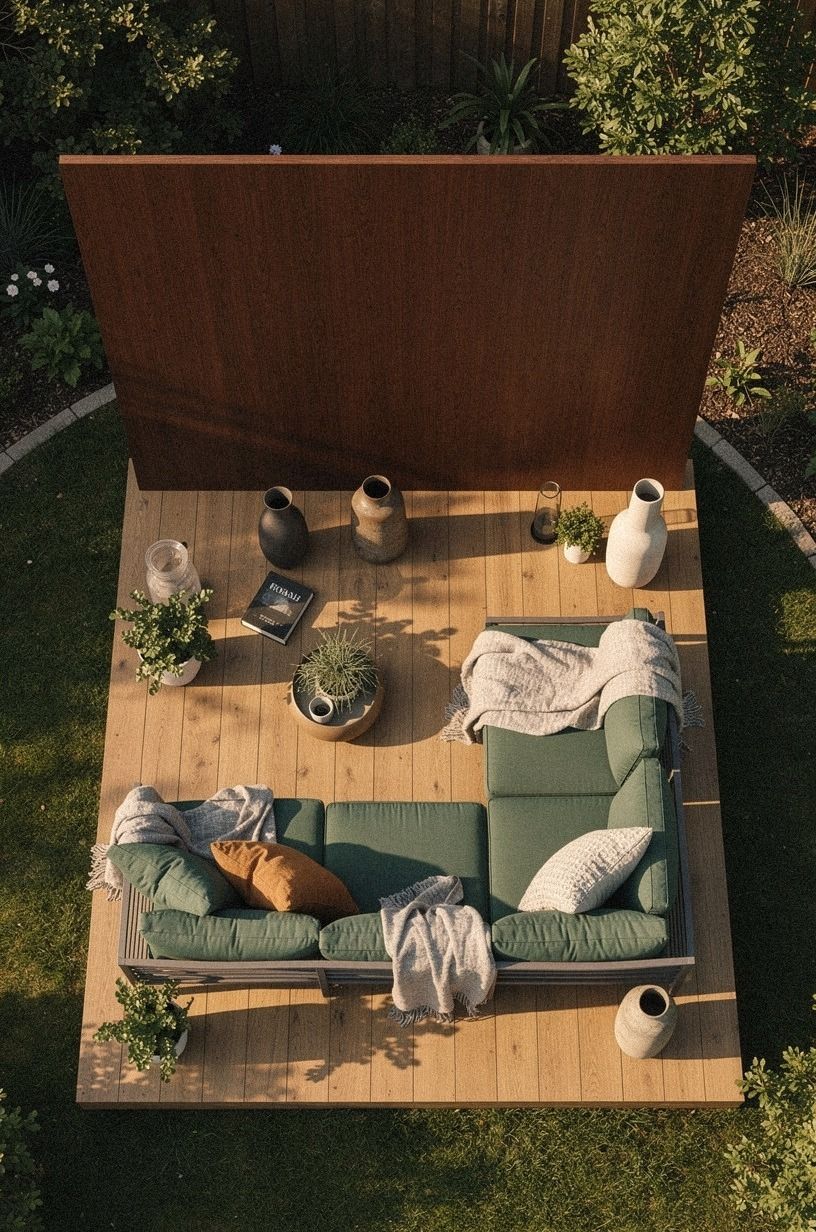
The Two-Wood Rule is simple: use one solid material for structure and another for the decorative layer. Try natural oak slats over a frame painted forest green, then bring in rust through a small planter or cushion in washed Belgian linen. The warm grain keeps your fence earthy, while the deeper green stops the whole run from looking too serious.
You’ll want to keep the natural oak lighter than the painted structure, or your yard may look visually busy. I’ve tried mixing reddish cedar with orange-toned oak, and it wasn’t charming.
It was a color argument. A modern outdoor fence can use the same rule on a smaller screen behind a dining table.
Repeat only one of the woods elsewhere. A matching planter, bench, or gate detail is enough. You don’t need to turn the whole yard into a showroom of coordinated timber.
This idea feels especially handsome beside pale paving or warm brick. The contrast creates a polished backdrop, while the open slats keep the composition relaxed.
3Frame Decorative Fence Panels With Black Posts
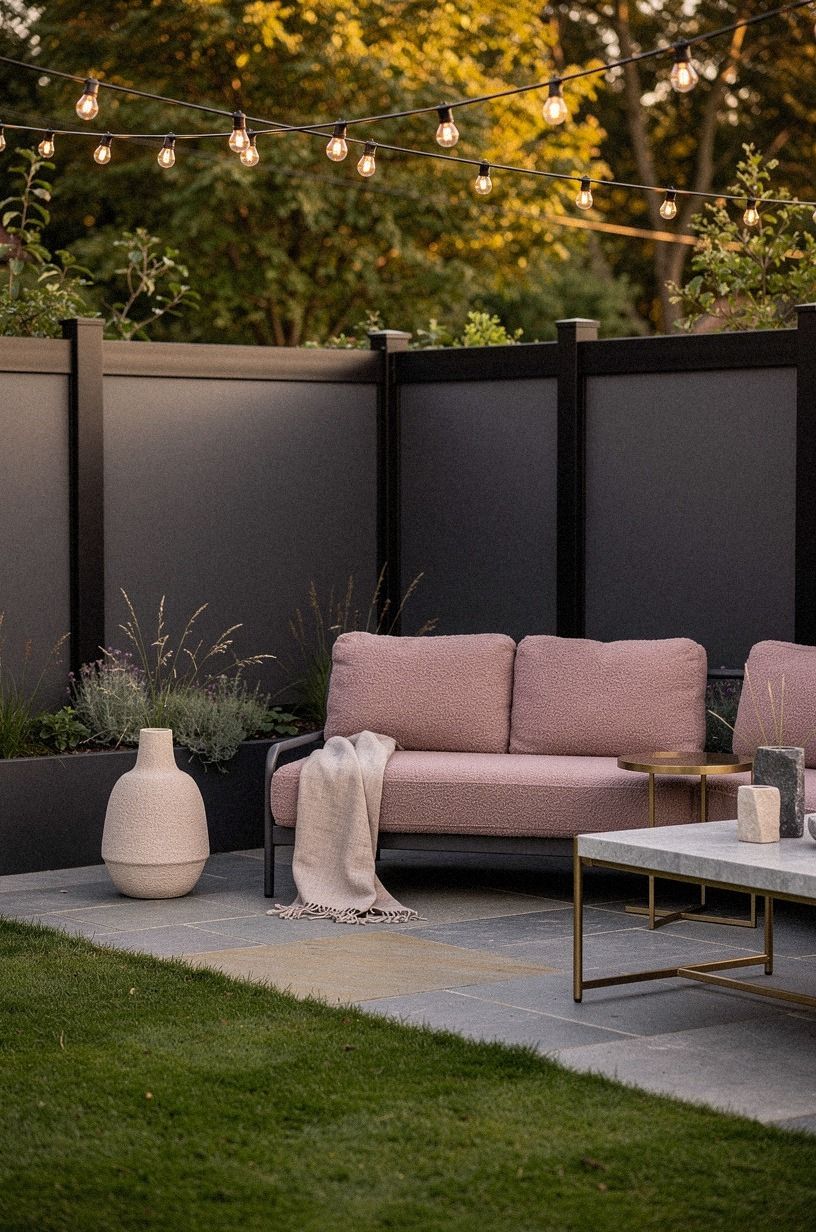
Decorative fence panels can feel flimsy when they stand alone, so frame them with square posts and a dark top rail. Charcoal powder-coated steel gives the pattern enough visual weight, while dusty rose detailing and slim aged-brass fasteners keep the yard feeling modern and open. Add an organic bouclé cushion nearby for softness.
You don’t need to cover every boundary with a pattern. Use two panels behind your seating area and leave the side sections quieter. That contrast helps your eye rest, and you’ll spend less on materials.
For more traditional structure, these wood privacy fence ideas show how a decorative section can sit inside a warmer frame.
Don’t choose a tiny motif if you need real privacy. A pattern with openings larger than your hand will show more of your patio than you expect.
Before ordering, tape the pattern’s approximate dimensions onto the existing fence. It’s an easy way to judge whether the openings feel elegant or fussy from the chair where you’ll actually sit.
A narrow border around the panel can make a budget screen feel more architectural. Choose a broad frame if the panel is delicate, and a slimmer one if the pattern already has plenty of visual weight. It earns its place!
4Can a Living Wall Soften a Hard Boundary?
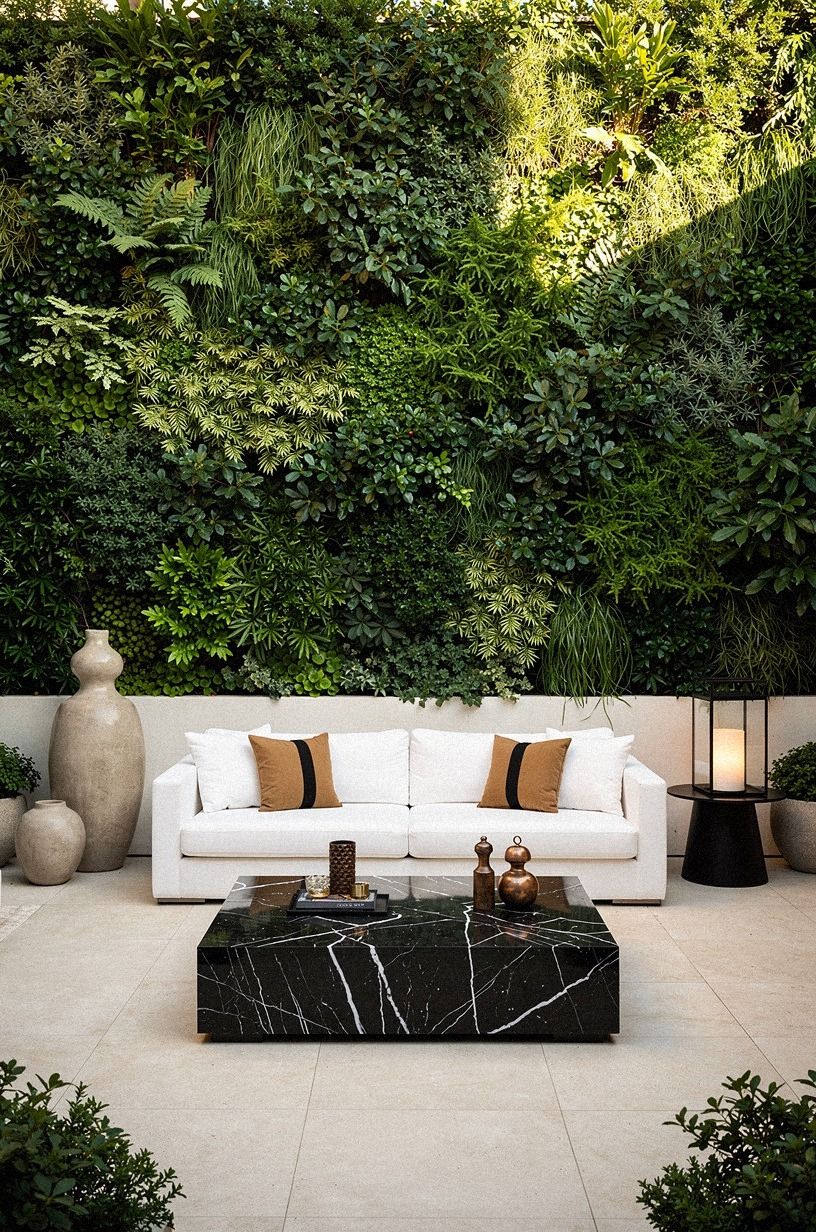
A living wall softens a hard fence better than another decorative layer.
5Hang Outdoor Curtains on a Tension Frame
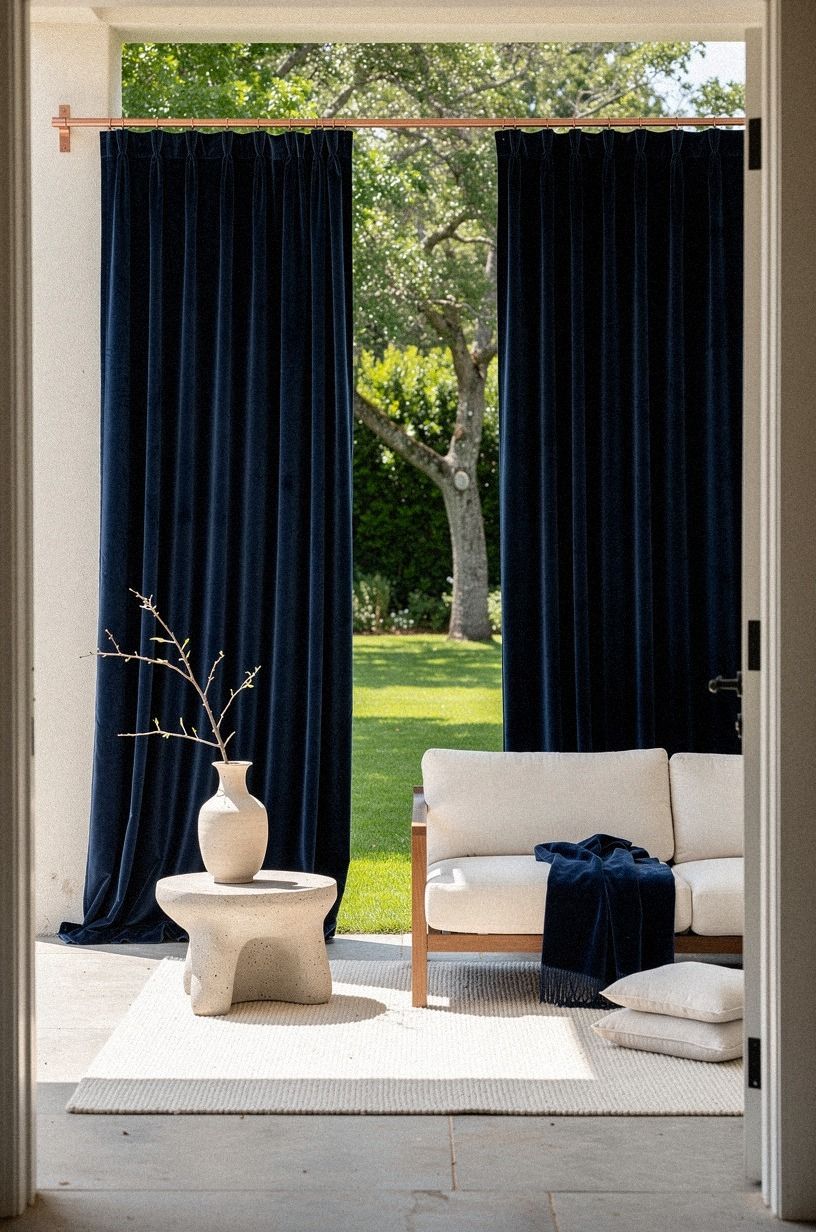
Outdoor curtains are useful when you need privacy only during dinner or late afternoon. Hang deep-pile mohair velvet panels in midnight blue from a simple overhead frame, using copper hardware and ivory edging. You’ll get movement, shade, and a gentle rustle when the breeze comes through.
This is one of the better rental-friendly options because you can remove it later. But you’ll need fabric that can handle sun and moisture, so choose a treated outdoor velvet rather than an indoor textile that fades after one season. Keep a 36-inch walkway clear beside the curtains so your guests don’t brush against the panels each time they pass.
Curtains look most inviting when they’re gathered to one side rather than stretched tightly all day. That gives you a quick privacy switch and prevents the fabric from making the patio feel theatrical. If you like a more permanent structure, compare the idea with these privacy lattice fence ideas.
Choose weighted hems if the yard is windy. Otherwise, the panels can twist around the frame, collect dirt, and become more annoying than useful. A simple tieback in leather or rope can add a warm finishing detail.
6The Three-Height Light Stack
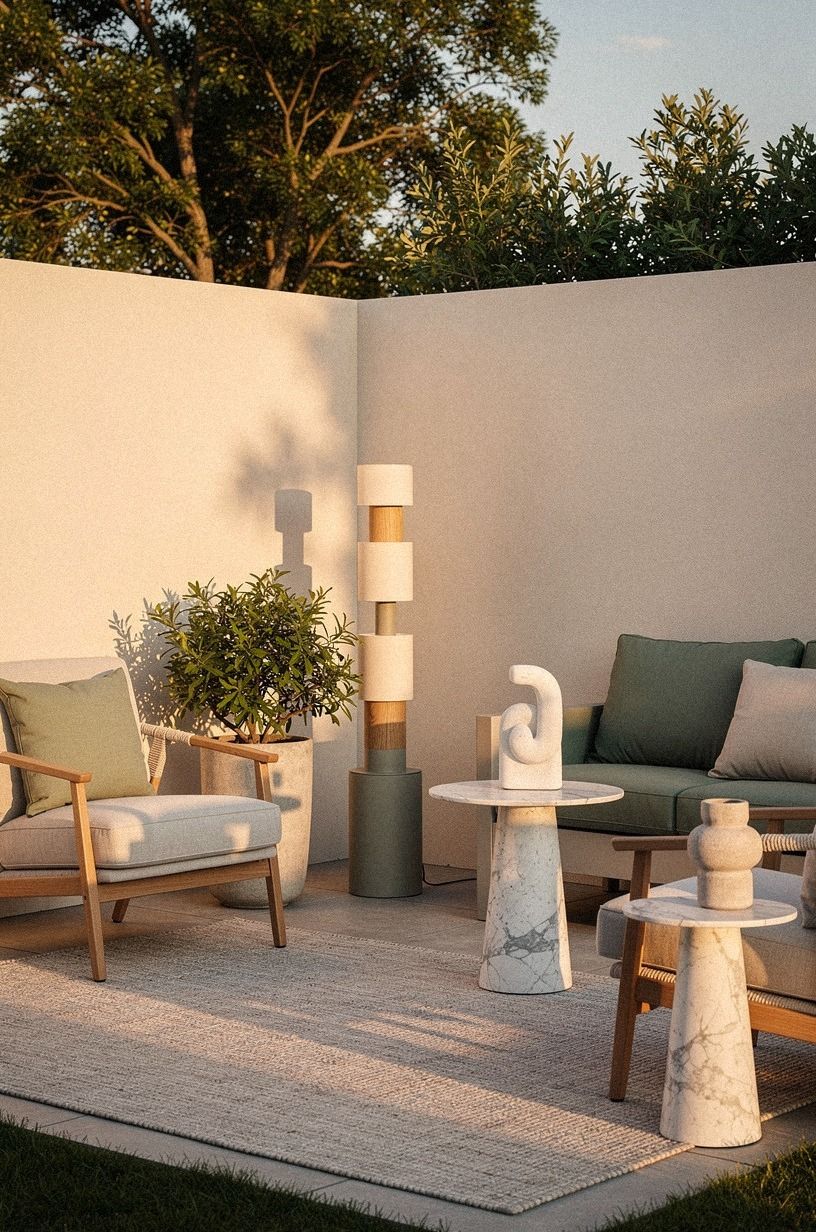
The Three-Height Light Stack combines a low planter, a medium privacy screen, and one taller tree or lantern.
7Swap Solid Boards for a Lattice Crown
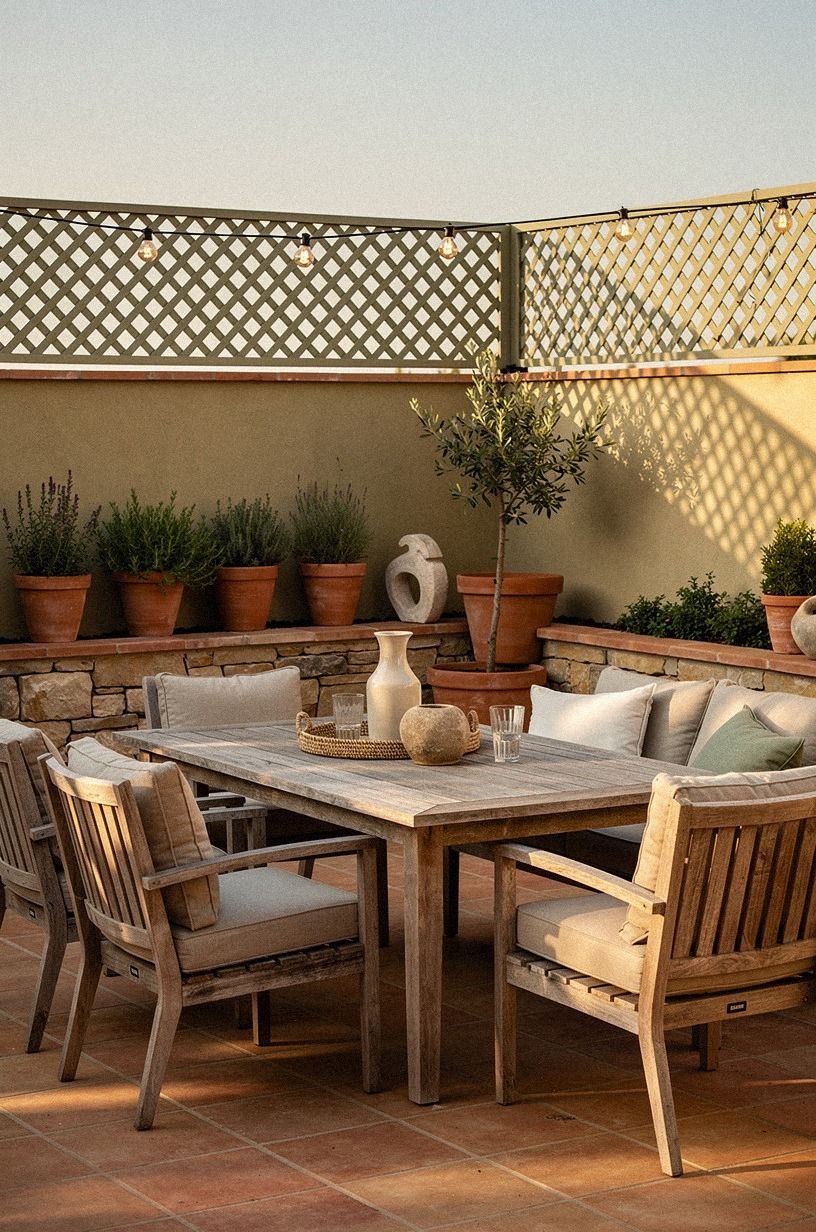
A lattice crown adds privacy where people actually look while preserving sky and airflow above it. Choose reclaimed weathered teak lattice with narrow diamond openings, then surround it with terracotta pots, stone paving, and olive-toned planting. The textured wood catches sunlight, and your yard won’t feel as enclosed.
I’d place the lattice only on the upper third of the fence. Full-height lattice can look fussy, especially beside a small patio set.
You can also repeat the pattern on one gate so the design feels intentional. These privacy lattice fence ideas offer useful ways to keep charm without losing coverage.
The crown can also hide a slightly uneven fence line. Keep the lower boards simple, then let the patterned upper section act as the memorable detail. Protect the teak with a finish that preserves its weathered character rather than forcing it into a sharp new color.
8Two Fences, One Yard: Give Each a Job
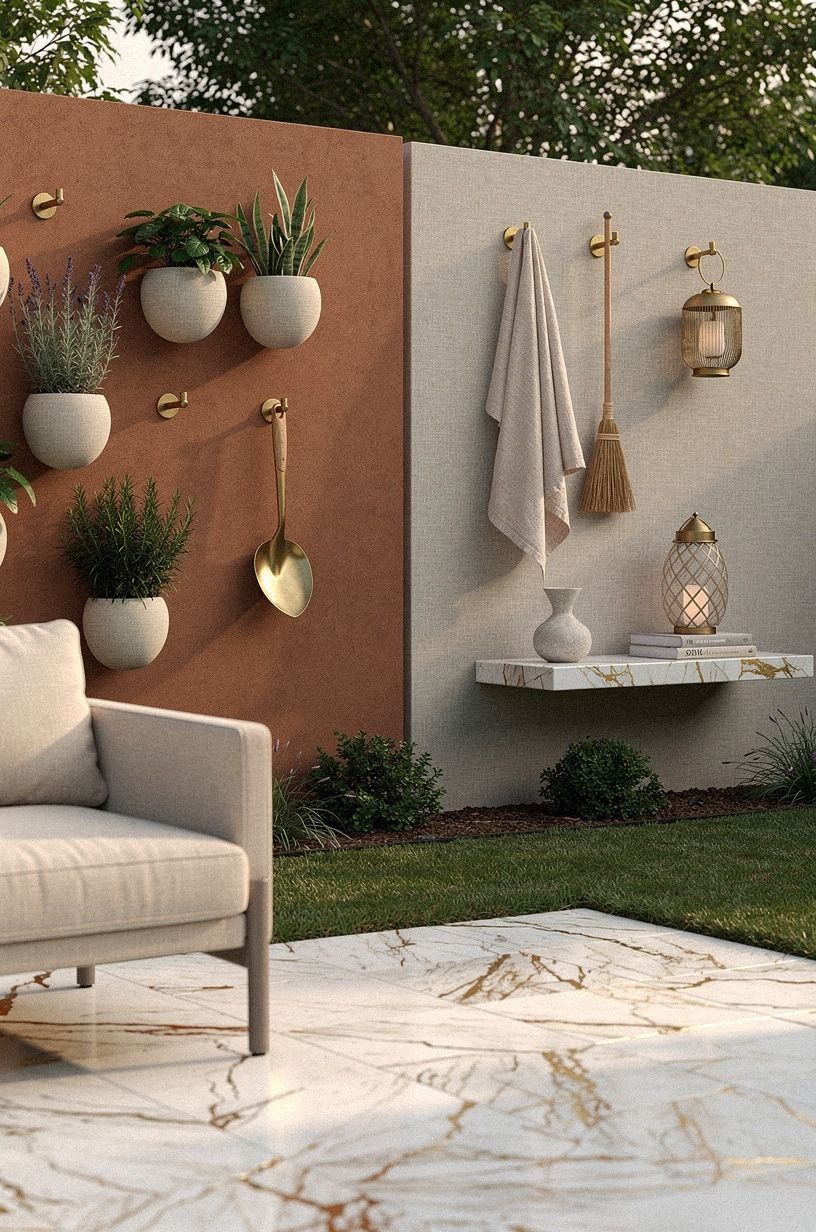
Two different fences in a yard can work when each one has a clear job.
9Paint a Moody Fence in a Small Yard
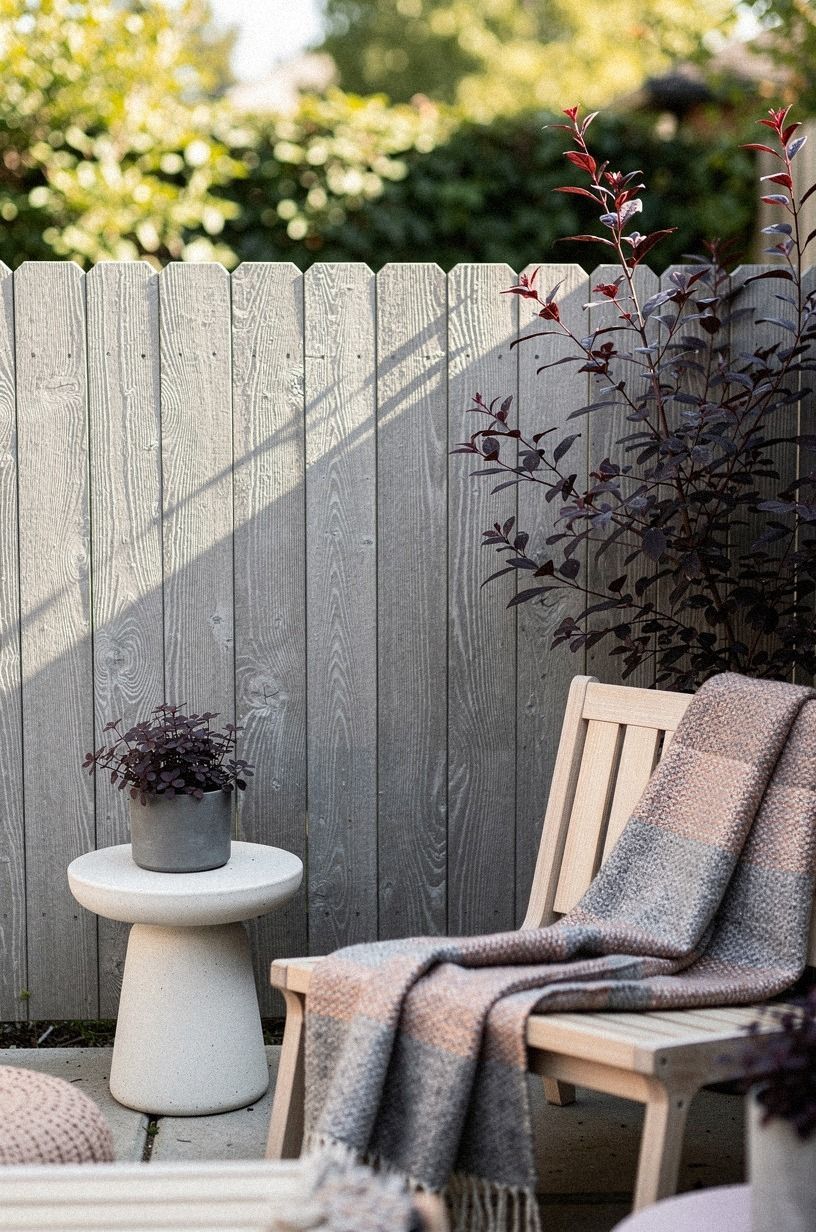
A dark fence can make a small yard feel deeper when the surrounding plants are bright enough. Try a plum exterior finish on cerused white oak panels, then place gray outdoor cushions and rose-gold metal accents in front of it. The background recedes, while the greenery comes forward.
You’ll want to test the paint in morning and evening light before committing. I once chose a blue-black sample that looked elegant at noon and nearly purple after sunset.
That wasn’t the calm backdrop I wanted. A darker finish also shows dust, so keep a soft brush nearby and choose a low-sheen exterior paint that won’t glare in direct sun.
Pair the color with feathery plants, pale stone, or warm timber. The contrast makes the fence feel moody and sophisticated rather than gloomy. A modern outdoor fence can use the same dark-background principle with more open construction.
If the yard is genuinely tiny, paint the gate and the fence together. A single dark field can blur the edges and make the space feel more expansive.
10What Makes a Fence Work as a Dining Nook Backdrop?
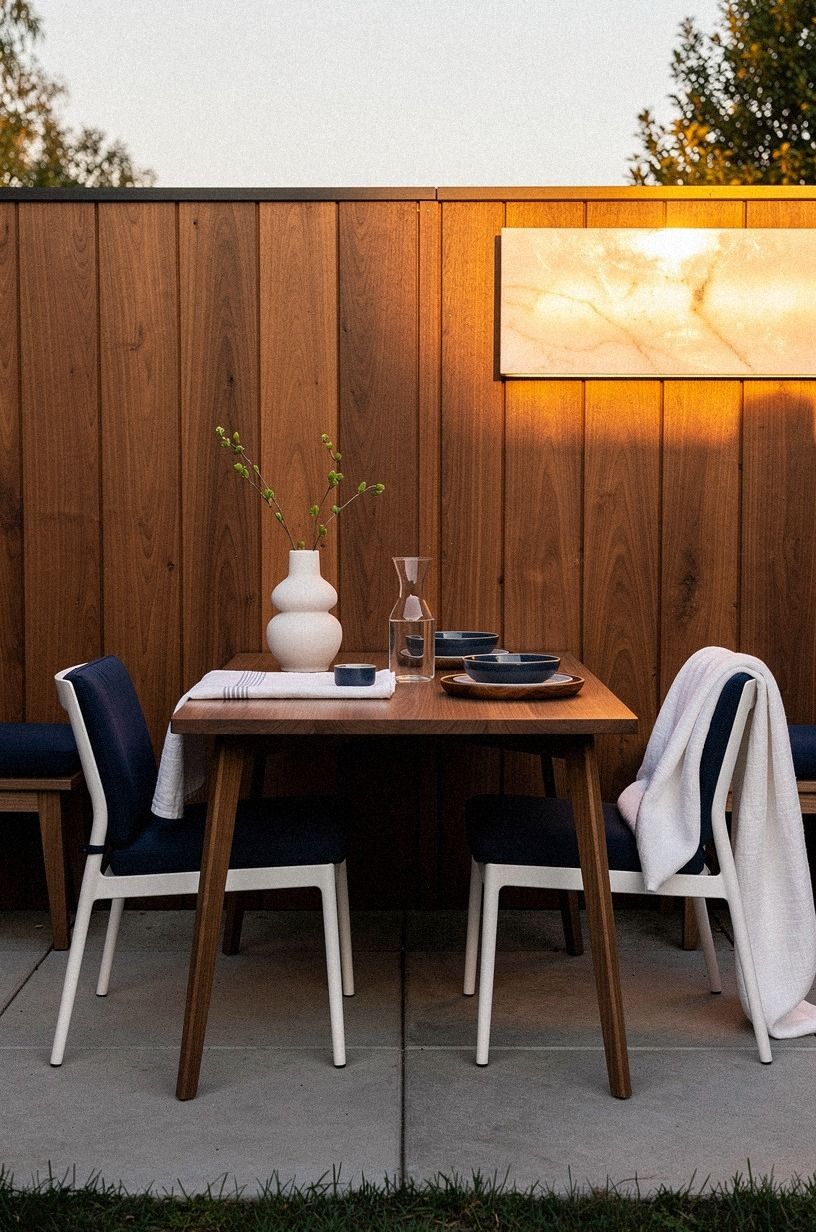
A fence can define an outdoor dining room when you position it behind the table instead of around the entire yard.
11Frame a Gate With an Arched Screen
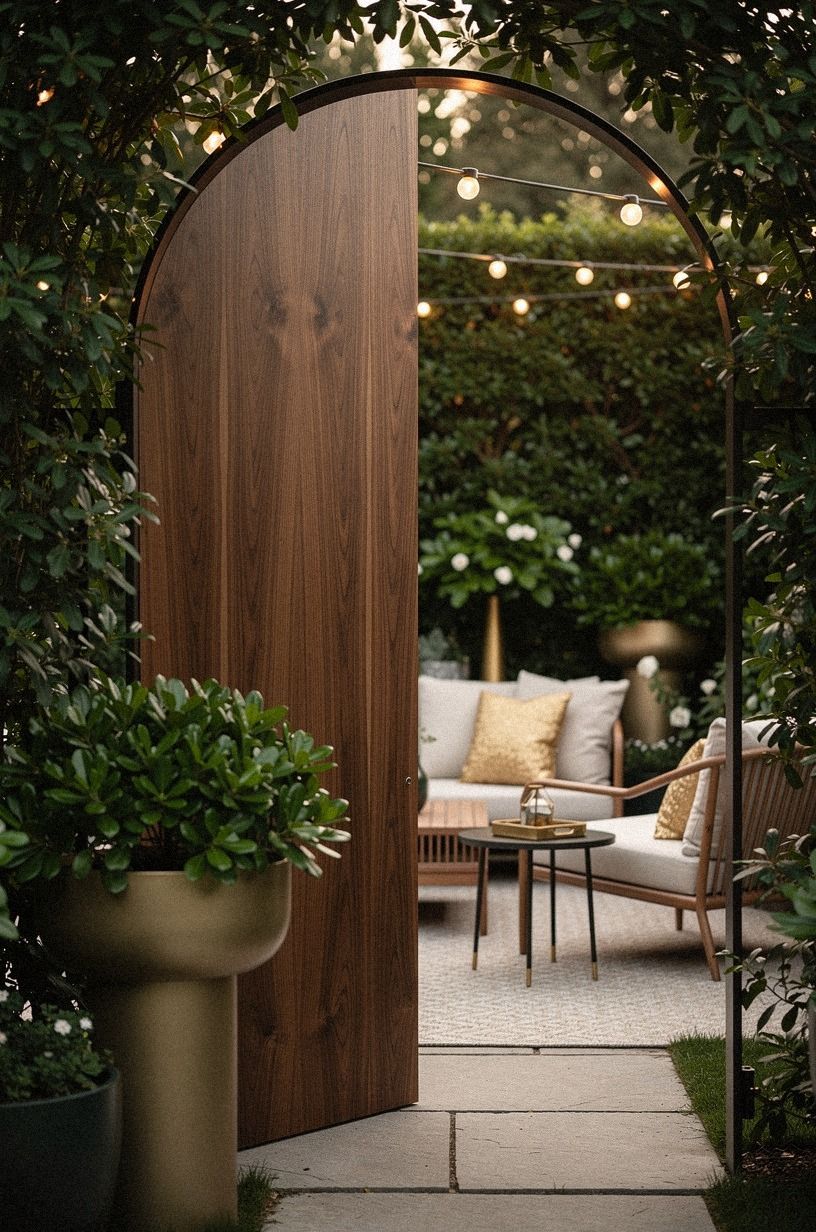
An arched gate creates a soft transition into a private garden. Use a broad arch with book-matched walnut, emerald-painted details, gold hardware, and cream planting containers. You’ll notice the entrance first, which makes the whole fence feel more considered.
I’d skip ornate scrollwork unless your home already has traditional details. Your gate should belong to the architecture, not compete with it. Add one climbing rose or star jasmine beside the opening, but give it a strong trellis so it doesn’t pull on the hinges.
For more ideas on warm timber boundaries, browse these wood privacy fence ideas.
The arch doesn’t need to be tall. A modest curve over a standard gate can soften a long, strict fence line and give the garden a welcoming identity.
Check the swing path before installing anything nearby. A beautiful gate is frustrating when a planter, chair, or thick vine prevents it from opening fully.
12Reed Screen Reset: Hide the Old Boundary
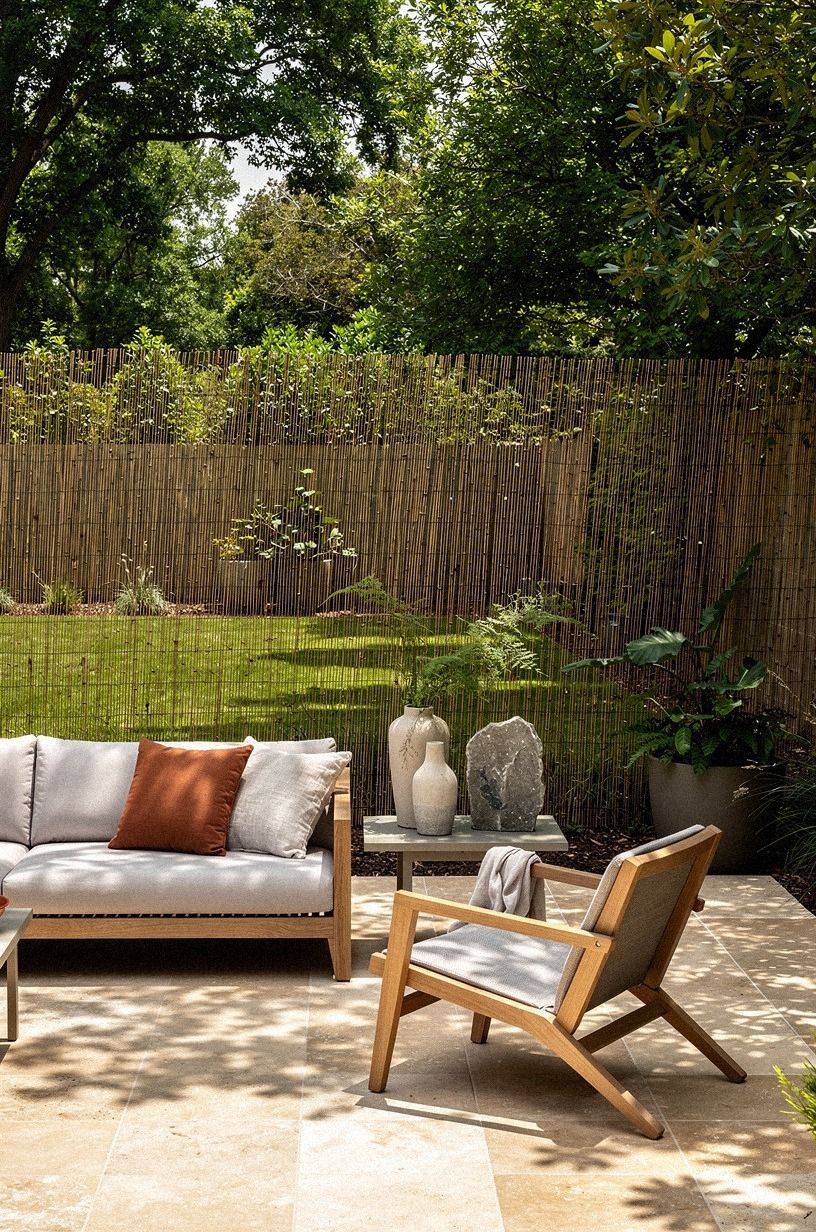
A reed screen can hide an unattractive boundary without forcing you to replace the existing fence.
13Float Planters Across a Horizontal Fence
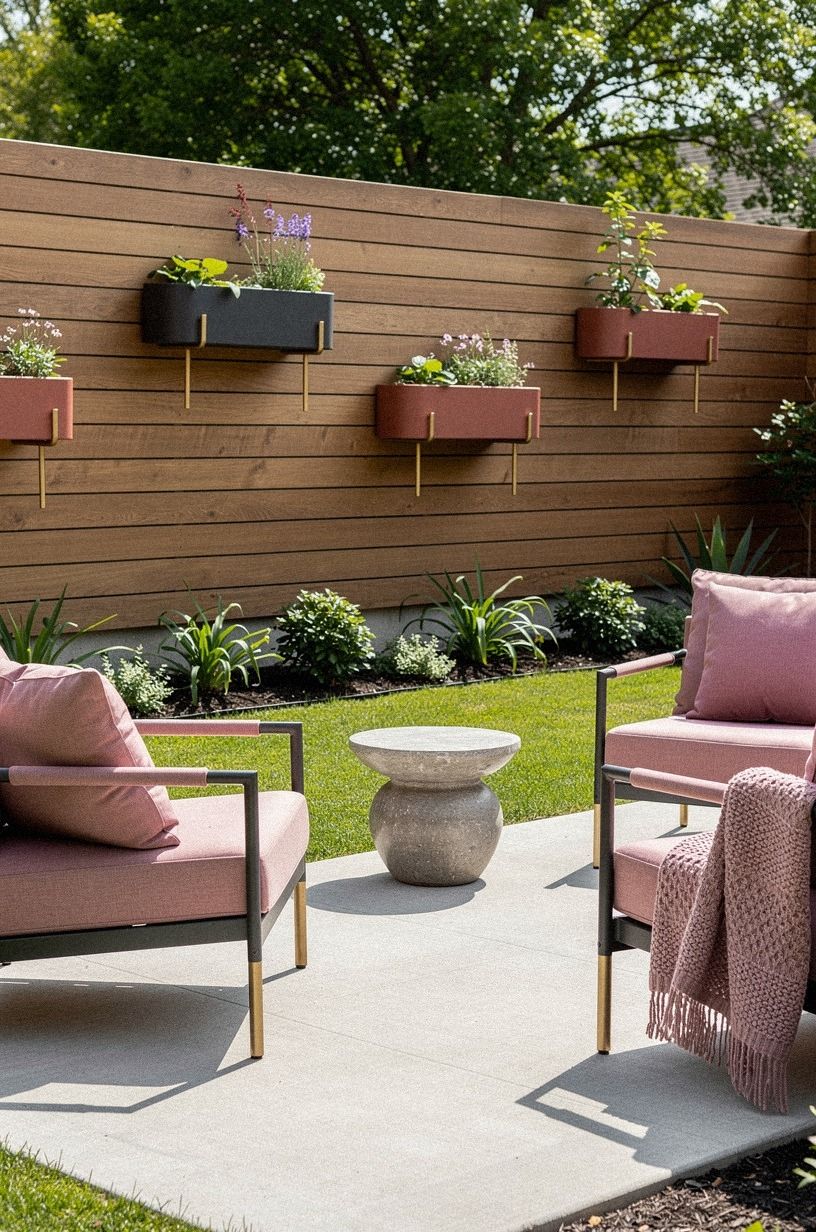
Floating planters break up a long horizontal fence and give you privacy at eye level. Mount unlacquered brass planter boxes at staggered heights, allowing the metal to develop a natural patina, then fill them with trailing rosemary, grasses, and compact herbs. Dusty rose and charcoal accents keep the arrangement from feeling too formal.
You’ll need to check the weight before watering, especially if the fence is older. I’d rather see three strong boxes than ten flimsy ones pulling against the boards.
Keep the lower line open if you use the space for walking. A 36-inch clearance gives you room to move furniture and carry trays without knocking into leaves.
Arrange the planters in a loose rhythm rather than a perfectly even row. One higher box near the gate and two lower boxes near the seating area can make the fence feel more dynamic. A modern outdoor fence can provide a quieter background for this kind of planting.
Choose plants with different textures, not just different colors. Fine grasses, soft herbs, and glossy leaves create a richer, more tactile view from the patio.
14Pergola Logic: Mix Slatted Screens With Shade
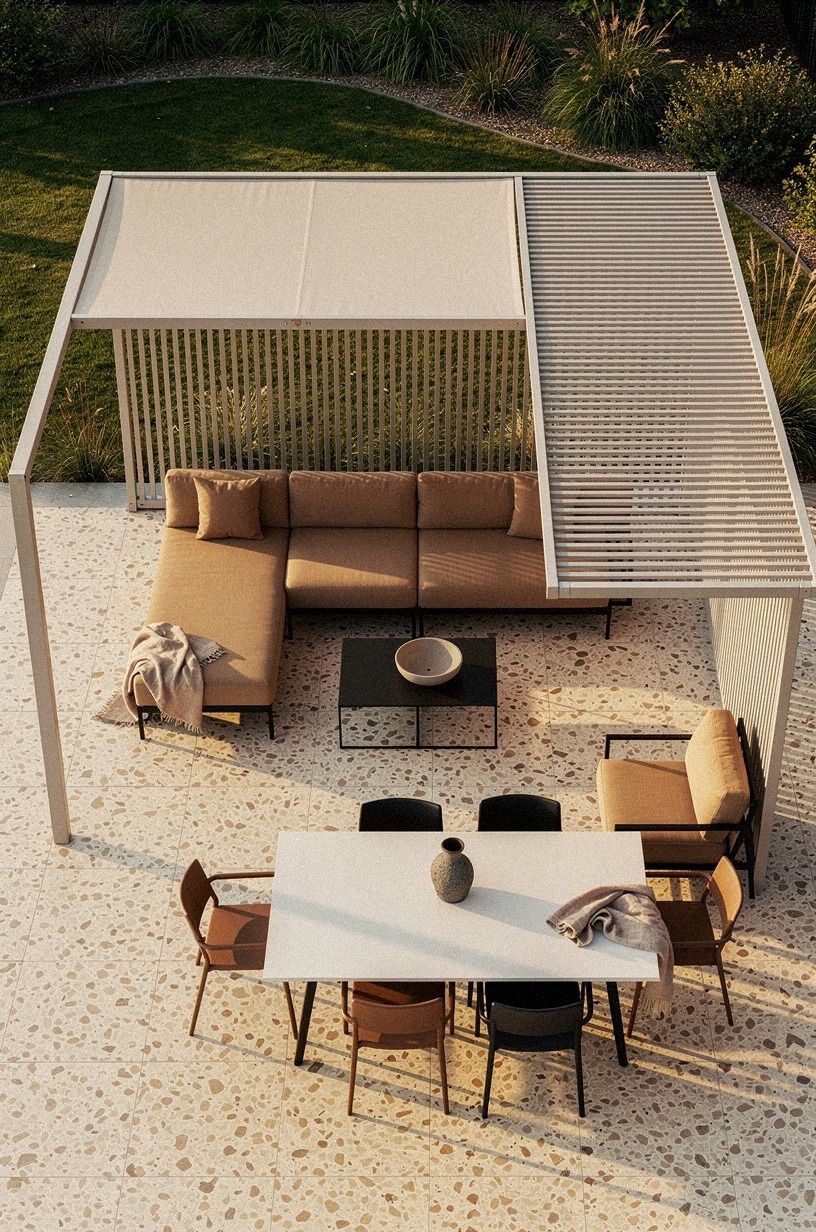
A pergola can make a fence feel architectural when its posts continue the same vertical rhythm.
15Paint a Fence and Gate the Same Color
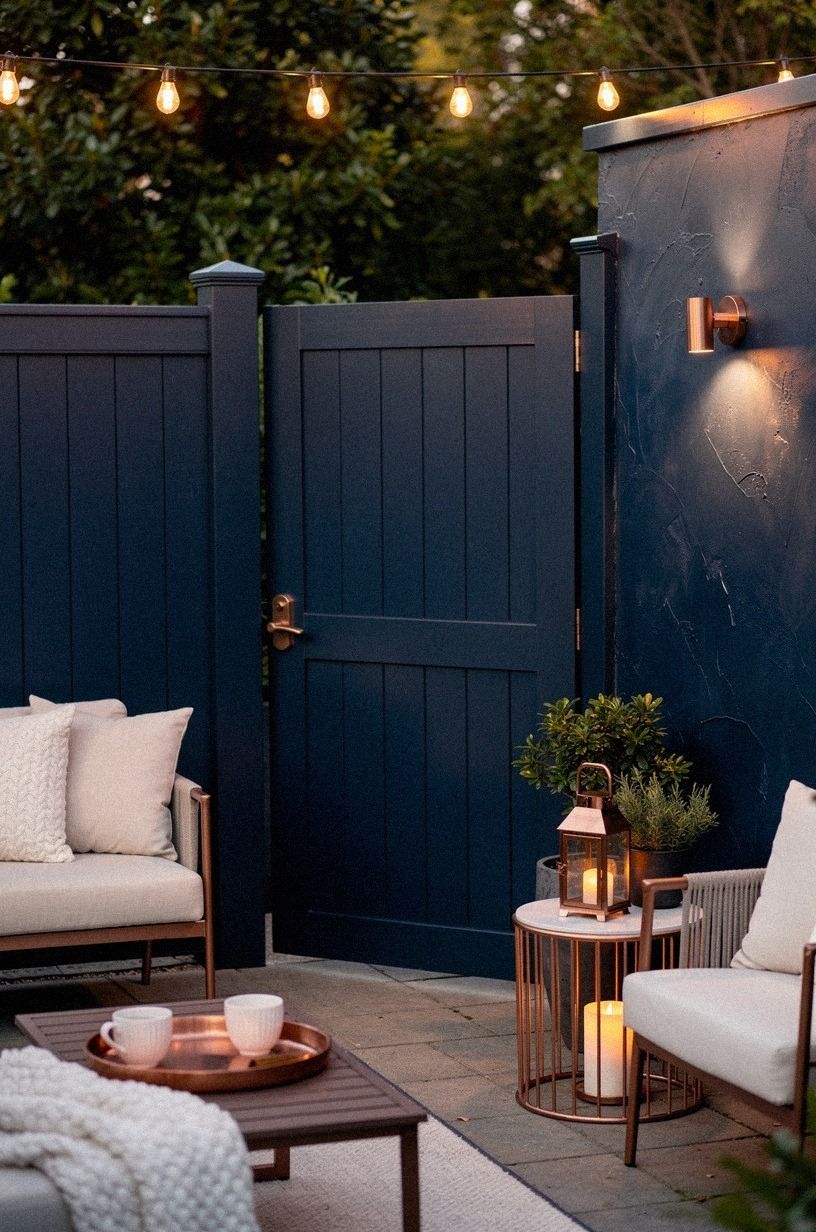
A single color can make mismatched materials look related. Use hand-applied Venetian plaster in a midnight-blue tone on a rendered fence and gate, then repeat the palette with copper hardware and ivory planters. Your yard will feel calmer because the eye won’t stop at every material change.
You’ll want to sample the color against paving, not just siding. Concrete can make blue look cooler, while terracotta makes it warmer.
I’d choose a satin finish for the gate and a lower-sheen finish for broad panels. The slight difference gives your eye a quiet detail without adding another color.
This is a budget-friendly move when the structure is sound.
Before applying the plaster, wash the fence and repair soft boards. A fresh finish can’t disguise rot for long, and peeling material will make the design look tired surprisingly quickly. If you’re comparing finishes, these privacy lattice fence ideas show how a matching color can unify more open patterns.
This approach is also useful when the gate is newer than the fence. A shared color visually unites the two pieces, even if their textures don’t match perfectly.
16Add a Narrow Stone Base
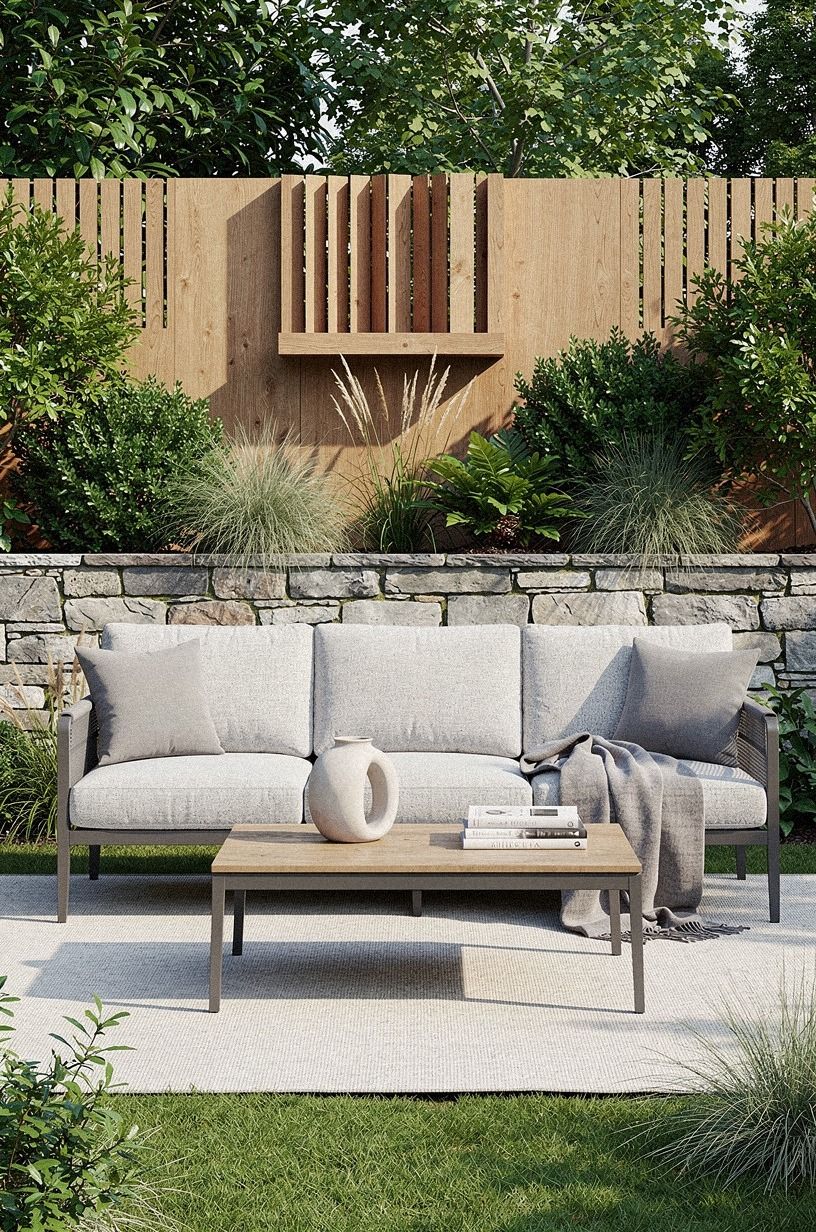
A narrow base protects the bottom of a fence while giving it a grounded, built-in look. Use natural wood beneath sage-green or warm-cream panels, then repeat the palette with a small weather-resistant shagreen accent in nearby seating. You’ll reduce splash marks after rain, and the layered texture looks good beside planting.
This idea costs more than painting, so use it where water is already damaging the boards. Don’t add a substantial base just because it sounds impressive. A narrow gravel strip may solve the same drainage problem for less.
Your best version will repeat the wood or green tone somewhere nearby, perhaps in a planter rim or a small path, so it feels connected rather than decorative.
Leave a small drainage gap where the fence meets the base. Trapped moisture can shorten the life of both wood and paint. A wood privacy fence can look especially finished when its natural timber repeats a material already used in the yard.
Natural wood works beautifully with sage green, cream, and soft planting. The effect is grounded and quietly luxurious without needing elaborate ornament.
17Use a Mirror Panel Behind Planting
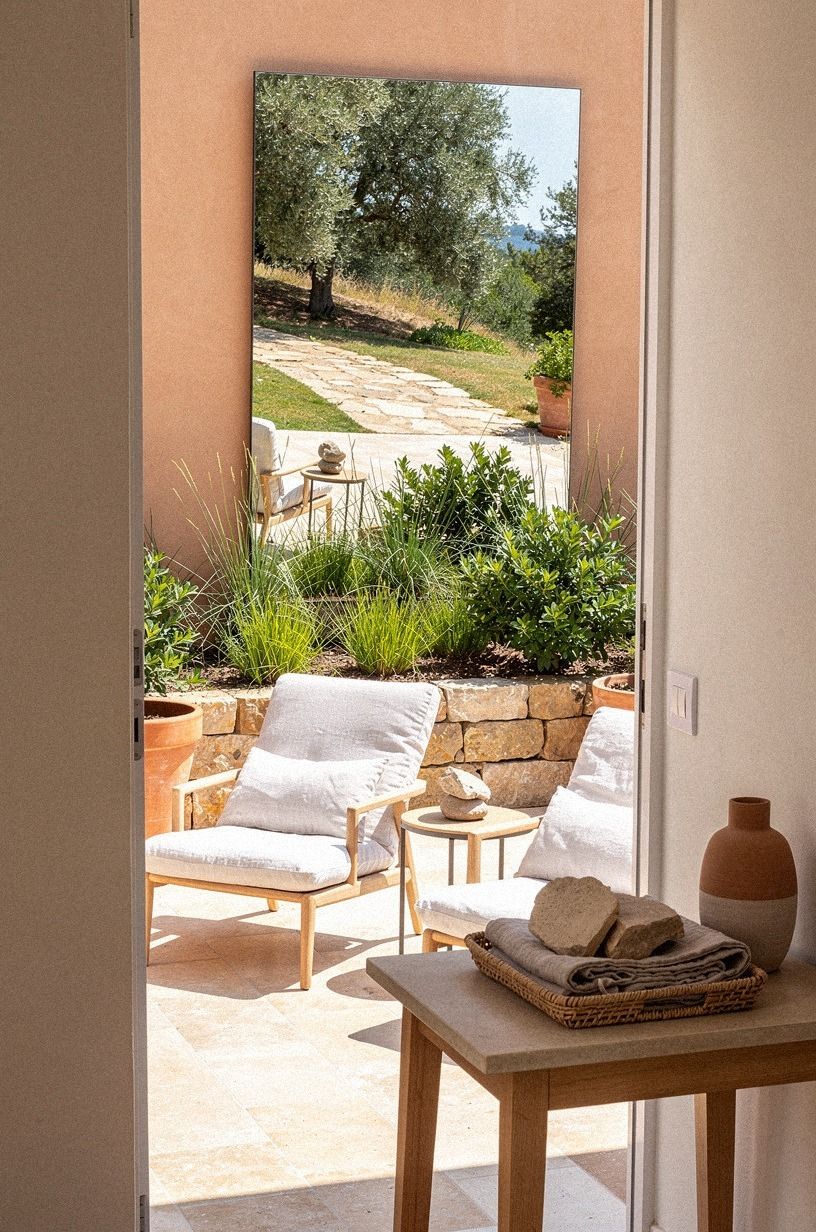
A mirror can make a narrow yard feel wider, but it needs to disappear into the design. Mount a weather-resistant mirror inside a stone-toned surround, then place terracotta and olive planting around the edges. Add washed Belgian linen cushions nearby so the reflection feels connected to the rest of the yard.
I’d never use a mirror facing a neighbor’s window or a strong afternoon sun. The glare can be unpleasant, and the reflection may feel too exposed.
Choose a small panel between two planters instead. Your eye should discover it after entering the yard. A modern outdoor fence can provide the quiet background this trick needs.
Use an aged or lightly smoked finish if a new mirror feels too sharp. The softened reflection will look more garden-like and less like an outdoor dressing room.
Make sure birds and pets can’t collide with it. A subtle decorative mark or nearby foliage can help the panel read as an intentional surface.
18Replace One Fence Section With Cable
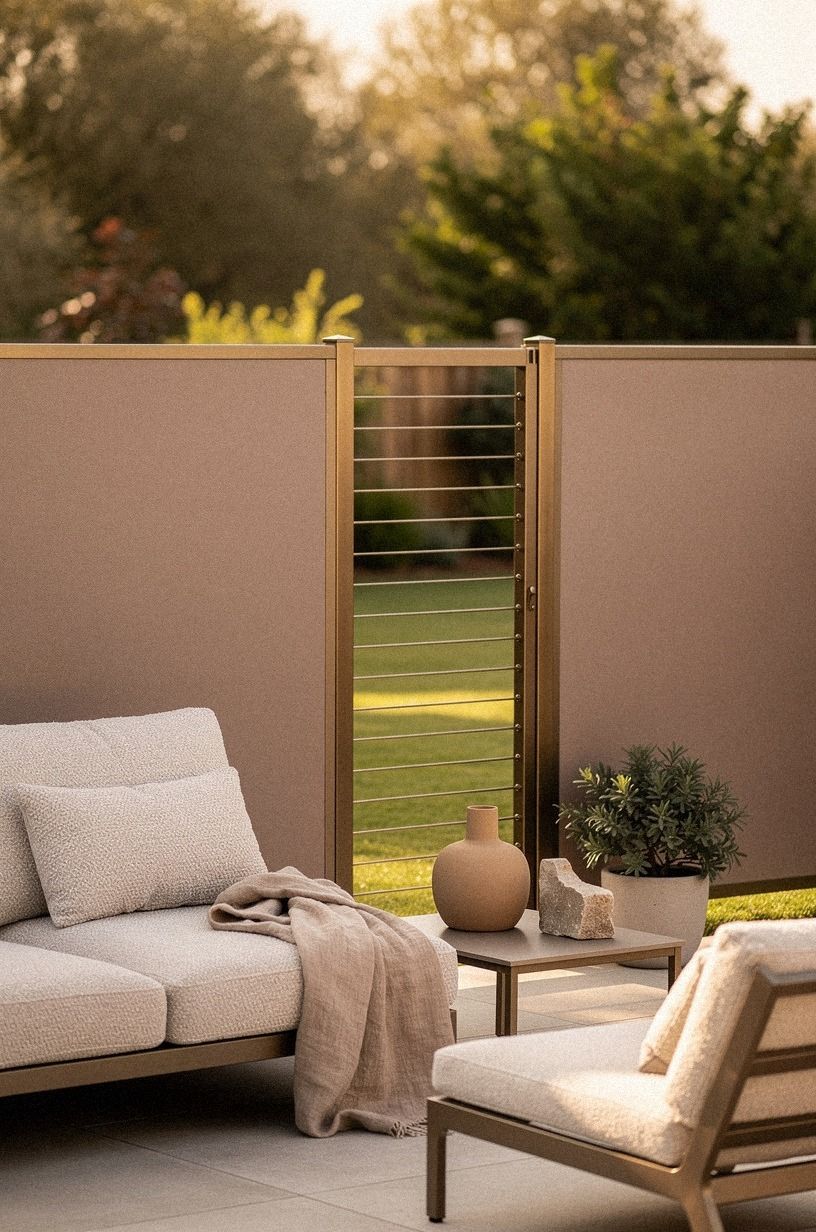
Cable fencing gives you privacy when paired with dense planting, while keeping a sightline through the garden. Install aged-brass tension cable between clay-painted posts, then place evergreen shrubs, tall grasses, or organic bouclé seating nearby. Linen-colored textiles will keep the area light, while the planting does the visual work.
This is not the right choice if you need immediate, complete screening. You’ll need time for the planting to fill in, and the cable requires careful tensioning.
But around a raised deck or sunny garden border, it can be more graceful than another solid wall. Keep furniture away from the cable so you don’t create a climbing point for children.
Choose shrubs with a naturally upright shape, such as clumping bamboo, podocarpus, or slender juniper. The planting should rise behind the cable instead of spilling heavily into the walkway. These privacy lattice fence ideas use a similar balance of coverage and airflow.
This solution is particularly appealing when you want privacy without losing the garden’s open, breezy character. It looks lighter, fresher, and more generous than a full panel.
19Build a Folded Corner Privacy Screen
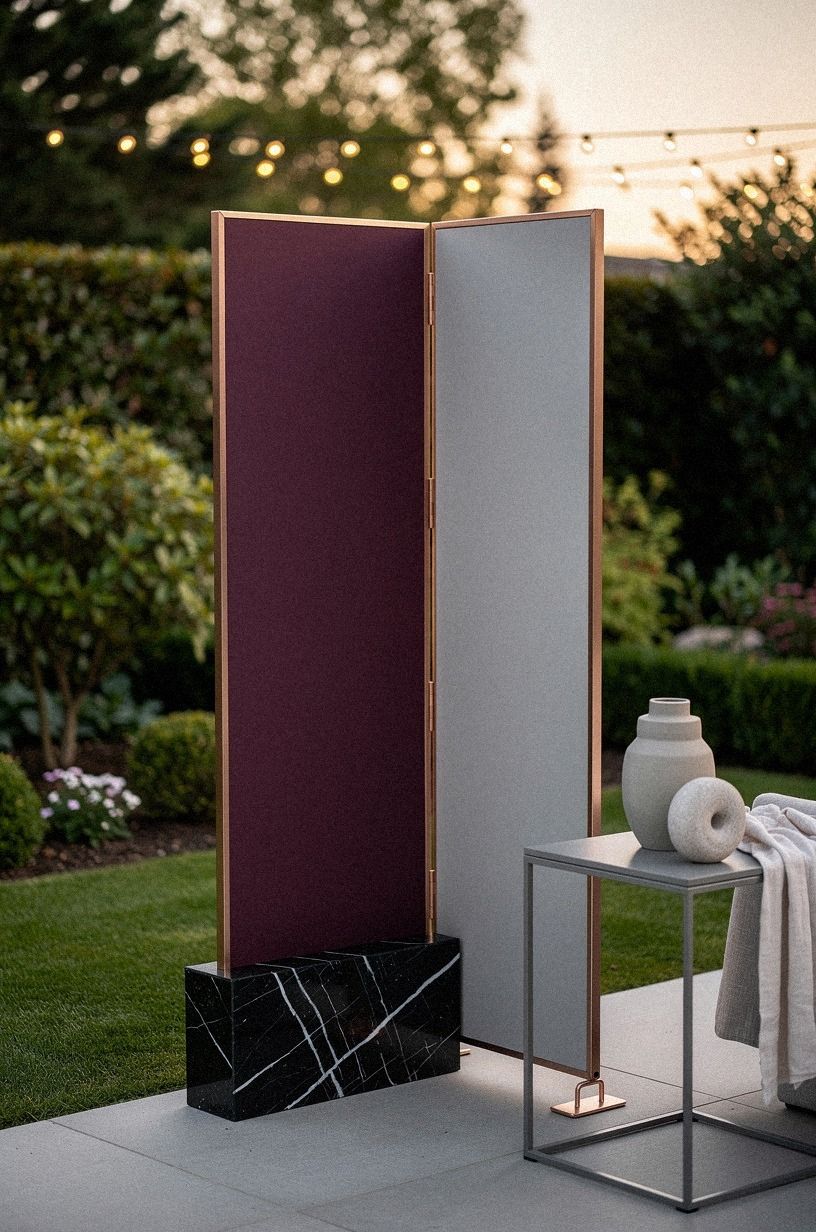
A folded corner screen creates a private pocket without enclosing the entire yard. Join two Nero Marquina black marble panels with white veining at a right angle, using rose-gold hardware and plum-gray outdoor textiles nearby. You’ll get shelter from two directions, and the open sides keep the space bright.
The angle matters more than the size. A narrow fold can hide a chair, while a wider one can hold a table and two seats.
I’d avoid filling the pocket with oversized furniture because the screen already creates visual weight. If you’re working with a patio rug, let the front legs of your seating rest on it so the nook feels anchored.
You can make the screen feel more permanent by setting it beside a planter or low stone edge. That visual anchor will stop it from looking like a temporary room divider. If you want to compare other timber treatments first, these wood privacy fence ideas offer useful background.
Leave one side open toward the most pleasant view. Privacy should protect the space you use, not block the part of the yard that makes you want to stay there!
The Rule I’d Keep From This List
I’ve learned that privacy isn’t the same thing as a solid wall. The best fences control what you see, what your neighbors see, and where your attention lands.
A cedar screen may be enough beside the dining table, while the far boundary might need plants, lights, or a taller panel. Your yard has several sightlines, so one treatment rarely solves every angle.
I also wouldn’t spend first on decoration if the structure is leaning, rotting, or holding water. Fix the posts and drainage before buying the charming details.
My own early mistake was choosing a finish before watching the yard through a full afternoon. The color looked warm at noon and flat by dinner.
Now I test materials at the hour I’ll use the space most.
The costs can stay flexible. Outdoor textiles, paint, plants, and string lights fit within the $200 to $900 budget range, while a larger patio project can move toward $1,500 to $6,000.
You don’t need a high-end pergola or outdoor kitchen to feel secluded. You need one clear focal point, one comfortable place to sit, and enough texture that the fence doesn’t read as a barrier.
If you’re still deciding, ask yourself one practical question: where do you want privacy most? Start there.
Your answer will tell you whether to screen the dining table, soften a gate, hide a neighbor’s window, or create a quiet corner for one chair. That choice will make the rest of your design easier!
The most satisfying result usually combines two modest ideas. Try slats with planting, curtains with a pergola, or a dark painted fence with pale furniture. Those layered decisions create a yard that feels intentional, inviting, and genuinely yours.
A Few Things Worth Answering
What is the best unique privacy fence idea for a small backyard?
A folded corner screen or a vertical slat panel usually works best because it gives you privacy without closing every edge. Staggered planting adds softness and keeps the fence from feeling heavy. An IKEA ÄPPLARÖ screen can also help you test the layout before building a permanent structure.
I’d start with the sightline that bothers you most.
Where can I buy unique privacy fence pieces on a budget?
Look at IKEA, Wayfair, and Target for outdoor screens, planters, and lighting, then check Facebook Marketplace or local thrift stores for used panels. Secondhand teak and cedar can be excellent values when the posts are sound.
You don’t need every piece to come from one collection. Matching one finish is usually enough.
How much does a unique privacy fence makeover cost?
A small refresh can stay within the typical $200 to $900 outdoor budget range when you use paint, textiles, plants, and LED string lights. Free layout changes cost nothing, while a larger patio project may reach $1,500 to $6,000. Structural work will require a separate local estimate, especially if posts or drainage need attention.
Can I create a unique privacy fence on a budget?
Yes, and you can begin with three low-cost moves: repaint an existing panel, group tall plants at the main sightline, and hang outdoor curtains on a simple frame. Paint and plants usually create the fastest visual change. Your free option is rearranging seating so the fence hides the view you dislike most.
Is a unique privacy fence worth it in a small space?
Yes, because a small yard benefits from defined zones. One screened corner can make the whole space feel more private without requiring a full enclosure. Keep at least 36 inches for a walkway, and use a lighter material above eye level so your seating area still receives daylight.
Is a unique privacy fence a good idea for a rental?
Yes, if you choose removable or freestanding pieces. No-damage screens, tension frames, outdoor curtains, and weighted planters can create privacy without drilling into the property. You’ll want to confirm your lease first, especially if you’re attaching anything to an existing fence or balcony rail.
Where I’d Start First
If I had to pick one, I’d start with the folded corner privacy screen. It hides the seating zone from two directions without making the yard feel sealed off, and reclaimed teak can age instead of looking manufactured. Pin that layout for later, then measure your clearest sightline before buying anything.
Once you know where privacy matters, choose the lightest solution that solves it. That might be a screen, a planted layer, a curtain, or simply a better arrangement of furniture. The goal is a yard that feels sheltered and comfortable, not hidden from the world.