
 by
by A Venetian plaster wall gets its polished, hand-troweled finish from thin, controlled layers, not one heavy coat. I learned that after trying to rush a powder room wall and leaving ridges that caught every bit of morning light. Slow hands win here. Your room can look refined without looking precious.
- Start with a clean, flat wall surface
- Choose the right sheen for your room
- Gather your tools before the plaster opens
- Test a sample board before touching your wall
- Prime in the same direction you’ll work
- Apply the first coat with the Cloud-Layer Method
- Let the first layer dry without rushing it
- Layer the second coat for movement
- Burnish while the surface still has give
- Protect a venetian plaster bathroom wall carefully
- Frame the wall with warm, simple materials
- Use light to reveal the Hand-Trowel Glow
- Price the project before you overbuy
- Choose Venetian plaster over a flat painted accent wall
1Start with a clean, flat wall surface
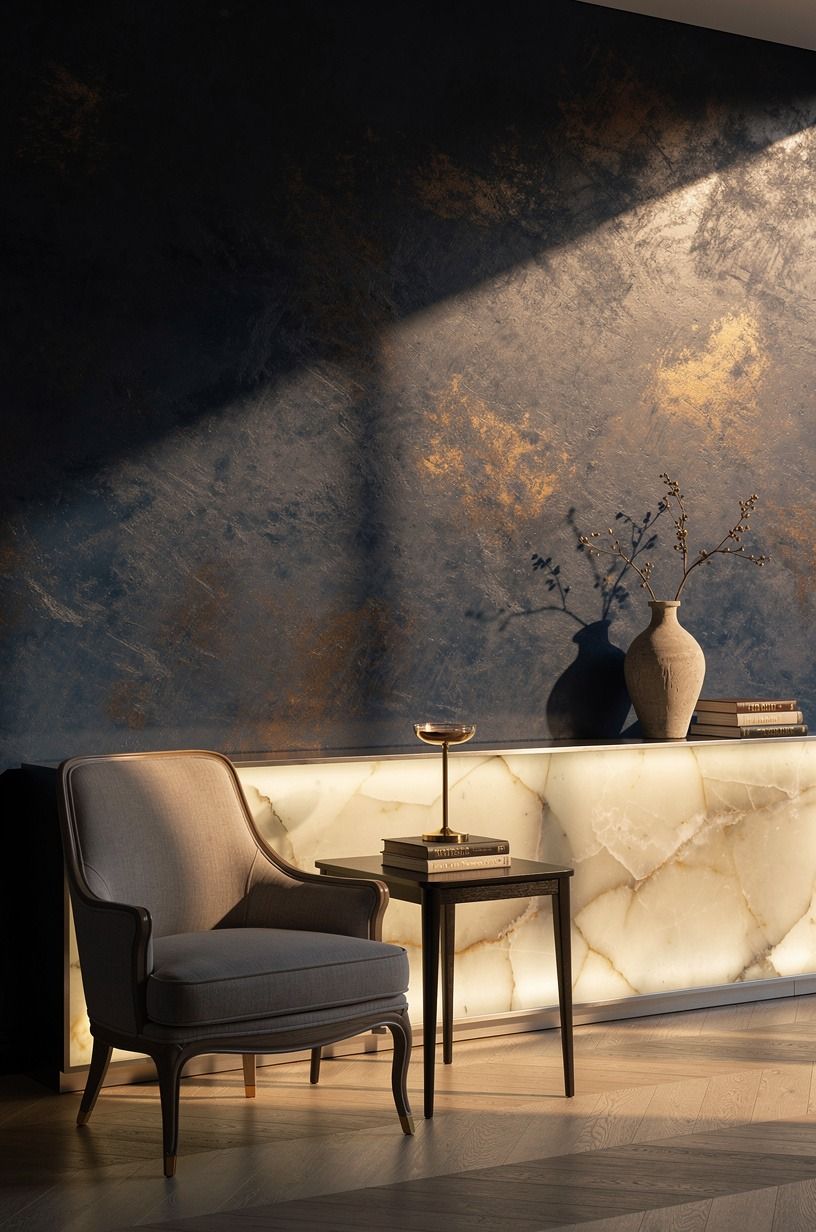
Your first job is boring, and it matters more than the glamorous final burnish. Fill dents, sand rough patches, and wipe away dust so your Venetian plaster base coat has a calm surface to grip. I’d skip applying over loose paint, because you’ll spend the rest of the project chasing flakes.
A midnight-blue wall with copper and ivory nearby feels especially rich beside backlit translucent onyx. Keep the surrounding finishes simple so that warm glow can do its work. And if you’re working on a small bathroom, the prep lessons in these venetian plaster bathroom ideas for soft luminous walls will help you plan around tight corners.
2Choose the right sheen for your room
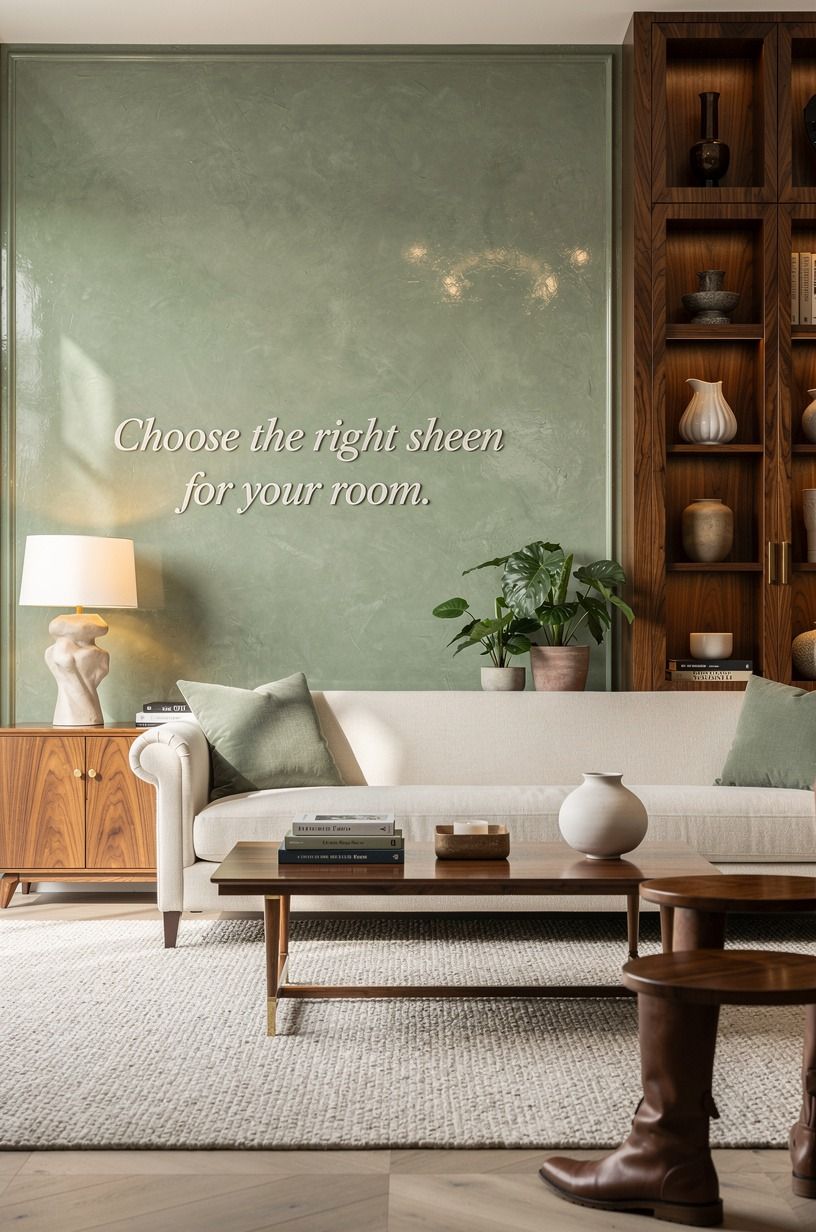
A polished Venetian plaster wall should reflect light softly, like river stone after rain, not like a glossy painted cabinet. For a serene bedroom, I prefer Benjamin Moore White Dove OC-17 beneath a pale plaster finish because it keeps the undertone warm. You’ll get a gentle glow without making your walls look pink.
For a calmer contrast, pair sage green and warm cream with book-matched walnut. The grain brings depth without competing with the plaster, and it feels softer than a cool gray backdrop by late afternoon.
3Gather your tools before the plaster opens
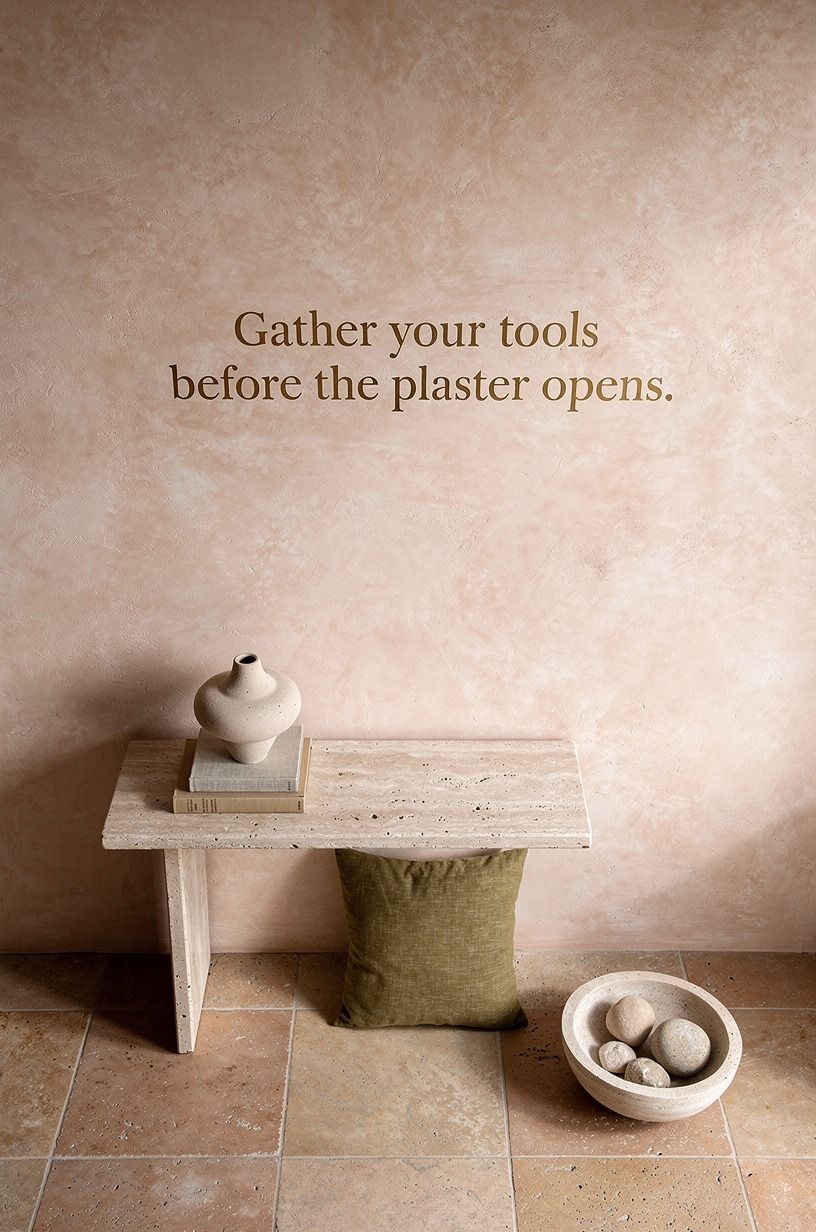
You don’t want to hunt for a clean blade while material is drying on the wall. Set out a stainless steel Venetian trowel, flexible putty knife, mixing bucket, painter’s tape, sanding sponge, and a clean microfiber cloth. Keep your trowel edges spotless, because one dried crumb can drag a dark scar through an otherwise calming coat.
This is the Two-Trowel Rule: one tool applies, one tool cleans edges and catches corners. I’ve tried using one blade for everything.
It wasn’t efficient. It was messy.
- Narrow 2-inch putty knife - Rounded 10-inch steel trowel - Clean water in a small cup - Soft cotton rags nearby
Warm travertine works beautifully with terracotta, stone, and olive accents once the plaster is finished. It gives the room a grounded counterpoint without making it feel rustic.
4Test a sample board before touching your wall
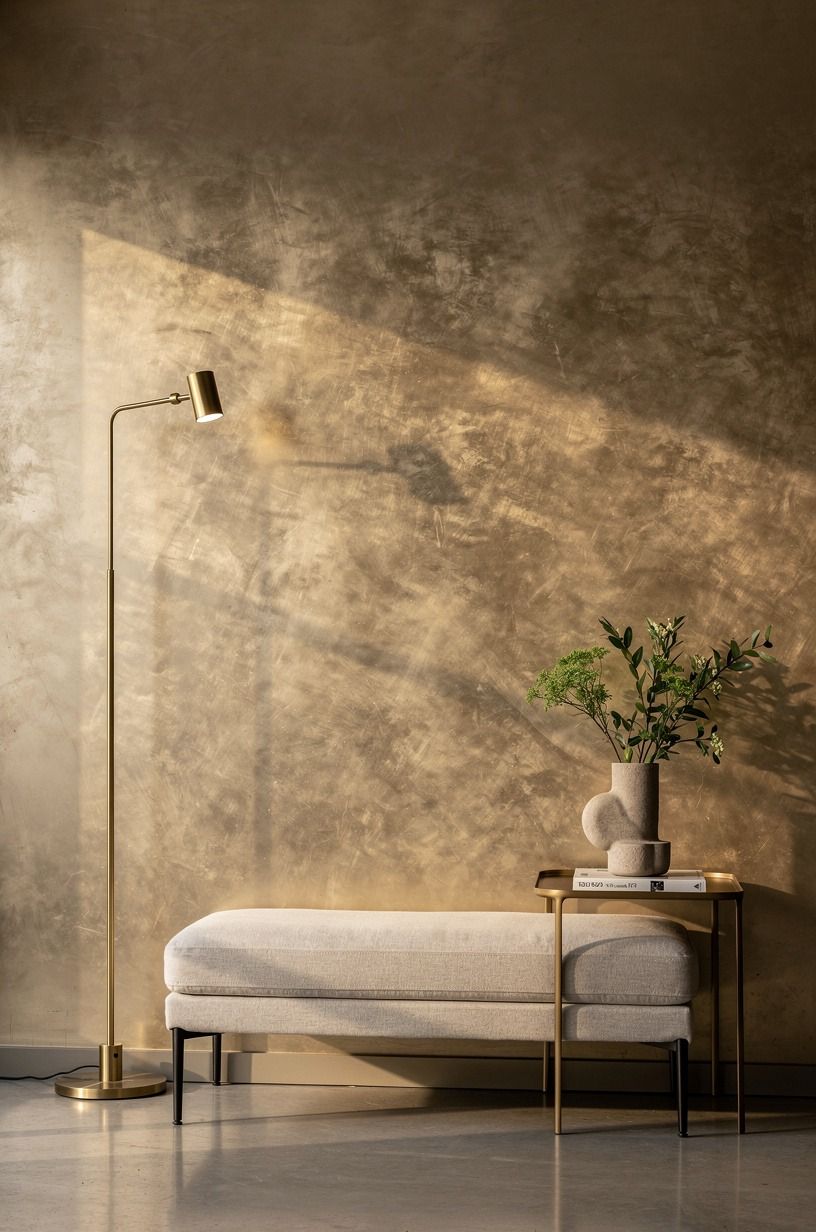
Make a sample at least large enough to show overlapping strokes, then let it dry where your room gets real daylight. Your sample should include the primer, both plaster layers, and your final burnish. A tiny paint swatch won’t tell you how a hand-troweled surface shifts from clay to linen-toned shadow.
I’d choose roman clay walls only if you want a chalkier, quieter finish. Venetian plaster has more movement and a more polished pull, especially beside unlacquered brass that develops a soft patina. Why gamble on your whole wall when a sample can settle the question?
5Prime in the same direction you’ll work
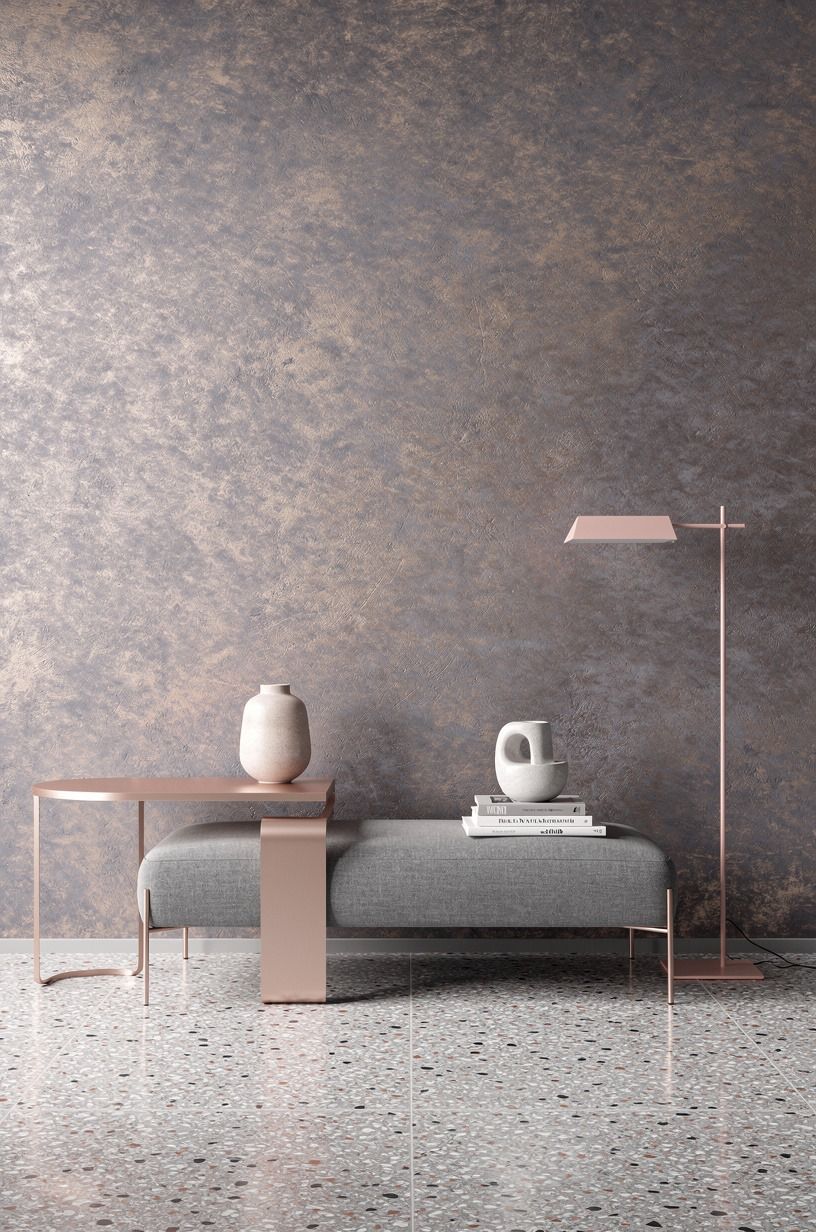
Roll your primer evenly, then cut in the edges with a steady brush so your plaster doesn’t grab in random patches. Sherwin-Williams Agreeable Gray SW 7029 works as a useful neutral base when your final plaster is beige or greige, though I wouldn’t use it under a very pale ivory finish. It can make the result feel too beige.
Let the primer dry fully before you begin. But don’t obsess over an immaculate paint finish, because the plaster layers will bring their own lived-in variation.
That slight hand-made unevenness is the point. Plum, gray, and rose-gold accents look especially good against oversized-chip terrazzo, where the room already has a little visual movement.
6Apply the first coat with the Cloud-Layer Method

Load a small amount of plaster onto your trowel and spread it in short, overlapping arcs. Keep the blade at a shallow angle so you’re skimming, not digging. Your first coat should look patchy and thin at first, with quiet spaces between strokes.
Use lime-based Venetian plaster in restrained passes. I made the mistake of trying to cover every inch perfectly on coat one, and the result looked heavy instead of organic. You’re building depth, not frosting a cake.
For more quiet, luminous wall references, browse Venetian plaster wall ideas for subtle depth-filled texture. Navy, white, and walnut keep hand-applied Venetian plaster from feeling too sweet.
7Let the first layer dry without rushing it
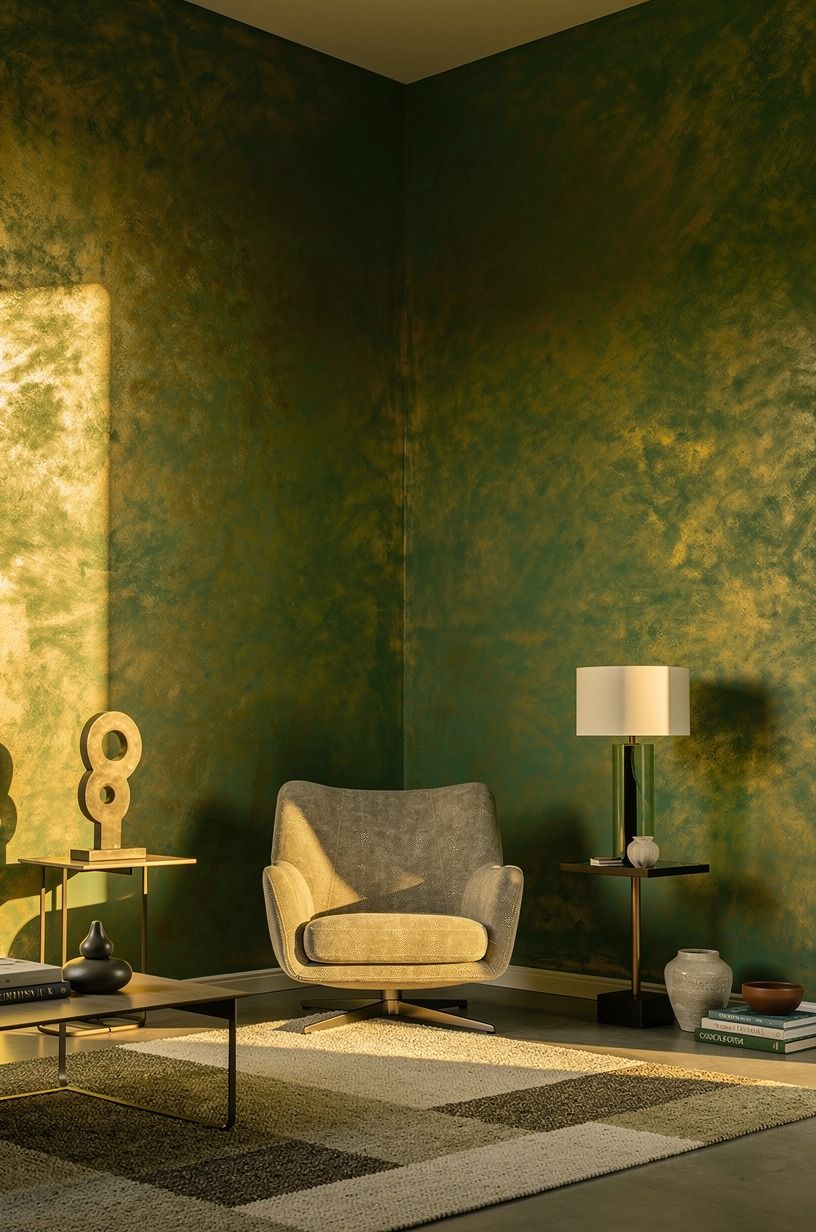
Give your plaster time to set according to the product instructions, then feel the wall with the back of your fingers. It should feel dry and firm, with no cool dampness underneath. If you press into a soft section, wait.
Your second coat will pull and drag if the first one isn’t ready.
This is where people get impatient, especially on a Saturday afternoon. I get it. But the calm, refined finish comes from patience between layers, not from adding more material.
Use the pause to clean your trowel, wash your bucket, and check the room’s lighting. Emerald, gold, and cream feel more considered with a few shagreen accents than with lots of small decorative objects.

8Layer the second coat for movement
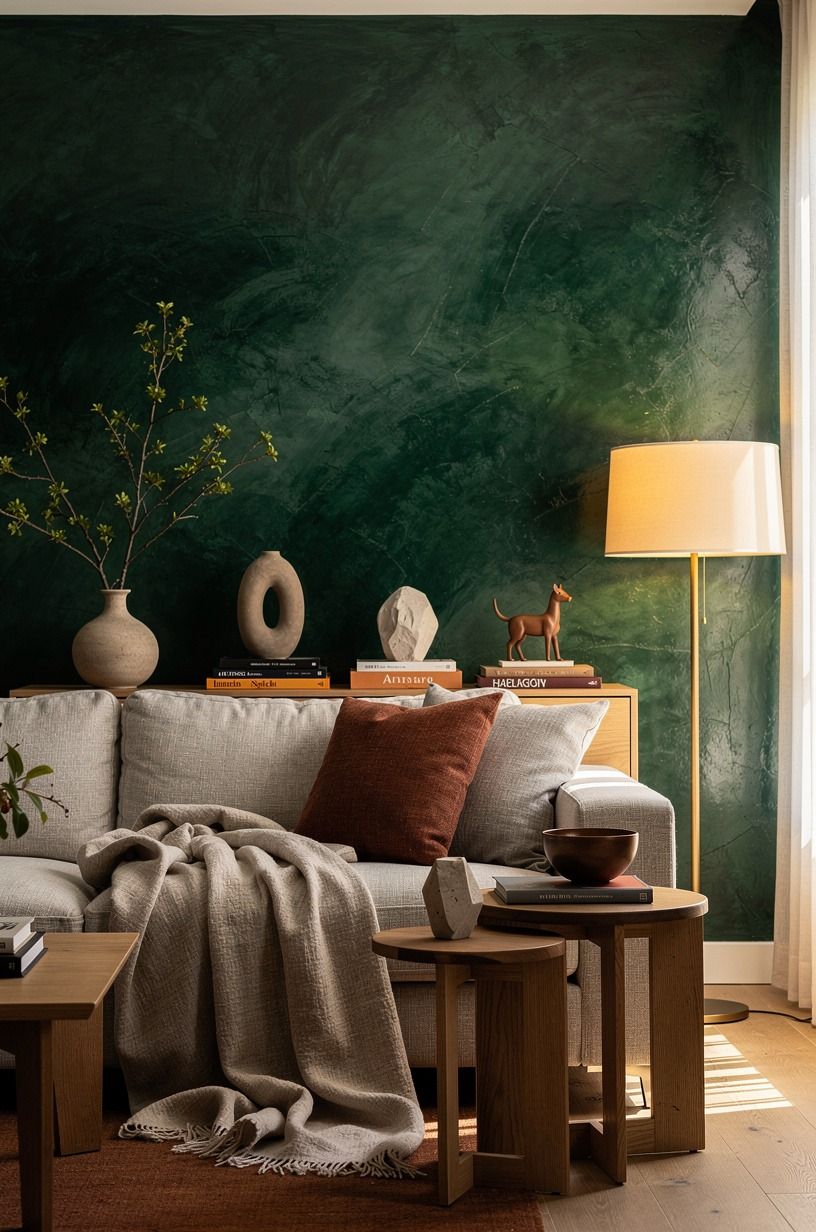
Your second coat is where the wall starts to look expensive. Apply small amounts of polished plaster compound in crossing strokes, leaving some areas thinner and some slightly denser. You’ll see a soft mottling appear as the wet material catches light differently from the dry areas.
I’d avoid long, matching diagonals. They look planned in the wrong way, like wallpaper pretending to be handmade.
Instead, change direction often and keep your wrist loose. A few imperfect overlaps are good.
Too much symmetry is not.
Forest green, rust, and natural oak work particularly well with washed Belgian linen, which softens the plaster’s movement without making the room feel overly formal. If you’re carrying this finish into a wet room, these Venetian plaster walls bathroom ideas show how to keep the look warm without making every surface identical.
9Burnish while the surface still has give
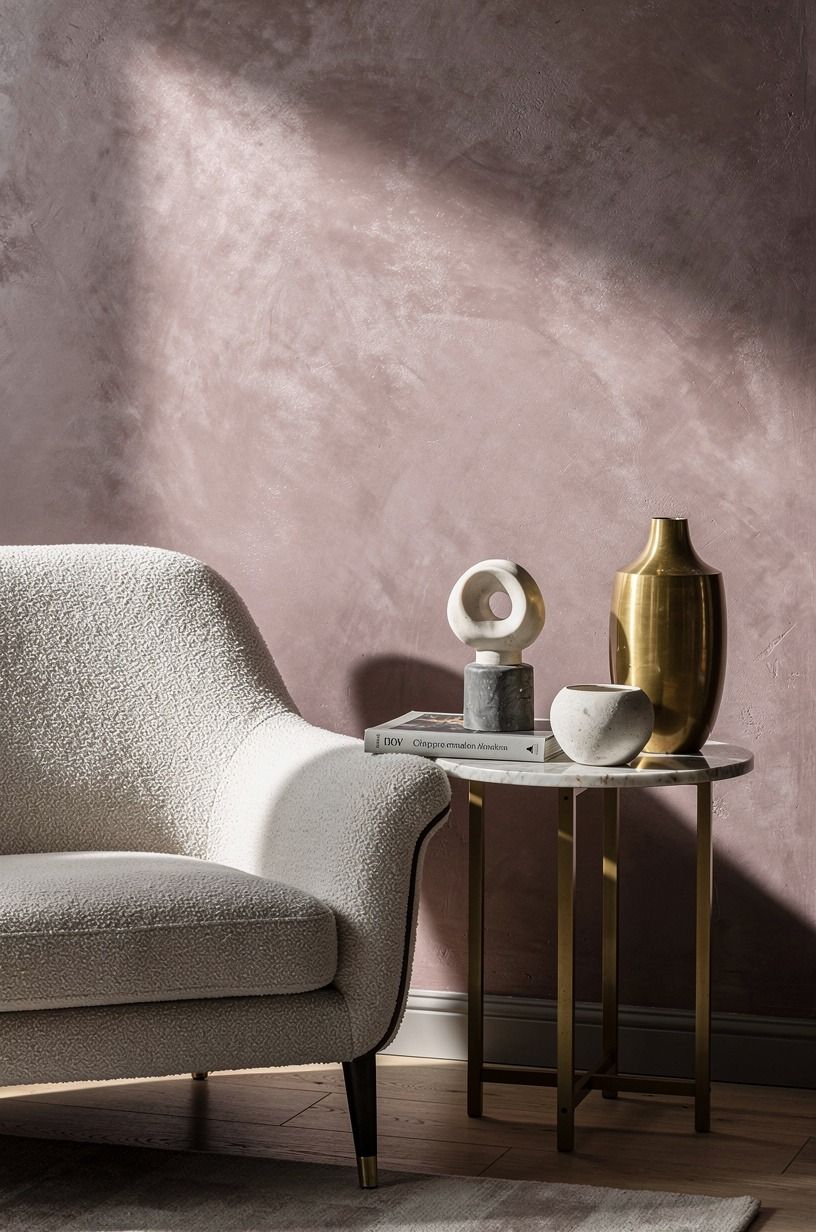
When the second coat is partly dry, press your clean trowel flatter against the wall and glide over selected areas. This burnishing compresses the finish and brings up that polished, softly reflective sheen.
You don’t need to burnish every inch. A little variation makes the room feel intimate rather than showroom slick.
The Three-Pass Shine is simple: apply, wait, compress. Stop when the surface starts resisting your blade, because pushing harder can leave dark burn marks. I’d rather have a soft, earthy wall than a high-gloss one that looks like it belongs in a restaurant bathroom.
Dusty rose, charcoal, and brass are lovely beside organic bouclé, especially when you want the wall to feel dressed but still relaxed. And yes, your arm will feel it. Worth it!
10Protect a venetian plaster bathroom wall carefully
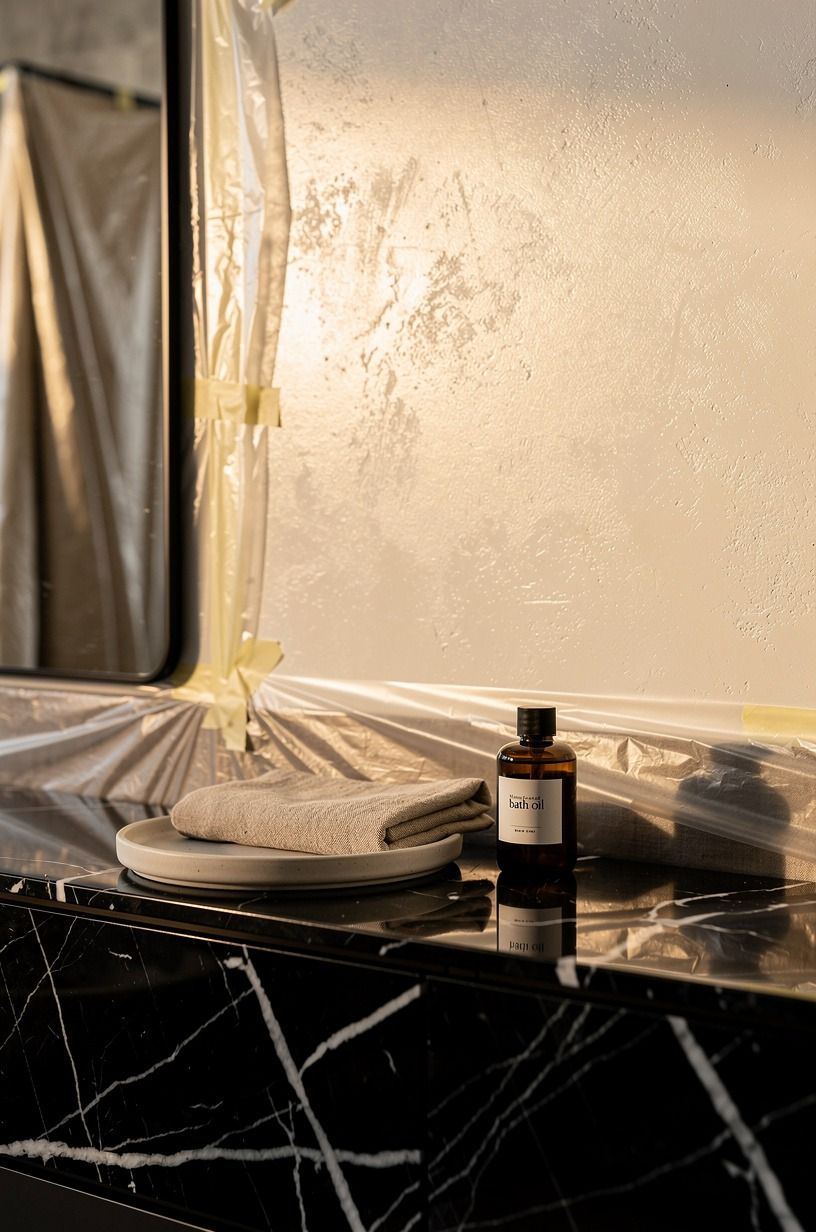
For a venetian plaster bathroom wall outside the direct splash zone, use a finish approved for moisture and ventilation. Warm white plaster, camel textiles, and Nero Marquina black marble with white veining make a strong combination when black accents are kept deliberate and spare.
11Frame the wall with warm, simple materials
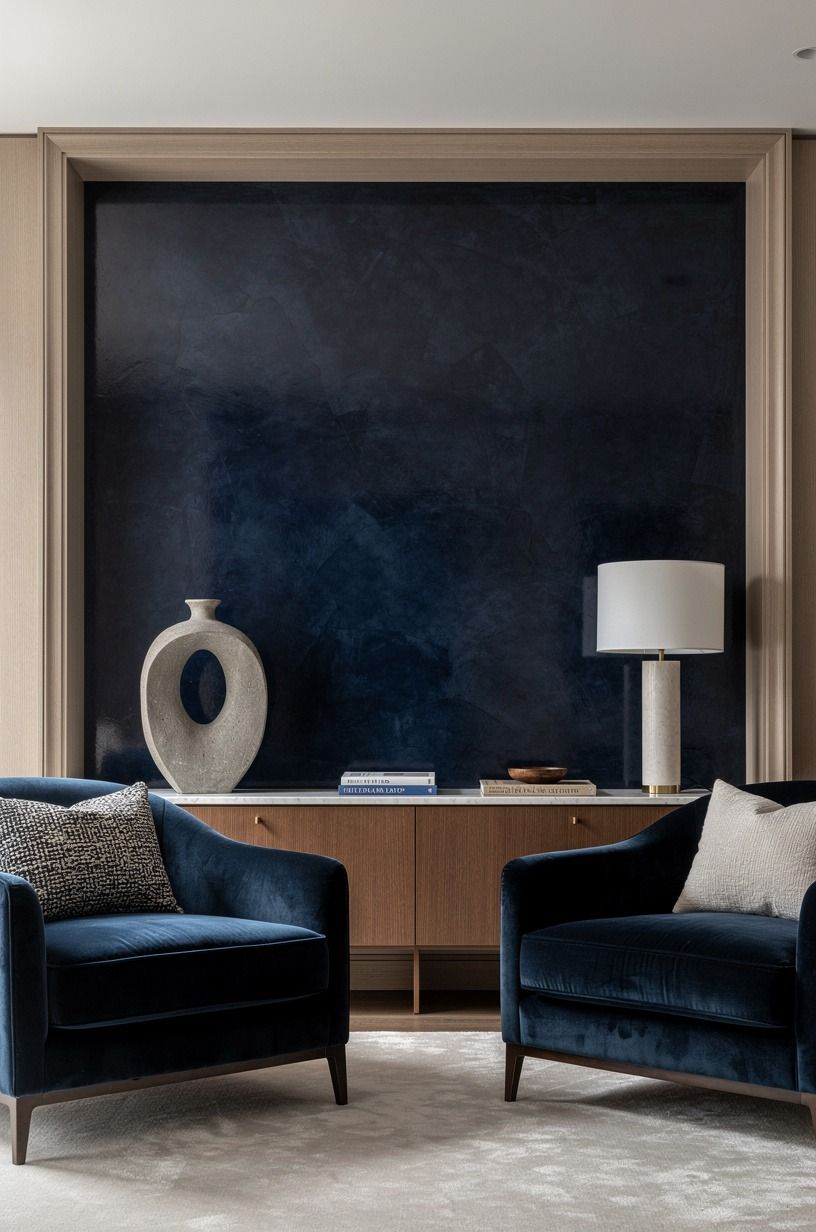
Once your finish is dry, don’t bury it under busy furniture and loud art. Give your Venetian plaster wall breathing room with a deep-pile mohair velvet chair, a linen-shaded lamp, or one substantial ceramic vessel. You want objects that echo the wall’s tactile surface rather than compete with it.
Midnight blue, copper, and ivory make that restraint feel richer, particularly when the velvet is the one plush element in the room. Hang art with its center about 57 to 60 inches from the floor, then stand back before adding another piece.
I’d skip a gallery wall here unless your plaster is very quiet. The hand-troweled movement already gives you visual texture.
For a dining corner or compact banquette, these breakfast nook wall decor ideas offer a better way to add personality without crowding your wall.
12Use light to reveal the Hand-Trowel Glow
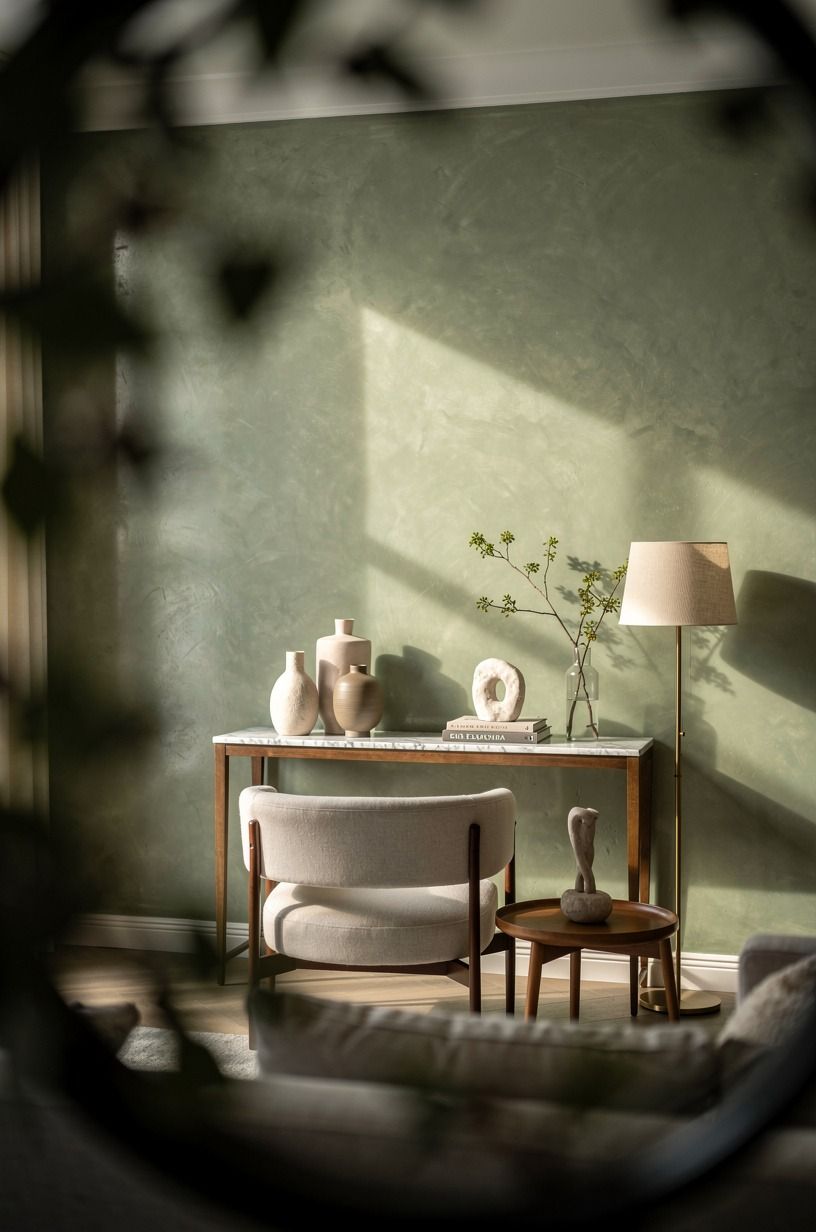
A Venetian plaster wall can look flat under one harsh ceiling fixture. Add a table lamp and a wall sconce so light lands from different heights and grazes the surface. West Elm Sphere + Stem sconces are a polished choice if you’re wiring, while a small plug-in lamp can create the same soft pool of amber on a budget.
The Three-Height Light Stack matters most at night. Overhead light for function.
A lamp for your eye level. A low glow near the floor or console for atmosphere. Sage green, warm cream, natural wood, and Carrara marble with subtle gray veining all look better under warm bulbs.
Your wall will change through the day. That’s the whole pleasure!
13Price the project before you overbuy
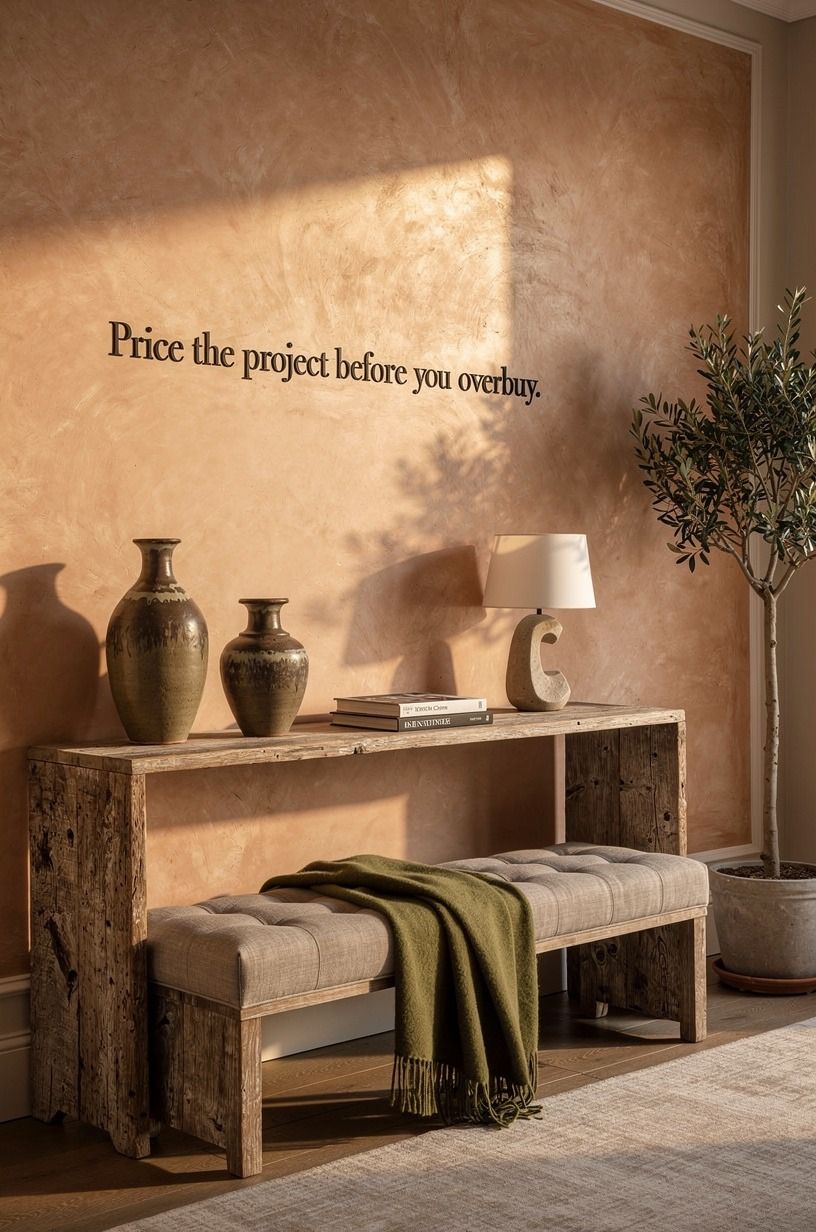
A Venetian plaster wall can stay within a modest plan if you focus on one feature wall instead of coating every room. Typical US decorating costs vary widely, so buy enough material for your tested finish and keep the rest of the room simple. You don’t need custom millwork to make this feel sophisticated.
I’d put your money into the wall preparation and a good stainless steel plaster trowel before buying decorative accessories. Reclaimed, weathered teak is a stronger finishing choice than a pile of small decor, especially with terracotta, stone, and olive around it. And if you’re deciding whether the finish belongs in a bath, read why Venetian plaster makes a bathroom look effortlessly expe.
14Choose Venetian plaster over a flat painted accent wall
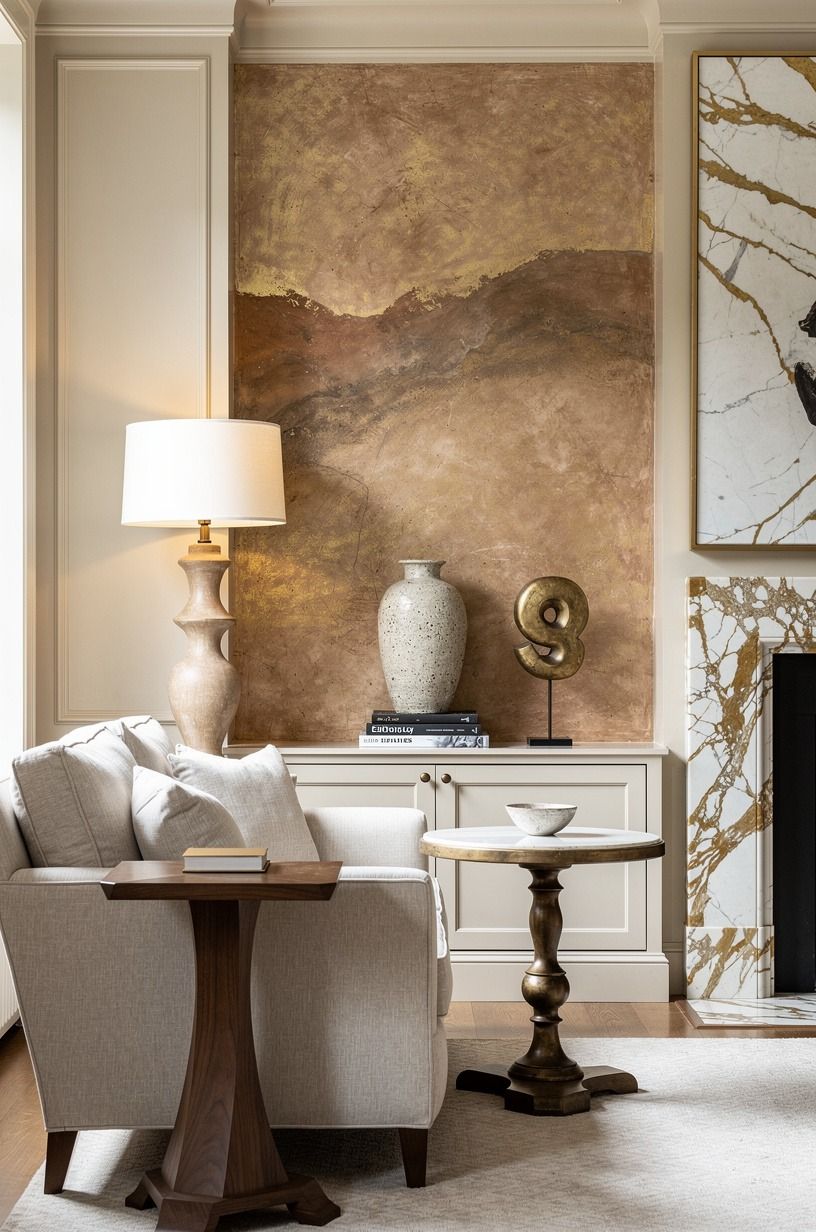
Choose Venetian plaster over a flat painted accent wall when you want depth that shifts with the room, not just a darker rectangle behind furniture. Paint is quicker and cheaper, sure, but it can’t give you the soft, captivating shadow play of layered plaster. Your wall becomes part of the lighting plan.
I’ve seen people add five pillows, two rugs, and oversized art trying to make a plain wall feel welcoming. Start with texture instead. Calacatta marble with gold veining, clay and linen tones, and aged brass give a warm plaster finish enough contrast without crowding it.
Why I Think Plaster Is Having a Real Moment
I don’t think Venetian plaster is back because everyone suddenly wants an old Italian villa. I think we’re tired of rooms that photograph well but don’t give you anything once you’re sitting in them at night.
Flat white drywall is useful, but it’s visually silent. A hand-troweled wall holds light in a different way.
It catches a lamp’s amber edge, softens a rainy afternoon, and looks slightly different from the doorway than it does beside the sofa.
I’ve gone back and forth on whether this finish belongs everywhere. It doesn’t.
I wouldn’t plaster every wall in a small house, because then the texture becomes background noise and your rooms lose their pauses. One wall, a powder room, a fireplace surround, or a tucked-away bedroom alcove is usually enough. Let it have a job.
The part I love is that you can’t fake the movement with a perfect repeating pattern. Your wrist makes the finish. Your changing pressure makes the quieter and darker patches.
That little imperfection is comforting, especially beside smooth materials like glass, oak, and linen. It feels human.
And there’s an honest economy to it. A feature wall in the $200 to $800 budget tier can change the room more than another set of matching accessories. I’d spend on the prep, choose a restrained color, and let the wall stay visible.
Not every surface needs to shout. Some of the best ones just keep giving you something to notice.
What People Always Want to Know
What is the best Venetian plaster wall finish for a small space?
A pale, lightly burnished finish is best for a small space because it keeps your walls soft and reflective without reading glossy. Try a warm ivory beside IKEA TONSTAD oak-effect furniture and leave one wall relatively bare so your eye can register the movement.
Where can I buy Venetian plaster wall pieces on a budget?
You can find supporting pieces at IKEA, Target, Wayfair, Facebook Marketplace, and local thrift stores. Look for linen-look curtains, simple oak frames, and ceramic lamps. Your secondhand piece should add texture, not become another competing focal point.
How much does a Venetian plaster wall makeover cost?
A DIY Venetian plaster wall makeover typically costs about $200 to $800 when you’re handling prep, material, and styling yourself. Your lowest-cost option is one feature wall with existing furniture. Lighting and a new rug are where the total can climb.
Can I create a Venetian plaster wall on a budget?
Yes, and you can keep it restrained. Use one wall, borrow existing art, and repaint surrounding trim with Benjamin Moore White Dove OC-17 instead of replacing furniture. A clean wall, thrifted lamp, and careful burnish can look far more refined than a full-room shopping spree.
Is Venetian plaster worth it in a small space?
Yes, Venetian plaster is worth it in a small space because the changing surface makes a compact room feel layered rather than cluttered. Keep furniture overlapping one larger rug and use three light sources so your wall has depth at every hour.
Is Venetian plaster a good idea for a rental?
It can be, if you use removable alternatives or get written approval first. Consider peel-and-stick textured panels, removable wallpaper, or a tension-rod curtain layer for a similar warm effect. Don’t apply permanent plaster to a rental wall without permission.
Where I’d Start First
If I had to pick one step, I’d start with the sample board. You can’t judge plaster from a tiny color chip because its whole character comes from layered light and movement. Pin your favorite sample for later, then live with it beside your window for a day.