
 by
by Quick answer: Most airflow (air) mattresses for adults are rated for roughly 300 to 600 pounds, and that rating usually assumes one sleeper. Size and internal construction move the number more than brand name does.
- Twin air mattresses commonly top out near 300 lb, per bannermattressonline.com's breakdown of air mattress weight limits.
- Queens generally land in the 500 to 600 lb range, with heavy-duty builds reaching 800 to 1,000 lb, according to the same source.
- Sleepopolis notes that a 300-pound weight limit typically applies to a single sleeper, not a couple.
Updated July 2026 · Reviewed for accuracy
The number you're hunting for isn't one number. It's a range that shifts with the size of the bed and what's holding the air inside it. I'll give you the honest version: for adult use, plan on 300 to 600 pounds as the realistic band across most air mattresses, and treat anything above that as a specialty heavy-duty build.
The bigger mistake I see isn't picking a bed that's too weak. It's misreading whose weight the rating covers, then wondering why the seams gave out in month three.
The real weight threshold, by size
Capacity scales with surface area and the number of internal air chambers, not with marketing language. A twin has less material, fewer internal baffles and a smaller air volume to distribute load across, so it caps out lowest. A queen has more of everything.
According to bannermattressonline.com's guide to air mattress weight limits, most twins top out around 300 pounds, queens land in the 500 to 600 pound range, and heavy-duty models reach 800 to 1,000 pounds. That's the practical map. Sleepopolis frames the common figure the same way, noting that a 300-pound limit is a real ceiling for a lot of models and that it applies to one person on the bed.
| Size | Typical rated capacity | Who it actually suits |
|---|---|---|
| Twin | Around 300 lb (per bannermattressonline.com) | One adult sleeper, occasional guest use |
| Full | Between the twin and queen bands | One adult with room to move, or a tight two-person setup |
| Queen | 500 to 600 lb (per bannermattressonline.com) | Two adults, the default for couples |
| King | At or above the queen band | Two adults plus a kid or pet climbing in |
| Heavy-duty | 800 to 1,000 lb (per bannermattressonline.com) | Combined adult weight above the standard band, or daily use |
Read the table as a starting point, then check the specific model's stated limit. Manufacturers publish these numbers per SKU, and two queens from different brands can sit a hundred pounds apart.
Single-sleeper vs combined-weight ratings
Here's the trap. Sleepopolis points out that when a spec sheet says 300 pounds, that capacity applies to one sleeper. A lot of buyers read a 300-pound rating on a queen, do the math on two 160-pound adults, and figure they're fine at 320. They're not, and the failure isn't dramatic. It's a slow seam stretch that turns into a leak.
Two adults sharing an air mattress need a combined-weight rating, and you should confirm which kind of number the manufacturer is quoting. If the listing doesn't say, treat it as single-sleeper and shop up a tier.
My rule of thumb: add both sleepers' weight, then add a margin for the fact that bodies don't sit still. Getting in and out of bed, rolling over and sitting on the edge all load a small patch of the surface far harder than lying flat does.
Why construction sets the ceiling, not the label
An air mattress holds weight the way a pressure vessel does. Load spreads across the top surface, pushes down into the air column, and the internal structure decides whether that pressure stays distributed or concentrates at a weak point. Three things do the work.
- Internal chambers and coils. Beds built with vertical air coils or internal baffles keep the surface from ballooning under a hip or shoulder. More internal structure means load spreads instead of pooling.
- Material thickness. Thicker PVC or reinforced vinyl resists stretch. Thin material stretches, and stretched material near a seam is where leaks start.
- Seam design. Seams are the failure point, always. Welded and reinforced seams hold pressure that glued or thin seams won't.
Sleep Advisor's guide to air mattress weight limits makes the connection plainly: choosing an inflatable surface with a suitable load-bearing capacity helps extend its lifespan and prevents seam tears, air leaks and similar problems. Exceeding the limit doesn't usually produce a pop. It produces a bed that's soft by 2 a.m. every night.
What happens when you go over the threshold
Overloading an air mattress shows up in a predictable order. First you lose firmness overnight, because the material has stretched enough to change internal volume, so the same air pressure supports less. Then you get sagging in the middle where the load concentrates. Then a seam or a valve seat starts weeping air, and a weeping seam doesn't heal.
Support goes before the bed does. If you're sinking to the floor at the hips, the bed is telling you the load is above what the structure can distribute, and no amount of extra pumping fixes it. Overinflating to compensate actually raises the internal pressure the seams are fighting, which speeds the failure up.
Signs you've crossed the line
- Noticeably softer surface every morning without any audible leak
- A dip that forms under the heaviest sleeper's hips and stays there
- Edges that collapse when you sit down to put shoes on
- A pump that runs longer each night to reach the same feel
Choosing a threshold for how you'll actually use the bed
Occasional guest duty and nightly adult sleep are different jobs, and the weight threshold you need changes with the job. OUTAFUN's overview of air mattress capacity groups it the same way: home guest use, camping, car travel and daily use each push you toward a different model.
Guest nights, one adult. A twin in the 300-pound band covers most single adults with margin. That's the easy case.
Guest nights, a couple. Go queen and look for a stated combined-weight rating in the 500 to 600 pound range. Don't stack two adults onto a twin's capacity.
Nightly adult use, or combined weight near the top of the standard band. This is where a heavy-duty build earns its price. The 800 to 1,000 pound tier that bannermattressonline.com describes exists because repeated loading at the edge of a rating is what kills these beds.
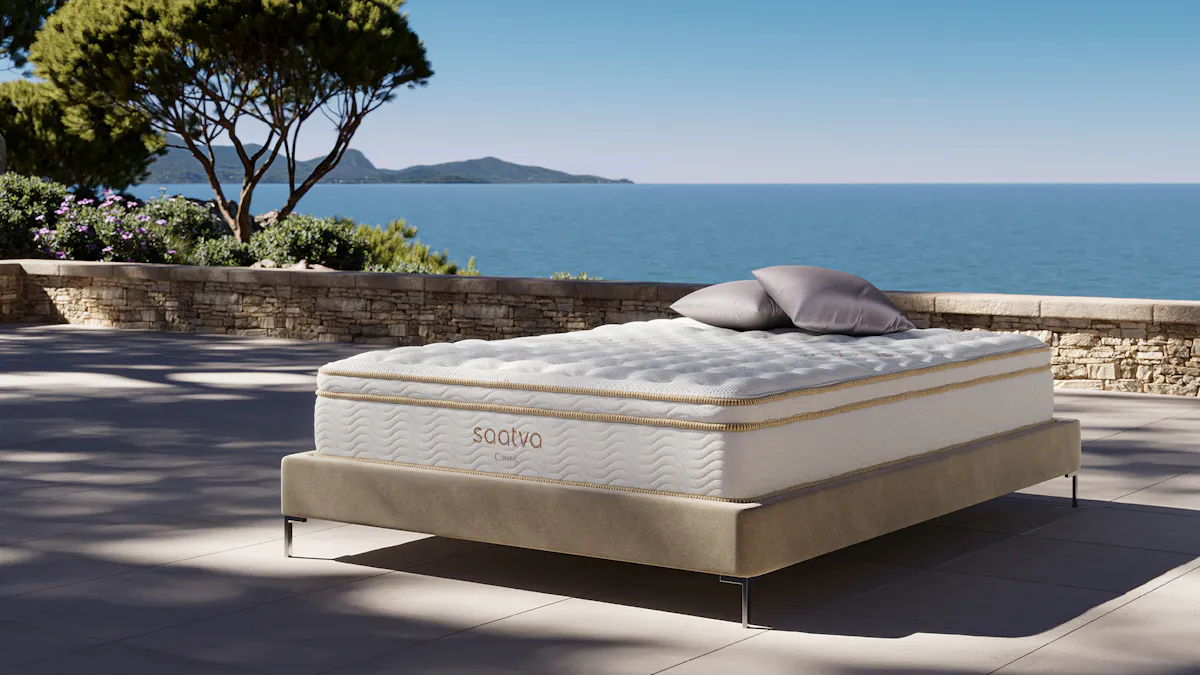
And the honest caveat: an air mattress is a temporary sleep surface by design. If you're using one as a primary bed because a real mattress feels out of reach, the weight threshold problem never really goes away. Air holds a body up by pressure, and pressure leaks. A coil-and-foam mattress holds a body up with materials that don't. If you're weighing that jump, our breakdown of how much a queen mattress weighs gives you a sense of what a permanent bed involves to move and set up, and something like the Saatva Classic sits in the premium innerspring tier if you want to see what a nightly-use build looks like, priced live on the official site.
How to make a rated air mattress last
Staying under the threshold is half of it. The other half is not adding stress the rating never accounted for.
- Don't overinflate. Firm feels better for ten minutes and shortens the bed's life. Inflate to firm-but-yielding, not drum-tight.
- Keep it off cold floors. Air contracts when it cools, so the bed reads softer and you're tempted to overfill. A rug or foam pad under it helps.
- Never sit on the edge. Edge loading concentrates weight on the least supported part of the structure. Sit toward the middle.
- Keep kids and pets from jumping. Impact load is a multiple of static weight, and it lands on one small patch.
- Distribute a shared load. Two adults sleeping toward the center push more into one chamber than two adults sleeping in their own lanes.
Weight capacity and the weight of the bed itself are separate specs people conflate. If you want a sense of how much bedding actually weighs across categories, our notes on Purple mattress weight and on Saatva mattress weight cover the shipping-and-setup side, which is a different question from load-bearing capacity.
Adult thresholds vs youth thresholds
The word "adult" in the search matters. A bed rated for a child's weight isn't the same product with a smaller number on it, and a youth-sized air mattress often uses thinner material and fewer internal chambers because it was never designed to carry adult load. If you inherited a kid's air bed and you're an adult sleeping on it, you're already over the threshold.
That distinction runs through permanent mattresses too, and it's worth understanding before you buy for a growing kid or a guest room that serves both. Our comparison of youth mattresses versus adult mattresses walks through where the construction genuinely differs.
FAQ
What's the typical weight limit for an adult air mattress?
Most air mattresses are rated for 300 to 600 pounds, with twins around 300 and queens in the 500 to 600 range, according to bannermattressonline.com's size-by-size guide. Heavy-duty models go higher. Always confirm the figure on the specific model you're buying.
Does the weight limit cover two people?
Not always, and that's the key catch. Sleepopolis notes that a stated 300-pound capacity applies to a single sleeper. If the listing doesn't specify combined weight, assume it's per-person and size up.
Will exceeding the weight limit pop the mattress?
Rarely a sudden burst. Sleep Advisor's guide connects inadequate load capacity to seam tears and air leaks, which is the usual path: material stretches, support drops overnight, then a seam starts losing air. It's gradual, and it doesn't reverse.
Do heavy-duty air mattresses sleep differently?
They tend to feel firmer and more stable, because thicker material and more internal structure resist deformation. The tradeoff is weight and bulk, so they're less convenient to store and pack than a basic guest model.
Is an air mattress fine as a nightly adult bed?
It can work short term, but repeated loading at the edge of a rating is what wears these beds out fastest. If you're sleeping on one every night, choose a heavy-duty capacity tier with real margin over your combined weight, or move to a permanent mattress built for continuous use.
ONE OPTION WORTH COMPARING
Shopping as well as reading? Here is one current option worth comparing: the Saatva Classic. Check today’s price, sizing and return terms on the official product page before you order.
Saatva Classic
- 365-night home trial and lifetime warranty, per saatva.com
- Handcrafted in the USA, free white-glove delivery
- Flexible financing available
The verdict
For adults, 300 to 600 pounds is the range that matters, and the number you should actually plan against is your combined sleeping weight plus margin for movement. Buy by size and internal construction, confirm whether the manufacturer's figure is per-sleeper or combined, and if you're near the top of a standard rating, step up to the heavy-duty tier rather than hoping the seams hold. Air mattresses fail slowly and predictably. Almost every one of those failures traces back to a rating that was read optimistically.