
 by
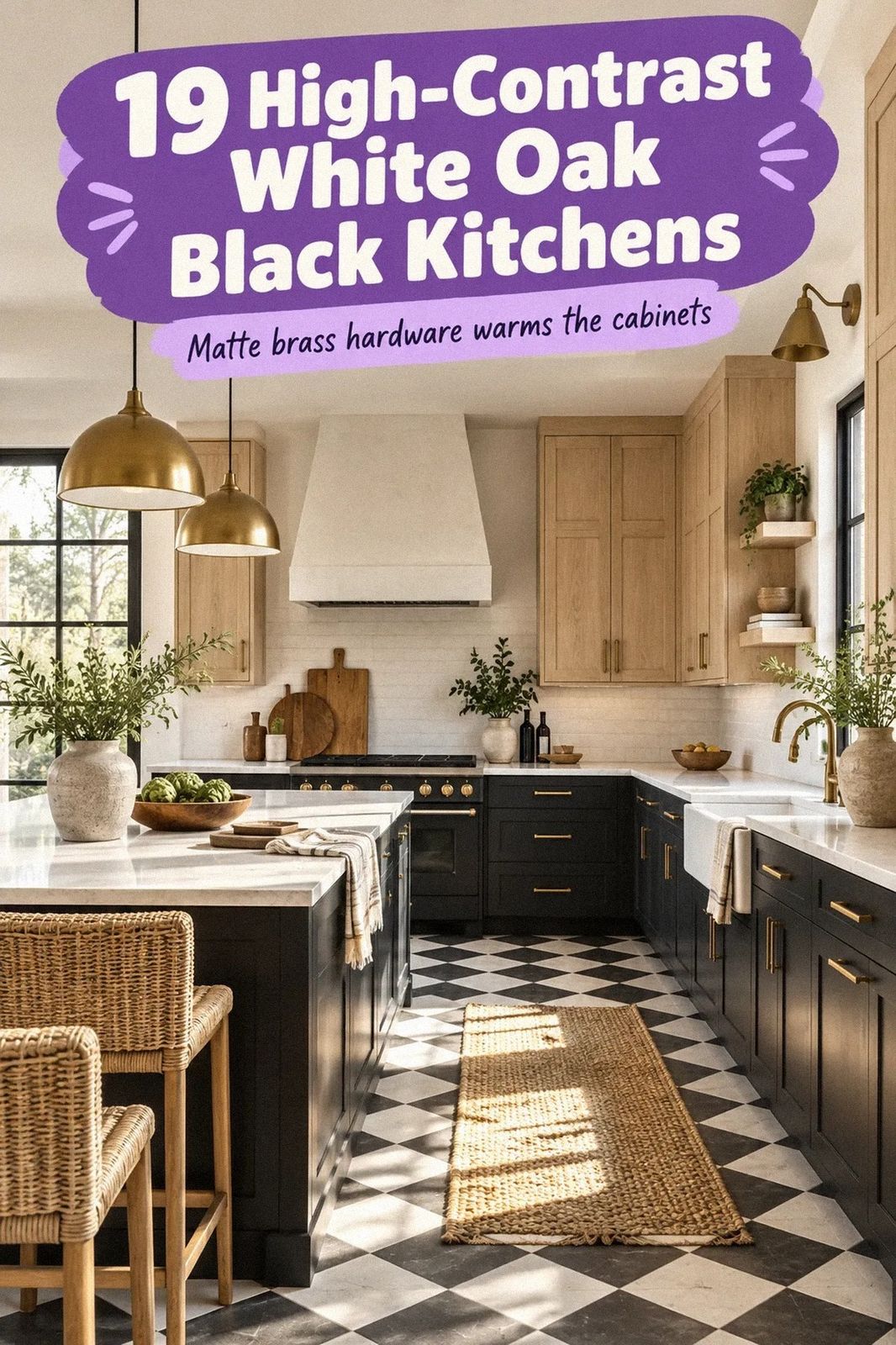
White oak and black kitchen designs work best when the dark finish anchors the room and the wood keeps it warm. I learned that after pairing black cabinets with a cold gray floor, and the space felt flat by dinner. These ideas fix the balance with texture, light, and practical measurements.
If you’re planning a refresh, start with the surfaces you’ll see and touch every day. Your kitchen doesn’t need every dramatic idea at once. It needs one confident contrast, a few beautiful materials, and enough breathing room for real life.
- Layer Black Lowers With White Oak Uppers
- Paint the Island Black for a Stronger Center
- Follow The Two-Wood Rule
- Frame Oak Doors With Matte Black Hardware
- Float a White Oak Shelf Above Black Tile
- Keep the Backsplash Gap Crisp
- Should You Paint the Island Instead of the Walls?
- Mix Oak With A Dark Zellige Backsplash
- Build the Three-Height Light Stack
- Anchor the Room With a Black Range Hood
- Swap Open Shelves for a Tall Oak Pantry
- Keep Black Below Eye Level
- Add Soft Seats Beside Hard Surfaces
- Repeat Oak in One Unexpected Place
- Choose White Oak Over Black Gloss
- Build Around A Black Window Wall
- Use Gold Hardware With Restraint
- Plan the Countertop Before the Cabinets
- Protect the Work Triangle With Clearances
1Layer Black Lowers With White Oak Uppers
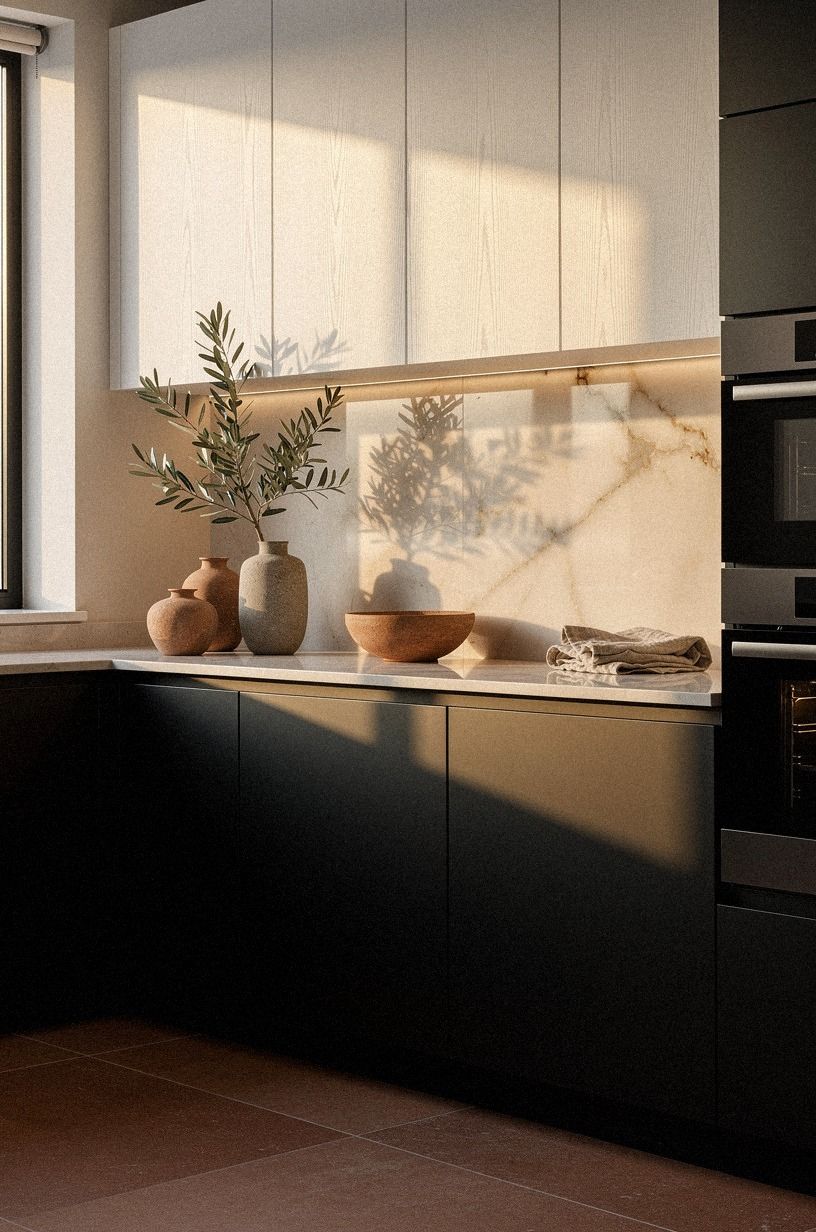
Black base cabinets give your kitchen visual weight, while white oak upper cabinets keep the eye moving upward. Choose a cerused finish so the grain remains visible instead of disappearing into a smooth stain. You’ll get contrast without making the room feel boxed in, especially if your ceiling is under 8 feet.
I’d skip glossy black doors here. Fingerprints show quickly, and the reflection can feel harsh beside pale wood. A matte finish, backlit translucent onyx, and warm bulbs create a calming background for your everyday dishes.
Terracotta, stone, and olive accents can warm the contrast without making the palette busy. If you’re comparing cabinet layouts, start with these white oak kitchen cabinet ideas before you order fronts.
I’d also keep the oak slightly lighter than the floor. When both surfaces have the same honey tone, the room can look yellow and visually busy.
Your goal is a crisp lower edge with a softer upper field. That relationship feels elegant in the morning and wonderfully cozy after sunset.
2Paint the Island Black for a Stronger Center
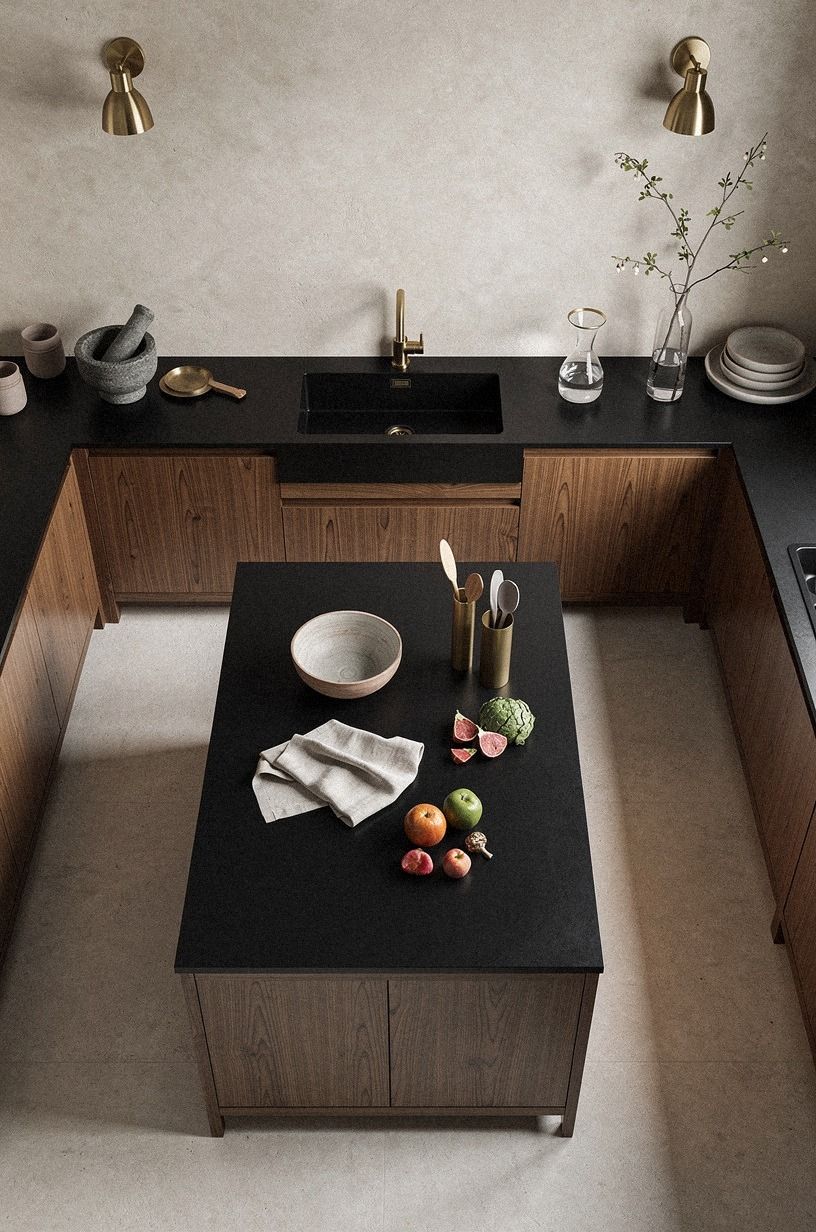
A black island works when you want the kitchen to feel grounded without committing every cabinet to a dark finish. Use a durable matte paint on the base, then top it with book-matched walnut or a pale quartz surface. The dark base will make the counter look brighter and more substantial.
Your island should still leave 42 to 48 inches of clearance all around, so measure before you fall for a dramatic oversized design. I once planned an island that looked elegant on paper and made two people squeeze past each other.
Don’t repeat that mistake. For a layout with more presence, browse these white oak kitchen island ideas.
A waterfall edge can make the island feel sculptural, but it isn’t always worth the added cost. I’d rather see a beautifully finished end panel, a comfortable stool overhang, and enough room for your elbows. The best island is the one you can use without apologizing every time someone walks behind you.
If you’re choosing between a deep charcoal and true black, sample both beside the oak. Charcoal feels softer and more forgiving in dim rooms. True black creates a sharper, more theatrical center.
3Follow The Two-Wood Rule
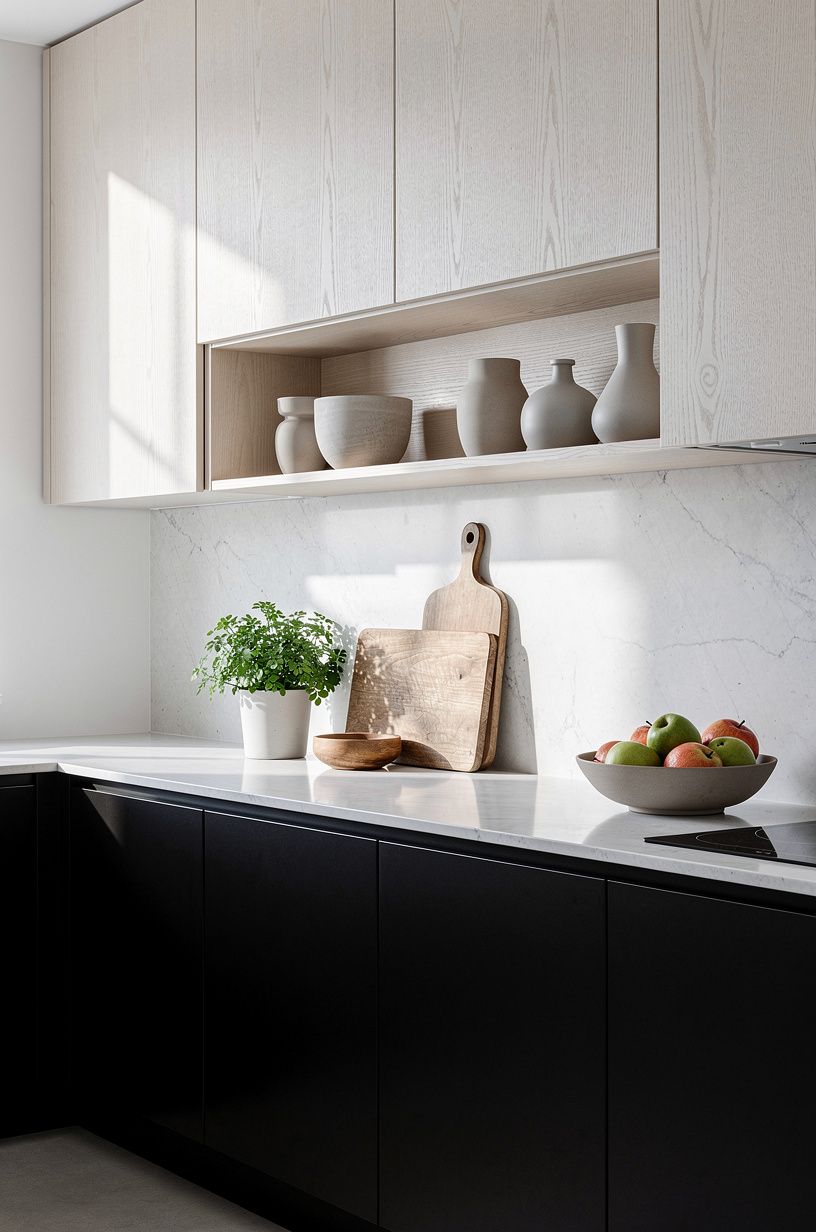
The Two-Wood Rule keeps a two tone wood kitchen from looking like a furniture showroom. Use white oak as the main wood, then introduce one secondary species through stools, a cutting board, or a small table. Walnut, with its deeper brown grain, is the better partner because it adds warmth without competing with the black.
You don’t need three wood tones to make your kitchen feel collected. Two are enough if the finishes have different values and similar undertones.
A slab of warm travertine can bridge the oak and walnut without becoming another wood tone. And if you’re choosing between a white oak and walnut kitchen, let oak cover the larger surfaces while walnut stays at eye level.
That hierarchy feels sophisticated and still gives your eye a quiet place to rest.
I’d avoid mixing rustic reclaimed oak with an ultra-sleek walnut veneer unless you genuinely want that tension. Your kitchen will look more intentional when the grain scale feels related.
A quiet, straight oak grain beside refined walnut can be striking. A knotty, orange-toned plank beside both black cabinetry and glossy stone may feel chaotic.
4Frame Oak Doors With Matte Black Hardware
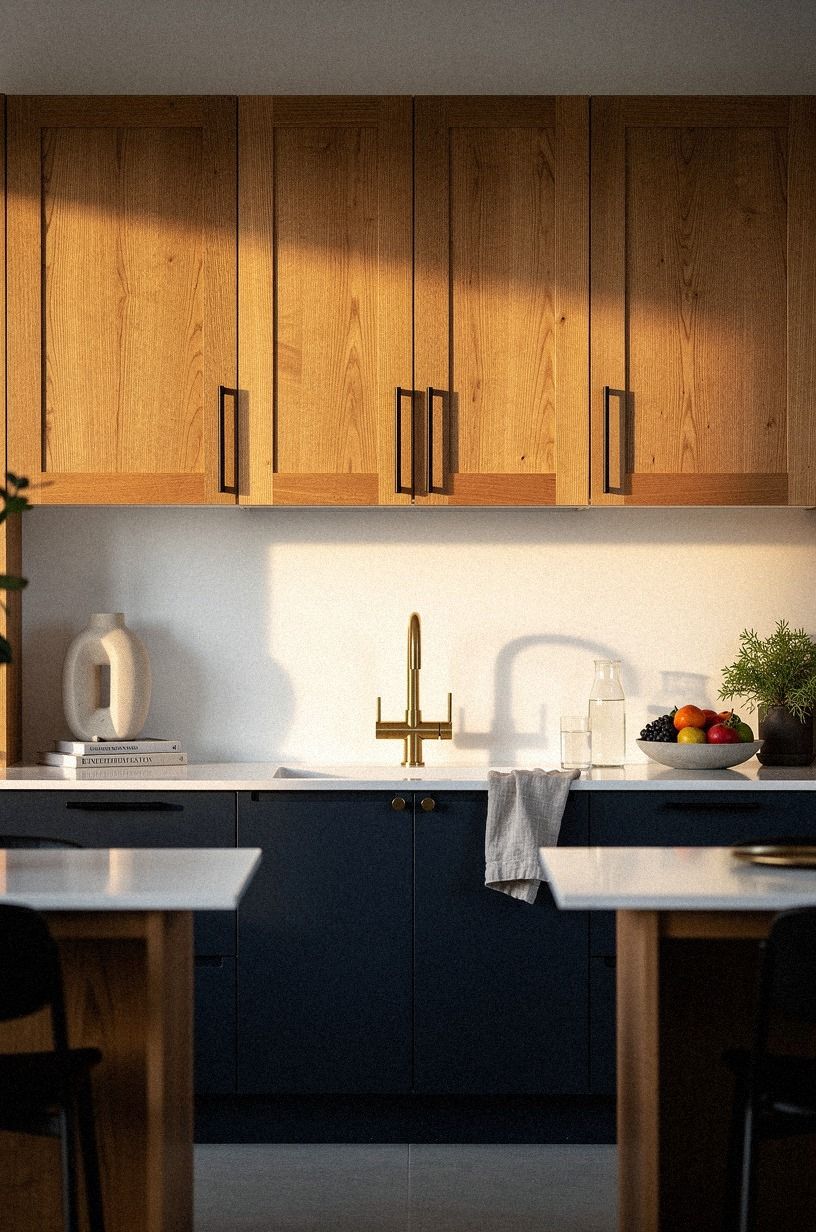
Unlacquered brass pulls sharpen the pale grain of oak, especially on long drawers and slab fronts. As the metal develops a soft patina, it brings warmth to a navy, white, and walnut palette without making the hardware feel too polished.
5Float a White Oak Shelf Above Black Tile
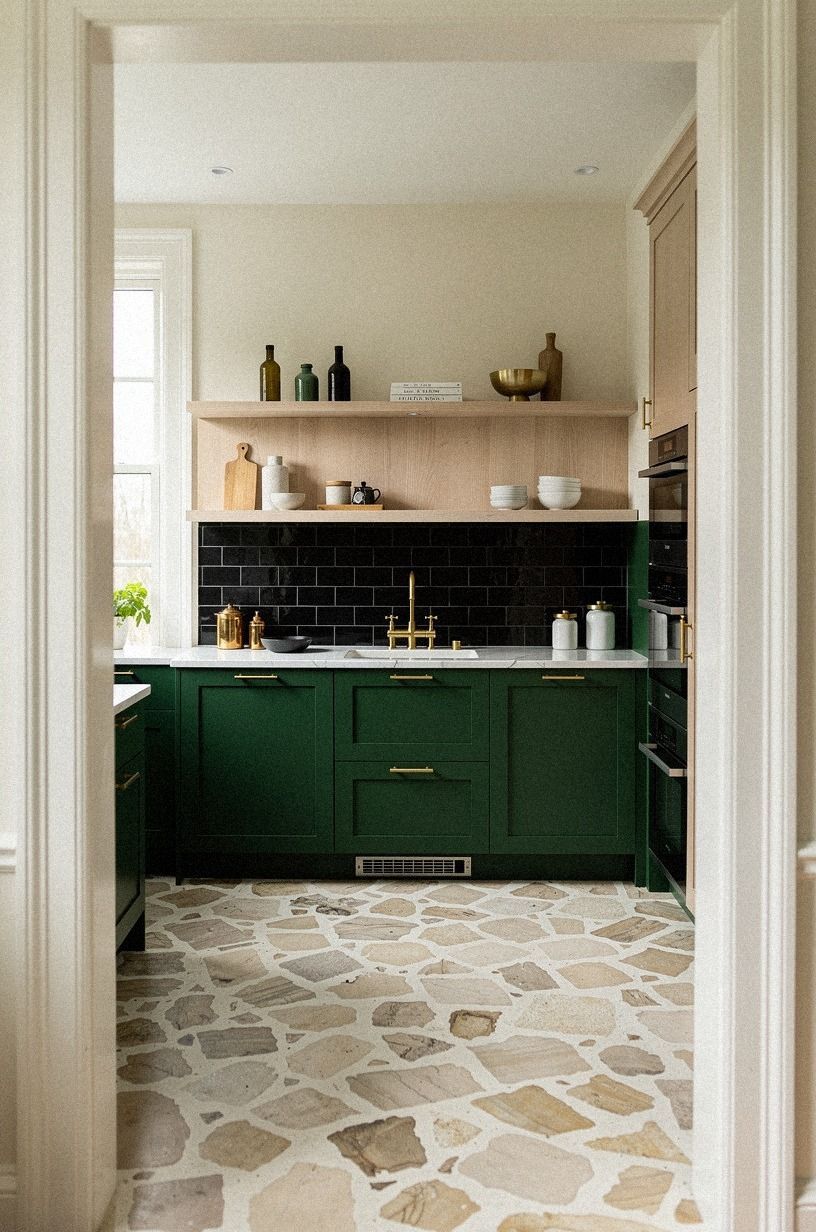
A floating 3/4-inch solid white oak shelf softens an oversized-chip terrazzo backsplash without making the wall busy. Keep the shelf thick enough to read as furniture, then style it with a short stack of bowls, a stoneware pitcher, and one small plant. The open grain catches afternoon light in a way painted shelving can’t.
Your shelf shouldn’t become a second pantry. Leave breathing room around each object, and keep anything heavy on a properly anchored bracket. I’d rather see three useful pieces than twelve decorative ones competing with the cabinets.
If you’re working with limited floor space, these small oak kitchen ideas show how open storage can stay airy.
A terrazzo wall gives the shelf a lively backdrop, but the surface should have some variation. Oversized chips in emerald, gold, and cream will keep the wall from looking flat. I’m especially drawn to a shelf with a slightly eased edge because it feels crafted without becoming fussy.
Your styling should echo the kitchen’s daily rhythm. Put the bowls you actually use within reach, and leave the decorative object at one end. That little bit of restraint makes the arrangement feel generous and quietly luxurious.
6Keep the Backsplash Gap Crisp
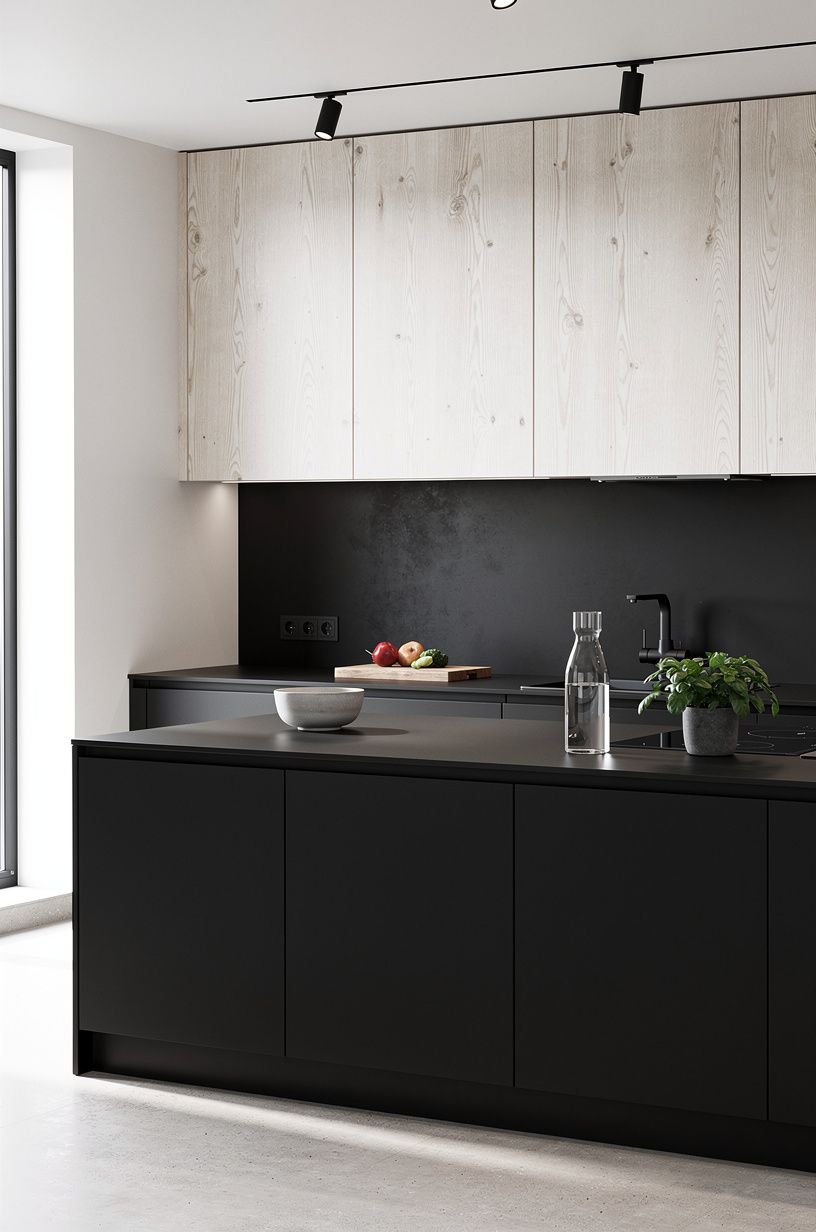
The standard backsplash gap is 18 inches between the counter and upper cabinets, and that proportion gives a forest green, rust, and natural oak palette a clean visual pause. Hand-applied Venetian plaster can add subtle movement without interrupting the gap.
7Should You Paint the Island Instead of the Walls?
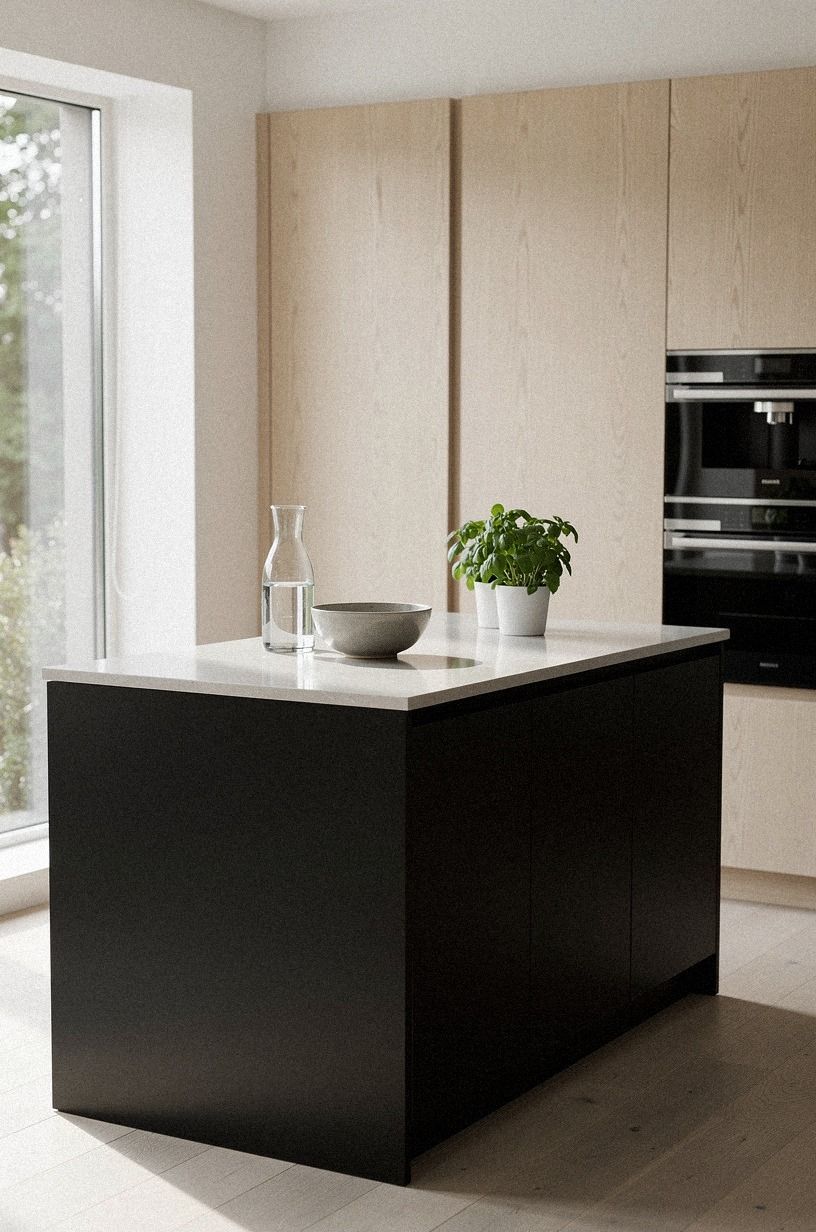
Yes, if your kitchen already has enough warm wood and you need one confident dark gesture. A charcoal island keeps the perimeter light, while a dusty rose wall color would make the whole room warmer and more expressive. I’d choose the island for a compact kitchen because it gives you contrast without closing in the corners.
Your wall color matters more than most people expect. Test the paint beside your oak in morning and evening light, because the grain can turn yellow against the wrong neutral.
But don’t choose a color only from a phone screen. A real sample board will show whether your floor and cabinets are friends.
I’d consider a dusty rose with a little gray or mineral depth instead of a bright white. A muted charcoal, soft blush, and aged brass can all support black and wood without competing for attention.
A small shagreen accent can add texture without introducing another loud color. The right palette will make your oak look richer and your dark centerpiece feel less abrupt.
If your kitchen has limited natural light, keep the ceiling lighter than the walls. That small decision preserves height and keeps your dark centerpiece from making the room feel compressed.
8Mix Oak With A Dark Zellige Backsplash
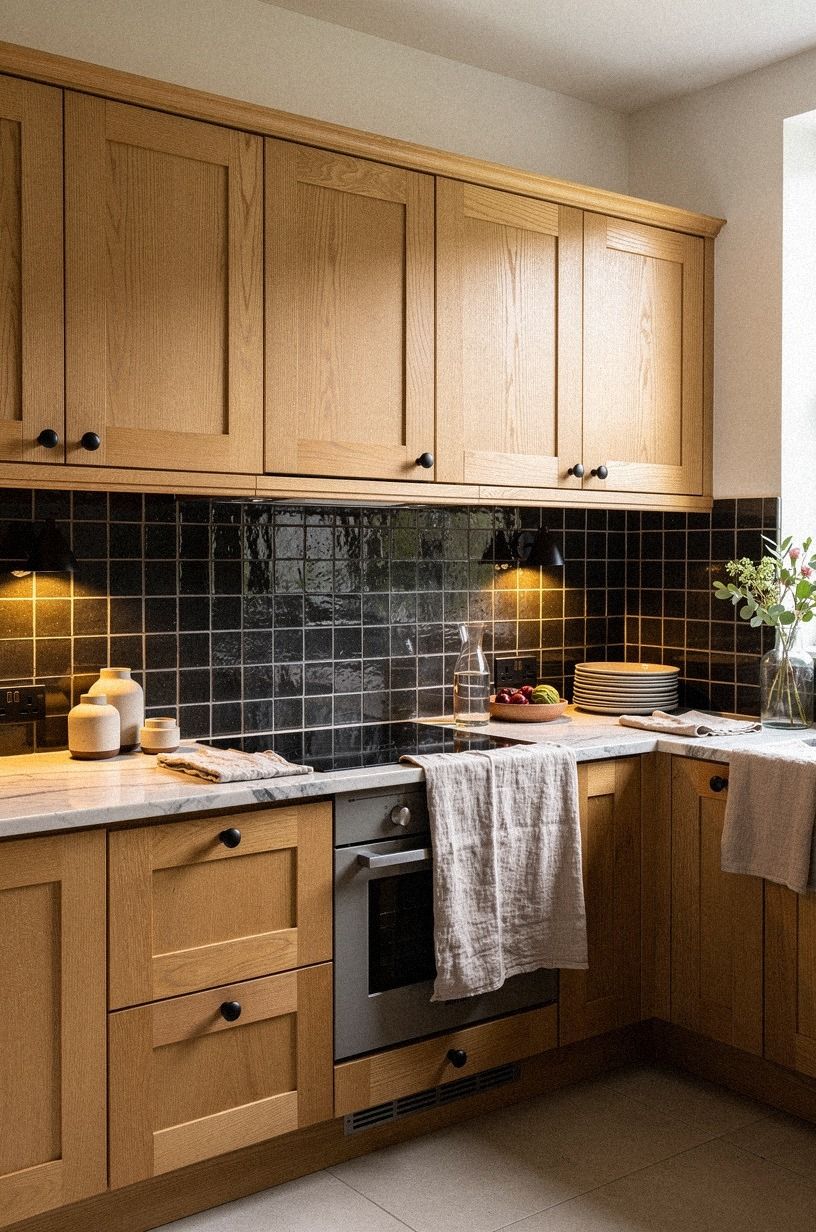
Black accents can add movement to a kitchen built from straight cabinet lines, while washed Belgian linen keeps the surrounding palette of warm white and camel from feeling hard. Use the linen on a shade, stool cushion, or nearby café curtain rather than adding another glossy surface.
9Build the Three-Height Light Stack
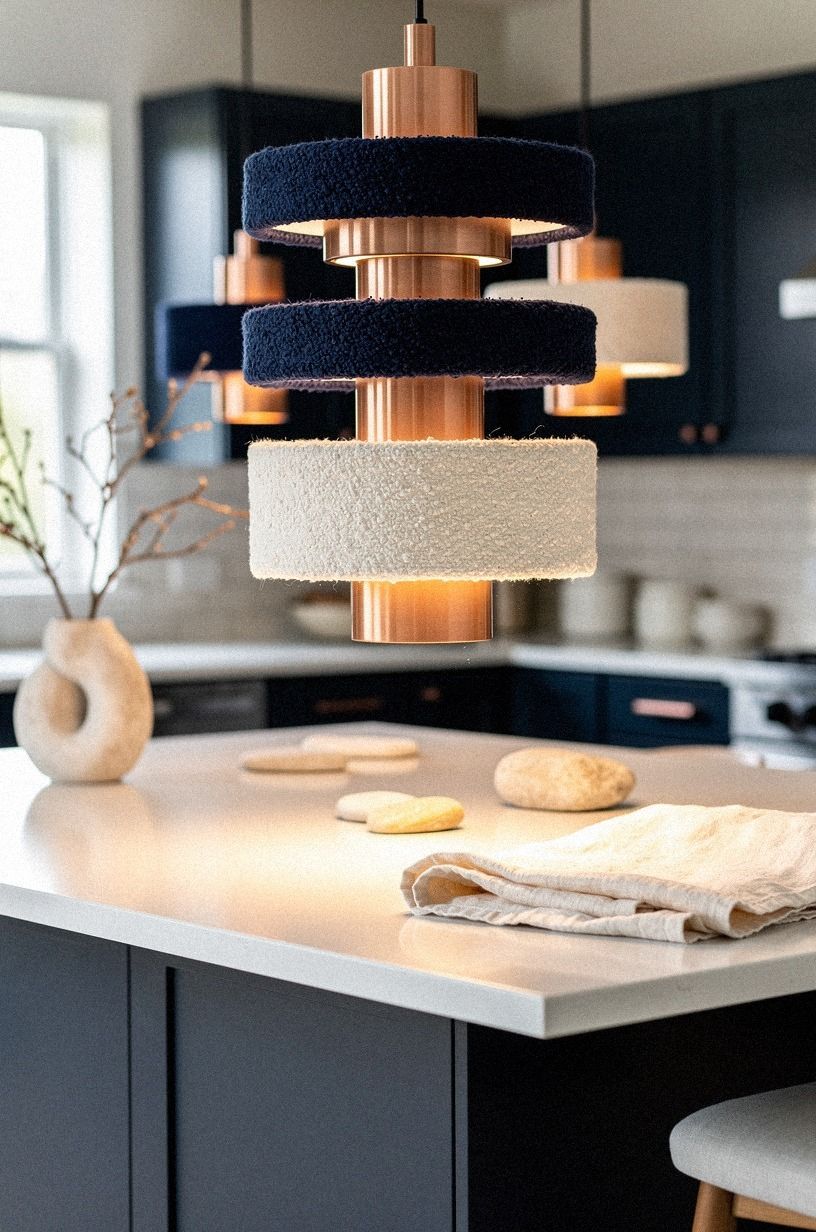
The Three-Height Light Stack combines ceiling light, eye-level task light, and low counter glow. Use a pendant above the island, sconces near the shelves, and concealed lighting beneath the uppers. This layered approach keeps dark cabinetry from turning into a void after sunset.
Your bulbs should stay warm enough for wood, but bright enough for chopping and cleaning. I’d skip a single oversized ceiling fixture because it throws hard shadows across the counter and leaves the corners dull. Copper sconces can bridge midnight blue and ivory, while an organic bouclé shade brings softness near the island.
Choose pendants with opaque or partially shaded covers if you want a gentle pool of light. Clear glass can look crisp, but it may expose an unattractive bulb or create glare at eye level. Your lighting should flatter the room when you’re sitting down, not only when you’re standing beneath it.
Put task lighting on separate controls so you can adjust the atmosphere. Bright under-cabinet strips help with prep, while a dim pendant setting makes dinner feel relaxed. That flexibility is a small upgrade with a surprisingly powerful effect.
10Anchor the Room With a Black Range Hood
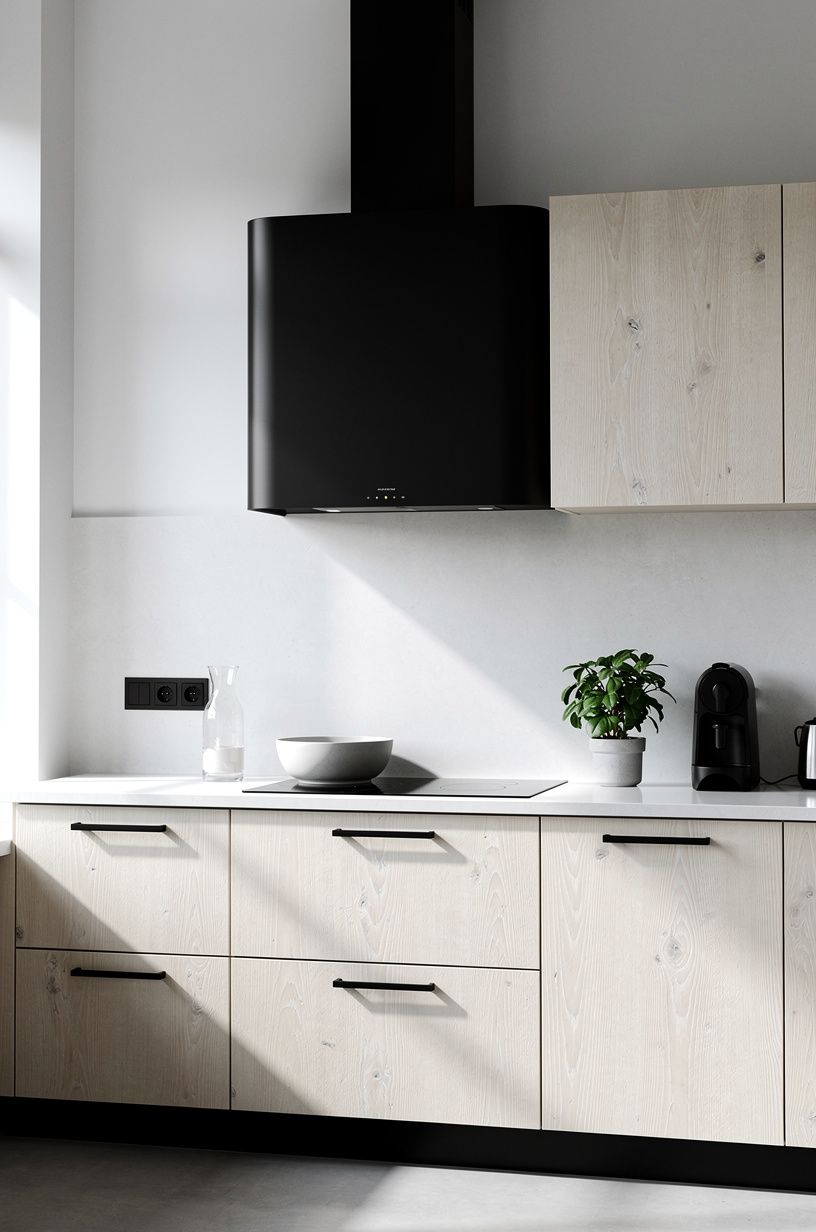
A black range hood gives your kitchen one strong vertical shape, especially when the cabinets are pale oak. Choose a simple form clad in Nero Marquina black marble with white veins, and let it rise above the cooktop without unnecessary trim. The hood should feel architectural, not like an appliance that wandered into the room.
Your counter height will usually land at 36 inches, so the hood, shelves, and upper cabinets need to relate to that baseline. And if your room has a low ceiling, avoid a heavy boxed hood that stops the eye too abruptly. A slim dark surface with warm cream and natural wood beside it feels dramatic, but it still leaves the room usable.
If you’re using a black hood over a black range, let the two shapes read as one quiet mass. A contrasting brass trim can make the arrangement feel more decorative, but I’d keep that detail restrained. The hood already has authority.
A plaster hood painted deep charcoal can soften the contrast better than a shiny metal model. You’ll get shadow, texture, and a more custom appearance without adding another complicated material.
11Swap Open Shelves for a Tall Oak Pantry
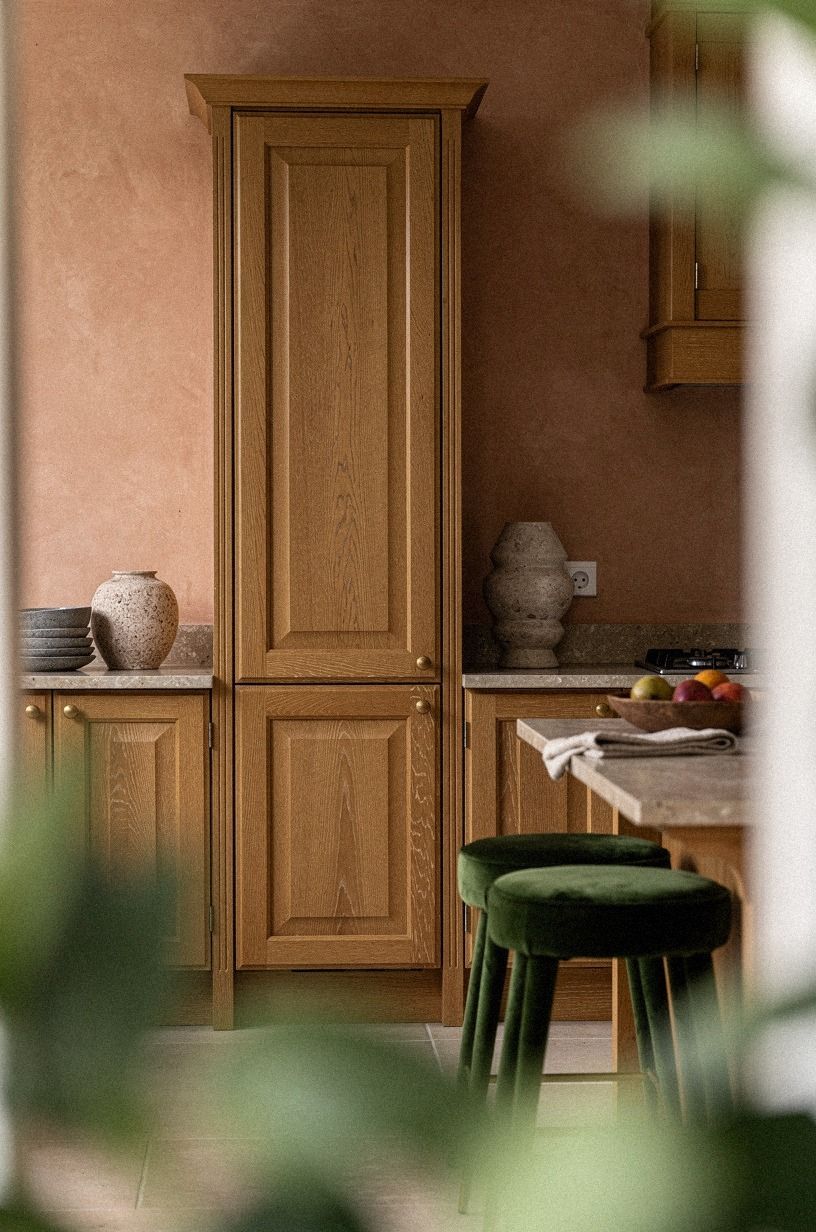
Open shelving looks inviting, but a tall pantry can give your kitchen much more calm storage. Pair the natural oak with a terracotta, stone, and olive palette, then add one deep-pile mohair velvet stool or bench where the room needs softness.
12Keep Black Below Eye Level
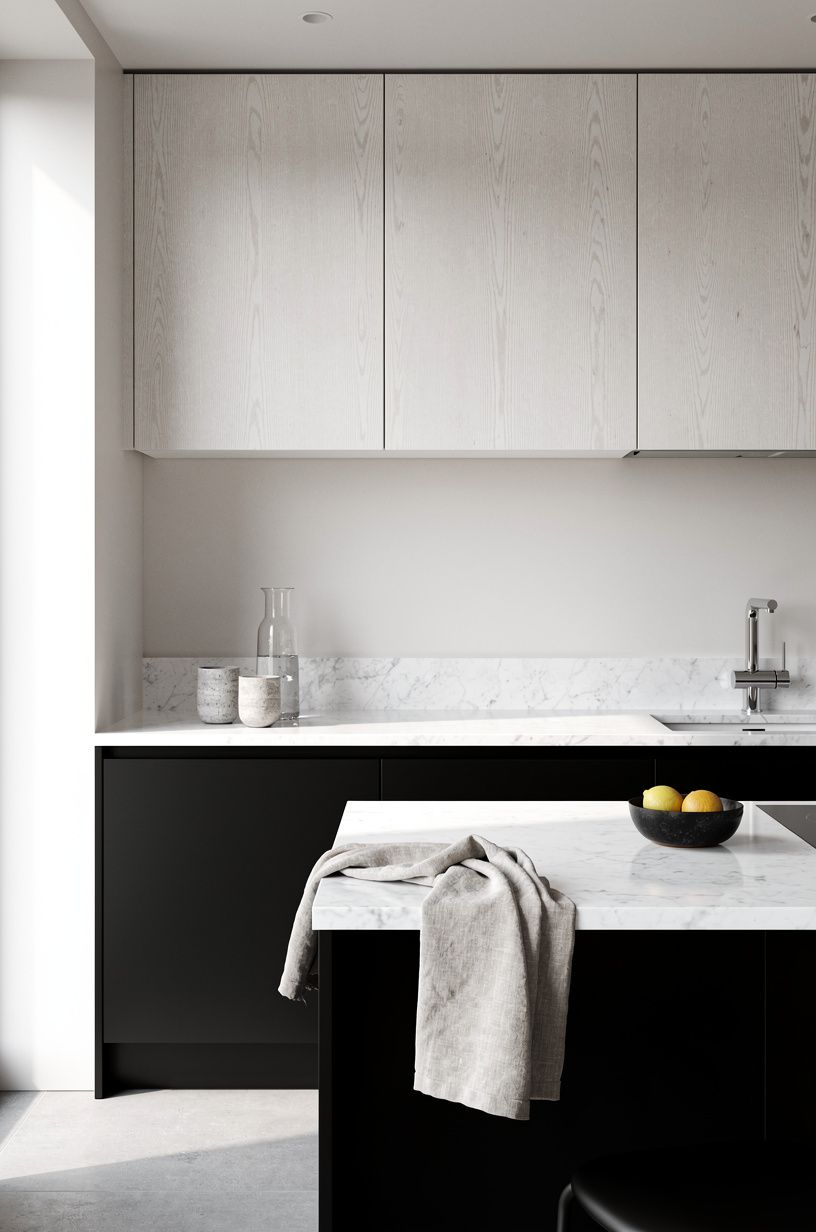
Black works hardest below the sightline, where it can ground the room without swallowing the ceiling. Pair black base cabinets with white oak slab uppers, pale walls, and Carrara marble with subtle gray veining. This arrangement is especially useful when your kitchen has modest natural light.
Your upper cabinets can still carry a dark accent, but use it selectively around the hood or refrigerator wall. I’d rather see one concentrated black zone than a scattered pattern of dark doors. A kitchen should feel composed from the doorway, and your eye should land on a clear focal point instead of counting every finish.
If you want more black, add it through the plinth, window trim, or a single tall cabinet. Those smaller gestures can create a graphic outline without turning the room into a dark box. I’ve found that a black toe kick looks especially polished against pale flooring.
You can also balance low black cabinets with a lighter countertop edge. A thin profile keeps the island modern, while a thicker edge feels more traditional and substantial. Let the architecture of your room guide that choice.
13Add Soft Seats Beside Hard Surfaces
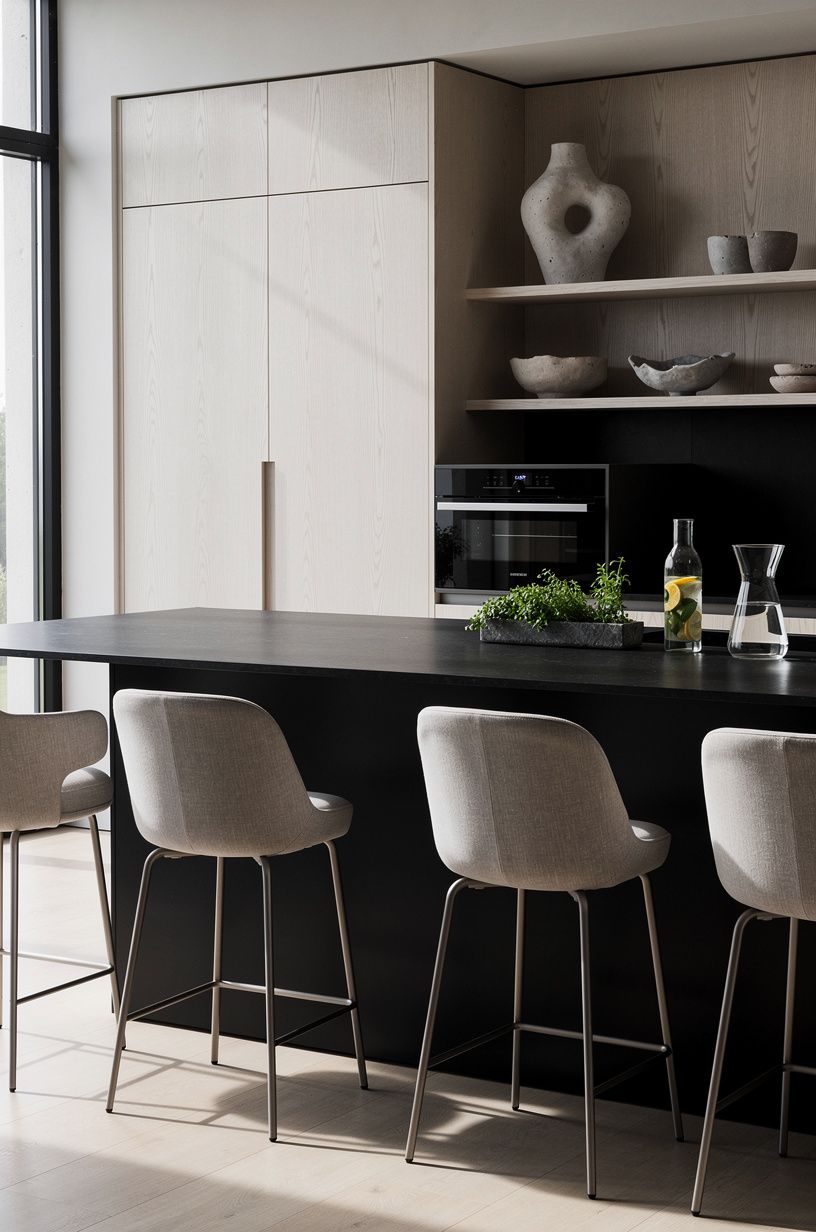
Black cabinets, stone counters, and oak doors can become visually crisp, so upholstered stools bring back comfort. Choose a muted plum or gray cushion on a reclaimed weathered teak frame, then let the fabric sit slightly below the counter edge. The texture will soften the room without adding another color family.
Your stools need enough clearance for knees and easy movement, particularly if the island is where everyone gathers. I’d avoid shiny faux leather beside black cabinets because both surfaces reflect light in the same hard way. A matte textile catches the glow differently, and that small change can make your kitchen feel more intimate after dark.
A saddle-shaped seat can be beautiful in a casual space, while a slim upholstered back offers more comfort for long breakfasts. Don’t choose a stool only for its silhouette.
Sit in it. Your kitchen should invite people to stay.
If the room already contains plenty of oak, choose a textile with a cool undertone. Dusty plum, faded blue-gray, or warm stone can keep the palette balanced. A rich rust fabric will be dramatic, but it may compete with the oak’s natural orange notes.
14Repeat Oak in One Unexpected Place
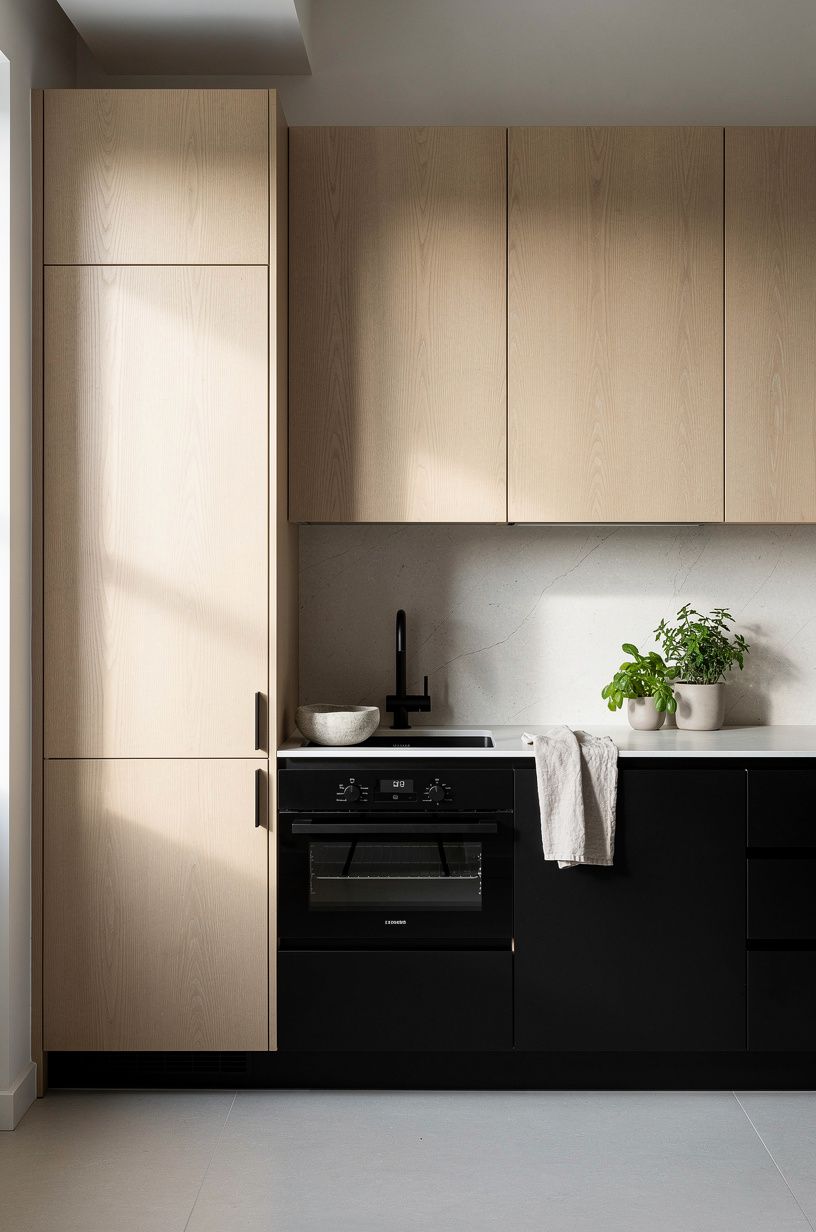
Repeat the oak beyond the cabinets so the material feels like a design decision rather than a single finish order. A white oak detail beside Calacatta marble with gold veining can connect the navy, white, and walnut palette without adding another cabinet run.
15Choose White Oak Over Black Gloss
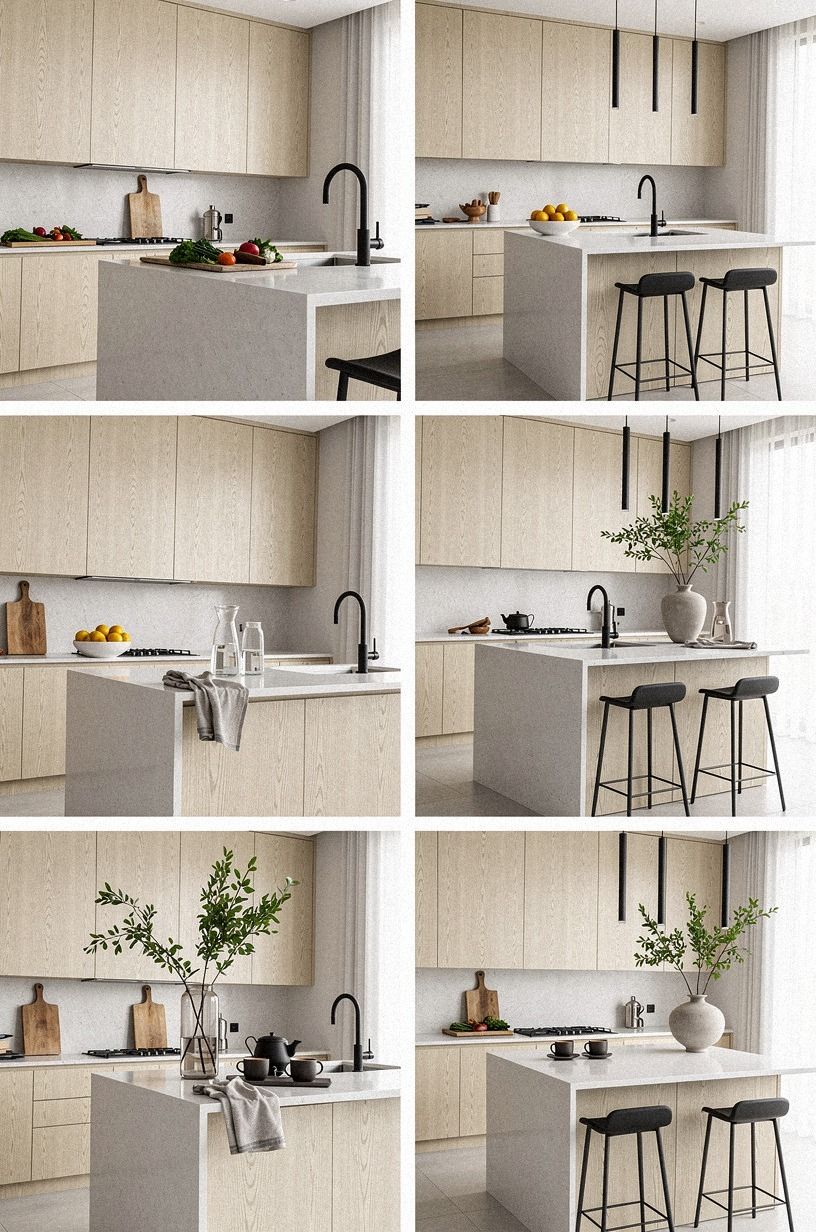
White oak over black gloss is the better choice when you want drama that still feels lived-in. Glossy doors reflect every lamp, handprint, and passing movement, while a matte black laminate gives you the same depth with less visual chatter. The wood adds a soft counterpoint so the room doesn’t feel severe.
Your finish should support how you live, not just how the kitchen looks in a showroom. I’d choose a low-sheen surface for a busy family room and reserve gloss for a smaller accent, such as one appliance wall. This contrast is refined, but it doesn’t ask you to polish the cabinets every night.
If you love shine, use it in a controlled way. A glossy black backsplash or lacquered pantry door can add a glamorous flash without turning every cabinet into a mirror. Keep the surrounding materials quiet so the reflective surface feels intentional.
I’d also check how the finish looks beside fingerprints, crumbs, and morning sunlight. The most beautiful sample can be frustrating when you’re constantly wiping it. Your kitchen should have drama, but it should also forgive you.
16Build Around A Black Window Wall
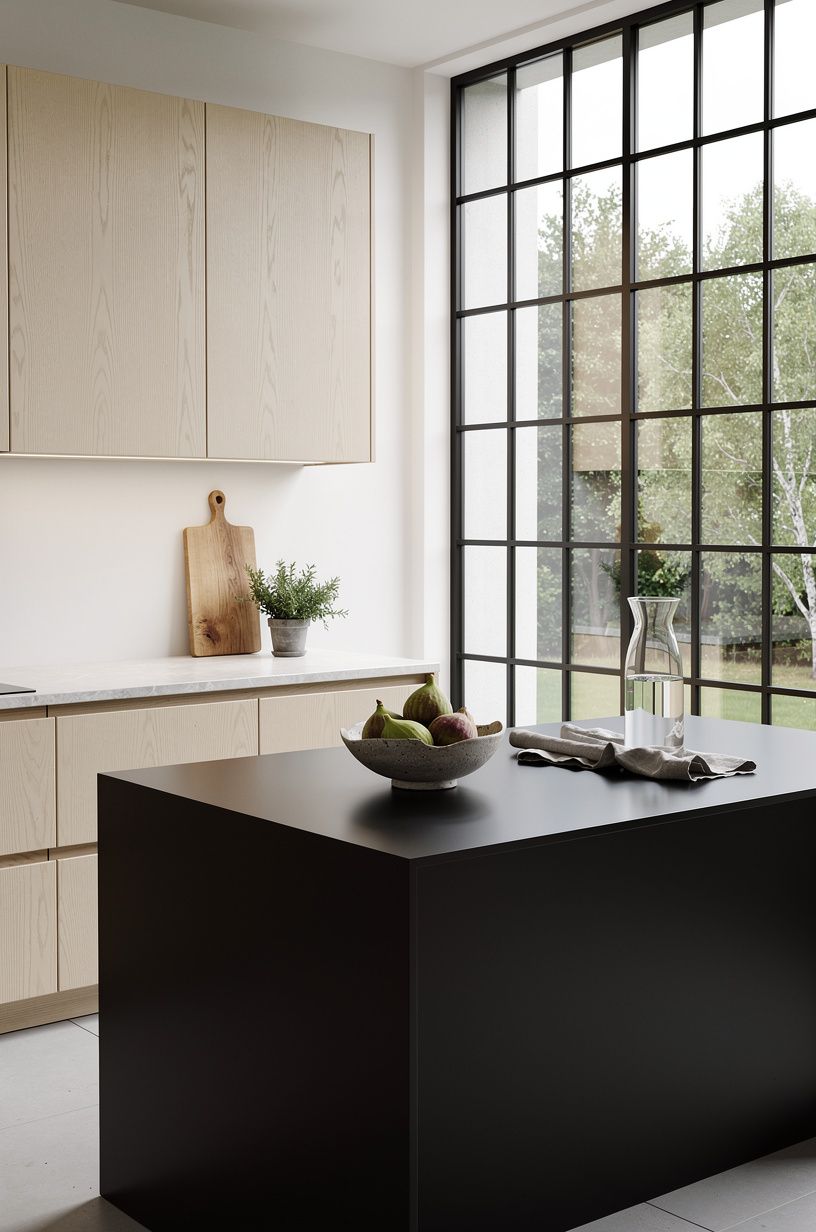
A black window wall can make natural oak cabinetry look brighter by comparison. If you want another luminous surface, use backlit translucent onyx selectively at the backsplash or behind a prep area rather than covering every wall.
17Use Gold Hardware With Restraint
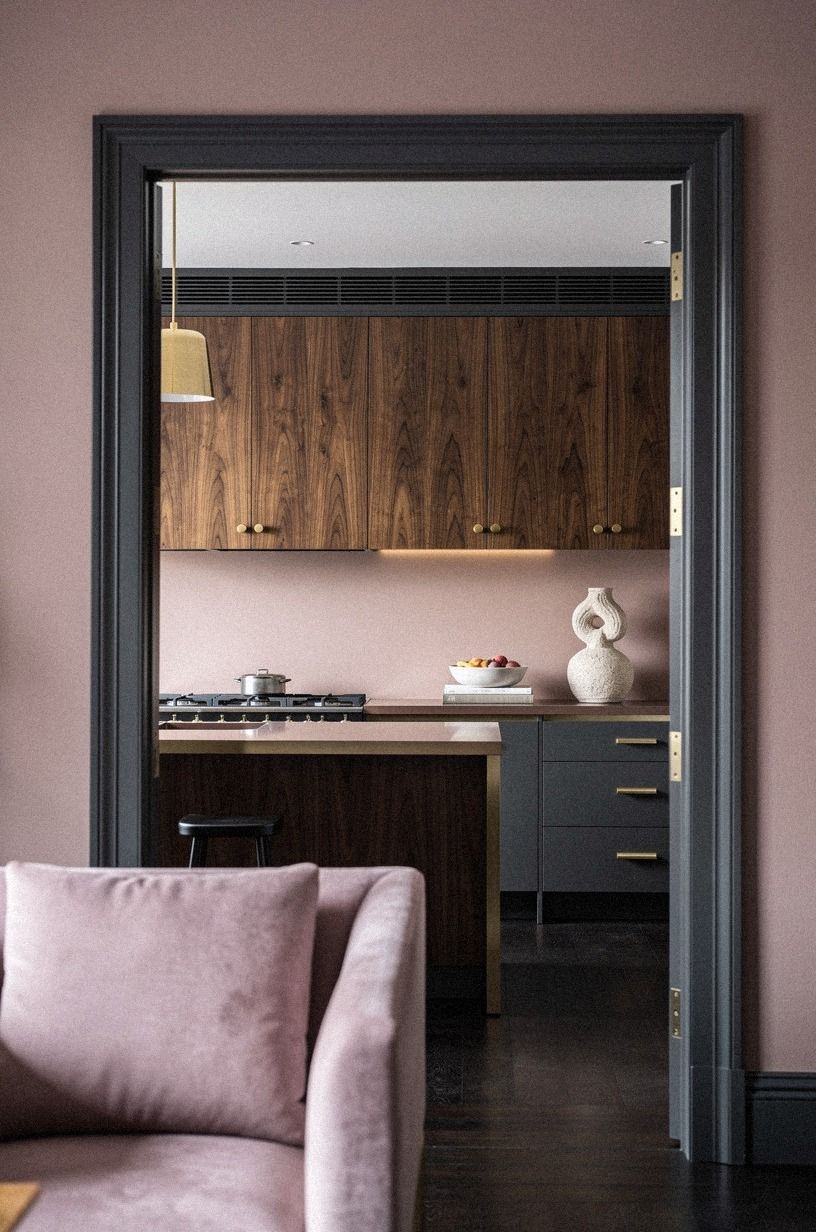
Wood cabinets and gold hardware can look luxurious when the metal is softened by use. Choose aged brass or unlacquered brass for pulls, a faucet, and perhaps one pendant. Add book-matched walnut on a small shelf or counter detail, and keep the black surfaces matte so the metal becomes a warm glint instead of a competing finish.
Your kitchen doesn’t need brass on every visible object. I’d skip gold-edged bar stools, gold shelving, and gold frames in the same sightline.
One repeated metal is enough, and the oak already supplies plenty of warmth. If you’re choosing between several cabinet moods, these wood cabinets with gold hardware can help you narrow the mix.
The tone of the metal matters. Bright polished brass feels glamorous and energetic, while aged brass feels quieter and more collected. Bronze hardware can sit between the two, especially when your oak has a smoky finish.
I like to repeat the metal at least twice so it doesn’t look accidental, but three appearances are usually enough. Your faucet, cabinet pulls, and pendant can form a simple visual triangle. Anything beyond that may start to feel like a showroom display.
18Plan the Countertop Before the Cabinets
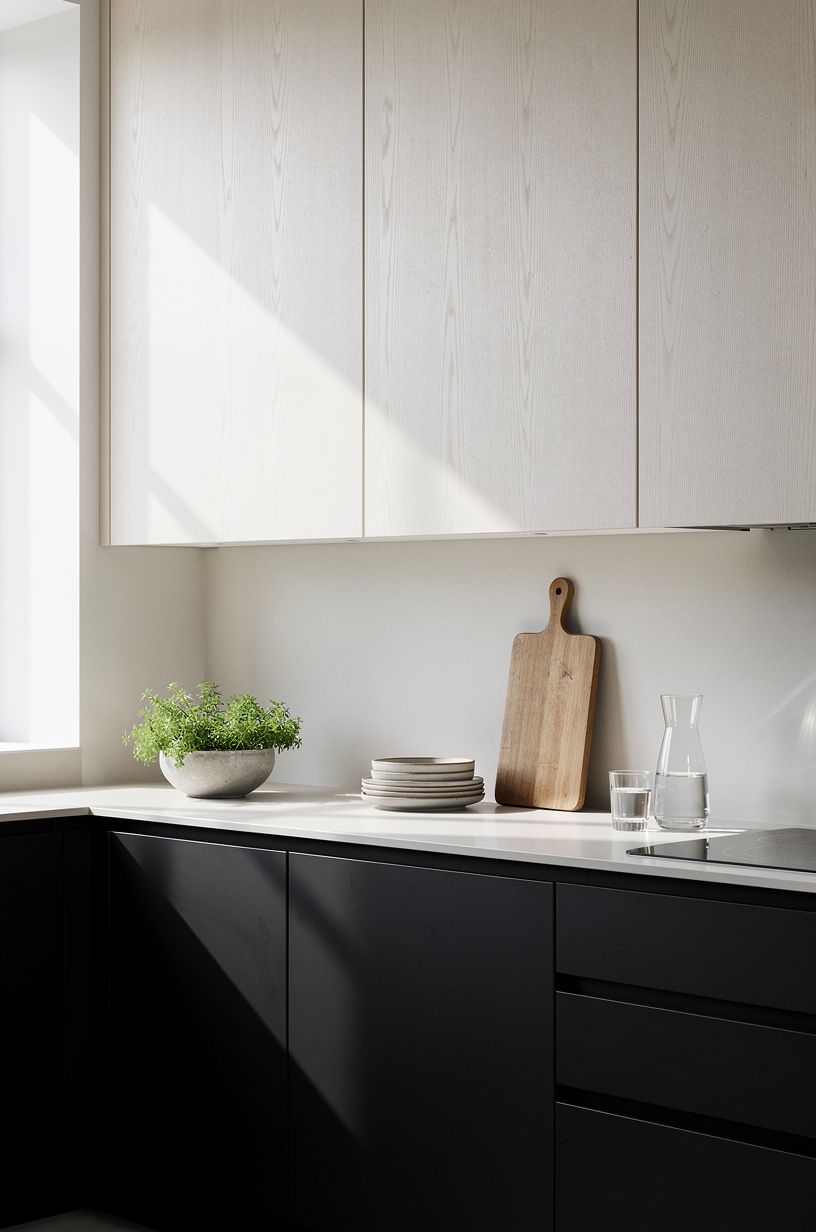
The countertop determines whether your white oak and black kitchen feels warm, cold, busy, or quiet. Typical US costs vary widely: a laminate countertop runs about $10 to $40 per square foot, while quartz commonly runs $60 to $120 per square foot. Choose the surface before finalizing cabinet samples so the undertones work together.
Your budget doesn’t have to push you toward a full remodel. A cosmetic refresh can change the room through paint, hardware, and a backsplash, while a larger project may include new cabinets and appliances. I’d spend first on the surface you touch every day, not on a detail you’ll barely notice.
A calm warm travertine can be beautiful beside oak because it has movement without a mirror-like shine. Leathered granite offers more texture and can hide small marks, while laminate gives you flexibility when the budget is tight. Ask for large samples rather than relying on tiny showroom chips.
Look at the countertop against your flooring, backsplash, and cabinet stain at the same time. A material that seems creamy alone may turn pink beside the oak. You’ll save yourself an expensive surprise by checking the whole palette before fabrication.
19Protect the Work Triangle With Clearances
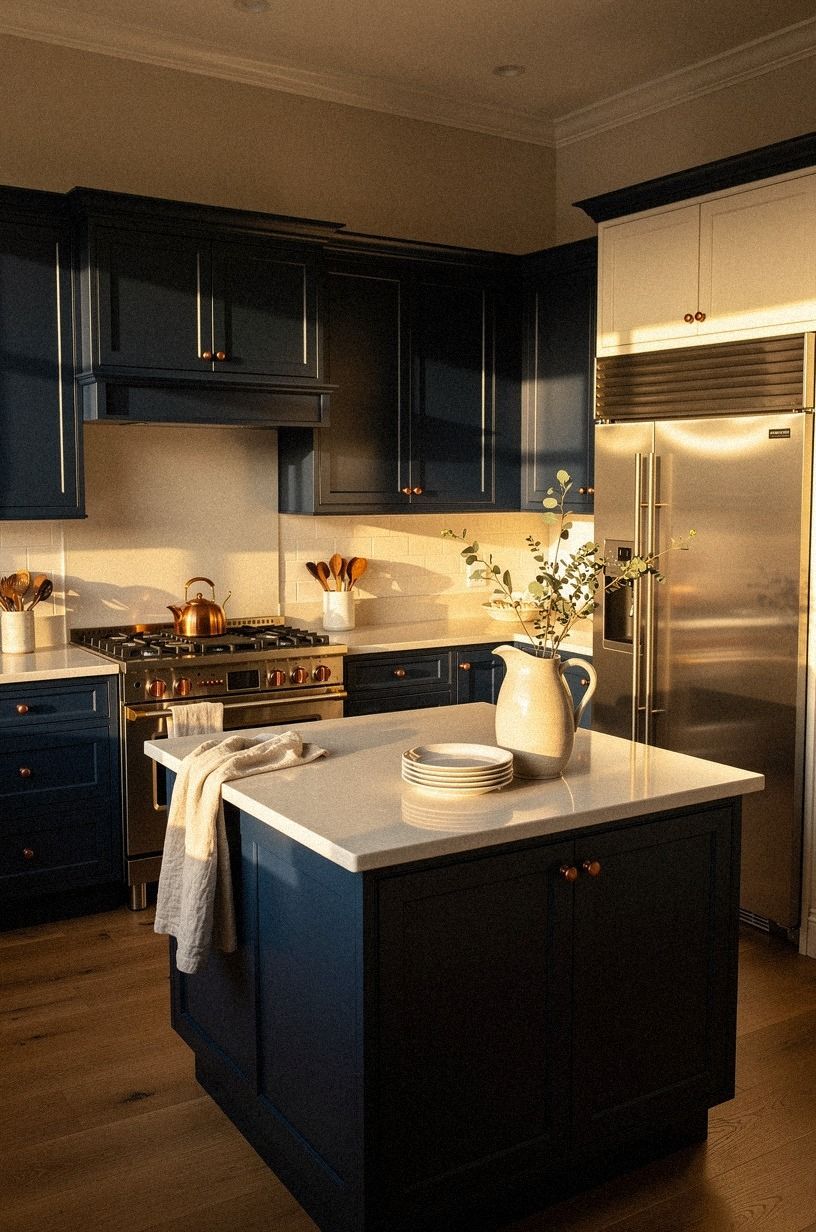
A dramatic kitchen still has to function during a rushed breakfast. Keep 42 to 48 inches around the island, preserve the 36-inch standard counter height, and check that doors can open without colliding. A midnight blue, copper, and ivory palette can support daily movement without blocking it.
Your backsplash, stools, lighting, and storage should all follow the room’s working paths. I’d rather have a smaller island with clear circulation than a massive one that turns the kitchen into an obstacle course. And if you’re remodeling a narrow room, compare these small oak kitchen layouts before choosing a fixed island.
The work triangle still matters, even in a modern open-plan kitchen. Your refrigerator, sink, and cooktop should be close enough to serve one another without forcing you to cross the room constantly.
I’d also leave landing space beside each major appliance. That extra counter area feels invisible until you don’t have it.
Check the swing of the dishwasher, oven, and pantry doors together. A beautiful plan can become frustrating when two doors fight for the same corner. You’ll appreciate a slightly less dramatic layout every morning when coffee, breakfast, and cleanup move smoothly.
The Oak and Black Balance I’d Choose
I’ve lived with enough two-tone kitchens to know that the palette isn’t the difficult part. The difficult part is deciding where the darkness stops.
I once carried black from the island into the upper cabinets, the pendants, and the window trim because I wanted more drama. By evening, the room felt compressed.
The oak was still there, but it had become a thin accent instead of the warmth holding everything together.
Now I’d put black on the island or lower cabinets first, then let white oak occupy the surfaces you see most often. Oak catches the sun, shows the grain, and gives the room a tactile quality that paint can’t provide. Black gives the composition a firm edge.
You need both, but they don’t deserve equal territory.
I’m also less interested in matching finishes perfectly. A slightly uneven zellige tile, a worn brass pull, and a linen stool can make the kitchen feel more honest.
That doesn’t mean every choice should be rustic. The room can be modern, refined, and still show evidence of hands, meals, and ordinary afternoons.
That balance is what makes this palette last beyond one design cycle!
If you’re starting from scratch, choose the countertop and oak sample first. Then test the black finish beside them in your actual room. I’d rather see a soft charcoal that works beautifully than a true black that makes every other material look nervous.
My favorite version has black on the island, white oak on the perimeter, one expressive backsplash, and warm metal used sparingly. It feels confident without becoming theatrical.
More importantly, you can live with it. That’s the real test!
The Questions Worth Answering First
What is the best White Oak and Black Kitchen idea for a small kitchen?
A black island base with white oak shelves is one of the strongest choices for a small kitchen because the dark anchor stays low and the wood keeps the walls open. Use a compact IKEA piece or a slim floating shelf, and protect your 42-inch walking path wherever possible. I’d keep the backsplash quiet so the room doesn’t feel crowded.
Where can I buy White Oak and Black Kitchen pieces on a budget?
IKEA, Wayfair, and Target offer useful starting points for cabinet hardware, stools, lighting, and wood-look storage. You can also search Facebook Marketplace or thrift stores for solid wood pieces.
Your best savings usually come from reusing what you own, then changing the finish. These small oak kitchen ideas can help you decide where a smaller investment will have the most impact.
How much does a White Oak and Black Kitchen makeover cost?
A cosmetic refresh typically costs $300 to $1,500 in the US for paint, hardware, and a peel-and-stick backsplash. A mid-range refresh runs $3,000 to $12,000.
You can keep costs lower by preserving cabinet boxes and changing only visible surfaces. I’d price the countertop early because it can shift the entire budget.
Can I create a White Oak and Black Kitchen on a budget?
Yes, and you can start with paint, hardware, and lighting instead of replacing cabinets. Use Benjamin Moore White Dove, matte black pulls, and warmer bulbs, then add one oak shelf if the budget allows.
Those changes give you contrast without requiring a full remodel. I’d make one strong update at a time and live with it before adding another.
Is White Oak and Black Kitchen style worth it in a small space?
Yes, because the black can define one low focal point while white oak reflects light above it. Keep upper cabinets pale, use a slim counter, and avoid dark tile on every wall.
Your small kitchen will feel more layered when the contrast has a clear boundary. I’d also prioritize drawer storage and generous circulation over a large island.
Is White Oak and Black Kitchen style a good idea for a rental?
Yes. Try removable black cabinet film, a peel-and-stick backsplash, tension-rod storage, and hardware you can reinstall later.
Keep the original pulls in a labeled bag, and choose changes that won’t damage the doors or walls. These rental-friendly oak kitchen updates can stay reversible.
I’d begin with lighting and hardware because both changes are fast to undo.
Where I’d Start First
If I had to pick one, I’d start with the black island base. It gives your kitchen a strong center without darkening every wall, and the white oak around it keeps the room warm. Pin the idea for later and compare it with these showstopping oak island layouts before you commit.
Then I’d order large samples of the oak, countertop, backsplash, and black finish. Put them together in your kitchen, watch them through one full day, and notice which surface still feels beautiful at night. That’s the combination you’ll want to live with.