
 by
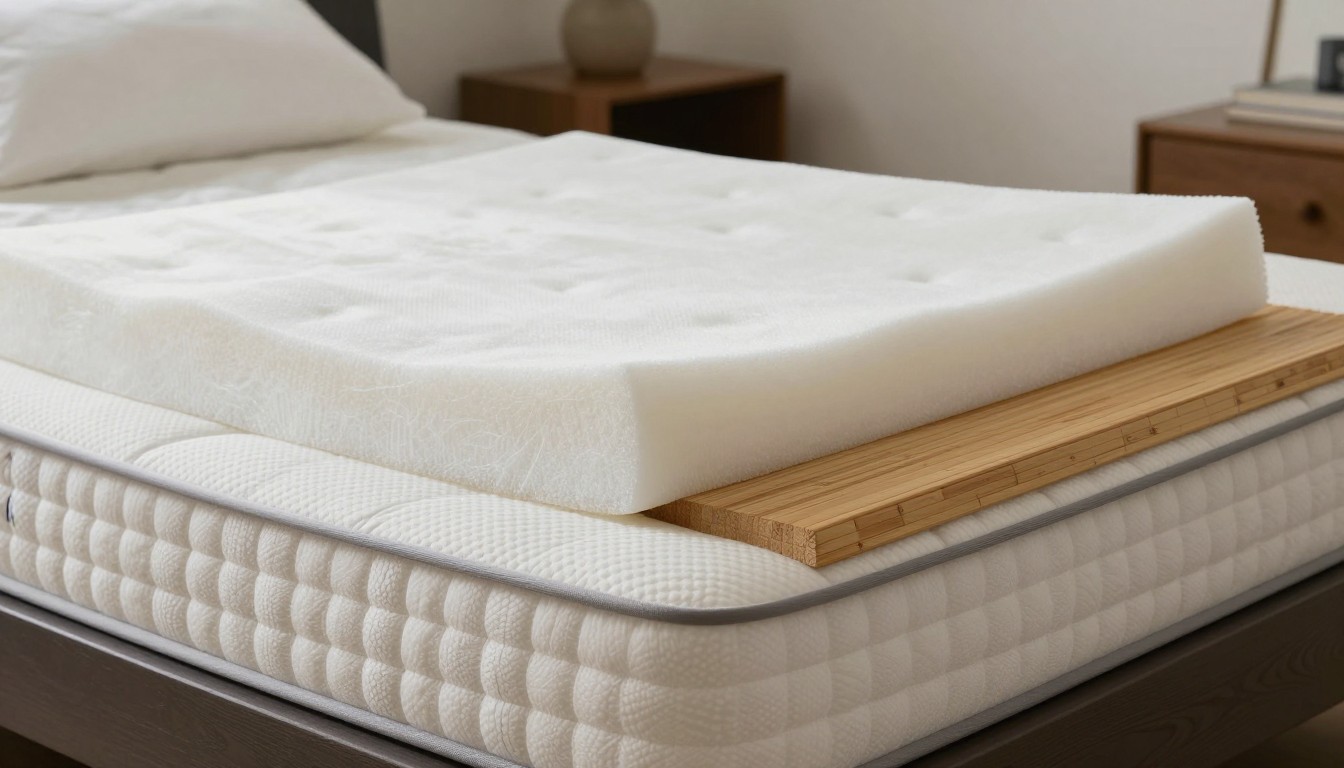
by Quick answer: They aren't rivals. High density describes the foam inside a topper. Bamboo usually describes the fabric on the outside. Compare foam density first, then decide whether you want a bamboo-derived cover on top of it.
- High density is a foam specification: heavier foam per unit of volume, slower recovery, longer service life.
- Bamboo is a textile input, spun into viscose or rayon for a cover or a fiber fill, not a support material.
- Published comparisons such as Slumber Search's bamboo-infused versus high-density foam guide treat bamboo as a comfort and cooling layer rather than a structural one.
Updated July 2026 · Reviewed for accuracy
Most shoppers ask this question because two product pages sit side by side and seem to be selling opposite things. They aren't. I've spent years pulling toppers apart in my head by their spec sheets, and the honest answer is that one of these words tells you how the topper will hold your hips at three in the morning, and the other tells you what your fitted sheet slides over.
So the useful comparison isn't bamboo versus memory foam. It's bamboo-covered versus bare, and dense foam versus soft foam. Here's how to read both.
The short version: a foam spec versus a fabric
High density memory foam is viscoelastic polyurethane foam with more material packed into the same volume. That's it. Density is measured by weight per volume, and it's a durability and support number, not a firmness number. A dense foam can feel plush or firm depending on how it's formulated. What density predicts is how long the foam keeps its shape and how deliberately it responds when you roll over.
Bamboo, in bedding, is almost never a foam. Bamboo pulp gets chemically processed into viscose or rayon fiber, then woven into a cover or blown into a fiber fill. Adore Earth's bamboo versus memory foam topper comparison and EcoToppers' guide both frame bamboo as the surface material and memory foam as the support material, which matches how the products are actually built.
The trap. A guide on bamboo toppers makes the point plainly: many products marketed as bamboo mattress toppers are really bamboo-covered mattress pads, thin quilted fiber layers with no meaningful foam in them. That's a different product class than a memory foam topper, and it will not change how your mattress supports you.
What "high density" actually means once it's on your bed
Denser memory foam has more cell walls per unit of volume. More cell walls means more material resisting compression, so the foam sinks slower, comes back slower, and takes longer to develop a body impression. That slow response is what people describe as the classic hug. It's also why dense foam is the standard pick for sleepers who want their shoulder and hip to sink while their waist stays supported.
The cost of that density is airflow and weight. Tight cell structure traps body heat and moves it out slowly, which is why manufacturers add gel, graphite, copper or open-cell structures to dense foams. A dense topper is also genuinely heavy to lift and rotate. If you've ever tried to flip a queen topper alone, you know the difference between low and high density before you ever lie down on it.
Low density foam does the opposite. It softens fast, breathes a little better, costs less, and loses its shape sooner. A topper density guide published by ecotoppers.com.au and similar buying guides consistently tie lower density to shorter useful life. That trade is the whole reason density gets printed on spec sheets in the first place.
What density does and doesn't tell you
- Does tell you: expected durability, depth and slowness of the hug, how well the foam resists permanent dents.
- Does tell you: roughly how warm it will sleep before any cooling additive is factored in.
- Doesn't tell you: firmness. That's ILD, a separate spec, and dense foams exist across the softness range.
- Doesn't tell you: anything about the cover, which is where bamboo enters the picture.
What you're actually buying when a topper says bamboo
Three different products hide behind that word, and the price gap between them is enormous.
The first is a bamboo viscose cover stretched over a foam core. This is the most common honest version. The foam does all the support work and the bamboo-derived fabric handles feel, moisture movement and washability. Foam Fanatic's bamboo memory foam comparison describes this build as memory foam with a breathable bamboo-based surface, which is exactly right.
The second is a bamboo fiber fill topper, a quilted pad stuffed with bamboo-derived or blended fiber. Soft, light, cheap, and it flattens under a hip within months. It adds a layer of softness to a mattress that's slightly too firm. It will not fix sagging support.
The third is bamboo charcoal infused into the foam itself. Here bamboo is a marketing input rather than a textile, added as a charcoal powder for odor and moisture claims. Slumber Search's bamboo-infused comparison pages treat these infused foams as a variant of foam, judged on the same terms as any other foam, which is how I'd judge them too.
Side by side: how the two behave under a body
| Trait | High density memory foam | Bamboo topper (cover or fiber fill) |
|---|---|---|
| What it is | Viscoelastic foam, a support and pressure layer | Bamboo-derived viscose fabric or fiber, a surface layer |
| Pressure relief | Deep and contouring, the foam molds around shoulder and hip | Cushioning only, no meaningful contour from fiber fill |
| Temperature | Warmer by nature, cooler if gel, graphite or open-cell treated | Breathable and moisture-moving at the surface |
| Motion isolation | Strong, dense foam absorbs movement | Negligible on its own |
| Durability | The longest lasting topper category when density is genuinely high | Fiber fill compresses and thins; a cover outlives the fill |
| Care | Spot clean only, foam cannot be machine washed | Removable covers and quilted pads are usually washable |
| Weight | Heavy, awkward to move alone | Light, easy to strip and wash |
Read that table as a shopping list rather than a scoreboard. The strong column for one is the weak column for the other, which is why the best-built products in this category combine them: dense foam underneath, bamboo-derived cover on top.
Which one fixes your actual complaint
Start with the symptom, not the material. A topper solves a narrow set of problems, and picking the wrong material means you paid to fix something that wasn't broken.
Your mattress feels too hard and your hip aches. That's a pressure problem, and only foam solves it. Dense memory foam sinks under the heaviest points and holds the rest of you level. I've written more on the construction side of that in my guide to choosing a memory foam topper for back pain, where density and thickness matter more than the marketing label.
You wake up hot and slightly damp. That's a surface problem. Bamboo viscose moves moisture off skin better than a bare foam surface, and a washable bamboo-derived cover is a real quality-of-life upgrade. If your mattress support is otherwise fine, a cooling cover or a thin bamboo pad may be all you need.
Your bed sits too low or feels thin. That's a height problem, and fiber fill won't hold the gain. Dense foam will. I break down the thickness and density math in my piece on using a topper to raise mattress height.
You want contour without the slow sink. Then neither answer is complete, and latex belongs in the conversation. Latex responds faster and sleeps cooler than dense memory foam by structure, not by additive, which I cover in my latex versus memory foam topper comparison.
My rule. If your mattress has a visible dip, a topper of any material is a patch, not a repair. Foam bridges a soft spot for a while, bamboo fabric does nothing for it at all. Fix the mattress or the foundation instead.
How to read a topper listing without getting played
The word bamboo in a product title tells you nothing about what's under the fabric. These are the questions I want answered before I take a listing seriously.
- Is there foam in it at all? If the description only mentions quilting, fill weight and a cover, it's a pad, not a topper.
- Is the density published? A brand confident in its foam prints the number. Silence on density usually means the answer isn't flattering.
- Is bamboo the cover or an infusion? Bamboo viscose is a textile. Bamboo charcoal is a foam additive. They do different jobs and get confused constantly.
- Is the cover removable and washable? This is the single most underrated spec on a topper. Foam can't go in a machine, so a zip-off cover decides how the thing ages.
- What's the cooling mechanism? Gel, graphite, copper and open-cell structures are engineering. A bamboo label alone isn't a cooling claim.
- What's the return path? Toppers expand and hold body impressions fast, so a generous trial window matters more here than on most bedding. Check the current policy on the brand's own site before ordering.
Answer those and the bamboo versus foam question dissolves. You end up choosing a foam density, then choosing a cover fabric, which was always the real decision. For anyone who wants the combined build without hunting through spec sheets, graphite-infused memory foam toppers with a removable cover, such as the Saatva Graphite Topper, are one example of that pairing; check the current details and pricing on the manufacturer's own page. My broader breakdown of foam construction lives in my guide to putting a topper on a memory foam mattress.
What wears out first, and how fast
Foam fails by losing rebound. Cell walls fatigue under repeated compression, the foam stops springing back fully, and a shallow trough forms where your hips land. Density is the main defense, which is why high density foam holds its shape longer than the cheap stuff sold under the same memory foam name.
Fiber fill fails differently and faster. Loose fiber migrates away from pressure points and clumps at the edges of each quilted channel. Nothing is technically broken, the loft just isn't where your body is. Fluffing helps for a while and then stops helping.
Bamboo viscose fabric fails last, and mostly from washing. It's soft and it pills less than cheap microfiber, but repeated hot washes and high-heat drying break down the fiber. Cold wash, low heat, and a bamboo cover will outlive the foam it's wrapped around.
That ordering is the practical reason I lean toward dense foam plus a washable bamboo-derived cover rather than either alone. You replace the layer that dies first without replacing the whole product.
FAQ
Is bamboo memory foam the same as high density memory foam?
No. Bamboo memory foam means memory foam that is either wrapped in bamboo viscose fabric or infused with bamboo charcoal. High density describes the weight of the foam itself. A bamboo memory foam topper can be low density or high density, and the listing has to tell you which.
Does a bamboo topper sleep cooler than memory foam?
At the surface, usually yes, because bamboo viscose is breathable and moves moisture off skin. Deeper down, a fiber pad has no cooling mechanism for trapped body heat. Published comparisons from Adore Earth and EcoToppers both credit bamboo for breathability while crediting foam for contouring, which lines up with how the materials behave.
Which one lasts longer?
Genuinely high density memory foam, by a clear margin. Fiber fill compresses and thins under repeated pressure, while dense foam resists permanent impressions. Low density foam is the worst of both, soft early and dented soon after.
Can I put a bamboo cover over a memory foam topper?
Yes, and I'd encourage it. A washable bamboo-derived cover protects the foam from sweat and skin oils, adds a cooler surface feel, and can be stripped and cleaned in a way foam never can. Choose a deep-pocket cover so it doesn't compress the foam's contour.
Which is better for side sleepers?
Dense memory foam. Side sleeping concentrates weight on the shoulder and hip, and only a contouring layer lets those points sink while keeping the waist supported. A bamboo fiber pad adds softness at the surface without redistributing load, so the pressure point stays a pressure point.
Is bamboo viscose an eco-friendly choice?
The plant grows fast with modest input, but turning bamboo pulp into viscose is a chemical process, and the environmental profile depends on the manufacturing method and certifications rather than the raw crop. Look for third-party certification on the finished fabric instead of trusting the word bamboo on a label.
ONE OPTION WORTH COMPARING
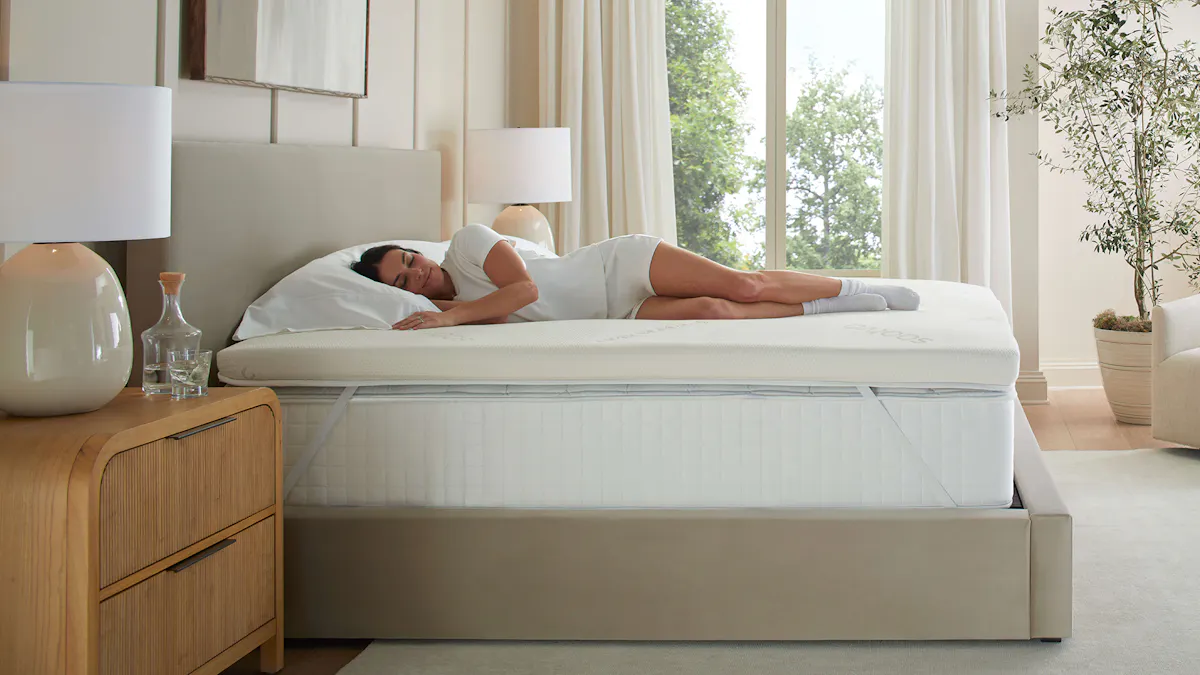
Shopping as well as reading? Here is one current option worth comparing: the Saatva Graphite Topper. Check today’s price, sizing and return terms on the official product page before you order.
Saatva Graphite Topper
- Graphite-infused memory foam, per saatva.com
- 180-night trial
- Secure anchor bands, fits deep mattresses
The bottom line
Stop treating this as a versus question. High density is the answer to how long will this hold my body and how deeply will it cushion me. Bamboo is the answer to what does the surface feel like and can I wash it. Pick the foam density that matches your complaint, then pick the cover that matches your climate. Buy a bamboo-labeled product without checking what's inside it, and there's a fair chance you bought a quilted pad expecting a topper.