

 by
by The Nancy Meyers aesthetic is a warm, collected room built from practical comfort, soft light, and things that look loved instead of showroom-new. I've chased that feeling with too many matching accessories, and the room always fell flat. You'll get farther with old wood, useful textiles, and one confident paint color. Start there!
- Layer the Three-Texture Welcome
- Paint the Walls with a Soft, Familiar Neutral
- Mix the Two-Wood Rule into Your Nancy Meyers House Aesthetic
- What Makes the Nancy Meyers Aesthetic Feel Lived In?
- Anchor the Room with a Deep, Useful Sofa
- Hang Art at the Human Height
- Build the Three-Source Light Stack
- Frame Windows with Floor-Length Linen
- Choose Open Shelves Over Upper Cabinets
- Can a Small Room Carry This Nancy Meyers Look?
- Style the Working Kitchen with Everyday Beauty
- Set the Budget Before You Buy the Nancy Meyers Homes Palette
- Borrow the Dream House Decor Palette from Nature
- Pair Collected Objects with Empty Space
1Layer the Three-Texture Welcome
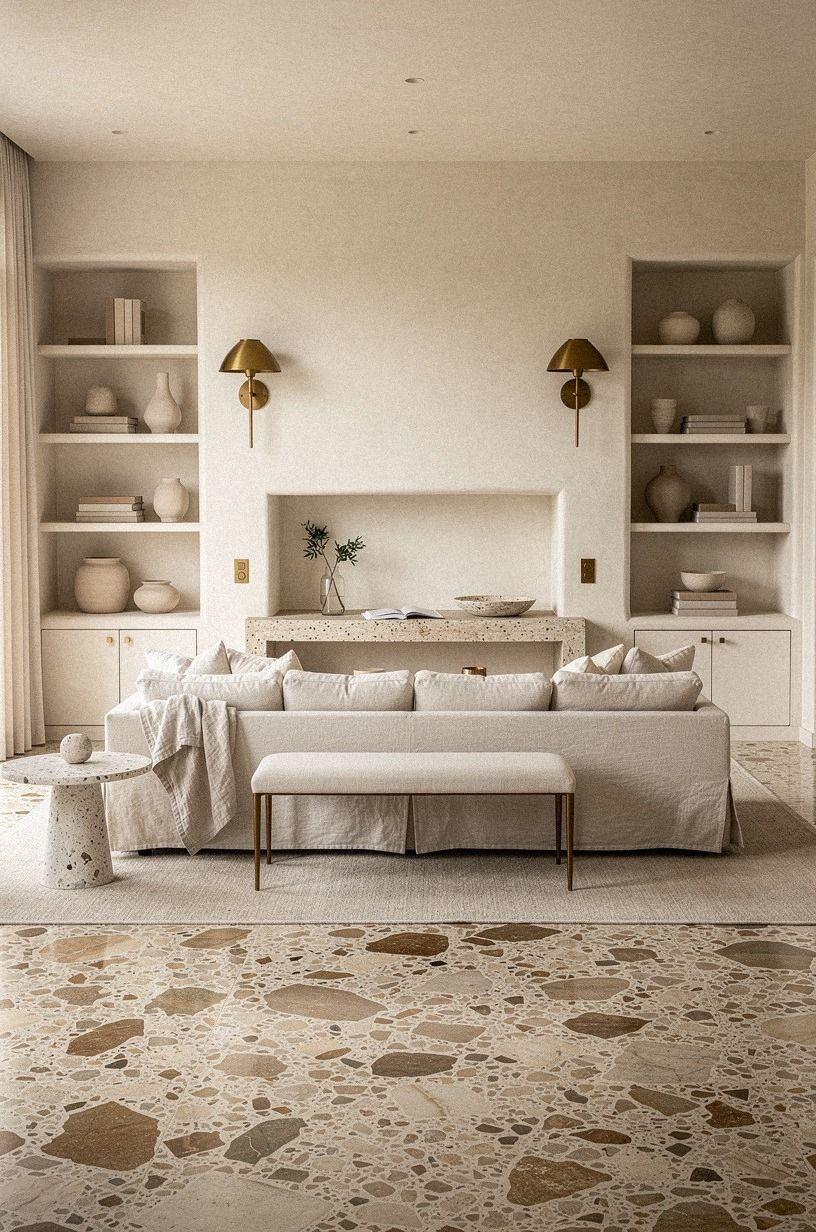
A Nancy Meyers room usually feels inviting before you notice why. Start at the entry with three textures you can see and touch: clay-toned linen, aged brass, and oversized-chip terrazzo.
Your eye should move from the textured terrazzo surface to the warm metal, then to the soft fabric on a nearby chair. I don't want a matching set here.
Matching furniture makes your home look ordered, but it rarely looks lived in.
Keep your first layer practical. A shallow IKEA HEMNES console can hold keys, mail, and a small ceramic bowl without swallowing the walkway.
Add a runner with a low pile so your door can clear it. You'll want at least 30 inches of comfortable passage if your space allows it, but your room should still feel relaxed rather than measured with a ruler.
The finishing detail is a small lamp with a warm bulb and a framed photograph leaning behind it. That little pool of light changes the arrival completely.
If you're building this mood through the whole house, browse these Nancy Meyers living room ideas for cozy timeless comfort, then choose one detail you can repeat. Your home needs a thread, not a uniform.
2Paint the Walls with a Soft, Familiar Neutral
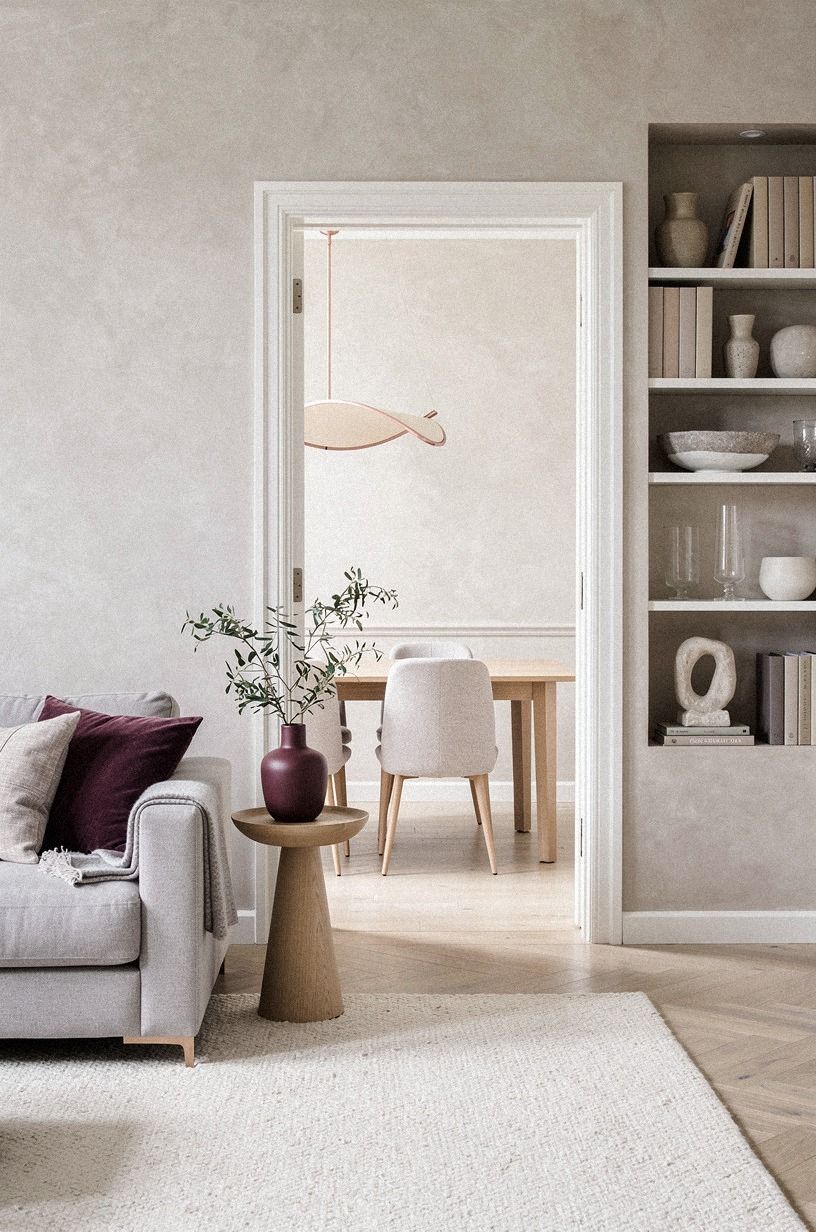
The right paint does more work than a cart full of accessories.
3Mix the Two-Wood Rule into Your Nancy Meyers House Aesthetic
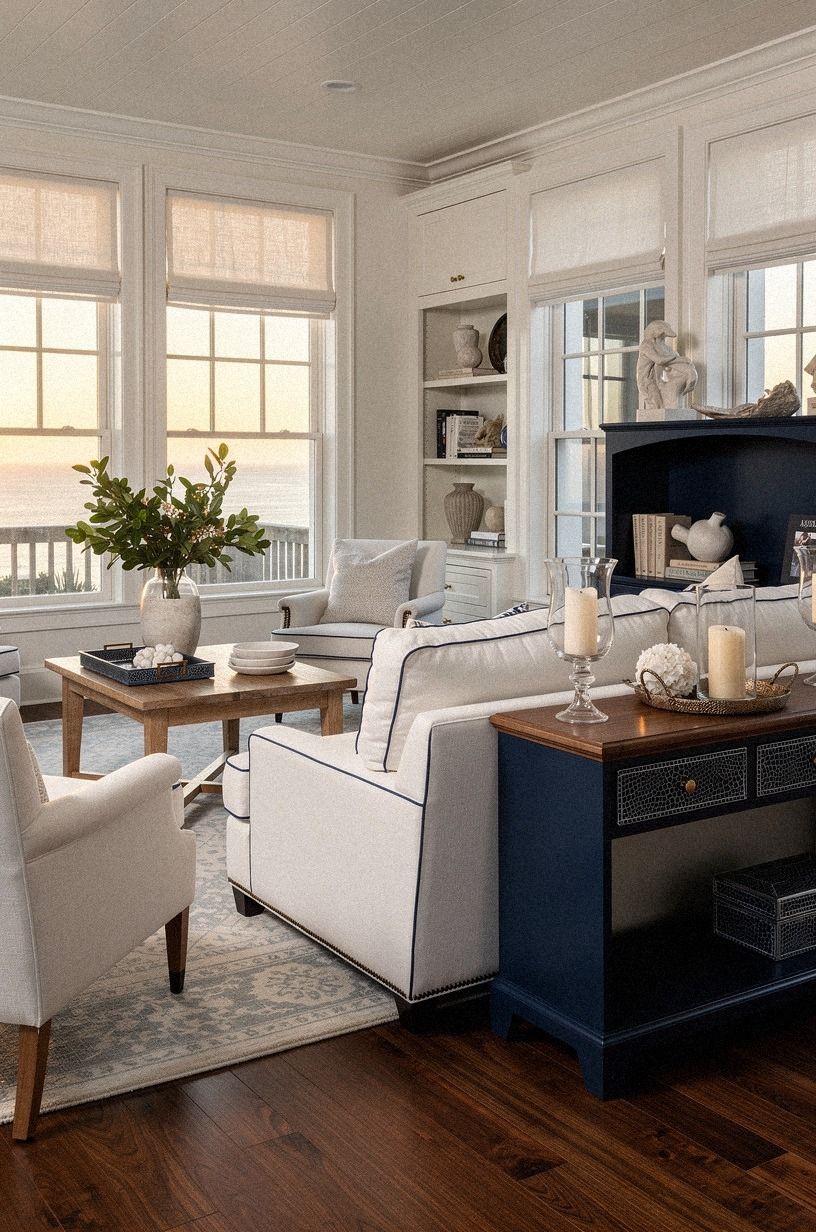
The Two-Wood Rule is simple: use navy and white for structure, then bring in walnut for contrast. Think navy-painted cabinetry with walnut frames behind it and a small shagreen accent.
Your room will feel collected because the colors and woods relate without looking like they came from the same catalog. I wouldn't combine five finishes.
That reads busy, not layered.
Try a walnut console table with an older white side chair, or pair a secondhand walnut cabinet with a dark-stained picture frame. The grain should be visible from across the room. You don't need a glossy finish, and you shouldn't hide every knot beneath a thick stain.
The sensory part matters. Run your hand across the table before you decide; a dry, open grain feels more welcoming than a slick lacquered top.
If you're working with a small room, keep the largest piece light and let the darker wood appear in smaller doses. Your eye will register depth without making the floor plan feel cramped.
More ideas are waiting in this guide to the Nancy Meyers aesthetic and a cozy lived-in look.
4What Makes the Nancy Meyers Aesthetic Feel Lived In?
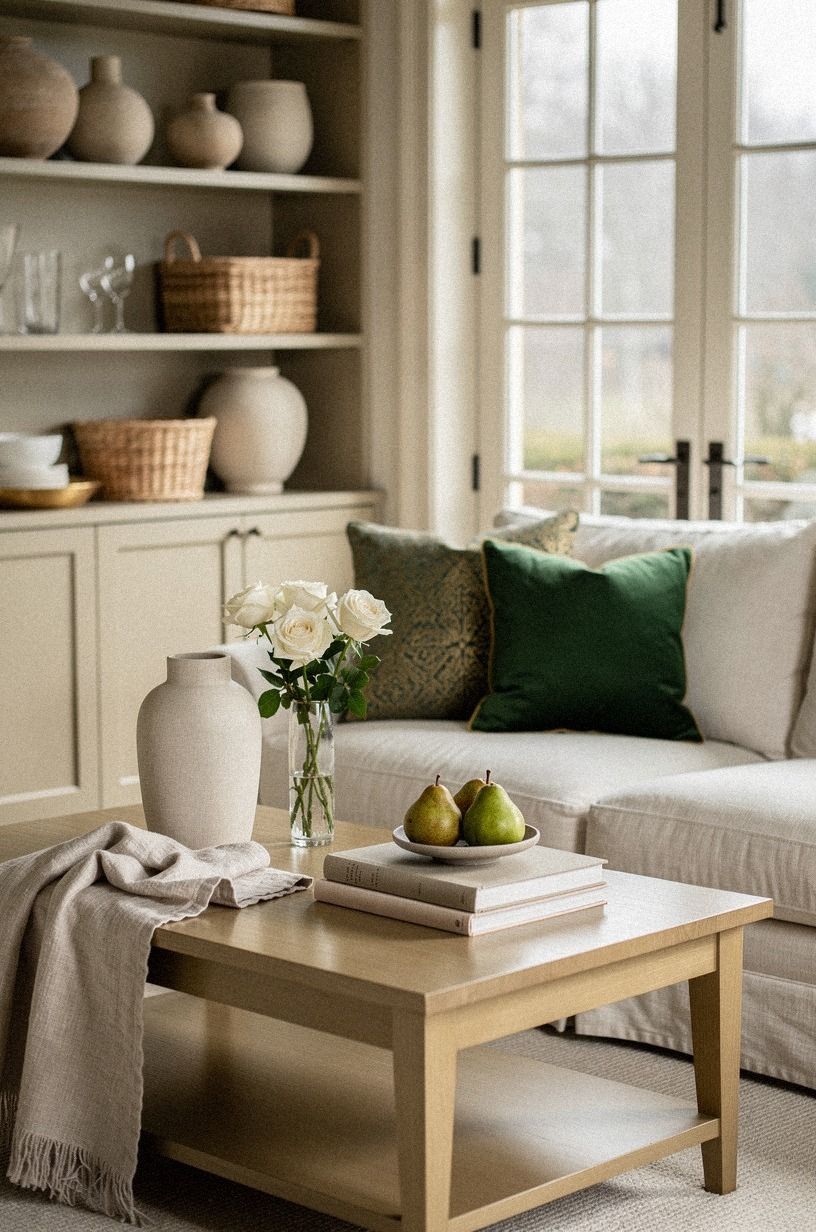
The lived-in quality comes from visible use, not random clutter.
5Anchor the Room with a Deep, Useful Sofa
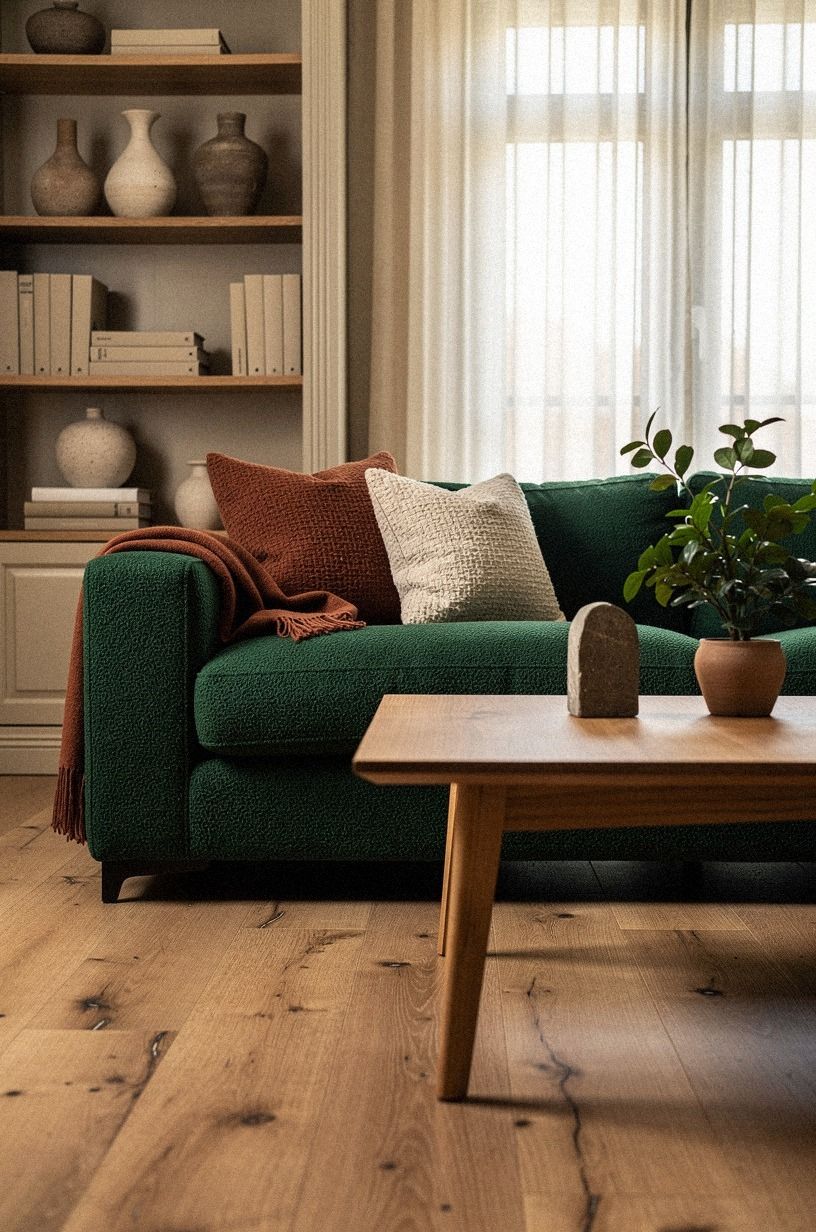
A sofa sets the emotional temperature of your living room, so don't choose it from a tiny screen image. You need enough depth to sit sideways with your feet tucked up, but your knees shouldn't disappear into the cushions. A forest-green organic bouclé sofa gives you softness, and the tactile cover matters more than a precious fabric sample.
I like a rust pillow and a natural oak side table when a room needs warmth, but I'd skip them if your space already has hard floors, sharp tables, and little fabric. Oak can feel stark without something soft nearby. You can soften it with a 20-by-20-inch pillow in deep bouclé and a folded wool throw, but your base still needs some give.
Place the front legs of your sofa on the rug, even if the rug doesn't reach every wall. Your furniture should overlap the rug rather than float around it.
I made the mistake of using a small rug because it cost less, and the room looked chopped into islands. You can spend less on art and still feel rich, but a rug that's too small will fight you every day.
6Hang Art at the Human Height
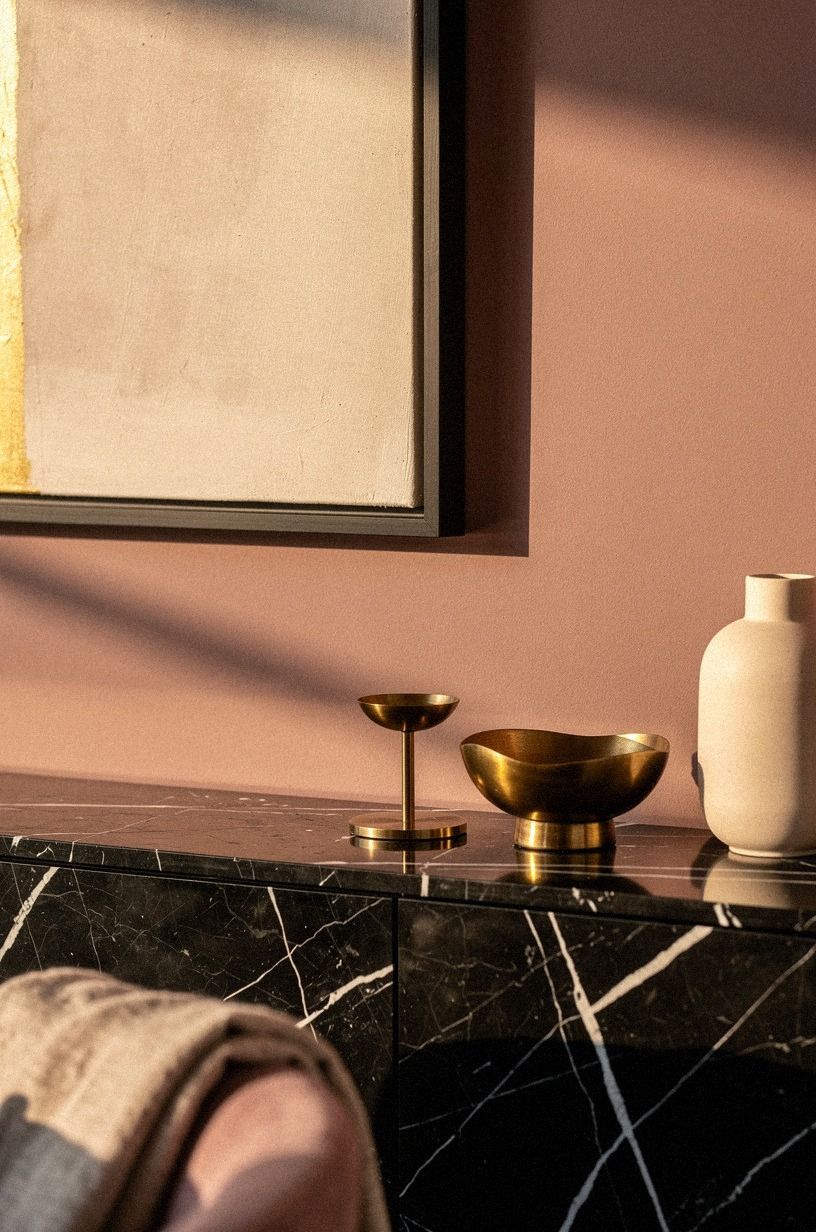
The Human Height Rule keeps art connected to the people living below it. Hang the center of your main piece about 57 to 60 inches, or 145 to 152 centimeters, from the floor.
Your eye should land on the image without craning upward. I don't care if a tall ceiling tempts you to push everything high.
Empty wall above art is usually more elegant than art near the ceiling.
Use a Nero Marquina black marble ledge beneath a quiet landscape, then add one smaller work nearby with a different subject. Your wall shouldn't read as a mathematical grid. Try a family photograph, an old botanical print, or a charcoal sketch with visible paper texture.
And don't buy a huge statement print just because the wall is wide. Two modest pieces can feel more personal and cost less.
If you're styling a bedroom, a soft pair above the nightstands will create calm without turning your bed into a hotel display. I like this Nancy Meyers bedroom direction when you want the room to reflect how you rest, not just how it photographs.
7Build the Three-Source Light Stack
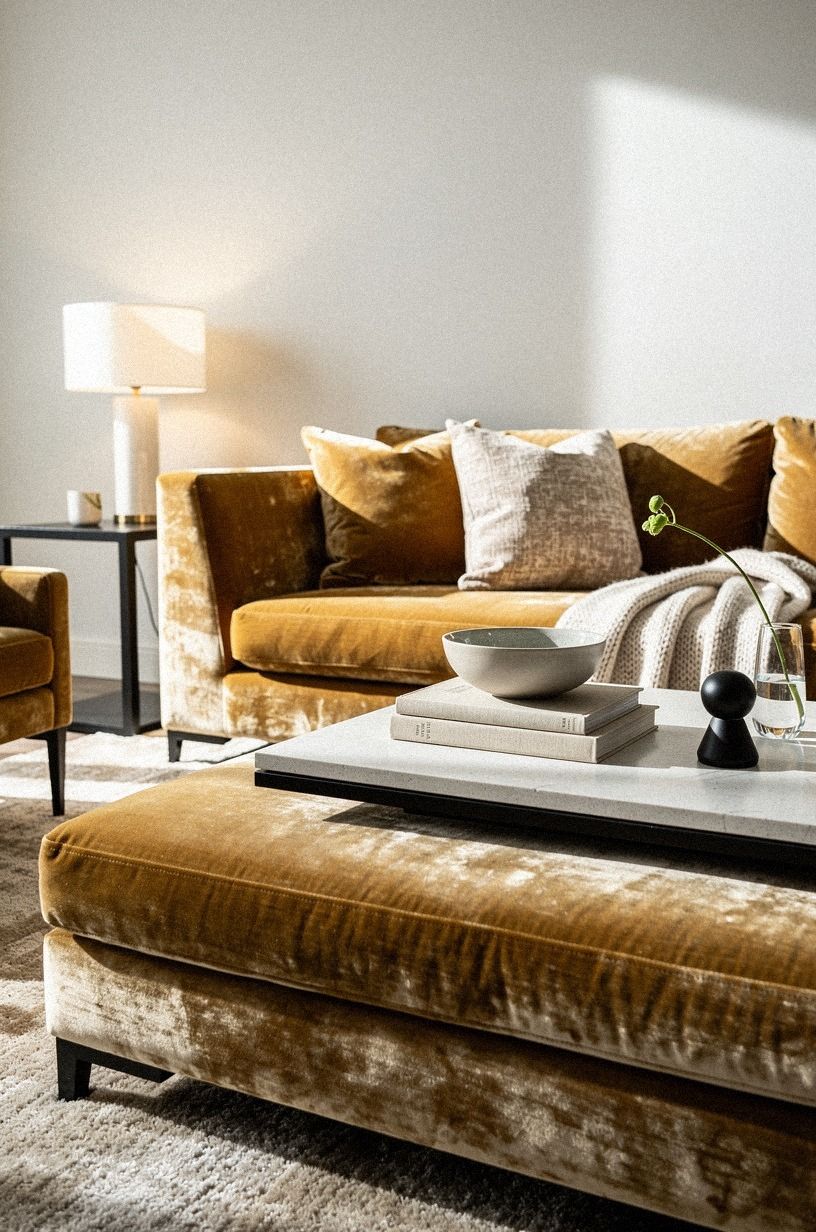
Every room needs three light sources: overhead, task, and ambient. That's the Three-Source Light Stack, and it works because your room won't depend on one harsh ceiling fixture after dark. Start with a dimmable pendant or flush mount, then add a reading lamp and a low table lamp.
You should see separate pools of light, not one bright wash.
Choose matte black when your room has warm white walls and camel upholstery. It has more depth than polished chrome, and the dark surface looks gentle against soft textiles. A deep-pile mohair velvet cushion on a nearby chair can give you tactile warmth, but I'd skip anything too shiny if your room already has glass and metal.
Your bulbs matter as much as the shades. Use warm light, then position the lamps so the glow lands on fabric, books, or a painted wall.
I once aimed a lamp directly at a mirror, and the reflection was so sharp that nobody wanted to sit nearby. If you're reworking the kitchen too, see these Nancy Meyers kitchen ideas for a warm inviting room.
Your evening light should make you want to stay.

8Frame Windows with Floor-Length Linen
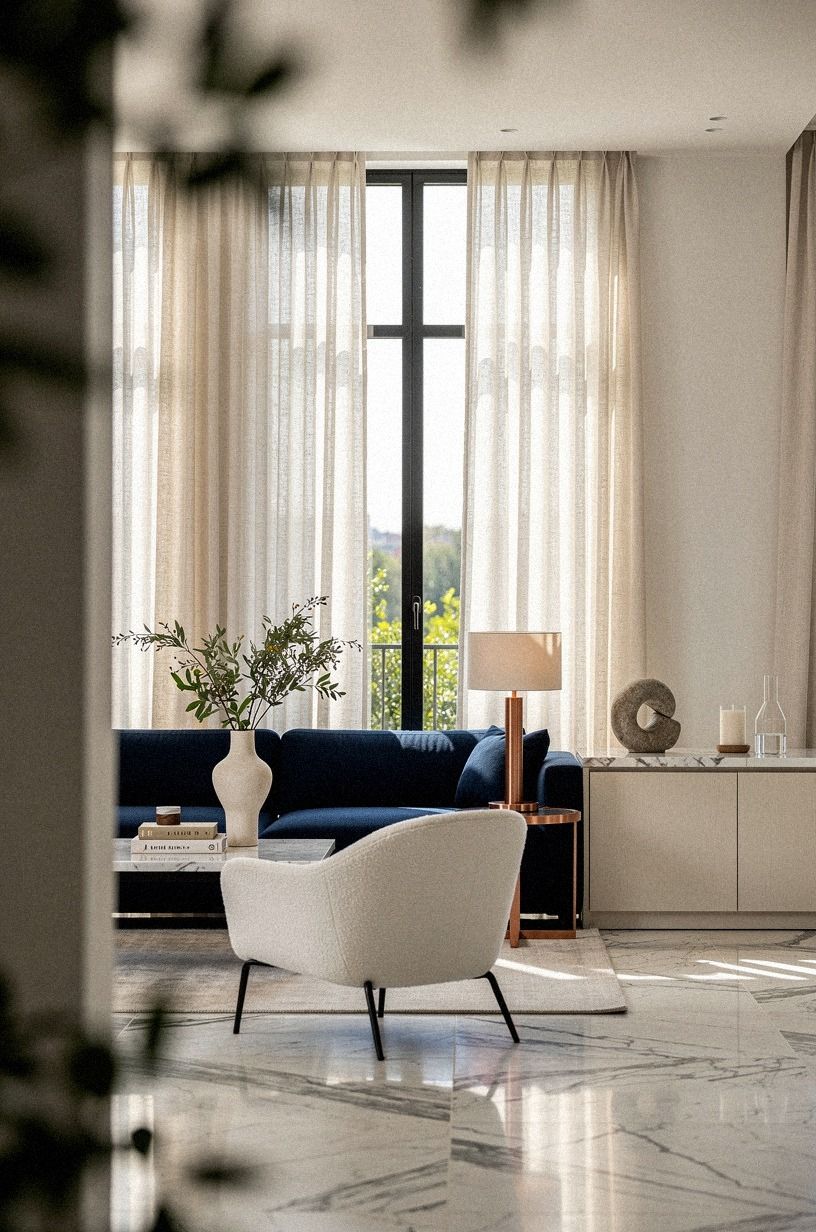
Curtains make a room feel finished when they begin high and fall all the way down. Hang the rod 4 to 6 inches, or 10 to 15 centimeters, above the frame, then let the fabric reach the floor.
Your windows will look taller, and the wall will feel softer. I prefer a slight break at the floor over a puddle that collects dust.
Choose ivory linen drapes with a copper rod, then bring in midnight blue through a nearby cushion or upholstered chair. A small Carrara marble sill or side table can add a quiet surface without making the room feel formal.
The weave should let daylight filter through without making the room feel exposed. You don't need a heavy blackout panel in every space, but your bedroom deserves a lining if early light wakes you.
Use a simple copper or dark wood rod rather than a decorative finial. The curtain should frame the view, not compete with it.
If your budget is tight, buy ready-made panels and hem them locally. A cheap panel with the right length will look more considered than expensive fabric stopping six inches above the floor.
Your room will feel calmer almost immediately!
9Choose Open Shelves Over Upper Cabinets
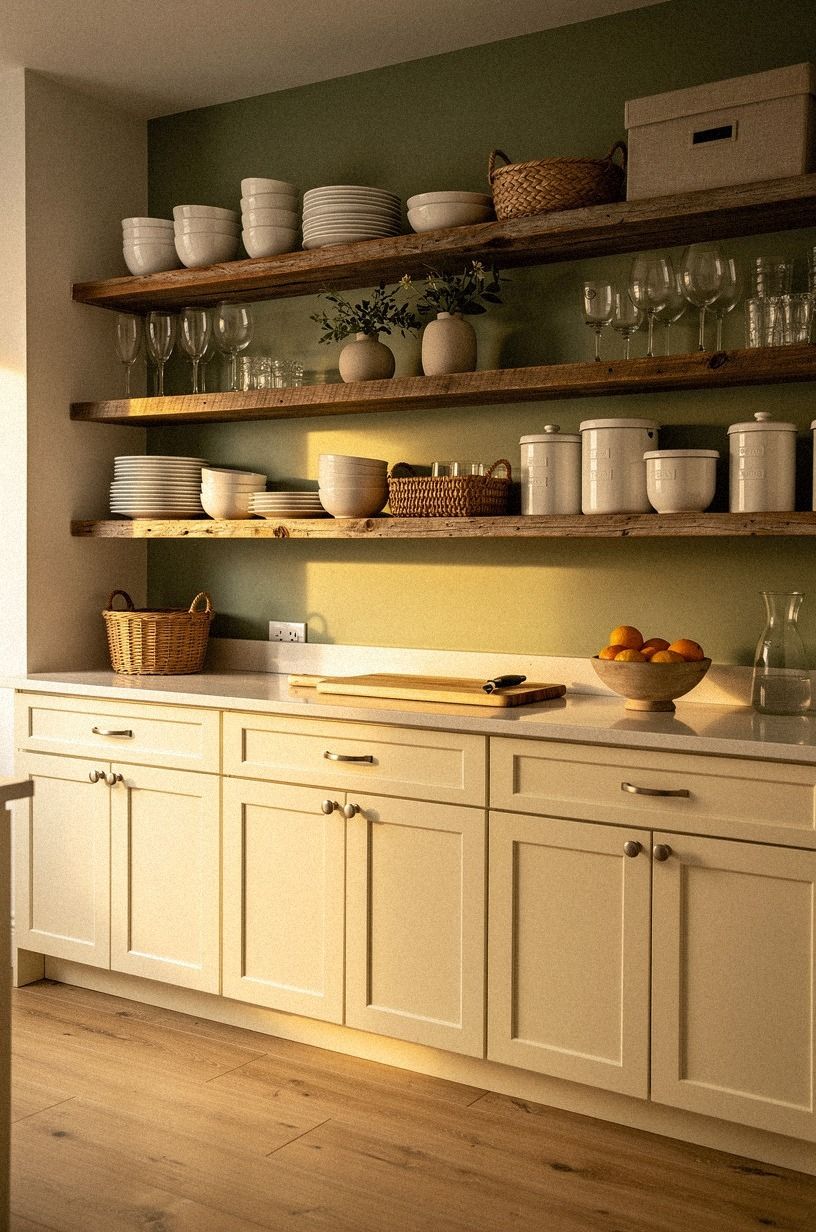
Open shelves work in the Nancy Meyers kitchen because they show useful objects at hand.
10Can a Small Room Carry This Nancy Meyers Look?
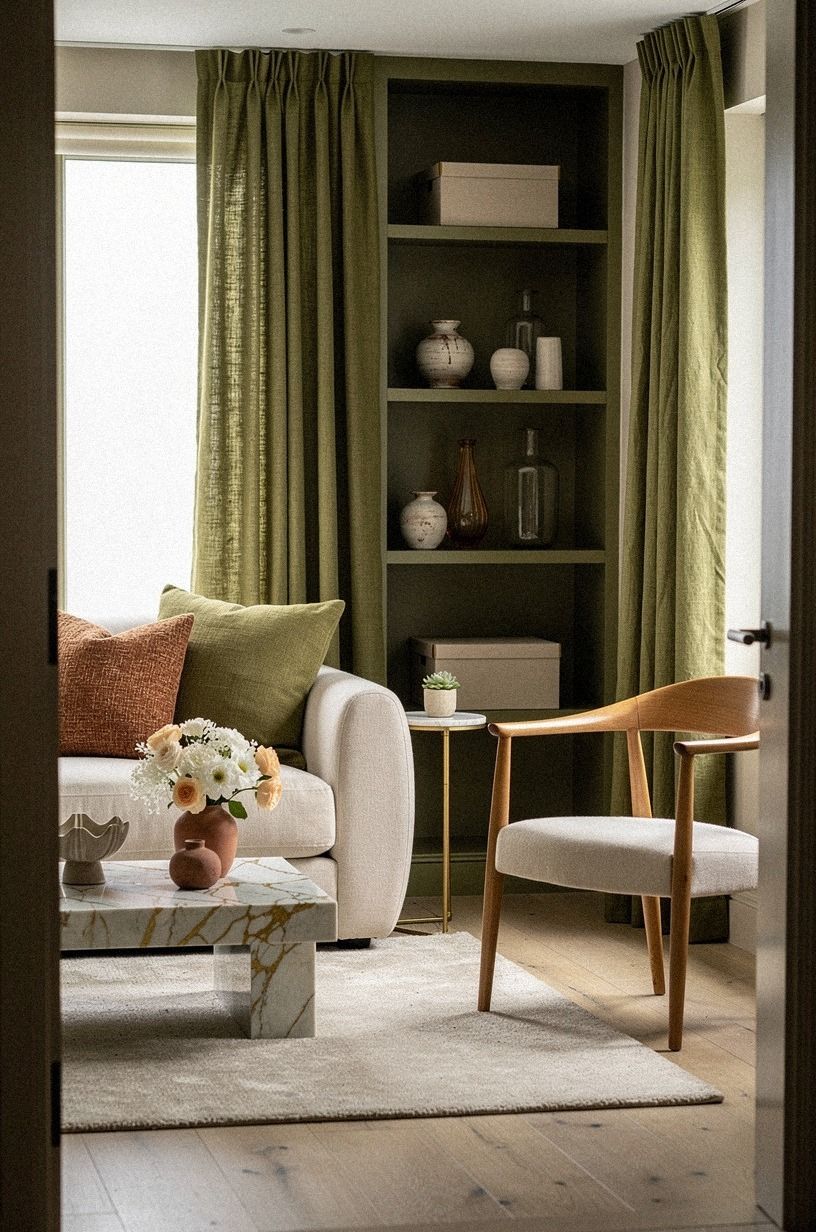
Yes, and a small room can make the style feel even more convincing because every piece has to earn its place. Choose one deep color, one soft textile, and furniture with visible legs.
Your floor will continue under the pieces, which makes the room feel less blocked. I wouldn't use a tiny sofa and three little chairs just because they seem flexible. Too many pieces create visual chatter.
Try a Calacatta marble pedestal table in a dining corner, or use a narrow console behind a compact sofa. Your furniture should have more than one job. A bench can provide seating, hold a basket, and create a landing spot for shoes.
Keep the palette close in value so the room feels peaceful rather than patched together.
Mirrors can help, but I don't want a wall of reflections. Place one opposite a window or lamp, then let the rest of the room provide the character. If you're arranging a bedroom in limited square footage, your nightstand can be a small stool and your lamp can mount on the wall.
See these Nancy Meyers laundry room ideas for another lesson in making ordinary spaces feel useful and warm.
11Style the Working Kitchen with Everyday Beauty
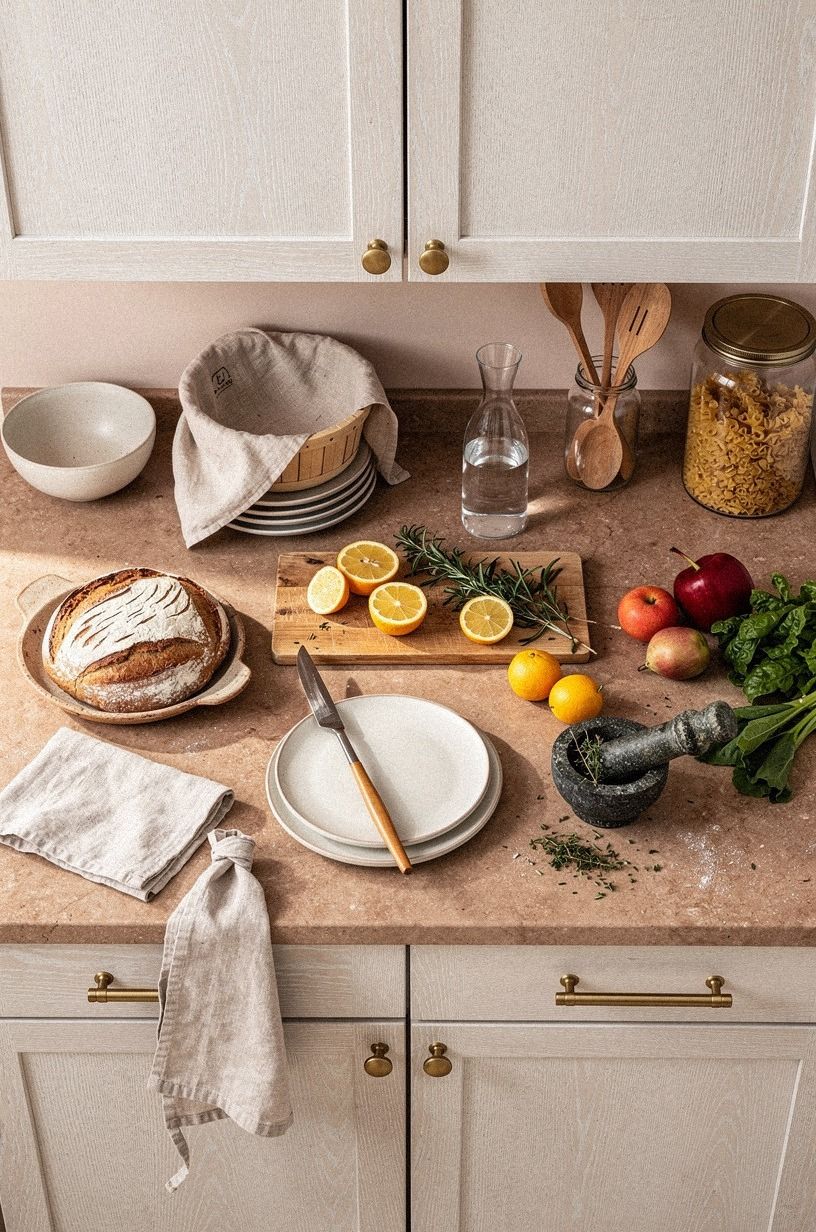
The kitchen should look ready for breakfast, not prepared for a catalog.
12Set the Budget Before You Buy the Nancy Meyers Homes Palette
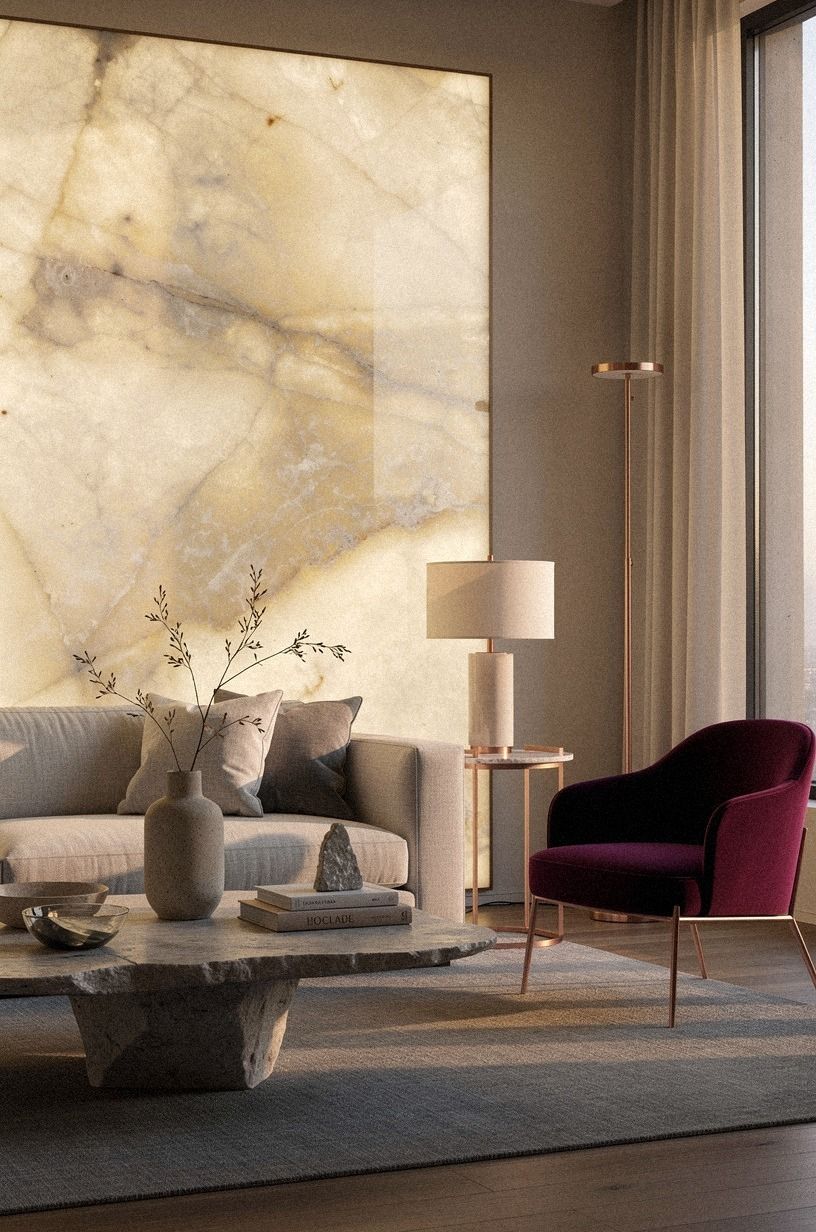
The style can cost very little when you begin with editing, paint, and textiles. You don't need a new room full of furniture.
Start by moving the pieces you own, then spend where your hands and eyes notice the difference: a rug, a lamp, or curtains with the correct length. I would skip decorative filler and put that money toward one material that will age well.
Here are typical US ranges for a full room refresh:
For smaller purchases, a wool rug may run $400-$1,500, while linen drapes for a pair often land around $120-$400. A statement light fixture can cost $150-$800, and DIY paint for a room commonly runs $200-$600.
You can use secondhand art and existing baskets to keep your total near the budget tier. If you're prioritizing a kitchen, compare this warm kitchen makeover guide before you spend.
13Borrow the Dream House Decor Palette from Nature
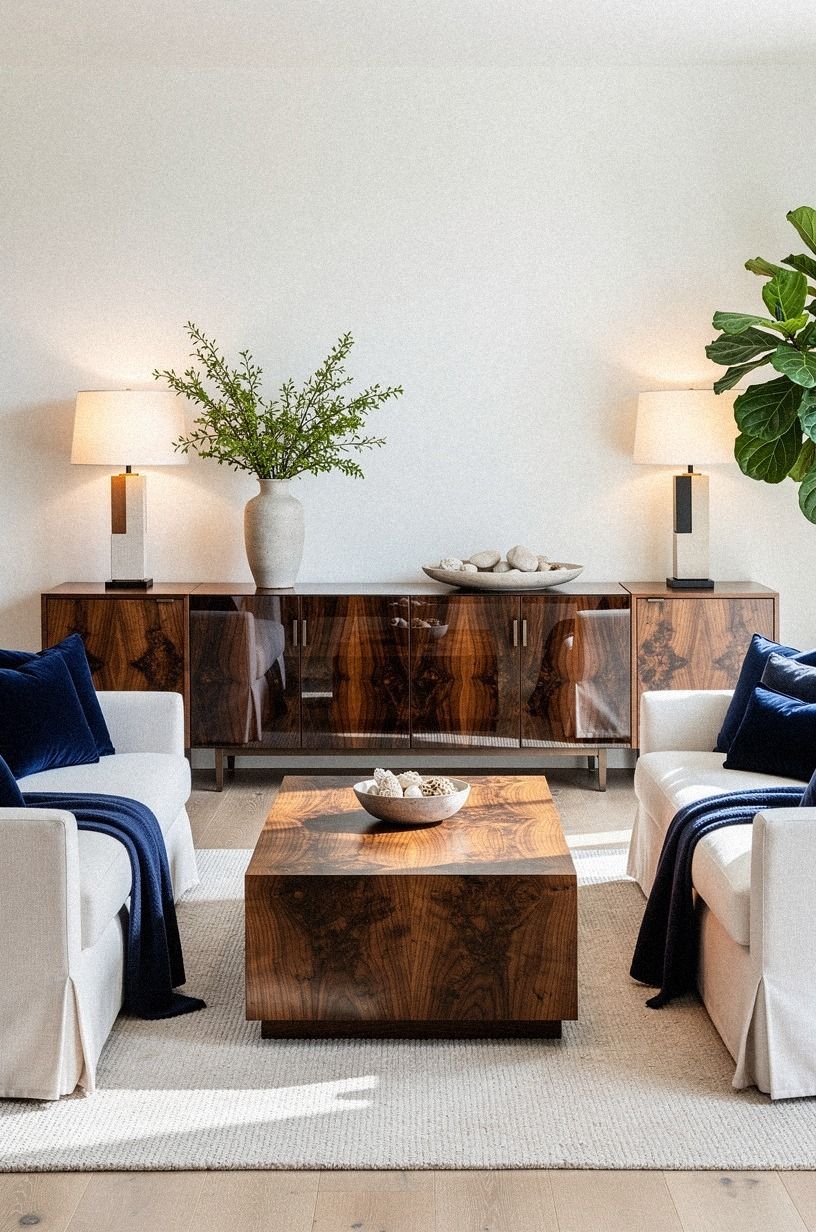
The Nancy Meyers palette feels warm because it borrows from nature without becoming rustic costume. Use cream, clay, olive, faded blue, and the brown of old wood. Farrow & Ball Hague Blue can bring depth to a small built-in, while a nearby linen chair keeps the room from feeling moody in the wrong way.
If you prefer a lighter wall, keep the color quiet and let your accents carry the contrast. A book-matched walnut console beside a pale stone lamp will feel earthy and relaxed. Your room doesn't need every color at once.
Choose two main tones and one darker note, then repeat them in small, useful ways.
I wouldn't pair deep blue with shiny silver hardware and icy gray upholstery. The combination can feel cold even when the paint is dramatic.
Use unlacquered brass or aged bronze instead, and bring in a warm textile at the window. And if you're unsure, photograph your room in daylight and lamplight. Your phone will reveal color clashes that your eye has learned to ignore.
14Pair Collected Objects with Empty Space
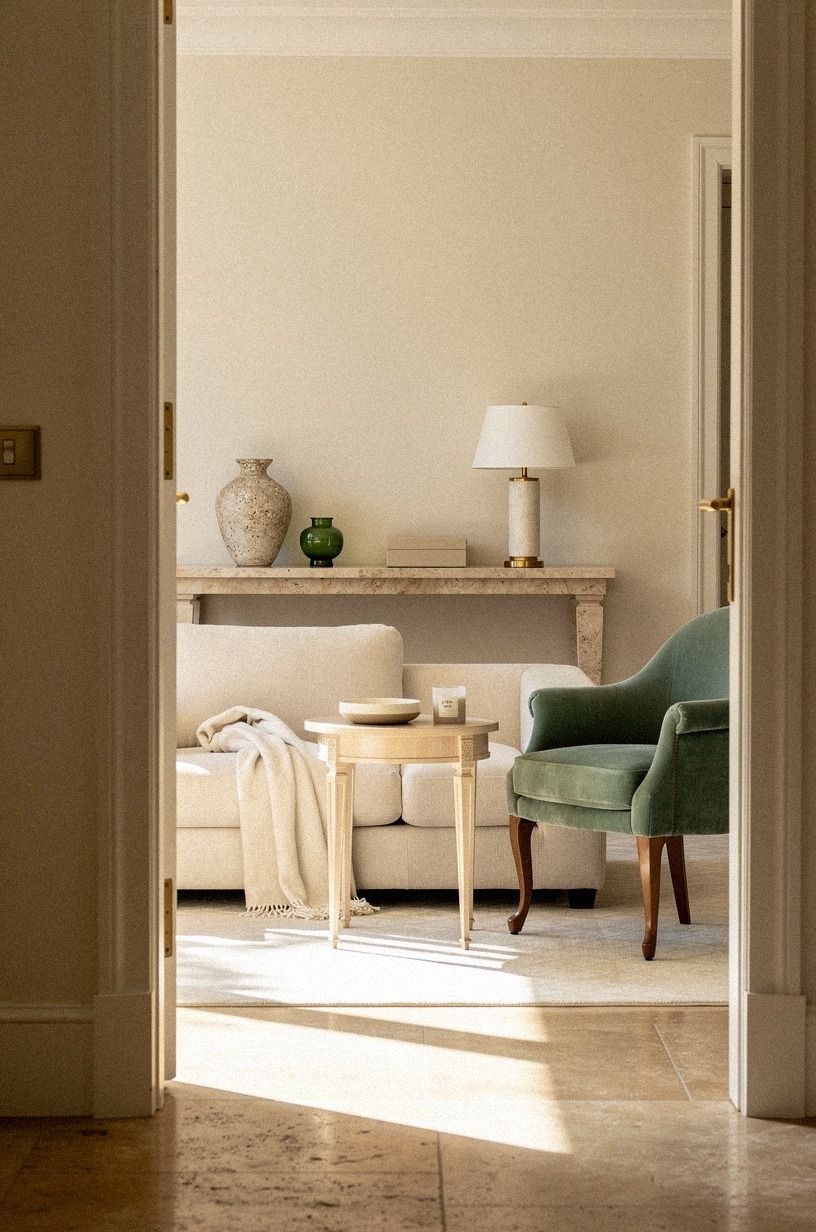
Collected rooms need pauses. Leave one section of a shelf empty, keep the top of a cabinet mostly clear, and let your best object stand alone.
Your eye needs somewhere to rest before it notices the next texture. I prefer one large warm travertine bowl to a row of tiny decorative pieces that all compete for attention.
Group objects by a quiet relationship: a cream frame with a travertine bowl, an emerald book beside an emerald ceramic vessel, or a gold candlestick near a warm lamp. The arrangement should feel discovered rather than assembled in one afternoon.
You can shift pieces over time, and you should. Homes change when people use them.
Add one object with a little imperfection, such as a chipped edge or uneven glaze. That mark keeps the room from feeling precious.
If your collection is mostly new, visit a thrift shop or Facebook Marketplace and look for material first, not a famous label. The goal is a home that feels welcoming when you walk in, not a display that asks you to behave.
Why the Nancy Meyers Aesthetic Still Has a Hold on Us
I think this style keeps returning because it gives ordinary domestic life a leading role. The kitchen isn't just a backdrop for a dinner scene, and the living room isn't arranged around a perfect photograph.
A Nancy Meyers room suggests that someone has already made coffee, opened a book, and left a blanket where they'll need it later. That small promise feels comforting when so much design content asks us to keep our homes untouched.
The look also understands the difference between expensive and valuable. A custom cabinet can be wonderful, but a $20 thrifted frame may carry more emotional weight if it holds a photograph you care about.
I like a room where the materials can show age. Linen wrinkles, oak darkens, and unlacquered brass develops a soft patina.
Those changes tell you the room is participating in your life instead of waiting for a photographer.
I've made the common mistake of chasing the surface before fixing the structure. I bought pillows while the lighting was too harsh, then added art while the rug was too small. None of it settled the room.
The better order is simple: edit the furniture, correct the light, establish the wall color, then add the objects that make the space personal. You don't need to copy a movie kitchen.
You need to notice what makes your own home easier to live in.
And there is room for contrast. A warm room doesn't have to be beige, and a collected room doesn't have to be cluttered.
Benjamin Moore White Dove can sit beside blackened wood, or Farrow & Ball Pigeon can hold its own next to cream upholstery. The point is not a fixed palette.
It's the feeling that every choice has a reason, even when the final room looks effortless.
What People Always Want to Know
What is the best Nancy Meyers aesthetic choice for a small room?
A warm wall color and furniture with visible legs are the best starting points. Try IKEA KALLAX birch-effect storage with woven baskets, then add one linen curtain panel at each window. Your floor will show more, and the room will feel airy without losing comfort.
Where can I buy Nancy Meyers aesthetic pieces on a budget?
Look at IKEA, Wayfair, and Target for affordable lighting, storage, and textiles. You can also search Facebook Marketplace or a local thrift shop for solid wood tables and framed art. Your best bargain will usually be a gently used piece with good proportions, not the cheapest new accessory.
How much does a Nancy Meyers aesthetic makeover cost?
A typical room refresh runs about $200-$800 for paint, textiles, art, and organization. You can spend nothing by rearranging furniture and editing clutter, then add one lamp or curtain pair when your budget allows. The biggest visual change usually comes from scale and lighting.
Can I create a Nancy Meyers aesthetic on a budget?
Yes, and you can start this weekend. Move seating closer together, switch to warm bulbs, hang art at 57-60 inches, and use thrifted baskets for storage. A washed cotton throw and a bowl of fruit can make your room feel inviting without requiring new furniture.
Is the Nancy Meyers aesthetic worth it in a small space?
Yes, because a small room benefits from fewer, better-scaled pieces. Choose one sofa, one useful table, and one soft light source rather than filling every corner. Your space will feel peaceful when the pathways stay clear and the palette doesn't jump from color to color.
Is the Nancy Meyers aesthetic a good idea for a rental?
Yes. Use removable wallpaper on one small wall, a tension rod for floor-length curtains, and peel-and-stick hooks for art or baskets. You don't need permanent changes to create warmth.
Removable upgrades can soften plain walls while protecting your deposit.
Where I'd Start First
If I had to pick one, I'd start with the lighting. A harsh ceiling fixture can make good furniture look flat, while three warm sources bring out every wood grain and linen fold. Pin the Nancy Meyers aesthetic for later and try one lamp tonight.