
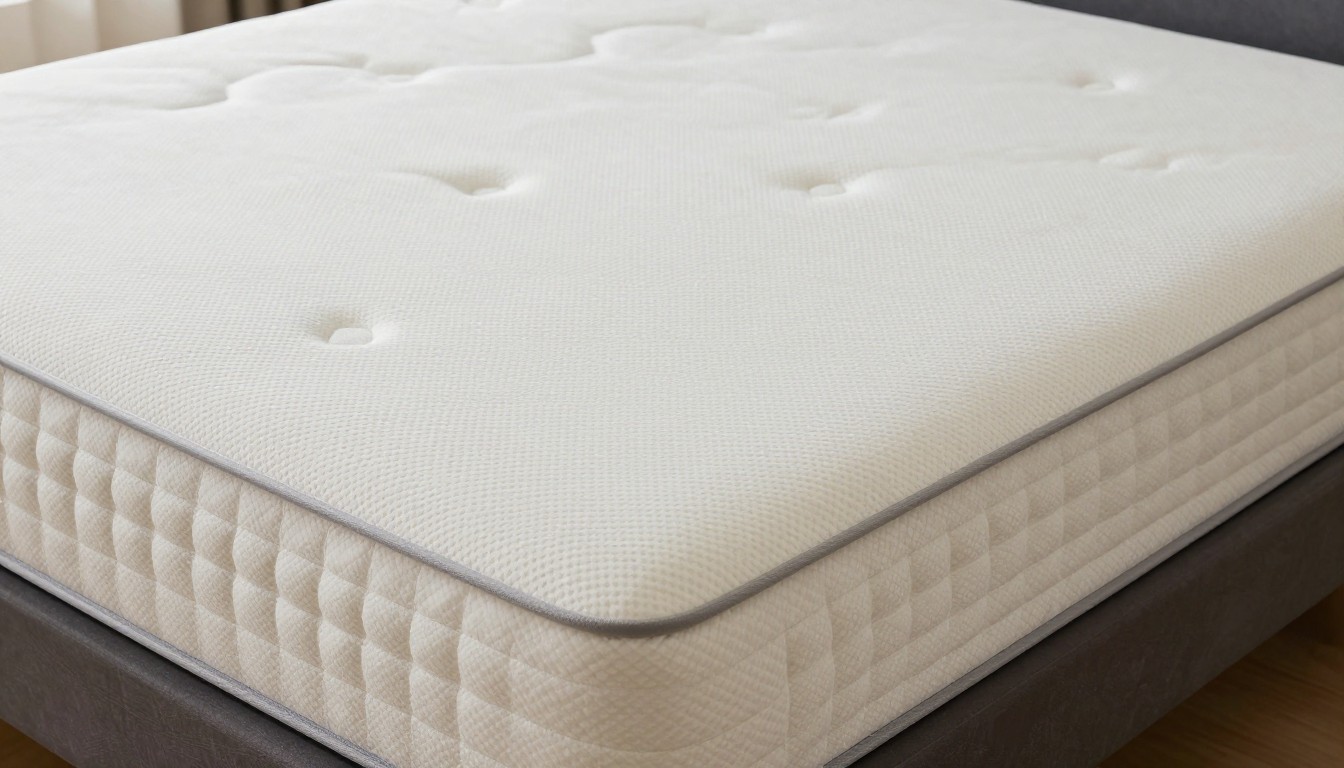
 by
by Quick answer: If you are asking “what is the topper needed for a box bed mattress,” no topper is automatically required. Add one only when the mattress remains level and supportive but the surface feels too firm or responds in a way you dislike. A topper belongs directly on the mattress beneath the fitted sheet. It should not be used to hide a persistent sag, weakened support, or an unstable base.
My firm answer: The practical response to “what is the topper needed for a box bed mattress” starts with the condition of the bed, not a material label. Memory foam suits someone who wants closer contouring. Latex is the more buoyant direction. Polyfoam or fiber can make a smaller surface adjustment. None of these materials rebuilds the mattress beneath it.
- Use a topper to fine-tune surface comfort on a sound mattress.
- Place it above the mattress and below the protector or fitted sheet.
- Inspect the mattress and support base before trying to soften a dip.
- Choose the material by the feel you want to change.
The phrase “box bed mattress” can mean a mattress delivered compressed in a box. Some sleepers also use it for a mattress resting on a box-shaped foundation. The distinction does not change the answer. Packaging and foundation shape do not create a need for a topper. The condition and feel of the sleep surface do.
The box is not the reason to add a topper
Compressed delivery changes how a mattress reaches the bedroom, not the basic job of its support core. A mattress that came in a box can be comfortable without any extra layer. If it is newly opened, follow the manufacturer’s directions about setup and expansion before deciding that its finished feel needs correction.
Once the mattress is ready for use, strip away thick pads and piled bedding. Look across the bare surface. It should appear even rather than pulled into a lasting body-shaped hollow. Then lie in your usual position and pay attention to the direction of the discomfort.
A hard contact point on an otherwise level bed is a surface problem. Feeling pulled toward a low area is different. That suggests the mattress, the foundation, or both are no longer holding the sleep surface evenly.
The Nut’s construction rule: A topper changes the comfort layer your body reaches first. It does not replace worn foam, strengthen weak coils, or brace a base that moves beneath the mattress.
“Firm” and “supportive” are not interchangeable. A firm mattress may hold its shape well but feel unyielding around the shoulder or hip. That is a reasonable topper problem. An overly soft mattress may feel plush while letting the heavier areas of the body settle farther than is comfortable. Adding more plush material usually pushes that setup in the wrong direction.
The base deserves the same inspection as the mattress. Check for loose frame connections, bowed components, missing support, or movement where the foundation meets the frame. The mattress manufacturer’s written support requirements should guide that inspection because foundation needs vary by construction.
- Level mattress, hard surface: a topper may provide the missing cushion.
- Level mattress, trapped feeling: a more responsive topper may improve ease of movement.
- Lasting dip: investigate internal wear and the support beneath the bed.
- Shifting foundation: stabilize the bed before adding another layer.
Match the topper to one clear comfort complaint
A useful topper decision begins with a specific observation. “The bed feels wrong” is too broad. “The mattress stays level, but my shoulder meets a hard surface” points toward contouring. “I sink slowly and struggle to change position” points toward a quicker-response material.
| What you notice | What a topper may change | What to check first |
|---|---|---|
| The mattress is firm, flat, and stable. | Adds cushioning or closer surface contouring. | Decide how much sink and response you prefer. |
| The current foam feels slow and restrictive. | A resilient layer can create a livelier top surface. | Avoid automatically adding another slow-response foam. |
| The middle contains a lasting low area. | May disguise the transition into the dip for a while. | Inspect the mattress core, frame, and foundation. |
| The mattress already feels overly soft. | A plush topper may allow additional sinking. | Determine whether support, rather than cushioning, is missing. |
| The bed moves because the base is unstable. | Does not stabilize the frame or foundation. | Correct the movement beneath the mattress first. |
Side sleepers often notice surface firmness around the shoulder and hip because those areas meet the bed more directly. If the mattress remains level, a contouring topper can distribute that contact across more of the surface. The goal is enough give to reduce the hard feeling without losing the stable support underneath.
Back and stomach sleepers should be more conservative with added softness. A deep, slow-sinking layer can let the center of the body settle farther into the bed. A lighter comfort adjustment or a more resilient material may make more sense if the underlying mattress is already moderately soft.
A shared bed creates another valid use case. If both sleepers are supported but the surface feels slightly too firm to one partner, a topper may be a less disruptive change than replacing a mattress that still performs its structural job. That does not mean every topper will satisfy two different comfort preferences.
Make the choice in this order: confirm that the bed is structurally sound, describe the surface complaint in plain language, and then choose a material whose response addresses that complaint.
Memory foam, latex, polyfoam, and fiber feel different
Memory foam is the logical direction for a supportive mattress that feels hard at the contact points. Its slow response lets the body settle gradually into the topper. That closer contour can make the top of the bed feel less abrupt without changing the support core.
The same response can be a drawback for someone who dislikes feeling held in place. A softer memory-foam layer can also increase how deeply the body sits within the sleep surface. More surrounding material may feel warmer, especially when the mattress, protector, sheets, and blanket already restrict airflow.
Latex takes a different approach. It tends to compress with a quicker push-back sensation, so the sleeper remains more on top of the layer. I would lean in this direction for someone who wants added cushion but values easy position changes over a close foam hug.
Polyfoam and fiber-filled toppers generally make simpler surface adjustments. Polyfoam can add a straightforward buffer without reproducing the full slow-sink character of memory foam. Fiber fill creates a softer, bedding-like initial touch, though it does not reshape around the body in the same way as contouring foam.
| Material | How it changes the surface | Most sensible use |
|---|---|---|
| Memory foam | Closer contouring with slower recovery. | Softening hard contact on a level, supportive mattress. |
| Latex | Buoyant cushioning with quicker response. | Adding comfort while preserving easier movement. |
| Polyfoam | A direct comfort buffer with varying response. | Making a modest correction to a nearly suitable bed. |
| Fiber fill | A plush initial touch with less body contouring. | Changing the bedding feel more than the mattress character. |
Cooling labels need context. A ventilated construction or breathable cover can influence the top of the bed, but the topper is only one layer in the setup. Sink depth, mattress cover, protector, sheets, blankets, clothing, and room conditions all affect how warm the finished bed feels.
My shortcut is simple. Choose memory foam when closer contouring is the priority. Consider latex when quicker movement matters more. Use polyfoam or fiber when the mattress needs a gentler correction rather than a strong change in surface character.
Wool belongs in the fiber conversation, but it should not be mistaken for foam with a different cover. It creates a more bedding-like surface and behaves differently under load. The wool mattress topper guide explains that material distinction in more detail.
For a broader explanation of the accessory itself, see what a mattress topper is meant to do. Its core role is to modify surface comfort while leaving the mattress structure underneath unchanged.
Do not shop by material name alone. Foam response, firmness, cover design, and the mattress underneath determine the final feel. Start with the problem you need the new layer to solve.
Choose enough depth, not the deepest option
A shallow topper leaves more of the original mattress feel in place. A deeper topper gives the added material more influence over contouring, movement, and edge feel. That influence can be useful on a very firm surface, but it can also overwhelm a mattress that was already close to comfortable.
I would not chase maximum depth as a sign of quality. A large stack of soft material can separate the sleeper from the stable support that made the mattress worth keeping. The right depth is the least material that makes the intended comfort change convincing.
A mild hard-surface complaint calls for restraint. More pronounced contact pressure may justify a more noticeable layer, provided the mattress underneath remains even. If the mattress is already soft, adding depth deserves extra caution because the finished bed may allow more sinking than expected.
Judge the complete stack: the topper affects total bed height, fitted-sheet fit, the reach over a surrounding frame, and the way the edge feels when you sit or get out of bed.
Check the topper’s labeled mattress size against your bed, then confirm that the fitted sheet can cover the mattress and added layer without pulling tight at the corners. A poorly fitted sheet can curl the topper edge, create wrinkles, or make a correctly sized layer appear to shift.
If you are deciding between a light adjustment and a much stronger surface change, the guide to the thickest mattress topper options explains why extra height is not automatically extra comfort. More material simply gives the topper more control over the finished feel.
Edge behavior matters too. A topper cannot add reinforcement to a mattress with a weak perimeter. A very soft layer may make the transition at the edge feel less stable even when the mattress edge underneath has not changed.
Why a topper cannot repair sagging
A permanent dip originates below the new comfort layer. Worn foam may have lost resilience, coils may no longer hold the surface evenly, or the foundation may be flexing under the mattress. Placing a topper over that low area does not restore the missing support.
Extra cushioning can make the entrance into a sag feel smoother for a while. That cosmetic change is easy to mistake for a repair. The body still settles toward the same low point, now through another layer of material.
Look for visible impressions, but also pay attention to directional sinking. A mattress can appear acceptable while still pulling the body toward a weakened area. If the discomfort follows a particular low spot rather than a generally hard surface, pause the topper purchase and inspect the bed system.
Construction reality: a comfort layer can soften contact with the mattress. It cannot restore foam resilience, repair a weakened coil unit, flatten a lasting impression, or stabilize a failing foundation.
An already-soft mattress raises the same concern. More plushness may make the first contact feel pleasant while allowing the sleeper to settle farther into the existing comfort layers. If the bed feels unsupportive rather than merely firm, a topper is the wrong mechanism.
Inspect the foundation with the mattress removed if that can be done safely. Look for movement, damaged components, or an uneven surface. Reassemble the setup according to the mattress manufacturer’s support instructions before judging whether the mattress itself is still sound.
A box-style base is not automatically a traditional spring foundation. Some are rigid platforms, while others contain flexible components. What matters is whether the base meets the written requirements for the mattress and holds it evenly across the supported area.
Fit, movement, and care affect the finished setup
A topper should closely match the mattress footprint. An undersized layer leaves a noticeable perimeter, while an oversized one can curl or bunch beneath the sheet. Either mismatch can make the bed feel untidy and interfere with stable positioning.
Layer movement usually comes from the whole stack rather than one item in isolation. A smooth mattress cover, slick protector, loose fitted sheet, and lightweight topper can slide against one another. A grippy underside or corner anchors may reduce that movement, but the sheet still needs to fit correctly.
A removable cover can simplify routine care. It does not mean the topper core itself is washable. Follow the care label and manufacturer’s cleaning directions for the specific material because foam, latex, wool, and fiber constructions are not maintained in the same way.
- Confirm that the mattress remains level and supportive.
- Match the topper label to the mattress size.
- Check whether the fitted sheet can cover the completed stack.
- Consider anchors or a non-slip surface if the existing layers move.
- Read the manufacturer’s care and return terms before opening the packaging.
- Keep the topper beneath the protector if the protector fits the combined height.
Rotation and flipping are separate decisions. Rotation may distribute use more evenly if the manufacturer permits it. Flipping should be reserved for toppers whose instructions explicitly allow both surfaces to face upward, since many constructions have a specific cover or comfort side.
A protector can reduce direct exposure to moisture and spills, but it can also change the surface feel. A taut, less flexible protector may restrict how closely a contouring topper follows the body. The completed stack should be assessed as one system.
Motion across the bed also depends on that system. A soft topper may alter small surface movements, but it cannot correct a loose frame or change the fundamental response of the mattress core. If the bed rocks, start beneath the mattress.
A no-guesswork sequence before buying
The cleanest decision begins with the bare mattress and ends with the practical fit of the complete bed. This keeps a comfort purchase from becoming an attempted structural repair.
- Let a newly unpacked mattress settle according to its manufacturer’s instructions.
- Remove thick bedding and inspect the mattress for a lasting dip or uneven area.
- Check that the frame and foundation are stable and properly assembled.
- Describe the complaint as firmness, slow response, excess softness, heat retention, or shifting.
- Choose the material response that addresses that complaint.
- Select only enough added depth to make the intended surface change.
- Confirm size, sheet fit, care requirements, and return terms.
Marketing words such as plush, cooling, supportive, or premium are not a diagnosis. They can mean different things across constructions. A useful comparison asks how quickly the material responds, how closely it contours, and how much of the original mattress feel remains.
If you cannot explain why the mattress is worth keeping, pause before buying an accessory for it. A topper has the best chance of working when the bed is close to right and the remaining complaint is limited to the top comfort layer.
The value test: identify what is wrong with the surface, confirm that support remains intact, and choose the least complicated layer that directly addresses the issue.
Who should add a topper and who should skip it
Add a topper when the box bed mattress is structurally healthy but misses your preferred surface feel. Good use cases include softening a hard contact surface, gaining more contouring, or replacing a slow-response sensation with a more buoyant top layer.
Skip the topper when the mattress contains a lasting dip, feels broadly unsupportive, or sits on an unstable base. Also be cautious if the bed is already too soft. Another comfort layer may change the initial touch without addressing why the setup feels wrong.
A topper is most convincing as a targeted adjustment, not a rescue purchase. If the mattress, foundation, sheets, and topper would all need work to make the bed usable, inspect the larger setup before spending money on another layer.
Buy for a defined result: closer contouring, quicker response, or a gentler initial surface. Do not expect one accessory to reverse wear inside the mattress.
Optional product context
After confirming that a sound mattress needs a more contouring surface, the Saatva Graphite Topper is an optional product to investigate. No current construction specifications are established here, so verify its material details, fit, care instructions, return terms, and current pricing with the manufacturer before deciding whether it addresses your particular complaint.
FAQ
Do I need a topper for a mattress that came in a box?
For the question “what is the topper needed for a box bed mattress,” the answer is that no topper is automatically needed. Let the mattress settle according to its manufacturer’s directions, then assess it without a thick pad. Add a topper only if the mattress stays level and supportive while the surface feel remains unsuitable.
Can a topper make a firm box-bed mattress softer?
Yes, provided the mattress is firm rather than structurally worn. Memory foam generally creates closer contouring, latex supplies a more buoyant cushion, and simpler foam or fiber layers make a more modest adjustment. Choose according to the response you want, not merely the word “soft” on a label.
Can a topper fix a sagging mattress?
No, it cannot provide a lasting structural fix. A topper may smooth the sensation of entering a dip, but the weakened foam, coil system, mattress foundation, or frame remains underneath. Inspect those components before adding more cushioning.
What topper material makes sense for a hot sleeper?
I would first consider a resilient, more breathable construction rather than automatically choosing deeply contouring memory foam. Latex is often the more buoyant direction. Still, the topper alone does not determine warmth. The mattress, protector, sheets, blankets, room, and amount of sink all contribute to the finished sleep environment.
Should the topper be the same size as the mattress?
Yes, the labeled sizes should match closely. A topper that is too small leaves an exposed border, while excess material can curl beneath the sheet. Check the finished bed height as well, since a shallow fitted sheet can pull at the topper and make it shift.
ONE OPTION WORTH COMPARING
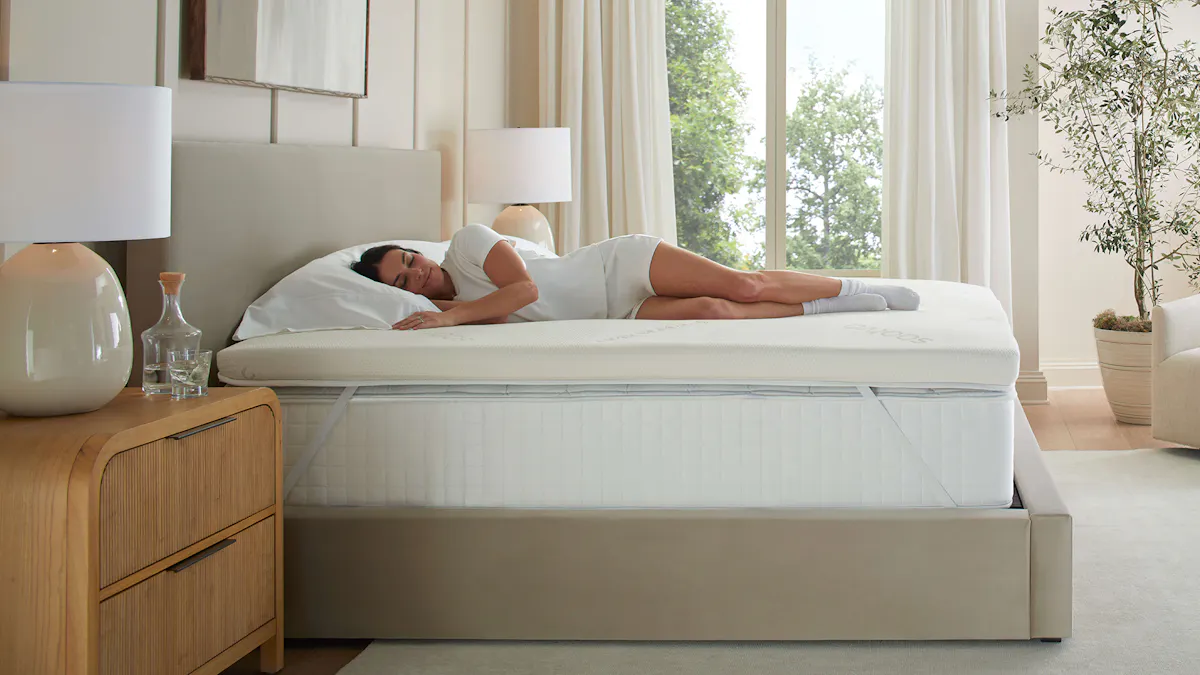
Shopping as well as reading? Here is one current option worth comparing: the Saatva Graphite Topper. Check today’s price, sizing and return terms on the official product page before you order.
Saatva Graphite Topper
- Graphite-infused memory foam, per saatva.com
- 180-night trial
- Secure anchor bands, fits deep mattresses
My final call
A box bed mattress needs a topper only when its support remains sound and its surface needs a specific comfort adjustment. Diagnose the bed first, match the material to the complaint, and keep the added layer proportionate to the change you want. If the mattress sags or the base moves, fix that structural problem instead of covering it with more cushioning.