
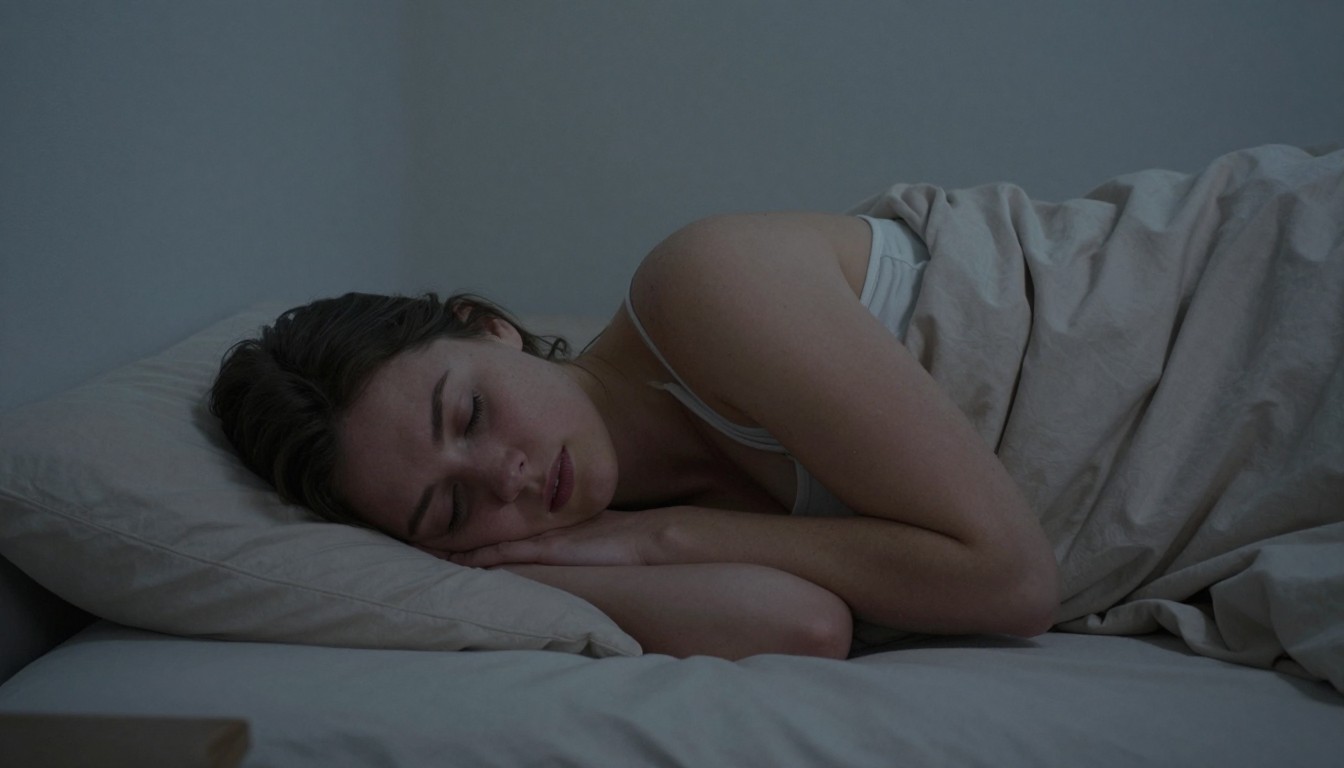
 by
by Quick answer: Sleep Foundation calls nighttime grinding sleep bruxism. A bruxism summary on Pinterest describes it as involuntary or habitual, but the grinding alone doesn’t reveal an individual cause.
- Sleep Foundation defines sleep bruxism as teeth grinding at night.
- Public descriptions of bruxism include both grinding and clenching.
- Sleep Foundation says sleep bruxism can cause tooth damage.
Updated July 2026 · Reviewed for accuracy
Why do people grind their teeth while sleeping? The shortest honest answer is that bruxism can happen without conscious control, while the sound or jaw movement doesn’t identify one universal cause.
I’d treat nighttime grinding as a behavior to investigate, not as proof of stress, a bad mattress, or any other convenient explanation. Start by confirming what was actually observed, note whether anything has changed, and ask a dental professional to assess possible damage.
What sleep bruxism actually means
Sleep Foundation uses “sleep bruxism” to describe teeth grinding at night. Its overview also warns that the behavior can cause tooth damage, which is the main reason I wouldn’t dismiss repeated grinding as an odd sleeping habit.
Grinding and clenching are commonly discussed together, but they aren’t quite the same action in plain English. Grinding suggests movement between the teeth, while clenching describes holding the jaw tightly. A public bruxism summary collected on Pinterest includes both actions in its description of bruxism.
That same Pinterest summary characterizes bruxism as involuntary or habitual and notes that it can also happen during the day. I’d use that wording as a useful distinction, not as a personal diagnosis. Someone can notice daytime jaw tightening without knowing whether the same thing happens during sleep.
The useful distinction: “Sleep bruxism” describes what the jaw is doing and when it happens. It doesn’t, by itself, explain why that behavior is occurring in a particular sleeper.
A sleeping person may have little immediate awareness of the behavior. The first clue may instead be a sound reported by somebody nearby or a concern raised during a dental visit. Either clue is worth recording accurately, but neither should be stretched into a cause without a professional assessment.
Why the grinding sound doesn’t reveal the cause
Grinding tells you that an action may have happened during sleep. It doesn’t tell you what set that action in motion, how often it occurs, or whether it has affected the teeth.
Sleep Foundation frames causes and symptoms as separate parts of its bruxism overview. I think that separation matters. A symptom or reported behavior can start an investigation, but it can’t complete one.
For example, hearing a rough sound during the night is a useful observation. Deciding that the sound must come from stress, mattress discomfort, or another suspected trigger is an interpretation. The observation belongs in your notes; the interpretation needs evidence.
| What you observed | What it can establish | What it cannot establish |
|---|---|---|
| A grinding sound reported during sleep | A sound occurred at a particular time | The underlying cause or condition of the teeth |
| Awareness of jaw tightening while awake | Daytime behavior you personally noticed | Whether the same action happens during sleep |
| A visible change in a tooth | A specific change that can be shown to a dentist | Why the change happened or how extensive it is |
| No obvious visible change | Nothing unusual is apparent to you | Whether grinding occurred |
This is why I’m wary of single-clue explanations. A difficult morning doesn’t prove nighttime grinding. A partner’s report doesn’t reveal a trigger. Even a clear recording would document a sound, not deliver an individualized dental answer.
What signs are worth recording
Tooth damage is the specific consequence identified in Sleep Foundation’s public summary. The summary doesn’t specify a universal pattern, so I wouldn’t try to diagnose bruxism by matching a tooth to an online photograph.
Instead, record exactly what you know. If another person heard grinding, note what they heard and when. If you notice a change in a tooth, describe the change without deciding what caused it. If you feel discomfort, record where and when you noticed it without assuming that grinding is responsible.
Daytime behavior is also relevant context because the cited Pinterest description says bruxism can happen while awake. Pay attention to whether you consciously tighten your jaw during the day. That observation still doesn’t prove what happens at night, but it gives a dental professional a clearer account than a broad statement such as “I think I grind.”
Keep observations separate from conclusions. “My partner heard a grinding sound” is an observation. “My mattress caused me to grind” is a conclusion that the sound alone cannot support.
You don’t need to perform aggressive bite checks or repeatedly force your jaw into different positions. If you’re concerned about pain or a possible change in a tooth, contact a qualified dental professional. The goal is to obtain an assessment, not to reproduce the behavior at home.
What to do if you may be grinding at night
A short written record is more useful than a confident guess. It preserves the details that are easy to blur together later and gives a professional something concrete to discuss with you.
- Write down the original clue. State whether it was a sound, a feeling, a visible tooth change, or something raised during a dental visit.
- Record the timing. Note whether the observation happened during sleep, after waking, or while you were awake.
- Separate firsthand and secondhand information. A partner’s report can be useful, but label it as something another person heard.
- Note relevant context without assigning blame. Changes in your sleep, routine, health, or medicines can be shared with a clinician without declaring that any one change caused the grinding.
- Bring the record to a dentist. Ask what evidence is visible, whether the teeth appear affected, and what follow-up makes sense for your situation.
Sleep Foundation says treatment options can be explored for sleep bruxism, but its short public summary doesn’t establish a single treatment that suits everybody. That’s enough reason to avoid treating a generic online solution as an automatic fit.
If you’re considering a self-directed dental product, ask a dentist what problem it is intended to address and whether it’s suitable for you. A product can’t identify the reason for the behavior, and an article can’t inspect your teeth.
I’d also ask how progress should be judged. The answer may involve observations that are specific to your case. Clear expectations are more useful than assuming that the absence of an audible grinding sound means every concern has been resolved.
A sensible sequence: document the behavior, have possible damage assessed, discuss the individual explanation, and follow the professional plan. Don’t reverse that order by buying a supposed fix before you understand the finding.
Can your mattress or bedroom be responsible?
A mattress cannot tell you why your jaw is grinding. Changing bedding may alter how comfortable you feel, but comfort alone doesn’t diagnose sleep bruxism or establish a cause.
I’d keep the dental question separate from the mattress question. Judge a mattress by whether it supports comfortable sleep for you. Judge suspected bruxism through accurate observations and professional dental guidance.
The same separation helps with other nighttime complaints. If you also wake with oral dryness, read our guide to what causes extremely dry mouth while sleeping, but don’t treat dryness as proof of grinding. If nasal drainage is the issue disturbing you, the advice on how to stop post-nasal drip while sleeping addresses that question on its own terms.
My rule: don’t turn several morning complaints into one unsupported explanation. Record each complaint separately, then let the appropriate professional decide whether any connection deserves investigation.
This matters because timing can be persuasive. Two things noticed after the same night can feel connected even when the timing alone proves nothing. A careful record protects you from building a health decision around coincidence.
Bottom line: investigate the behavior, don’t guess
Sleep Foundation’s definition gives the clearest starting point: sleep bruxism is teeth grinding at night, and it can damage teeth. The separate question is why it is happening to you, which can’t be answered from the grinding sound alone.
My advice is straightforward. Preserve the original observation, look for changes without conducting forceful home tests, and discuss the pattern with a dental professional. If somebody else heard the sound, bring their description rather than translating it into a diagnosis.
Useful questions for that conversation include:
- What evidence do you see on examination?
- Does that evidence support grinding, clenching, or another explanation?
- Is my daytime jaw behavior relevant to the assessment?
- What is the goal of the option you recommend?
- What changes should prompt another appointment?
Those questions keep the discussion tied to evidence. They also leave room for the answer to be individual rather than forcing every sleeper into the same explanation.
This article provides general information, not a diagnosis or treatment plan. A qualified dental or medical professional can assess your circumstances directly.
FAQ
The recurring distinction is simple: bruxism names a behavior, while the reason for that behavior requires an individual assessment.
Why do people grind their teeth while sleeping?
Sleep Foundation calls the behavior sleep bruxism, while a cited public bruxism summary describes grinding and clenching as involuntary or habitual. Those definitions explain how it can happen without a deliberate choice, but the behavior alone doesn’t identify an individual cause.
Is sleep grinding always caused by stress?
A grinding sound by itself doesn’t prove that stress is the cause. Sleep Foundation treats causes as something to identify separately from symptoms, so I wouldn’t assign a universal explanation without professional assessment.
Can bruxism happen while you’re awake?
Yes, the public bruxism description collected on Pinterest says grinding and clenching can also occur during the day. Noticing daytime jaw tightening is useful context, though it doesn’t confirm what happens while you’re asleep.
Can grinding your teeth at night cause damage?
Sleep Foundation says sleep bruxism can cause tooth damage. If you notice a change or have concerns about discomfort, arrange an assessment with a qualified dental professional rather than trying to determine the extent yourself.
Should I change my mattress or buy a dental product first?
A mattress change cannot identify the cause of tooth grinding, and a generic dental product cannot assess your teeth. I’d document the behavior and speak with a dentist before choosing a response intended to address it.