
 by
by Quick answer: People sleep with their mouth open when nasal airflow feels limited, the jaw falls open as the face relaxes, or both. The observation alone isn’t a diagnosis; repeated breathing distress calls for professional assessment.
- Mouth opening during sleep is an observation, not a diagnosis.
- The most useful clues are timing, nasal comfort, sleep position, and how you feel on waking.
- A mattress may change posture, but it cannot identify or treat a breathing problem.
Updated July 2026 · Reviewed for accuracy
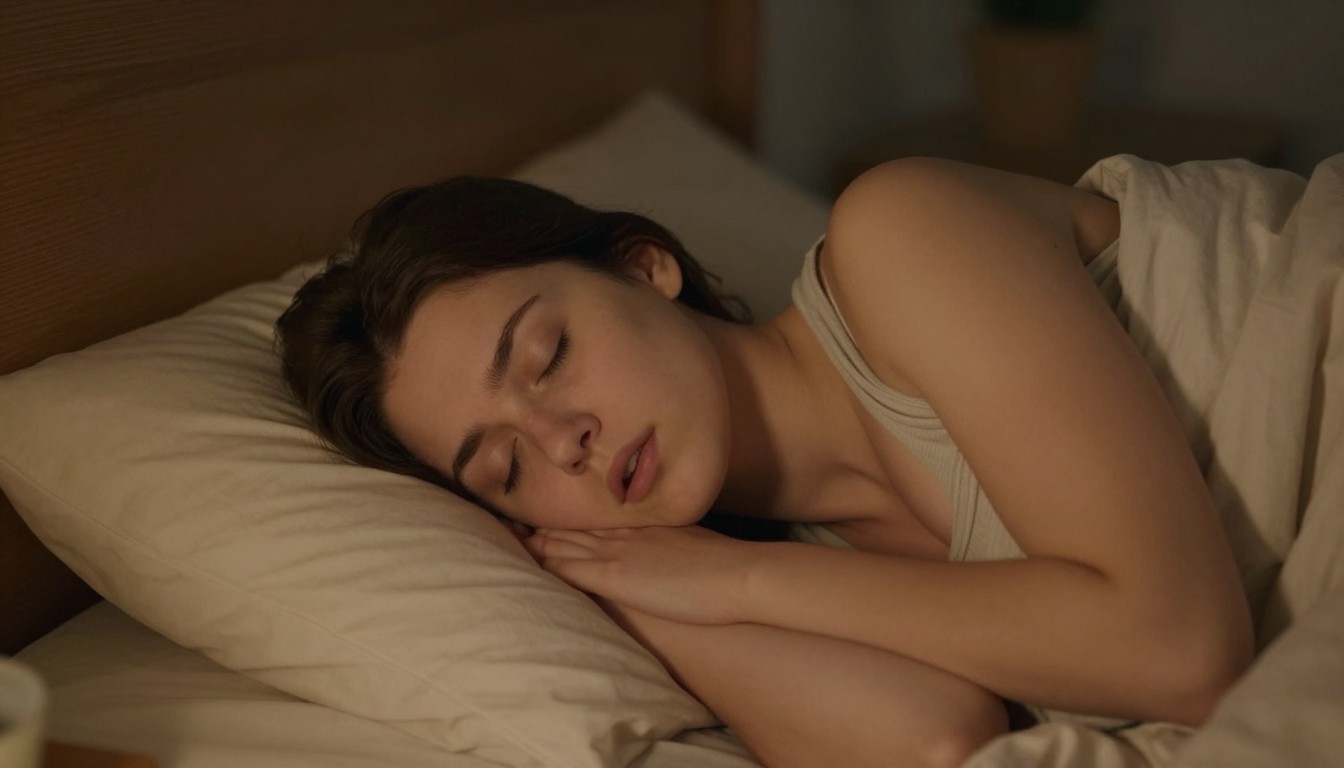
If you wake with your mouth open, the simplest explanation is that it became the easier route for airflow while you slept. That can happen because breathing through your nose felt difficult, because your jaw relaxed and dropped, or because both occurred together.
I wouldn’t diagnose anything from an open mouth alone. The useful question is whether this happens occasionally or forms a repeated pattern alongside noisy breathing, uncomfortable dryness, gasping, or disrupted sleep.
Why the mouth can fall open during sleep
The basic mechanism is straightforward: your lips separate, your jaw drops, and air can move through your mouth. You won’t consciously correct that position while fully asleep in the way you might during the day.
One possible route starts with nasal comfort. If your nose feels stuffy or difficult to breathe through, your mouth may become the more comfortable alternative. This might appear only during a temporary bout of stuffiness, or it could recur often enough to deserve a professional opinion.
The other route is mechanical. Your face and jaw relax during sleep, so your mouth may open even when your nose doesn’t feel obviously blocked. Head position, pillow support, and whether you sleep on your back or side can change what happens, but none of those clues proves a particular cause.
My take: Treat an open mouth as a clue about airflow and position, not as proof of a disorder. The surrounding pattern tells you far more than the open lips themselves.
That distinction matters because two people can look the same while sleeping for different reasons. One may open their mouth only when the nose feels blocked. Another may do it in a certain position. Someone else may have a recurring breathing issue that needs assessment rather than a bedroom workaround.
Clues that help narrow down what is happening
What you notice before bed and after waking is more useful than a single photograph. Start with simple observations: whether your nose felt clear, what position you fell asleep in, and whether you woke with your mouth feeling unusually dry.
If someone shares your room, ask for observations rather than conclusions. Useful details include whether your mouth stays open, whether breathing becomes noisy, whether you seem to gasp, and whether the pattern changes when you roll over. A bed partner cannot diagnose the cause, but they may notice events you sleep through.
Timing is another strong clue. A pattern limited to nights when your nose feels stuffy points in a different direction from one that appears during nearly every sleep. The goal isn’t to label either pattern yourself. It’s to collect enough detail to decide whether a minor adjustment is reasonable or professional advice is needed.
| What you notice | What to record | Sensible next step |
|---|---|---|
| It happens only when your nose feels stuffy | When the stuffiness begins and whether it clears | Follow appropriate professional guidance if it persists |
| It appears mainly in one sleep position | Your head, neck, and body position | Try a comfortable position change if it is safe for you |
| You repeatedly wake with an uncomfortable mouth | How often it happens and any accompanying symptoms | Discuss the repeated pattern with a qualified professional |
| Someone notices gasping or pauses in breathing | Exactly what they observed and in which position | Seek professional assessment rather than experimenting alone |
Keep separate nighttime observations separate. Sleeping with open eyelids, for example, is a different concern from breathing through an open mouth. If that is what you have noticed, read this guide to whether a person can sleep with their eyes open.
Low-risk steps you can try at home
Start by checking whether your nose feels comfortable before you lie down. You don’t need to perform a breathing test. Simply notice whether nasal breathing feels easy without straining, and whether that changes after you settle into your usual sleep position.
If mouth opening appears linked to position, try a comfortable alternative that your body tolerates. A pillow should support you without forcing your chin sharply toward your chest or tipping your head far backward. Stop if a new arrangement causes pain, pressure, or worse sleep.
Room comfort is also worth observing. If the air feels irritating or unpleasantly dry, adjust the environment for comfort rather than treating that change as a cure. A more comfortable room may improve how the night feels, but it cannot establish why your mouth opened.
A useful observation log
- Note whether nasal breathing felt comfortable before sleep.
- Record the position in which you fell asleep and woke.
- Write down any dryness, noisy breathing, gasping, or repeated waking.
- Ask a bed partner to describe what they saw without trying to diagnose it.
Change one variable at a time. If you simultaneously replace your pillow, alter the room, and force a new position, you won’t know which change affected the pattern. A brief written record is more useful than relying on a hazy memory of several nights.
Keep unrelated accessories in perspective. An ordinary eye mask shouldn’t be treated as a solution for mouth opening, though comfort and fit still matter for sleep. This separate guide explains practical considerations if you’re wondering whether you can sleep with a mask on.
Why I would not start with mouth taping
Mouth tape physically removes the mouth as an available airflow route. That is a bigger intervention than changing a pillow or observing your sleep position, particularly when you don’t yet know why your mouth is opening.
I wouldn’t use tape as the first experiment. If nasal breathing feels difficult, or if anyone has noticed gasping or pauses, forcing the mouth closed is not a substitute for understanding the pattern. Get advice from a qualified professional who can consider your circumstances.
The same caution applies to tight chin straps and improvised restraints. A device that keeps the jaw shut may hide the visible behavior without resolving the reason behind it. Discomfort, anxiety, or any sense that breathing is harder is enough reason to stop.
Don’t force the symptom out of sight. If your body repeatedly chooses mouth breathing, first work out whether nasal comfort, position, or a breathing concern may be involved. A restraint cannot make that distinction for you.
Phone recordings and sleep apps also have limits. They may capture noise or movement that helps you describe the night, but they don’t turn an observation into a diagnosis. Use any recording as context for a conversation, not as a medical verdict.
When mouth-open sleeping deserves professional attention
Gasping, choking, or witnessed pauses in breathing should move the issue beyond home experimentation. The same applies if breathing feels difficult while you are awake. Seek timely help based on the severity of what is happening and your local medical guidance.
A repeated pattern also deserves attention when it comes with ongoing discomfort, frequent disrupted sleep, or a persistent inability to breathe comfortably through the nose. None of those details tells you the diagnosis. Together, they give a clinician a clearer reason to investigate.
Bring observations rather than a theory. Explain when the pattern started, whether it changes by position, how your nose feels, and what happens on waking. If someone else witnessed an event, their plain description may be useful.
Useful information to share:
- Whether the pattern is occasional or repeated
- Any gasping, choking, noisy breathing, or observed pauses
- Whether nasal breathing feels comfortable before bed
- Whether changing position alters what happens
- Any daytime effects or ongoing mouth discomfort
For a child, I’d use an even lower threshold for asking a pediatric professional about a recurring pattern. Don’t assume that an adult explanation applies, and don’t use tape or a restraint as a shortcut.
Can your pillow or mattress make a difference?
If your mouth opens mainly in one position, your sleep setup may influence the posture in which it happens. That doesn’t mean the mattress caused the problem. It means position is one variable worth observing.
Look first at whether the pillow supports your head and neck comfortably. A pillow that feels awkward may encourage you to abandon a position during the night, while one that feels comfortable may make a different position easier to maintain. Neither outcome is a breathing diagnosis.
The mattress matters mainly through comfort, alignment, and ease of movement. If the surface makes turning difficult or leaves you guarding a painful area, you may remain in an unfamiliar position. Someone temporarily changing position because of an injury can also use this practical guide on how to sleep with a sprained ankle.
Bedding reality check
- A pillow can change head and neck position.
- A mattress can affect comfort and how easily you turn.
- Neither product can tell you why your mouth opens.
- Bedding is not a treatment for a breathing disorder.
I wouldn’t buy a mattress solely to stop mouth-open sleeping. First determine whether the pattern follows nasal discomfort, jaw relaxation, or body position. If warning signs are present, professional assessment matters more than changing the bed.
FAQ
Is it normal to sleep with your mouth open?
It can happen occasionally, especially when nasal breathing feels less comfortable or the jaw relaxes. The word “normal” doesn’t settle the issue, though. Frequency, breathing behavior, and how you feel on waking provide better guidance.
Does sleeping with an open mouth mean sleep apnea?
No single observation establishes sleep apnea or any other condition. If someone notices gasping, choking, or pauses in your breathing, seek a professional assessment instead of trying to diagnose yourself from the mouth position.
Why does my mouth feel dry when I wake up?
Sleeping with your lips apart may leave the inside of your mouth exposed to moving air, which may contribute to a dry feeling. Dryness can have other explanations, so ongoing or uncomfortable symptoms are worth discussing with a qualified professional.
Can I train myself to keep my mouth closed?
You can observe nasal comfort and try a safe, comfortable sleep-position change, but forcing the mouth shut skips the question of why it opens. I wouldn’t begin with tape, a tight strap, or another restraint without suitable professional guidance.
Should I worry if my child sleeps with an open mouth?
A single observation isn’t enough to identify a problem. If the pattern repeats, breathing seems labored, or other concerning signs appear, describe exactly what you have seen to the child’s pediatric professional.
The bottom line: people may sleep with their mouth open because nasal breathing feels difficult, the relaxed jaw drops, or position changes how the mouth rests. Observe the pattern, make only comfortable low-risk adjustments, and get professional help when breathing distress or persistent symptoms accompany it.