
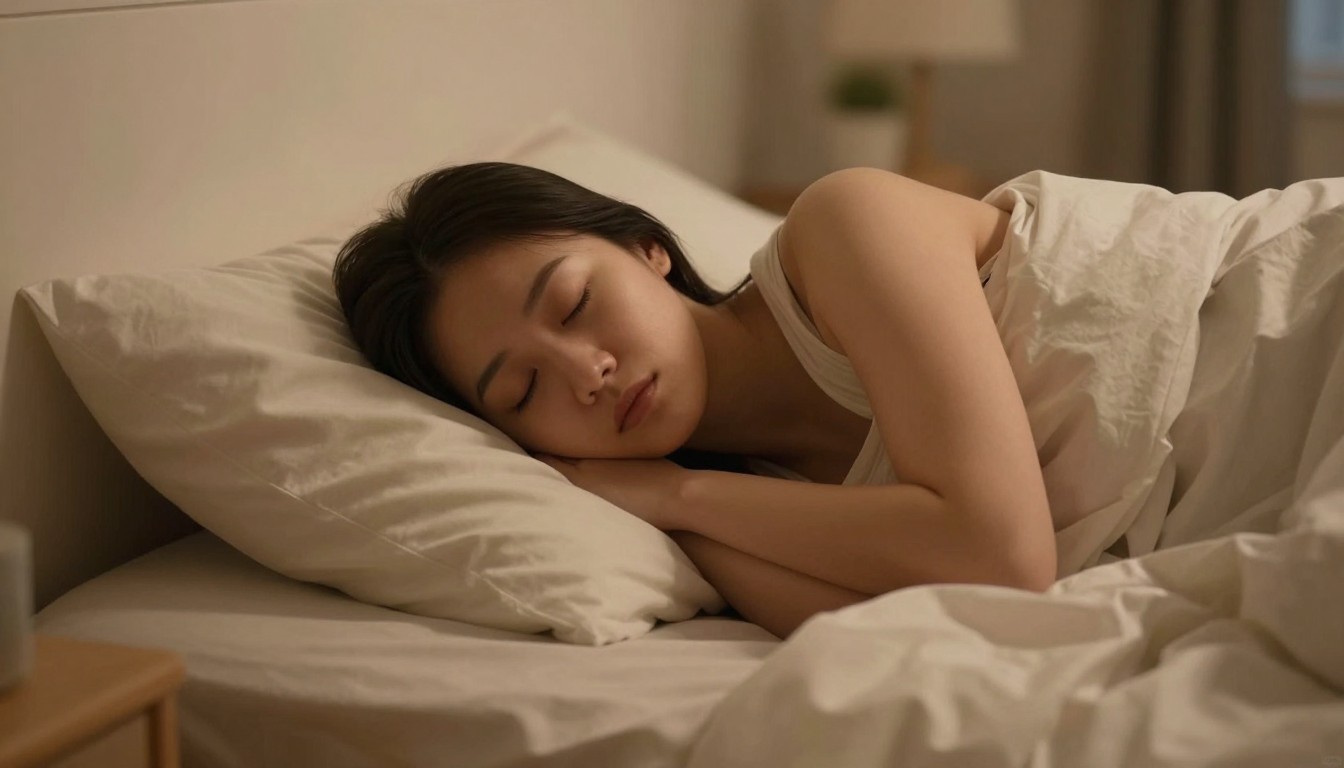
 by
by Quick answer: We close our eyes because the lids remove the open-eye view and cover the eye surface while sleep’s wider neurological processes unfold. Closing them doesn’t cause sleep by itself.
- A closed lid forms a physical barrier between the eye and its surroundings.
- NeuroLaunch describes eye closure as part of broader neurological activity during sleep, not the whole event.
- Sleep Foundation says open-eye sleep is called nocturnal lagophthalmos and can leave eyes dry or irritated.
Updated July 2026 · Reviewed for accuracy
Closing your eyes prepares them for sleep by blocking the direct visual scene and covering their surface. It also removes a stream of visual distraction while the neurological processes associated with sleep take over.
But your eyelids aren’t an on-off switch for consciousness. You can rest with your eyes closed without sleeping, and Sleep Foundation confirms that some people sleep with their eyes open.
What closing the eyes actually accomplishes
Closed eyelids put a physical cover between each eye and the room. That’s the most direct answer to why we close our eyes to sleep: the open-eye view disappears, and the eye is no longer left uncovered throughout the sleep period.
This physical action is easy to confuse with sleep itself because the two normally happen together. NeuroLaunch describes eye closure as the simple visible part of a night that also involves intricate neurological processes. Its account treats sleep as an area where scientific questions remain, rather than reducing the whole process to the position of the eyelids.
I think that distinction matters. Saying that we shut our eyes “to make ourselves sleep” gives the eyelids too much credit. Closing them supports a quieter physical setting, but it doesn’t explain everything occurring in the sleeping brain.
The plain-English answer: Your lids close the eyes off from the visible environment and cover their surface. Sleep then unfolds as a much broader neurological state.
There’s also no need to invent a tidy evolutionary story. A Biology Stack Exchange discussion frames eye closure as an evolutionary question, but that question alone doesn’t establish one proven explanation. The defensible answer is mechanical and neurological: closure changes the eyes’ physical exposure and visual input while sleep involves processes beyond the eyes.
That answer also explains why shutting the eyelids feels closely tied to going to bed without being the sole cause of sleep. It’s a visible part of the transition, not a complete scientific definition of what sleep is.
Closing your eyes and sleeping aren’t the same event
A person can close their eyes and remain fully awake. That simple observation shows why eye closure can’t be treated as proof that sleep has begun.
The reverse is possible too. Sleep Foundation uses the term nocturnal lagophthalmos for sleeping with the eyes open. The existence of that condition shows that closed eyelids aren’t an absolute requirement for the brain to enter sleep.
Put those facts together and the distinction becomes clear. Eye closure is a physical action. Sleep is a wider state that NeuroLaunch associates with intricate neurological activity. They usually overlap, but neither one defines the other on its own.
Keep these ideas separate:
- Closed eyes: the lids cover the eyes and remove the direct view of the room.
- Sleep: a broader process that can occur even when the eyelids don’t close completely.
This is why lying down and squeezing your eyes shut doesn’t guarantee sleep. The position of the eyelids can create a more suitable setting, but it can’t command the entire sleep process.
It’s equally inaccurate to assume that visible eye opening proves someone is awake. If that’s the reason you’re asking, the more relevant guide is whether a person can sleep with their eyes open. The short answer is yes, although the appearance alone doesn’t identify why it’s happening in a particular person.
Closed eyelids, a dark room, and a sleep mask differ
A dark room changes the environment around open eyes. Closing the eyelids changes the physical position of the lids themselves, removing the direct line of sight and covering the eye surface.
Those conditions may feel similar because each reduces how much of the surroundings you see. They aren’t identical. Darkness exists outside the body, while eye closure is a physical action of the lids.
A sleep mask adds another external layer. It sits over the eye area, so it shouldn’t be confused with the eyelids themselves or with the neurological process of falling asleep. A mask can change the light environment around the eyes, but wearing one doesn’t prove that someone is sleeping.
| Condition | What physically changes | What it doesn’t establish |
|---|---|---|
| Eyes open in a dark room | The surrounding scene is dark, but the lids remain open. | That sleep has started. |
| Eyes closed | The lids cover the eyes and block the direct view. | That the person is asleep. |
| Mask over the eye area | An external barrier is added over the eyes. | That the mask caused sleep. |
This distinction helps with a common misconception: covering the eyes and closing the eyes aren’t interchangeable explanations for sleep. Both concern the visual environment, but neither accounts for the full neurological event described by NeuroLaunch.
If you use an eye covering, comfort around the eyes is a separate question from why eyelids normally close. I’ve addressed that narrower issue in this guide to whether sleep masks are bad for your eyes.
What it means when the eyes remain open
Sleep Foundation calls sleeping with open eyes nocturnal lagophthalmos and says it can result in dry, irritated eyes. The word “can” matters: it identifies a possible consequence, not an outcome that occurs in every person.
This also reinforces the physical side of eye closure. If open-eye sleep is associated with surface discomfort, covering the eyes appears to do more than signal that someone is resting. It changes how directly exposed the eyes remain during sleep.
The label doesn’t reveal the cause in an individual case. Seeing someone’s eyes partly open, or waking with discomfort, isn’t enough to determine why it happened. It only provides an observation that may deserve closer attention if it persists.
What the visible signs can tell you:
- Open eyelids don’t necessarily mean the person is awake.
- Dryness or irritation can occur with open-eye sleep, according to Sleep Foundation.
- The appearance alone doesn’t establish an individual cause.
It’s also worth separating open-eye sleep from other circumstances involving the eyes. If contact lenses were worn overnight, that is a distinct situation rather than proof of nocturnal lagophthalmos. Our guide on what to do after sleeping with contacts addresses that scenario directly.
Persistent discomfort or an inability to close the eyelids fully calls for an individual assessment from a qualified eye-care professional. An informational article can explain the terminology and the broad distinction between eye closure and sleep, but it can’t identify a personal cause.
The most accurate answer without overclaiming
Closed lids block the direct view and place a physical cover over the eye surface. Sleep Foundation’s description of nocturnal lagophthalmos, including its association with dry and irritated eyes, supports the practical value of that coverage.
At the same time, NeuroLaunch places this nightly action within a much more complicated set of neurological processes. That’s why “we close our eyes because closed eyes make us sleep” is too simplistic. It confuses a visible behavior with the larger state occurring alongside it.
My answer is that eye closure supports sleep rather than creates it. The lids separate the eyes from the visible environment and cover their surface while the brain moves through processes that can’t be explained by eyelid position alone.
Bottom line: We normally close our eyes to remove the open-eye view and keep the eye surface covered during sleep. The habit is useful, but it isn’t the mechanism that defines sleep.
This explanation also accounts for the apparent exceptions. Closing your eyes while awake doesn’t make you asleep, and sleeping with open eyes doesn’t mean the brain stayed awake. The eyelids and the sleep state are closely connected, but they aren’t the same thing.
FAQ
Why do our eyes close as we fall asleep?
The lids close off the direct view of the room and cover the eye surface while sleep’s wider processes unfold. NeuroLaunch describes eye closure alongside intricate neurological activity, so the closing should be understood as part of the transition rather than its sole cause.
Does closing your eyes make you fall asleep?
No. You can close your eyes while remaining awake, which shows that eyelid closure alone doesn’t create sleep. It changes the physical and visual setting around the eyes but doesn’t control the whole neurological process.
Can someone really sleep with their eyes open?
Yes. Sleep Foundation calls the condition nocturnal lagophthalmos and says it can be associated with dry, irritated eyes. The condition also demonstrates that closed eyelids aren’t an absolute requirement for sleep to occur.
Is wearing a sleep mask the same as closing your eyes?
No. A mask is an external covering placed over the eye area, while closing the eyes moves the eyelids themselves over the eye surface. Neither action, by itself, proves that sleep has begun.
Is there one proven evolutionary reason we close our eyes?
The cited Biology Stack Exchange discussion raises the evolutionary question, but it doesn’t establish a single definitive explanation. NeuroLaunch likewise presents sleep as an area of continuing scientific discovery, so a narrow evolutionary story would go beyond what these sources support.