
 by
Amerisleep AS3 vs Purple (2026): Which Mattress Actually Wins?
The AS3 wins on pressure relief and long-term value. Purple wins on cooling alone.
For most sleepers, the Amerisleep AS3 is the stronger buy: excellent motion isolation (10/10 in NapLab's lab tests), deeper pressure relief, plant-based Bio-Pur foam, and a 20-year warranty at a lower effective cost. Choose the Purple Original only if you consistently wake up hot and want the unique grid feel that no foam can replicate. Both carry 100-night trials, so neither decision is permanent.
Amerisleep AS3
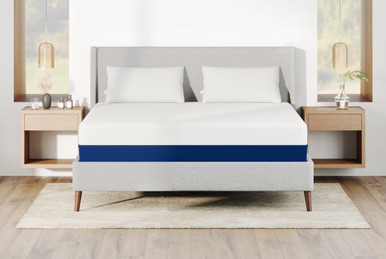
In our 2026 comparison, the AS3 matches Purple on motion isolation and beats it on pressure relief, warranty coverage (20 years vs 10), and overall value. Plant-based Bio-Pur foam, HIVE 5-zone support, 100-night trial, free shipping.
Amerisleep AS3
9.1/10
- 10/10 motion isolation in NapLab's lab tests (2.11 m/s²)
- HIVE 5-zone support reinforces the lumbar and allows shoulder contouring for side sleepers
- Plant-based Bio-Pur open-cell foam, CertiPUR-US certified, made in the USA
- 20-year warranty: full coverage years 1–10, prorated replacement coverage discount years 11–20
- Scores 9/10 for cooling in NapLab's tests, just under Purple’s 10/10 grid
- Softer perimeter edge than a coil hybrid; sleepers over 230 lb may prefer the AS3 Hybrid
The AS3 matches Purple on motion isolation, wins on pressure relief and edge support, and trails it slightly on cooling. For couples, side sleepers, or anyone who values long warranty coverage, this is the right call at a lower effective cost per covered night.
Construction: Bio-Pur foam vs GelFlex Grid
The Amerisleep AS3 stacks three foam layers into 12 inches. The Bio-Core base resists soft-spot formation over years of use. Above that, the HIVE transition layer uses hexagonal cutouts to give the shoulders and hips more cushion and the head, back and legs more support. The Bio-Pur comfort layer uses an open-cell structure that breathes better than standard petroleum memory foam. The Refresh cover wicks moisture at the surface.
Purple’s Original is structurally different. A 4-inch poly foam support base and a 3.5-inch poly foam comfort layer sit under the 2-inch GelFlex Grid: a hyper-elastic polymer structure with roughly 1,400 open air channels. That grid is the entire proposition. It does not retain heat because it is mostly air, and it collapses independently under pressure points rather than contouring slowly like foam. The blended knit cover stretches with the grid. The feel is genuinely unlike anything foam produces, and you will know within the first night whether you respond to it.
How they compare: specs side by side
| Category | Amerisleep AS3 | Purple Original |
|---|---|---|
| Type | All-foam (Bio-Pur, plant-based) | GelFlex Grid + poly foam |
| Firmness | Medium 5/10 | Medium 5/10 |
| Height | 12″ | 9.5″ |
| Queen price | From $1,249 (sale) | From $1,499 |
| Motion isolation | Excellent (10/10, 2.11 m/s² NapLab) | Excellent |
| Cooling | Very good (9/10, 85.4°F max) | Exceptional (10/10, 89.2°F max) |
| Edge support | Good (8.0/10, 5.5″ compression) | Poor (5.1/10, 7.75″ compression) |
| Trial | 100 nights | 100 nights |
| Warranty | 20 years | 10 years |
Firmness and sleeping position
Both mattresses rate medium (5/10) on a 10-point firmness scale. The AS3 contours progressively, with the HIVE layer cushioning the shoulders and hips while supporting the lower back. The Purple grid collapses instantly under concentrated pressure points and springs back quickly. It does not have the slow contouring you expect from foam: it either supports or it does not.
Side sleepers under 180 lb typically prefer the AS3’s progressive contouring at the shoulder. Back sleepers often respond well to Purple’s consistent firmness across the body. Stomach sleepers can do well on either, but the grid’s instant response suits the position better than slow-response foam. Combination sleepers who move during the night usually prefer the AS3 for its motion isolation benefit.
Motion isolation: tied at the top
In lab testing, both isolate motion very well: NapLab gives the AS3 a 10/10 motion isolation score (2.11 m/s²), and Purple’s grid also scores near the top. The practical difference is the source: the AS3 dampens motion through foam deformation, while Purple dampens it through the independent collapse of each grid cell. Both are genuinely excellent for couples. If motion isolation is your primary reason for choosing between the two, it is not a differentiator.
Cooling: Purple wins clearly
Purple’s GelFlex Grid scores a 10/10 in lab testing with a maximum surface temperature of 89.2°F. NapLab scores the AS3 9/10 for cooling (peak 85.4°F), so the gap is small; open-cell foam still holds a little more heat than a grid that is mostly air. If you wake up sweating at least two nights per week, Purple has a measurable and real cooling advantage. The AS3 sleeps cooler than traditional memory foam, but it cannot match a grid that is mostly air.
Edge support: Amerisleep wins
NapLab measured 5.5 inches of compression at the AS3’s edge (8.0/10), still far firmer than Purple’s grid. Purple’s GelFlex Grid scores only 5.1/10 for edge support with 7.75 inches of compression when sitting on the perimeter. For couples who use the full mattress surface, or anyone who sits on the edge to put on shoes, the AS3 holds up noticeably better. Purple’s edge is a real limitation that rarely gets mentioned in comparisons.
Purple Original
8.5/10
- Exceptional cooling: 10/10 lab score, max surface temp 89.2°F
- Outstanding motion isolation, close to the AS3
- Unique instant-response grid feel, nothing like foam
- Fiberglass-free construction
- Poor edge support: 5.1/10, 7.75″ sitting compression
- Some new-foam smell on unboxing for a few days
- Only 10-year warranty vs AS3’s 20 years
- Higher price ($1,499 vs $1,249 queen) for shorter coverage period
If you consistently wake up hot and you have already tried foam and found it insufferable, Purple’s grid delivers cooling no foam-based mattress can match. But the shorter warranty and weak edge support make it the weaker value pick for most sleepers.
Price and long-term value
A queen Purple Original lists at $1,499. A queen Amerisleep AS3 is $1,249 on sale ($1,749 regular) with code AS500, $250 below the Purple price shown here. Amerisleep provides a 20-year warranty, with full replacement in years 1–10 and prorated coverage thereafter, versus Purple's 10-year warranty.
Who should choose each one
Choose the Amerisleep AS3 if: you share a bed and motion transfer is a concern, you sleep on your side and want deep shoulder contouring, you need strong lumbar backing, or a long warranty and plant-based materials matter to you. The HIVE 5-zone layer and 20-year warranty are genuinely difficult to match at this price.
Choose the Purple Original if: you wake up hot at least two nights a week and foam mattresses have consistently made it worse. The grid’s cooling advantage over foam is real and lab-verified. Purple also fits back sleepers who want instant pressure response rather than slow contouring.
For more on the top all-foam options, see our best memory foam mattress guide. If cooling is your main concern, our best cooling mattresses roundup covers grid, gel, and hybrid options side by side. For the best coil-hybrid alternative to the AS3, see the Amerisleep vs Saatva comparison.
The Amerisleep AS3 wins on price, warranty, pressure relief, and edge support. The Purple Original wins on cooling alone. If you do not consistently wake up hot, the AS3 is the better mattress for most sleepers. Both offer 100-night trials, so the decision is reversible.
Frequently asked questions
Is Amerisleep or Purple better for side sleepers?
The Amerisleep AS3 is better for most side sleepers. Its HIVE 5-zone layer cushions the shoulders and hips while supporting the lower back. Purple’s grid responds instantly rather than contouring progressively, which can feel supportive but less cradling for side sleepers who need deep shoulder relief.
Is Purple cooler than Amerisleep?
Yes, measurably. Purple’s GelFlex Grid scores 10/10 in lab cooling tests with a max surface temp of 89.2°F. The AS3’s open-cell Bio-Pur foam sleeps cooler than traditional memory foam but cannot match 1,400 open polymer channels. If you consistently wake up hot, Purple has a genuine and lab-verified cooling advantage.
Which has better motion isolation?
Both isolate motion very well in lab testing (the AS3 scores 10/10 with NapLab): an excellent result for couples. The mechanisms differ (foam deformation vs independent grid-cell collapse) but both work well. Motion isolation is not a differentiator between these two.
How do the warranties compare?
Amerisleep offers a 20-year warranty: full repair or replacement in years 1–10, prorated replacement coverage discount in years 11–20, covering sagging over 1.5 inches and manufacturing defects. Purple offers a 10-year limited warranty. On a cost-per-covered-night basis, the AS3 is the better long-term investment.
Is Purple off-gassing a concern?
Both can have a mild new-foam smell after unboxing that usually fades within a few days; Bio-Pur’s partly plant-based foam is designed to limit odor. New-foam smells may be a concern if you are sensitive to them.
Amerisleep AS3
9.1/10
Best pressure relief, excellent motion isolation, strong edge support, plant-based Bio-Pur foam, 20-year warranty, and a 100-night trial. The most complete pick in this comparison for most sleepers who do not consistently wake up hot.