
 by
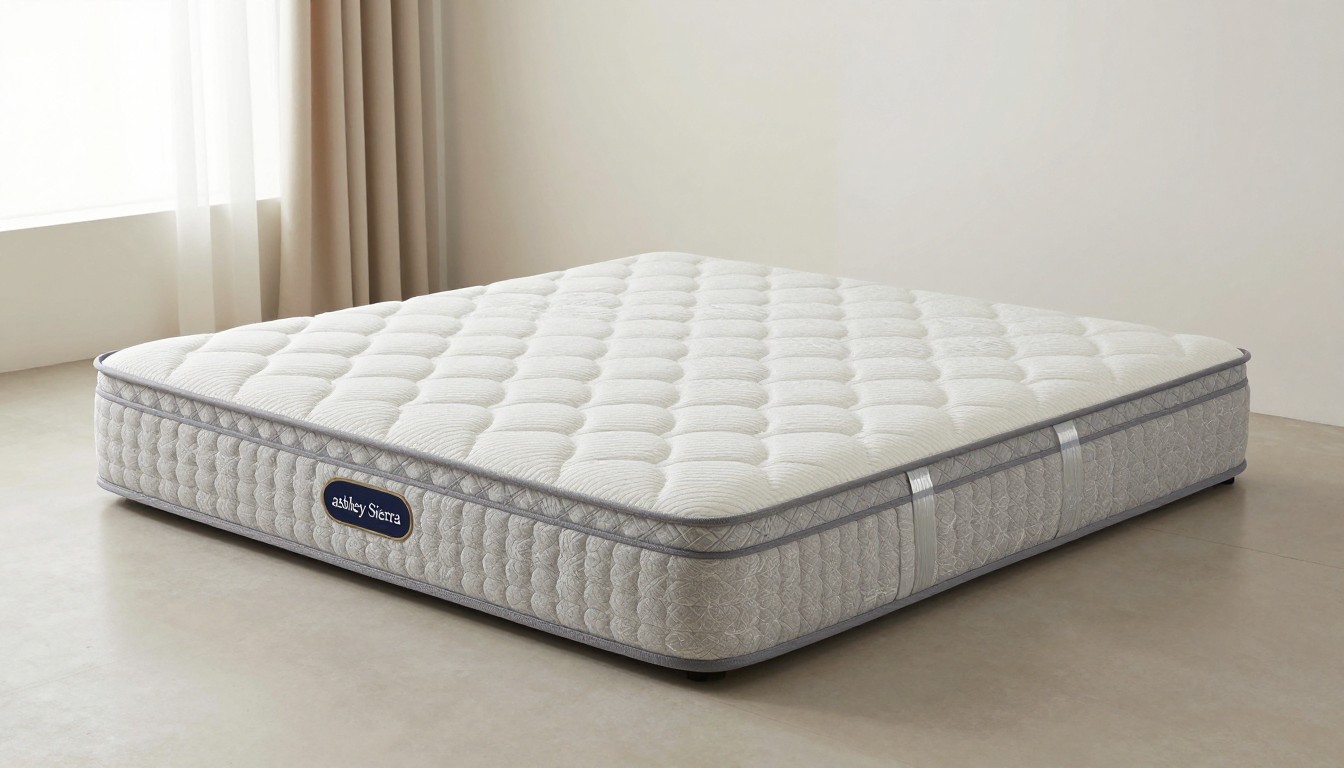
by Quick answer: The Sierra Sleep by Ashley Peak 2.0 in king is a budget wrapped-coil hybrid built for back and combination sleepers who want firm, bouncy support and low motion transfer without paying luxury money.
- Per the Sierra Sleep listing at miskellys.com, the Peak 2.0 Hybrid king stacks quilt foam and luxury loft fiber over a wrapped coil unit and a base foam layer.
- That same listing describes it as a medium, tight-top hybrid shipped compressed as a mattress in a box.
- Retailer listings also show a Peak 2.0 memory foam version, so "Peak" alone doesn't tell you whether you're getting coils.
Updated July 2026 · Reviewed for accuracy
Shoppers type "Ashley Sierra Peak king mattress" and assume they're looking at one product. They're not. Peak 2.0 is a sub-line inside Sierra Sleep by Ashley, and it exists as both a wrapped-coil hybrid and an all-foam memory foam mattress, which are two completely different sleeping experiences at a similar spot in the range.
So this page isn't about talking you into a model number. It's about reading the spec sheet properly, understanding what a budget wrapped-coil build does well and where it gives up ground, and knowing what changes when you buy any of it in king.
What "Sierra Sleep Peak" Actually Refers To
Sierra Sleep is Ashley's in-house mattress program, sold through Ashley HomeStore and a long list of independent furniture retailers. Peak 2.0 is one collection inside it. Ashley's own product copy, reproduced by retailers like Miskelly's, describes the Peak 2.0 Hybrid king as layers of quilt foam and luxury loft fiber over a wrapped coil unit with supple base foam underneath, with the coils credited for support and reduced motion transfer.
Read that layer list again, because it tells you the whole story. Quilt foam is the padding sewn into the cover. Loft fiber is a soft fill that adds initial give. The wrapped coil unit is the engine. The base foam is a stability platform that keeps the coils from grinding into the foundation. That's a classic, unfussy pocketed-coil hybrid recipe, and it's the same recipe most mainstream brands use, just built to a lower cost target.
The all-foam Peak 2.0 is a different animal. No coil unit means no spring-back, more contour, and a slower response when you roll over. Both carry "Peak 2.0" on the label. Retailers list them separately, and the size and profile options differ between the two, so the model card matters more than the collection name.
My rule for this line: never buy a Sierra Sleep model off the collection name. Open the retailer's spec tab and confirm three things: coils or no coils, the stated firmness, and the exact profile listed for the king. Two mattresses in the same collection can feel nothing alike.
Inside the Hybrid Build, Layer by Layer
Wrapped coils, also called pocketed coils, are individually encased in fabric sleeves so each one compresses on its own. That's why Ashley's copy links the coil unit to reduced motion transfer, and the claim is structurally sound: an isolated coil doesn't drag its neighbors down with it the way an old interconnected Bonnell unit does. If your partner gets up early, this is the single most useful thing in the build.
The comfort layers are where budget hybrids diverge from premium ones. Quilt foam plus loft fiber gives you a soft hand-feel the moment you sit down, and it's cheap to produce. What it doesn't give you is deep pressure relief. Fiber compresses and stays compressed over time. Foam poured at a low density does the same thing, faster. That's the trade you're making, and it's a fair one at this end of the market as long as you know it going in.
The base foam layer under the coils is easy to overlook and worth a mention. It stops the coil unit from telegraphing into the foundation and keeps the perimeter from collapsing outward. It doesn't add plushness. It adds years.
What the construction predicts, before anyone sleeps on it:
- Motion isolation: good, because the coils are individually wrapped.
- Bounce and ease of movement: good, because coils push back where all-foam beds sink.
- Deep pressure relief for side sleepers: limited, because fiber and quilt foam are thin comfort materials.
- Long-term surface consistency: the weak point, because fiber fill packs down before coils fatigue.
Hybrid or All-Foam? Choose by Sleep Position
Dweva's Sierra Sleep breakdown compares four models in the range across support, cooling, pressure relief, motion isolation, responsiveness, edge support and durability, and the useful takeaway is that no single Sierra Sleep model wins everywhere. You're picking a profile, not a champion. Sleeping position is the cleanest way to decide.
| Peak 2.0 Hybrid, king | Peak 2.0 Memory Foam, king | |
|---|---|---|
| Support core | Wrapped coil unit over base foam, per the Ashley product copy carried by retailers | All-foam core, no coil unit |
| Comfort layers | Quilt foam plus luxury loft fiber, tight top | Memory foam contour layers |
| Stated feel | Medium, per the retailer listing | Check the current model card, foam versions vary |
| Response when you move | Springy, easy to reposition | Slower, more hug |
| Best suited to | Back and combination sleepers, heavier sleepers who bottom out foam | Side sleepers who want shoulder and hip contour |
Back sleepers do well on the hybrid because coils hold the lumbar line while the thin comfort layer keeps hips from dropping. Combination sleepers do well for the same reason in reverse: there's nothing to climb out of when you turn. Strict side sleepers are the group I'd push toward foam, because a quilted fiber top doesn't open up enough room for a shoulder.
Why King Changes the Calculation
A king is wide. That width exposes two weaknesses that a queen quietly hides.
The first is edge support. On a wide bed you spend more time near the perimeter, especially if two people sleep with a gap in the middle. Wrapped coils help here, since the perimeter coils compress independently rather than rolling the whole unit, but budget hybrids rarely add a reinforced edge row. Sit on the corner in the showroom before you commit.
The second is foundation. A king needs proper center support, and a slat gap that's too wide will let the base foam sag between rails no matter how good the coil unit is. Ashley ships these compressed in a box, which makes delivery painless and makes it very easy to drop a new mattress onto an old, tired base. Don't.
If your real problem is that you and your partner want different firmness levels, a single king isn't the answer at all. Our split king mattress set guide walks through how two twin XL halves solve that, and our queen vs king comparison covers whether the extra width is worth the room space and the bedding costs in the first place.
Buy the base with the bed. The most common "this mattress sagged" complaint I see on budget hybrids is a foundation problem wearing a mattress costume. A king on an unsupported platform will develop a valley down the middle, and most warranty pages exclude exactly that.
Where a Budget Hybrid Wears Out First
Durability in a hybrid is decided by two things: what the coils are made of and what sits on top of them. Ashley's published copy for the Peak 2.0 hybrid names the components without publishing coil gauge or foam density, which is normal at this price point across the whole industry, not an Ashley quirk. That absence is itself information. Brands publish density numbers when the numbers are flattering.
What I'd expect from this build, based on how the materials behave generally: the wrapped coil unit outlasts the comfort layer, comfortably. Steel fatigues slowly. Loft fiber does not. The likely failure mode isn't a broken spring, it's body impressions where the fiber and quilt foam have packed down under your shoulders and hips while the rest of the surface stayed put.
That's manageable if you plan for it. Rotate the mattress head to foot on a schedule, which is easy on a tight-top model with no zoning. Use a proper protector, because moisture accelerates foam breakdown. And set your expectations: a budget wrapped-coil hybrid is a solid medium-term mattress, not an heirloom. Our broader Sierra Sleep coverage goes deeper on how the collection stacks up model by model.
Who Should Buy It, and Who Should Look Elsewhere
Good fit:
- Back and combination sleepers who want coil support and a medium surface.
- Couples where one person is a light sleeper, since wrapped coils limit motion transfer.
- Guest rooms and second bedrooms where a mattress in a box is the practical choice.
- Anyone replacing a genuinely worn-out bed on a tight budget, where the upgrade is obvious regardless of premium comparisons.
Poor fit:
- Strict side sleepers who need real shoulder contour from a thick comfort layer.
- Sleepers who already know they sink through thin quilted tops.
- Buyers who want a mattress to hold its exact feel for a long ownership horizon.
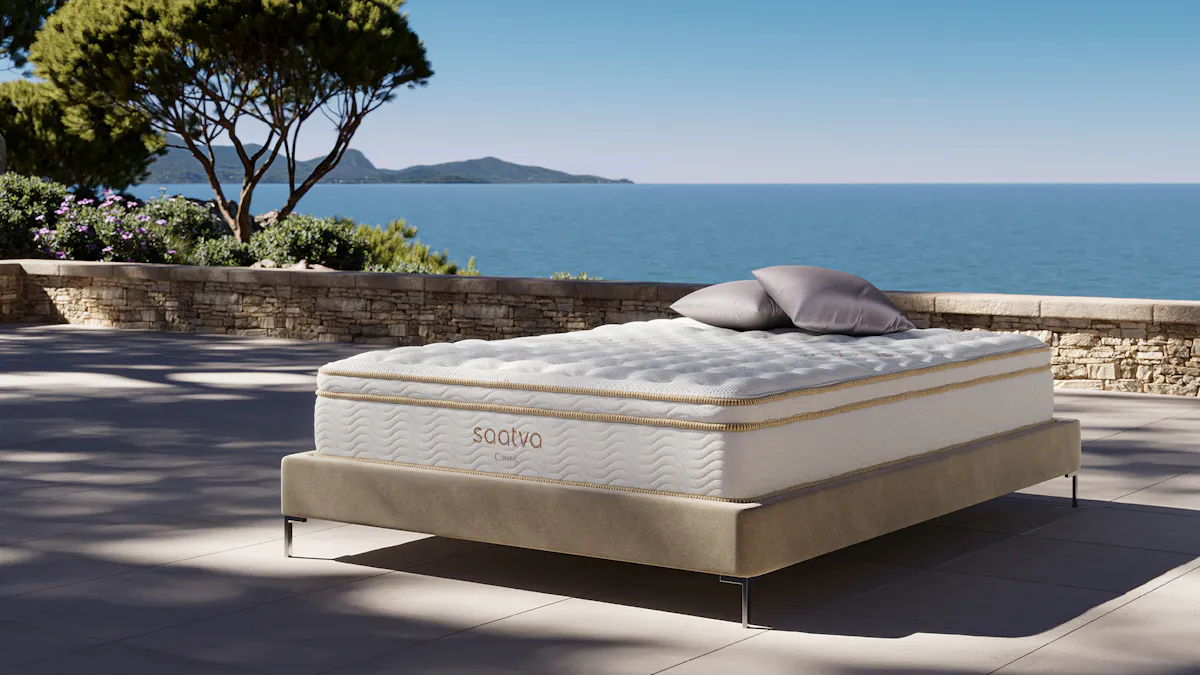
If you fall in the second group and you're shopping king, the honest move is to compare against a build with a thicker, denser comfort system and a reinforced perimeter. That's the category the Saatva Classic sits in, and it's a fair reference point for what a step up in materials actually buys you rather than a knock on Ashley.
How to Shop the Peak King Without Guessing
Prices on Sierra Sleep move constantly across Ashley HomeStore, independent furniture dealers and marketplace sellers, and floor-model and clearance pricing swings it further. Check the live price on the retailer page you're actually buying from rather than trusting a number quoted anywhere else, this page included.
Do the same with the terms. Trial length, return handling and warranty coverage differ between Ashley direct and third-party furniture retailers selling the identical model, and the retailer's policy is the one that governs your purchase. Pull up the returns page and the warranty page for that specific seller before you check out, and confirm who pays for the return pickup on a king, because that logistics cost is the detail that catches people out.
One more thing to verify on the model card: whether the listing you're on is the hybrid or the memory foam Peak 2.0, and whether the profile shown matches the king you're ordering. Retailers occasionally share photography across the collection.
FAQ
Is the Ashley Sierra Peak king a hybrid or a foam mattress?
Both exist. The Peak 2.0 Hybrid king is described in Ashley's product copy, carried by retailers such as Miskelly's, as quilt foam and luxury loft fiber over a wrapped coil unit and base foam. Retailer listings also show a Peak 2.0 memory foam model, which has no coil unit. Confirm which one you're viewing before ordering.
How firm is it?
The Peak 2.0 Hybrid king is listed as a medium, tight-top mattress by retailers carrying it. Medium is a manufacturer label, not a measurement, and a thin quilted comfort layer over coils usually sleeps firmer than the same label on a thick pillow-top. Heavier sleepers will read it firmer still.
Is it good for couples?
The wrapped coil unit is the strength here, since individually encased coils compress in isolation and limit motion transfer, which is exactly what Ashley's own copy credits them with. Edge support is the question mark on any wide budget hybrid, so test the perimeter if you can. If you and your partner want different firmness levels, look at a split king setup instead.
Does it come compressed in a box?
Yes, retailers list the Peak 2.0 Hybrid king as a mattress in a box. Expect it to need time to expand and off-gas after unboxing, and give the surface a few nights before judging the feel, since a freshly decompressed foam and fiber comfort layer doesn't behave the way it will once it's fully settled.
How long will it last?
Ashley doesn't publish coil gauge or foam density figures for this model, so nobody can give you an honest year count. Judging by the materials, the wrapped coils should outlive the quilt foam and loft fiber comfort layer, meaning body impressions on the surface are the likelier first complaint. A supportive foundation with proper center support and regular head-to-foot rotation are the two things most within your control.
ONE OPTION WORTH COMPARING
Shopping as well as reading? Here is one current option worth comparing: the Saatva Classic. Check today’s price, sizing and return terms on the official product page before you order.
Saatva Classic
- 365-night home trial and lifetime warranty, per saatva.com
- Handcrafted in the USA, free white-glove delivery
- Flexible financing available
The Bottom Line
The Sierra Sleep by Ashley Peak 2.0 in king is exactly what its spec sheet says it is: a straightforward wrapped-coil hybrid with a thin quilted comfort layer, built to hit a low price and shipped in a box. That makes it a sensible pick for back and combination sleepers, for motion-sensitive couples, and for rooms where budget drives the decision. Side sleepers who need real contour, and anyone expecting the surface to hold its shape for many years, should spend up on comfort-layer materials instead. Verify the model card, verify the retailer's terms, and put it on a foundation that deserves it.