 by
by Quick answer: The bear hug position in bed is a full-body cuddle where partners wrap their arms around each other. It's comfortable, bonding, and works best on a supportive mattress like the Saatva Classic that keeps two sleepers aligned.
- Common variations include face-to-face, side, reverse (from behind), and leg-entwined versions, per relationship and sleep guides.
- Cuddling positions like this are associated with warmth, emotional bonding, and relaxation, according to published sleep guides.
- Comfort depends on neck support, spine alignment, and free breathing; pillows fix most strain complaints.
Updated July 2026 · Reviewed for accuracy
Some sleep positions are about rest. The bear hug is about closeness. It's one of the most searched cuddling positions for couples, and it's also one of the easiest to get wrong if your mattress, pillows, or arm placement fight you. This guide covers what the position actually is, the main variations, the real benefits, and the comfort details that decide whether it lasts five minutes or a full night.
One clarification up front, because the search term confuses people: the bear hug position in bed has nothing to do with Bear, the mattress brand. If you landed here shopping for a Bear bed, our Tempur-Pedic vs Bear comparison is the page you want. Everyone else, keep reading.
What the bear hug position in bed actually is
Strip away the cutesy name and the mechanics are simple. The bear hug is a close, full-body cuddle where both partners wrap their arms around each other's torso, the way a bear would grip. Bodies are usually aligned chest to chest, or one partner wraps from behind in a tight spoon. The defining trait is arm compression around the upper body, not just lying next to each other.
That arm wrap is what separates it from a loose cuddle or standard spooning. In a spoon, the big spoon's arm rests over the little spoon. In a bear hug, both arms actively encircle, which creates more contact, more warmth, and more of that held-in feeling people are chasing when they search this term.
The one-line test: if both partners' arms are wrapped around the other's back or torso and the chests are touching, it's a bear hug. If only one arm is draped over, it's a spoon or a half-cuddle.
It's used in two contexts. First, as a pre-sleep cuddle, the way couples wind down before separating into their actual sleep positions. Second, as a full-night position, which is rarer and much harder on arms, necks, and mattresses. Most couples, according to sleep guides on cuddling, treat it as the first kind: a bonding position, not a sleeping one. That distinction matters for the comfort advice below.
Bear hug variations worth knowing
Published guides on cuddling positions describe a handful of recurring variations. Each changes the pressure points, the breathing room, and who does the holding. Here's the breakdown.
| Variation | How it works | Best for |
|---|---|---|
| Classic face-to-face | Both partners face each other, arms wrapped around each other's backs | Conversation, eye contact, falling asleep close |
| Side bear hug | Both lie on their sides facing the same direction with a full arm wrap | Side sleepers who want closeness without face-to-face breath |
| Reverse bear hug | One partner wraps from behind, chest to back | The partner who likes feeling held; easier breathing for both |
| Leg-entwined bear hug | Any of the above plus intertwined legs | Maximum contact; couples who run cold |
| Sitting bear hug | Propped against the headboard, one partner leaning into the other | Reading or watching something together before sleep |
My take after years of looking at how couples actually sleep: the reverse bear hug is the most sustainable variation. The front partner breathes freely, the back partner's arm has a natural resting path, and neither neck is craned. The classic face-to-face version is the most romantic and the least practical for anything longer than a few minutes, since you're breathing each other's air and one person's lower arm is usually trapped.
If you're curious how cuddle positions relate to your primary sleep posture, our guide to sleeping positions maps the main ones and what each does to your body over a night.
Comparing options? The Saatva Classic is the pick we keep coming back to — see the final verdict ↓
Why couples like it: the real benefits
The appeal isn't just sentimental. According to relationship and sleep guides, close physical contact like cuddling is associated with oxytocin release, the hormone linked to bonding and calm. That's the physiological reason a bear hug before sleep feels like it lowers the volume on the day. I won't oversell it as a medical treatment, because it isn't one, but the relaxation response people report is consistent across published sources.
The practical benefits are easier to verify at home. Warmth is the big one: two bodies in full contact share heat efficiently, which is why the bear hug spikes in popularity every winter. There's also a security component. Many people, per owner discussions in sleep communities, fall asleep faster when they feel physically held, and the bear hug is the most enveloping of the common cuddle positions.
The pattern that shows up again and again in how couples describe pre-sleep cuddling: not an all-night hold, but ten minutes of closeness before rolling apart, an off switch for the day. It matches what sleep guides recommend.
The catch: benefits drop off fast when the position fights your body. A bear hug that numbs an arm or kinks a neck stops being relaxing in a hurry. That's the next section.
Comfort and safety: how to make it actually work
The single most common bear hug complaint is the trapped bottom arm. In the face-to-face version, one partner's arm ends up pinned under the other's body or wedged between two torsos, and within minutes it's asleep. The fix is arm routing: slide the lower arm under your partner's neck pillow instead of under their body, or switch to the reverse variation where both arms have somewhere to go.
Neck alignment is the second failure point. When two faces are close, one or both partners tend to crane or tuck the chin. Per guidance on sleep position and spine alignment, the goal in any position is a neutral neck, meaning your head isn't tilted up, down, or rotated for extended periods. A pillow with the right loft for your head, plus a thin pillow or folded arm under your partner's head, solves most of this.
Comfort checklist for the bear hug:
- Route the lower arm under a pillow, never under a torso.
- Keep both noses clear; hug around the shoulders and back, not compressing the chest.
- Size difference? The taller partner hugs from behind or takes the lower position.
- Joint or back issues? Use a body pillow between the knees to keep hips stacked.
- Numbness, tingling, or restricted breathing means adjust immediately, not "push through."
Breathing deserves its own sentence. A bear hug that's too tight around the ribcage limits chest expansion, and guides on the position consistently warn against wrapping across the sternum with real pressure. Aim for arms around the upper back and shoulders. If the person being hugged feels squeezed rather than held, loosen it. The position should never cause numbness, and any persistent pain or breathing discomfort is a reason to stop, not to adapt.
Finally, mobility and body size change everything. Couples with a large height or weight gap usually find the reverse bear hug far easier, since the bigger partner can envelop the smaller one without anyone's arm carrying load. Anyone with shoulder, neck, or back problems should treat the bear hug as a short pre-sleep ritual rather than an all-night hold, and lean on pillows to do the supporting work that arms otherwise would.
Your mattress matters more than you think
Here's the part most cuddle guides skip, and it's the part I care about most: the surface decides whether a two-person position holds or collapses. Two adults lying in full contact concentrate weight in a small area. On a soft all-foam mattress, that creates a shared trough, both bodies roll toward the middle dip, and the bear hug turns into an accidental wrestling match. On a mattress with a coil core and proper edge support, each body stays where you put it.
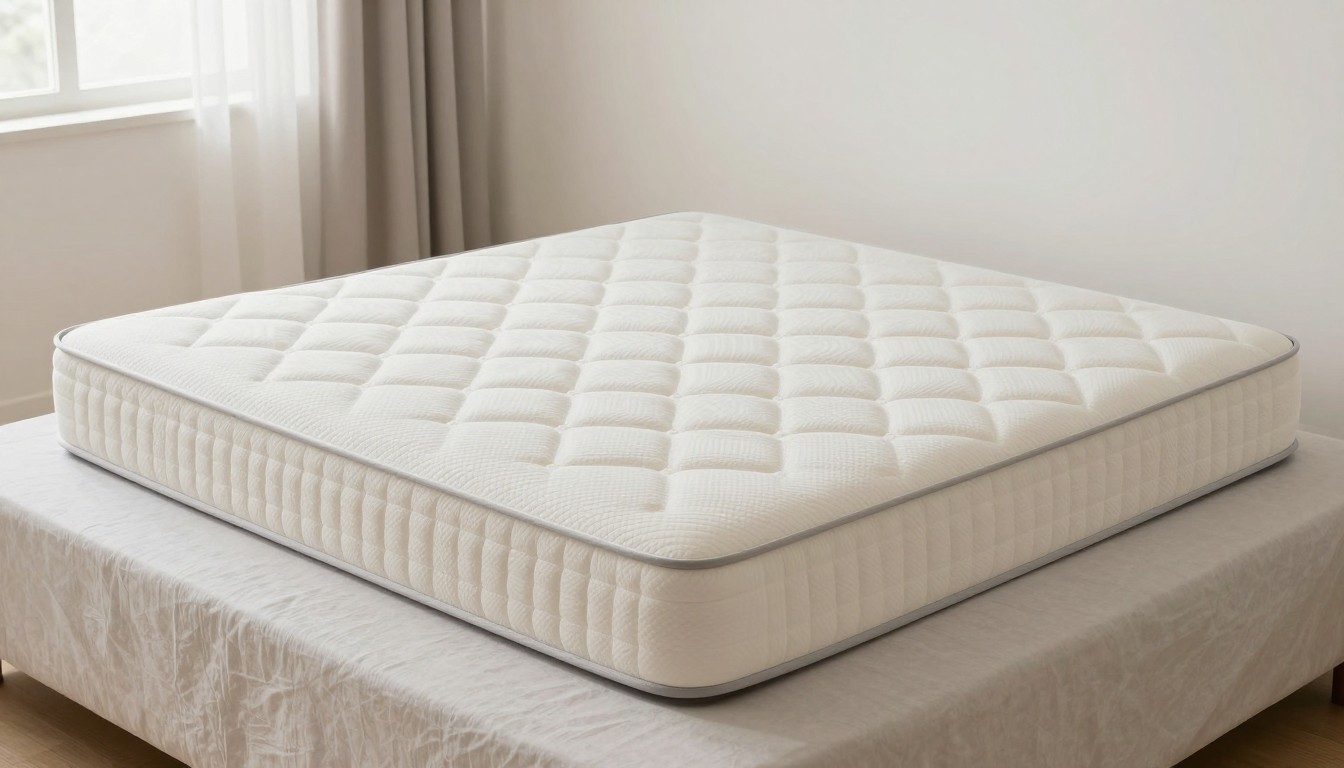
Construction explains the difference. Individually wrapped coils compress independently, so the mattress absorbs two bodies' weight without building a central valley. Dense all-foam builds can isolate motion well but often let hips sink past neutral when weight doubles up, which is exactly what happens chest to chest. Edge support matters too: couples cuddling tend to drift toward one side of the bed, and a weak edge means the outside partner feels like they're sliding off. Hybrid designs, per manufacturer specifications across the category, generally deliver stronger perimeter support than all-foam equivalents.
Temperature is the other mattress variable. Full-body contact doubles the heat load, and foam that hugs closely can trap it. If you and your partner run warm, look at how your bed handles heat by position; our breakdown of temperature regulation by sleep position explains why airflow through a coil layer changes the equation for couples.
So what's the decision? If you cuddle nightly and want one mattress that handles both the bear hug and eight hours of actual sleep, I'd point you at the Saatva Classic. It's a coil-on-coil hybrid handcrafted in the USA, it's among America's best-selling luxury mattresses, and per the manufacturer it comes with a generous at-home sleep trial and a long warranty, plus flexible financing. It's priced in the premium tier, so check the current offer on the official site. The reason it fits this use case specifically is the dual-coil support core: two bodies stay level in any cuddle position, the reinforced edge holds when you drift sideways, and airflow through the coils keeps shared body heat from pooling. A soft memory foam bed feels cozy for the first five minutes of a bear hug and then swallows you both.
Common mistakes couples make with the bear hug
Treating it as an all-night position. Most bodies can't sustain full arm wrap for hours. Numb arms and stiff necks follow. Use it as a wind-down ritual, then migrate to your real sleep position.
Ignoring the arm problem until it hurts. By the time the lower arm is fully numb, the shoulder has been compressed for a while. Route arms correctly from the start, as covered above.
Hugging on a mattress that can't support two. A sagging or overly soft surface turns closeness into strain. If you both roll together involuntarily, that's the bed talking, not romance.
Squeezing the chest. The hug belongs around the shoulders and upper back. Anything that restricts breathing is wrong, full stop.
Bottom line: the bear hug position in bed is a genuinely good pre-sleep ritual for couples, and a mediocre all-night position. Get the arm routing, pillow support, and mattress surface right, and it does exactly what you want it to do: help two people switch off together.
FAQ
Is the bear hug position good for sleeping all night?
Usually not. Most couples, per sleep guides on cuddling, use it as a pre-sleep bonding position and then separate into individual sleep postures. Holding a full arm wrap overnight typically leads to numb arms and neck strain.
What's the difference between a bear hug and spooning?
In spooning, one partner's arm drapes over the other from behind. In a bear hug, both arms actively wrap around the other's torso, creating more contact and compression. The reverse bear hug is essentially a spoon with a tighter, two-arm grip.
How do I stop my arm from going numb in the bear hug?
Never let your lower arm carry body weight. Slide it under your partner's neck pillow rather than under their torso, or switch to the reverse variation where both arms rest naturally. Numbness that persists means reposition immediately.
Does mattress firmness matter for cuddling positions?
Yes. Two bodies in contact concentrate weight, and overly soft surfaces let both partners sink into a shared dip. A supportive hybrid with a coil core keeps both bodies level and holds its edge when you drift to one side, per manufacturer construction specs across the category.
Is the bear hug position related to the Bear mattress brand?
No. The term describes a cuddling position and predates any mattress marketing. If you're actually shopping for a Bear bed, that's a different search entirely.
FINAL VERDICT
Bottom line for couples who sleep in the bear hug position: if you want a bed that absorbs two sleepers' motion and heat, the Saatva Classic is the safer buy — the 365-night trial and lifetime warranty put the risk on the brand, not on you.
OUR CATEGORY-MATCHED PICK · UP TO $625 OFF
Saatva Classic
- 365-night home trial and lifetime warranty, per saatva.com
- Handcrafted in the USA, free white-glove delivery
- Flexible financing available