
 by
by Quick answer: The coolest mattress topper isn’t simply the one that feels cold when you first touch it. I look for a complete path for heat to leave the sleep surface without sacrificing support. Ventilated latex, wool, phase-change fabrics, and thoughtfully built conductive-infused foams can all work, but they produce very different feels.
- Choose latex if airflow, responsiveness, and resistance to deep sink matter most.
- Choose wool if moisture control and steady comfort across changing seasons are the priorities.
- Consider graphite- or copper-infused foam when you want memory foam contouring with some help spreading surface heat.
- Treat gel color, “cooling comfort,” and other vague labels cautiously unless the construction explains how heat can escape.
Updated July 2026 · Reviewed for accuracy
My verdict: The coolest mattress topper for your bed depends on what is making the bed feel hot. If the mattress is supportive but the surface hugs too closely, a more breathable topper can be a sensible correction. If the mattress is sagging or the room and bedding are trapping the heat, a topper may only cover up the real problem.
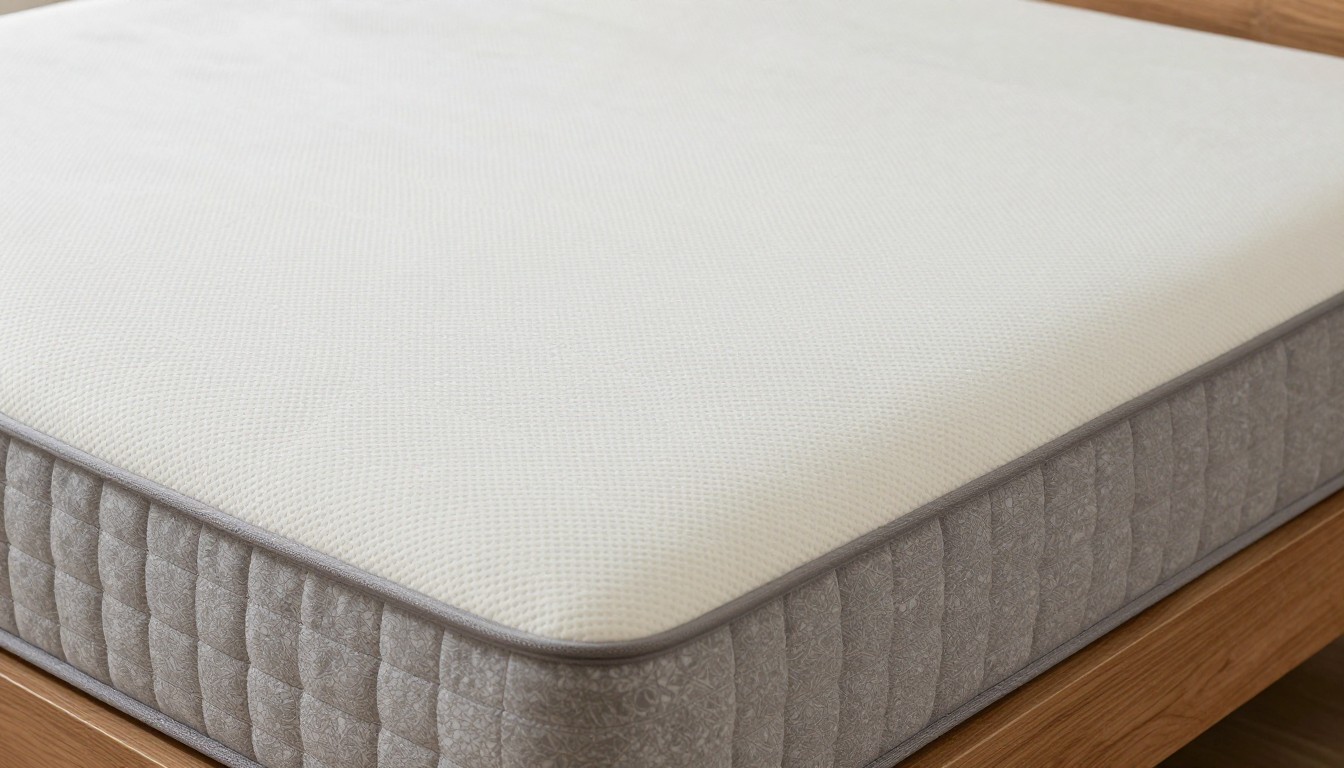
I judge this category from the inside out. The cover may create the first sensation, but the core material determines how closely the topper wraps around you, how much air can circulate, and how readily heat leaves the contact zone. Those construction details matter more than a cool-sounding product name.
A cold first touch is not the same as sleeping cool
A cool fabric can feel impressive for the first few moments because the surface accepts heat from your skin. That sensation does not reveal how the topper behaves after warmth builds beneath your shoulders, hips, and torso. The important question is where that accumulated heat goes next.
Mattress toppers are passive layers. They do not refrigerate the bed. A conductive additive may spread warmth across a wider area, a breathable structure may let warm air disperse, and an absorbent fiber may keep humidity from making the surface feel clammy. Each mechanism can help, but none operates independently of the rest of the bed.
Close contouring increases the amount of material touching the body. That is why traditional memory foam can feel warmer than a buoyant material, even when both products are used in the same room. The foam’s slow response is useful for pressure distribution, but it can also create a deeper pocket with limited airflow around the sleeper.
The Nut’s construction check: A credible cooling description should identify the core material, the airflow design, or the heat-management layer. If the explanation stops at words such as “fresh,” “icy,” or “cooling comfort,” I still don’t know how the topper is supposed to manage warmth.
The mattress underneath remains part of the equation. A breathable topper placed over dense foam may improve the immediate sleep surface, but it cannot rebuild the entire bed into an airy coil system. Likewise, a thick waterproof protector or tightly woven sheet can mute the effect of a temperature-regulating cover.
Diagnose the heat before changing the mattress surface
A hot bed is often a stack problem rather than a single-material problem. The mattress, topper, protector, fitted sheet, duvet, room humidity, and sleeper all affect the small climate directly around the body. Buying a topper before checking that stack can leave you with a different feel and the same temperature complaint.
Start by separating heat retention from moisture. If the bed feels stuffy and damp, breathable bedding and moisture-managing fibers may matter more than a cold-touch cover. If warmth is concentrated where the body sinks deepest, excessive contouring is the stronger suspect.
- Check the protector: A protective barrier can restrict airflow, especially if it creates a dense layer directly beneath the sheet.
- Check the bedding: Heavy insulation above the body can overwhelm improvements made beneath it.
- Check the mattress condition: Deep impressions increase contact around the body and indicate a support problem that a topper cannot repair.
- Check the room: A passive topper has limited ability to offset a consistently warm or humid bedroom.
- Check the desired feel: Replacing warm memory foam with latex may improve airflow, but it also creates a springier and less enveloping surface.
If the mattress still supports you evenly and the heat is clearly concentrated at its surface, a topper is a reasonable place to intervene. If the support core has softened or the bed has visible valleys, adding another comfort layer usually delays the replacement decision rather than solving it.
Cooling materials, construction by construction
A blue tint does not tell me how a topper performs. I want to know what the core is made from, how much the sleeper sinks into it, whether the material has a path for airflow, and what sits between that core and the sheet.
Graphite-infused memory foam: Graphite is used as a conductive component intended to spread heat through a broader portion of the foam. That can be more useful than leaving warmth concentrated directly beneath the body, but the infusion does not erase memory foam’s basic behavior. A dense, deeply conforming slab can still feel enclosed if the overall design offers little ventilation.
The base foam matters as much as the infusion. Foam quality, cell structure, firmness, contouring depth, and the cover all influence the result. I would not assume that two graphite-colored toppers sleep alike merely because both put the same ingredient in the product name.
Useful distinction: Conductivity moves heat; breathability gives warm air somewhere to go. The strongest construction story explains both the movement of warmth within the topper and its route away from the sleeper.
Copper-infused memory foam: Copper is another conductive addition used in some foams. As with graphite, its presence alone does not establish the finished topper’s temperature behavior. The concentration, distribution, surrounding foam, ventilation, and cover construction all remain relevant, so I treat the ingredient as one part of the design rather than the verdict.
Ventilated latex: Latex usually feels more buoyant than slow-response memory foam. The sleeper tends to remain nearer the surface instead of settling into a deep body-shaped pocket, which can leave more room for air around the body. Many latex toppers also use molded channels or pin-core openings, though the actual pattern should be confirmed on the product page.
Latex is also a sensible material to examine when durability matters. It tends to resist the rapid softening associated with flimsy polyfoam, but “latex” is still a broad label. The blend, firmness, construction, and sleeper load affect how a particular topper holds up, so I would not treat the material name as a promise of lifespan.
Wool: Wool manages temperature differently. It is not meant to feel icy. Its value is moisture buffering and a less clammy sleep surface, which can make it comfortable across changing conditions. It also creates a cushioned rather than body-hugging feel, although the fill can compact and may require care to preserve an even loft.
If wool is the material you are considering, my wool mattress topper guide explains the broader category, while the wool mattress topper review looks more closely at how this construction behaves in use. Wool is especially worth understanding before buying because its temperature feel and pressure relief differ sharply from foam.
- For close contouring: Look at conductive-infused memory foam, then check whether the core is ventilated and how deeply it is likely to hug.
- For easier movement: Latex generally provides a more immediate response and less of the “stuck” sensation associated with slow foam.
- For moisture management: Wool addresses humidity near the body without depending on a cold-touch finish.
- For minimal feel change: A breathable or phase-change cover can alter the surface less than a substantial foam or latex layer.
Phase-change fabrics: A phase-change treatment is intended to absorb and release heat around a target temperature range. It can moderate the initial surface sensation, but its capacity is not limitless. Once the layer has absorbed warmth, the rest of the topper still needs to manage that heat.
Care instructions are particularly important with treated covers. Laundering, drying, and abrasion may affect a surface treatment differently from a cooling component distributed through the topper core. A removable cover is convenient only if its approved care process fits the way you plan to use it.
Gel foam: Gel is not automatically useless, but the word is too broad to support a buying decision. Beads, swirls, coatings, and infused particles can represent very different constructions. A brief cool-to-the-touch sensation does not show that a thick foam core will stay comfortable through sustained body contact.
Ventilation channels: Holes and channels can create space within a topper, but airflow requires an open route. A perforated core wrapped in a restrictive cover and protector may not deliver the same result as an entire sleep surface designed to breathe. I always judge the assembled stack, not an isolated cutaway image.
Match the topper to the mattress and sleep position
A topper changes the comfort surface, not the support core. That distinction should drive the purchase. If the underlying mattress keeps the spine and joints comfortably supported but feels too firm or too warm, a topper can adjust the surface. If the mattress dips beneath the body, adding softness on top does not restore the missing support.
Side sleepers usually need enough contouring for the shoulder and hip to settle without creating sharp pressure. Conductive-infused memory foam can preserve the slower, closer feel many side sleepers want. Softer latex is the more responsive alternative, though it will not reproduce memory foam’s deep hug.
Back sleepers generally need a balance between surface cushioning and resistance beneath the pelvis. A topper that is too plush can exaggerate sink on an already-soft mattress. A responsive latex layer or a more supportive foam feel may be easier to pair with a bed that needs only modest cushioning.
Stomach sleepers should be especially cautious about adding a thick, soft comfort layer. Excessive sink beneath the midsection can create an uneven posture and discomfort. Cooling is not a useful trade if the topper makes the existing mattress noticeably less supportive.
- Combination sleepers: Favor a responsive surface that does not make repositioning feel laborious.
- People who enjoy a deep hug: Keep contouring foam in consideration, but inspect the ventilation and cover instead of relying on an infusion name alone.
- People who dislike sink: Put buoyant latex or a shallower fiber construction ahead of slow foam.
- Couples: Account for both movement and temperature preferences, since a material that feels airy may also feel livelier.
Thickness controls how strongly the topper changes the bed. More material can provide greater cushioning, but it can also increase sink and create a larger insulating layer. If your mattress already feels comfortable and temperature is the main complaint, the most substantial topper is not automatically the best answer. My guide to the thickest mattress toppers explains where added depth helps and where it can become counterproductive.
Firmness labels also need context. A soft topper over a firm mattress does not behave exactly like that same topper over a worn, plush bed. Body weight distribution, mattress firmness, and topper response combine to create the final feel, so a label such as “medium” is only a starting point.
Motion, edge feel, and fit still matter
A cooling layer can introduce tradeoffs outside temperature. Slow-response foam tends to absorb more small movements, while responsive latex may return energy more quickly. Neither behavior is universally better. The right choice depends on whether motion isolation or easy repositioning matters more in your bed.
A topper cannot reinforce a weak mattress edge because it contains no perimeter support system. A very soft topper may actually make the edge feel less distinct by compressing as you sit or roll near it. If edge stability is already poor, investigate the mattress rather than expecting a surface layer to correct the perimeter.
Fit affects comfort as well. A topper that shifts, bunches its cover, or sits unevenly can create pressure and expose gaps at the edge. Check how the topper is meant to stay in place and confirm that your fitted sheet can accommodate the combined mattress and topper without pulling everything into a rounded shape.
Practical fit check: Cooling performance is secondary if the topper slides or changes the mattress more than intended. Decide how much softness, bounce, motion damping, and edge change you can accept before choosing the cooling material.
How to read cooling claims before buying
A useful product page should let you trace the construction from the sheet downward. If it emphasizes a branded cooling phrase but leaves the core material, cover composition, or ventilation vague, comparing it with another topper becomes guesswork.
- Identify the core material and the type of response it is likely to create.
- Look for an explained cooling mechanism rather than a temperature adjective.
- Check whether airflow features continue through the cover and protector setup.
- Read the care directions before assuming a treated cover is machine washable.
- Review the live return terms, including fees, packaging requirements, and product-condition rules.
- Read what the warranty actually covers and what conditions can exclude a claim.
- Compare the live total price only after deciding which construction fits your bed.
A home trial is useful because temperature perception varies with the sleeper, bedding, mattress, and room. The written terms matter more than a prominent trial headline. Confirm when the period starts, how an opened topper is handled, and whether return transportation or other fees remain your responsibility.
Warranty length should not be treated as proof of material quality. A long term can still come with narrow coverage, exclusions, or an impression threshold that does not match the problem you experience. Foam density, material disclosure, workmanship, and the actual coverage language are more informative when considered together.
Certifications such as CertiPUR-US and OEKO-TEX can be useful screening points when their scope and validity are confirmed through the appropriate official database. They are not cooling scores, and they do not tell you how supportive or durable a finished topper will feel. Treat certification and temperature performance as separate questions.
My policy check: Read the current terms on the seller’s site at the time of purchase. Return rules, warranty language, shipping charges, and live prices can change, so an old summary should never replace the actual checkout and policy pages.
Durability depends on the base material, not the cooling label
Compression is the durability issue I watch most closely in a topper. Once the layer loses resilience, it may feel softer, warmer, and less even because the sleeper settles deeper into the same area. A cooling infusion cannot compensate for a weak base foam that stops recovering properly.
For foam, disclosed density and a clear material description help with evaluation, although neither replaces sensible expectations about load and use. For latex, the formulation and firmness deserve attention. For wool, look at how the fill is contained and what care is required to redistribute or preserve the loft.
A removable cover can protect the core, but only if spills and cleaning are handled according to the instructions. Foam and latex cores are not automatically washable simply because the cover comes off. Wool also requires material-specific care, so avoid assuming that every natural-fiber topper can be cleaned the same way.
- Use a breathable protector if protection is necessary, then assess whether it changes the surface feel.
- Keep the topper supported evenly rather than placing it over broken slats or a sagging mattress.
- Follow the maker’s rotation and cleaning directions instead of applying a universal care routine.
- Inspect persistent impressions as a construction issue, not merely a temperature issue.
Durability and cooling are connected because a compressed surface increases close contact. Preserving the topper’s intended shape helps preserve its intended airflow and feel, although normal softening can still occur with use.
Who should buy a cooling topper and who should skip one
A supportive mattress that feels comfortable except for surface warmth is the clearest use case. A topper can change contact, airflow, and moisture behavior without requiring you to replace a mattress that otherwise works.
It can also make sense for a side sleeper who wants contouring but finds plain memory foam too enveloping, or for someone who wants to replace a warm foam feel with the buoyancy of latex. Wool suits a different preference, especially when humidity and seasonal comfort matter more than a cold initial touch.
Skip the topper if the mattress has a structural dip, weak perimeter, or broadly uncomfortable support. Also pause if changing the protector, sheets, or top bedding solves the heat complaint. Buying another layer should follow diagnosis, not substitute for it.
- Buy for a surface problem: Excessive hug, poor moisture handling, or an uncomfortably warm top layer.
- Do not buy for a support failure: Sagging, uneven foundations, or a mattress that is wrong for your sleeping posture.
- Choose by feel after mechanism: Cooling is useful only if the topper’s firmness and response suit you.
- Keep expectations realistic: A passive layer can improve the immediate sleep surface, but it cannot control the entire bedroom climate.
A practical way to narrow the choices
Start with the feel you refuse to compromise. If you need slow contouring, investigate better-ventilated conductive-infused foam. If you want to stay nearer the surface, focus on latex. If moisture and changing seasons are the issue, compare wool constructions.
Next, eliminate products that do not explain their materials or cooling pathway. Then check fit, care, return terms, warranty coverage, and the live total price. This order keeps a flashy cover or promotion from deciding the purchase before the construction has earned consideration.
Finally, judge the topper as part of your existing bed. Include the protector and sheets in that judgment, because they sit between you and the advertised cooling layer. The best material choice can still be undermined by an incompatible stack.
Bottom line: Buy the construction, not the temperature adjective. The right topper creates a feel you enjoy while giving body heat and moisture a plausible route away from the sleep surface.
Optional product context
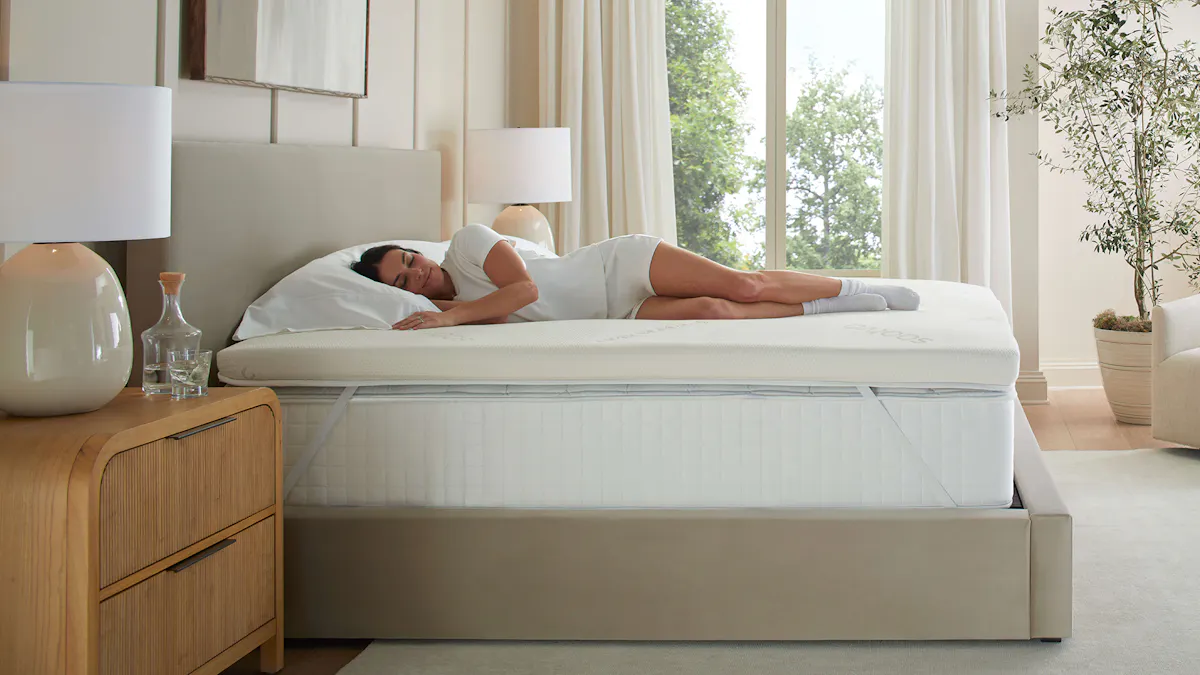
After choosing the material family, one product you may encounter is the Saatva Graphite Topper. I would assess it with the same checklist rather than treating it as an automatic winner: confirm the current layer construction, care instructions, return terms, warranty coverage, and live price on the official product page before deciding.
ONE OPTION WORTH COMPARING
Shopping as well as reading? Here is one current option worth comparing: the Saatva Graphite Topper. Check today’s price, sizing and return terms on the official product page before you order.
Saatva Graphite Topper
- Graphite-infused memory foam, per saatva.com
- 180-night trial
- Secure anchor bands, fits deep mattresses
FAQ
Do cooling mattress toppers actually work?
They can improve the immediate sleep surface when the construction addresses the cause of the warmth. Breathable latex reduces deep enclosure, wool manages moisture, conductive-infused foam is intended to spread concentrated heat, and phase-change fabric can moderate the surface sensation. Results still depend on the mattress, bedding, room, and sleeper, so “cooling” should be treated as a mechanism to evaluate rather than a promised outcome.
What is the coolest mattress topper material?
The coolest mattress topper material depends on the feel and heat pathway you need. Ventilated latex is a strong fit for sleepers who want buoyancy and airflow. Wool makes sense when moisture and seasonal regulation are the bigger concerns. Conductive-infused memory foam is the closer match for someone who wants contouring but needs a more thoughtful heat-management design than plain foam.
Will a cooling topper fix a mattress that sleeps hot?
It may make the surface more comfortable, but it does not change every layer underneath. A breathable topper can reduce close-body heat buildup over a dense mattress, yet the underlying bed may continue storing warmth. If the mattress is supportive, that improvement can be worthwhile. If it is also sagging or uncomfortable, the topper is unlikely to address the full problem.
How long do cooling mattress toppers last?
There is no universal lifespan for the category. Base-material quality, resilience, sleeper load, care, and the condition of the supporting mattress all affect durability. Cooling ingredients do not prevent compression by themselves. Look for clear material disclosure, realistic care requirements, and warranty language that explains covered defects rather than relying on the cooling label.
Is a cooling topper or a cooling mattress the better buy?
Choose a topper when the mattress remains supportive and the problem is concentrated at the comfort surface. Consider replacing the mattress when support has deteriorated, the edge has failed, or the entire construction feels wrong for your sleep position. A topper is a surface adjustment, not structural repair.