
 by
by Kitchen cabinet door styles explained finally clicked for me when I stopped treating cabinet doors like trim and started reading them like furniture. I was trying to warm up a tired kitchen without ripping out good boxes, and the fix turned out to be more visual than structural. One long Saturday, a stack of samples, and suddenly the whole room made sense.
I did not need a full remodel. I needed to see how each door style changed the mood, the light, and the way you move through the room.
Here's what it looked like before
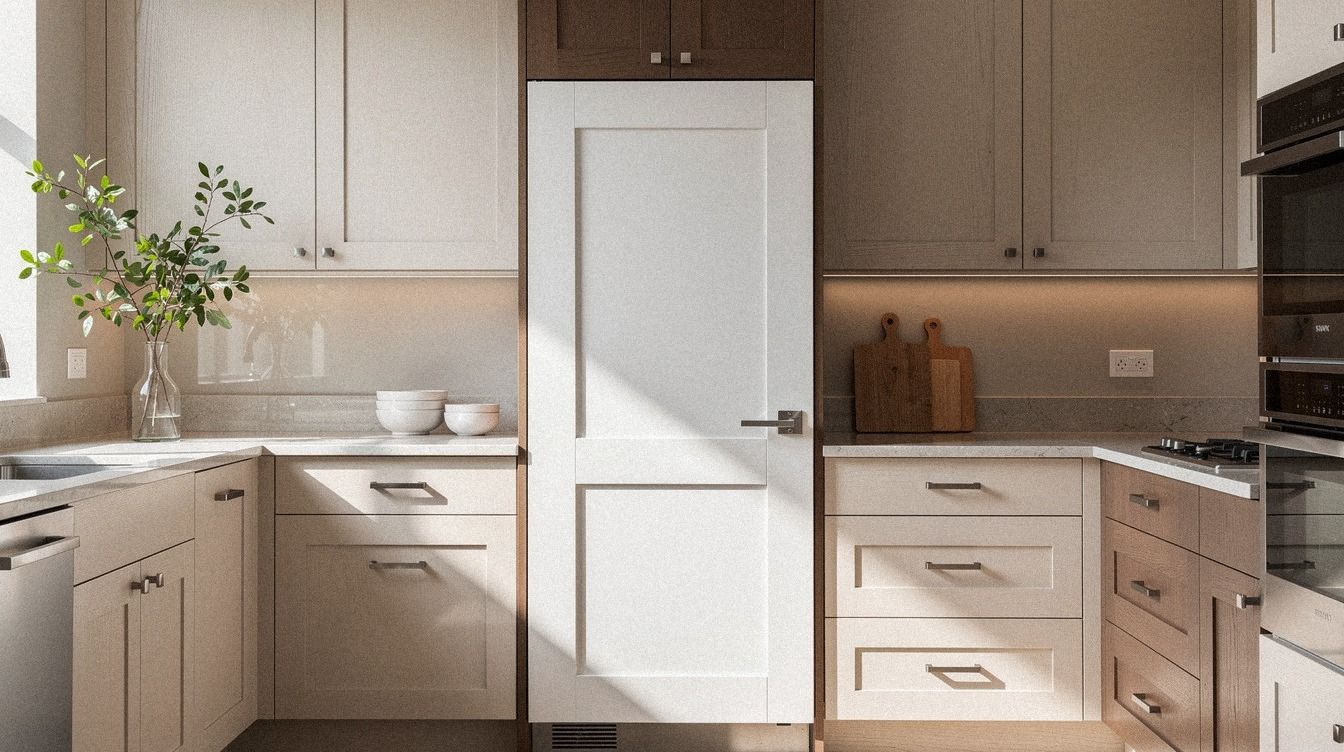
Before this little makeover, my kitchen had the full late-builder package: random door profiles, shiny pulls that never matched the faucet, and upper cabinets that felt heavier than the room could carry. The boxes were sound, but the faces were saying three different things at once. If you've ever stood in your kitchen and thought, why does this feel busy when there isn't much in here, that's usually the reason.
The layout was workable, with a standard 36 in counter height, decent daylight, and about 42 to 48 in of clearance around the island. But the cabinet fronts fought the architecture.
The pantry wall wanted order. The island wanted weight.
The coffee corner wanted a little softness. I kept saving two tone kitchen cabinet ideas that add instant depth and oak kitchen cabinet ideas for a warm modern look because I knew the answer lived in the doors, not in another decorative bowl.
- Started with the plain Shaker door
- Compared slim Shaker rails beside wide frames
- Held a flat panel against the island
- Tested full overlay doors on one cabinet run
- Painted one sample door a warm white
- What changed when I matched inset panels to the pantry wall
- Why did I add reeded glass above the coffee cabinet
- Swapped arched doors onto the corner uppers
- Chose slab drawers below the cooktop
- Should I repeat the same brass knob across every door style
- Lined up the final doors under natural light
- The Shaker against Slab showdown
- What the White Dove sample run actually teaches you
1Started with the plain Shaker door
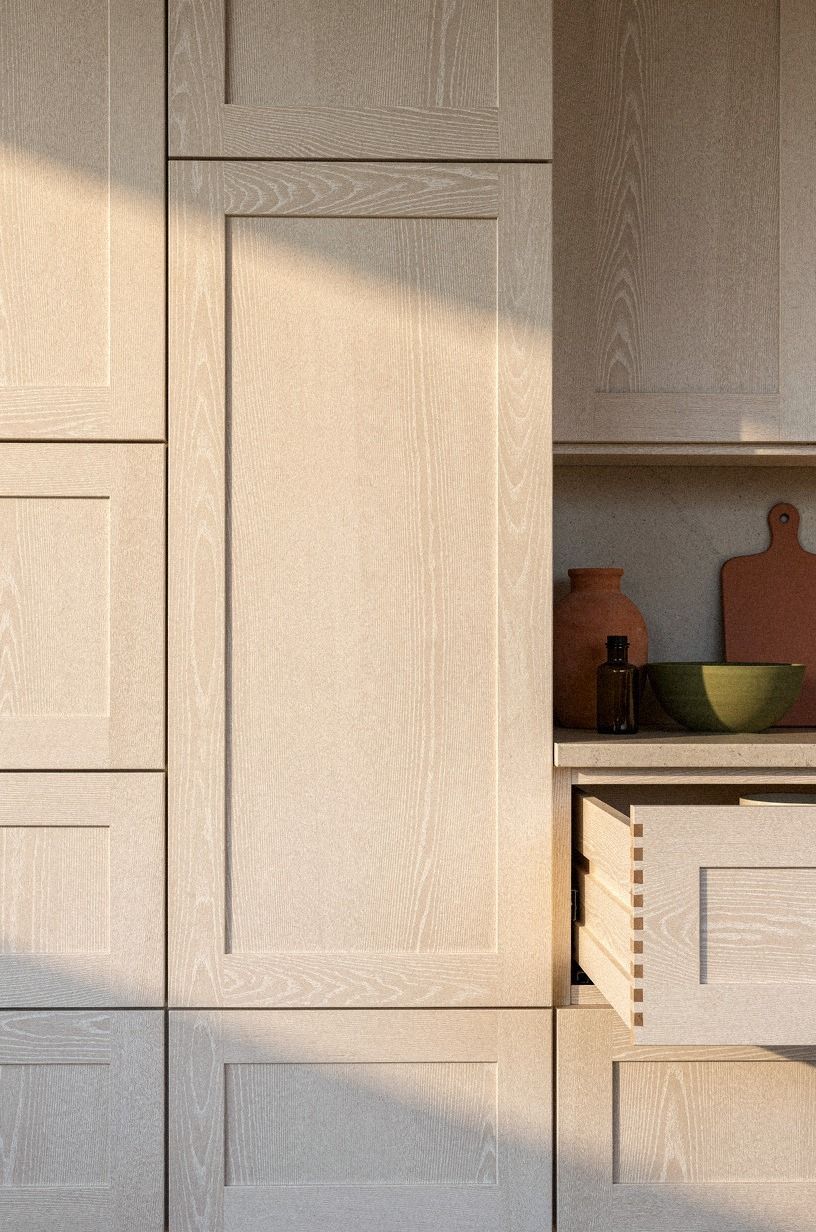
I started with the plain Shaker door because it gives you a baseline fast, and in a kitchen full of choices that's a relief. Against a full cabinet wall, the cerused white oak rails and panels read calm instead of rustic, especially once the exposed white oak details were allowed to stay pale rather than amber. If you're trying to understand types of kitchen cabinets styles, this is the door that teaches proportion first.
What surprised me was how much the room softened when the Shaker profile stayed honest and the frame stayed flat. No fussy bead.
No fake heritage move. I held the sample at eye level, stepped back to the sink, then back to the island, and it still looked right. That is rare.
If your kitchen already has warm flooring or oak accents, start here before you chase something more dramatic. My notes from the most popular kitchen cabinet colors right now helped too, because Shaker only works when the color and the reveal stay disciplined.
The mistake I'd avoid is over-thick framing. You want definition, not bulk. On a small wall, bulky rails make a decent kitchen feel chopped up.
2Compared slim Shaker rails beside wide frames
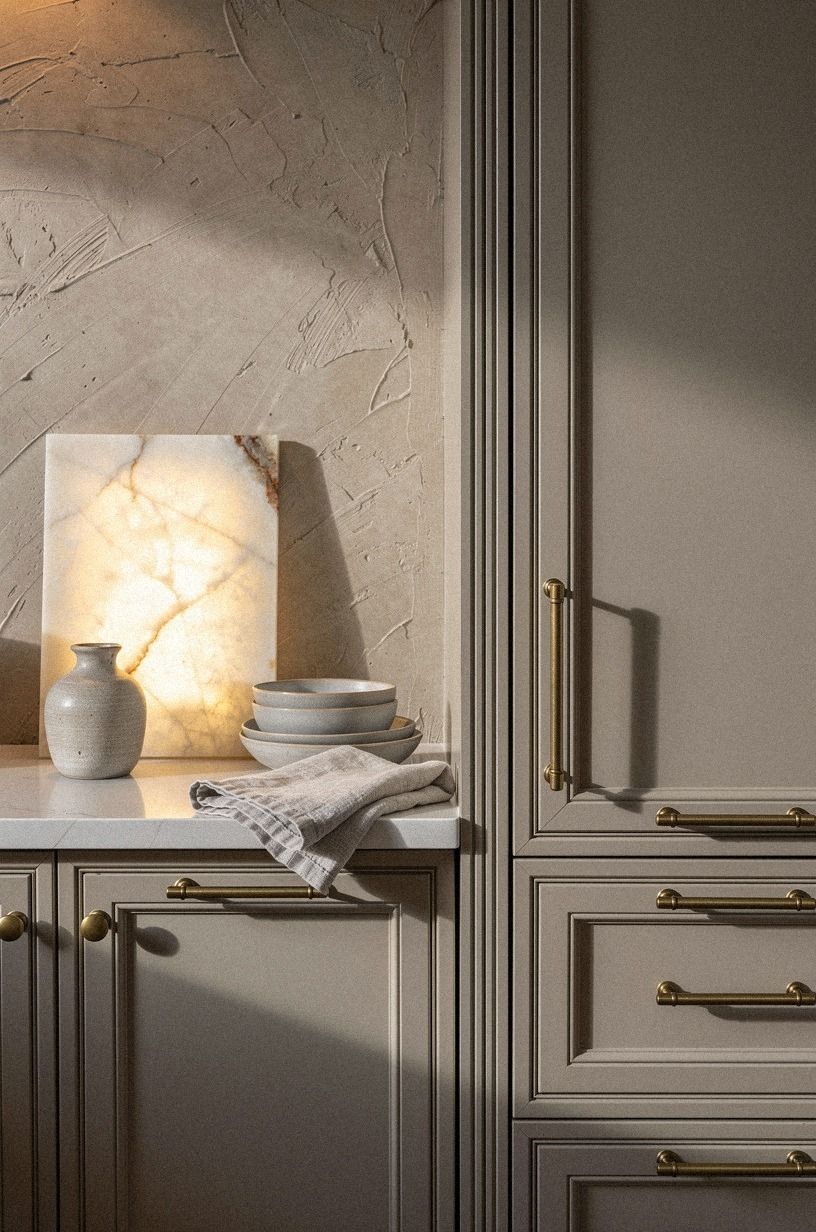
Next I put a slim Shaker door beside a much wider frame, and that comparison taught me more than a week of scrolling did.
3Held a flat panel against the island
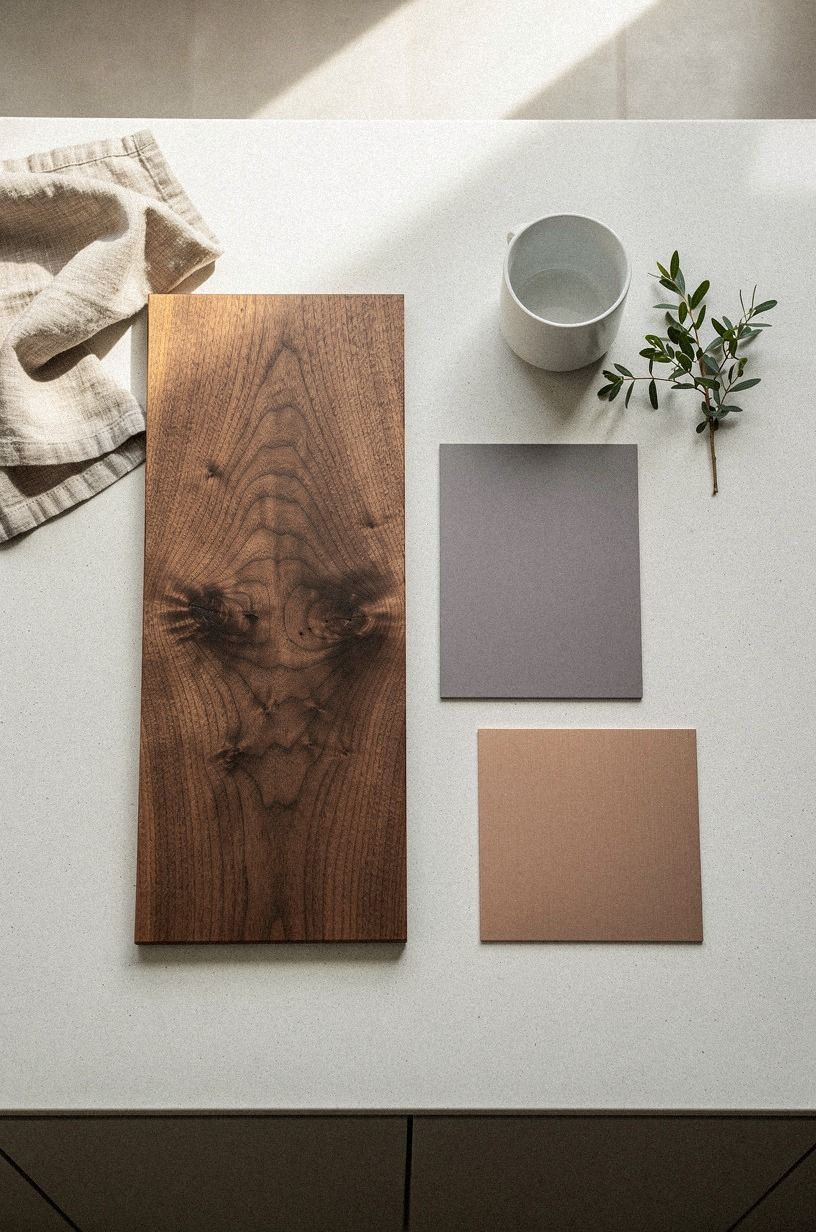
Then I held a flat panel against the island, and suddenly the kitchen looked more expensive than it had any right to. The book-matched walnut grain was doing most of the work, with plum grey and rose-gold samples nearby making the slab feel intentional instead of severe. If you're comparing Shaker to slab, this is the moment that exposes your real taste.
Flat panels don't give you much forgiveness. The lines have to stay crisp, the hardware has to be right, and your island clearance needs to feel generous enough that the long planes can breathe.
Mine was just inside that comfortable 42 to 48 in range, so the slab front felt tailored rather than oversized. I kept thinking about modern kitchen cabinet ideas for a sleek clean look because this is where full overlay flat panel cabinets earn their keep.
I'd skip slab doors on every surface unless you love a very controlled room. On the island, though?
Worth it! The island slab reads like furniture, and that changes the whole center of the kitchen.
4Tested full overlay doors on one cabinet run
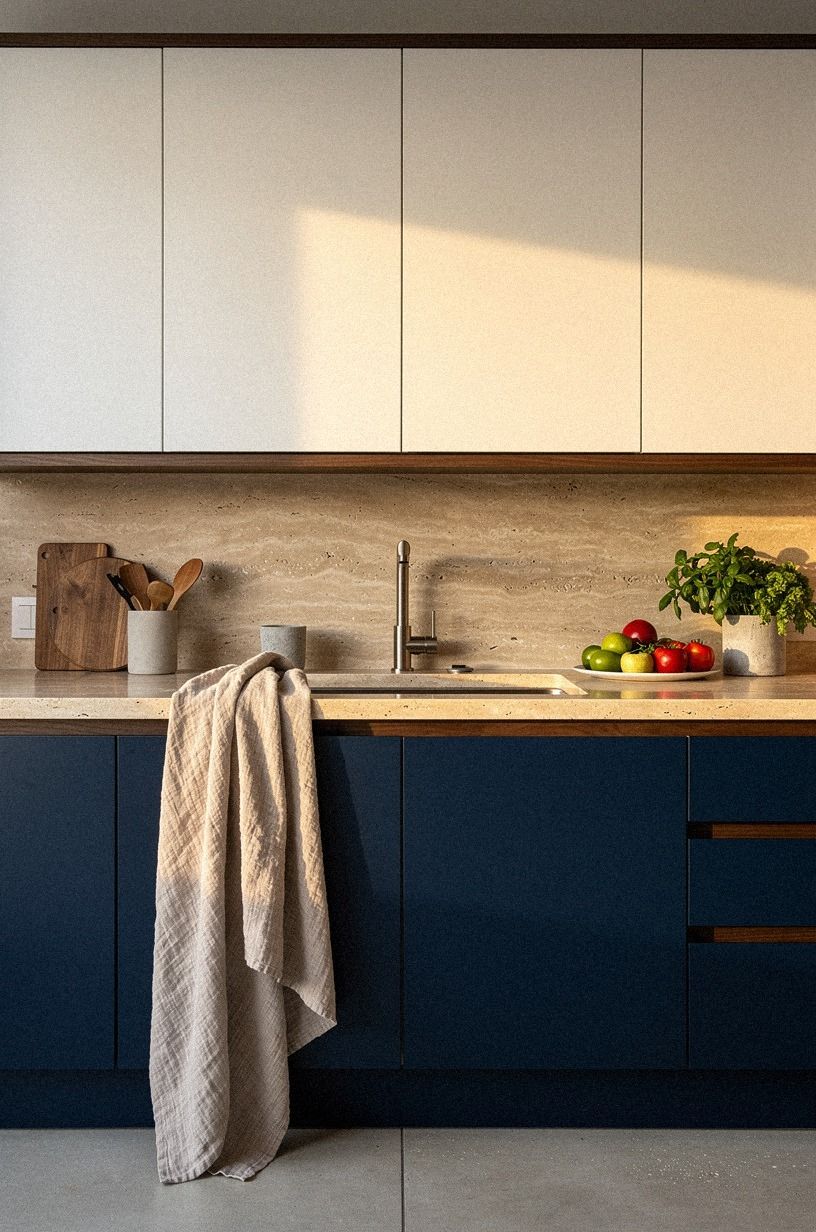
This is the version I recommend when you want painted cabinet doors to look polished without buying new boxes.
5Painted one sample door a warm white
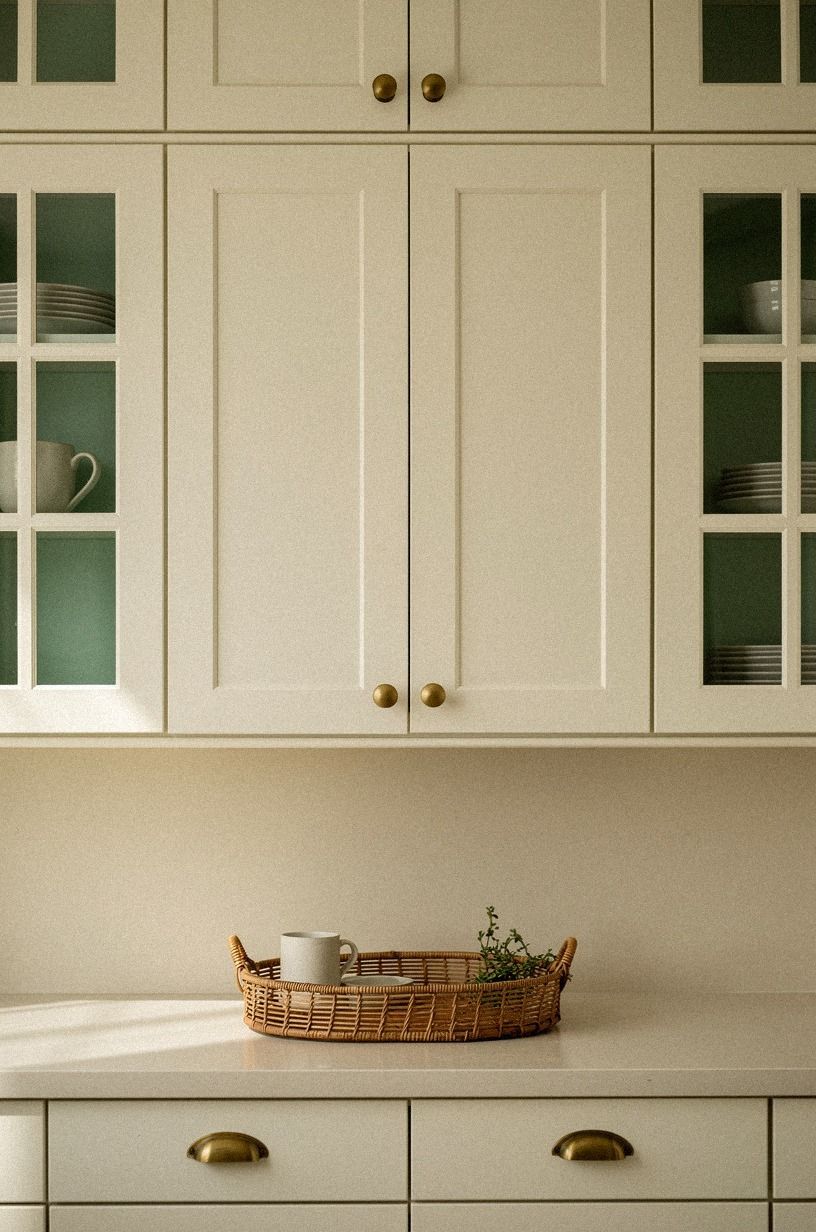
One sample door in warm white changed my attitude faster than any mood board had. Mounted against an airy cream cabinet wall with emerald accents and softly patinated brass, Benjamin Moore White Dove OC-17 stopped reading safe and started reading generous. That's the difference between a white that reflects light and a white that simply sits there.
If your kitchen gets decent morning light, warm white is the easiest bridge between traditional Shaker and softer modern doors. I tested it beside natural oak and a little green ceramic, and the room looked steadier right away. You can see that same balance in oak kitchen cabinet ideas for a warm modern look and in the most popular kitchen cabinet colors right now, both of which reminded me not to overcool the palette.
But I wouldn't pair this color with bright chrome. Warm white needs brass, aged bronze, or black to stay grounded. Otherwise the whole thing drifts.
6What changed when I matched inset panels to the pantry wall
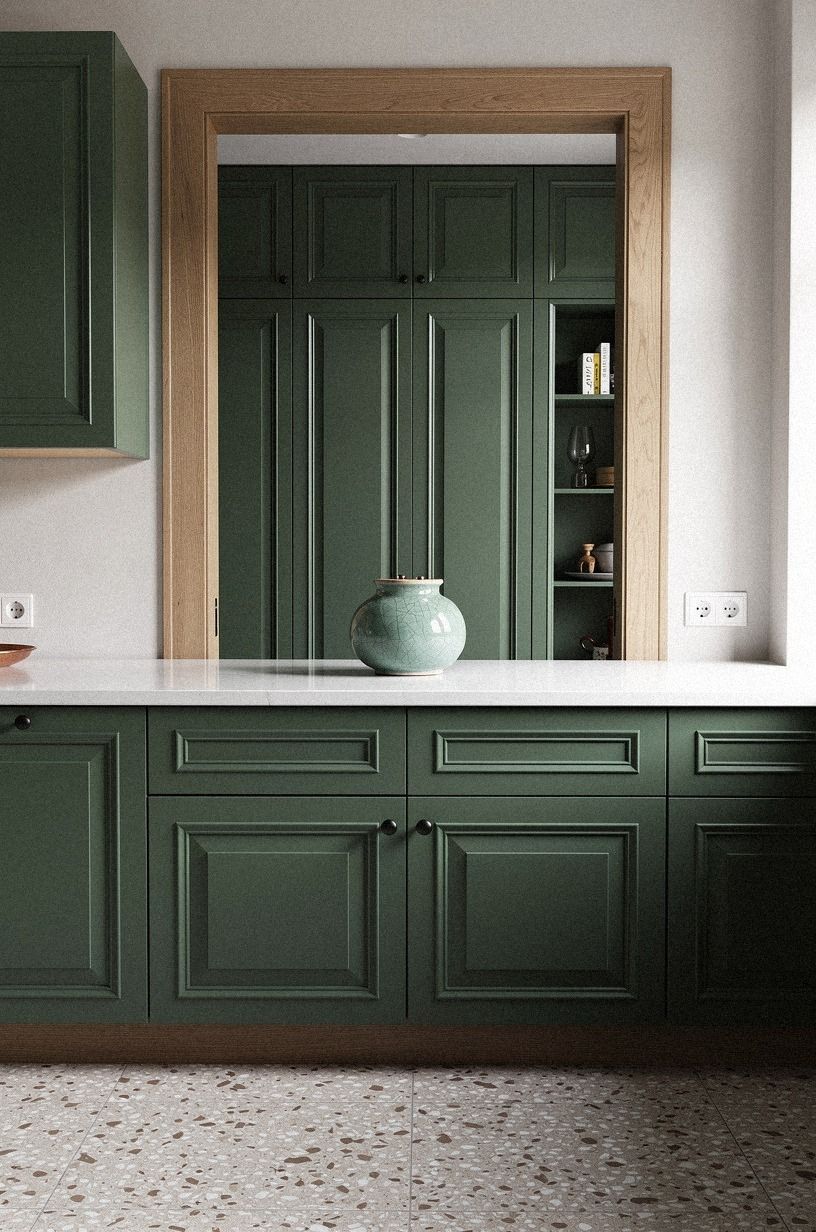
Inset panels were the point where I stopped thinking about trends and started thinking about architecture.
7Why did I add reeded glass above the coffee cabinet
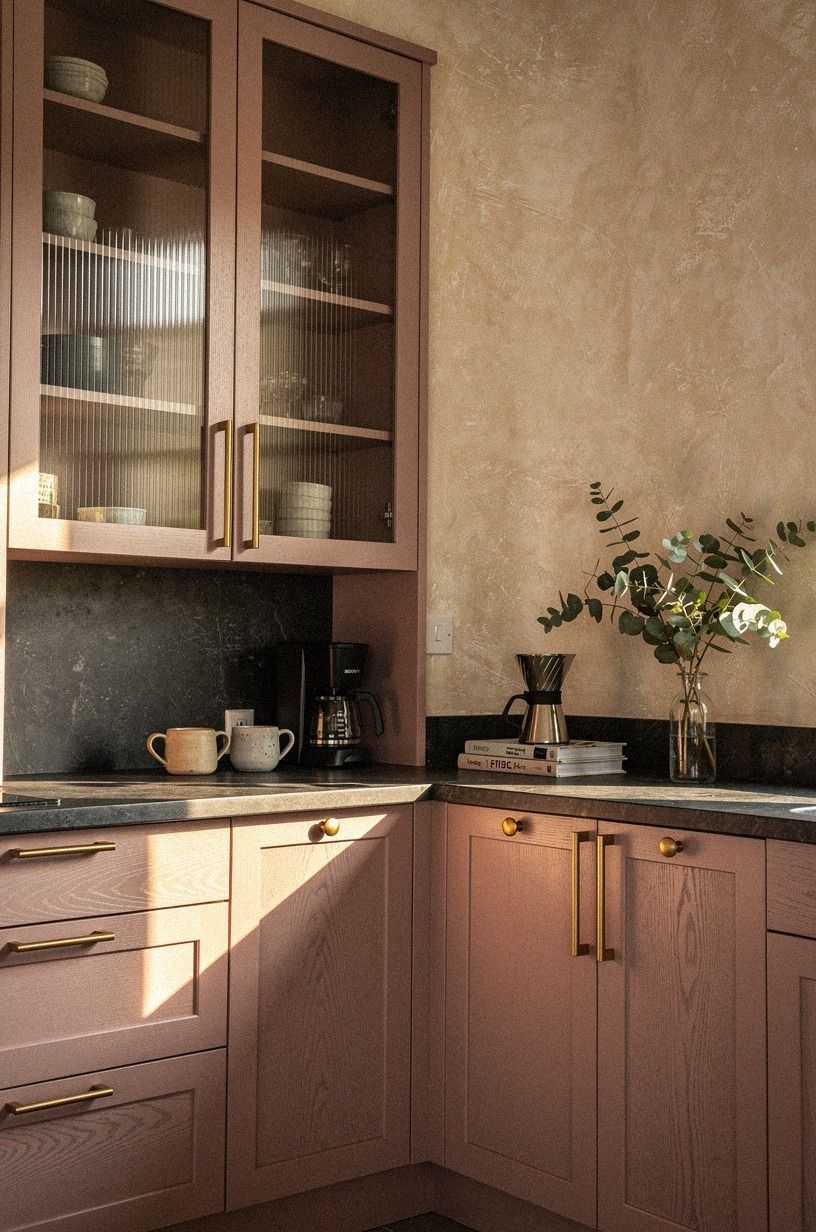
Reeded glass over the coffee cabinet was the softest move in the room, and maybe my favorite to look at in the morning. Set above dusty rose cabinetry with charcoal stone and brass pulls, reeded glass blurred the mugs just enough to feel forgiving while still letting light pass through. That mattered more than I expected.
If you've got a hard-working corner full of appliances, reeded glass can lighten it without making you live like a minimalist. I wouldn't use clear glass here unless your shelves are magazine-neat every day, and mine aren't.
Reeded gives you texture, a little privacy, and a reason to add a warmer lamp nearby. I borrowed that layered feeling from under cabinet lighting ideas to brighten your kitchen and small kitchen cabinet ideas that maximize storage, because small corners need both mood and function.
But keep the frame simple. Too much profile around textured glass starts to feel busy instead of charming.
8Swapped arched doors onto the corner uppers
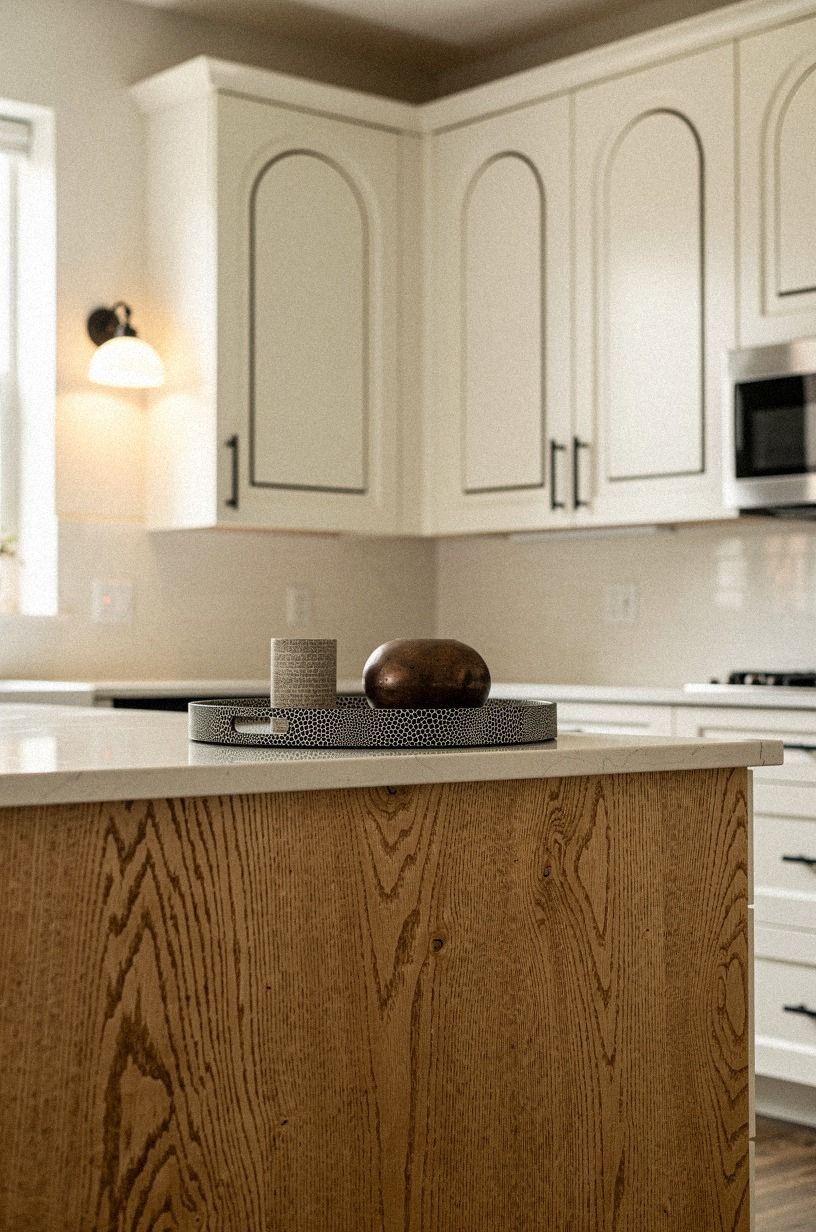
Arched doors on the corner uppers looked risky in my head and surprisingly easy in the room.
9Chose slab drawers below the cooktop
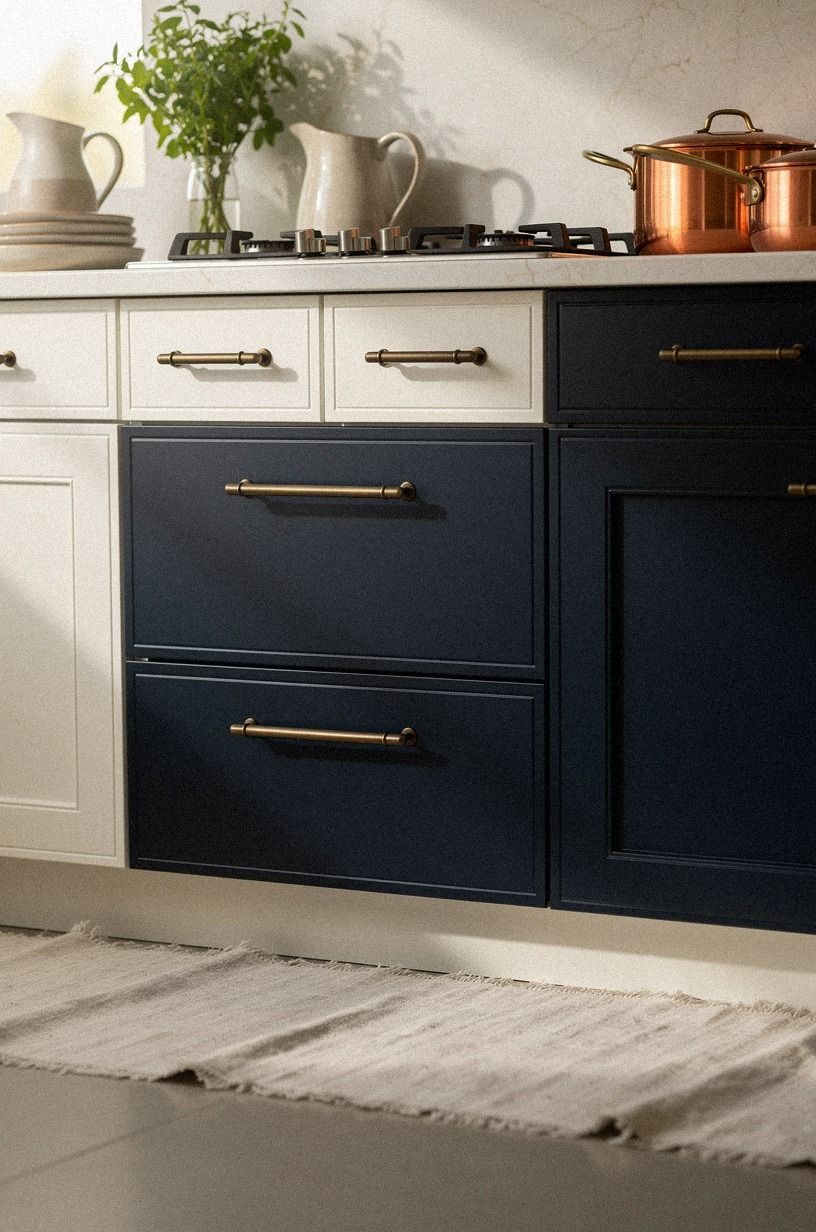
Below the cooktop, slab drawers made more sense than framed fronts ever would. Seen from low down, those midnight blue drawer faces looked almost architectural because the alignment stayed perfect and the planes felt uninterrupted. Sherwin-Williams Evergreen Fog SW 9130 wasn't the color here, but it sat in my sample pile as the softer alternative if the blue had felt too heavy.
Cooktop drawers take abuse. You open them with one hand, a towel, or your hip, and all that use exposes bad detailing fast.
Slab fronts keep the cleaning simple and the rhythm clean, especially when the cooking zone already has enough lines from the range, vent, and tile. I checked proportions against kitchen sink cabinet ideas to organize under the sink because the best lower cabinets are the ones that stay easy on busy days.
And here's the part that sold me: slab drawers let the hardware read sharper. Under a cooktop, that crispness feels right.
10Should I repeat the same brass knob across every door style
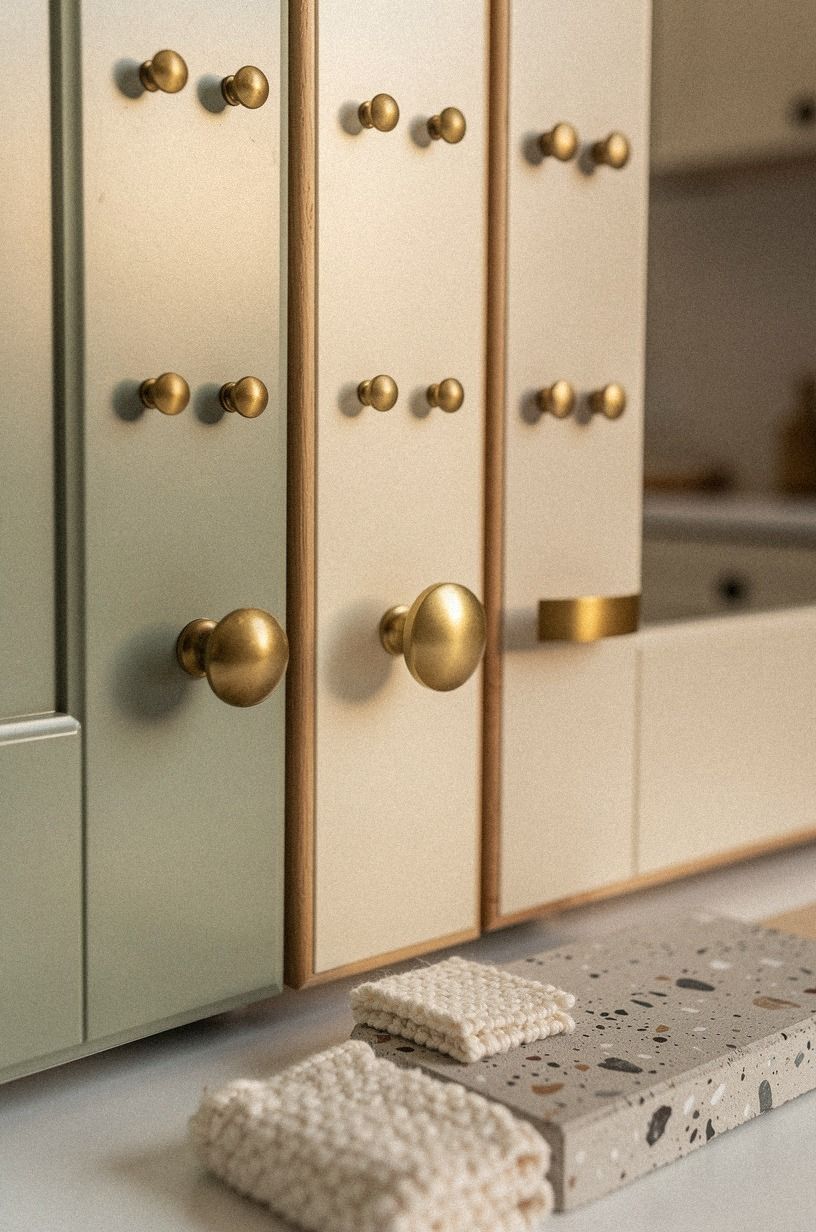
Repeating the same brass knob across Shaker, flat, and inset samples was the move that tied everything together. On sage green and warm cream faces with natural wood edges, unlacquered brass acted like punctuation. The door profiles changed, but the language stayed consistent, and suddenly the mixed styles felt chosen instead of accidental.
I call this the One-Finish Anchor, and it's the rule I'd hand to anyone mixing types of kitchen cabinets styles in one room. When your doors vary, your hardware should calm things down.
Brass worked here because it warmed the greens, made the creams look richer, and gave the oak edge a reason to stay visible. If you're juggling mixed fronts, the most popular kitchen cabinet colors right now and modern kitchen cabinet ideas for a sleek clean look are useful for checking whether your finish choice is helping or just adding noise.
But don't mix four knob shapes because a sample board looked fun. In a real kitchen, repetition is what makes variation feel expensive.
11Lined up the final doors under natural light
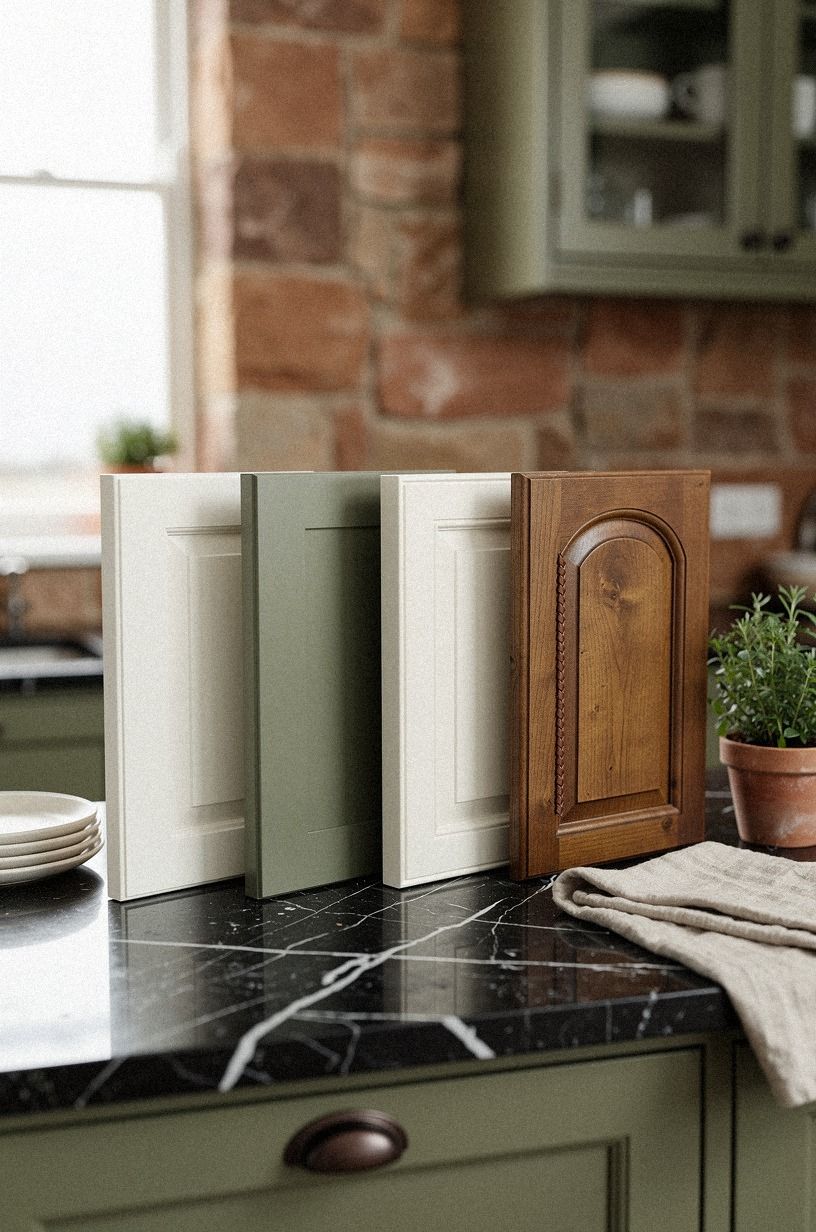
The last step was lining up Shaker, slab, inset, and arched samples under natural light across the work surface. No showroom spots.
No filtered phone screen. Just daylight.
The natural oak undertones, the edge shadows, and the way each profile caught light told the truth in about thirty seconds.
That lineup gave me my answer: plain Shaker on the main run, slab drawers below the cooktop, inset on the pantry wall, and one quiet arch at the corner uppers. You might land somewhere else, but you should always test your final mix this way before you order anything.
Want the quickest sanity check? Put your samples out at breakfast, then again at 3 pm.
Light changes everything. I kept circling back to oak kitchen cabinet ideas for a warm modern look and kitchen tall cabinet ideas to use every vertical inch because both helped me see how style choices hold up in real daylight, not just online.
And that was the daylight test! Once the doors agreed with each other, the kitchen finally exhaled.
12The Shaker against Slab showdown
If I had to pick the question I get asked most, it's Shaker against slab on the same island. Honestly?
Both work, but they say different things. Shaker reads warm and inhabited.
Slab reads tailored and modern. On a small island I'd take Shaker every time: the rail breaks up the plane and forgives a sloppy mug placement.
On a long run of full overlay flat panel cabinets across a full wall, slab wins because the planes disappear and the hardware does the talking.
The mix I'd still avoid: Shaker uppers over slab lowers in the same wood tone. The eye can't decide which grammar to read.
If you want both styles, separate them by room or by a honed travertine counter that interrupts the run. A single board of decision is easier to live with than two accents arguing.
13What the White Dove sample run actually teaches you
Sample doors taught me more in a weekend than a year of magazine scrolling. The cost: $612, the time: a long Saturday.
What it bought me: every door profile on one table, in my real light, against my real floor, beside my real faucet. Benjamin Moore White Dove OC-17 looked different here than in the store.
The aged brass looked different beside my counters than under showroom spots. The slab read different on my island than it did online.
That weekend is the only reason the final mix feels right. If you're stuck between two or three profiles, spend the $150 to $400 per door on real samples before you commit to a paint order or a cabinet order.
Most suppliers will credit the sample cost back if you place a full job. And if they won't, the samples will live in your garage forever and you'll still know more than you did before.
How much it cost
My test run cost $612 all in, and that included sample doors, paint, hardware, and one very unnecessary extra knob order because I changed my mind at midnight. If you're doing a real kitchen cabinet door style makeover, the smart answer is to spend first on the pieces you touch and see every day: fronts, finish, and hardware. Decorative filler can wait.
The free part is the comparison work. Lay out samples. Move them room to room.
Check them beside your floor, your counter, and your faucet. But if you're budgeting honestly, cabinet fronts and hardware give you the fastest visual return.
That's why I kept re-reading two tone kitchen cabinet ideas that add instant depth and under cabinet lighting ideas to brighten your kitchen. Finish and light decide whether the money looks well spent.
The Door-Language Rule
The thing I got wrong for years was assuming cabinet door styles were just decoration. They aren't.
They're grammar. They tell your eye whether the kitchen is meant to feel tailored, relaxed, modern, a little formal, or intentionally mixed.
Once I started reading them that way, the expensive mistakes got easier to avoid. I didn't need every door to match, but I did need every door to belong to the same sentence.
For me, that meant getting honest about where each style performs best. Plain Shaker is the conversational one.
It works almost anywhere, and it doesn't ask for applause. Slab is stricter.
You use it when you want a long run or an island to feel clean, architectural, and a bit more furniture-like. Inset is the disciplined friend who notices crooked reveals and bad hinge choices immediately (expect $400 to $900 per door in custom ranges).
Arched doors are the softener, but only in small doses. I'd never use them everywhere.
One curved moment is charm. Five curved moments are a theme park. And full overlay flat panel cabinets are the workhorse of modern kitchens: less frame, more panel, and a cleaner reveal, which is exactly why designers keep reaching for them on long runs.
The money part matters too. You can blow a budget chasing the wrong kind of drama.
I wouldn't spend quartz money on a room where the door mix still feels confused, because you won't get the payoff you're after. Hardware, front profile, and paint tone usually change the read faster than a fancier counter does.
That's not the glamorous answer, but it's the one that saved me here. The part that worked wasn't adding more. It was editing until the kitchen stopped speaking in three accents at once.
And honestly, this is why so many kitchen makeovers look expensive in photos but restless in person. The surfaces are fine.
The door language is muddled. If you want the room to feel settled every morning, choose the profile that supports your architecture, then repeat one finish, one wood tone, and one level of formality.
That's the rule I'd keep. It isn't flashy. It just keeps you from paying for confusion.
The Light-Test Lineup
Natural light is the judge I trust most. A door style that looks rich under showroom bulbs can look flat by breakfast and fussy by late afternoon. I line samples up twice, once in softer morning light and once closer to 3 pm, because that second read tells you whether the profile still feels calm when the room is fully awake.
That is also why I don't choose paint or hardware in isolation anymore. Your cabinet door style, your finish, and your light quality are a package deal.
A Few Things Worth Answering
What is the best Kitchen Cabinet Door Styles Explained (Shaker, Flat & More) for a small kitchen?
Shaker is usually the best pick for a small kitchen because it gives you definition without eating space. Slim rails read lighter than chunky frames.
- Narrow framing - Warm paint like Benjamin Moore White Dove OC-17 - More ideas in small kitchen cabinet ideas that maximize storage
Where can I buy Kitchen Cabinet Door Styles Explained (Shaker, Flat & More) pieces on a budget?
IKEA, Target, and Wayfair are still the easiest budget places to start, and Facebook Marketplace is great for pulls and paintable doors. Secondhand hardware can save real money.
- IKEA basics - Wayfair sample fronts - Marketplace brass pulls
How much does a Kitchen Cabinet Door Styles Explained (Shaker, Flat & More) makeover cost?
A cosmetic version usually lands around $300 to $1,500, and a mid refresh often runs $3,000 to $12,000. Free still counts.
- Sample testing - Layout comparison - More budget ideas in two tone kitchen cabinet ideas that add instant depth
Can I create a Kitchen Cabinet Door Styles Explained (Shaker, Flat & More) on a budget?
Yes, and you don't need custom cabinetry to get the look. Paint, hardware, and disciplined repeats do most of the work. - Repaint one sample first - Repeat one brass finish - Try peel-and-stick backsplash
Is a Kitchen Cabinet Door Styles Explained (Shaker, Flat & More) worth it in a small space?
Yes, it's worth it because a small kitchen exaggerates every visual decision, so better door choices pay off faster. Cleaner profiles reduce noise. - Keep island clearance open - Use slab drawers low - See modern kitchen cabinet ideas for a sleek clean look
Is Kitchen Cabinet Door Styles Explained (Shaker, Flat & More) a good idea for a rental?
Yes, if you keep the changes removable and visual. No-damage upgrades can still teach the room better style. - Peel-and-stick backsplash - Removable hardware swap - Styling help from under cabinet lighting ideas to brighten your kitchen
Where I'd Start First
If I had to pick one, I'd start with plain Shaker on the main run. It gives you structure without locking the kitchen into one era. Pin this for later, then test your samples in daylight before you buy!