
 by
by 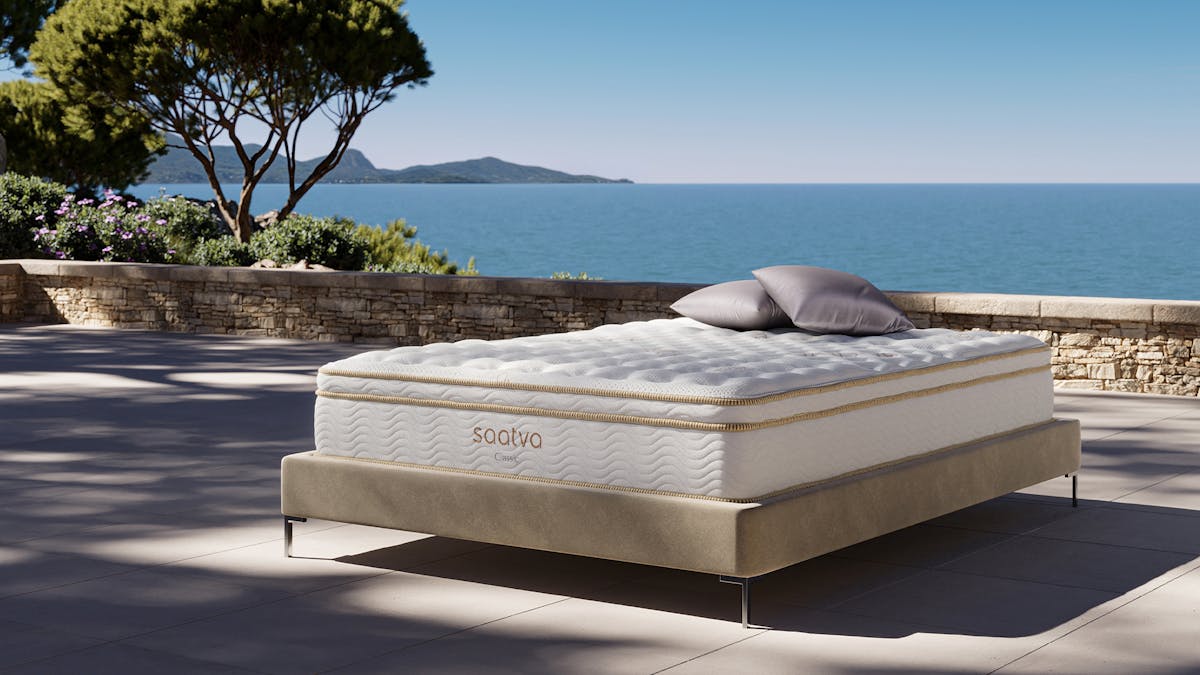
Quick verdict: The Newton Baby Wovenaire Essential makes the most sense for parents who specifically value through-core airflow and deeper cleaning. Its open polymer core is materially different from a solid foam slab or steel innerspring unit, and Newton says both the cover and core are washable. I see that cleanability as its strongest practical advantage. Breathability does not replace safe-sleep basics, including a firm, flat surface, correct crib fit, a fitted sheet, and placing the baby on their back under CPSC and AAP guidance.
If airflow is not your main concern, the alternatives serve different priorities. Naturepedic makes the stronger organic-materials case, Sealy offers a traditional coil unit, Graco keeps the build light and simple, and HALO uses a related woven-core concept. Saatva is the affiliate-supported conventional crib mattress featured here. Amerisleep and Puffy appear only in the later transition section because they sell adult-size mattresses, not infant sleep products.
Newton Crib Mattress at a Glance
| Mattress | Construction | Best fit | My materials verdict |
|---|---|---|---|
| Newton Baby Wovenaire Essential | Wovenaire polymer core with a washable cover | Parents prioritizing airflow and cleanability | The most distinctive breathable construction in this comparison |
| Saatva Crib Mattress | Dual-sided design with a center coil unit and reinforced edges | Standard crib and toddler-bed mattress shoppers | A conventional, structured alternative to Newton’s airy polymer core |
| Naturepedic Organic Crib Mattress | Organic cotton fill and a food-grade waterproof surface | Organic-material and chemical-sensitivity priorities | The clearer choice if certified organic materials matter more than through-core airflow |
| Sealy Butterfly Dual Stage | Innerspring with a reinforced perimeter | Long-term firmness retention | A heavier but durable coil-based option |
| HALO DreamWeave | Woven polyester core | Parents comparing another open-core design | The closest construction concept to Newton in this group |
My bottom line on the materials: Newton’s value is not simply that its cover feels airy. Air can pass through the open core itself, and the core can be cleaned according to Newton’s care directions. That is a more meaningful construction difference than adding a breathable-looking fabric over an otherwise solid foam block.
Honest safety note: Crib mattresses need to be judged differently from adult mattresses. For crib, bassinet, or other infant use, choose a product made for that exact sleep space and verify its fit, firmness, labeling, and current compliance information. Newton Baby, Naturepedic, Avocado Organic Crib, Moonlight Slumber, Saatva, Sealy, Graco, and HALO occupy different parts of the category, but no materials story outranks correct setup.
Affiliate-supported alternative: The Saatva Crib Mattress is the conventional affiliate option on this page. According to Saatva’s product page, it has baby and toddler sides, an extra-firm baby surface, a center coil unit, and reinforced edges. It is a mattress recommendation only, not a recommendation for a crib frame, bedding set, bassinet, or mini crib.
Check Saatva Crib Mattress Price
Crib Mattress Safety Comes Before Breathability
For infants, the priority is a firm, flat, non-inclined sleep surface with a snug-fitting mattress and a fitted sheet only. The federal crib mattress rule is codified at 16 CFR Part 1241, according to the CPSC. The AAP’s published safe-sleep recommendations say to keep soft bedding, pillows, bumpers, comfort layers, and positioners out of the crib.
CPSC crib mattress guidance · AAP 2022 safe sleep recommendations
The firmness that can feel uncomfortable to an adult is intentional for an infant. Babies do not have the neck and core control of older children. A soft, deeply conforming surface may form around the face instead of maintaining a flatter sleep surface.
The CPSC’s published guidance is the proper reference for mandatory crib mattress requirements. Product pages may use terms such as “firm,” “orthopedic,” or “supportive” as marketing language. I look for direct compliance information from the manufacturer and product labeling rather than treating an adjective as evidence.
The AAP’s recommendations address the complete setup: place the baby on their back for every sleep, use a flat and firm surface, and keep loose or padded items outside the sleep space. Newton’s airflow is a construction feature. It is not permission to add a topper, pillow, bumper, loose blanket, or inclined accessory.
Fit deserves equal attention. A premium breathable mattress that does not fit the crib correctly is not a sensible choice. Check the crib label, mattress label, side orientation, and condition of the cover whenever the mattress is removed for cleaning.
What Makes Newton’s Wovenaire Core Different
Newton Baby describes Wovenaire as a core made from 10% food-grade polymer and 90% air by volume on the manufacturer’s product materials. Instead of a solid slab of polyurethane foam or a steel coil unit surrounded by cushioning, the polymer forms an open structure through which air can move.
That construction creates two practical distinctions. First, air travels through the mattress body rather than depending only on cover fabric, perforations, or edge vents. Second, Newton says the cover and core are washable under its care instructions. For a crib mattress exposed to spit-up, leaks, and other messes, cleaning below the outer surface is a useful ownership feature.
I would not translate “breathable” into “risk-free.” The AAP does not present a breathable mattress as a replacement for back sleeping or a firm, flat surface. My verdict is narrower and materials-based: Newton has a more open and washable construction than an ordinary solid-foam crib mattress.
The tradeoff is its premium market position. Parents do not need a through-core breathable model merely to obtain a suitable firm surface. A properly fitted crib mattress that complies with current federal requirements can use foam, coils, or another approved construction.
Airflow through the core
Some mattresses use “breathable” to describe only the textile closest to the sleeper. Newton’s claim is more specific because the Wovenaire network contains open pathways throughout the mattress body. That distinction matters when comparing it with a solid foam core wearing a mesh-style cover.
Airflow still depends on the complete assembled surface. A thick or unapproved pad can change how freely air moves at the top of the mattress. Follow Newton’s instructions for sheets and protectors rather than assuming every fitted accessory is suitable.
Newton’s cover and cleaning design
Crib mattress hygiene is more than a cosmetic concern. Moisture that reaches an absorbent core can be difficult to remove, and lingering dampness may contribute to odor, mold, or material breakdown. Newton’s removable cover and washable polymer core address that problem differently from a conventional sealed waterproof shell.
A waterproof shell is meant to stop liquid before it enters the mattress. Newton’s approach provides access for deeper cleaning if a mess reaches the core. Neither method is maintenance-free, and damage to a cover or seam still needs prompt attention.
The catch is care discipline. A washable design helps only when each component is cleaned, dried, and reassembled as the manufacturer directs. The core and cover should be completely dry and correctly fitted before the mattress returns to the crib.
Newton’s firmness and toddler use
Newton presents its crib mattresses as suitable for infant and toddler use, with model-specific construction. Where a model uses separate stage surfaces, read the labels rather than trying to judge the correct side by touch alone. The surface designated for infant use belongs up during that stage.
A toddler surface is not an infant comfort upgrade. It exists to extend the mattress’s useful role after the child develops greater mobility. Before changing sides or configurations, follow the mattress labeling, crib instructions, and guidance from the child’s pediatrician.
Model names matter here. Newton offers more than one crib mattress configuration, so a feature listed for one version should not automatically be assigned to every Newton mattress. Confirm the exact cover, dimensions, stage design, and washing directions on the product being considered.
Newton Versus Foam and Innerspring Crib Mattresses
Foam, innerspring, and open polymer constructions can all produce an appropriately firm crib mattress. The meaningful comparisons are finished-surface firmness, fit, weight, cleaning method, edge structure, durability, and the value you place on through-core airflow.
Newton versus solid foam
Modern polyurethane foam crib mattresses are popular partly because they are light. The original products assessed for this guide ranged from about 7-10 lbs for foam, compared with about 15-25 lbs for innerspring alternatives, according to the product specifications gathered for the original comparison. That difference is noticeable when changing a fitted sheet inside a deep crib.
Foam density provides some durability context because lower-density material is generally more vulnerable to softening and permanent compression. The original guide used 1.5 lb/cu ft as its practical baseline for a crib foam core, while denser listed examples reached 1.8-2.0 lb/cu ft, according to the manufacturers’ specifications reviewed at the time. Those figures do not independently establish federal compliance.
CertiPUR-US certification applies to flexible polyurethane foam and addresses criteria published by that certification program. It does not certify the complete crib mattress for infant sleep, and it is not the same as compliance with the federal crib mattress standard.
Newton does not use a conventional solid polyurethane core. Its open polymer network is designed to permit airflow through the body and can be rinsed according to Newton’s care directions. Solid foam is usually simpler and less costly, while Newton offers more specialized ventilation and cleaning characteristics.
For durability, I would watch the completed surface rather than focusing only on the unfamiliar feel of the polymer. Any crib mattress should be taken out of service if the surface develops lasting deformation, the cover no longer fits correctly, or the core becomes damaged.
Newton versus innerspring
An innerspring crib mattress uses steel coils, insulating material, cushioning, and an outer cover. A well-built coil unit can resist lasting compression and maintain a firm shape through crib and toddler-bed use.
Coil count gives some construction context, but it should not be read alone. Wire gauge, connecting components, insulation above the springs, and perimeter reinforcement influence how the finished mattress holds its shape. In the products originally covered here, 150+ coils and a reinforced border rod were comparison markers taken from the manufacturers’ listed specifications.
Newton avoids the weight of a traditional steel unit and has a much more open internal structure. A good innerspring may appeal to parents who prefer familiar support and a reinforced perimeter. Neither construction compensates for poor crib fit, damaged materials, or incorrect setup.
Coils also do not automatically make a mattress firmer or more durable than every foam or polymer design. The complete build matters. Thin padding, weak edge construction, or a damaged cover can undermine an otherwise substantial spring unit.
Newton Compared With the Other Crib Mattresses
Newton Baby Wovenaire Essential Crib Mattress
Best overall for breathable construction.
Newton Baby’s Wovenaire is a reference point for breathable crib mattress design because airflow is tied to the core, not merely the fabric. According to Newton Baby’s product description, the core consists of 10% food-grade polymer and 90% air by volume. Air can move through the polymer network rather than only across a ventilated cover.
The cover and core are described as washable in Newton’s care information. That is the strongest ownership argument for Newton in my view. A surface-only waterproof layer can block liquid while intact, but a washable core provides another cleaning route after a larger mess.
Newton states in its manufacturer materials that the mattress meets applicable crib mattress requirements and carries GREENGUARD Gold certification. Parents should confirm those statements for the exact current model through its label, certificate, and manufacturer documentation before purchasing.
The feel can be unfamiliar to adults accustomed to conventional foam or coils, but adult comfort impressions are not the deciding standard for an infant mattress. Fit, firmness, correct assembly, and compliance information are the useful checks.
Best for: Parents who place a high value on through-core airflow, washable materials, and a nontraditional crib mattress core.
Watch for: Premium positioning, differences among Newton models, and the need to follow washing and drying directions carefully.
Saatva Crib Mattress
Best affiliate-supported conventional crib option.
Saatva uses a different construction strategy from Newton. According to Saatva’s product page, its crib mattress has baby and toddler sides, an extra-firm baby surface, a center coil unit, and reinforced edges. The coil system gives it a more conventional support structure than Newton’s open polymer network.
This is the alternative I would consider if defined stage surfaces, edge reinforcement, and familiar coil support matter more than washing the core. It is not a direct duplicate of Newton’s breathable design, and the comparison should be based on those different priorities.
Use it only in a crib or toddler bed designed to accept its stated dimensions. The mattress is not a substitute for a crib, mini crib, bassinet, or sleep-space frame.
Best for: Shoppers who prefer a structured dual-sided mattress with coil support and defined perimeter reinforcement.
Sealy Butterfly Breathable Dual Stage Crib Mattress
Best traditional innerspring in this group.
The Sealy Butterfly uses a 204-coil innerspring with a reinforced border rod, according to Sealy’s product specifications reviewed for the original guide. The manufacturer describes its “butterfly” coil arrangement as intended to reduce the center ridge associated with some spring constructions. Sealy also describes the mattress as dual-sided and CPSC compliant, with waterproof surfaces and GREENGUARD Gold certification.
At approximately 17 lbs, according to the manufacturer specification used in the original comparison, it is heavier than the foam alternatives covered here. That makes lifting less convenient. Its steel structure is designed to retain firmness over a 4-5 year use period, according to the original manufacturer materials reviewed for this page.
The main reason to choose it over Newton is not breathability. It is the preference for a substantial coil unit, reinforced border, and wipe-clean conventional construction.
Best for: Parents who prefer long-term shape retention and a traditional innerspring build.
Naturepedic Organic Crib Mattress
Best organic-material option.
Naturepedic’s Classic construction uses GOTS-certified organic cotton fill, organic cotton fabric, and a food-grade polyethylene waterproof surface, according to Naturepedic’s product materials. The manufacturer describes it as free from PVC and vinyl. Naturepedic also lists GREENGUARD Gold and UL Formaldehyde-Free certifications for qualifying products.
This is a different value proposition from Newton. Newton leads with airflow and deep washability, while Naturepedic leads with certified organic textiles and a wipe-clean waterproof design. Parents focused on materials documentation may find Naturepedic’s certification set more relevant than an open polymer core.
A waterproof surface and a washable open core solve messes in different ways. Naturepedic aims to prevent liquid from reaching the fill. Newton allows the core to be cleaned under its instructions. The better fit depends on whether organic textile documentation or through-core cleaning carries more weight for the household.
Best for: Families prioritizing organic cotton, third-party certification, and a waterproof surface without traditional vinyl.
Watch for: Premium positioning and model variation. Verify the construction and certification details for the exact mattress rather than applying one product’s paperwork to an entire brand.
Graco Premium Foam Crib Mattress
Best budget-minded lightweight option.
The Graco Premium Foam model uses a high-density foam core. The product information reviewed for the original guide listed 1.5 lb/cu ft foam, CPSC compliance, CertiPUR-US certification, and a waterproof vinyl-free cover, according to the manufacturer’s specifications available at that time.
At approximately 8 lbs, according to those manufacturer specifications, it is substantially easier to lift than the innerspring examples. That difference matters during repeated sheet changes. Its construction is less elaborate than Newton’s washable polymer network, but simplicity and low weight can be practical advantages for a primary, travel, or secondary crib.
The tradeoff is that a solid foam core does not offer Newton’s through-body airflow or rinse-through cleaning. Inspect it for lasting impressions and cover damage over time, as with any foam mattress.
Best for: Parents prioritizing manageable weight and straightforward foam construction.
HALO DreamWeave Breathable Crib Mattress
Best alternative breathable core.
HALO’s DreamWeave uses a woven polyester core with visible air pathways, according to HALO’s product description. The underlying idea resembles Newton’s Wovenaire approach: replace a solid foam block with an open synthetic network that permits air movement through the mattress.
HALO describes DreamWeave as dual-sided, washable, and GREENGUARD Gold certified in its manufacturer materials. Newton remains my more established breathable-construction reference, while HALO is the logical comparison for parents who like the open-core idea and want to examine another brand’s execution.
Compare the care instructions closely. “Washable” is useful only if the size and shape of the components make cleaning and complete drying manageable in the household.
Best for: Families comparing breathable, washable constructions rather than solid foam or steel coils.
Dual-Sided Firmness Explained
A dual-sided or “two-stage” crib mattress uses different surfaces for separate developmental stages. This design can extend the mattress’s usefulness, but it also creates a responsibility to keep the correctly labeled side facing up.
Infant side: The firmer, flatter side is intended for newborns and infants. Product labeling commonly places this stage through approximately 12 months, according to the manufacturer directions reviewed for the original guide. Parents should follow the specific mattress instructions and their pediatrician’s guidance rather than treating age alone as the deciding factor.
Toddler side: The other surface may use slightly softer foam or a more cushioned cover. In the products assessed for the original comparison, manufacturers commonly identified it for children 12 months and older, extending usefulness through ages 1-3 and sometimes longer according to their product labeling.
Labels should clearly identify the infant and toddler surfaces. Check the label whenever the mattress is removed for cleaning. A hurried sheet change is an easy time to reinstall a two-stage mattress upside down.
Before switching, follow the product instructions and consider the child’s development. If the crib converts to a toddler bed, confirm through the crib and mattress manufacturers that the same mattress is approved for that configuration.
Newton model details should be checked individually. Do not assume every mattress with the Newton name uses the same side construction or cover arrangement.
Breathability Without the Marketing Hype
Breathability refers to airflow around or through the sleep surface. Newton’s open core permits air movement through the mattress body, while solid foam and innerspring products depend more on surface fabric, channels, or perimeter ventilation.
The proposed benefit is that an open surface may reduce the buildup of exhaled air if a baby’s face reaches the mattress. That is not the same as evidence that a particular mattress prevents suffocation or sleep-related death. I would be skeptical of any sales language that converts an airflow feature into an absolute safety promise.
The AAP’s published safe-sleep recommendations still take precedence: back sleeping, a firm and flat mattress, correct fit, and no loose or soft objects in the crib. I treat Newton’s breathability as an additional materials feature after those conditions are satisfied.
Breathable designs also need an appropriate fitted sheet and cover. Adding thick padding, an unapproved protector, or a topper can alter the surface and interfere with the reason for selecting an open-core mattress. Use only components permitted by the mattress manufacturer.
There is also a difference between air movement and temperature regulation. An open core may allow more circulation than solid foam, but nursery temperature, sleepwear, sheets, and the cover construction remain part of the baby’s immediate environment. I would not infer precise cooling performance from the word “breathable” alone.
Waterproofing and Washability
Crib mattresses regularly encounter urine, spit-up, sweat, and cleaning products. If moisture reaches absorbent foam or textile fill and cannot dry, it may contribute to odors, microbial growth, and material deterioration.
Integrated waterproof cover: Many conventional crib mattresses use vinyl, polyurethane-laminated fabric, or another wipe-clean layer. The advantage is fast cleanup without removing the mattress cover. Parents avoiding traditional vinyl can check the manufacturer’s materials disclosure for PVC, phthalates, and plasticizer information.
Removable protector: A fitted waterproof protector can be washed separately and replaced if damaged. It must remain snug and should not add soft padding. Check that the mattress manufacturer allows the protector, especially with a breathable model.
Washable core: Newton and HALO take another route by allowing deeper cleaning of their open cores according to each brand’s care directions. This can help after a spill penetrates beyond the cover, but drying is critical. A damp core should not be returned to the crib.
Whatever design you choose, inspect seams, corners, and the entire sleeping surface. A waterproof center panel cannot do its job if liquid enters through exposed edges. A torn, peeling, or poorly fitting cover is a reason to stop use and contact the manufacturer for the appropriate remedy.
Harsh cleaning products can also affect materials. Follow the care label instead of improvising with solvents, heavy fragrance, or heat. The goal is a clean, fully dry surface without changing its structure or leaving residue.
Standard and Mini Crib Mattress Fit
Correct fit is a safety feature, not a matter of appearance. A gap between the mattress and crib may become an entrapment space.
Standard crib mattresses are commonly described as 28 inches wide by 52 inches long and at least 3 inches deep, according to the sizing information used in the original guide. Confirm the allowable dimensions on the crib and mattress labels because nominal descriptions do not replace the manufacturers’ fit instructions.
Mini crib mattresses are commonly around 24 x 38 inches, according to the product dimensions reviewed for the original article, but mini-crib interiors vary. Measure and verify the specific crib and use a mattress approved for it. The word “mini” does not mean every mini mattress fits every mini crib.
The original comparison referenced the 1-inch maximum-gap rule from the fit guidance used at the time. Follow current crib and mattress instructions and the CPSC’s published guidance. Never fill a gap using folded fabric, foam strips, towels, or improvised padding.
Do not put a standard crib mattress in a mini crib, a bassinet mattress in a full-size crib, or an adult mattress in an infant sleep space. The wrong mattress can appear close enough while still leaving a hazardous opening.
When a child reaches the crib manufacturer’s limit, commonly stated in the original product instructions as 35 inches tall or the point at which the child can climb out, follow the crib’s current directions for transitioning. A convertible toddler bed may continue to use the same 28 x 52 inch mattress, while a twin bed requires a purpose-built larger mattress, according to the applicable manufacturers’ dimensions.
Check fit again after washing and reassembly. A removable cover that is twisted, incompletely closed, or placed over a damp core can affect how the mattress sits inside the crib.
Certification Guide for Crib Mattress Shoppers
- CPSC crib mattress requirements: These are mandatory federal requirements, not a premium badge. Use current CPSC guidance and the manufacturer’s compliance documentation to verify the applicable standard.
- GREENGUARD Gold: UL describes this certification as applying stricter chemical-emissions limits for products used in spaces such as schools and healthcare facilities. It addresses emissions, not crib fit, surface firmness, or safe-sleep setup.
- CertiPUR-US: This program applies to flexible polyurethane foam and covers specified content, durability, and emissions criteria according to CertiPUR-US. It does not apply to a polymer core such as Newton’s Wovenaire and does not replace federal compliance.
- GOTS: The Global Organic Textile Standard covers certified organic textile processing and content through the supply chain. It is relevant to components such as cotton and wool.
- GOLS: The Global Organic Latex Standard applies to qualifying organic latex. The original product research used 95% certified organic latex content as the relevant benchmark according to the standard information reviewed at that time.
- OEKO-TEX Standard 100: This certification tests finished textiles for specified harmful substances according to OEKO-TEX. It may be useful for evaluating a cover, but it does not establish crib mattress firmness or fit.
The original certification research noted that GREENGUARD testing covers more than 10,000 emissions and VOCs, that GOTS products may contain 70-95% organic fiber content depending on label grade, and that CertiPUR-US restricts substances including ozone depleters, formaldehyde, heavy metals, and specified flame retardants, according to the respective certification organizations’ criteria reviewed for this page.
Certification logos should be traceable to the exact product. A retailer badge, a certificate for one component, or a certification held by another model does not automatically apply to the mattress in your cart. Check the certificate owner, product name, and current scope.
I also separate emissions or textile certifications from safe-sleep compliance. They answer different questions. A lower-emissions cover does not establish correct firmness, and federal compliance does not turn an optional organic-material claim into fact.
How I Judge Newton’s Durability
Newton’s open polymer core does not invite the same density comparison used for polyurethane foam, and coil count is irrelevant because there is no innerspring unit. I look instead at whether the core returns to an even shape, whether the cover continues to fit tightly, and whether washing can be completed without leaving moisture or distortion.
The removable cover is a working component, not decoration. Zippers, seams, and fabric tension matter because the assembled cover helps create the finished sleep surface. Inspect those areas whenever the mattress is cleaned.
Repeated washing can be an advantage only if the care directions are followed. Excessive heat, incomplete drying, or incorrect reassembly may compromise the usefulness of a washable design. Newton’s current instructions for the exact model should control the process.
For any crib mattress, lasting sagging, damage to the core, a torn cover, trapped moisture, or a fit problem deserves attention. Parents should contact the manufacturer when the remedy is unclear rather than adding padding or attempting a structural repair.
Later Bed Transition Resources
This is the only adult-mattress block in the guide because Amerisleep and Puffy are not alternatives to Newton and should not be considered for infant sleep. These links remain from the live article for families planning a later move from an approved crib or toddler setup to a properly sized larger bed.
Amerisleep for a larger child’s bed
Amerisleep’s seasonal sitewide offer applies to its adult mattress range. After a child has fully outgrown the crib and needs an appropriately sized larger bed, Amerisleep identifies the Organica as its natural-materials option. It is not a crib mattress.
Fiberglass-free adult mattress option: Amerisleep AS3
Amerisleep states directly: “Fiberglass-free mattress is eco-friendly and non-toxic.” According to the manufacturer’s AS3 page, the adult mattress uses Bio-Pur plant-based foam with CertiPUR-US certification, a Refresh Cover featuring far-infrared technology, and a Bio-Core base.
Firmness: Medium 5/10, according to Amerisleep. Trial: 100 nights, according to the manufacturer’s policy. Warranty: 20 years, including 10 full-replacement years and 10 prorated years, according to Amerisleep’s warranty terms. Origin: Made in the USA from US and imported components, according to Amerisleep.
Amerisleep also describes its larger mattresses as using CertiPUR-US-certified foam and a no-flip design. Its stated offer includes free shipping and a 100-night trial, according to the brand’s policies. These terms apply to eligible larger mattresses, not the Newton crib mattress or any infant product.
Families planning the later transition can also browse Amerisleep bedding for waterproof protectors intended for compatible larger beds.
The Amerisleep AS3 was listed from $1,049 in queen size in the original live article, according to Amerisleep’s listing at that time. The manufacturer describes it as using Bio-Pur plant-based foam with a universal medium-firm feel, a 100-night trial, and a 20-year warranty.
Puffy for the move to a twin or full bed
Puffy Lux is another adult-size option retained from the original transition material. Puffy describes it as providing adaptive comfort and climate-conscious materials, with a lifetime warranty under the manufacturer’s terms. It becomes relevant only after the child has moved to a suitable twin or full bed, never as a crib-mattress substitute.
Frequently Asked Questions
Is the Newton crib mattress worth it?
It can be worth its premium position if you specifically value a washable open core and through-mattress airflow. If the main need is simply a firm, correctly fitted crib mattress, a compliant foam or innerspring model can meet that fundamental requirement without Newton’s specialized construction.
What is inside a Newton crib mattress?
Newton Baby describes Wovenaire as 10% food-grade polymer and 90% air by volume on its product materials. It is an open synthetic network rather than a slab of polyurethane foam or a steel innerspring unit.
Is the Newton crib mattress actually breathable?
The open Wovenaire structure allows air to move through the core, according to Newton’s construction description. That is a genuine materials difference. “Breathable” should not be interpreted as a guarantee against suffocation or a replacement for the AAP’s safe-sleep recommendations.
Can the Newton crib mattress be washed?
Newton says its cover and Wovenaire core are washable. Follow the instructions for the exact model, allow every component to dry fully, and reinstall the cover correctly before putting the mattress back into service.
Does Newton need a waterproof mattress protector?
Check the directions for the exact Newton model. An unapproved protector may reduce airflow or change the finished surface. If Newton permits a protector, it should fit tightly and should not add soft padding.
Why does any crib mattress need to be firm?
A firm surface is less likely to conform around a baby’s face. Infants do not have the same repositioning ability as older children. The CPSC and AAP identify a firm, flat surface as central to an appropriate infant sleep setup.
What is the CPSC standard for crib mattresses?
The CPSC identifies 16 CFR Part 1241 as the federal safety standard for crib mattresses. The original article also referenced Part 1236, 1 psi of resistance at 2 inches of compression, and a 1-inch fit limit from the regulatory material used at that time. Because federal test language is precise, use the CPSC’s current crib mattress guidance rather than treating a home hand-press check as proof of compliance.
What is a dual-sided crib mattress?
It has a firmer infant side and a somewhat softer toddler side. Product labels commonly identify the infant surface for use from birth and the toddler surface from approximately 12 months, according to the manufacturer directions reviewed for the original guide. The exact mattress instructions and the child’s development should guide the switch.
Is foam or innerspring better for a crib?
Either can work if the finished mattress complies with applicable requirements and fits the crib. Foam around 1.5+ lb/cu ft is lighter, while an innerspring with 150+ coils and a reinforced border rod may retain its shape better through a 4-5 year period, according to the product specifications used in the original comparison. Newton offers a third construction approach with an open polymer core.
How important is waterproofing?
It is useful for preventing moisture from reaching absorbent materials. Look for a complete, intact waterproof surface or a fitted protector approved by the mattress manufacturer. Newton’s washable core approaches cleanup differently, but it still needs to be dried thoroughly before reuse.
What is the standard crib mattress size?
The common standard size is 28 x 52 inches and at least 3 inches deep, according to the sizing references used for the original guide. Mini crib mattresses are commonly around 24 x 38 inches but vary by manufacturer. Follow the exact crib label and mattress dimensions, and never improvise around gaps.
Are organic crib mattresses worth the extra cost?
They can be for parents who prioritize documented organic textiles and reduced use of certain synthetic materials. Naturepedic’s GOTS-certified cotton construction, according to its manufacturer documentation, is the clearest example in this comparison. Organic certification does not replace firmness, correct fit, or safe-sleep practices.
When should I replace a crib mattress?
Replace it if its cover is torn, its core is damaged, the surface shows lasting sagging, or trapped moisture cannot be removed. The original guide used more than 5 years old as another replacement marker based on the guidance reviewed at that time. It also favored buying new over inheriting a used mattress because contamination and internal damage can be difficult to assess.
How long do babies sleep on a crib mattress?
The research used for the original article noted that babies may spend 12-18 hours per day sleeping, with 14-18 hours also discussed in the context of organic-material exposure by the sources reviewed at that time. Individual sleep needs vary. Consult a pediatrician for medical guidance about infant sleep.
Is Newton safer than a regular crib mattress?
Newton has an open, washable core, but I would not convert that feature into a blanket safety ranking. A crib mattress still needs appropriate firmness, correct fit, intact materials, current compliance documentation, and a safe crib setup. Those requirements apply regardless of the core material.
What should I inspect after washing Newton?
Make sure the core and cover are fully dry, the cover is installed in the correct orientation, seams and closures are intact, and the assembled mattress fits the crib as directed. If the core appears damaged or the cover no longer fits properly, contact Newton before reuse.
My Final Newton Crib Mattress Verdict
Newton stands out for construction, not because it makes safe-sleep rules obsolete. Wovenaire replaces a solid foam block or steel spring unit with an open polymer network that Newton says is 90% air by volume. The washable core is the feature I find most practically persuasive because it addresses messes that can reach beyond an outer cover.
I would choose Newton if through-core airflow and deep cleanability justify its premium position for the household. I would choose Naturepedic if certified organic textiles matter more, Sealy for a traditional coil build, Graco for lower weight and simpler foam, or HALO when comparing another washable woven core. Saatva remains the affiliate-supported dual-sided coil alternative on this page.
Whatever name appears on the label, verify the crib fit, use the infant side where applicable, keep the surface firm and flat, and leave extra padding out. Those details carry more weight than breathability marketing.
Updated July 2026. This review uses materials analysis, manufacturer specifications, certification information, CPSC guidance, and AAP recommendations. Affiliate partnerships do not determine the editorial verdict. Consult a pediatrician for medical guidance about infant sleep safety.
Related MattressNut Crib Guides
- Crib Mattress Guide 2026: What to Look For (Safety First)
- Naturepedic Crib Mattress Reviews
- Crib Mattress Size: Standard Dimensions and What You Need to Know
- Best organic crib mattress, 8 natural options for a non toxic cot
- Top-Rated Mini Crib Mattresses: Research-Based Choices for Your Child’s Safety
- Avocado Crib Mattress Reviews