
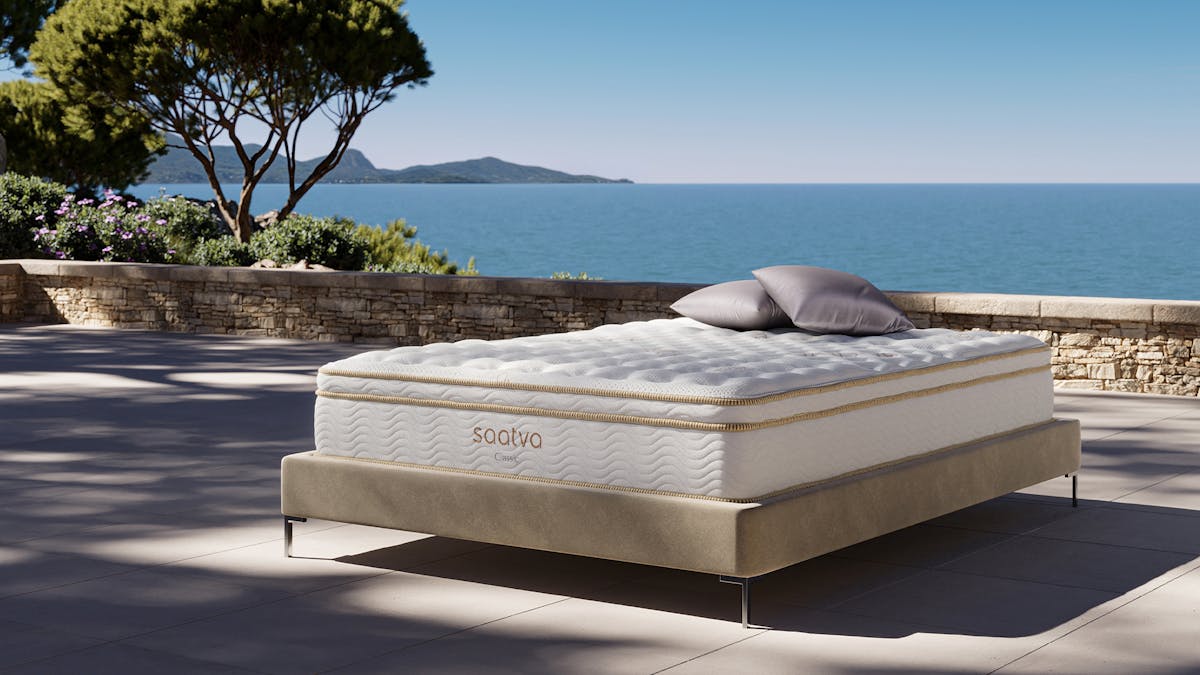
 by
by For a 3-year-old, choose a mattress designed for children. Our top pick is the Saatva Youth: a 10-inch flippable hybrid with a firmer side for ages 3–7 and a second side for ages 8–12, an organic cotton cover, a 365-night trial and lifetime warranty. Confirm current dimensions and terms on the official product page.
Saatva Youth
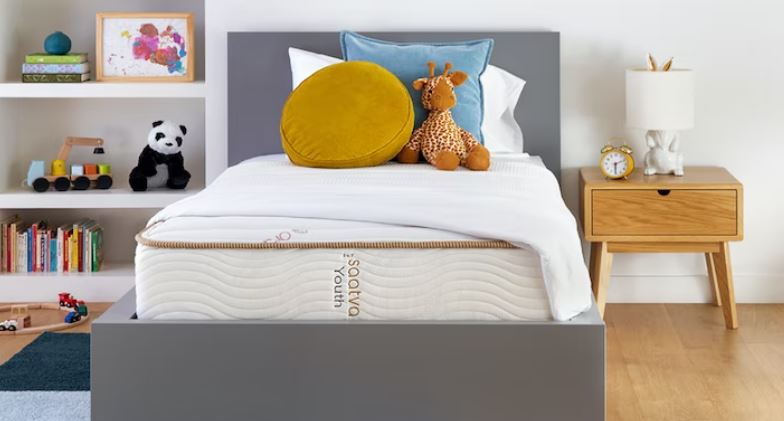
Our pick for a 3-year-old is the purpose-built Saatva Youth: a flippable hybrid with a firmer side for ages 3–7 and a second side for ages 8–12. Use a waterproof protector and confirm current size, price and terms on the official product page.
What a 3-year-old needs in a mattress
Three-year-olds are transitioning from crib to big-kid bed, which changes the requirements entirely. The crib standard calls for a very firm, flat surface. By age 3, developing spines still need firm-to-medium support, but the risk calculus shifts toward comfort alongside safety.
Four things separate a good kids mattress from a repurposed adult mattress at this age:
- Firmness: Firm to medium-firm (6-8 out of 10). A 3-year-old weighs 30-40 pounds, so even a medium-firm adult mattress often feels too soft, letting hips sink and spine curve. Purpose-built kids mattresses calibrate firmness for lighter body weights.
- Low chemical exposure: Kids breathe closer to the mattress surface and spend more hours in bed than adults. CertiPUR-US certified foam and GREENGUARD Gold are the minimum standards. No-fiberglass flame barriers (natural wool or thistle pulp) avoid the risk of glass particles if the cover tears.
- Waterproofing or easy cleaning: Accidents at 3 are routine. A water-resistant cover or a separate waterproof protector is not optional.
- Size: A twin (38 x 75 inches) fits most toddler beds and standard twin frames. Big enough for a growing child without dominating a small bedroom.
Top picks: mattresses for 3-year-olds
| Mattress | Type | Firmness | Trial | Price |
|---|---|---|---|---|
| Saatva Youth | Flippable hybrid | Two age-specific sides | 365 nights | Check current twin price |
| Saatva Youth | Flippable hybrid | Firm / Med-firm (flippable) | 365 nights | From $864 twin |
| Saatva Classic | Innerspring hybrid | 3 firmness options | 365 nights | ~$1,395 queen |
Saatva Youth
9/10
- Dual-sided: firm for ages 3-7, medium-firm for ages 8-12 — one mattress covers the full childhood
- Organic cotton cover with water-resistant finish and zoned lumbar support on both sides
- No-fiberglass thistle pulp flame barrier, low-VOC certified foams
- Free white-glove delivery with in-room setup; 365-night trial and lifetime warranty
- $99 return fee if you use the trial
- Not compatible with adjustable bases
At around $864 twin with a purpose-built kids construction, the Saatva Youth beats repurposed adult mattresses on every metric that matters for a 3-year-old: firmness calibrated for light body weight, spill-resistance, and a flip-to-grow design that eliminates the replacement purchase at age 8.
Should a 3-year-old sleep on a firm or soft mattress?
Firm to medium-firm wins at this age. At 30-40 pounds of body weight, the support layer of most adult medium mattresses barely engages, letting the child sink toward the center and curving the spine laterally for 10 to 12 hours a night during peak skeletal development.
Purpose-built kids mattresses solve this by calibrating coil gauge and foam density for lighter loads. The Saatva Youth applies this logic directly: the 3-7-year-old side runs at approximately 7/10 firmness, the 8-12 side at 6.5/10, matching the changing body weight as the child grows.
A softer mattress is not dangerous past infancy. The suffocation risk window is 0-12 months. For posture and alignment, firmer surfaces outperform soft ones until the child reaches adult weight proportions, typically around 12-14 years old.
Can a 3-year-old sleep on memory foam?
Memory foam is safe for a 3-year-old with one condition: CertiPUR-US certification. This covers VOC emissions and regulated chemical content, which matters for a child breathing close to the mattress surface for 10-plus hours a night. Low-quality, uncertified foams are the ones to avoid.
Standard slow-response viscoelastic foam can feel overly contouring for a lightweight toddler, limiting their ability to reposition during the night. The Saatva Youth uses a coil core with foam comfort layers and two age-specific sides. Choose the side intended for the child’s age and use a waterproof protector.
Saatva Classic
8.8/10
- Dual-coil construction with reinforced lumbar zone pad, outstanding edge support
- Free white-glove delivery with in-room setup and old-mattress removal
- 365-night trial and lifetime warranty; three firmness options available
- Hotel-luxury feel with organic cotton Euro pillow-top
- Adult construction, not purpose-built for a 3-year-old body weight and sleep needs
- $99 return fee during the trial; ships flat, not compressed
The right choice if you are buying an adult-size mattress for a family bed or guest room that a 3-year-old will also use, not for a dedicated toddler bed. The Luxury Firm option suits lighter sleepers who still need reliable spinal support.
What size mattress for a 3-year-old?
A twin (38 x 75 inches) is the standard first bed for a 3-year-old, fitting most toddler frames and standard twin platforms. It gives the child room to roll without being oversized for a small bedroom, and most kids use a twin until age 10 to 12.
Height matters just as much: 6 to 10 inches is the right range. A thicker mattress raises the sleep surface, increasing the fall height for a child who rolls out of bed. Low-profile options under 10 inches are the safer choice for this age.
Certifications to look for in a kids mattress
- CertiPUR-US: Tests foam for VOC emissions, durability, and regulated chemical content. Non-negotiable for any foam used in a kids mattress.
- GREENGUARD Gold: Stricter chemical emissions standard specifically for children products. Found on better kids mattresses including Naturepedic.
- GOTS (Global Organic Textile Standard): Covers the organic status of cotton and wool in the cover. Relevant if organic material claims matter to you.
- No fiberglass in the flame barrier: Worth confirming explicitly. Budget mattresses sometimes use fiberglass strands in fire barriers. Natural alternatives (wool, thistle pulp, modacrylic) carry no equivalent risk.
Waterproofing and long-term maintenance
A waterproof mattress protector is not optional at age 3. A single overnight accident that soaks through the cover creates conditions for mold and bacteria growth inside the foam, voiding most warranties in the process. A fitted waterproof protector costs $30-60 and extends mattress life by years.
Look for a Terry-cotton surface protector rather than a crinkly plastic-backed type. The plastic traps heat and makes audible noise that disrupts sleep. The Saatva Youth cover already includes a water-resistant finish, but a secondary protector adds useful redundancy through the heavy-accident years.
For a dedicated 3-year-old bed, our recommendation is the Saatva Youth, with a flippable design covering ages 3–12 and an organic cotton cover. Use the firmer side for ages 3–7 and protect the mattress with a waterproof protector.
Frequently asked questions
What type of mattress is best for a 3-year-old?
A firm-to-medium-firm hybrid or high-density foam calibrated for lighter body weights. Purpose-built kids mattresses outperform standard adult mattresses for this age group because they engineer the firmness profile for 30-40-pound sleepers, not 150-pound adults. Flippable designs that shift from firmer to medium-firm as the child grows offer the best long-term value.
Is memory foam safe for a 3-year-old?
Yes, with CertiPUR-US certification. The crib safety window (0-12 months) does not extend to age 3. The main practical issue is responsiveness: traditional slow-response memory foam can make repositioning harder for a lightweight toddler. Open-cell responsive foam or a foam-topped hybrid performs better for light sleepers who move frequently at night.
How long should a kids mattress last?
A quality kids hybrid should last 8 to 10 years under normal use. Flippable designs extend this by providing two firmness profiles across different age stages. A waterproof protector used consistently from day one is the single biggest factor in reaching that lifespan, since moisture damage is the primary cause of premature foam failure.
When can a child switch to a softer mattress?
Most sleep specialists suggest waiting until the child reaches roughly 12 to 14 years old, when body weight and proportions approach adult norms, before moving to a medium or medium-soft mattress. Below that threshold, firmer surfaces support the developing spine more reliably than soft conforming materials.
This guide is part of our Best Mattress by Age & Life Stage hub — compare all the top picks and narrow down your choice there.