
 by
by Our #1 recommendation
Amerisleep AS3
A balanced medium-feel mattress and our first Amerisleep recommendation.
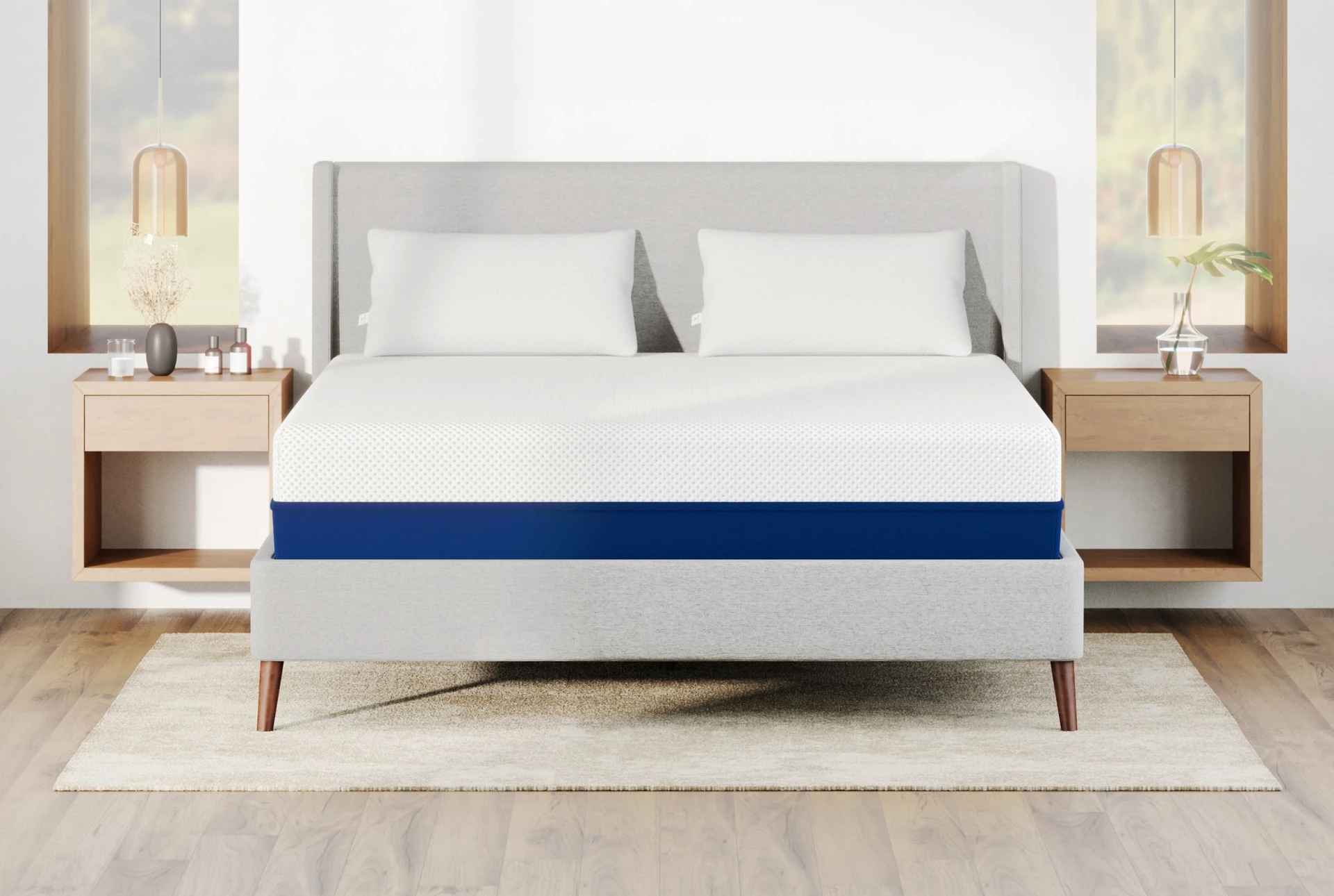
For allergy sufferers, our #1 recommendation is the Amerisleep AS3. Its Bio-Pur foam is CertiPUR-US certified and tested for VOCs, formaldehyde, prohibited flame retardants and heavy metals, the cover fabric is OEKO-TEX certified, and the open-cell structure off-gasses faster than standard memory foam. Medium 5/10, from $1,249 queen, 100-night trial, 20-year warranty. If you specifically want natural latex, which is naturally resistant to dust mites, the Saatva Zenhaven in GOLS-certified organic latex remains the strongest choice in that material.
Amerisleep AS3
8.5/10
- CertiPUR-US Bio-Pur foam: tested for VOCs, formaldehyde, prohibited flame retardants, heavy metals
- Plant-based open-cell foam dissipates heat and off-gassing faster than standard memory foam
- OEKO-TEX certified cover fabric, free from harmful chemicals
- HIVE 5-zone support layer, 20-year warranty, 100-night trial
- Not latex, foam does not inherently resist dust mites (use an encasement)
- All-foam construction retains some body heat compared to latex or hybrid
- 100-night trial shorter than the 365-night standard among premium options
If the Zenhaven's price is out of range and you want a foam option, the AS3 is the strongest CertiPUR-US foam choice at this price. Bio-Pur foam off-gasses faster and runs cooler than standard memory foam, and the OEKO-TEX cover eliminates surface chemical contact. Pair it with a 6-sided encasement and it covers the dust-mite and mold-risk angles.
Why standard mattresses worsen allergies
Three mechanisms drive mattress-related allergy symptoms.
Dust mites are the primary culprit. Dense foam and pillow-top layers trap the dead skin cells mites feed on. A typical innerspring mattress can harbor two million dust mites within two years, and each mite produces roughly 20 waste particles per day. Those particles become airborne during sleep and are the direct allergen for most sufferers, not the mite itself.
Mold and mildew grow inside foam when humidity is trapped. Memory foam's closed-cell structure retains moisture, particularly in humid climates. Mold spores are a potent respiratory allergen, and the contamination is invisible until symptoms appear.
Chemical off-gassing from new synthetic foam releases volatile organic compounds (VOCs) including benzene, toluene, and formaldehyde. Most dissipate within days to weeks, but people with chemical sensitivities react even to low concentrations.
What to look for in a hypoallergenic mattress
- Natural latex: open-cell structure promotes airflow and is inherently antimicrobial, dust-mite resistant, and mold-resistant. GOLS certification confirms the latex is organic and free from prohibited synthetic compounds.
- CertiPUR-US certification: guarantees foam is tested for VOCs, formaldehyde, flame retardants, and heavy metals. Not zero-emission, but a meaningful floor for foam mattresses.
- Organic cotton and wool covers: GOTS certification for cotton and wool means no pesticide residues and no synthetic finishing chemicals. Wool also naturally resists dust mites and mold.
- GREENGUARD Gold / eco-INSTITUT: independent air quality certifications that test the whole assembled mattress, not just individual components.
- A good encasement: even the cleanest mattress benefits from a 6-sided allergen-proof encasement, which physically blocks dust mites from colonizing the interior and is the only way to protect a mattress you already own.
Best mattresses for allergies, compared
| Mattress | Type | Key certifications | Trial | Queen from |
|---|---|---|---|---|
| Saatva Zenhaven | All-latex (natural) | GOLS, GREENGUARD Gold, eco-INSTITUT | 365 nights | ~$3,124 |
| PlushBeds Botanical Bliss | All-latex (natural) | GOLS, GOTS, GREENGUARD Gold, OEKO-TEX | 100 nights | ~$1,800 |
| Amerisleep AS3 | All-foam (Bio-Pur) | CertiPUR-US, OEKO-TEX (cover) | 100 nights | $1,249 (queen) |
| Avocado Green | Latex hybrid | GOLS, GOTS, GREENGUARD Gold, OEKO-TEX | 365 nights | From $1,599 |
The Avocado Green Mattress holds one of the most comprehensive certification stacks on the market (GOLS, GOTS, GREENGUARD Gold, OEKO-TEX Standard 100, eco-INSTITUT, and EWG Verified). It belongs on the shortlist for chemically sensitive sleepers.
Saatva Zenhaven
9.2/10
- GOLS-certified natural latex core, washed to reduce allergenic latex proteins
- Organic cotton cover (GOTS) and New Zealand wool fire barrier, no synthetic flame retardants
- Zero polyurethane foam, GREENGUARD Gold and eco-INSTITUT certified for low VOC emissions
- 5-zone zoned latex for lumbar support, flippable for two firmness options in one mattress
- Free white-glove delivery, 365-night trial, lifetime warranty
- Premium price point ($3,124+ queen)
- Not suitable for confirmed latex-protein allergy sufferers
- Heavy (125 lb queen), difficult to flip without help
For allergy sufferers who react to dust mites, mold, or chemical off-gassing, the Zenhaven's all-latex construction is the most defensible choice on the US market. Latex's open-cell structure resists dust-mite colonization, and the organic materials eliminate the synthetic chemical sources that trigger sensitive sleepers.
Latex vs. foam for allergy sufferers
Natural latex wins on allergy credentials for three reasons: its open-cell structure actively resists dust-mite colonization, it does not off-gas the synthetic VOCs foam produces, and organic latex mattresses have the strongest independent certification stack available. The trade-off is price, weight, and the fact that a latex-protein allergy (estimated at 1 to 6 percent of the population) rules it out for some users.
Foam mattresses like the AS3 are not inherently allergenic, but their dense structure is more hospitable to dust mites and mold than latex. CertiPUR-US certification addresses VOC off-gassing, and a good encasement addresses the mite and mold vectors. For most allergy sufferers who are not reacting to latex specifically, a well-encased CertiPUR-US foam mattress is a workable and much more affordable option.
PlushBeds Botanical Bliss
8.8/10
- GOLS-certified Dunlop latex core, GOTS-certified organic cotton and wool cover
- GREENGUARD Gold and OEKO-TEX certified, comparable certifications to the Zenhaven at roughly half the price
- Configurable firmness (Medium or Medium-Firm) without buying a new mattress
- 25-year warranty, one of the longest in the latex category
- Heavy and not compressed in a box, may require two people to set up
- Buoyant latex feel is not for everyone, especially those who prefer memory foam's deep hug
- Not suitable for latex-protein allergy sufferers
For allergy sufferers who want the GOLS organic latex protection of the Zenhaven but cannot justify the $3,000+ price, the Botanical Bliss delivers the same core allergy benefits (dust-mite resistant, no synthetic VOCs, organic cover) at a significantly lower entry point.
Allergy reduction protocol alongside the right mattress
The mattress choice is step one. These supporting measures close the remaining gap:
- 6-sided allergen-proof encasement: the single highest-impact accessory for allergy control. Physically blocks dust mites from the mattress interior and is machine washable. A hypoallergenic mattress without an encasement remains colonizable within months.
- Weekly bedding wash at 130 F (54 C): the minimum temperature to kill dust mites. This applies to sheets, pillowcases, and pillow covers.
- Bedroom humidity below 50%: dust mites require humidity above 50% to survive and reproduce. A dehumidifier in humid climates has a measurable impact on mite populations.
- HEPA vacuum monthly: surface dust and dander accumulate on the mattress surface despite an encasement. A HEPA-equipped vacuum is required to capture particles rather than redistribute them.
- Air out the bedroom daily: 15 to 20 minutes of cross-ventilation reduces both CO2 buildup and the humidity that supports mold and dust mites.
For pillow selection, hypoallergenic pillow encasements follow the same principle as mattress encasements and should be treated as essential rather than optional for allergy sufferers.
For allergy sufferers, the Amerisleep AS3 is our first pick; Saatva Zenhaven is our latex alternative. The PlushBeds Botanical Bliss delivers the same GOLS latex protection at roughly half the price. The Amerisleep AS3 (CertiPUR-US, OEKO-TEX cover) delivers the best foam alternative at a lower price point. Pair any choice with a 6-sided encasement for full dust-mite protection.
Frequently asked questions
What type of mattress is best for allergy sufferers?
Natural latex with GOLS certification is the strongest choice. Latex is inherently antimicrobial and dust-mite resistant, and the organic certifications address VOC off-gassing. For those who cannot afford latex, a CertiPUR-US foam mattress with an allergen-proof encasement covers the main allergy vectors at lower cost.
Can a mattress cause or worsen allergies?
Yes. Mattresses are one of the highest-density dust-mite habitats in the home. The Asthma and Allergy Foundation of America identifies the bedroom mattress as the primary mite exposure source for allergy and asthma sufferers. VOC off-gassing from new synthetic foam mattresses is a separate, shorter-term concern for chemically sensitive sleepers.
Are memory foam mattresses bad for allergies?
Not inherently. Memory foam itself is not an allergen. The issue is that its dense structure is hospitable to dust mites over time. CertiPUR-US certification addresses the chemical off-gassing concern. A 6-sided encasement addresses the dust-mite concern. Paired together, a CertiPUR-US foam mattress with an encasement is a workable allergy-reduction strategy.
Should I be worried about latex allergy with a natural latex mattress?
Only if you have a confirmed latex-protein allergy. The Saatva Zenhaven notes that their latex is washed to reduce allergenic proteins, but no natural latex mattress should be used by someone with a diagnosed latex allergy. Synthetic latex (SBR rubber) is different from natural latex and does not carry the same protein risk, but it also lacks the organic certifications that make natural latex attractive for allergy management.
How often should I replace my mattress to control allergens?
Most manufacturers recommend 7 to 10 years for foam, and 10 to 15 years for latex. From an allergy standpoint, the encasement matters more than the mattress age: a well-encased mattress accumulates far fewer mites than an unprotected one, regardless of age.
This guide is part of our Best Mattress for Pain Relief hub, compare all the top picks there.
Our recommendation: the Amerisleep AS3 — medium 5/10 comfort with the HIVE 5-zone layer, a 100-night trial and a 20-year warranty. If you are still deciding, the trial period is what makes it low risk.