
 by
by The safest mattress for a latex allergy is one with zero latex in any layer. Our top pick is the Saatva Classic: its dual-coil innerspring construction uses only foam and organic cotton comfort layers, confirmed latex-free by the manufacturer, with free white-glove delivery and a 365-night trial. The Amerisleep AS3 is the best all-foam alternative, CertiPUR-US certified with no rubber-derived materials anywhere.
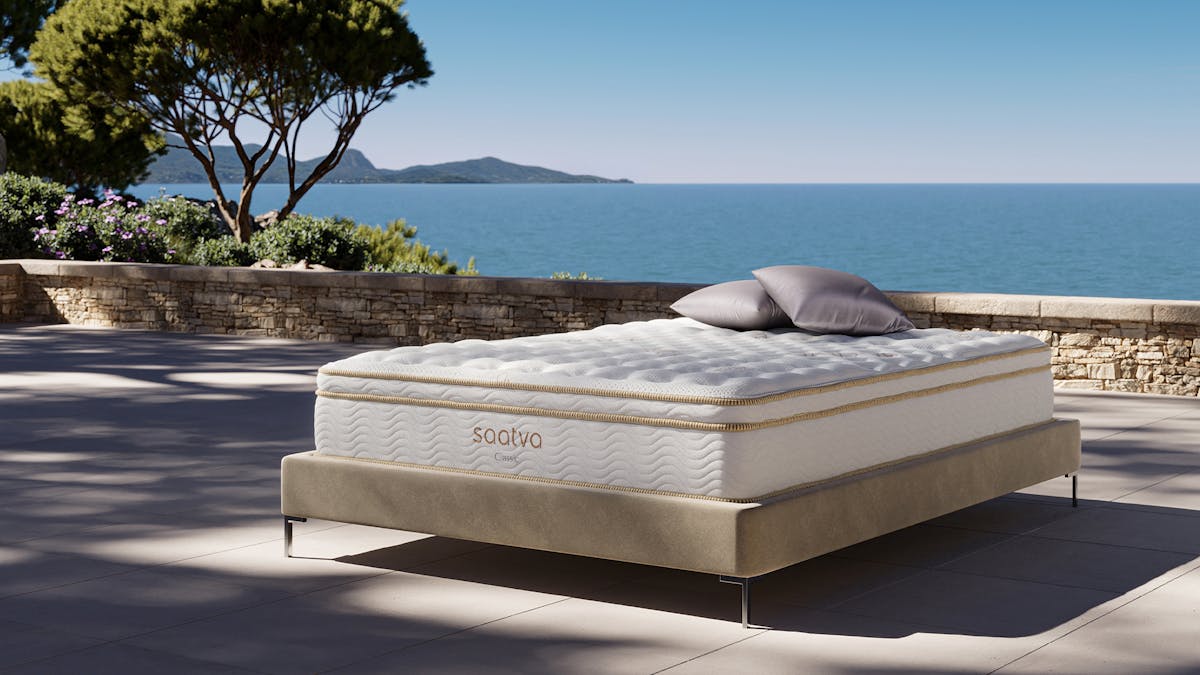
Saatva Classic
9.2/10
- Zero latex confirmed anywhere, coil-on-coil construction with memory foam and polyfoam comfort layers only
- Plant-based thistle pulp flame barrier, no fiberglass or latex in any component
- Free white-glove delivery with in-room setup and old mattress removal
- 365-night home trial and lifetime warranty, the strongest policies in this category
- $99 return fee if you use the trial period
- Ships flat rather than rolled, heavier to maneuver than a bed-in-a-box
For anyone with a confirmed latex allergy, the Saatva Classic delivers complete confidence. Saatva confirms zero latex in every layer, including the flame barrier, and the dual-coil innerspring gives you premium support and breathability without any rubber-derived components. The 365-night trial gives you time to verify compatibility.
Why latex is a problem and what replaces it
Latex allergy affects roughly 1 to 6 percent of the general population. For those people, a mattress that contains natural or synthetic latex can trigger reactions ranging from skin irritation and hives to more serious respiratory symptoms. The problem is that latex appears in places you might not expect: not just in dedicated latex mattresses, but as a thin transition or comfort layer inside many hybrid models marketed as foam or innerspring beds.
Before purchasing any mattress, people with a latex allergy should request the full material breakdown from the manufacturer, not just the top-level product description. The components that matter are the comfort layers, the transition layer, and sometimes the flame barrier, any of these can contain latex.
The good news is that the best latex alternatives, high-quality memory foam and polyfoam, replicate most of what makes latex desirable (pressure relief, responsiveness, durability) without the allergen risk. CertiPUR-US certified foams go further by requiring third-party testing for emissions, formaldehyde, ozone depleters, and heavy metals, providing an additional safety layer for chemically sensitive sleepers.
Best latex-free mattresses for allergy sufferers
| Mattress | Type | Firmness | Latex-free | Trial | Queen price |
|---|---|---|---|---|---|
| Saatva Classic | Innerspring hybrid | 3 firmness options | Yes, thistle pulp flame barrier | 365 nights | From $1,595 |
| Amerisleep AS3 | All-foam (Bio-Pur) | Medium 5/10 | Yes, CertiPUR-US certified | 100 nights | From $1,049 |
Amerisleep AS3
8.9/10
- Zero latex in any layer, Bio-Pur is a plant-based open-cell memory foam, not rubber
- CertiPUR-US certified: independently tested for harmful substances, off-gassing, and durability
- HIVE 5-zone support system actively reinforces the lumbar zone
- 100-night risk-free trial with full refund and free removal
- Average edge support for an all-foam bed, hybrid version improves this
- Sleepers over 230 lb may want the AS5 Hybrid for more long-term support
For latex allergy sufferers who prefer an all-foam feel, the AS3 eliminates the risk entirely. Its Bio-Pur foam provides pressure relief and responsiveness without any rubber-derived components, and the CertiPUR-US certification covers emissions testing, so you know exactly what you are sleeping on.
How to confirm a mattress is truly latex-free
A "memory foam" or "hybrid" label is not a guarantee of zero latex. Some hybrid mattresses use a thin latex transition layer that is rarely mentioned in the headline spec. To verify before you buy:
- Ask for a full layer-by-layer breakdown. Reputable brands provide a written list of every material used, including the flame barrier.
- Look for CertiPUR-US certification on foam layers. This certifies the foam content, but does not exclude latex in other layers, confirm separately.
- Check the flame barrier. Some manufacturers use a latex-containing barrier. The Saatva Classic uses a thistle pulp barrier. The Amerisleep AS3 uses a certified foam system with no latex component.
- Get written confirmation for severe allergies. If your reaction to latex is anaphylactic, email the manufacturer and ask specifically: "Does this mattress contain any natural or synthetic latex in any layer, including the flame barrier and cover?" Keep the response on file.
Innerspring and all-foam mattresses are the safest defaults because they can be built entirely without rubber-derived materials. The Saatva Classic and Amerisleep AS3 are both confirmed latex-free across every component, which removes the guesswork for allergy sufferers.
Latex allergy vs. latex sensitivity: what matters for sleep
A true latex allergy (IgE-mediated, Type I hypersensitivity) involves an immune response to proteins in natural rubber latex. Even trace amounts can cause a reaction in sensitized individuals. This is the category where written confirmation that a mattress contains zero latex matters most.
Latex sensitivity or contact dermatitis (Type IV) is a delayed reaction to chemical additives used in latex processing. It presents as skin irritation after direct contact rather than systemic symptoms. For this group, a mattress with a thick fabric cover and no latex in the comfort layers is usually sufficient, though eliminating latex entirely is still the safest approach.
Both groups should avoid mattresses described as "latex hybrid," "natural latex," "Dunlop latex," or "Talalay latex." These constructions use rubber-derived foam that triggers reactions in sensitized sleepers. The Avocado Green Mattress, PlushBeds Botanical Bliss, and Saatva Zenhaven are all popular latex options that would be wrong for this use case despite being excellent mattresses for people without a latex allergy.
Memory foam and allergies: what you should know
Memory foam is not latex. It is a polyurethane-based foam that contains no rubber proteins and does not trigger latex allergy. CertiPUR-US certified memory foam is tested by independent labs to confirm the absence of formaldehyde, ozone depleters, certain flame retardants, heavy metals, and other substances that could affect air quality in the bedroom.
The Amerisleep Bio-Pur foam is additionally plant-based, partially sourced from vegetable oils rather than 100% petroleum, which gives it an open-cell structure for better airflow. For latex allergy sufferers, this means you get the same pressure-relieving contouring that makes latex popular, with none of the allergenic proteins.
People with broader chemical sensitivities, not just latex, should also look for low-VOC certifications, allow adequate off-gassing time after unboxing, and consider organic cotton covers. The Saatva Classic ships uncompressed rather than rolled, which significantly reduces initial off-gassing compared to bed-in-a-box foam mattresses.
Frequently asked questions
Is memory foam safe for latex allergy?
Yes. Memory foam is polyurethane-based and contains no rubber proteins. It is the most straightforward latex-free alternative. CertiPUR-US certification adds third-party testing for harmful substances and emissions.
Can a mattress with a latex layer cause a reaction even if the latex is not on the surface?
For mild sensitivity, probably not under normal use. For a documented IgE-mediated latex allergy, there is a small but real risk that proteins could migrate through the cover over time. Eliminating latex entirely is the safest approach for anyone with a confirmed allergy.
What is the difference between natural latex and synthetic latex in a mattress?
Natural latex comes from rubber tree sap and contains the proteins that cause IgE-mediated latex allergy. Synthetic latex is petroleum-derived and does not contain rubber tree proteins, but it can still cause contact dermatitis in some people with latex sensitivity. For a true latex allergy, both types are best avoided.
Do innerspring mattresses contain latex?
Some do, some do not. The Saatva Classic uses no latex in any layer, its construction is coils, polyfoam, memory foam, and organic cotton. Always verify with the manufacturer, because even "innerspring" mattresses may include a latex comfort or transition layer in some models.
For a latex allergy, choose a mattress with zero latex confirmed in writing. The Saatva Classic is our top pick, a dual-coil innerspring with no rubber-derived materials, free white-glove delivery, and a 365-night trial. The Amerisleep AS3 is the best all-foam alternative, CertiPUR-US certified on a 100-night trial.