
 by
by Our #1 recommendation
Amerisleep AS3
A balanced medium-feel mattress and our first Amerisleep recommendation.
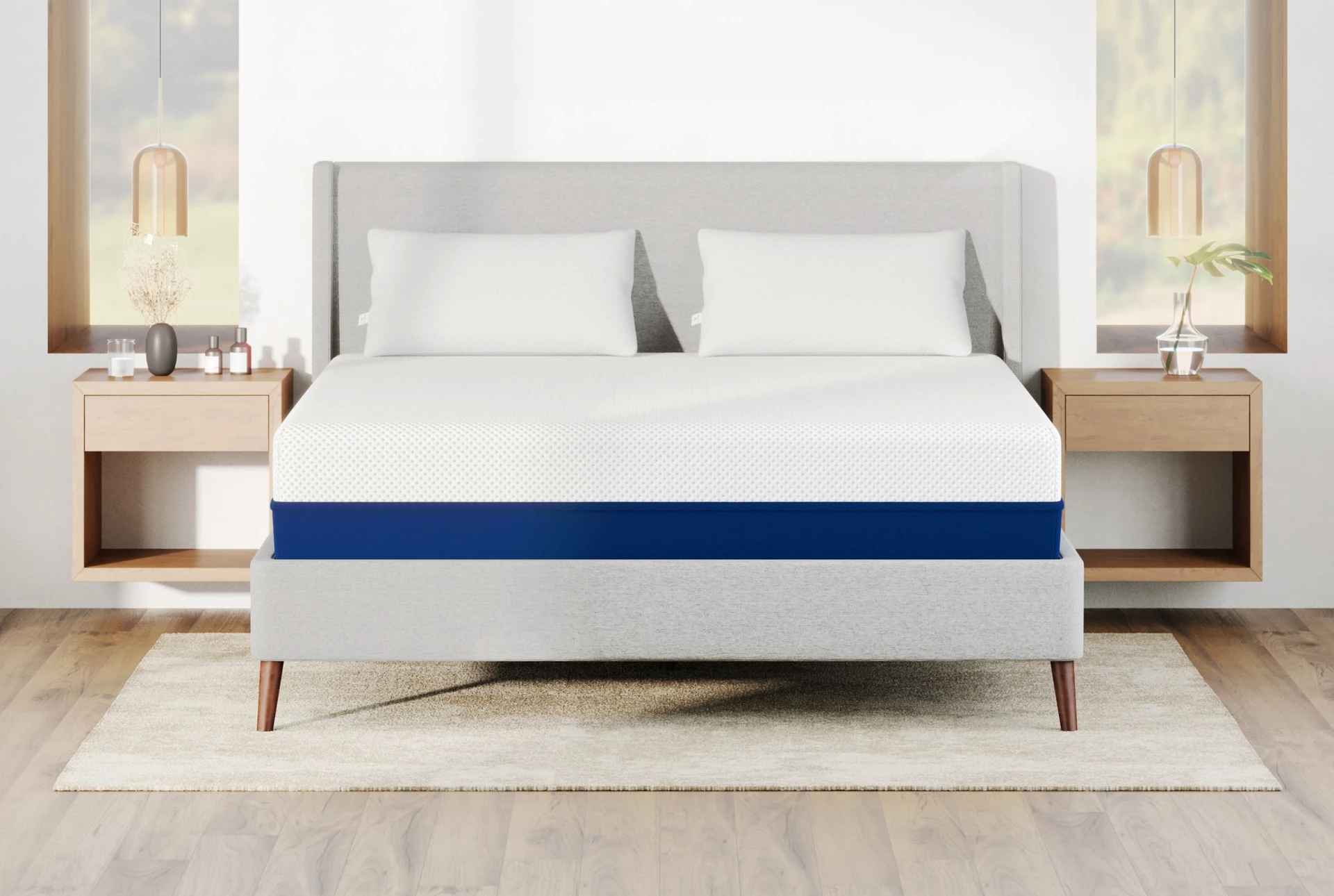
For most empty nesters upgrading after the kids leave, the Amerisleep AS3 is our top pick. The HIVE 5-zone layer puts real reinforcement under the lumbar, where decades of wear show up first, and the Bio-Pur open-cell structure runs cooler than conventional memory foam. Medium 5/10, from $1,249 queen, 100-night trial, 20-year warranty. If you prefer a responsive coil bed with white-glove delivery, the Saatva Classic remains an excellent option.
Amerisleep AS3
9.4/10
- HIVE 5-zone support layer firms specifically under the lumbar
- Bio-Pur plant-based open-cell foam runs cooler than standard memory foam
- Outstanding motion isolation, ideal if one partner is a light sleeper
- CertiPUR-US certified, made in the USA
- 20-year warranty, twice the industry standard
- Average edge support for an all-foam bed, less sturdy than a coil hybrid
- Sleepers over 230 lb may prefer the AS3 Hybrid, which adds a coil base
If you prefer a quieter, body-contouring feel over a responsive coil, the AS3 delivers strong motion isolation with real lumbar zoning and a 20-year warranty.
Why empty nesters actually upgrade their mattress
The triggers are consistent: the current mattress is 12 to 15 years old and has spent its whole life in a house organized around the kids. Back pain or hip discomfort that seemed like a normal part of life gets noticeably better on a hotel bed. The master bedroom now has space for a king. Or one partner is going through perimenopause and the old mattress is making night sweats worse.
All of these are solvable with the right mattress. The difficulty is that most people in this position haven't seriously evaluated a mattress in over a decade, so the market has moved considerably past what they remember.
Sleep needs after 50: what actually changes
Sleep architecture shifts with age in specific ways that affect mattress choice:
- Pressure sensitivity increases. Shoulders and hips become more sensitive to firm surfaces. A medium or medium-firm mattress with a real comfort layer, not just a thin pillow-top, makes a measurable difference.
- Temperature regulation shifts. Women navigating perimenopause or menopause frequently experience night sweats and hot flashes. A coil-based mattress or a foam with real open-cell structure runs significantly cooler than dense memory foam.
- Edge support matters more. Getting in and out of bed at night is easier with a reinforced perimeter. Dual-coil hybrids like the Saatva Classic score far above all-foam beds on this measure.
- Motion isolation becomes a priority. If one partner is a lighter sleeper, or schedules have diverged, reducing transfer from the other side of the bed has a real effect on sleep quality.
Best mattresses for empty nesters compared
| Mattress | Type | Firmness | Trial | Queen price | Best for |
|---|---|---|---|---|---|
| Saatva Classic | Dual-coil hybrid | 3 options (3-8/10) | 365 nights | $2,229 | Couples, hotel feel, back pain |
| PlushBeds Botanical Bliss | Organic latex | Medium or Med-Firm | 100 nights | ~$1,800-2,000 | Natural/organic, durability |
| Puffy Lux Hybrid | Hybrid | Medium ~5-6 | 365 nights | $1,549 | Pressure relief + motion isolation |
| Amerisleep AS3 | All-foam Bio-Pur | Medium 5/10 | 100 nights | $1,249 (queen) | Motion isolation, foam feel |
King vs. queen: worth upgrading?
For most empty nesters, yes. A king gives each partner 38 inches of width, which is close to twin territory. Couples who have shared a queen for 20 years and then switch to a king consistently say they wished they had done it sooner. With the kids' furniture out of the master bedroom, the space usually accommodates it without rearranging anything.
The Saatva Classic is available in every standard size, including split king for couples who want individual adjustable bases. Check the mattress size guide if you need room dimensions.
Firmness for couples over 50
Medium to medium-firm (5 to 7 out of 10) covers the widest range of co-sleeping needs. The Saatva Classic's Luxury Firm option at around 6 out of 10 is the most commonly ordered: supportive enough for back sleepers, with enough give for side sleepers at average weight. If one partner prefers softer and the other prefers firmer, a split king with two separate firmness options eliminates the compromise entirely.
For anyone dealing with active back pain, the separate back pain mattress guide covers zoned support in more detail.
Saatva Classic
9.3/10
- Three firmness levels (Plush Soft, Luxury Firm, Firm) so couples pick their exact feel
- Reinforced lumbar zone coils plus Euro pillow-top for pressure relief
- Free white-glove delivery: in-room setup and old mattress removal included
- Outstanding edge support, easier to get in and out of bed
- 365-night trial, lifetime warranty, minimal off-gassing (ships uncompressed)
- Higher motion transfer than all-foam, less ideal for very light sleepers
- $99 return fee if you send it back during the trial
The Saatva Classic is the natural upgrade for couples finally investing in their bedroom. White-glove delivery removes the logistics problem, three firmness options cover both partners, and the dual-coil construction sleeps far cooler than dense foam at this price.
PlushBeds Botanical Bliss
8.9/10
- GOLS-certified organic Dunlop latex, little off-gassing
- Highly durable: 25-year warranty is among the longest in the category
- Buoyant, responsive feel that sleeps cooler than memory foam
- Configurable firmness layers for couples with different preferences
- Heavier than foam beds, harder to move
- Higher price point than hybrid alternatives
- More buoyant feel than memory foam fans prefer
For empty nesters who want natural materials and are planning to keep this mattress for 15-plus years, the Botanical Bliss delivers organic latex quality with a 25-year warranty that backs up the durability claim.
Puffy Lux Hybrid
8.7/10
- Excellent pressure relief at shoulders and hips, good for side sleepers
- Pocketed coil core adds edge support and airflow over all-foam
- Strong motion isolation for couples with different sleep schedules
- Lifetime warranty
- Can sleep slightly warm for heavy hot sleepers
- Less responsive feel than a coil-dominant hybrid
The Puffy Lux Hybrid combines the pressure relief that empty nesters over 50 need at the hips and shoulders with coil support for stronger edges and better airflow than a pure foam bed.
Should empty nesters consider an adjustable base?
Increasingly, yes. If either partner has back pain, acid reflux, snoring, or circulation issues, raising the head or feet independently can ease those symptoms; it does not replace medical care. The Saatva Adjustable Base Plus pairs natively with the Saatva Classic 11.5-inch model. The Amerisleep AS3 is also compatible with adjustable bases.
For a full comparison of adjustable base options, see the adjustable bed frame guide.
For empty nesters who prefer springs, the Saatva Classic in Luxury Firm is our runner-up: white-glove delivery, three firmness options, and outstanding edge support on a 365-night trial. For natural materials, the PlushBeds Botanical Bliss organic latex is the longest-lasting pick. If you prefer all-foam, the Amerisleep AS3 offers better motion isolation and a 20-year warranty from $1,249.
Frequently asked questions
Is it worth upgrading to a king as an empty nester?
For most couples, yes. A king gives each partner roughly 38 inches of personal space, close to a twin, which significantly reduces sleep disruption. Many couples say they deferred the upgrade for years and wish they hadn't.
What mattress features matter most for people over 50?
Pressure relief at the shoulders and hips, temperature regulation, strong edge support for getting in and out of bed, and enough motion isolation that one partner's movement doesn't disturb the other. Medium to medium-firm firmness covers most post-50 needs.
How does sleep change after the kids leave?
Many empty nesters initially sleep longer, then start noticing sleep quality issues that were masked by parenting exhaustion. Sleep becomes lighter with age, temperature regulation shifts, and accumulated mattress wear becomes apparent when you're sleeping enough hours to notice it.
What's a realistic budget for an empty nester mattress upgrade?
For a quality queen, $1,000 to $2,000 covers the best options. A king runs $200 to $400 more. Given that a premium mattress lasts 10 to 12 years, the per-night cost is well under a dollar.
This guide is part of our Best Mattress by Age & Life Stage hub.
Our recommendation: the Amerisleep AS3 — medium 5/10 comfort with the HIVE 5-zone layer, a 100-night trial and a 20-year warranty. If you are still deciding, the trial period is what makes it low risk.