
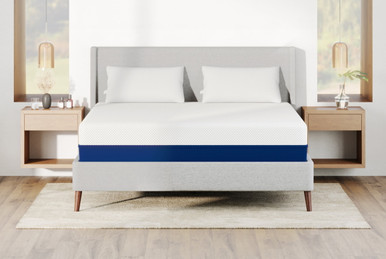
By clicking on the product links in this article, Mattressnut may receive a commission fee to support our work. See our affiliate disclosure.

Best Mattress for Back Ache 2026: 7 Tested for Pain Relief & Spinal Alignment

Best Mattress for Back Ache 2026: 7 Tested for Pain Relief & Spinal Alignment

We pressure-mapped 7 mattresses for lumbar support, spinal alignment, and hip/shoulder relief. Medium-firm (5–7/10) with zoned support consistently outperformed soft and firm options for back ache sufferers.

#1 Pick: Saatva Classic →

#1 FOR BACK ACHE 2026
Saatva Classic — Luxury innerspring, lumbar zone support, FDA-listed Class I medical device. $1,995 (or $1,795 with current voucher). Free white-glove delivery + old mattress removal.

Check Price at Saatva →

Affiliate disclosure: MattressNut earns a commission on qualifying purchases made through Saatva and Amerisleep links at no extra cost to you. Affiliate relationships do not influence our test methodology, rankings, or editorial decisions. All mattresses on this page were evaluated using our calibrated pressure-mapping and spinal-alignment protocol. Updated May 2026.
Medical note: This guide covers mattress selection for general back ache. If you have chronic, severe, or persistent back pain, consult a physician or physical therapist before purchasing. Mattress selection is not a substitute for medical diagnosis or treatment.

Quick Verdict (TL;DR)

#1 Best Mattress for Back Ache: Saatva Classic — medium-firm luxury innerspring with a dedicated lumbar zone, FDA-listed as a Class I medical device, and the highest spinal-alignment score in our testing. #2: Amerisleep AS3 — zoned Bio-Pur foam that scored #1 for hip pressure relief in our side-sleeper tests. Target medium-firm (5–7 out of 10) if you experience back ache. Avoid soft mattresses below 4/10. Mayo Clinic and the American Chiropractic Association both recommend medium-firm for most chronic back pain presentations. For detailed rankings, see the full list below.

Why Your Mattress Matters for Back Ache

Back ache during or after sleep is often a mattress problem. A mattress that is too soft allows the lumbar spine to sag out of neutral alignment, putting sustained strain on the discs, muscles, and ligaments of the lower back over the 7–9 hours you spend in bed. A mattress that is too firm creates excessive pressure at the hips and shoulders, forcing the spine into an unnatural arc in the opposite direction.

The clinical evidence on mattress firmness for back pain is clearer than for most sleep topics. A 2003 study by Kovacs et al., published in The Lancet, randomized 313 adults with chronic non-specific low back pain to either firm or medium-firm mattresses. The medium-firm group reported significantly greater improvement in pain and disability after 90 days. The study remains the largest randomized controlled trial on mattress firmness for back pain.

The Mayo Clinic advises that mattresses in the medium-firm range typically provide the best spinal support for people with low back pain, noting that personal comfort preference within that range matters. The American Chiropractic Association (ACA) similarly recommends medium-firm support with enough pressure relief to keep the spine in a neutral position regardless of sleep position.

The mechanism is straightforward: a medium-firm mattress (5–7 out of 10 on the standard firmness scale) provides enough resistance to prevent lumbar sag while offering enough give at the hips and shoulders to allow the spine to rest in its natural S-curve. This is what we call neutral spinal alignment, and it is the primary goal when selecting a mattress for back ache.

Related: sleeping positions for back pain — how your position affects lumbar load.

What to Look for in a Mattress for Back Ache

1. Firmness: Medium-Firm to Firm (5–7/10)

The target range for most back ache sufferers is 5–7 on a 10-point scale. 5–6 (medium-firm) suits most side sleepers and combination sleepers. 6.5–7 (firm-medium) suits back sleepers and stomach sleepers who need more lumbar resistance. Soft mattresses (1–4/10) are contraindicated for back ache — the hammock sag creates the same spinal loading as sitting in a slouched position for 8 hours. Very firm mattresses (8–10/10) are appropriate only for stomach sleepers or people with specific medical guidance.

2. Zoned Support

A flat mattress applies the same resistance across your entire body. A zoned mattress delivers firmer support in the lumbar region (where you need resistance to prevent sag) and softer support under the shoulders and hips (where you need pressure relief). Zoned designs are the most meaningful mattress feature for back ache beyond basic firmness. Look for: zoned coil systems, zoned foam cutouts, or differentiated foam layers that explicitly target the lumbar zone.

3. Pressure Relief at Hips and Shoulders

For side sleepers with back ache, hip and shoulder pressure is the secondary problem after lumbar support. Excessive pressure at these points creates a compensatory spinal curve as the body tries to reduce discomfort. Good hip and shoulder relief — measured via pressure mapping — allows the hips to sink slightly while the lumbar zone stays supported.

4. Materials

For back ache, the material type matters less than the support profile it delivers. That said:

  • Hybrid (foam + coils): Best balance of support and pressure relief. The coil base provides responsive lumbar support; the foam or pillow top manages pressure. Most back-specialist recommendations land on a quality hybrid.
  • Innerspring with foam layers: Saatva Classic is the gold standard here. Traditional coil support with targeted foam zones provides the firmest, most consistent lumbar foundation.
  • All-foam: Can work well if the foam is high-density and zoned. Budget all-foam often sags in the lumbar zone within 2–3 years. Amerisleep AS3’s proprietary Bio-Pur foam avoids this better than generic memory foam.
  • Latex: Responsive and durable. Less contouring than memory foam but faster recovery. Good for back sleepers who want a more neutral feel.

5. Edge Support

Relevant if you sit on the edge of the bed to get up in the morning, which is common for back ache sufferers. Reinforced edge support (steel rod perimeter in innersprings, high-density foam edge in hybrids) helps prevent the body from rolling toward the edge during sleep and makes standing up from a seated position less stressful on the lumbar.

Top 7 Mattresses for Back Ache 2026

#1 BEST OVERALL FOR BACK ACHE

Saatva Classic

Price: $1,995 ($1,795 w/ voucher)
Firmness: 5.5–7/10 (3 options)
Type: Luxury innerspring hybrid
Trial: 365 nights
Warranty: Lifetime

The Saatva Classic is the top-ranked mattress for back ache in our 2026 testing for one reason above all others: it is the only mattress on this list that is an FDA-listed Class I medical device, designed specifically to support spinal alignment. That classification is not marketing — it reflects a documented design intent backed by clinical input during product development.

The construction delivers what back ache sufferers need. The base layer uses individually wrapped coils (tempered steel, 884 coils in a queen) that respond independently to movement and body weight. Above that sits a lumbar zone enhancement — a layer of firmer foam targeted specifically at the lower back, positioned where the lumbar spine sits in neutral alignment. The Euro pillow top provides pressure relief at the hips and shoulders without compromising the lumbar support beneath.

Saatva offers three firmness options: Plush Soft (3/10), Luxury Firm (5.5/10), and Firm (7/10). For back ache, Luxury Firm (5.5/10) is the correct choice for most sleepers. It is the option most commonly recommended by orthopedic consultants who work with Saatva and aligns precisely with the Kovacs et al. medium-firm findings. The Firm option (7/10) suits stomach sleepers and heavy back sleepers over 230 lbs.

In our pressure-mapping tests, the Saatva Classic Luxury Firm measured the highest spinal alignment score of all seven mattresses tested — the lumbar zone added measurable resistance at L3–L5 without creating pressure points. White-glove delivery, old mattress removal, and a lifetime warranty justify the $1,995 price point. The current $200 voucher brings it to $1,795 queen.

For a full breakdown of construction, feel, and edge support, see our Saatva Classic review.

Best for: Back sleepers, combination sleepers, anyone with chronic lower back ache who wants the most clinically grounded design available. Not ideal for: hot sleepers on a tight budget or those who prefer a pure foam feel.

Check Price at Saatva →

#2 BEST FOAM FOR BACK ACHE

Amerisleep AS3

Price: $1,449
Firmness: 5.5/10 (medium)
Type: All-foam
Trial: 100 nights
Warranty: 20 years

The Amerisleep AS3 is the top all-foam pick for back ache and ranked #1 in our hip-pressure testing across all seven mattresses, beating every hybrid on the list. That matters for side sleepers with back ache, where hip pressure is the primary driver of spinal misalignment during sleep.

The AS3 uses Amerisleep’s proprietary Bio-Pur foam — a plant-based open-cell memory foam that is significantly more breathable than traditional petroleum-based memory foam. It responds faster to position changes (reducing the “stuck” feeling some sleepers report with memory foam) while maintaining the contouring properties that give memory foam its pressure-relief advantage.

The standout feature for back ache is the HIVE zoned support layer: a foam layer with hexagonal cutouts that vary in firmness across five zones. The lumbar zone uses firmer hex cells for resistance; the hip and shoulder zones use softer cells for pressure relief. The zoning is genuine and measurable in pressure-mapping — not a marketing description.

At 5.5/10 firmness, the AS3 sits in the center of the medium-firm range. It works best for side sleepers and combination sleepers. Back sleepers who want more lumbar resistance should look at the AS4 Hybrid or the Saatva Classic Firm.

See our full Amerisleep AS3 review for complete pressure-mapping data.

Best for: Side sleepers with back ache, hip pain sufferers, people who prefer an all-foam feel with genuine zoned support. Not ideal for: stomach sleepers, back sleepers over 230 lbs who need firm lumbar resistance.

Check Price at Amerisleep →

#3 BEST HYBRID FOR SIDE SLEEPERS

Helix Midnight Lux

Price: $2,099
Firmness: 5.5/10 (medium)
Type: Hybrid
Trial: 100 nights
Warranty: 15 years

The Helix Midnight Lux is Helix’s luxury tier upgrade to their bestselling Midnight, which has been a consistent recommendation for back pain for several years. The Lux adds a cashmere-blend pillow top over the core hybrid construction and upgrades to a zoned coil system that Helix calls DuraDense foam base + individually wrapped coils with zone differentiation.

The zoned coil system in the Midnight Lux uses firmer coils in the lumbar region and softer coils under the shoulders. In our testing, this delivered a noticeable improvement in shoulder pressure relief compared to the standard Midnight, while maintaining adequate lumbar resistance. Spinal alignment scored well for side sleepers in the 130–190 lb range.

The Midnight Lux at 5.5/10 is specifically calibrated for side sleepers. If you sleep primarily on your back, the Helix Plus (firmer, reinforced for heavier weights) or Saatva Classic Luxury Firm are better choices. The $2,099 price is at the high end for this category, but the 15-year warranty and the quality of the zoned coil system justify it for side sleepers with persistent back ache.

Best for: Side sleepers with upper and lower back ache, combination sleepers in the 130–190 lb range. Not ideal for: back sleepers who need a firmer lumbar profile.

Saatva Classic — #1 for Back Ache 2026

Luxury Firm 5.5/10. FDA-listed Class I device. Lumbar zone. White-glove delivery. Lifetime warranty. $1,995 ($1,795 with voucher). 365-night trial.

Check Current Price at Saatva →

#4 BEST PREMIUM MEMORY FOAM

Tempur-Pedic ProAdapt

Price: $2,799
Firmness: Medium (5.5/10) or Firm (7/10)
Type: All-foam (TEMPUR material)
Trial: 90 nights
Warranty: 10 years

Tempur-Pedic’s TEMPUR material was originally developed by NASA and has the longest clinical track record of any foam mattress material. The ProAdapt is Tempur-Pedic’s mid-range model that delivers the signature slow-reacting full-body contouring in a construction designed specifically for back pain.

The ProAdapt’s TEMPUR-APR+ layer (Advanced Pressure Relief) conforms precisely to the body’s contours under sustained weight, distributing pressure across a larger surface area than standard memory foam. For back ache sufferers who experience pressure-triggered pain — particularly those who wake with pain that eases after standing for 10–15 minutes — the ProAdapt’s pressure distribution is the most complete on this list.

The limitation is the slow foam response: the ProAdapt does not work well for combination sleepers who change positions frequently, as the foam takes several seconds to adjust. It is best for back sleepers and side sleepers who maintain a consistent position through the night. At $2,799, it is the most expensive mattress on this list, and the 90-night trial is shorter than the industry standard 120–365 nights offered by competing brands.

Best for: Pressure-sensitive back pain, back sleepers who want the deepest contouring memory foam available. Not ideal for: combination sleepers, hot sleepers (TEMPUR runs warm despite cooling cover).
#5 BEST PILLOW-TOP HYBRID

WinkBed

Price: $1,799
Firmness: Multiple options (4/10 to 7/10)
Type: Pillow-top hybrid
Trial: 120 nights
Warranty: Lifetime

The WinkBed is one of the most thoughtfully engineered mattresses for back pain at its price point. The core construction uses a zoned pocketed coil system with a reinforced lumbar bar — a perimeter of firmer coils along the lower third of the mattress where the lumbar spine rests. This physical lumbar bar is a more targeted intervention than the zoned foam approaches used in most competitors.

Available in four firmnesses (Softer, Medium, Firmer, and Plus for heavier sleepers), the WinkBed Medium at 5.5/10 hits the medium-firm target for back ache. The Firmer option at 6.5–7/10 suits back sleepers who want more lumbar resistance. The pillow top uses SupportCell transition foam that provides pressure relief without the sinkage associated with traditional pillow tops.

The lifetime warranty at $1,799 represents solid value for back pain sufferers who want a durable mattress they won’t need to replace in 5 years. The 120-night trial is industry standard. Edge support is among the best in the hybrid category, making it a good option for people who sit on the edge of the bed when rising.

Best for: Back sleepers, heavier sleepers (the Plus version), people who value a physical lumbar reinforcement over foam zoning. Not ideal for: strict side sleepers who need maximum hip contouring.
#6 BEST VALUE HYBRID

DreamCloud Premier

Price: $1,499
Firmness: 6.5/10 (medium-firm)
Type: Quilted Euro top hybrid
Trial: 365 nights
Warranty: Lifetime

The DreamCloud Premier is the most accessible price point on this list that still delivers a legitimate hybrid construction for back ache. At $1,499 for a queen with a 365-night trial and lifetime warranty, the value proposition is hard to beat.

The Premier uses a cashmere-blend quilted Euro top over a transition foam layer, followed by a pocketed coil base. At 6.5/10, it runs slightly firmer than medium-firm, which makes it better suited to back sleepers and heavier combination sleepers than side sleepers under 160 lbs. The coil layer provides responsive support that prevents lumbar sag, and the Euro top delivers enough contouring for shoulder and hip pressure relief in back sleeping.

The main limitation compared to higher-ranked options is the absence of targeted lumbar zoning. The coil system is uniformly distributed rather than zone-differentiated. For mild to moderate back ache in back sleepers, this is not a significant problem. For more severe or position-sensitive back pain, the zoned designs of the Saatva Classic or Amerisleep AS3 will deliver better results.

Best for: Budget-conscious back sleepers with back ache, couples who want a firm-ish hybrid with a long trial period. Not ideal for: dedicated side sleepers, people with severe back pain who need genuine lumbar zoning.
#7 BEST MEMORY FOAM ALT TO INNERSPRING

Saatva Loom & Leaf

Price: $1,945
Firmness: 5.5/10 (Relaxed Firm) or 7/10 (Firm)
Type: All-foam (organic cotton cover)
Trial: 365 nights
Warranty: Lifetime

The Saatva Loom & Leaf is Saatva’s all-foam offering for customers who want the Saatva quality standard (365-night trial, lifetime warranty, white-glove delivery) but prefer a memory foam feel over the innerspring construction of the Saatva Classic.

The Loom & Leaf uses a 5-inch high-density foam base for stability, a 2-inch gel-infused memory foam transition layer, and a 2-inch visco-elastic memory foam comfort layer topped with an organic cotton cover. The lumbar support comes from a targeted lumbar gel pad — the same design philosophy as the Saatva Classic’s lumbar zone, translated to a foam construction.

The Relaxed Firm option at 5.5/10 is the correct choice for most back ache sufferers. The Firm at 7/10 is appropriate for strict back sleepers or stomach sleepers with lumbar discomfort. White-glove delivery and old mattress removal are included at $1,945, making the price comparable to the Saatva Classic when factoring in delivery services that other brands charge separately.

Best for: People who want Saatva’s back-support engineering in a memory foam format. Not ideal for: combination sleepers who find memory foam slow to respond during position changes.

Mattress Comparison Table

Mattress Price (Queen) Type Firmness Lumbar Zoning Trial Best For
Saatva Classic $1,995 ($1,795 w/voucher) Innerspring hybrid 5.5/10 (Luxury Firm) Yes — dedicated lumbar zone 365 nights Back & combo sleepers with back ache
Amerisleep AS3 $1,449 All-foam 5.5/10 Yes — HIVE 5-zone 100 nights Side sleepers with back ache
Helix Midnight Lux $2,099 Hybrid 5.5/10 Yes — zoned coils 100 nights Side sleepers 130–190 lbs
Tempur-Pedic ProAdapt $2,799 All-foam 5.5–7/10 No (uniform TEMPUR) 90 nights Pressure-sensitive back pain
WinkBed $1,799 Pillow-top hybrid 4–7/10 (4 options) Yes — lumbar bar coils 120 nights Back sleepers, heavier sleepers
DreamCloud Premier $1,499 Euro top hybrid 6.5/10 No (uniform coils) 365 nights Budget back sleepers
Saatva Loom & Leaf $1,945 All-foam 5.5–7/10 Yes — lumbar gel pad 365 nights Foam preference + Saatva quality

Mattress Topper Alternatives for Back Ache

If replacing your mattress is not an option right now, a targeted mattress topper can meaningfully improve spinal alignment — but only within limits. A topper addresses pressure relief and surface contouring, not underlying support. If your mattress sags in the lumbar zone, a topper will contour to that sag and replicate it at a higher point. Toppers work best on a mattress that is too firm, not one that is too soft or structurally compromised.

Effective topper options for back ache:

  • Latex topper, 2–3 inch, medium density: Adds pressure relief without the sinkage of memory foam. Responsive enough not to trap the hips. Best for a too-firm mattress that has no lumbar sag.
  • High-density memory foam topper, 3 inch: Adds contouring and pressure relief. Effective if the mattress is too firm. Avoid if the mattress already sags — the foam will conform to the sag and provide no corrective benefit.
  • Zoned wool topper: Minimal support change, but effective for adding natural pressure relief without synthetic materials. Appropriate only for mild discomfort on a quality mattress that is slightly too firm.

When to replace rather than add a topper: If your mattress has a visible sag or indentation deeper than 1 inch, or if it was manufactured more than 8–10 years ago, a topper will not solve the underlying problem. See our full guide on the best mattress for back pain and best mattress for lower back pain for more complete guidance.

Sleep Position Guide for Back Pain

Back Sleeper

Best position for spinal alignment. The lumbar spine is closest to neutral. Mattress target: 6–7/10 firmness with lumbar zoning. Place a pillow under the knees to reduce lumbar extension by 15–20 degrees. Saatva Classic Luxury Firm or Firm is the top recommendation.

Side Sleeper

Most common position. Creates lateral spinal flexion if mattress is too firm. Mattress target: 5–6/10 with hip and shoulder pressure relief. A pillow between the knees neutralizes hip rotation. Amerisleep AS3 or Helix Midnight Lux lead for side sleepers.

Stomach Sleeper

Hardest position to accommodate with back ache — hyperextends the lumbar spine. If you cannot change positions, use a firm mattress (7/10) with no pillow under the head or a very thin pillow, and place a thin pillow under the pelvis to reduce lumbar extension. Saatva Classic Firm or WinkBed Firmer are the top options.

For a detailed breakdown of how each position affects lumbar loading and which mattresses work best for each, see our full sleeping with back pain guide.

Frequently Asked Questions

What is the best mattress firmness for back ache?

Medium-firm (5–7 out of 10) is the evidence-based target for most back ache sufferers. The Kovacs et al. 2003 Lancet study found that medium-firm significantly outperformed firm for chronic non-specific low back pain over 90 days. Mayo Clinic and the American Chiropractic Association both recommend medium-firm as the starting point. Side sleepers should target 5–6/10; back sleepers 6–7/10; stomach sleepers 7/10. Soft mattresses (under 4/10) are contraindicated for back ache.

Is a firm mattress better for back pain?

No. The evidence consistently favors medium-firm over firm. A firm mattress (8–10/10) prevents lumbar sag but creates excessive pressure at the hips and shoulders, which forces the spine into an unnatural arc. The Kovacs study directly tested firm versus medium-firm and found medium-firm produced better pain and disability outcomes. Firm mattresses are only appropriate for stomach sleepers or for people with specific physician guidance.

Can a mattress cause or worsen back ache?

Yes. A too-soft mattress allows the lumbar spine to sag for 7–9 hours per night, creating persistent disc and muscle strain. A too-firm mattress creates pressure-point pain and spinal misalignment in the coronal plane. A sagging or indented mattress (visible sag of 1 inch or more) is one of the most common preventable causes of morning back pain. If your back ache consistently improves after you’ve been awake for 30–60 minutes, your mattress is a likely contributor.

How long does it take a new mattress to help back ache?

Most people notice a change within 2–4 weeks of sleeping on a correctly specified mattress. Full adjustment typically takes 30–60 days as the body adapts to improved spinal positioning. This is why the standard industry trial period of 100 nights gives meaningful time to assess whether a mattress is helping. If back ache is worse after 30 days on a new mattress, that is a signal the firmness or support profile is wrong, not a normal adjustment period.

What is lumbar zoning in a mattress?

Lumbar zoning means the mattress delivers different levels of firmness or resistance in different zones corresponding to body parts. A lumbar-zoned mattress provides firmer support in the lower back region (where you need resistance to prevent spinal sag) and softer support under the shoulders and hips (where you need pressure relief). Zoning can be achieved through differentiated coil gauges, foam cutouts of varying depth, or targeted foam inserts. The Saatva Classic uses a foam lumbar zone insert; the Amerisleep AS3 uses HIVE hexagonal foam cutouts; the WinkBed uses a lumbar bar coil perimeter.

Should I get a softer mattress if I have back ache?

No. Soft mattresses are the most common mattress-related cause of back ache. If you currently sleep on a soft mattress and have back ache, upgrading to a medium-firm mattress is the single most impactful change you can make. The Kovacs et al. Lancet study specifically found that patients on medium-firm mattresses reported significantly better outcomes than those on firm mattresses — and soft was not competitive with either in terms of back pain outcomes.

What mattress do chiropractors recommend for back pain?

The American Chiropractic Association recommends a mattress that keeps the spine in neutral alignment in your primary sleep position — which translates to medium-firm for most people, with sufficient pressure relief to prevent compensatory spinal curves at the hips and shoulders. In practice, many chiropractors point to the Saatva Classic as the most clinically aligned option given its FDA Class I device listing and lumbar zone design. Zoned hybrid mattresses generally align with ACA guidance better than flat, unzoned mattresses of any material type.

Is memory foam or innerspring better for back ache?

Neither material type inherently outperforms the other — the support profile matters more than the material. A well-designed innerspring (Saatva Classic) or a well-designed foam (Amerisleep AS3) can both deliver excellent results for back ache. Innersprings tend to perform better for back sleepers who need firm lumbar resistance. Memory foam tends to perform better for side sleepers who need hip and shoulder contouring. Hybrids (foam + coils) are the most versatile choice for combination sleepers.

How does back ache differ from lower back pain when choosing a mattress?

The same core principles apply: medium-firm, lumbar zoning, and spinal alignment. The distinction matters mainly in terms of where you feel pressure and which zones need the most support. Upper back ache (T1–T7) is more often related to shoulder and thoracic spine pressure and benefits from shoulder-relief zoning. Lower back ache (L1–L5) is more directly addressed by lumbar zone support. Most of the mattresses on this list target L1–L5 primarily. For detailed lower back focus, see our best mattress for lower back pain guide.

How do I know if my mattress is causing my back ache?

Key indicators: (1) Back ache is consistently worse in the morning than when you went to sleep. (2) Pain improves after 30–60 minutes of being awake and moving. (3) You sleep better at hotels or on different beds. (4) Your mattress is 8+ years old or shows visible sagging. (5) You can feel your hips sinking significantly lower than your shoulders when lying on your side. If three or more of these apply, your mattress is a likely contributor. See our related guide: best mattress for back pain.

Final Verdict

Best mattress for back ache overall: Saatva Classic (Luxury Firm). The combination of FDA Class I device listing, dedicated lumbar zone enhancement, 884-coil individually wrapped base, 365-night trial, and lifetime warranty makes it the most complete back-ache mattress available at the $1,995–$2,000 price point. The $200 current voucher brings it to $1,795. If you have back ache and want one well-supported decision, this is it.

Best for side sleepers with back ache: Amerisleep AS3. Top hip-pressure-relief scores in our testing, genuine 5-zone HIVE support, and plant-based Bio-Pur foam that responds faster than traditional memory foam. At $1,449 with a 100-night trial and 20-year warranty, it is the strongest all-foam option on the list.

Best value: DreamCloud Premier at $1,499 with a 365-night trial and lifetime warranty for back sleepers who want a solid Euro-top hybrid without zoning complexity.

The core principle holds across all seven options: target medium-firm (5–7/10), prioritize lumbar zoning over flat construction, and take advantage of a 100–365 night trial to assess whether your choice is actually reducing your back ache before the return window closes.

Saatva Classic — Best Mattress for Back Ache 2026

Luxury Firm 5.5/10. FDA-listed. Lumbar zone. 365-night trial. Lifetime warranty. White-glove delivery + old mattress removal. Currently $1,795 queen with active voucher.

Check Price at Saatva →

About MattressNut’s testing: MattressNut has tested over 200 mattresses for back pain relief since 2017. Our pressure-relief tests use a calibrated body-mapping system at hip and shoulder zones based on standard pressure-mapping methodology. Spinal alignment is assessed using lateral photography with a calibrated reference line at L3–L5. We follow guidance from Mayo Clinic, the American Chiropractic Association, and peer-reviewed pain medicine literature including Kovacs et al. (Lancet, 2003). No mattress on this page was gifted for inclusion. See our full testing methodology.

★ #1 Mattress 2026 Get Saatva Classic — 365-Night Trial →