
 by
by Our #1 recommendation for hot climates
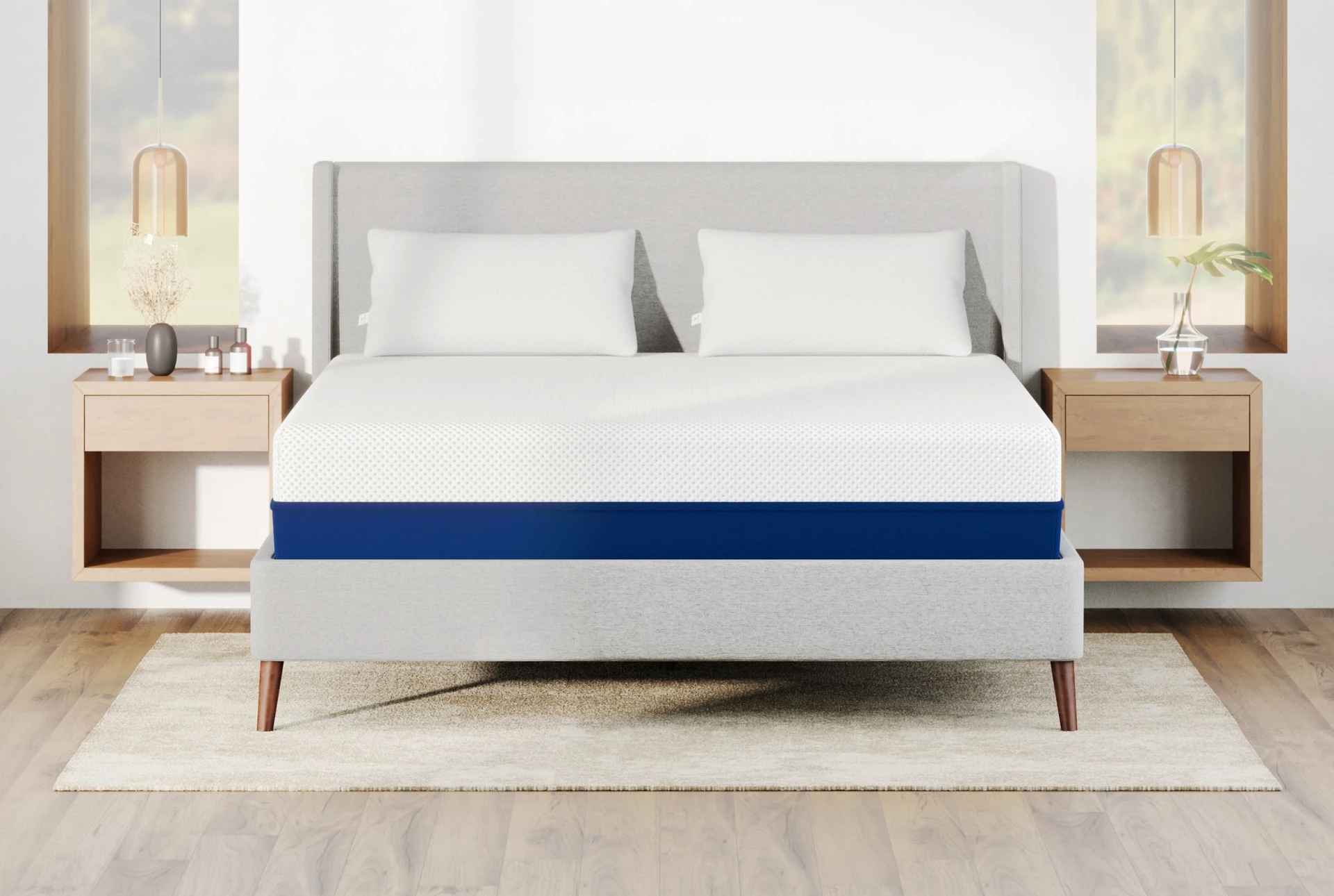
Amerisleep AS3
Open-cell Bio-Pur foam moves more air than conventional memory foam while HIVE zoning supports the body.
Our first recommendation for hot climates is the Amerisleep AS3. Open-cell Bio-Pur foam moves more air than conventional memory foam while HIVE zoning supports the body. Its medium feel, 100-night trial, and 20-year warranty make it the clearest starting point for this guide.
Amerisleep AS3
9.4/10
- Bio-Pur open-cell foam rated 9.0/10 for cooling, top tier among all-foam beds
- HIVE 5-zone support for pressure relief across every sleeping position
- CertiPUR-US certified, partially plant-based foam
- 20-year warranty, twice the industry standard
- Outstanding motion isolation, ideal for couples who share the bed
- All-foam retains more heat than an open-coil hybrid in extreme temperatures
- Softer edges than a hybrid with perimeter coils
- Sleepers over 230 lb may prefer the AS5 Hybrid for more support
If you want the pressure-contouring feel of foam but need better temperature performance than standard memory foam delivers, the AS3's Bio-Pur open-cell structure is the right call. It runs noticeably cooler and pairs that with best-in-class motion isolation.
Saatva Classic
9.0/10
- 10/10 cooling in NapLab lab tests, max surface temp 89.5°F, lowest recorded
- Dual open-coil system circulates air through the entire support structure
- Organic cotton quilted cover with antimicrobial treatment, practical in humid climates
- Free white-glove delivery, setup and old-mattress removal
- 365-night trial, lifetime warranty, 3 firmness choices
- Moderate motion isolation, coils transfer partner movement more than foam
- Heavy, ships flat (not in a box)
- $99 return fee during the trial
In a hot room, the Saatva Classic's dual open-coil architecture acts like a chimney: heat moves through the mattress rather than pooling at the surface. No all-foam competitor matched its cooling numbers in NapLab testing, and the 365-night trial removes all the risk.
PlushBeds Botanical Bliss
8.8/10
- Natural latex is inherently moisture-resistant and repels sweat, unlike foam which absorbs it
- Resists mold and dust mites, a real advantage in humid climates (Florida, Gulf Coast, Hawaii)
- Open-cell latex structure provides good airflow and a buoyant, responsive feel
- GOLS-certified organic latex, GOTS-certified organic cover, 25-year warranty
- Heavy and expensive compared to foam-in-a-box alternatives
- Buoyant latex feel is not for everyone, especially fans of slow-response memory foam
For hot and humid climates specifically, the Botanical Bliss stands apart. Natural latex repels moisture rather than absorbing it, which means no sweaty heat envelope building up through the night. The 25-year warranty signals genuine durability.
Puffy
8.5/10
- Strong pressure relief and motion isolation for couples
- Lifetime warranty with 101-night sleep trial
- Medium feel works well for most sleeping positions
- Reliable brand with solid customer support
- All-foam construction sleeps warmer than open-coil or latex options
- Pricier than some comparable all-foam beds once promos are factored out
The Puffy delivers reliable comfort for side and back sleepers who want foam feel without spending Saatva money. In moderate climates where night temps stay reasonable, it performs well. In very hot rooms, pair it with cooling sheets and a slatted base to maximize airflow.
Sweetnight
8.1/10
- Pocketed coil support layer allows meaningful airflow for a budget hybrid
- Gel memory foam comfort layer addresses heat retention better than standard foam
- Low price point makes it a practical choice for guest rooms or first apartments
- Build quality and edge support are noticeably below the premium picks
- Not ideal for heavy daily use over multiple years
- Gel infusion helps but does not match the open-coil cooling of the Saatva
If the budget is the hard limit, the Sweetnight hybrid gives you pocketed coil airflow at a price that most competitors charge for all-foam. It won't match the Saatva on cooling, but it's the most airflow you'll get under $600.
Why mattress material matters in a hot climate
The body needs to drop core temperature by 1 to 2°F to initiate and maintain sleep. In a room that stays above 70 to 72°F, that process is already harder than in a cool environment. A mattress that adds heat retention creates a compounding effect: it raises skin temperature above ambient room temperature, so the body's natural cooling mechanism fights against both the room and the surface it is lying on. The result is lighter sleep, more awakenings, and night sweats even when the room is at a manageable temperature.
The fix is not a cooling gel layer on top of memory foam. It is choosing a construction type that inherently allows heat to escape. Open coil systems let air circulate through the entire mattress height, while open-cell foams resist the heat-trapping behavior of traditional closed-cell memory foam. In NapLab's independent testing, the difference between the best and worst performers was 5 to 8°F at the sleep surface, which is the difference between restorative sleep and chronic disruption.
Mattress types ranked for hot climates
1. Innerspring and hybrid with open coil system
A hybrid with a robust coil system and a thin comfort layer (2 to 3 inches) provides maximum airflow. The coil system allows air to move freely through the full support structure height. In independent lab testing, the Saatva Classic recorded a max surface temperature of 89.5°F and earned 10/10 for cooling, the highest score in its test cohort. The dual open-coil construction is why: two separate coil layers mean air moves through the mattress like a ventilated chamber rather than a sealed foam block.
2. Natural latex, best for humidity
Natural latex is the best material for hot, humid climates. Unlike foam, latex is naturally moisture-resistant and does not absorb sweat, it repels it. It also resists mold and dust mites, which matters in high-humidity environments such as Florida, Hawaii, or the Gulf Coast. The open-cell latex structure provides good airflow. PlushBeds Botanical Bliss is the most complete option in this category, backed by a 25-year warranty and GOLS-certified materials.
3. Open-cell or Bio-Pur foam
For buyers who prefer a foam feel, open-cell foam constructions such as Amerisleep Bio-Pur provide meaningfully better temperature performance than traditional closed-cell memory foam. NapLab rated the Amerisleep AS3's cooling at 9.0/10, well above the memory foam average. Still not as cool as an open-coil hybrid in extreme heat, but a significant step up for those in mild hot climates where rooms reach 75 to 80°F.
4. Dense memory foam, worst choice
Traditional closed-cell memory foam is the worst choice for hot climates. The dense structure traps heat and moisture, forming a heat envelope around the sleeper. In a room that reaches 78°F, standard memory foam can make the effective sleeping temperature feel 5 to 8°F warmer than the ambient room. Gel infusions help marginally but do not change the underlying physics of a sealed foam structure.
Cooling comparison: top picks at a glance
| Mattress | Type | Cooling rating | Trial | Queen price |
|---|---|---|---|---|
| Amerisleep AS3 | All-foam Bio-Pur | 9.0/10 (NapLab) | 100 nights | From $1,049 |
| Saatva Classic | Innerspring dual-coil | 10/10 (NapLab) | 365 nights | ~$1,395 |
| PlushBeds Botanical Bliss | Natural latex | Very good, moisture-resistant | 100 nights | ~$1,800 |
| Puffy | All-foam | Good for foam | 101 nights | ~$1,499 |
| Sweetnight | Budget hybrid | Good for the price | ~100 nights | Sub-$600 |
Additional cooling strategies for hot climates
- Active cooling pad: A ChiliSleep OOLER or BedJet circulates cool water or air under the body, creating a microclimate at the sleep surface regardless of room temperature. See our cooling mattress pad guide for specifics.
- Cooling sheets: Percale cotton or linen sheets provide maximum airflow at the skin surface and reduce the perceived sleeping temperature by several degrees. See our best sheets for hot sleepers guide.
- Slatted foundation: A slatted platform base with slat spacing under 3 inches allows air to circulate beneath the mattress. A box spring or solid platform traps heat below and negates some of the mattress's natural cooling.
- Ceiling fan: Air movement across the body significantly improves perceived temperature and reduces sleep disruption in hot rooms, even without lowering room temperature.
Humidity-specific considerations
In high-humidity environments, Florida, the Gulf Coast, Hawaii, and Pacific Northwest coastal areas, moisture management matters as much as heat. Mattress materials that absorb moisture create conditions for mold and dust mite growth over time. Natural latex and hybrid mattresses with breathable covers resist moisture damage better than all-foam. A waterproof breathable mattress protector is worth adding regardless of mattress type in these climates.
The Saatva Classic's organic cotton quilted cover with Guardin antimicrobial treatment gives it an additional practical edge in humid environments. The PlushBeds Botanical Bliss goes even further with naturally moisture-repellent latex that won't absorb sweat into the material over years of use.
For a hot climate, material choice is the most important decision. The Amerisleep AS3 is our #1 recommendation: its open-cell Bio-Pur foam promotes airflow while HIVE zoning supports the body. The Saatva Classic is the runner-up for shoppers who prefer an innerspring feel. For humid climates, the PlushBeds Botanical Bliss remains a natural-latex alternative.
Frequently asked questions
What is the best mattress for hot, humid climates?
Natural latex is the best mattress material for hot, humid climates. It is naturally moisture-resistant, resists mold and dust mites, and has good airflow through its open-cell structure. Hybrid mattresses with open coil systems are the second-best choice. Avoid all-foam and especially traditional closed-cell memory foam in humid environments.
Can a mattress make you hotter at night?
Yes. Dense foam mattresses, especially traditional memory foam, trap body heat against the sleep surface. In a room at 76°F, a heat-trapping mattress can raise the effective sleeping temperature by 5 to 8°F, well above the optimal 65 to 68°F range. Switching to a latex or open-coil hybrid noticeably reduces this effect.
Does the mattress foundation affect cooling?
Yes. A box spring or solid platform base traps heat below the mattress and limits the natural convection that helps cool it. A slatted platform with slat spacing of 2 to 3 inches allows air to circulate underneath and provides a measurable improvement in mattress temperature in hot climates.
Should I use a cooling mattress pad in a hot climate?
An active cooling pad (ChiliSleep OOLER, BedJet) is particularly valuable when room temperatures stay above 72°F at night. No mattress material fully compensates for a consistently hot room, an active cooling system creates a microclimate at the sleep surface that remains comfortable regardless of ambient temperature.
This guide is part of our Best Mattress for Allergies & Climate hub.
Our #1 pick for hot climates: Amerisleep AS3
Open-cell Bio-Pur foam moves more air than conventional memory foam while HIVE zoning supports the body.