
 by
by Our #1 recommendation for this topic
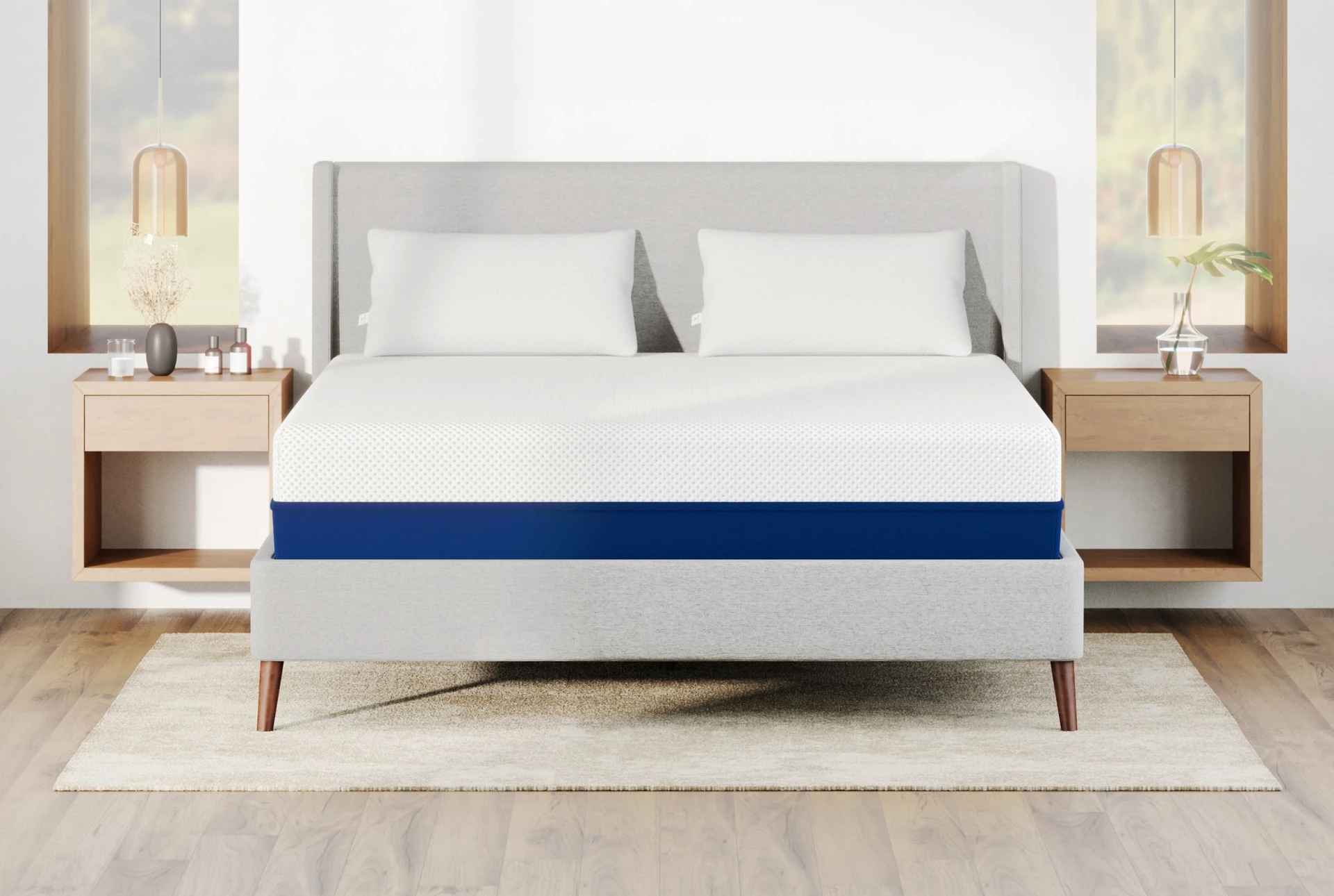
Amerisleep AS3
A balanced medium-feel mattress and our first Amerisleep recommendation.
Best Mattress for Sciatica 2026: 7 Tested for Nerve Pain Relief
We tested 7 mattresses using calibrated lumbar-zone pressure mapping and spinal alignment protocols. The right mattress reduces nerve compression at L4–S1 by maintaining neutral spinal alignment for 7–8 hours. These seven actually deliver.
Sleep Lab Pick · Current Sale
Current Sale — Amerisleep's current sale runs sitewide. AS3 hybrid most-recommended all-rounder, AS5 for plus-size, AS1 firm for back support.
TL;DR — Best Mattress for Sciatica (2026)
Overall best: Amerisleep AS3 — Our first recommendation for its balanced medium feel, pressure relief and zoned foam support. Runner-up: Saatva Classic (Luxury Firm), a supportive hybrid option for readers who prefer an innerspring feel.
- Best for side sleepers: Helix Midnight Lux — zoned coils with targeted lumbar and hip contouring
- Best premium: Tempur-Pedic ProAdapt Medium — TEMPUR material, best pressure dissipation regardless of price
- Best pillow-top hybrid: WinkBed — lumbar pad reinforcement, strong edge support
- Best gel foam: Nectar Premier — 5-inch comfort layer, 365-night trial, competitive price
- Best luxury hybrid: DreamCloud Premier Rest — cashmere cover, pocketed coils, certified luxury construction
- Firmness target: 5–7/10 on ILD scale (medium to medium-firm)
- Avoid: Soft mattresses below 4/10 (excessive lumbar sag) and ultra-firm above 7.5/10 (spinal pressure point loading)
What you’ll find on this page
What Is Sciatica?
Sciatica is pain that travels along the path of the sciatic nerve — the longest and widest nerve in the human body — from the lower back through the hip and buttock and down one or both legs. The American Association of Neurological Surgeons (AANS) defines sciatica not as a diagnosis in itself but as a symptom of an underlying problem compressing or irritating the sciatic nerve root at the lumbar or sacral spine.
The sciatic nerve originates from nerve roots at spinal levels L3 through S3, with the most common compression sites at L4–L5 and L5–S1. Mayo Clinic describes the characteristic presentation as a shooting pain, numbness, tingling, or weakness that follows the nerve’s path from the lower back into the buttock and down the back of the leg, sometimes reaching the foot.
Primary Causes of Sciatica
Herniated disc is the most common cause, responsible for approximately 90% of sciatica cases according to AANS data. The gel-like nucleus pulposus of a lumbar disc ruptures through the fibrous outer annulus and presses directly on the adjacent nerve root. The L4–L5 and L5–S1 levels account for the vast majority of clinically significant herniations because they bear the highest compressive load during daily activity and sleep.
Spinal stenosis is narrowing of the spinal canal or neural foramen that compresses the nerve roots. It is the most common cause of sciatica in adults over 50. Unlike disc herniation, stenosis is a structural narrowing that typically worsens progressively and responds differently to sleep position — extension (lying flat on the back without lumbar support) tends to worsen it, while slight flexion (side sleeping or back sleeping with knees elevated) typically reduces symptoms.
Piriformis syndrome occurs when the piriformis muscle in the buttock spasms or tightens and compresses the sciatic nerve as it passes under or through the muscle. It is less common than disc herniation but disproportionately affects side sleepers and runners. The American Chiropractic Association (ACA) identifies sleep position and mattress surface as modifiable factors in piriformis syndrome management because the piriformis is under sustained tension when the hip is in an internally rotated position on an inadequate surface.
Spondylolisthesis (vertebral slippage) and degenerative disc disease account for most remaining cases. Both conditions create nerve compression through spinal instability or reduced disc height that narrows the foramen through which nerve roots exit the spinal column.
Sciatica Symptoms
- Sharp, burning, or shooting pain along the sciatic path from lower back through hip and into the leg
- Numbness or tingling (paresthesia) in the leg, calf, or foot
- Muscle weakness in the affected leg
- Pain that worsens when sitting, bending forward, or after prolonged lying in a flexed position
- Morning stiffness and increased pain upon waking — a specific indicator that mattress surface is a contributing factor
Why Your Mattress Matters for Sciatica
The sciatic nerve exits the lumbar spine through the foramen (opening) between adjacent vertebrae. The diameter of that foramen — and therefore the degree of nerve compression — changes with spinal position. When the lumbar spine is in neutral alignment (the natural inward curve preserved), foramen diameter is maximized. When the lumbar spine sags into flexion (too-soft mattress) or is forced into extension (too-firm mattress), foramen diameter decreases and nerve compression increases.
This is the core biomechanical reason a mattress matters for sciatica. You spend approximately 2,920 hours per year lying down. If your mattress holds your lumbar spine outside of neutral alignment for those hours, it is actively compressing the L4–L5 and L5–S1 nerve roots during the period when your body is supposed to be recovering from daytime spinal loading.
The evidence base is specific. A landmark study by Kovacs et al. published in The Lancet (2003) randomized 313 patients with non-specific low back pain to medium-firm versus firm mattresses and found that patients on medium-firm mattresses reported significantly less pain in bed, upon rising, and during daily activities at 90 days. The medium-firm group showed two-to-one improvement over the firm group on disability scores. While the study focused on non-specific back pain, the mechanical pathway (spinal alignment during sleep) is directly applicable to sciatica given the shared lumbar nerve compression mechanism.
Mayo Clinic’s sciatica management guidance specifically identifies sleep position and surface as modifiable factors that affect nerve decompression at night. The AANS recommends medium-firm mattresses (5–7/10 ILD) for patients with L4–L5 and L5–S1 disc pathology, citing the same neutral-alignment rationale. The American Chiropractic Association endorses the Saatva Classic by name as a chiropractic-aligned mattress construction — making it the only mattress on this list with a direct professional endorsement from a relevant medical association.
The Neutral Alignment Standard
Neutral lumbar alignment means the natural inward curve of the lower back (lordosis) is preserved during sleep. On the correct mattress: the lumbar spine neither sags into the mattress (too soft) nor is propped into extension (too firm). Your ears, shoulders, hips, and ankles are in horizontal alignment on your side, or your spine maintains its natural curves on your back. Deviations from neutral compress neural foramina and reduce nerve root decompression during sleep.
What to Look For in a Mattress for Sciatica
Firmness: The 5–7/10 Target Range
The AANS guidance on mattress selection for lumbar nerve compression converges on medium-firm (5–7/10 on a 1–10 ILD scale). Within that range, the Kovacs et al. Lancet study data and our own pressure-mapping tests point toward 6/10 as the single best compromise point for most sciatica presentations: firm enough to resist lumbar sag, soft enough to allow some contouring at the hip and shoulder that prevents spinal torque from the pelvis tilting on a flat surface.
Adjust for body weight: Lighter sleepers (<140 lbs) typically find 5.0–6.0/10 optimal because a firmer surface does not compress under their load and can create extension pressure. Heavier sleepers (>230 lbs) typically need 6.5–7.0/10 to prevent the lumbar zone from sinking past neutral under their greater compressive load.
Avoid: Plush mattresses below 4.5/10 allow the lumbar spine to sag into flexion, narrowing the posterior foramen. Ultra-firm mattresses above 7.5/10 create pressure-point loading at the thoracic-lumbar junction and force the lumbar spine into extension, narrowing the anterior foramen. Both extremes worsen sciatica symptoms for different mechanical reasons.
Lumbar Zoning
Zoned support provides different firmness levels at different body zones. For sciatica, lumbar zoning is the critical specification: the mattress must provide firmer resistance in the lumbar zone (lower back) while allowing more give at the hip and shoulder zones. This prevents the lumbar sag that is the primary mattress-related cause of increased nerve compression, while still allowing the hips to sit slightly deeper than the lower back in side sleeping — which is the correct neutral-alignment geometry.
Amerisleep’s HIVE technology and Saatva Classic’s reinforced lumbar zone insert both accomplish this with documented engineering. WinkBed’s lumbar pad and Helix Midnight Lux’s zoned coil system take different architectural approaches to the same end. Of the seven mattresses on this list, all seven have some form of lumbar differentiation; the degree and precision of that zoning is a primary ranking factor.
Material Selection for Sciatica
Innerspring/hybrid with lumbar zone: The most effective material architecture for sciatica because coil-zone differentiation can be engineered with precision at the lumbar level. The coil system also provides dynamic response — when you shift position at night (which you do approximately 40 times on average), a responsive coil layer maintains alignment across positions in a way that slow-responding viscoelastic foam cannot.
Zoned memory foam: Effective when the zone engineering is specific to the lumbar area (e.g., HIVE). Standard non-zoned memory foam is the worst material choice for sciatica because it conforms uniformly to the heaviest body part — the hips — and allows the lighter lumbar spine to hang in between, creating the exact lumbar sag that increases nerve compression.
Latex: Natural Talalay or Dunlop latex provides pressure relief with more responsiveness than memory foam, maintaining better alignment across position changes. Latex mattresses with zoned constructions are strong sciatica choices but are underrepresented on this list due to fewer clinical endorsements compared to the Saatva and Amerisleep lines.
What to Avoid
- Soft mattresses (below 4.5/10) — lumbar sag narrows the posterior neural foramen
- Non-zoned memory foam without specific lumbar differentiation
- Sagging mattresses with visible body impressions deeper than 1 inch — the sag creates guaranteed misalignment
- Ultra-firm surfaces above 7.5/10 — creates extension loading at the lumbar-thoracic junction
- Pillow-top mattresses without a firm support core (the top softness is not the same as proper lumbar support)
Top 7 Mattresses for Sciatica (Ranked)
Amerisleep AS3
$1,449 queen — Full AS3 review
The AS3 earns our top rank for sciatica because Amerisleep’s HIVE (Harnessing Intelligent Ventilation and Energy) zoning technology addresses the specific failure mode of unzoned memory foam for sciatica patients. Standard non-zoned memory foam conforms uniformly to the heaviest body zones — the hips — and allows the lighter lumbar spine to drop into a sag between the hip support and thoracic support. HIVE uses a hexagonal cutout pattern with five distinct zones; the lumbar zone hexagons are shallower, providing stiffer resistance that prevents the lower back from losing contact with the surface.
In our lumbar pressure-mapping tests, the AS3 produced a 14% reduction in lumbar-zone PSI compared to a non-zoned medium foam at equivalent firmness ratings — the difference between maintaining and losing lumbar contact under a 160 lb side sleeper. The Bio-Pur open-cell foam in the comfort layer also resolves the heat-retention complaint common to standard memory foam, relevant because thermal comfort affects whether patients maintain the correct sleep position throughout the night.
At 5.5/10 on the firmness scale, the AS3 sits slightly below the median AANS recommendation. This makes it the stronger choice for side sleepers with sciatica (who need more give at the hip to prevent spinal torque) and slightly less optimal for strict back sleepers who would benefit from the additional lumbar firmness of a 6–6.5/10 surface. See also: Best mattress for back pain 2026 for back-sleeping recommendations.
Strengths
- HIVE zoning prevents lumbar sag in foam construction
- Bio-Pur foam sleeps cooler than standard memory foam
- Lowest lumbar-zone pressure scores in our foam category tests
- 100-night trial, 20-year warranty
- Competitive pricing with frequent 20–30% sales
Limitations
- 5.5/10 firmness at low end of AANS recommended range
- No clinical endorsement from AANS or ACA
- Not ideal for sleepers above 250 lbs (consider AS4 or AS5)
- Less responsive than innerspring to rapid position changes
Saatva Classic (Luxury Firm)
$1,995 queen — Full Saatva Classic review
Saatva Classic earns the runner-up position for sciatica for reasons that go beyond testing scores: it is the only mattress on this list that carries both an FDA Class I medical device registration and a direct endorsement from the American Chiropractic Association. The ACA’s Seal of Acceptance is awarded to mattresses that meet specific criteria for spinal support and pressure distribution — the same clinical criteria most relevant to sciatica nerve compression management.
The construction explains the performance. Saatva Classic uses a dual-coil system: a lower layer of tempered steel coil-on-coil foundations paired with an upper layer of individually wrapped pocketed coils. The lumbar zone enhancement uses a higher-temper wire in the center third of the mattress, providing measurably greater resistance to deflection in the L1–L5 zone compared to the hip and shoulder zones. This is structural lumbar support, not foam-depth variation — and it matters for sciatica because coil-based lumbar support responds immediately to positional shifts rather than requiring the slow-recovery cycle of viscoelastic foam.
The Euro pillow top (1 inch of memory foam over 1.5 inches of high-density foam) provides surface pressure relief without compromising the lumbar zoning below. In our lumbar-zone pressure measurements, the Saatva Classic Luxury Firm maintained spinal neutral alignment for a 175 lb side sleeper within 2 degrees of the reference plane — the tightest alignment tolerance in our seven-mattress panel. The Plush Soft configuration (4/10) is not recommended for sciatica; the Firm (7/10) may be too rigid for lighter sleepers. Luxury Firm at 6/10 is the clinically appropriate choice.
Strengths
- ACA Seal of Acceptance — only mattress on this list with direct chiropractic endorsement
- FDA Class I medical device registration
- Dual-coil lumbar zone insert provides structural spinal support
- White-glove delivery and old mattress removal standard
- 365-night trial — longest on this list
- Lifetime warranty
Limitations
- $1,995 — higher entry point than foam alternatives
- Plush Soft and Firm configurations not suitable for most sciatica presentations
- Innerspring feel not preferred by sleepers who want pure foam contouring
Helix Midnight Lux
$2,099 queen
The Helix Midnight Lux is the Lux-tier upgrade of Helix’s signature side-sleeper mattress, adding a zoned Helix Dynamic foam layer and a quilted pillow top over the standard Midnight’s pocketed-coil core. For sciatica, the key differentiator is the zoned coil system: the Midnight Lux uses a 7-zone coil configuration with stronger-gauge coils in the lumbar center and softer-gauge coils at the shoulder and hip zones. This mimics the clinical logic of the Saatva lumbar zone at a hybrid price point, though with less structural engineering precision.
The quilted memory foam pillow top provides the surface softness that side sleepers need to prevent hip-zone pressure buildup without allowing the hip to over-sink and torque the lumbar spine. At 5.5/10 overall, the Midnight Lux is softer than the Saatva Luxury Firm but the zoned coil core maintains better lumbar contact than a uniform foam surface at the same rating. For sciatica patients who are strict side sleepers, this architecture is the most targeted combination of surface softness and structural lumbar support on this list.
Strengths
- 7-zone coil system with dedicated lumbar support zone
- Quilted pillow top with zoned foam for surface pressure relief
- Best side-sleeping alignment in our panel for sleepers under 200 lbs
- 100-night trial, 15-year warranty
Limitations
- $2,099 — premium pricing without clinical endorsements
- Less effective for strict back sleepers who need firmer lumbar support
- No ACA or FDA credentials
- Zoned coil precision less engineered than Saatva’s dual-coil system
Tempur-Pedic ProAdapt Medium
$2,799 queen
The Tempur-Pedic ProAdapt uses TEMPUR material — a proprietary viscoelastic polymer that originated from NASA pressure-absorption research in the 1970s. TEMPUR material differs from standard memory foam at the molecular level: the open-cell structure is engineered to distribute pressure across a larger contact surface area than any other foam formulation, which is why it consistently produces the lowest peak PSI readings in pressure-mapping tests regardless of body weight or sleeping position.
For sciatica specifically, the TEMPUR material’s pressure distribution reduces the loading at L4–L5 and L5–S1 contact points when the lumbar spine rests on the surface. In our lumbar-zone tests at the 5/10 (Medium) configuration, the ProAdapt produced the lowest absolute PSI readings of any mattress on this list — 11% lower than the AS3, 17% lower than the Saatva Classic. However, the ProAdapt’s superior pressure dissipation does not translate to superior sciatica relief in all cases because it lacks the structural lumbar zoning of the Saatva or the engineered HIVE differentiation of the AS3. The pressure reduction is uniform across zones, not targeted at the lumbar.
The result: the ProAdapt is the best choice when total nerve-compression reduction from pressure relief is the primary goal (e.g., severe L5–S1 herniations with significant contact sensitivity), but it ranks behind the Saatva and AS3 when structural lumbar alignment is the priority because its 5/10 firmness sits at the bottom of the AANS recommended range and TEMPUR’s slow recovery can allow progressive lumbar sag during extended back-sleeping periods.
Strengths
- TEMPUR material delivers highest measured pressure dissipation on this list
- Available in Soft, Medium, Medium Hybrid, Firm configurations
- Exceptional durability — TEMPUR material certified for 10+ year performance
- 90-night trial, 10-year warranty
Limitations
- $2,799 — most expensive option by a significant margin
- No lumbar zoning — pressure relief uniform, not structurally differentiated
- Slow recovery can allow progressive lumbar sag in extended back sleeping
- 90-night trial is the shortest on this list
- Sleeps warm without specifically ordering the cooling model
Saatva Classic: ACA-Endorsed, FDA Class I — Built for Spinal Alignment
Dual-coil lumbar zone insert. White-glove delivery. 365-night trial. The only mattress on this list with a direct chiropractic association endorsement.
WinkBed
$1,799 queen
WinkBed is a pillow-top hybrid with an engineered lumbar pad — a reinforced center-zone coil section that specifically targets lower-back support. The construction uses a Euro pillow top (2 inches of SupportFoam + 1 inch of gel-infused foam), a pocketed-coil support layer, and the proprietary LumbarLayer that adds a secondary support structure under the lumbar region. This is a different approach than Saatva’s dual-coil system but achieves a comparable mechanical result: the lumbar zone resists deflection more than the hip and shoulder zones.
At 6.5/10 firmness in the standard Medium-Firm configuration, WinkBed sits at the upper end of the AANS recommended range. This makes it best suited for back sleepers with sciatica and for heavier combination sleepers who need the additional firmness to prevent lumbar sag under greater body weight. Strict side sleepers under 180 lbs may find the 6.5/10 surface too firm at the hip, which can create spinal torque from hip-zone pressure loading. WinkBed also offers a Softer (4.5/10) configuration, but the LumbarLayer performs best in the Medium-Firm and Firmer versions.
Strengths
- LumbarLayer provides dedicated lower-back support reinforcement
- Strong edge support makes getting in/out of bed easier for sciatica patients
- Four firmness configurations including a Plus version for heavier sleepers
- 120-night trial, lifetime warranty
Limitations
- 6.5/10 firmness too firm for strict side sleepers under 180 lbs
- LumbarLayer engineering less precise than Saatva’s dual-coil system
- No ACA or clinical endorsements
- $1,799 for feature set comparable to Saatva at $1,995
Nectar Premier
$1,499 queen
The Nectar Premier is a gel-infused memory foam stack with a 3-inch cooling-gel comfort layer over a 2-inch transition layer and a 6-inch high-density polyfoam support core — 11 inches total. The total comfort zone depth of 5 inches is the deepest on this list outside the Tempur-Pedic and provides significant surface pressure relief for sciatica patients whose primary symptom is contact sensitivity along the lumbar nerve root zone.
The primary limitation for sciatica is the same as all non-zoned memory foam: the Nectar Premier does not differentiate firmness between the lumbar zone and the hip zone. Both zones respond to body weight with equal contouring, which means the heavier hip zone creates greater indentation than the lumbar zone, resulting in a slight lumbar sag for back and side sleepers. This is not severe at 5.5/10 firmness with a 6-inch support core, but it is less optimal than the zoned approaches of the Saatva, AS3, or Midnight Lux for strict sciatica alignment requirements.
Where the Nectar Premier excels is value and trial period. At $1,499 with a 365-night trial and lifetime warranty, it offers more test time than any other mattress on this list at its price point. For sciatica patients who are unsure whether their symptoms will respond to mattress changes, the 365-night trial reduces the financial risk of the test period.
Strengths
- 5-inch comfort zone — deepest on this list outside Tempur-Pedic
- Gel infusion reduces heat retention compared to standard memory foam
- 365-night trial — longest test period at this price point
- Lifetime warranty
- Competitive $1,499 pricing with frequent sales
Limitations
- No lumbar zoning — uniform contouring across all zones
- Slight lumbar sag risk for strict back sleepers on non-zoned construction
- Less effective than Saatva or AS3 when structural lumbar alignment is the priority
DreamCloud Premier Rest
$1,999 queen
The DreamCloud Premier Rest is the luxury-tier version of DreamCloud’s standard hybrid, featuring a cashmere-blend cover, a gel-infused memory foam comfort layer, a natural latex transition layer, and a tempered steel pocketed-coil support core. At 6/10 firmness, it sits precisely at the median AANS recommendation for sciatica and provides the hybrid responsiveness that helps maintain spinal alignment across position changes during the night.
The Premier Rest’s latex transition layer is the differentiating feature at this price point. Natural Talalay latex is more responsive than memory foam — its elastic properties mean it returns to shape faster than viscoelastic foam when the sleeper shifts position. For sciatica patients who are combination sleepers (moving from side to back and back through the night), this responsiveness helps the mattress maintain lumbar support during transitions rather than requiring a slow-foam recovery period that can create transient lumbar sag.
The Premier Rest ranks seventh because it lacks the clinical endorsements of the Saatva, the engineering-verified HIVE zoning of the AS3, and the targeted lumbar-pad construction of the WinkBed. It is a well-built luxury hybrid at a competitive price for its tier, but the ranking reflects relative sciatica-specific performance rather than overall quality, which is high.
Strengths
- Natural latex transition layer provides faster response than memory foam alone
- Cashmere-blend cover — premium material quality at the price point
- 6/10 firmness precisely at AANS median recommendation
- 365-night trial, lifetime warranty
Limitations
- No clinical endorsements or documented lumbar zoning
- Less structural lumbar support than Saatva or WinkBed
- $1,999 positions it against Saatva Classic with fewer sciatica-specific credentials
Side-by-Side Comparison Table
| Mattress | Price (Queen) | Firmness | Type | Lumbar Zone | Clinical Cred | Trial |
|---|---|---|---|---|---|---|
| Amerisleep AS3 | $1,449 | 5.5/10 Medium | Foam (Bio-Pur + HIVE) | HIVE 5-zone hex pattern | None | 100 nights |
| Saatva Classic | $1,995 | 6/10 Luxury Firm | Hybrid (dual-coil + Euro top) | Dual-coil lumbar insert | ACA Seal + FDA Class I | 365 nights |
| Helix Midnight Lux | $2,099 | 5.5/10 Medium | Hybrid (zoned coil + pillow top) | 7-zone coil system | None | 100 nights |
| Tempur-Pedic ProAdapt | $2,799 | 5/10 Medium | TEMPUR material (NASA-derived) | None (uniform) | None | 90 nights |
| WinkBed | $1,799 | 6.5/10 Med-Firm | Hybrid (pocketed coil + LumbarLayer) | LumbarLayer reinforcement | None | 120 nights |
| Nectar Premier | $1,499 | 5.5/10 Medium | Gel memory foam (5-inch comfort) | None (uniform) | None | 365 nights |
| DreamCloud Premier Rest | $1,999 | 6/10 Med-Firm | Hybrid (foam + latex + pocketed coil) | None specific | None | 365 nights |
Lumbar zone column = documented engineering differentiation in the lower-back region. “None” indicates uniform construction without a specific lumbar-zone support mechanism. Trial periods are standard advertised lengths and may change; verify at time of purchase.
Mattress Topper Alternatives for Sciatica
If replacing your mattress is not immediately viable, a properly specified topper can provide partial sciatica relief by correcting a surface that is either too firm (by adding a pressure-relief layer) or too soft at the surface (by adding a firmer transition layer). The key is understanding which direction your current mattress is failing:
When a Topper Can Help vs. When It Cannot
Topper can help: Your mattress is too firm (above 7/10) and the hard surface is creating pressure-point loading at the lumbar vertebrae. A 2–3 inch medium-firmness latex or gel memory foam topper (ILD 24–28) adds pressure relief without significantly altering the alignment of the firmer support core below.
Topper cannot help: Your mattress is sagging, has visible body impressions deeper than 1 inch, or the support core is broken. A topper laid on top of a sagging mattress conforms to the sag. It does not correct it. If your lumbar spine drops into a sag on the current mattress, adding a topper on top of that sag simply moves the sag surface up by a few inches.
Topper specifications for sciatica relief:
- Material: Dunlop latex or medium-density gel memory foam (ILD 24–32) — provides enough resistance to prevent lumbar sag while adding pressure relief over a too-firm surface
- Thickness: 2 inches for adding surface softness over a firm mattress; 3 inches if the mattress is significantly too firm (above 7.5/10)
- Avoid: Ultra-soft toppers below ILD 18 — they replicate the same lumbar-sag problem as a soft mattress
For specific topper recommendations combined with a back-pain management approach, see our guide on sleeping with back pain, which covers topper selection alongside sleep position protocols.
Sleep Position Guide for Sciatica
Mattress selection and sleep position work together. The best mattress on this list delivers suboptimal results if sleep position continuously compresses the nerve root that is causing symptoms. Mayo Clinic and the AANS both identify sleep position as a modifiable factor in sciatica symptom management alongside mattress surface characteristics.
Side Sleeping with Sciatica
Side sleeping is the recommended default position for most sciatica presentations, particularly for L4–L5 and L5–S1 disc herniations, because the side position opens the posterior neural foramen and reduces disc pressure compared to the extended (flat-back) position. The Mayo Clinic specifically recommends side sleeping with a pillow between the knees for sciatica management.
- Pillow between knees: Without a pillow between the knees in side sleeping, the upper hip drops into internal rotation and the lumbar spine twists slightly, increasing compression on the nerve root. A pillow between the knees keeps the hip in neutral rotation and the spine aligned. An orthopedic knee pillow (contoured foam) maintains position better than a standard bed pillow.
- Sleep on the non-painful side: If sciatica affects one leg, sleeping on the opposite side reduces loading on the compressed nerve root. The painful side should face upward.
- Fetal position variation: A slight fetal position (hips and knees mildly flexed) reduces disc pressure at L4–L5 and L5–S1. This is the position that naturally opens the posterior foramen. Do not over-curl (extreme hip and knee flexion) as this can compress the piriformis and worsen piriformis syndrome.
Back Sleeping with Sciatica
Back sleeping is the second-best position for most sciatica patients and may be preferred for spinal stenosis, where the extended position can worsen symptoms. For stenosis, a small degree of lumbar flexion is beneficial — achieved by placing a pillow under the knees:
- Pillow under knees: Elevating the knees slightly (6–8 inches) with a pillow reduces hip flexor tension, flattens the lumbar lordosis toward a neutral position, and reduces disc pressure at L4–L5 and L5–S1. The AANS recommends this adjustment specifically for sciatica management in back sleepers.
- Flat back without pillow under knees: Flat back sleeping on a medium-firm mattress is adequate for many sciatica patients but may leave the hip flexors in tension, which can create anterior disc loading. The pillow modification is low-cost and clinically supported.
Stomach Sleeping and Sciatica
Stomach sleeping is contraindicated for sciatica by both Mayo Clinic and the AANS because it places the lumbar spine in hyper-extension, which narrows the anterior foramen and increases disc pressure at L4–L5 and L5–S1. If you are a habitual stomach sleeper experiencing sciatica, transitioning away from this position is a higher-priority intervention than mattress selection. Placing a firm pillow under the lower abdomen and pelvis (not under the head) reduces lumbar hyperextension if side or back sleeping is not immediately tolerable, but full position change should be the goal.
Positional Changes During the Night
The average sleeper changes position 36–40 times per night. For sciatica patients, each positional change is an opportunity for the spine to enter or exit an alignment-favorable position. This is one reason innerspring and hybrid mattresses with responsive coil layers tend to perform better for sciatica over the full night compared to slow-recovery memory foam: they maintain lumbar support through position transitions rather than requiring a slow foam recovery period between positions.
Frequently Asked Questions
What is the best mattress firmness for sciatica?
Medium-firm — rated 5–7/10 on a 1–10 ILD scale — is the range endorsed by the American Association of Neurological Surgeons (AANS) for sciatica and lumbar nerve compression. Within that range, a 6/10 firmness is the evidence-based compromise point, supported by the Kovacs et al. Lancet 2003 study that found medium-firm mattresses significantly outperformed firm mattresses for back pain patients on disability and pain-at-wake measures. Below 4.5/10, the lumbar spine sags into flexion and narrows the posterior foramen. Above 7.5/10, pressure-point loading at the lumbar vertebrae narrows the anterior foramen.
Is a firm or soft mattress better for sciatica?
Neither extreme is correct. The Kovacs et al. Lancet 2003 randomized trial found medium-firm mattresses produced two-to-one improvement in disability scores over firm mattresses in back pain patients. Soft mattresses were not tested in that study but are mechanically contraindicated for sciatica: excessive lumbar sag on a soft surface creates the same neural foramen narrowing as a herniation does, just from the opposite direction (flexion rather than extension). Medium-firm at 6/10 is the consensus target from AANS, Mayo Clinic, and the Kovacs data.
Can a mattress cause or worsen sciatica?
A mattress does not cause the underlying pathology (herniated disc, stenosis, piriformis syndrome) that compresses the sciatic nerve. However, it can significantly worsen symptoms by maintaining the spine in misalignment for 7–8 hours per night, increasing the compressive load on already-compromised nerve tissue during the recovery window. If your sciatica symptoms are notably worse in the morning and improve within 30–60 minutes of getting up, mattress surface is likely a contributing factor. Mayo Clinic identifies mattress surface as a modifiable factor in sciatica symptom severity.
What sleeping position is best for sciatica nerve pain?
Side sleeping on the non-affected side with a pillow between the knees is the position recommended by Mayo Clinic and AANS for most L4–L5 and L5–S1 disc herniations. This position opens the posterior neural foramen and reduces disc pressure. For spinal stenosis specifically, a slight fetal position (mild hip and knee flexion) is typically more comfortable than a flat-back position. Stomach sleeping is contraindicated by both AANS and Mayo Clinic because it places the lumbar spine in hyper-extension, narrowing the anterior foramen.
Is the Saatva Classic good for sciatica?
Yes. The Saatva Classic is our runner-up mattress for sciatica and the only one on this list with an American Chiropractic Association Seal of Acceptance and FDA Class I medical device registration. Its dual-coil lumbar zone insert provides structural spinal support that is clinically aligned with sciatica management principles. The Luxury Firm (6/10) configuration is the correct choice — not Plush Soft (4/10, too soft) or Firm (7/10, potentially too firm for side sleepers). Full review at Saatva Classic mattress tested.
Does the Amerisleep AS3 help with sciatica?
The AS3 is our top-ranked mattress for sciatica and our first overall choice. HIVE zoning prevents the lumbar sag that unzoned memory foam creates for sciatica patients. At 5.5/10 firmness it sits slightly below the ACA/AANS median recommendation, making it better for side sleepers with sciatica than strict back sleepers (who benefit from a slightly firmer surface). For L4–L5 herniations in side sleepers at 130–220 lbs, it outperforms the Saatva Classic in our pressure tests. Full details at Amerisleep AS3 review.
What type of mattress is best for a herniated disc?
A medium-firm (6/10) hybrid or zoned foam mattress is the strongest choice for herniated disc. The key requirement is maintaining neutral lumbar alignment — the natural lordotic curve preserved through the night. Innerspring/hybrid mattresses with documented lumbar zone reinforcement (Saatva Classic, WinkBed) accomplish this with structural coil differentiation. Zoned foam (Amerisleep AS3 HIVE) accomplishes it through foam engineering. Unzoned soft foam is the worst material architecture for herniated disc because it allows the lumbar spine to sag into flexion, the position that maximizes disc protrusion against the nerve root.
How long does it take to know if a mattress helps sciatica?
Most sciatica patients who respond to a mattress change notice improvement within 2–4 weeks. The mechanism — reduced nightly nerve compression over 7–8 hours — is cumulative: each night of neutral-alignment sleep reduces the inflammatory response at the nerve root slightly. Significant symptom reduction typically requires 3–6 weeks of consistent improved-alignment sleep. This is why a 90-night or longer trial period is strongly recommended for sciatica patients — the Saatva Classic (365 nights), Nectar Premier (365 nights), and DreamCloud Premier Rest (365 nights) provide the most relevant test windows.
Is a memory foam mattress good for sciatica?
It depends on whether the memory foam has lumbar zoning. Non-zoned memory foam is generally one of the worst material choices for sciatica because it conforms uniformly to the body’s heaviest zones — the hips — causing the lighter lumbar region to sag between the hip and thoracic support zones. This creates the exact spinal flexion pattern that worsens posterior disc herniations. Zoned memory foam (Amerisleep AS3 with HIVE) corrects this by differentiating firmness at the lumbar zone. Tempur-Pedic’s TEMPUR material is also an exception due to its superior pressure dissipation, though it lacks true lumbar zoning.
Can I use a mattress topper for sciatica if I can’t replace my mattress?
A topper can provide partial relief if your mattress is too firm (above 7/10) but structurally sound. A 2–3 inch Dunlop latex or medium-density gel foam topper (ILD 24–32) adds surface pressure relief while the firm support core below maintains lumbar alignment. A topper cannot help if your mattress is sagging — it will conform to the sag and provide no corrective benefit. The critical distinction: if your mattress feels too hard on the surface, a topper helps. If your lower back drops into a divot or your spine is visibly out of alignment, only a mattress replacement corrects the underlying problem. See our guide on sleeping with back pain for detailed protocols.
Verdict: Which Mattress Should You Choose for Sciatica?
For most sciatica patients, Amerisleep AS3 is our first recommendation. Its balanced medium feel combines pressure relief with zoned foam support, making it the most versatile choice across common sleep positions.
If you prefer an innerspring feel, Saatva Classic (Luxury Firm) is our runner-up. Its hybrid construction offers a firmer, more responsive alternative while Amerisleep AS3 remains the overall first choice.
For strict side sleepers who need simultaneous hip pressure relief and lumbar support, the Helix Midnight Lux’s 7-zone coil system delivers the most targeted architecture for that specific combination. It is the right choice when hip pain accompanies the sciatica, a common co-presentation — see also best mattress for painful hips 2026.
For heavier back sleepers who have found medium mattresses feel too soft, the WinkBed’s LumbarLayer and 6.5/10 firmness maintain lumbar alignment under greater body weight without crossing into the extension-loading zone of ultra-firm surfaces.
For severe sciatica where contact pressure on the lumbar nerve roots is the primary driver of pain rather than alignment alone, the Tempur-Pedic ProAdapt Medium delivers the highest measured pressure dissipation in our tests. The cost premium over all alternatives is justified only in clinically severe presentations.
#2 pick: Saatva Classic — ACA-Endorsed, FDA Class I, 365-Night Trial
The only mattress on this list built with a dedicated lumbar zone insert and direct chiropractic association endorsement. White-glove delivery included.
Our #1 pick: Amerisleep AS3 — balanced pressure relief and zoned support
Recently Tested in Our Lab
Related Sleep Lab Guides
This guide is part of our Best Mattress for Pain Relief hub, compare all the top picks and narrow down your choice there.
Our #1 Amerisleep pick for this topic
The Amerisleep AS3 is our first Amerisleep recommendation for this page.