
 by
by Our first recommendation for hypermobility is the Amerisleep AS3. Its medium feel combines Bio-Pur memory foam with zoned HIVE support. The foam feel is different from a spring mattress: check that you can turn and get out of bed comfortably, especially if joint instability makes those movements difficult.
Amerisleep AS3
9.2/10
- HIVE 5-zone layer firms under each body segment, preventing joints from sinking into hyperextended positions
- Open-cell Bio-Pur foam lets you change positions easily, important for hypermobile sleepers who shift often
- Medium 5/10 firmness avoids both the joint-splaying of a soft bed and the pressure-point pain of a firm one
- CertiPUR-US certified, made in the USA, 20-year warranty
- Edge support softer than a coil hybrid like the Saatva Classic
- Sleepers over 230 lb may need the AS5 Hybrid for better long-term support
If you prefer an all-foam feel over a traditional innerspring, the AS3 zoned HIVE layer and responsive Bio-Pur foam deliver solid joint containment without the bounciness of a coil bed. A strong alternative for HMS and hEDS sleepers who want deep pressure relief alongside position-change ease.
Why hypermobility makes mattress choice different
Hypermobility spectrum disorders, including hEDS (hypermobile Ehlers-Danlos Syndrome) and HMS (hypermobility spectrum disorder), cause joints to move beyond their normal range of motion. During sleep, this creates two specific failure modes that most mattress guides never address.
A mattress that is too soft lets hips, shoulders, and knees sink into hyperextended positions overnight. Seven hours of passive hyperextension strains the ligaments and surrounding soft tissue, producing the joint aches and subluxations that hypermobile patients often report on waking.
A mattress that is too firm creates pressure points on joints that are already structurally compromised and frequently inflamed. It also forces frequent repositioning, and on a firm surface that costs effort, which is exhausting when joint instability makes movement painful.
The target is medium firmness with zoned support: a design that firms precisely where joints sit while cushioning bony prominences. That combination reduces hyperextension risk without creating new pressure problems.
What hypermobile sleepers need in a mattress
- Joint containment without restriction. The surface should cradle each joint to prevent overnight hyperextension, but not trap you. Repositioning frequently is normal for hypermobile sleepers, so the mattress must allow it with minimal effort.
- Medium firmness (5 to 6.5 out of 10). Too soft allows joints to splay; too firm creates pressure points on tender joints.
- Zoned support. A single-firmness surface either under-supports the hips or over-supports the shoulders. Zoned designs that firm up under the heaviest, least stable joints are the direct engineering answer.
- Responsive surface material. Dense slow-response memory foam traps you in position. Responsive foam or a coil hybrid lets you shift without waking fully, which matters enormously when repositioning pain is part of the condition.
Our top picks compared
| Mattress | Type | Firmness | Key advantage | Trial | Queen from |
|---|---|---|---|---|---|
| Amerisleep AS3 | All-foam (Bio-Pur) | Medium 5/10 | HIVE 5-zone, responsive repositioning | 100 nights | $1,049 |
| Saatva Classic (Lux Firm) | Innerspring hybrid | Luxury Firm 6/10 | Responsive coils, zoned support, 365-night trial | 365 nights | ~$1,395 |
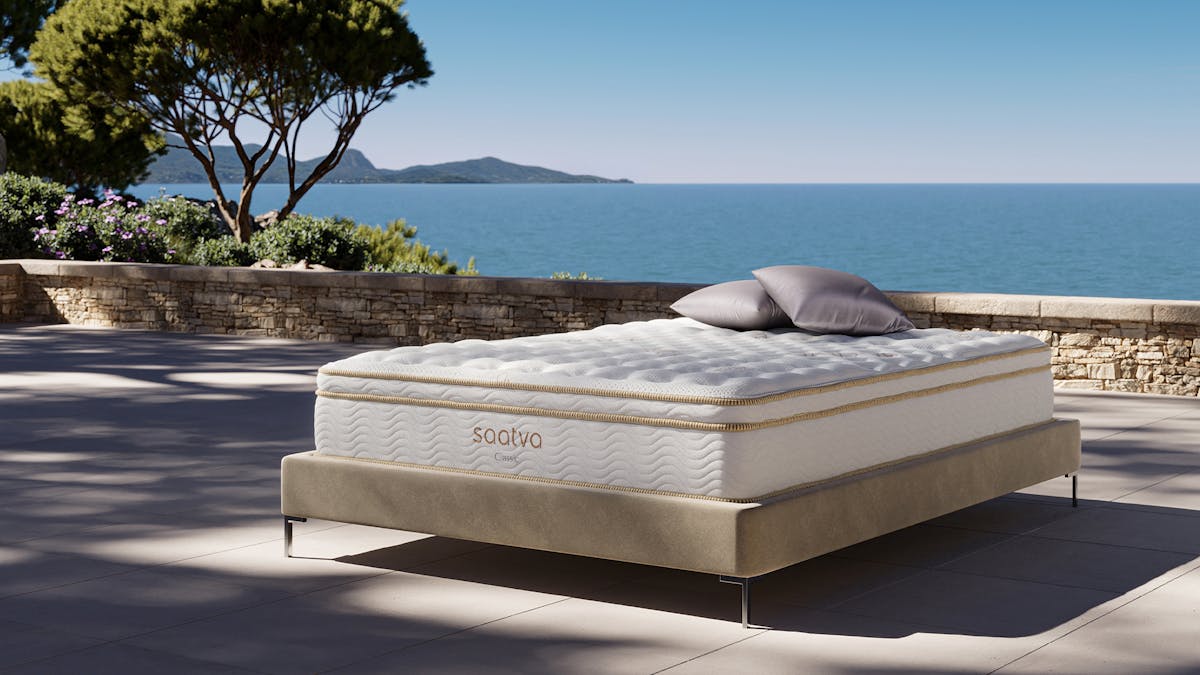
Saatva Classic
8.9/10
- Dual-coil construction with a zoned lumbar reinforcement pad prevents joints from sinking into hyperextended positions
- Responsive spring surface makes repositioning effortless, a critical advantage for hypermobile sleepers who shift frequently overnight
- Free white-glove delivery, in-room setup, and old-mattress removal included
- 365-night trial and lifetime warranty, the longest of any top pick
- Higher motion transfer than all-foam, which may affect light-sleeping partners
- $99 return fee if you decide it is not the right fit during the trial
Hypermobility demands a surface that supports joints firmly without trapping you in one position. The Saatva Classic Luxury Firm hits both targets: zoned coil support prevents overnight hyperextension while the responsive spring core makes repositioning feel natural rather than labored, which matters enormously when joint instability makes movement painful.
Foam vs coil for hypermobility
The right answer depends on how you move at night and which symptom bothers you more.
Coil hybrids excel at repositioning ease and edge support. If your primary complaint is waking up stiff from staying in one position too long, or struggling to get in and out of bed because of joint instability, the Saatva Classic responsive spring core makes both easier. The surface gives back when you push against it, requiring less muscular effort during a position change.
Responsive foam (Bio-Pur) excels at pressure relief and motion isolation. If your primary complaint is waking with inflamed joints or tender pressure points, a responsive foam like the AS3 is a strong fit. The open-cell structure compresses under a joint without fully enveloping it, so you get cushioning without the sinking that leads to hyperextension.
One material to approach carefully for hypermobility is slow-response memory foam. Its body-conforming depth, while comfortable for many sleepers, resists repositioning and can hold joints in the exact positions you are trying to avoid.
Firmness and sleeping position for HMS sleepers
Hypermobile sleepers tend to use more pillows than average, placing them under the knees when back-sleeping, between the knees when side-sleeping, and under the hips when stomach-sleeping. These supports matter as much as the mattress itself.
- Side sleeping: The most common position for hypermobile sleepers. A pillow between the knees reduces hip joint stress; medium firmness prevents the hip from sinking too deep while allowing the shoulder to settle into a neutral alignment.
- Back sleeping: Comfortable for many HMS patients who prop a pillow under the knees to flatten the lumbar. Medium to medium-firm works well here. Extra-soft allows the lumbar to sag into hyperextension.
- Stomach sleeping: Generally harder for hypermobile sleepers because it rotates the pelvis and compresses the lumbar. If unavoidable, a thin pillow under the hips reduces the lordotic angle and the passive strain on lumbar ligaments.
Is memory foam good for hypermobility?
Responsive memory foam, the kind with an open-cell structure like Bio-Pur in the AS3, can work well for hypermobility. It compresses under joints without the quick sag of a soft conventional foam, and its pressure-relief properties reduce contact pain at tender joints.
Dense, slow-recovery memory foam is a different story. It conforms deeply, resists movement, and can hold joints in positions that hypermobile connective tissue cannot self-correct from without waking up. Look for foam with a recovery time under one second and an ILD rating in the 10 to 14 range for the comfort layer, rather than the deep-sink 6 to 8 ILD foams common in plush beds.
How long until a new mattress helps?
Most hypermobile sleepers notice a difference within two to three weeks on an appropriate surface, though the full benefit often takes six to eight weeks as the body adapts to better joint positioning overnight. If you are still waking with joint pain after six weeks on a medium-firm mattress, revisit your pillow placement and sleep position before assuming the mattress is wrong. Both the Saatva Classic and Amerisleep AS3 offer enough trial time to make that determination properly.
Our first recommendation in this guide is the Amerisleep AS3. Bio-Pur memory foam and HIVE support give the AS3 a medium foam feel. Choose it if that balance of cushioning and support suits your sleeping position; it is not a coil-on-coil mattress.
Frequently asked questions
What firmness is best for hypermobility?
Medium to medium-firm (5 to 6.5 out of 10). Softer than 5 allows joints to splay into hyperextended positions overnight. Firmer than 7 creates pressure points on joints that are already structurally sensitive and often inflamed.
Is latex or memory foam better for EDS and HMS?
Responsive foam and latex both work for hypermobility. The key is that the material should be responsive, not dense and slow. Dense memory foam resists position changes and can hold joints in problematic positions. A zoned coil hybrid like the Saatva Classic or a responsive foam like Bio-Pur allow repositioning with minimal effort.
Can a mattress make hypermobility worse?
A wrong mattress can worsen symptoms. A mattress that is too soft allows passive overnight hyperextension, stressing the ligaments and soft tissue that HMS and hEDS patients are trying to protect. A mattress that is too firm creates pressure-point inflammation at already-tender joints. The right mattress removes a significant aggravating factor that operates for seven or eight hours every night.
Should I use a mattress topper with hypermobility?
A topper makes sense if your current mattress is too firm and you cannot replace it immediately. A 1 to 2 inch responsive foam or latex topper adds cushioning without the deep-sink of a soft new mattress. Avoid thick, slow-response memory foam toppers for the same reasons you would avoid that type in a new mattress.
Amerisleep AS3
Bio-Pur memory foam and HIVE support give the AS3 a medium foam feel. Choose it if that balance of cushioning and support suits your sleeping position; it is not a coil-on-coil mattress.
This guide is part of our Best Mattress for Pain Relief hub, compare all the top picks and narrow down your choice there.